
航空航天

Search documents
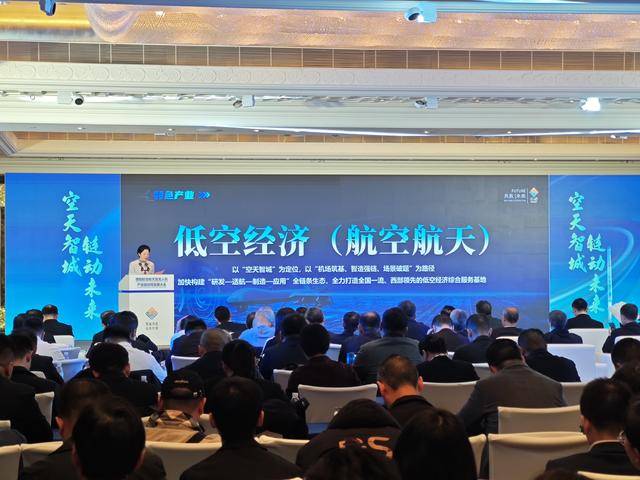
什邡在京作城市产业推介,擘画“空天智城”新蓝图
Sou Hu Cai Jing· 2025-11-06 06:41
Core Viewpoint - The conference held in Beijing on November 6 focused on the collaborative development of the aerospace and drone industry chain in Deyang, showcasing Shifang's unique advantages and development potential in the low-altitude economy sector [1][8]. Group 1: Industry Development - The establishment of the Beijing-Jinshui-Shifang Industrial Alliance marks a partnership aimed at exploring new opportunities in the low-altitude economy [3]. - Shifang is positioning itself as a "Smart Sky City," with a focus on building a comprehensive ecosystem that includes research, airworthiness, manufacturing, and application [3]. - Shifang has three core strengths in the low-altitude economy: effective flight operations, quality manufacturing, and practical applications [3]. Group 2: Infrastructure and Services - Shifang is home to the only A1-class general airport in the Chengdu metropolitan area, capable of handling 120 takeoffs and landings daily, and supports both manned flights and cargo operations [5]. - A specialized airport operation company has been established, along with the first joint research center for drone airworthiness certification in Southwest China, providing comprehensive airworthiness services [5]. - The total area of the general aviation industrial park in Shifang is 44,300 square meters, equipped with business centers, talent apartments, and living towns, offering convenient services for enterprises [5]. Group 3: Economic Impact - By 2024, Shifang has attracted 23 representative enterprises in the low-altitude economy, achieving a total output value exceeding 5 billion yuan [5]. - The local enterprise, Xinhang Titanium, has grown into a national high-tech enterprise with an annual output value nearing 4 billion yuan [5]. - Shifang's industrial output value is projected to exceed 80 billion yuan in 2024, with industrial added value maintaining a growth rate of over 10% for two consecutive years [6]. Group 4: Talent and Innovation - Shifang has established two double-A-level platform companies and one private equity fund to provide financial support throughout the enterprise lifecycle [6]. - A partnership with Chengdu College of Electronic Science and Technology has been formed to cultivate over 1,000 specialized talents in the aviation sector [6]. - Collaborative platforms with universities such as Beihang University and the Civil Aviation Flight University of China are being developed to enhance research and industry integration [6]. Group 5: Industrial Focus - Shifang's industrial layout emphasizes three main industries: tobacco, food and medicine, and new materials, along with a focus on the low-altitude economy [7]. - The city hosts the only "Three Tobacco Base" in the country and the world's largest single-unit cigar factory, with a market share of over 50% for Great Wall cigars [7]. - Shifang is also the largest producer of plant protein beverages in Southwest China, with the "Weiyi Beverage" brand leading sales in the region for 17 consecutive years [7].

商业航天融资火爆,产业驶入黄金赛道,航空航天 ETF(159227)持仓股掀涨停潮
Mei Ri Jing Ji Xin Wen· 2025-11-06 06:41
Group 1 - The Aerospace ETF (159227) experienced a slight decline, with a current increase of 1.15% and a trading volume of 205 million yuan, maintaining its position as the largest in its category [1] - The latest scale of the Aerospace ETF (159227) is 1.726 billion yuan, with significant holdings in stocks such as Triangle Defense and Aviation Power Technology, which reached their daily limit [1] - As of July 2025, the commercial aerospace sector in China has completed 31 financing events this year, totaling 2.143 billion yuan, indicating a rapid acceleration towards industrialization [1] Group 2 - Wanlian Securities predicts that 2025 will mark a significant acceleration period for China's commercial aerospace industry, driven by advancements in reusable rocket technology and the normalization of high-density launch tasks [1] - The Aerospace ETF (159227) closely tracks the Guozheng Aerospace Index, which has a high military industry purity of 98.2%, covering key sectors such as aerospace equipment and satellite navigation [2] - The commercial aerospace concept accounts for 51.83% of the index's weight, highlighting its importance within the broader military industry framework [2]



实时净申购同标的第一,航空航天ETF天弘(159241)近10日累计“吸金”超4200万元
2 1 Shi Ji Jing Ji Bao Dao· 2025-11-06 02:58
资金流向方面,航空航天ETF天弘(159241)近期持续获资金布局,截至11月5日,该ETF近10日累 计"吸金"超4200万元。 航空航天ETF天弘(159241)跟踪的国证航天指数精准覆盖了空天产业链。其中,航空装备与航天装备 的权重合计超过68%。其前十大重仓股包括航发动力、中航沈飞、中航成飞等央企龙头企业,既具备核 心资产的稳定性,又拥有中小市值的成长弹性。 中信证券认为,我国航天产业已进入发展"快车道"。随着中国星网和G60千帆星座先后进入批量化发射 阶段,以及海南商业航天发射场和商业运载火箭的投入使用,大运力、低成本趋势正引领商业航天开启 新时代。万亿市场规模的新赛道即将扬帆启航。 11月6日,A股三大指数集体高开高走。 全市场热门ETF中,航空航天ETF天弘(159241)涨1.48%,成交额超5800万元,换手率超11%,盘中 交投活跃,实时净申购达1900万份居同标的产品第一。 东吴证券指出,预计到2030年,我国商业航天市场规模将达到7.8万亿元。对标美国SpaceX十年间约40 倍的市值增长,国内商业航天核心产业链有望孕育出百亿甚至千亿估值的本土龙头企业。方正证券明确 判断,我国商业航天 ...

低空经济开启新蓝海,航空航天 ETF(159227)涨超1.15%,三角防务涨停
Mei Ri Jing Ji Xin Wen· 2025-11-06 02:37
Core Viewpoint - The aerospace ETF (159227) is experiencing significant growth, with a 1.59% increase and a trading volume of 1.25 billion yuan, indicating strong market interest and performance in the aerospace sector [1]. Group 1: ETF Performance - The aerospace ETF (159227) has reached a total scale of 1.726 billion yuan, making it the largest aerospace ETF in the market [1]. - Key holdings in the ETF, such as Triangular Defense and Aero Engine Corporation of China, have hit the daily limit, reflecting positive investor sentiment [1]. Group 2: Industry Developments - The 2025 Nanchang Flight Conference and Aerospace Industry Expo recently concluded, showcasing over 60 aerospace companies and research institutions, highlighting advancements in low-altitude economy products [1]. - The low-altitude economy is seeing significant breakthroughs across policy and industry levels, with a potential trillion-yuan market emerging [1]. - The aerospace ETF closely tracks the Guozheng Aerospace Index, selecting leading companies in sectors such as large aircraft manufacturing, low-altitude economy, and commercial aerospace [1].
向“新”图强,塑造产业竞争新优势
Nan Jing Ri Bao· 2025-11-06 02:19
Group 1 - The city's high-tech manufacturing industry added value increased by 8.3% year-on-year in the first three quarters, with aerospace and equipment manufacturing growing by 17.9% and medical equipment manufacturing by 12.6% [1][5] - The modern service industry is also experiencing rapid growth, with internet access and related services revenue increasing by 62.4%, internet production service platforms by 12.7%, and internet technology innovation platforms by 20.5% from January to August [6][7] - Nanjing's focus on building a trillion-level software industry and a 500 billion-level smart grid industry aims to enhance industrial innovation through technological advancements [2][10] Group 2 - High-tech manufacturing companies like Nanjing Gaohua Technology Co., Ltd. are contributing to significant aerospace projects, providing various sensor systems that ensure the success of missions like the Shenzhou 21 manned spacecraft launch [3][4] - Nanjing Puhui Medical Equipment Co., Ltd. has successfully passed FDA approval for its C-arm product, marking a significant step in its global strategy and expanding its market presence [5] - The city has established a robust aerospace industry cluster, focusing on key areas such as aircraft engines, onboard systems, and drone manufacturing, supported by various policy initiatives [4][10] Group 3 - The rise of internet platforms in Nanjing is facilitating the digital transformation of traditional industries, with companies like Huitongda Network leveraging AI to enhance retail operations for small businesses [6][7] - China Manufacturing Network, a key platform under Focus Technology, has seen a 35% increase in traffic, with significant growth in emerging markets, indicating a strong demand for Chinese suppliers [7] - Nanjing Tianchuang Intelligent Technology Co., Ltd. has gained attention for its innovative robots, including the world's first explosion-proof humanoid robot, showcasing the city's advancements in robotics [8][9]


航空航天ETF(159227)涨超1%,我国航天器首次观测到星际天体
Xin Lang Cai Jing· 2025-11-06 02:11
Core Viewpoint - The aerospace industry in China is experiencing significant growth, driven by advancements in technology and increased economic contributions, with the commercial space sector entering a critical acceleration phase by 2025 [2] Group 1: Market Performance - The National Aerospace Industry Index (CN5082) rose by 1.18% as of November 6, 2025, with key stocks such as Triangular Defense (300775) increasing by 20.01% and Aerospace Technology (688239) by 7.19% [1] - The Aerospace ETF (159227) saw a 1.06% increase, with a latest price of 1.14 yuan and a turnover rate of 0.63%, amounting to a transaction volume of 10.98 million yuan [1] - Over the past week, the Aerospace ETF averaged daily transactions of 172 million yuan, ranking first among comparable funds [1] Group 2: Industry Developments - The Tianwen-1 orbiter successfully observed the interstellar body Atlas (3I/ATLAS), marking China's first observation of such a celestial object, with the orbiter being approximately 30 million kilometers from the target [1] - The domestic commercial aerospace industry has rapidly accelerated, becoming a key driver of technological innovation and economic growth [2] - By 2025, the commercial aerospace sector is expected to enter a significant acceleration phase, characterized by advancements in reusable rocket technology, mass production of satellites, and regular high-density launch missions [2] Group 3: ETF and Industry Composition - The Aerospace ETF closely tracks the National Aerospace Index, with a high concentration of 98.2% in the primary military industry, making it the highest purity military index in the market [2] - The ETF covers critical industry chain segments, including aerospace equipment, satellite navigation, and new materials, featuring leading companies in the military sector [2]
即将揭晓!特斯拉CEO马斯克能否赢得“万亿”表决
Di Yi Cai Jing Zi Xun· 2025-11-06 00:41
Core Viewpoint - Tesla's annual shareholder meeting will focus on the vote regarding CEO Elon Musk's proposed 10-year compensation plan, which raises questions about traditional corporate governance rules and Musk's influence on the company [1]. Group 1: Compensation Proposal - Musk has threatened to resign if shareholders do not approve a compensation plan that could yield him up to $1 trillion [2]. - The proposal includes ambitious targets such as increasing Tesla's market value to $8.5 trillion and delivering 20 million vehicles, which would allow Musk to hold nearly 29% of Tesla's shares [2]. - Current voting statistics show approximately 80% participation, with over 55% in favor of the proposal [3]. Group 2: Shareholder Concerns - Major shareholders, including CalPERS and Norway's sovereign wealth fund, have raised concerns about the scale of the proposed compensation and its implications for shareholder influence [4]. - Analysts note that Musk's leadership is critical to Tesla's valuation, and any leadership transition could pose risks to the company's performance [4]. Group 3: Potential Outcomes - Tesla has warned that if the compensation proposal is rejected, Musk may leave to focus on other ventures, including xAI and SpaceX [5]. - The board has indicated that if Musk departs, they would likely choose an internal candidate for succession, although no current executive matches Musk's prominence [6]. - Morgan Stanley has cautioned that a rejection of the compensation plan could lead to a potential drop of over 10% in Tesla's stock price, reflecting a lack of confidence in Musk's leadership [6].

【西安】让科技“种子”尽快开花结果
Shan Xi Ri Bao· 2025-11-05 23:15
Core Viewpoint - The article highlights the role of the Chang'an Pioneer Innovation Center in bridging the gap between scientific research and industrial application, emphasizing the importance of technology managers in facilitating this process [2][5][11]. Group 1: Role of Technology Managers - Technology managers at Chang'an Pioneer serve as intermediaries between research institutions and the market, possessing knowledge of both technology and market needs [5][6]. - The center has a team of 755 technology managers, many of whom have cross-disciplinary backgrounds, enhancing their ability to connect research with industry [5][12]. - The transformation of scientific achievements into marketable products requires a deep understanding of both technical specifications and production realities [4][10]. Group 2: Innovation and Collaboration - Chang'an Pioneer aims to create a collaborative ecosystem by integrating resources from over 30 research institutions, universities, and enterprises to develop a domestic industrial software ecosystem [12][13]. - The center's approach includes providing comprehensive support throughout the innovation cycle, from technical research to market launch [11][12]. - The establishment of a domestic software adaptation center is a significant step towards overcoming reliance on imported technologies in high-end manufacturing [9][12]. Group 3: Talent Development - The center has initiated a talent cultivation program, the Zhonglin Class, to develop skilled professionals in the field of nanotechnology, addressing the shortage of interdisciplinary talent [13][16]. - This program employs a continuous education model, allowing students to engage in research projects from their first year, fostering practical skills and international exposure [16]. - The center has successfully gathered over 2,500 high-level talents, including 57 academicians, contributing to advancements in various fields such as aerospace, life sciences, and artificial intelligence [16].
中国创新何以“柳暗花明”(评论员观察)
Ren Min Ri Bao· 2025-11-05 22:11
Group 1 - Innovation is a process of exploring the unknown, which cannot be achieved overnight; it requires bold attempts and the acceptance of mistakes [1][2] - Resource constraints can limit innovation but can also drive it; the key to breaking through is transforming "stumbling blocks" into "stepping stones" [3][4] - Difficulties often inspire significant mental strength and determination, as seen in the development of advanced military aircraft despite financial hardships [4] Group 2 - Companies like Yushutech and BYD exemplify how overcoming initial challenges can lead to significant advancements in technology and market reputation [1][2] - The release of domestically developed technologies, such as the 90 GHz real-time oscilloscope, demonstrates the ability to break through foreign technological barriers [1] - The experience of Chinese companies shows that resource limitations can lead to innovative breakthroughs by returning to the essence of technology and finding alternative paths [3][4] Group 3 - The Chinese government's emphasis on enhancing the national innovation system and autonomous innovation capabilities indicates a strategic focus on technological advancement [5] - The historical context of China's innovation journey highlights the resilience and determination required to achieve significant technological progress despite various constraints [4][5]

全景东盟双周报(2025年第11期):东帝汶正式加入,东盟版图添新员-20251105
Yin He Zheng Quan· 2025-11-05 13:12
Group 1: Diplomatic Dynamics - The China-ASEAN Free Trade Area 3.0 agreement was officially signed on October 27, 2025, marking a new phase of institutional openness in the strategic partnership between China and ASEAN[5] - The agreement focuses on emerging areas such as digital economy, green economy, supply chain connectivity, competition, and support for small and medium enterprises[6] - The signing of the agreement is expected to enhance regional economic integration and provide a framework for deeper cooperation among ASEAN countries[9] Group 2: Economic Dynamics - The GDP growth forecast for the region has been adjusted upwards, with a projected growth rate of 5.2% for 2024, supported by improved consumption, industrial output, and exports[3] - East Timor's GDP for 2024 is estimated at $1.9 billion, making it the smallest economy in ASEAN and classified as one of the world's least developed countries[14] - The trade structure of East Timor shows a high dependency on industrial products and low-value exports, with 66.38% of its GDP coming from services[16] Group 3: Policy Dynamics - Coordinated fiscal, monetary, and trade policies are being implemented to address economic uncertainties in the region[3] - The integration of East Timor into ASEAN is seen as a significant milestone for regional cooperation and economic balance[22] Group 4: Risks and Opportunities - The entry of East Timor into ASEAN opens new opportunities for investment and infrastructure development, particularly in the construction sector, which attracted significant foreign direct investment (FDI) in 2023[18] - East Timor's oil reserves are substantial, with proven reserves of 187 million tons, and the country has established a petroleum fund to manage resource revenues sustainably[19]