
食品

Search documents
山东政商要情(8.11—8.17)
Jing Ji Guan Cha Wang· 2025-08-17 10:05
Group 1: Foreign Trade Performance - Shandong's total foreign trade volume reached 2.04 trillion yuan in the first seven months of the year, marking a year-on-year growth of 7.3% [2] - Exports amounted to 1.24 trillion yuan, growing by 6.6%, while imports were 793.2 billion yuan, increasing by 8.5% [2] - Shandong ranked first among the top five provinces in terms of foreign trade growth rate [2] Group 2: Trade Composition - General trade accounted for 65.7% of Shandong's foreign trade, with a total of 1.34 trillion yuan and an 8% growth [2] - Bonded logistics trade reached 342.4 billion yuan, growing by 6.7%, and accounted for 16.8% of the total [2] - Processing trade totaled 297.8 billion yuan, with a growth rate of 7.3%, making up 14.6% of the total [2] Group 3: Trade Entities - Private enterprises in Shandong reported a total import and export volume of 1.55 trillion yuan, growing by 8.5% and accounting for 75.9% of the total [2] - State-owned enterprises had an import and export volume of 183.4 billion yuan, with a growth of 12.2%, representing 9% of the total [2] Group 4: Clean Energy Expo - The 2025 Shandong Clean Energy Industry Expo will be held from September 15 to 17 in Yantai, focusing on clean energy development [4] - The expo will feature five specialized exhibition areas, covering hydrogen energy, lithium batteries, new power systems, and more, with a total area of 30,000 square meters [4] - Over 60 leading enterprises, including major state-owned companies, are expected to participate, along with various professional forums [4] Group 5: Talent Development in Yantai - The 2025 Yantai Talent Week was launched, featuring participation from over 80 universities and 200 experts to discuss talent development [6] - Yantai introduced customized support policies for top talents and aims to attract high-level professionals across various fields [6] - The city has a demand for 841 high-level talents, including 561 PhDs and 200 postdoctoral researchers [6] Group 6: Food Industry Development - The 2025 Third Shandong (Yishui) Food Expo was held, showcasing a variety of food products and attracting nearly 400 quality enterprises [8] - Yishui's food industry has evolved from small workshops to a large cluster, with over 670 food processing enterprises and an annual output of over 600 million tons [8] - The region has established significant market shares in various food categories, including a 70% share in the market for a specific snack product [8] Group 7: Green Fuel Initiatives - Qingdao Port successfully completed its first methanol bunkering operation, marking its capability to provide both biofuels and methanol [10] - Methanol is recognized as a low-carbon alternative fuel for international shipping, significantly reducing harmful emissions compared to traditional fuels [10] - The port aims to establish a comprehensive network for green alternative fuel services, contributing to the development of a world-class marine port cluster [10] Group 8: Cross-Border E-commerce Development - The opening of the Silk Road e-commerce TIR cross-border channel aims to enhance logistics support for cross-border e-commerce activities [11] - TIR international road transport is becoming an important logistics guarantee for cross-border e-commerce, offering flexibility and ease of loading [11] - The region has established several TIR international road routes, forming a preliminary international road transport hub [12]


食品饮料行业周报:周观点:白酒底部建议乐观,大众品关注强α-20250817
GOLDEN SUN SECURITIES· 2025-08-17 10:02
Investment Rating - The report maintains an "Increase" rating for the food and beverage industry, indicating a positive outlook for the sector [4]. Core Insights - The report highlights optimism for the liquor sector, particularly for premium brands like Moutai and Wuliangye, and suggests focusing on three main lines: leading brands, high-certainty regional wines, and elastic stocks benefiting from recovery [1][2]. - In the beverage segment, companies like Master Kong and Angel Yeast are noted for their strong profit growth, while Chongqing Beer shows stable volume but slight price declines [3][8]. - The report emphasizes the importance of innovative product strategies and market positioning for companies to capture emerging market opportunities [2][3]. Summary by Sections Liquor Sector - Moutai's H1 2025 revenue reached 91.094 billion yuan, up 9.16% year-on-year, with a net profit of 45.403 billion yuan, up 8.89% [2]. - The introduction of new products, such as the competitively priced "Dazhen" by Zhenjiu Li Du, is expected to drive sales growth and improve the company's fundamentals [2]. Beer and Beverage Sector - Chongqing Beer reported H1 2025 revenue of 4.48 billion yuan, down 1.8% year-on-year, with a net profit of 390 million yuan, down 12.7% [3]. - Master Kong's H1 2025 revenue was 40.09 billion yuan, down 2.7%, but net profit increased by 20.5% [3][8]. - The report suggests focusing on companies with strong growth potential and those benefiting from policy improvements or recovery [1][3]. Growth Opportunities - The report identifies high-growth companies such as Yanjing Beer and Zhujiang Beer as key players to watch in the beer segment [3]. - In the snack sector, companies like Wei Long and Sanhua are highlighted for their impressive revenue growth, with Wei Long's H1 2025 revenue increasing by 18.5% to 3.48 billion yuan [8].
好想你:上半年营收同比下降15.64% 红枣制品收入下降16.38%
Zhong Zheng Wang· 2025-08-17 09:00
Core Insights - The company reported a revenue of 689 million yuan for the first half of 2025, representing a year-on-year decline of 15.64% [1] - The net profit attributable to shareholders was a loss of 19.84 million yuan, an improvement from a loss of 36.23 million yuan in the same period last year [1] - The company's non-recurring net profit was 17.07 million yuan, compared to a loss of 36.31 million yuan in the previous year [1] Business Segment Performance - Revenue from the food sector was 640 million yuan, down 15.87% year-on-year [1] - Revenue from red date products was 500 million yuan, a decrease of 16.38% year-on-year [1] - Revenue from health-preserving fresh-lock products was 25.81 million yuan, down 26.13% year-on-year [1] Regional Sales Analysis - E-commerce revenue was 198 million yuan, reflecting a decline of 23.27% year-on-year [1] - Revenue from within Henan province was 205 million yuan, down 10.09% year-on-year [1] - Revenue from outside Henan province was 254 million yuan, a decrease of 13.11% year-on-year [1] Sales Model and Distribution - The company's retail business operates through a multi-channel sales network including specialty stores, e-commerce, supermarkets, exports, and snacks [2] - E-commerce accounted for 28.73% of total revenue in the first half of the year [2] - The number of distributors decreased from 1,267 at the beginning of the period to 1,062 by the end, a reduction of 205 distributors [2]

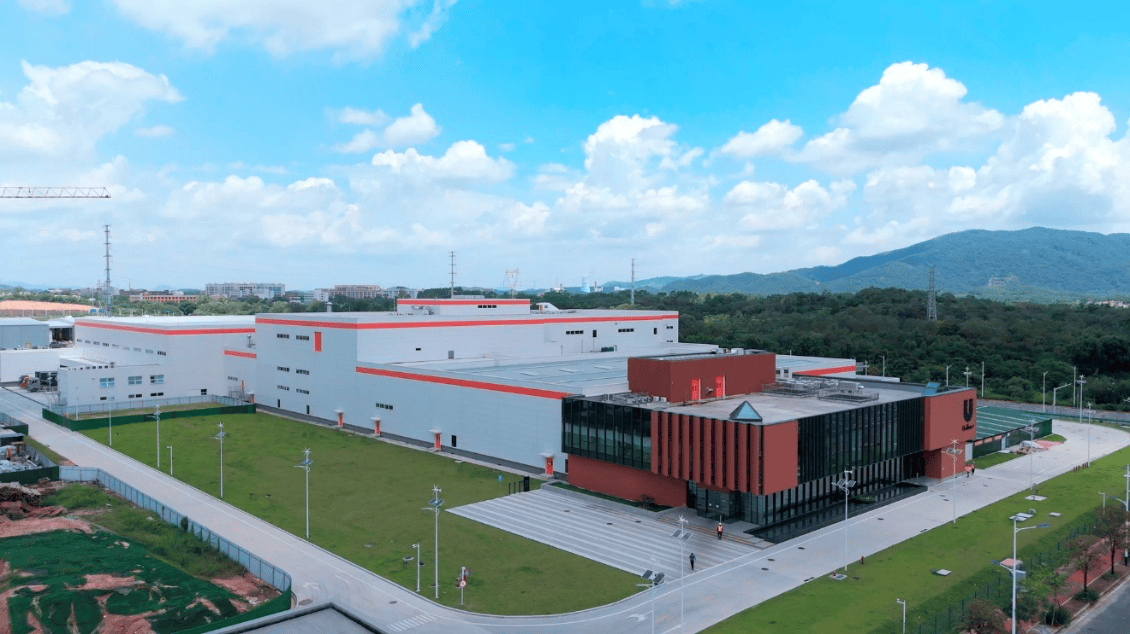
目标“灯塔工厂”,这家全球消费品巨头要缩短广州制造到全球餐桌的链路 | 碳路新工厂
Sou Hu Cai Jing· 2025-08-16 16:16
Core Insights - Unilever China has officially launched its first food factory and logistics park in Guangzhou, marking a significant milestone in the company's efforts to promote smart manufacturing and supply chain collaboration in China [1][3] Group 1: Factory and Logistics Park Overview - The Guangzhou food factory is Unilever's first comprehensive food production base in China, expected to be a key growth engine for the company's food business in the region [1] - The factory aims to enhance Unilever's operational capabilities in Southern China and improve its supply chain layout in the market [1] Group 2: Automation and Smart Management - The factory is designed as a "lighthouse factory," featuring a series of automated and intelligent layouts that improve overall operational efficiency and market responsiveness [3] - It includes a highly integrated smart management system covering demand tracking, production execution, warehouse management, quality control, and operational optimization, ensuring dynamic visibility and flexibility in manufacturing processes [3] Group 3: Supply Chain Ecosystem - The factory is expected to accelerate the local aggregation of upstream and downstream enterprises, forming a local supply chain ecosystem centered around the factory [5] - Collaboration with suppliers, distributors, and service providers has optimized the end-to-end process from raw materials to delivery, creating a high-efficiency and mutually beneficial business network [5] Group 4: Logistics Capabilities - The newly launched logistics warehouse supports a one-stop service for "direct delivery from the production site to customers," incorporating advanced automation technologies [5] - The storage density of the new logistics warehouse has increased by approximately 70%, and its dispatch capacity has improved by 60%, significantly enhancing fulfillment efficiency while ensuring product freshness [5] Group 5: National and Global Logistics Network - The logistics warehouse not only serves the South China region but also integrates national transportation and storage networks, playing a crucial role in cross-regional allocation for Unilever's food business [7] - Unilever has established a comprehensive logistics system centered in Guangzhou, facilitating connections to national and overseas markets, thereby improving service to customers and consumers [7]

日本年轻人最爱逛的宝藏街区,不欢迎品牌连锁店
创业家· 2025-08-16 10:10
Core Viewpoint - The article discusses the concept of "involution" in consumer markets, highlighting how businesses often replicate each other, leading to a lack of uniqueness and consumer engagement [4][21]. Group 1: Examples of Involution - Many famous shopping streets in China look almost identical, offering the same local snacks and souvenirs, which detracts from the authentic local experience [2]. - Renowned shopping centers in China feature similar luxury brands and products, making shopping a monotonous experience [3][4]. Group 2: Causes of Involution - Involution occurs because businesses engage in the same practices, leading to a homogenized market [5][15]. - The article references the insights of Japanese social psychologist Minoru Miura, who emphasizes the importance of uniqueness in consumer offerings [5][15]. Group 3: Case Study of Shimokitazawa - Shimokitazawa, a vibrant Tokyo community, initially saw a decline in popularity due to the influx of chain stores that diluted its unique character [9][10]. - To combat this, the community began to reject chain stores and welcomed unique local shops, which helped restore its vibrancy [11][12][14]. Group 4: Lessons from Japan - The article suggests that instead of competing to be the best in a saturated market, businesses should focus on being unique and distinctive [15]. - The flagship store of Tommy in Tokyo exemplifies this approach by offering exclusive products that cannot be found in other locations, highlighting the value of uniqueness [16][17]. Group 5: Future Opportunities - The article outlines a learning trip to Japan aimed at understanding how Japanese brands thrive despite economic challenges, providing insights for Chinese businesses [19][21]. - It emphasizes the need for Chinese brands to adapt to changing consumer behaviors and market dynamics, learning from Japan's experience [21][22]. Group 6: Key Strategies for Success - The article identifies three core strategies for successful Japanese brands: supply chain-driven private label products, continuous iteration of key products, and creating lifestyle definitions that resonate emotionally with consumers [22][24]. - Examples include Kobe Bussan's efficient supply chain model and Nitori's innovative furniture supply chain management [22][26].

兼评7月经济数据和个人消费贷贴息:内需放缓,个人消费贷贴息或提振社零0.2个百分点
KAIYUAN SECURITIES· 2025-08-16 07:49
Consumption - The contribution of trade-in programs to retail sales has weakened, with July retail sales growth declining by 1.1 percentage points to 3.7% year-on-year[3] - The personal consumption loan interest subsidy is expected to boost retail sales by approximately 0.2 percentage points, with a historical context showing a 1% subsidy could lead to a greater impact than previous years[4] - The consumer loan consumption rate has remained low, averaging around 2.5% since 2024, indicating a shift towards cash purchases rather than credit expansion[3] Production - Industrial production growth in July was 5.7%, down 1.1 percentage points from the previous value, with a month-on-month increase of only 0.38%[5] - Service sector production also saw a slight decline of 0.2 percentage points to 5.8% year-on-year, with mixed performance across various industries[5] Fixed Investment - Real estate investment has further declined, with July showing a year-on-year drop of 12.0%, and new housing sales showing signs of weakness[6] - Manufacturing investment has decreased by 1.3 percentage points to 6.2%, with significant declines in sectors such as non-ferrous metallurgy and chemical products[6] - Infrastructure investment turned negative for the first time since 2021, with broad infrastructure showing a decline of 1.9% year-on-year in July[6] Economic Outlook - The data from July indicates a further weakening of domestic demand, suggesting increased downward pressure on economic growth in Q4, which may prompt policy adjustments[7] - Risks include potential underperformance of policy measures and unexpected downturns in the U.S. economy[7]
四川肚香肆益食品有限公司成立 注册资本10万人民币
Sou Hu Cai Jing· 2025-08-16 07:20
Core Insights - Sichuan Duxiangsi Yi Food Co., Ltd. has been established with a registered capital of 100,000 RMB and is represented by Su Hang [1] - The company is engaged in various food-related activities, including wholesale and retail of edible agricultural products, internet sales, and packaging services [1] Company Overview - The company operates under the legal framework that requires approval for certain projects before commencing operations [1] - The general business scope includes wholesale and retail of fresh fruits, food sales (only pre-packaged), and daily necessities [1] Business Activities - The company is involved in the wholesale and retail of edible agricultural products, internet sales (excluding licensed goods), and fresh fruit sales [1] - Additional activities include the sale and acquisition of aquatic products, as well as agricultural product sales [1]
成都蔡小果食品有限公司成立 注册资本50万人民币
Sou Hu Cai Jing· 2025-08-16 07:20
天眼查App显示,近日,成都蔡小果食品有限公司成立,法定代表人为段明胜,注册资本50万人民币, 经营范围为一般项目:食品销售(仅销售预包装食品);食品互联网销售(仅销售预包装食品);农副 产品销售;食用农产品零售;食用农产品批发;食品添加剂销售;新鲜蔬菜批发;新鲜蔬菜零售;水产 品零售;水产品批发;互联网销售(除销售需要许可的商品);餐饮管理;品牌管理;企业管理;供应 链管理服务;社会经济咨询服务;信息咨询服务(不含许可类信息咨询服务);信息技术咨询服务;咨 询策划服务;市场营销策划;项目策划与公关服务;个人商务服务;销售代理;会议及展览服务;组织 文化艺术交流活动;技术服务、技术开发、技术咨询、技术交流、技术转让、技术推广。(除依法须经 批准的项目外,凭营业执照依法自主开展经营活动)许可项目:食品销售。(依法须经批准的项目,经 相关部门批准后方可开展经营活动,具体经营项目以相关部门批准文件或许可证件为准)。 ...
四川两碗食品有限公司成立 注册资本50万人民币
Sou Hu Cai Jing· 2025-08-16 07:20
Core Viewpoint - Sichuan Liangwan Food Co., Ltd. has been established with a registered capital of 500,000 RMB, focusing on food sales and related activities [1] Company Summary - The legal representative of Sichuan Liangwan Food Co., Ltd. is Tan Yunfang [1] - The company is authorized to engage in food sales, specifically pre-packaged food, and also involves the wholesale and retail of fresh meat [1] - The company will operate under the necessary approvals and permits as required by relevant authorities [1]
俩小熊(山东)食品有限公司成立 注册资本300万人民币
Sou Hu Cai Jing· 2025-08-16 03:21
天眼查App显示,近日,俩小熊(山东)食品有限公司成立,法定代表人为王纪科,注册资本300万人 民币,经营范围为许可项目:食品销售;食品互联网销售。(依法须经批准的项目,经相关部门批准后 方可开展经营活动,具体经营项目以相关部门批准文件或许可证件为准)一般项目:食品销售(仅销售 预包装食品);食品互联网销售(仅销售预包装食品);食品进出口;宠物食品及用品批发;食品、 酒、饮料及茶生产专用设备制造;餐饮管理;工艺美术品及收藏品批发(象牙及其制品除外);工艺美 术品及收藏品零售(象牙及其制品除外);工艺美术品及礼仪用品销售(象牙及其制品除外);日用百 货销售;日用品批发;日用品销售;服装服饰批发;服装服饰零售;互联网销售(除销售需要许可的商 品);服装辅料销售;服装辅料制造;服饰制造;茶具销售;家居用品销售;货物进出口;运输货物打 包服务;技术服务、技术开发、技术咨询、技术交流、技术转让、技术推广;数字技术服务;信息咨询 服务(不含许可类信息咨询服务);科技中介服务;咨询策划服务;玩具制造;玩具销售;进出口代 理;标准化服务。(除依法须经批准的项目外,凭营业执照依法自主开展经营活动)。 ...