科技

Search documents
Doo Financial|债市波动与融资压力:美港股企业盈利前景观察
Sou Hu Cai Jing· 2025-09-25 15:48
Core Viewpoint - Recent volatility in the global bond market has significantly impacted corporate financing costs and profitability outlooks in the US and Hong Kong stock markets, leading to a heightened focus on how companies balance growth with financial stability [1][3][5] Group 1: Impact on US Stock Market - The high interest rate environment poses particular challenges for growth-oriented and highly leveraged companies, as rising financing costs compress profit margins, especially for tech and startup firms reliant on capital market funding [3] - Companies with strong cash flow and low debt ratios, particularly industry leaders, demonstrate greater resilience against interest rate fluctuations, highlighting a divergence in investor focus on financial stability and sustainable long-term profitability [3] Group 2: Impact on Hong Kong Stock Market - The Hong Kong stock market faces a dual situation: while overall valuation levels are low and some companies remain attractive for financing, the market's sensitivity to international capital and US dollar interest rates amplifies pressures on companies through financing channels [3] - High-leverage real estate and certain traditional industries are more adversely affected by bond market volatility, whereas new economy and consumer sectors with policy support and cash flow advantages may strengthen their competitive positions amid these challenges [3] Group 3: Long-term Trends and Strategies - As global bond market volatility and interest rate uncertainty increase, corporate profitability will increasingly depend on internal cash flow and continuous innovation [3] - Key strategies for companies to mitigate bond market risks and stabilize profits include optimizing capital structures, enhancing operational efficiency, and leveraging supportive policy environments [3][5] - Companies with robust financials and core competitive advantages are more likely to navigate economic cycles successfully and achieve valuation premiums in the long run [5]


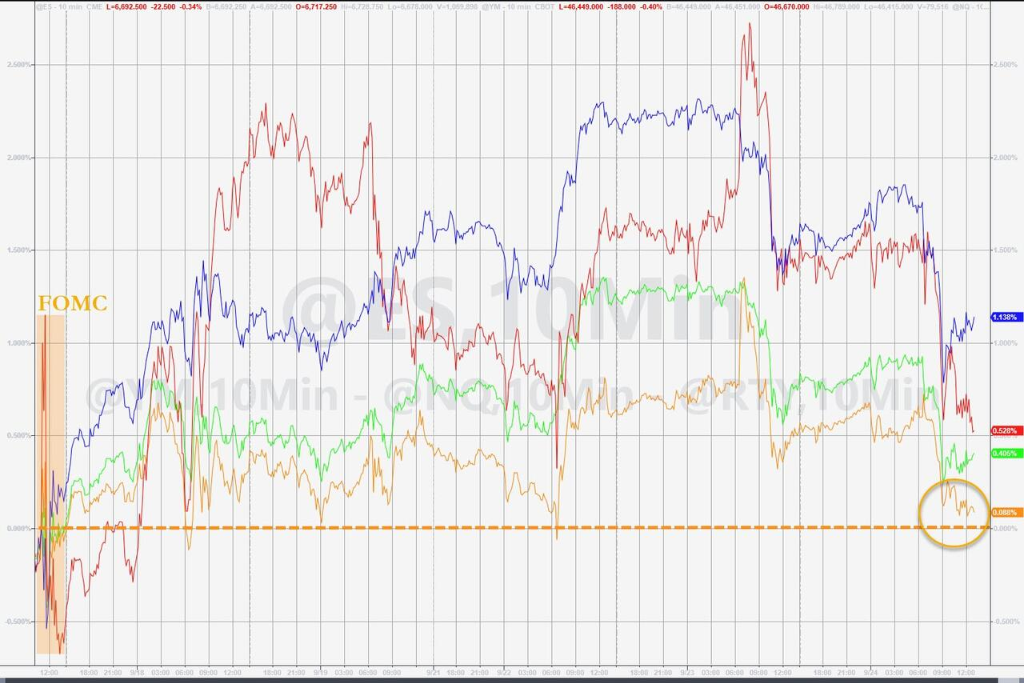
美股异动 | 纳指跌超1% 明星科技股普跌 甲骨文(ORCL.US)跌超6%
智通财经网· 2025-09-25 14:04
此外,周二,美联储主席鲍威尔表示,美国经济正面临"滞胀式"挑战,经济增长和就业市场出现明显疲 软,而通胀仍处于高位。这种"上下两难"的局面使货币政策制定者面临艰难抉择。在谈及金融市场时, 鲍威尔表示,美联储会关注整体金融状况,并指出"从多项衡量指标来看,美国股市估值相对偏高"。 智通财经APP获悉,周四,美股盘初走低,纳指跌超1%,明星科技股普跌,甲骨文(ORCL.US)跌超 6%,美光(MU.US)、特斯拉(TSLA.US)、台积电(TSM.US)、博通(AVGO.US)跌超3%,英伟达 (NVDA.US)跌超1%。消息面上,随着美国国会民主党与共和党就联邦政府后续资金拨付方案陷入僵 局,美国政府部门下周开始部分停摆的风险正持续上升。如果政府停摆,这可能通过限制金融监管机构 的运作、推迟关键经济数据的发布等方式对市场产生影响。野村证券分析师在本周报告中指出,若停摆 持续时间较长,可能导致投资者评估宏观经济趋势所需的关键数据延迟发布甚至取消,例如月度就业报 告与通胀数据。 ...


港股25日跌0.13% 收报26484.68点
Xin Hua Wang· 2025-09-25 09:57
Market Overview - The Hang Seng Index fell by 33.97 points, a decrease of 0.13%, closing at 26,484.68 points with a total turnover of 314.89 billion HKD [1] - The National Enterprises Index increased by 1.23 points, closing at 9,444.22 points, a rise of 0.01% [1] - The Hang Seng Tech Index rose by 56.04 points, closing at 6,379.19 points, an increase of 0.89% [1] Blue-Chip Stocks - Tencent Holdings rose by 0.23%, closing at 650 HKD [1] - Hong Kong Exchanges and Clearing fell by 0.59%, closing at 435.6 HKD [1] - China Mobile decreased by 0.7%, closing at 85.1 HKD [1] - HSBC Holdings dropped by 0.37%, closing at 107.1 HKD [1] Local Hong Kong Stocks - Cheung Kong Holdings fell by 1.25%, closing at 36.22 HKD [1] - Sun Hung Kai Properties decreased by 1.57%, closing at 91.05 HKD [1] - Henderson Land Development dropped by 1.46%, closing at 27.04 HKD [1] Chinese Financial Stocks - Bank of China fell by 2.34%, closing at 4.17 HKD [1] - China Construction Bank decreased by 2.28%, closing at 7.3 HKD [1] - Industrial and Commercial Bank of China dropped by 2.41%, closing at 5.67 HKD [1] - Ping An Insurance fell by 0.29%, closing at 52.25 HKD [1] - China Life Insurance decreased by 1.39%, closing at 21.26 HKD [1] Oil and Petrochemical Stocks - China Petroleum & Chemical Corporation fell by 0.49%, closing at 4.05 HKD [1] - China National Petroleum Corporation rose by 0.14%, closing at 7.08 HKD [1] - CNOOC Limited decreased by 0.37%, closing at 19 HKD [1]
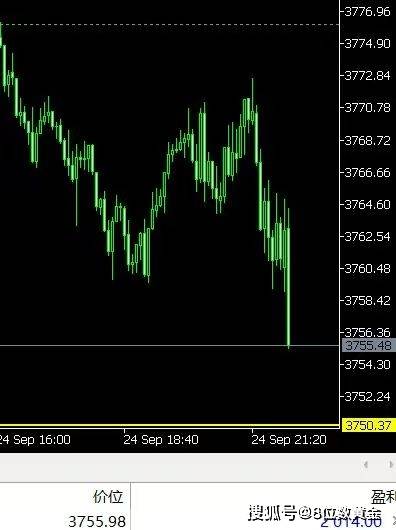
9.25黄金重挫跳跌60美金 空看3700
Sou Hu Cai Jing· 2025-09-25 07:26
Market Overview - Gold experienced a significant drop of over $60, entering a major correction phase after failing to sustain a rebound [1][12] - The market is currently facing resistance around the $3750 level, with potential support at $3716 and $3684 [7][8][12] Economic Factors - Divergence in Federal Reserve interest rate expectations has intensified, with a strong dollar contributing to gold's decline [13] - Recent adjustments in U.S. tariffs, particularly a reduction to 15% on European car imports, are seen as beneficial for the global supply chain, impacting gold prices negatively [13][14] Labor Market Data - Upcoming labor market data, including unemployment claims and GDP revisions, are expected to influence Federal Reserve policy and, consequently, gold prices [15] - The labor market's volatility could lead to significant market reactions, affecting both equity and bond markets [15] Investment Strategy - The current gold market is viewed as an opportunity for rebound trades, with a focus on entry points around $3716 and $3684 for long positions, while short positions may be considered near $3750 and $3790 [12] - Emphasis on the importance of risk management and accurate entry/exit strategies for successful trading in the gold market [15]
20cm速递|创业板50ETF国泰(159375)盘中上涨2.2%,市场关注流动性改善与政策支撑
Mei Ri Jing Ji Xin Wen· 2025-09-25 05:46
Core Insights - The ChiNext 50 ETF (159375) experienced a 2.2% increase on September 25, indicating strong performance in the ChiNext 50 Index [1] - Recent fund flows have shifted from net redemptions to net subscriptions for ChiNext-related ETFs, reflecting increased investor appetite for high-growth sectors [1] - The expectation of improved liquidity following the Federal Reserve's interest rate cuts supports the ChiNext and other high-elasticity sectors, historically leading to significant gains for the ChiNext Index post-preemptive rate cuts [1] Fund and Index Details - The ChiNext 50 ETF tracks the ChiNext 50 Index (399673), which has a price fluctuation limit of 20% and selects 50 stocks with large market capitalization and excellent liquidity from the ChiNext board [1] - The index covers high-growth sectors such as information technology, new energy, and biomedicine, emphasizing a dual focus on "technology + growth" [1] - The index employs a dynamic adjustment mechanism to continuously optimize its constituent stock structure, reflecting the overall market performance of core quality enterprises on the ChiNext board [1] Investment Options - Investors without stock accounts can consider the Guotai ChiNext 50 ETF Initiation Link C (023372) and Link A (023371) as alternative investment options [1]

港股开盘 | 恒指高开0.07% 奇瑞汽车(09973)上市首日高开超11%
智通财经网· 2025-09-25 01:37
Group 1 - The Hang Seng Index opened up 0.07%, while the Hang Seng Tech Index fell by 0.13%. Chery Automobile saw a first-day increase of over 11%, Zijin Mining rose nearly 4%, and JD Group increased by nearly 2% [1] - Huatai Securities reported that the recent rebound in Hong Kong tech stocks is driven by accelerated domestic AI developments, with the Hang Seng Tech Index and Hang Seng Hong Kong Stock Connect Tech Index rising nearly 20% since July [1] - CITIC Securities indicated that Hong Kong stocks are expected to see a bottoming out of earnings in the first half of 2025, with revenue and profit growth rates recorded at 1.9% and 4.6% respectively as of September 15 [1] Group 2 - CITIC Securities forecasts a turning point in earnings growth for Hong Kong stocks in the second half of 2025, with high growth expected in materials, healthcare, and technology sectors, while sectors like energy and consumer staples may see a turnaround [2] - CITIC Jiantou noted that the anticipated interest rate cuts by the Federal Reserve will directly benefit Hong Kong stocks, with ample liquidity and continued inflow of southbound funds [2] Group 3 - Guotai Junan's report emphasized that dividend assets are characterized by stable performance and sustainable cash flows, providing investors with stable high dividend returns, with Hong Kong stocks offering better value compared to A-shares [3] - The average cash dividend ratio for all Hong Kong stocks from 2017 to 2024 is 44%, higher than A-shares at 36%, and the dividend yield for the Hang Seng Composite Index is 2.9%, compared to 1.9% for the Wind All A Index [3] - Hong Kong's high dividend assets have a lower valuation level, with the Hang Seng High Dividend Yield Index PE and PB at 7.2 times and 0.6 times respectively, lower than the CSI Dividend Total Return Index at 7.9 times and 0.8 times [3]


汇丰(HSBC.US)量子计算试点金融应用告捷 债券交易预测准确性大幅提升34%
Zhi Tong Cai Jing· 2025-09-25 00:49
Core Insights - HSBC has successfully conducted a pilot project on "quantum computing-assisted bond trading," marking a significant advancement in the application of emerging technology within the financial sector [1][2] - The pilot, in collaboration with IBM, demonstrated a 34% improvement in the accuracy of predicting whether bond trades would execute at quoted prices compared to traditional computing methods [1] - Quantum computing leverages quantum physics to solve complex problems that traditional computers struggle with, offering significantly faster processing speeds [1] Industry Potential - According to McKinsey, the quantum technology market is projected to reach $100 billion within the next decade, primarily driven by quantum computing, which had a revenue of only $4 billion last year, indicating substantial growth potential [1] - The pilot project utilized a hybrid model combining quantum and traditional computing, focusing on pricing in the European corporate bond market [2] - HSBC's quantum technology lead, Philip Intallura, emphasized that current quantum computers can effectively address real-world business challenges, providing a viable example for technology implementation [2]

美股“涨不动”了?
Hua Er Jie Jian Wen· 2025-09-25 00:36
Core Viewpoint - The U.S. stock market is showing signs of fatigue after a rapid rise, with investors weighing high valuations against potential macro risks [1][2] Valuation Concerns - 19 out of 20 indicators suggest that the U.S. stock market is trading at expensive levels, with the S&P 500's 12-month forward P/E ratio reaching a high of 22.9, only surpassed during the dot-com bubble and the summer 2020 pandemic rebound [2][7] - There is a debate on whether the current high valuations are justified, with some analysts suggesting that increased visibility and predictability of corporate earnings may warrant a premium on current valuations, potentially viewing them as a "new normal" [8] Market Sentiment and Potential Risks - Wall Street strategists believe the market may enter a consolidation phase in the short term, with some indicating that the strong upward trend has not ended but is facing tightening risk-reward conditions [4][3] - Concerns about a potential "bubble" are growing, especially in tech stocks, as the S&P 500 has rebounded nearly 35% since April [4][12] Macro Economic Risks - Macro risks such as persistent inflation and a slowdown in the labor market could pose challenges for the market's progress [12] - Historical data suggests that despite current concerns, there are reasons for optimism, as past bull markets have shown resilience [14] Investor Behavior - Some investors are advised to hedge their portfolios as more participants chase this year's gains, which could increase downside risks [4][6] - Sentiment indicators show that the current market rise is based on cautious optimism rather than excessive speculation, providing a constructive outlook for the stock market [14]
当积极回报投资者蔚然成风
Jing Ji Ri Bao· 2025-09-24 22:49
Core Insights - The awareness of listed companies in China to return value to investors has significantly increased during the "14th Five-Year Plan" period, with a total of 10.6 trillion yuan distributed through dividends and buybacks, representing an over 80% increase compared to the "13th Five-Year Plan" period [1] - The total amount returned to investors is 2.07 times the amount raised through IPOs and refinancing during the same period, indicating a strong alignment between capital market investment and financing [1] Group 1 - The substantial return of 10.6 trillion yuan reflects the improvement in the quality of listed companies and their enhanced awareness of shareholder returns [1] - Regulatory bodies have strengthened the emphasis on investor returns, making it a mandatory focus for companies rather than optional, leading to a market environment where companies actively engage in quality improvement and return actions [1][2] - The A-share market has seen a shift from a focus on financing to a balanced approach that emphasizes both financing and returns, with the scale of dividends and buybacks surpassing financing amounts [2] Group 2 - The operating quality of listed companies has improved, as evidenced by stable profitability and abundant cash flow, with A-share companies achieving revenue of 35.01 trillion yuan and net profit of 3 trillion yuan in the first half of the year, reflecting year-on-year growth [2] - The market's investment logic is changing, with investors increasingly focusing on long-term value rather than short-term speculation, leading to a more predictable and measurable return environment [3] - A virtuous cycle is expected to form, characterized by increased returns, inflow of funds, improved company performance, and market stability, contributing to a favorable investment climate [3]
[9月24日]指数估值数据(大盘继续上涨;5.9星一周年,市场还会继续向上吗;自动止盈功能上线)
银行螺丝钉· 2025-09-24 13:38
Core Viewpoint - The article discusses the significant recovery of A-shares and Hong Kong stocks over the past year, highlighting the shift from extreme undervaluation to a more balanced valuation, driven primarily by improved liquidity and some signs of fundamental recovery. Group 1: Market Performance - A-shares and Hong Kong stocks have shown strong performance recently, with overall increases noted [1][6] - Small-cap stocks have outperformed larger stocks in the recent rally [3] - The technology sector, particularly in Hong Kong, has seen substantial gains, with tech stocks rising over 2% [7] Group 2: Yearly Comparison - A year ago, both A-shares and Hong Kong stocks were at a historical low valuation of approximately 5.9 stars [8][14] - Over the past year, A-shares and Hong Kong stocks have risen significantly, with the Hang Seng Index increasing by 43% and tech stocks up by 66% [11] - The global stock market has seen an overall increase of 17% during the same period [10] Group 3: Valuation Insights - The current valuation of A-shares is around 4.2 stars, indicating a recovery from the previous year's extreme undervaluation [9][21] - A-shares are still trading at a valuation approximately 50% lower than the global market average [16] - The article notes that the valuation gap has narrowed to about 10% compared to global averages, suggesting less room for further valuation expansion [31] Group 4: Market Drivers - The recent market rally has been primarily driven by improved liquidity rather than strong fundamental growth [21] - A-shares have shown signs of profit recovery, with earnings growth for listed companies improving, albeit still below historical averages [27][28] - The article emphasizes that sustained market growth will depend on continued earnings growth rather than just valuation recovery [37] Group 5: Future Outlook - The potential for further market gains exists if earnings continue to grow alongside reasonable valuations [41] - The article suggests that if the Federal Reserve maintains a low-interest-rate environment, it could provide additional support for market growth [41] - The focus on active selection and enhanced index strategies is highlighted as a way to navigate the post-undervaluation phase [43]