集成电路

Search documents
市值36亿!理工大学,获无偿捐赠
Xin Lang Cai Jing· 2025-12-05 07:08
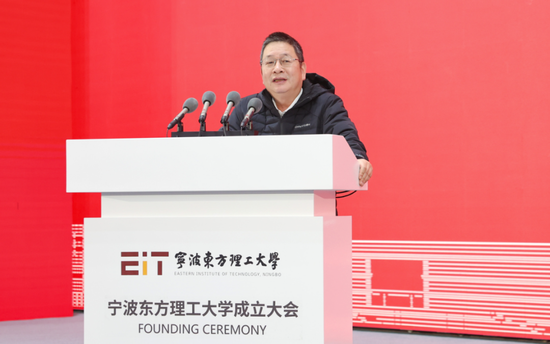
Core Viewpoint - The major semiconductor company, Huowei Integrated Circuit (Group) Co., Ltd., announced a donation of 30 million shares to the Ningbo Dongfang University Education Foundation, valued at approximately 3.6324 billion yuan based on the closing price on December 2 [1][5]. Group 1 - The controlling shareholder, Yu Renrong, has a history of donating shares to the Ningbo Dongfang University Education Foundation, including a donation of 10 million shares in December 2023 and 15 million shares in March 2024 [3][7]. - On October 11, 2024, Huowei Group announced another donation of 25 million shares, valued at 2.8 billion yuan at that time [3][7]. - Yu Renrong initiated a fundraising plan for the establishment of the university in 2020, leading to the official establishment of Ningbo Dongfang University in November 2023 [3][7]. Group 2 - During the university's inauguration ceremony, Yu Renrong expressed his dream of establishing a university for his hometown, emphasizing the importance of respecting educational principles and ensuring sufficient funding for the institution [4][8]. - He highlighted the need for collaboration with visionary entrepreneurs to secure top-notch research conditions and adequate operational funding for the university [4][8].

下一个五年,湘鄂赣“中三省”准备怎么干?
Di Yi Cai Jing· 2025-12-05 06:12
Group 1: Core Perspectives - The central theme of the news is the strategic focus of the "Central Three Provinces" (Hunan, Hubei, Jiangxi) on expanding domestic demand, building a technological innovation hub, and serving as a model for regional coordinated development during the 14th Five-Year Plan period [1] Group 2: Economic Development Strategies - Hubei aims to accelerate consumption expansion by innovating consumption models and increasing the supply of quality goods, with a target of driving over 176 billion yuan in consumption through initiatives like trade-in programs [2] - Hunan emphasizes the integration of consumer welfare and investment, aiming to enhance the consumer market and support the development of regional consumption centers [3] - Jiangxi plans to actively create new demand and supply by leveraging its ecological and cultural resources to develop immersive consumption experiences [3] Group 3: Technological Innovation - All three provinces recognize technology as the primary productive force, with Hubei aiming to increase the number of high-tech enterprises to 35,000 and technology transaction volume to over 600 billion yuan by 2025 [4] - Hunan is focused on establishing itself as a competitive technological innovation hub, encouraging investment in fundamental research and breakthroughs in key technologies [5] - Jiangxi aims to build a nationally influential industrial technology innovation center, concentrating research efforts on areas like rare earth materials and modern agriculture [6] Group 4: Regional Coordination and Development - The news highlights the importance of the Yangtze River Middle Urban Agglomeration, with Hubei supporting the development of regional centers like Wuhan and Xiangyang to enhance economic collaboration [7] - Hunan plans to optimize its economic layout and promote coordinated regional development through new urbanization strategies [8] - Jiangxi is set to improve its regional coordination mechanisms to facilitate efficient resource flow and high-quality county-level economic development [8]
制度创新破局,产业能级跃升!浦东引领区五年交出亮眼成绩单
Guo Ji Jin Rong Bao· 2025-12-05 05:33
Core Insights - Shanghai Pudong has made significant progress in institutional innovation, platform construction, and service upgrades over the past five years, establishing a robust trade network that connects the world [1] Economic Growth - Pudong's GDP reached 1.78 trillion yuan in 2024, a 34% increase from 2020 [2] - In the first three quarters of 2025, GDP grew by 6% year-on-year, with per capita GDP at $43,000 [2] - Labor productivity reached 606,000 yuan per person, and per capita income for urban and rural residents was 95,000 yuan [2] Technological Innovation - Pudong has focused on "technology innovation" as a driving force, with a significant increase in fiscal spending on technology from 3.9% to 9.2% of the general public budget [2] - R&D investment has grown at an annual rate of 11.2%, with a cluster of large scientific facilities being established [2] - Key technological breakthroughs include advancements in integrated circuits and innovative pharmaceuticals, with nearly 2,000 research pipelines and over 800 new drugs under development [3] Industry Development - The integrated circuit industry is projected to reach 294.7 billion yuan in 2024, accounting for 75% of the city's total and 20% of the national total [3] - The biopharmaceutical sector is expected to reach 409.9 billion yuan, representing 40% of the city's total, with a focus on innovative drugs and medical devices [3] - The artificial intelligence industry is anticipated to grow to 163.7 billion yuan, making up 40% of the city's total, with over 200 companies in related fields [4] Investment and Financing - Pudong has established a 20 billion yuan industry development fund to address financing challenges for tech companies, leveraging a total of 600 billion yuan in state-owned capital [4] - Over the past five years, 7,329 innovative companies have been incubated, with 52 companies listed on the Sci-Tech Innovation Board, representing 9% of the national total [5] Regulatory Reforms - Systematic reforms have been implemented to enhance the business environment, including the "one industry, one license" reform to streamline licensing processes [7] - The introduction of a "policy service platform" has improved access to 278 policies for businesses, utilizing AI to match policies with enterprises [8] Foreign Investment and Trade - Pudong has attracted over 9,400 new foreign enterprises during the 14th Five-Year Plan, with actual foreign investment reaching $45.3 billion [9] - The region has optimized trade and customs management, with a 13.2% increase in trade with Belt and Road countries [9] Urban Development and Quality of Life - Pudong has focused on improving living standards, with a reduction in the urban-rural income ratio to 1.95 and the construction of 129,000 affordable rental housing units [13] - Environmental improvements include a reduction in PM2.5 levels to 23.4 micrograms per cubic meter and a 43.2% recycling rate for household waste [13]
20cm速递|科创综指ETF国泰(589630)飘红,科创行业有望继续打开估值上限
Mei Ri Jing Ji Xin Wen· 2025-12-05 04:10
每日经济新闻 (责任编辑:董萍萍 ) 【免责声明】本文仅代表作者本人观点,与和讯网无关。和讯网站对文中陈述、观点判断保持中立,不对所包含内容 的准确性、可靠性或完整性提供任何明示或暗示的保证。请读者仅作参考,并请自行承担全部责任。邮箱: news_center@staff.hexun.com 华创证券指出,科创行业在康波周期下的科技竞赛有望继续打开估值上限,政策聚焦卡脖子与未来 产业制高点,重视端侧稳健增长、应用侧ToB商业化落地。从PEG/资本开支视角看,半导体、光学元 件、PCB、集成电路等细分领域具备配置价值。科技板块短期需关注业绩兑现消化静态高估值,中期则 需观察AI能否成为新一轮康波周期的核心驱动。此外,电子、通信设备等高出海占比且高景气的领域 也值得重视,全球视角下中国制造业的产能出海将提升全球竞争力。 科创综指ETF国泰(589630)跟踪的是科创综指(000680),单日涨跌幅达20%,该指数覆盖科创 板几乎所有符合条件的上市公司,市值覆盖率接近100%。科创综指聚焦于半导体、生物医药、高端制 造等"硬科技"产业,行业分布均衡,能够全面反映科创板上市公司的整体表现与成长潜力。 注:如提及个股仅 ...
马上评|冲刺“十四五”收官战,上海继续挑大梁
Sou Hu Cai Jing· 2025-12-05 03:30
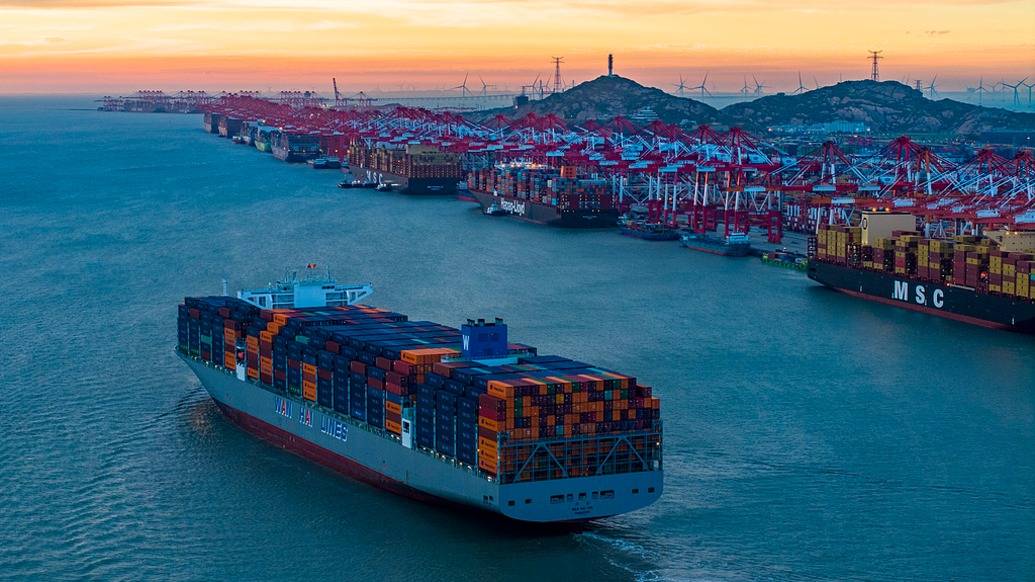
Core Insights - Shanghai's port throughput has surpassed 50 million TEUs ahead of schedule, indicating strong economic recovery and growth momentum as the city approaches the end of the 14th Five-Year Plan [2] - The city's GDP growth rate for the first three quarters reached 5.5%, outpacing the national average, with significant contributions from strategic emerging industries [3] - Shanghai's retail sales and tourism have shown robust growth, with a notable increase in consumer spending and new business models emerging [4] Economic Performance - Shanghai's economy has shown resilience, with a steady recovery and better-than-expected performance in the first three quarters of the year [2] - The city achieved a record intent transaction amount of $83.49 billion at the recent China International Import Expo, reflecting a 4.4% increase from the previous year [2] - The total number of inbound and outbound passengers at Pudong International Airport exceeded 30 million, marking a 19.8% year-on-year increase [2] Industrial Development - The share of strategic emerging industries in Shanghai's total industrial output has risen to 44.1%, with manufacturing output in key sectors like AI and biomedicine growing by 8.5% [3] - Shanghai is actively exploring non-traditional markets for exports, with significant growth in exports to India (44.2%), Hong Kong (43.5%), and ASEAN (27.6%) [3] Consumer Trends - The total retail sales of consumer goods in Shanghai reached 1.2303 trillion yuan, with a year-on-year growth of 4.3% [4] - Major events and exhibitions have driven consumer engagement, with over 2.55 million tourists during the National Day and Mid-Autumn Festival holidays, reflecting a nearly 20% increase [4] Future Outlook - Shanghai aims to solidify its position as a world-class modern socialist city, focusing on technological innovation and industrial upgrades as it transitions into the 15th Five-Year Plan [5] - The city is committed to playing a leading role in China's modernization efforts, with ongoing projects in the Lingang New Area and the Yangtze River Delta integration [5]
多地绘就资本市场发展路线图
Jing Ji Wang· 2025-12-05 03:02
Group 1: Capital Market Development Initiatives - Local governments are increasingly focusing on guiding capital towards technology innovation and emerging industries, reflecting a strategic approach to enhance the role of capital markets in supporting the real economy [1][2][3] - Various regions, including Shaanxi, Guangdong, and Zhejiang, have introduced measures to support the listing and financing of technology-driven enterprises, aiming to create a favorable environment for hard technology companies [2][3] Group 2: Support for Hard Technology Enterprises - Shaanxi's recent measures include 16 initiatives aimed at nurturing potential listing companies and optimizing the listing process for technology firms, emphasizing a mechanism that promotes a virtuous cycle among technology, industry, and finance [2] - The goal is to have over 80% of new listed companies come from the technology innovation sector, with a target of issuing technology innovation bonds exceeding 1 trillion yuan [3] Group 3: Mergers and Acquisitions (M&A) Encouragement - The M&A market has seen increased activity due to supportive policies from both central and local governments, which provide a solid institutional framework for development [4][5] - Local governments are promoting state-owned capital M&A funds, focusing on strategic emerging industries, to enhance resource integration and accelerate the commercialization of new technologies [5] Group 4: Strengthening Corporate Governance - There is a shift in corporate governance from mere compliance to effective substance, with local governments emphasizing the need for improved incentive mechanisms within listed companies [6] - Measures include enhancing cash dividend policies and the role of independent directors, which are expected to elevate the governance standards of listed companies and ensure better returns for shareholders [6]
摩尔线程杭州子公司增资,增幅达100%
Zheng Quan Shi Bao Wang· 2025-12-05 02:43
Group 1 - The core point of the article is that Moore Threads' wholly-owned subsidiary, Guangsu Mofang Intelligent Technology (Hangzhou) Co., Ltd., has increased its registered capital to 100 million yuan, marking a 100% increase [1] Group 2 - Guangsu Mofang Intelligent Technology (Hangzhou) Co., Ltd. was established in March 2025 and is represented by Wang Dong [1] - The business scope of the company includes integrated circuit design, integrated circuit chip design and services, information system integration services, and integrated circuit sales [1]
申万宏源杨成长:以培育耐心资本为核心的政府投行招商模式
申万宏源证券上海北京西路营业部· 2025-12-05 02:37
Core Viewpoint - The article emphasizes the importance of enhancing the evaluation mechanism for local funds and improving the tolerance for investment losses to better leverage government funds in supporting foundational research, common technology breakthroughs, and future industry development [1][3]. Group 1: Government Fund Utilization - Local governments are increasingly establishing industrial and guiding funds to attract emerging industries and quality enterprises through equity investment and project recruitment [3]. - The effective interaction between local equity investment and attracting investment is still limited, necessitating further exploration of the government investment banking model [3]. - Key factors for developing the government investment banking model include enhancing the risk investment role of government funds and introducing market-oriented professional management institutions to attract more market funds [3][4]. Group 2: Major Project and Industry Chain Development - Government funds should play a leading role in promoting major projects and industry chain development, focusing on core and weak links within the industry chain [4]. - Local governments need to identify key industries for support and prioritize funding for leading enterprises and critical projects, especially in areas where social capital is hesitant to invest [4][5]. Group 3: Traditional and Emerging Industry Coordination - There is a need for a comprehensive industrial development philosophy that promotes the transformation of traditional industries while also fostering emerging and future industries [5][6]. - Investments should not only target new and early-stage projects but also enhance traditional industries through technological upgrades and digital transformation [5][6]. Group 4: Hefei's Experience in Government Investment Banking - Hefei has adopted a government investment banking approach to attract strategic emerging industries, resulting in a cluster effect by linking capital with industry [7][8]. - The city has established a risk tolerance and accountability mechanism to encourage investment, allowing for a loss tolerance of 15% to 50% for different fund types [8]. - Hefei's "Creative Investment City" initiative aims to shift from government-led investment to attracting proactive capital, linking over 200 funds with a total scale of 400 billion yuan [9].


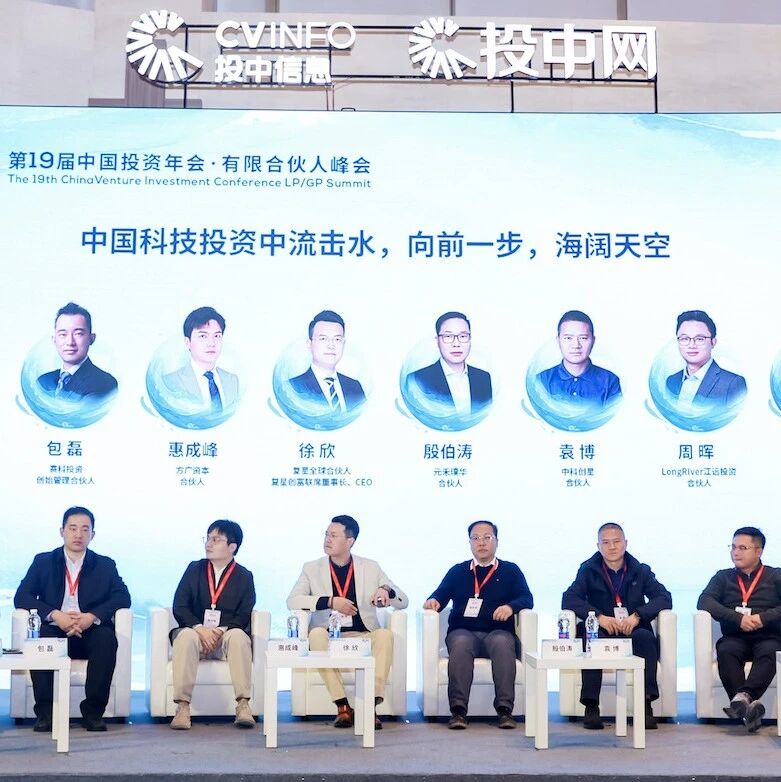
“中国企业的天花板应该是全世界的市场”
投中网· 2025-12-05 02:18
Core Viewpoint - The article discusses the current state of technology investment in China, highlighting both opportunities and challenges in the context of global competition and domestic innovation policies [2][3]. Group 1: Technology Investment Landscape - China's technology investment is at a critical juncture, with significant advancements in fields like artificial intelligence, quantum technology, and biomanufacturing, providing new momentum for economic growth [2]. - The government is optimizing the technology finance ecosystem through various policies, including the establishment of innovation funds and encouragement of early-stage investments [2][3]. - The investment community is exploring new paths for deep integration of technology and finance, creating a multi-layered and comprehensive investment landscape [2]. Group 2: Investment Strategies and Focus Areas - Investors are focusing on balancing technological foresight with commercialization efficiency, particularly in hard technology sectors like integrated circuits, renewable energy, and healthcare [3][4]. - High-potential investment areas include AI, quantum technology, and synthetic biology, with firms like Zhongke Chuangxing actively investing in these fields [4]. - The medical sector is also highlighted, with a focus on early-stage technologies and the importance of clinical validation for commercialization [5][6]. Group 3: AI and Its Impact - AI is identified as a major investment theme, with opportunities in AI models, infrastructure, and applications across various sectors [7][8]. - Companies are advised to integrate AI into their business models to remain competitive, as AI is expected to drive significant innovation [7][8]. Group 4: Renewable Energy Investment - The renewable energy sector is seeing substantial interest, particularly in battery technology, electric vehicle electrification, and smart energy solutions [17][18]. - Companies are focusing on next-generation battery materials and the electrification of commercial vehicles, anticipating a significant increase in electric vehicle adoption [17][18]. Group 5: Globalization and Market Expansion - The article emphasizes the importance of global market integration for Chinese companies, with a focus on leveraging local advantages to compete internationally [32][36]. - Investment strategies are evolving to support Chinese teams in global entrepreneurship, particularly in AI and biotech sectors [32][36]. - The need for companies to adapt to local regulations and market conditions when expanding internationally is highlighted as a critical factor for success [36].
摩尔线程中一签开盘赚26万!
Sou Hu Cai Jing· 2025-12-05 02:12
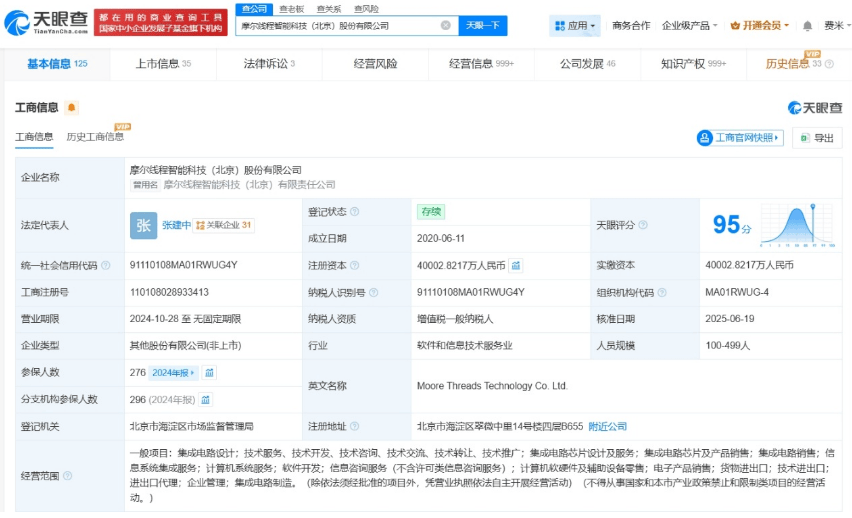
投资时间网、标点财经快讯 其发行价114.28元/股,为A股近一年来上市新股最高 摩尔线程(688795.SH)已于12月5日登陆科创板,发行价114.28元/股,为A股近一年来上市新股最高。本次公开发行7000 万股新股,发行后总股本为4.7亿股,其上市首日开盘报650.00元/股,涨幅468.78%,中一签可赚超26万元。 天眼查App显示,摩尔线程关联公司摩尔线程智能科技(北京)股份有限公司成立于2020年6月,法定代表人为张建中, 注册资本约4亿人民币,经营范围包括集成电路设计、集成电路芯片设计及服务、集成电路芯片及产品销售等,由南京神 傲管理咨询合伙企业(有限合伙)、张建中、杭州华傲管理咨询合伙企业(有限合伙)等共同持股。 对外投资信息显示,该公司对外投资10余家存续企业,包括北京数道智算科技有限公司、光速摩方智能科技(广东横 琴)有限责任公司、北京摩笔生成科技有限公司等。 投时关键词:摩尔线程(688795.SH) ...