
消费品

Search documents
稳定增长、促进消费、优化机制 借助关键词感知经济发展新“动”力
Yang Shi Wang· 2025-11-28 06:36
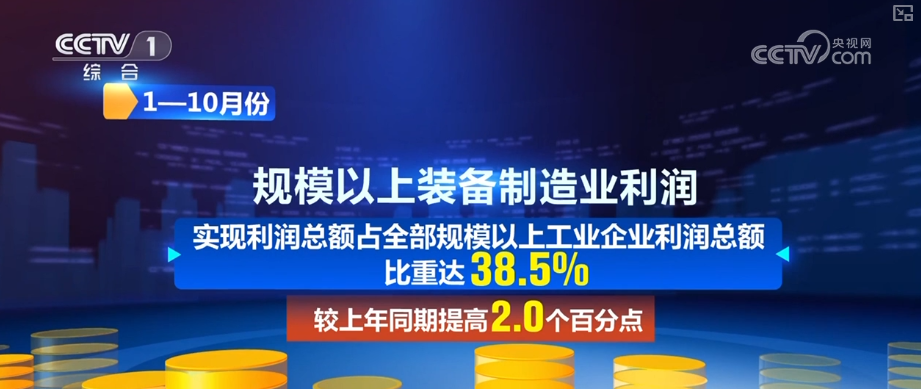
Group 1: Industrial Profit Growth - In the first ten months of the year, profits of large-scale industrial enterprises increased by 1.9% year-on-year, marking three consecutive months of growth since August 2025 [1] - Profits in the equipment manufacturing sector grew significantly, with a year-on-year increase of 7.8%, accounting for 38.5% of total profits in large-scale industrial enterprises, an increase of 2.0 percentage points from the previous year [3] - Seven out of eight major categories in the equipment manufacturing sector reported profit growth, particularly in railways, shipping, aerospace, and electronics, which saw double-digit profit increases [3] Group 2: High-tech Manufacturing Performance - Profits in the high-tech manufacturing sector rose by 8.0% year-on-year during the same period, with strong growth observed in smart electronics, unmanned aerial vehicles, smart vehicle equipment, semiconductor manufacturing, and precision instruments [5] Group 3: Consumption Promotion Policies - The Ministry of Industry and Information Technology, along with five other departments, introduced a plan to enhance the adaptability of supply and demand in consumer goods, aiming to boost consumption [6][10] - The plan outlines 19 key tasks across five areas, focusing on accelerating the application of new technologies and models, expanding the supply of unique and new products, and precisely matching the needs of different consumer segments [10] - By 2027, the goal is to establish three trillion-yuan consumption sectors and ten hundred-billion-yuan consumption hotspots, with a vision for a high-quality development pattern by 2030 [13][15] Group 4: Credit Repair Mechanism - The State Administration for Market Regulation announced a new Credit Repair Management Measures to assist more enterprises in correcting mistakes and restoring their credit [16][19] - The measures include a systematic approach to credit repair, detailing conditions, procedures, and special circumstances, allowing businesses to rebuild their credit in a structured manner [21] - The new regulations categorize violations into "minor, general, and serious," with varying public disclosure periods, and reduce the processing time for credit repair from 15 working days to 7 [23]

麦肯锡:中国企业全球化加速,外企重塑在华战略
Guo Ji Jin Rong Bao· 2025-11-28 04:38
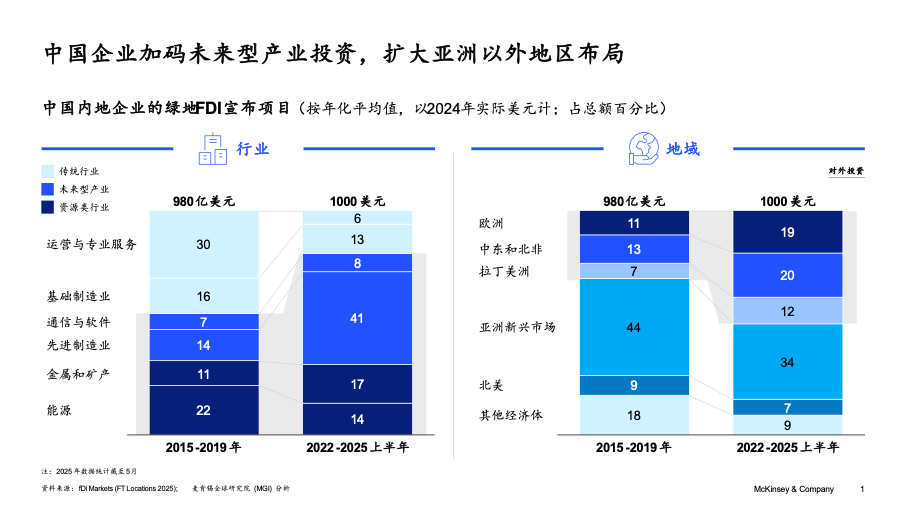
Core Insights - McKinsey's recent media day in Shanghai focused on strategies for companies to succeed in the future Chinese market and navigate global expansion [1] Group 1: Foreign Investment Trends - Global capital flows are undergoing structural changes, with China transitioning from a major recipient of foreign direct investment (FDI) to a key global investor [2] - Chinese companies are increasing capital deployment in Europe, Latin America, and the Middle East and North Africa by over two-thirds [2] - Since 2022, China's annual greenfield investment has decreased by 65% compared to pre-pandemic levels, while outbound investment in future industries and resources has grown by 54% [2] Group 2: Automotive Industry Developments - Chinese automotive companies have shifted from "market for technology" to "technology for the world," gaining approximately 30% market share from multinational joint ventures in the domestic market [5] - By 2030, it is expected that 3 to 5 Chinese companies will be among the top ten global automakers, with Chinese brands projected to capture 10% to 20% of core overseas markets [6] - In 2025, two Chinese automakers are anticipated to enter the global top ten in sales, with 2023 expected to see record-high annual exports, surpassing Japan and Germany [6] Group 3: Pharmaceutical Industry Evolution - China's innovative drug development has seen significant growth, with about one-third of global innovative drug pipelines originating from China [11] - Chinese pharmaceutical companies need to evolve from developing globally competitive products to establishing a global presence [11] - Three strategic upgrades are necessary for Chinese pharmaceutical firms: transitioning from specialized talent to global and diverse talent, from efficient decision-making to a balance of agility and stability, and from following innovation to leading innovation [12] Group 4: Manufacturing Sector Opportunities - China has evolved from a "world factory" to a strategic market and innovation hub for global advanced industrial enterprises [15] - Leading Chinese manufacturers are integrating digitalization, AI, and IoT technologies to maintain competitive advantages [15] - For multinational companies, deep engagement in China's vibrant industrial ecosystem is essential for enhancing global competitiveness [15] Group 5: Consumer Market Dynamics - The middle class in China is expected to grow, with high-income households projected to reach 259 million by 2030, accounting for 62% of urban families [16] - Despite declining consumer confidence, retail sales in China grew by 4.6% year-on-year in the first eight months of 2025, with significant increases in home appliance and electric vehicle sales [16] - E-commerce platforms are evolving from a fresh food-centric model to a comprehensive category approach, driving growth through new consumption scenarios [19]
最大程度激发消费活力,促进经济循环畅通
Ke Ji Ri Bao· 2025-11-28 01:15
Core Viewpoint - The core idea of the "Implementation Plan for Enhancing the Adaptability of Supply and Demand for Consumer Goods" is to shift production from quantity to quality, addressing resource misallocation and waste, and stimulating consumption through high-quality supply [1] Group 1: Supply and Demand Adaptation - The plan aims to maximize consumption potential and promote smooth economic circulation by enhancing the overall adaptability of supply and demand [1] - The Ministry of Industry and Information Technology will work with relevant departments to implement the plan, increase resource investment, and support policies to expand consumption and stabilize growth [1] Group 2: Quality Supply and Market Growth - China's consumer goods supply has entered a new stage of quality and price, with a total of 230 million varieties of consumer goods, leading in over 100 categories such as home appliances and furniture [2] - The manufacturing capabilities allow rapid responses to technological upgrades and consumer demand changes, resulting in a significant increase in innovative products like smart drones and smart vehicle equipment, with respective value-added growth of 59.9% and 25.1% in the first three quarters of this year [2] - The plan aims to achieve dynamic balance in supply and demand at a higher level within approximately five years, addressing structural mismatches in supply and demand [2] Group 3: Expanding Consumption Space - The plan sets a target to form three trillion-level consumption fields and ten hundred-billion-level consumption hotspots by 2027, focusing on areas such as elderly products, smart connected vehicles, and consumer electronics [2][3] - The implementation of the plan is expected to create greater consumption space, enhancing the resilience and vitality of the domestic consumption market [3] Group 4: Integration of Artificial Intelligence - The plan emphasizes the integration of artificial intelligence (AI) in consumer goods, with AI acting as a catalyst for promoting consumption [4] - By mid-2023, the user base for generative AI products in China reached 515 million, with continuous expansion of application scenarios [4] - Future efforts will focus on product and scenario innovation, leveraging AI and big data to enhance the digital ecosystem across the entire industry chain [5]
推动供给与消费良性互动、相互促进(权威发布)
Ren Min Ri Bao· 2025-11-27 22:30
Core Viewpoint - The implementation plan aims to enhance the adaptability of supply and demand in consumer goods, addressing structural mismatches and promoting high-quality consumption in China by 2027 [1][2][4]. Group 1: Supply and Demand Adaptability - The current supply of consumer goods in China has entered a new development stage, but structural mismatches still exist in high-end brands and innovative products [2][3]. - The implementation plan proposes five key measures to address these mismatches, including expanding new product supply, enhancing innovation, and promoting new manufacturing models [2][3]. Group 2: Market Potential and Growth - By 2027, the plan aims to create three trillion-yuan-level consumption sectors and ten hundred-billion-yuan-level consumption hotspots, including elderly products, smart connected vehicles, and consumer electronics [4][5]. - The consumer market is expected to show strong growth potential, with diverse and vibrant characteristics emerging in sectors like cultural and creative products [4][6]. Group 3: Consumer Needs and Trends - The plan emphasizes the importance of catering to diverse consumer needs across different age groups, promoting safety in children's products, and enhancing the quality of elderly care products [3][5]. - There is a focus on developing personalized and fashionable products that resonate with younger consumers, such as cultural and designer collaborations [5][6]. Group 4: Economic Contribution and Policy Support - The plan aims to establish a high-quality development pattern by 2030, enhancing the contribution of consumption to economic growth through coordinated efforts among various departments [7][8]. - Recent data shows that retail sales reached 36.6 trillion yuan in the first ten months of the year, with a year-on-year growth of 4.4%, indicating a stable consumer market [7][8].
美国延长对华关税豁免:这些品类暴露了华盛顿的软肋
Sou Hu Cai Jing· 2025-11-27 21:53
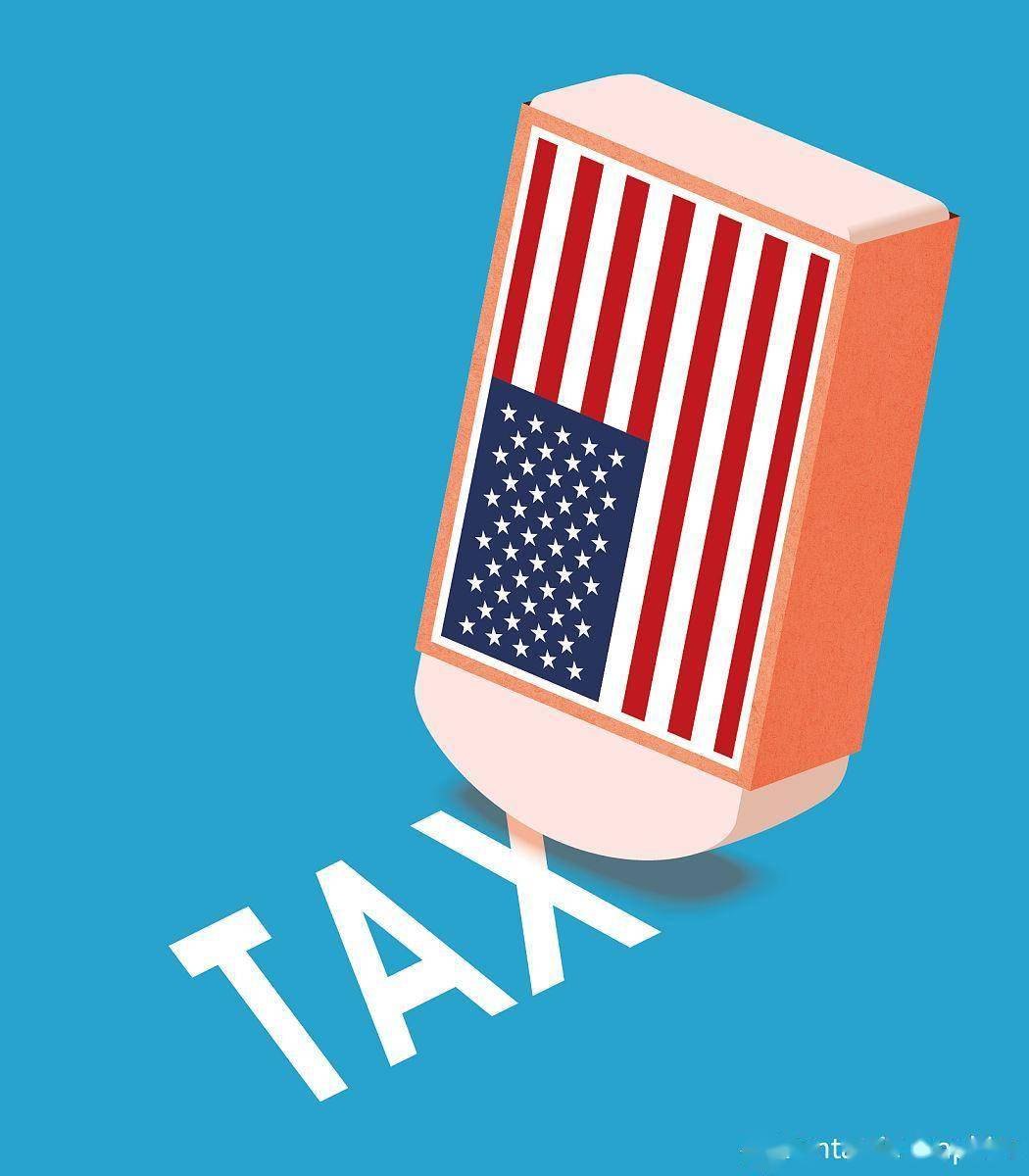
Core Viewpoint - The Biden administration's unexpected decision to extend the tariff exemption period for over 300 product categories until 2026 reveals the vulnerabilities in the U.S. supply chain and highlights the deep reliance on Chinese imports for essential goods [1] Group 1: Exemption List Insights - The exemption list includes three notable categories: medical supplies (27%), industrial intermediate goods (41%), and consumer goods (32%), indicating a reliance on critical items that are essential for U.S. factories and supermarkets [3] - Among the exempted electrical components, 60% are directed towards "manufacturing return" projects in the U.S., illustrating the irony of importing components while promoting "American manufacturing" [3] Group 2: Tariff Implications - The exemption list serves as a diagnostic report for policymakers, showing ongoing dependence on Chinese supply chains for medical supplies and highlighting the insufficient domestic capacity to meet infrastructure demands [5] - Data indicates that out of 325 exempted items, 289 have seen a decline in U.S. domestic production over the past two years, emphasizing the challenges in rebuilding supply chains [7] Group 3: Political Calculations - The exemption strategy is a calculated political move, aimed at addressing voter concerns over inflation while allowing time for the "manufacturing return" initiative [5] - The selection of complex intermediate goods helps maintain U.S. factory operations without directly boosting Chinese brands, while the 2026 deadline aligns with the next presidential term, providing room for policy adjustments [7] - The ongoing trade dynamics between the U.S. and China reflect the resilience of global supply chains, with the extended exemption list serving as both an opportunity and a warning for China to continuously strengthen its industrial advantages [7]
将制造优势转化为消费动能
Jing Ji Ri Bao· 2025-11-27 21:38
Core Viewpoint - The implementation plan aims to enhance the adaptability and balance of supply and demand in the consumer goods industry, leveraging consumption upgrades to drive industrial upgrades and transforming China's manufacturing advantages into strong consumer momentum [1][4]. Supply Side Analysis - China has established a comprehensive consumer goods industrial system with over 100 products, including home appliances, automobiles, consumer electronics, and textiles, leading the world in production capacity [1]. - The country possesses rich experience in intelligent and green transformation, making its supply capabilities globally competitive [1]. Demand Side Analysis - The consumer goods sector is a basic necessity for people's livelihoods, covering essential needs such as clothing, food, housing, and transportation [1]. - China has the world's largest and most dynamic consumer market, with significant potential for domestic demand growth [1]. Structural Mismatch Issues - There exists a structural mismatch in the current supply and demand, characterized by an excess of low-end supply and a shortage of high-quality offerings, particularly in high-end footwear, cosmetics, and bags, which are heavily reliant on imports [2]. - The transition from old to new growth drivers is lagging, with insufficient technological innovation and a lack of new product supply to meet rapidly growing emerging demands [2]. Solutions for Mismatch - To address the supply-demand mismatch, it is essential to focus on the demand side by understanding consumer needs through big data and behavioral analysis [2]. - Companies should shift from a "produce first, find market later" approach to a model that accurately meets essential needs and follows consumer trends [3]. - Production should innovate to reduce costs and develop new products that balance affordability with quality, replacing price competition with value competition [3]. Multi-Channel Approach - Optimizing channel layouts in the distribution sector is crucial to match different consumer groups' preferences and manage inventory effectively [3]. - Establishing a supply-demand information platform and enhancing regulatory measures can help align production with effective supply [3]. - Consumer education and improved product transparency are necessary to address subjective factors contributing to demand mismatch [3]. Economic Growth Perspective - Consumption is a vital engine for economic growth, and supply-demand adaptability is key to unlocking this potential [4]. - With the implementation of policies like trade-in programs and continuous improvement in corporate innovation capabilities, the synergy between quality supply and upgraded demand can unleash more consumption potential and stimulate endogenous growth [4].
2025世界智能制造大会在南京举行 中国首批15家领航级智能工厂名单公布
Zheng Quan Shi Bao· 2025-11-27 19:32
Core Insights - The 2025 World Intelligent Manufacturing Conference was held in Nanjing, Jiangsu Province, focusing on "Digital Intelligence Driving New Quality Leadership" [1] - The conference established a new National Intelligent Manufacturing Expert Committee and released initiatives for national leading intelligent factories and the top ten technological advancements in intelligent manufacturing for 2025 [1] Industry Developments - China's intelligent manufacturing has transitioned from "point breakthroughs" to "system collaboration," with over 7,000 advanced and 500 excellent intelligent factories established nationwide, and the total industry scale exceeding 4.5 trillion yuan [1] - The first batch of 15 leading intelligent factories was unveiled, marking a critical leap from digitization and networking to intelligence in China's manufacturing sector [2] Company Highlights - Nanjing Steel Group was recognized for its personalized smart factory for special steel, aiming to enhance its transformation through AI and digital twin technologies [2] - SAIC-GM-Wuling received unanimous approval for its "Smart Island Manufacturing System," which allows for efficient production of 24 vehicle models through a flexible production system [2] - Hikvision's smart factory for IoT perception products has facilitated digital collaboration with over 2,000 suppliers and 800,000 channel partners, enhancing digitalization across various industries [3] - Zoomlion was acknowledged for its shared manufacturing smart factory for excavators, achieving global firsts in several manufacturing processes [3] - Haier's central air conditioning interconnected factory leads the home appliance sector by providing AI-driven, customized manufacturing solutions [3] Additional Recognitions - Other companies recognized as leading intelligent factories include Baosteel, Weichai Power, Longfly Fiber, Gree Electric, Shanghai Aerospace Equipment Manufacturing Factory, and others, contributing to the global intelligent manufacturing landscape [4]
时报观察 供需双侧协同升级 激活万亿消费新动能
Zheng Quan Shi Bao· 2025-11-27 19:30
工信部等六部门近日出台系列举措增强消费品供需适配性,推动进一步扩大消费。这是一段时间以来将 扩大内需作为经济工作重中之重的政策延续。 此外,这也是统筹推进扩大内需战略和供给侧结构性改革的具体体现。本次实施方案从多处强调要加快 开发人工智能终端产品,让科技创新能真正从惊艳的技术,变成消费者身边的便利;有了更进一步的需 求牵引,科技创新、产业升级也才有可持续发展的动力。 提振消费、扩大内需是一项系统性工程。去年以来,政策层面就对提振消费的需求侧作出诸多安排,包 括影响面广、拉动效果直接的消费品以旧换新补贴、育儿补贴等。最新数据显示,今年总额为3000亿元 的消费品以旧换新"国补"资金,仅前10个月就已经带动销售额超2.4万亿元。但提振消费绝非仅靠"发 钱"就能够解决,尤其是从长期发展角度来看,归根结底要通过进一步筑牢社会保障屏障、完善收入分 配制度改革,增强消费者的消费能力、提高边际消费倾向,目前相关部门频繁强调要"投资于人"也在于 此。 当然,推动实现供需高水平的动态适配,应当主要依靠企业本身洞察市场需求、调整经营行为,从而夯 实竞争力。在这个过程中,政府部门绝不是也绝不能代替企业进行生产调节,而是通过制度创新 ...
中国首批15家领航级智能工厂名单公布
Zheng Quan Shi Bao· 2025-11-27 19:29
Group 1 - The 2025 World Intelligent Manufacturing Conference was held in Nanjing, China, focusing on "Digital Intelligence Driving New Quality Leadership" and featuring 12 specialized activities [1] - The conference highlighted the establishment of the new National Intelligent Manufacturing Expert Committee and the release of the first batch of national leading intelligent factory initiatives [1] - China's intelligent manufacturing has achieved significant milestones, with over 7,000 advanced-level and 500 excellent-level intelligent factories established, and the total scale of intelligent manufacturing equipment and industrial software exceeding 4.5 trillion yuan [1] Group 2 - The first batch of 15 leading intelligent factories was unveiled, marking a critical transition from digitalization and networking to intelligence in China's manufacturing sector [1][2] - The leading intelligent factory initiative, launched in 2025, aims to explore new manufacturing forms and create globally competitive benchmarks [2] - Notable companies like Nanjing Steel and SAIC-GM Wuling were recognized for their innovative intelligent manufacturing systems, showcasing significant advancements in personalized customization and production efficiency [2][3] Group 3 - Hikvision's intelligent factory focuses on large-scale personalized customization, achieving digital collaboration with over 2,000 suppliers and 800,000 channel partners [3] - Zoomlion's intelligent factory project achieved three global firsts in excavator manufacturing, demonstrating advanced shared manufacturing capabilities [3] - Haier's central air conditioning interconnected factory leads the home appliance industry by providing AI-driven, customized manufacturing solutions [3][4] Group 4 - Additional companies recognized as leading intelligent factories include Baosteel, Weichai Power, and Gree Electric, contributing to the development of world-class benchmark factories [4] - The "Leading Action Plan" aims to enhance industry consensus and collaborative efforts, promoting China's solutions and wisdom in global intelligent manufacturing [4]

六部委划重点:未来两年这些消费领域迈向万亿级
Xin Jing Bao· 2025-11-27 14:59
Core Viewpoint - The implementation plan aims to enhance the adaptability of supply and demand for consumer goods, promoting consumption through targeted policies and measures following the 20th National Congress of the Communist Party of China [1] Group 1: Policy Measures - The plan includes accelerating the innovation and application of new technologies and models, promoting flexible production, and expanding user participation in design [4] - It emphasizes the development of distinctive and new products, particularly in green, health, rural, and national trends, while enhancing the efficiency standards of consumer goods [4][5] - The initiative aims to match the diverse needs of different age groups, including children, students, and the elderly, through targeted actions and product development [5][6] Group 2: Consumer Experience Enhancement - The plan proposes the cultivation of new consumption scenarios and business formats, encouraging the launch of new products and exhibitions [5][9] - It aims to improve the quality and safety standards of products, particularly for vulnerable groups such as children and the elderly, by establishing strict quality standards and promoting high-quality product directories [6][11] Group 3: Market Environment Optimization - The initiative seeks to create a favorable development environment by leveraging financial support and combating illegal advertising and counterfeit products [5][13] - It emphasizes the importance of enhancing the international consumption environment by enriching the supply of quality products and services in key cities [9][11] Group 4: Technological Integration - The plan highlights the integration of artificial intelligence and other new technologies across the entire production and sales chain, aiming to improve efficiency and consumer experience [10][17] - It encourages the development of smart home products and health monitoring devices, particularly for the elderly, to enhance their quality of life [17][18]
