
CXO

Search documents
国诚投顾:板块放量反弹,期待年底催化行情
Sou Hu Cai Jing· 2025-11-28 09:45
Core Viewpoints - The pharmaceutical sector is influenced by market pricing power and capital influx, with a focus on investment strategies for innovative drugs and related industry chains [1] - The innovative drug sector is experiencing increased liquidity and risk appetite, with a significant rise in attention towards biotech catalysts [1] - The raw material drug market is expected to see a substantial increase in demand due to patent expirations, with a projected sales impact of $390 billion from 2025 to 2030 [1] Summary by Category Innovative Drugs - The IPOs of innovative biotech companies peaked between 2019 and 2021, and the current period is critical for validating core pipelines and concept verification for second-tier pipelines [1] - The A + H share innovative drug index has seen an increase in market capitalization, which is likely to improve local financing conditions [2] Raw Material Drugs - From 2025 to 2030, the expiration of patents for over half of the top 15 small molecule drugs is expected to create a demand surge for raw materials [1] - In the first half of 2025, the production of raw materials by large-scale industrial enterprises reached 1.935 million tons, an 8.2% year-on-year increase [1] - India’s imports of raw materials and intermediates from China amounted to $1.652 billion, with a slight decrease in value but an 11.59% increase in volume, indicating a recovery in demand [1] CXO Sector - The Federal Reserve is expected to initiate a rate cut cycle, with a 90% probability of a 25 basis point cut by September 2025, which may lead to improved market liquidity [2] - The recovery in overseas demand is anticipated to boost CXO demand and performance [2] Investment Strategies - Key factors to monitor include changes in Federal Reserve interest rate policies, marginal changes in financing, gradual recovery in overseas demand, geopolitical relations, and the introduction of supportive policies for innovative drugs [3]


平安基金周思聪:创新药行情将步入分化期 未来超额收益将更多来源于个股选择
Zhong Zheng Wang· 2025-11-27 13:44
Core Viewpoint - The phase of broad increases in the innovative drug sector may be over, and the next two years will be a critical period for differentiation among innovative drug companies, making selective stock picking and focusing on true leaders a more suitable investment strategy [1] Group 1: Investment Strategy - The company will continue to focus on domestic commercialization and international expansion, prioritizing companies that excel in both areas rather than solely betting on business development (BD) transactions [1] - Valuations driven solely by BD are considered fragile, necessitating a careful assessment of associated risks [1] - The market tends to factor in potential total value (including milestone payments) into stock prices at the announcement of BD transactions, but the realization of milestone payments is uncertain and depends on clinical and regulatory success [1] Group 2: Sector Outlook - The company is optimistic about specific segments within innovative drugs, including Antibody-Drug Conjugates (ADC), multi-antibodies, cell and gene therapy, and autoimmune products [2] - Beyond innovative drugs, the company also sees potential in medical devices, Contract Research Organizations (CRO), and medical services [2] - The medical device sector is expected to experience significant growth in orders and inventory digestion due to increased procurement data amid a replacement trend [2] - The CRO sector is likely to benefit from the global shift towards research outsourcing, maintaining steady growth [2] - Economic recovery is anticipated to boost demand for medical services, particularly in high-end and specialized medical services [2]
医药行业2026年度投资策略:需求是力量之源,创新是破局之光
Huachuang Securities· 2025-11-27 06:47
Overall Viewpoint - The core viewpoint of the report emphasizes that demand is the source of strength and innovation is the light that breaks the deadlock in the pharmaceutical industry. The continuous demand for pharmaceuticals and the increasing unmet needs drive pharmaceutical companies to invest in research and development, leading to explosive revenue and stock price growth [5][7][13]. Innovation Drugs - China has become a significant participant in global innovative drug research and development, with a high-quality growth rate of therapies in development far exceeding the global average. The domestic innovative drug sector is entering a revenue era driven by innovation, creating a positive dynamic between traditional pharmaceutical companies and emerging players [5][7][27]. - The number of domestic new drug overseas authorizations has surpassed $10 billion since 2021, indicating a sustained increase in overseas authorization activity, which continues to propel China's innovative drugs into the global market [5][7][27]. Pharmaceutical Industry - The report indicates that the innovative layout in the pharmaceutical industry is beginning to yield results, with performance expected to accelerate. Many companies are transitioning to a growth phase driven by innovation, suggesting that the current period is just the beginning of a more significant performance acceleration [5][7][27]. CXO Sector - Starting in the second half of 2024, global pharmaceutical research and development demand is expected to gradually recover, with strong demand for new molecular types such as peptides and ADCs driving growth in the CDMO segment. The value of leading CRO companies is anticipated to further highlight as the difficulty and barriers in drug development increase [5][7][27]. API Sector - The core business of API companies is primarily focused on non-U.S. exports (to Europe and India), with current demand remaining strong. Leading companies are achieving positive results in expanding into CDMO businesses, and many have integrated local market formulation businesses, which are expected to benefit from the easing of centralized procurement policies [5][7][27]. Medical Devices - The high-value consumables sector is experiencing a reduction in procurement pressure, with performance expected to return to a high growth trajectory. The report highlights that the bidding for medical devices is recovering, indicating an upcoming turning point for the sector, with optimism for domestic equipment technology upgrades and international expansion [5][7][27]. Traditional Chinese Medicine - The report expresses optimism for the recovery of the traditional Chinese medicine sector in 2026, with upward factors outweighing downward ones. The expected recovery sequence for sub-sectors includes hospital-based traditional Chinese medicine, four categories of drugs, OTC common drugs, and high-value consumer traditional Chinese medicine [5][7][27]. Medical Services - The report anticipates that with the introduction of several positive macro policies, consumer expectations are likely to recover. If favorable local fiscal policies are implemented, the bad debts and payment cycles for private hospitals will also see substantial relief, alleviating market concerns [5][7][27]. Pharmaceutical Retail - The pharmaceutical retail sector has faced continuous pressure since Q3 2024, primarily due to declining demand for four categories of drugs, consumption downgrading, intensified competition, and fluctuations in medical insurance policies. However, as high baselines are gradually digested, the revenue growth of leading chains is expected to stabilize and improve [5][7][27]. Blood Products - Despite short-term performance pressures, the essential nature of blood products indicates that supply and demand are expected to rebalance. The diversity of products among companies is rapidly increasing, with high-value new products like immunoglobulin expected to drive industry growth [5][7][27]. Life Sciences Services - The life sciences services sector is experiencing a demand recovery, coupled with deepening domestic substitution and ongoing overseas expansion, leading to a positive quarterly revenue growth starting from Q4 2024. The net profit margin of the sector has been gradually improving, indicating sustained profitability [5][7][27].
华创证券:医药行业持续加码创新 看好中药2026年修复行情
智通财经网· 2025-11-27 05:51
Core Insights - The pharmaceutical industry is expected to reach new highs globally due to persistent human demand and unmet needs, alongside increased R&D investments by pharmaceutical companies [1] - Continuous innovation and successful outcomes are essential for pharmaceutical companies to achieve explosive revenue and stock price growth [1] Group 1: Innovative Drugs - China has seen a high-quality growth in the number of innovative therapies in development, significantly outpacing the global average, establishing itself as a key player in global innovative drug R&D [2] - Since 2021, the total overseas licensing amount for domestic new drugs has exceeded $10 billion, with ongoing growth in overseas licensing driving China's share in the global market [2] - The industry is entering an "innovation-driven" revenue era, fostering a positive dynamic between traditional pharmaceutical companies and emerging players [2] Group 2: Pharmaceutical Industry - The industry is experiencing accelerated growth as companies reap the benefits of years of R&D, with many transitioning to innovation-driven growth phases [2] - The current period is seen as just the beginning of a harvest phase, with future performance expected to further accelerate [2] Group 3: CXO Sector - Starting in the second half of 2024, global pharmaceutical R&D demand is anticipated to recover, with leading CXO companies seeing a gradual increase in orders and revenue [2] - There is strong demand for new molecular types such as peptides, small nucleic acids, and ADCs, which is driving high prosperity in the CDMO segment [2] - As drug development becomes more challenging, the value of leading CRO companies is expected to become more pronounced [2] Group 4: API Sector - API companies primarily focus on non-U.S. exports (Europe/India), with strong current demand [3] - Leading companies are achieving positive results in expanding into CDMO businesses, leveraging their robust EHS and GMP systems [3] - Many companies are also integrating local market formulation businesses, poised to benefit from easing centralized procurement pressures [3] Group 5: Medical Devices - The high-value consumables sector is expected to return to a high growth trajectory as procurement pressures ease, with innovation driving ongoing development and value reassessment [3] - The medical equipment bidding process is recovering, indicating a turning point for the sector, with optimism for domestic equipment technology upgrades and international expansion [3] - The IVD industry is under pressure, but policy disruptions are gradually clearing, allowing leading domestic companies to increase market share [3] Group 6: Traditional Chinese Medicine - The traditional Chinese medicine sector is expected to recover significantly, driven by improved chip structure, favorable policies, and inventory reduction [3] - The anticipated recovery sequence for sub-sectors includes hospital-based Chinese medicine, four categories of drugs, OTC common drugs, and high-value consumer Chinese medicine [3] Group 7: Medical Services - Positive macro policies are expected to restore consumer confidence, alleviating concerns about private hospitals' bad debts and payment cycles [4] Group 8: Pharmaceutical Retail - The pharmaceutical retail sector has faced ongoing pressure since Q3 2024 due to declining demand for four categories of drugs, consumer downgrading, and intensified competition [4] - Drugstores are responding by closing locations and enhancing efficiency, with expectations for recovery as high baseline effects are gradually digested [4] Group 9: Blood Products - Despite short-term performance pressures, the essential nature of blood products suggests a return to supply-demand balance [4] - The variety of products is increasing rapidly, with high-value new products expected to drive industry growth [4] Group 10: Life Sciences Services - The sector is seeing a recovery in demand, supported by deepening domestic substitution and ongoing international expansion, with quarterly revenue expected to turn positive from Q4 2024 [4] - The net profit margin for the sector has been improving, indicating sustained profitability growth [4]
沉寂数月后,80亿元资金已涌入这一板块丨每日研选
Shang Hai Zheng Quan Bao· 2025-11-27 01:11
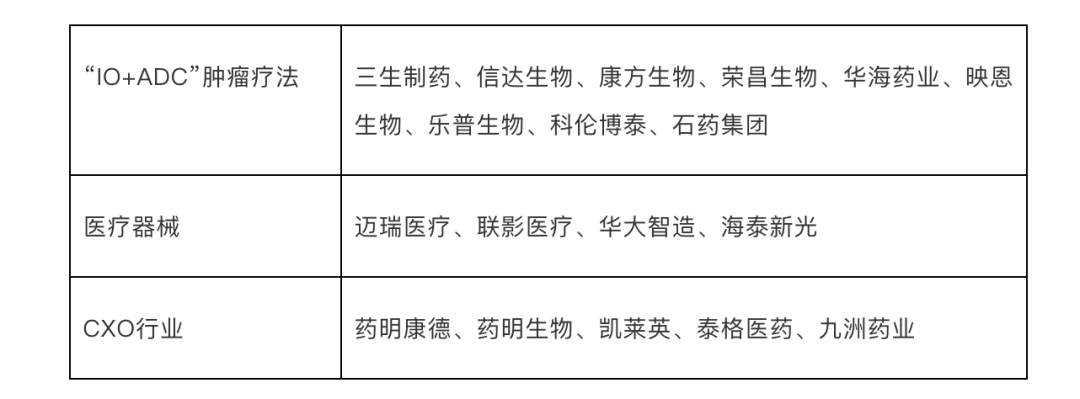
Core Viewpoint - Despite a slowdown in the sector in the second half of the year, there remains strong interest from capital, with nearly 8 billion yuan of net inflow over five consecutive trading days, indicating a new round of investment layout [1] Group 1: Global Trends - Over the past decade, the number of pharmaceutical transactions globally has shown a steady growth trend, with multinational corporations (MNCs) needing to replenish their pipelines due to profit pressures [1] - By 2030, products with sales exceeding 5 billion USD that are nearing patent expiration will total nearly 200 billion USD, driving MNCs' enthusiasm for business development (BD) [1] Group 2: Chinese Pharmaceutical Companies - Chinese pharmaceutical companies are increasingly competitive globally, with the total amount of license-out transactions exceeding 100 billion USD this year, doubling compared to 2024 [2] - From 2015 to 2024, the number of original innovative drugs entering clinical trials from Chinese companies reached 4,382, surpassing the 4,009 from the United States, with 704 new drugs entering clinical trials in 2024, ranking first globally [2] - The number of innovative drugs developed by Chinese companies that have entered late-stage clinical trials is comparable to that of the United States [2] Group 3: Technological Trends - Antibody-drug conjugates (ADC) have become a hot topic for license-out transactions among Chinese companies over the past three years, transitioning from a follower to a leader in innovation [2] - Chinese companies are rapidly following innovations in immuno-oncology (IO) and have the potential to surpass competitors, with some products already authorized for international markets [2] Group 4: Policy Environment - The average price reduction of drugs in the 2025 medical insurance negotiations is expected to stabilize, with a significant proportion of newly added drugs being domestically produced [3] - Future centralized procurement may focus more on comprehensive value assessments rather than solely on low prices, emphasizing efficacy, quality, and patient accessibility [3] Group 5: Investment Opportunities - Focus on IO and ADC as foundational therapies for tumors, particularly with the upcoming expiration of PD-1 patents, which may lead to a market shift towards second-generation IO therapies [3] - Highlighted companies in the IO and ADC sectors include: 3SBio, Innovent Biologics, CanSino Biologics, Rongchang Biopharmaceuticals, Huahai Pharmaceutical, Yiming Pharmaceutical, Lepu Medical, Kelun-Biotech, and CSPC Pharmaceutical [3][5] - Emphasis on the internationalization of Chinese pharmaceutical companies, with a long-term view of the industry evolving into global leaders, particularly in innovative drugs and medical devices [3] - Notable companies in the medical device sector include Mindray Medical, United Imaging Healthcare, BGI Genomics, and Haitai New Light [3][5] - The CXO industry is expected to improve due to better supply-demand dynamics, with global investment recovery likely to boost client demand [4] - Key CXO leaders to watch include WuXi AppTec, WuXi Biologics, Kelun Pharmaceutical, Tigermed, and Jiuzhou Pharmaceutical [4][5]
估值触底,逻辑重生:中国CXO的投资再认知
远川研究所· 2025-11-25 13:04
Core Viewpoint - The CXO industry in China is experiencing a structural recovery driven by new technologies and models, moving beyond short-term profit and order recovery to a new cycle of higher added value [6][31]. Summary by Sections Introduction - The CXO industry has undergone significant fluctuations over the past five years, transitioning from a period of rapid growth to a phase of adjustment due to various external pressures [5][8]. Definition, History, and Business Model of CXO - CXO encompasses contract research organizations (CRO) and contract development and manufacturing organizations (CDMO), providing essential services throughout the drug development lifecycle [9][10][11]. - The industry evolved through three main stages: initial outsourcing in the 1960s-80s, systematic development of R&D outsourcing since the 1990s, and the rise of integrated services and new technologies in the 2010s [12][13][14]. Business Model of CXO - The growth of the CXO market is driven by global pharmaceutical R&D investment and the increasing outsourcing penetration rate [15][16]. - Global pharmaceutical R&D investment has grown from approximately $130 billion in 2010 to over $250 billion in 2023, providing a solid foundation for the industry [16]. - The outsourcing penetration rate has increased from about 30% to nearly 50% over the past decade, driven by cost efficiency and risk management [17][18]. Cycle Review: 2017-2024 - The CXO industry in China experienced a "super cycle" from 2017 to 2021, driven by domestic demand, global technology cycles, and the COVID-19 pandemic [20][22][23]. - The subsequent downturn from late 2021 to early 2024 was marked by a decline in demand, tightening global liquidity, and the natural decline of COVID-related demand [24][25][26]. New Cycle: Structural Recovery or Full Reversal? - The current recovery is characterized by a structural shift driven by new technologies, moving away from homogeneous competition to a higher value cycle [31][32]. - The recovery signals are evident from upstream drug discovery to midstream animal testing, indicating a gradual improvement in demand [33][34]. Core Drivers: New Technology Platforms - The recovery is driven by the emergence of complex, high-value new technology platforms such as ADCs and TIDES, which enhance the dependency on CXO services [35][36]. Funding Dynamics - The funding landscape has shifted from reliance on external financing to a more diversified and stable model, with domestic companies achieving profitability and increased BD activities [37][38][40]. Global Competition and Geopolitical Challenges - Chinese CXO companies maintain a competitive edge through cost advantages, efficiency, and quality improvements, despite geopolitical uncertainties [42][43][46]. - The geopolitical risks, such as the proposed BIOSECURE Act, may impact market perceptions but are unlikely to significantly affect the core operations of leading CXO firms [48]. Investment Logic in the New Cycle - The investment focus has shifted from chasing overall industry growth to identifying companies with unique competitive advantages, such as leading technology platforms and integrated service capabilities [49][50][51].

药明康德“美颜”三季报:营收增18.6%,非经常性收益支撑利润,多项指标显露增长隐忧
Hua Xia Shi Bao· 2025-11-25 06:37
本报(chinatimes.net.cn)记者张斯文 于娜 北京报道 近日,无锡药明康德新药开发股份有限公司(下称"药明康德",603259.SH)披露了2025年第三季度报 告,前三季度实现营业收入328.57亿元,同比增长18.61%;归属于上市公司股东净利润120.76亿元,同 比大增84.84%。 (数据来源:Wind) 但细究业绩结构,可以看到,公司存在非经常性收益贡献显著,国内业务增长停滞、部分板块疲软、研 发投入收缩等问题。 非经常性收益拉高利润 报告显示,前三季度公司非经常性损益达25.53亿元,主要来自出售联营企业WuXi XDC Cayman Inc.部 分股票的收益(32.23亿元)。扣除该部分后,归属于上市公司股东的扣除非经常性损益净利润为95.22 亿元,同比增长率下降至42.51%,显著低于净利润增速。 对此,山东隆湶律师事务所主任、高级合伙人李富民对《华夏时报》记者表示,利润结构的健康度要 看"可持续性"。84%的净利润里,超过四成来自非经常性收益,扣非增速落后同行20个百分点,说明主 业溢价能力在收窄。CXO板块普遍把闲置资金做理财或跟投客户股权,但把公允价值变动当"主营味 道 ...


中国医疗行业近期走弱或为 2026 年布局良机-Recent China healthcare sector weakness could mean a good setup for 2026
2025-11-25 01:19
Summary of the Conference Call on China Healthcare Sector Industry Overview - The conference call focused on the **China healthcare sector**, highlighting recent weaknesses and potential opportunities for 2026 [2][5][6]. Core Insights and Arguments - **Current Market Performance**: The Hang Seng Healthcare Index (HSHCI) has declined by **3.1%**, while the Hang Seng Index fell by **1.6%**. The HSHCI has dropped approximately **17%** from its year-to-date high in early October, with some small and mid-cap stocks down around **30%** [2][5]. - **Valuation Outlook**: Despite the current weakness, the fundamentals of the sector remain intact, and valuations are becoming more attractive, suggesting a potential rebound in 2026 [2][5][6]. - **Investment Recommendations**: - **Biotech**: Innovent and Kelun Biotech (rated Overweight) - **Pharma**: Hansoh Pharma and Hengrui-A (rated Overweight) - **CXO**: WuXi Apptec and WuXi XDC (rated Overweight) - Caution is advised regarding Akeso due to unclear updates on HARMONi-2 OS [2][5][6]. Upcoming Events and Legislative Considerations - **NRDL Price Negotiations**: Anticipated results from the National Reimbursement Drug List (NRDL) price negotiations are expected to be neutral to negative, reflecting the current weak sentiment [5][6]. - **Biosecure Act**: The potential passing of the Biosecure Act could be a negative headline event, although it is not expected to significantly impact China CXOs' business [5][6]. - **Medical Conferences**: Upcoming medical conferences in December (e.g., ASH'25 and SABCS'25) are not expected to affect overall sentiment towards the China healthcare sector [5][6]. Emerging Themes for 2026 - Potential interest in new drug modalities such as **siRNA** (small interfering RNA) and **RDC** (radionuclide drug conjugate) is anticipated, along with expectations for global Phase 3 data from out-licensed assets [5][6]. - A healthy out-licensing deal flow is expected in 2026, although it may not surpass the total deal size of 2025 due to several significant deals this year [6]. - The **JPM Global Healthcare Conference** in January 2026 is expected to provide further insights into the prospects for the China healthcare sector, with presentations from over a dozen public and private Chinese companies [6]. Key Companies Discussed - **Akeso** (9926.HK) - **Hansoh Pharma** (3692.HK) - **Hengrui** (600276.SS) - **Innovent Biologics** (1801.HK) - **Kelun Biotech** (6990.HK) - **WuXi AppTec** (603259.SS and 2359.HK) - **WuXi XDC** (2268.HK) [8]. Conclusion - The China healthcare sector is currently facing challenges but presents potential investment opportunities as valuations become more attractive. Key themes and developments in 2026 will be closely monitored, particularly in light of upcoming conferences and legislative changes [2][5][6].
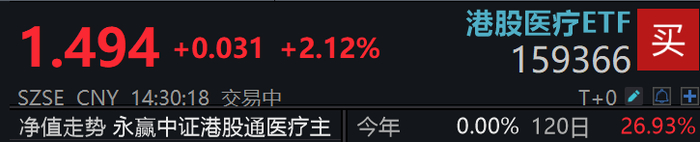
港股医疗ETF(159366)午后大涨超2%,权重股泰格医药涨超9%
Xin Lang Cai Jing· 2025-11-24 06:55
Group 1 - The CRO concept stocks are experiencing a collective rebound, with the CSI Hong Kong Stock Connect Medical Theme Index rising by 2.73% as of November 24, 2025 [1] - Notable individual stock performances include Tigermed (03347) increasing over 9%, and other companies like Hansoh Pharmaceutical (03692), MicroPort Medical (00853), and WuXi AppTec (02359) also seeing gains [1][2] - The Hong Kong Medical ETF (159366) has risen over 2%, and over the past six months, it has accumulated a 29.35% increase [1][2] Group 2 - The innovative drug industry is benefiting from dual advantages of policy support and explosive demand, which are activating new drug research and development needs, positively impacting the CXO sector [3] - Among 29 listed companies in the A-share CXO sector, 20 reported year-on-year revenue growth in the first three quarters, indicating strong industry resilience [3] - WuXi AppTec's unique "integrated, end-to-end" CRDMO business model has driven steady growth, with total revenue of 32.86 billion yuan in the first three quarters of 2025, a year-on-year increase of 18.6%, and net profit attributable to shareholders rising by 84.8% to 12.08 billion yuan [3] Group 3 - The high growth of the CXO sector is supported by the trend of pharmaceutical companies outsourcing R&D and production to specialized CXO firms, which helps reduce costs and improve efficiency [4] - CXO companies are enhancing their service capabilities through continuous technological development and scale expansion, leading to deeper integration with pharmaceutical companies [4] - As of October 31, 2025, the top ten weighted stocks in the CSI Hong Kong Stock Connect Medical Theme Index accounted for 62.83% of the index, indicating a high concentration in the market [4]



生物医药ETF(512290)涨超1.1%,行业趋势与创新技术受关注
Mei Ri Jing Ji Xin Wen· 2025-11-24 06:24
Core Insights - The pharmaceutical and biotechnology industry is experiencing three major trends: deepening internationalization 2.0, unprecedented policy support, and continuous technological breakthroughs [1] Group 1: Internationalization - By 2025, the number of license-out transactions is expected to reach 103, with upfront payments hitting a record high of $8.45 billion, benefiting companies that expand internationally [1] - Companies that successfully venture abroad are enjoying valuation premiums [1] Group 2: Policy Support - There is significant policy support, with improved efficiency in medical insurance negotiations and the establishment of a directory for innovative drugs under commercial insurance for the first time [1] Group 3: Technological Advancements - Continuous breakthroughs in technology are evident, with advancements in ADC, IO dual antibodies, GLP-1 weight loss drugs, and small nucleic acid drugs [1] Group 4: Market Dynamics - The CXO industry adjustment is largely complete, with stable overseas demand and a rebound in domestic investment and financing [1] - Focus is on CDMO companies with strong international capabilities and leading clinical CROs [1] Group 5: Industry Recovery - The upstream supply chain is showing significant recovery, with ample room for increasing domestic production rates [1] - The dual drivers of intelligent, digital production and international expansion are emphasized [1] Group 6: Investment Index - The biopharmaceutical ETF (512290) tracks the CS Biomedicine Index (930726), which selects listed companies involved in biotechnology, pharmaceuticals, and medical devices to reflect the overall performance of the biopharmaceutical sector [1] - The index constituents exhibit high growth potential and innovation, focusing on showcasing the comprehensive development level of the biopharmaceutical industry [1]