
结构性复苏

Search documents
估值触底,逻辑重生:中国CXO的投资再认知
远川研究所· 2025-11-25 13:04
Core Viewpoint - The CXO industry in China is experiencing a structural recovery driven by new technologies and models, moving beyond short-term profit and order recovery to a new cycle of higher added value [6][31]. Summary by Sections Introduction - The CXO industry has undergone significant fluctuations over the past five years, transitioning from a period of rapid growth to a phase of adjustment due to various external pressures [5][8]. Definition, History, and Business Model of CXO - CXO encompasses contract research organizations (CRO) and contract development and manufacturing organizations (CDMO), providing essential services throughout the drug development lifecycle [9][10][11]. - The industry evolved through three main stages: initial outsourcing in the 1960s-80s, systematic development of R&D outsourcing since the 1990s, and the rise of integrated services and new technologies in the 2010s [12][13][14]. Business Model of CXO - The growth of the CXO market is driven by global pharmaceutical R&D investment and the increasing outsourcing penetration rate [15][16]. - Global pharmaceutical R&D investment has grown from approximately $130 billion in 2010 to over $250 billion in 2023, providing a solid foundation for the industry [16]. - The outsourcing penetration rate has increased from about 30% to nearly 50% over the past decade, driven by cost efficiency and risk management [17][18]. Cycle Review: 2017-2024 - The CXO industry in China experienced a "super cycle" from 2017 to 2021, driven by domestic demand, global technology cycles, and the COVID-19 pandemic [20][22][23]. - The subsequent downturn from late 2021 to early 2024 was marked by a decline in demand, tightening global liquidity, and the natural decline of COVID-related demand [24][25][26]. New Cycle: Structural Recovery or Full Reversal? - The current recovery is characterized by a structural shift driven by new technologies, moving away from homogeneous competition to a higher value cycle [31][32]. - The recovery signals are evident from upstream drug discovery to midstream animal testing, indicating a gradual improvement in demand [33][34]. Core Drivers: New Technology Platforms - The recovery is driven by the emergence of complex, high-value new technology platforms such as ADCs and TIDES, which enhance the dependency on CXO services [35][36]. Funding Dynamics - The funding landscape has shifted from reliance on external financing to a more diversified and stable model, with domestic companies achieving profitability and increased BD activities [37][38][40]. Global Competition and Geopolitical Challenges - Chinese CXO companies maintain a competitive edge through cost advantages, efficiency, and quality improvements, despite geopolitical uncertainties [42][43][46]. - The geopolitical risks, such as the proposed BIOSECURE Act, may impact market perceptions but are unlikely to significantly affect the core operations of leading CXO firms [48]. Investment Logic in the New Cycle - The investment focus has shifted from chasing overall industry growth to identifying companies with unique competitive advantages, such as leading technology platforms and integrated service capabilities [49][50][51].


食品饮料步入消费旺季 产业链上市公司乘风布局
Zheng Quan Ri Bao Wang· 2025-11-13 12:28
Group 1 - The food and beverage industry is entering its most important sales window, with capital expenditure growth of 15.15% year-on-year in November 2025, indicating proactive market positioning by listed companies [1] - The industry is experiencing a structural recovery, with significant online sales growth in the liquor sector during the National Day and Mid-Autumn Festival, including over 100% year-on-year growth on JD's platform and a 58% increase on Douyin [1] - Institutional research activity has surged, with 202 total investigations in the food and beverage sector over the past three months, particularly in the snack and seasoning segments [1] Group 2 - Individual companies such as Chongqing Fuling Zhacai, Angel Yeast, and Xiangpiaopiao have been the focus of institutional attention, each receiving multiple investigations in the last three months [2] - Li Gao Food's third-quarter earnings call attracted 88 institutions, showcasing a nearly 40% year-on-year growth in new channel revenue, indicating strong growth momentum [2] Group 3 - Companies are innovating in products, channels, branding, and supply chain capabilities to capitalize on the consumption peak, with examples including Jiu Gui Jiu's successful product launch and Jin Zai Food's channel innovation strategy [3] - Yanjinpuzi is leveraging local sports events to enhance brand visibility and sales, while ensuring stable production orders in preparation for the upcoming peak season [3] Group 4 - Absolute Food is optimizing its supply chain and market dispatch mechanisms to address regional demand fluctuations and market changes, ensuring stable product supply [4] - Research indicates that product innovation and new channel development are key growth strategies for consumer goods companies, with expectations of a fundamental turning point and policy catalysts for traditional consumer categories [4]




投资策略周报:行业分化下,市场的配置思路发生变化-20250907
KAIYUAN SECURITIES· 2025-09-07 09:15
Group 1 - The report maintains an optimistic long-term outlook for the index, emphasizing a "bull market mindset" and the potential for upward valuation based on current securities rates [3][12][13] - The market structure is characterized by a "dual-driven" approach, with strong growth in technology sectors and a cyclical recovery led by "anti-involution" trends [3][15] - The report suggests focusing on growth sectors, particularly in a high-risk appetite market, and highlights potential low-position investment opportunities in gaming, media, and the Huawei supply chain [3][12][15] Group 2 - The 2025 mid-year report shows a significant structural recovery, with overall performance being flat but notable improvements in specific sectors [4][17] - The report emphasizes the importance of focusing on high-growth industries, particularly in technology manufacturing, consumer goods, and cyclical sectors [16][19] - It highlights that the current economic environment favors structural recovery over a broad economic rebound, with technology-intensive industries showing rapid growth [18][19] Group 3 - Since June, there has been a rapid expansion of non-broad-based ETFs, with net inflows reaching 227.9 billion yuan, indicating a shift in how retail investors are entering the market [5][21][22] - The report notes that the preference for non-broad-based ETFs suggests a "running into the market" behavior among retail investors, reinforcing the importance of leading stocks [21][22][28] - It emphasizes that selecting industries may become more critical than selecting individual stocks, as the differentiation between sectors is expected to be greater than historical averages [21][28] Group 4 - The report outlines a core investment strategy focusing on technology, military, cyclical recovery, and stable dividends [30][31] - It provides a "4+1" industry allocation strategy, recommending investments in technology growth, cyclical sectors benefiting from PPI improvements, and stable dividend stocks [32][30] - The report identifies structural opportunities in exports and emphasizes the importance of stable dividend and gold investments as part of a balanced portfolio [32][30]
金融和理财市场8月报:储蓄走势逆转,银行理财分流-20250818
Huachuang Securities· 2025-08-18 11:35
Investment Rating - The report does not explicitly state an investment rating for the financial and wealth management market Core Insights - The financial market in China is experiencing a structural recovery, with a 5.2% year-on-year growth in actual GDP for Q2 2025 and a nominal GDP value of 34.18 trillion yuan, although nominal growth (3.94%) continues to lag behind actual growth, indicating ongoing pressure on corporate profits [8] - The savings market saw a net inflow of 2.47 trillion yuan in June, but experienced a net outflow of 1.1 trillion yuan in July, reflecting a strong long-term savings intention among residents despite short-term fluctuations [28] - The wealth management market's total size remained above 30 trillion yuan, with a slight contraction in June, primarily driven by declines in fixed-income and cash management products [32] - The fund market has seen significant expansion, with a total scale of 34.05 trillion yuan by the end of July, driven mainly by bond and equity funds [32] Summary by Sections Financial Market Overview - The financial market is characterized by a structural recovery, with notable improvements in industrial output and inflation metrics [8] - The M2 balance reached 329.94 trillion yuan, growing by 8.8% year-on-year, indicating a supportive monetary environment [8] Financial Policy Analysis - The report highlights several financial policy initiatives aimed at enhancing consumer finance and capital market reforms, including the introduction of new financial products and support for consumption [16][17][18] Market Scale Changes and Fund Flows - A structural differentiation in the financial market is observed, with funds shifting from wealth management to the fund market, driven by a preference for higher returns and risk diversification [22] - The wealth management market contracted by 640 billion yuan in June, while the fund market expanded by 1.71 trillion yuan, indicating a clear migration of funds [25] Resident Savings - The savings market showed a net inflow in June but a subsequent outflow in July, reflecting seasonal consumption patterns and a shift towards investment in financial assets [28][31] Wealth Management Products - The wealth management market's total size was reported at 30.65 trillion yuan as of June, with a decrease in fixed-income and cash management products [32] - The issuance of wealth management products saw a significant increase in June, with a total issuance scale of 604.12 billion yuan, marking a 25.06% increase from May [39] Public Funds - The public fund market experienced substantial growth, with a total scale of 34.05 trillion yuan by the end of July, primarily driven by bond and equity funds [32] - The report notes a shift in the types of newly issued funds, with equity funds regaining a larger share of the market in July [32]
一波援军正在路上!
Sou Hu Cai Jing· 2025-08-14 09:01
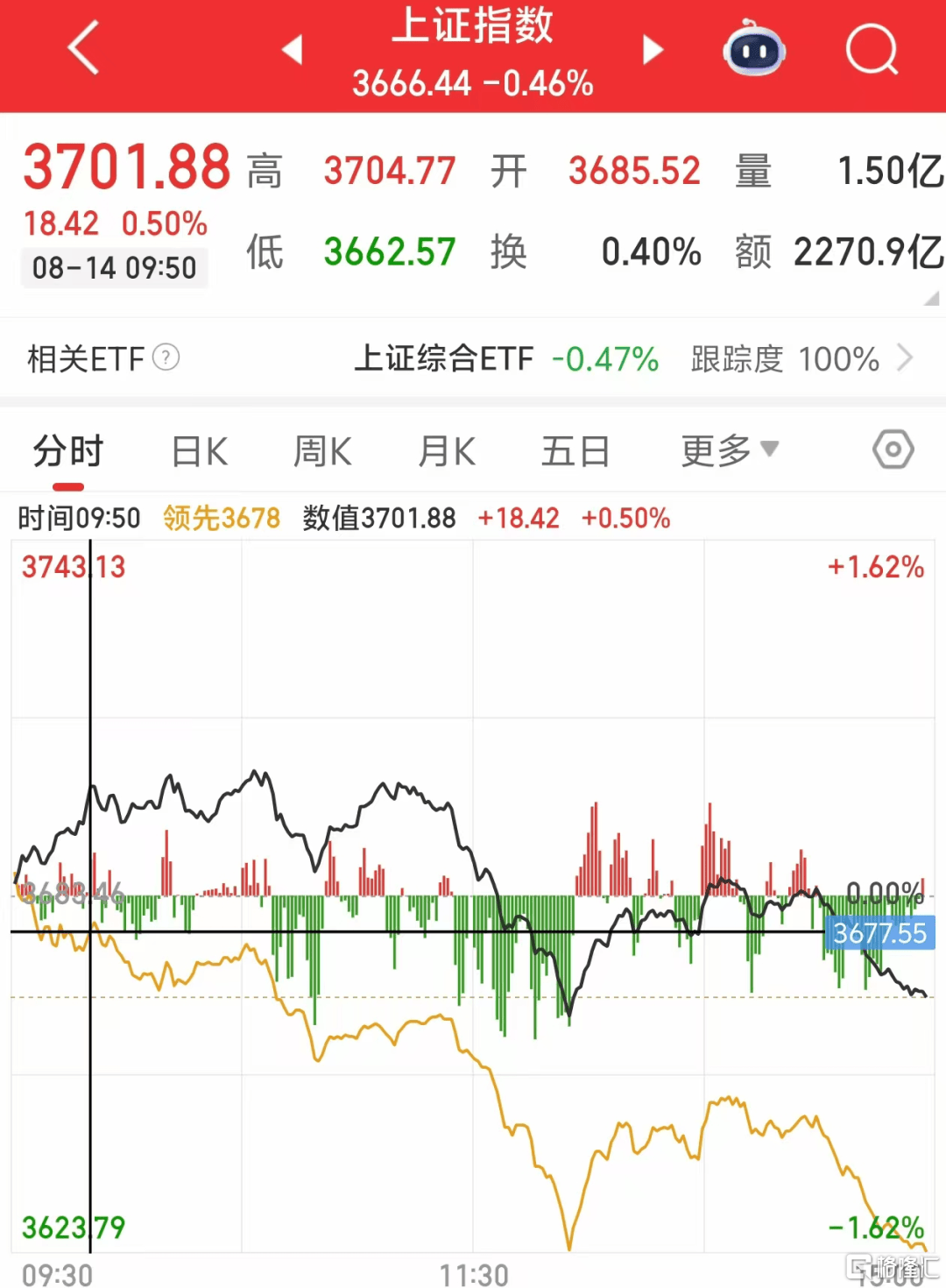
Market Performance - The Shanghai Composite Index broke through the 3700-point mark, reaching a nearly four-year high since December 2021, shortly after opening yesterday [1][4] - The index has shown a strong upward trend since June 23, moving from 3500 to 3600 and now attempting to stabilize above 3700, indicating a potential for further gains [4] Foreign Investment - Foreign capital is accelerating its inflow into the Chinese stock market, with a reported injection of $2.7 billion (approximately 19.4 billion RMB) in July, a significant increase from $1.2 billion in June [4][6] - The International Financial Association reported a strong inflow of $55.5 billion into emerging market assets in July, with China accounting for a substantial portion of this [6] Bond Market - In July, China's bond market saw a net inflow of $30.8 billion, representing 78.6% of the total inflow into emerging market bonds [6][8] - Foreign investors have increased their holdings of domestic RMB bonds to over $600 billion, indicating a strong preference for Chinese debt [8] Retail Investment Trends - There has been a notable shift in household savings, with a decrease of 1.11 trillion RMB in household deposits in July, suggesting a migration of funds towards equity markets [12][13] - The number of new A-share accounts opened in July reached 1.96 million, a 71% increase year-on-year, reflecting growing retail investor interest [13][15] Economic Indicators - The M2 money supply growth rate increased to 8.8% in July, indicating higher liquidity in the market, while M1 growth rose to 5.6% [12] - The trend of increased non-bank deposits suggests a shift in risk appetite among residents, likely driven by positive stock market performance [12][16] Institutional Investment - Major investment firms like Bridgewater and JPMorgan have significantly increased their holdings in tech giants such as Nvidia and Microsoft, indicating confidence in the sector's growth potential [20][22] - BlackRock also reported substantial increases in its positions in major U.S. tech stocks, further highlighting the trend of institutional investment in high-growth sectors [23]
芯片复苏,冷热不均
半导体行业观察· 2025-05-30 01:55
Core Viewpoint - The semiconductor industry is experiencing a complex and prolonged downcycle that deviates from traditional cyclical patterns, indicating a structural change rather than a simple cyclical downturn [1][16]. Group 1: Semiconductor Cycle Understanding - The typical semiconductor cycle consists of phases from demand surge to recovery, lasting approximately 16 quarters or 4 years, but the current cycle has shown prolonged and complicated downturns since the pandemic began in 2021 [1]. - Recent reports suggest that Wolfspeed, a leading SiC company, is seeking bankruptcy protection, highlighting the uncertainty in the current market phase [1][17]. Group 2: Performance of Analog Chip Companies - The performance of major analog chip manufacturers in Q1 2025 generally exceeded market expectations, indicating potential positive signals in the industry [5]. - Companies like TI, ADI, and Infineon have shown signs of recovery in industrial and automotive markets, while others like Microchip are still struggling with all major markets at low points [8][9]. Group 3: Market Recovery and Predictions - The Q2 2025 financial guidance shows a 3.6% quarter-over-quarter growth but a 2.9% year-over-year decline, suggesting a potential recovery phase that is still cautious [11][13]. - Nine out of twelve analog chip companies have raised their performance expectations, with TI and ADI anticipating a return to year-over-year growth in Q2 [14]. Group 4: Structural Changes in the Industry - The semiconductor industry is witnessing a shift where investment decisions are increasingly influenced by non-market factors such as policy guidance and geopolitical considerations, rather than solely by market demand and financial returns [16][20]. - The market dynamics have changed, with companies that are well-positioned in industrial and communication sectors showing resilience, while those reliant on consumer electronics face ongoing challenges [22].



中信建投地产-2月百强房企销售及楼市小阳春解读
2025-03-02 06:36
Summary of the Real Estate Market Conference Call Industry Overview - The conference call discusses the real estate market in China, particularly focusing on the performance of top real estate companies and market trends in early 2025. The market is showing signs of structural recovery, with some companies like China Overseas and China Resources achieving over 20% growth in sales [1][2]. Key Points and Arguments Sales Performance - In February 2024, the cumulative sales of the top 100 real estate companies decreased by 5% year-on-year, but there was an 8% increase in monthly sales. The top ten companies saw a 17% year-on-year growth, with seven companies achieving monthly sales exceeding 10 billion yuan [2]. - The real estate market during the Spring Festival was generally underwhelming, with a decrease in home-buying by returning residents. However, post-holiday, visitor numbers and purchase intentions rebounded, showing a 15% to 25% increase compared to January [3]. Market Trends - The new housing market in the first two months of 2025 showed better performance than the previous year, particularly in core cities, although there remains a 20% gap compared to a few years ago. The second-hand housing market also reached a three-year high with nearly 30% year-on-year growth [5]. - Housing prices in first-tier cities continued to rise, with Shanghai and Shenzhen seeing increases of 0.6% and 0.2% respectively for new homes, and 0.4% for second-hand homes [6]. Land Market Characteristics - The land market is characterized by high total prices, high premiums, and high floor prices. For instance, a plot in Shanghai was acquired for nearly 9 billion yuan, and a plot in Zhengzhou had a premium rate close to 90%, setting a new record for floor prices in the city [9][10]. Inventory and Government Measures - The real estate inventory pressure remains significant, with many completed properties unsold. The government is attempting to alleviate this through special bonds to purchase idle land and institutions buying existing homes, although the overall impact is limited [11][12]. - The government has shown strong commitment to stabilizing the real estate market, with recent meetings indicating a focus on restoring growth in real estate investment [14]. Future Outlook - The expectation is that first-tier and core second-tier cities will recover first, with price corrections potentially stabilizing the market. However, overall transaction volumes are projected to decline for the next 2-5 years, with second-hand transactions possibly matching new home sales [15]. - Future policy measures are anticipated to be more nuanced, focusing on stabilizing the economy and the real estate sector without large-scale adjustments [16]. Profit Margins and Market Dynamics - Companies are adopting a project-by-project approach, with profit margins being calculated based on recent land acquisition costs. The impact of reduced land purchases on overall financial metrics is minimal [17]. - Adjustments to down payment ratios and interest rates have shown diminishing marginal effects on the market, indicating a need for more diverse strategies to stimulate growth [18]. Observations on High-Energy Cities - The performance of high-energy cities remains relatively stable, with adjustments in down payment policies having less impact due to strong demand and payment capabilities. However, in lower-tier cities, the effects of such policies have been more pronounced, with government incentives leading to increased transaction volumes [19]. Additional Important Insights - The market is experiencing structural price increases, with quality projects seeing clear price hikes and reduced negotiation space in second-hand transactions [8]. - The narrowing premium space in land transactions is a noteworthy signal for market observers [20].
