
公用事业

Search documents
低波因子继续成为共振因子—— 量化资产配置月报202504
申万宏源金工· 2025-04-02 03:00
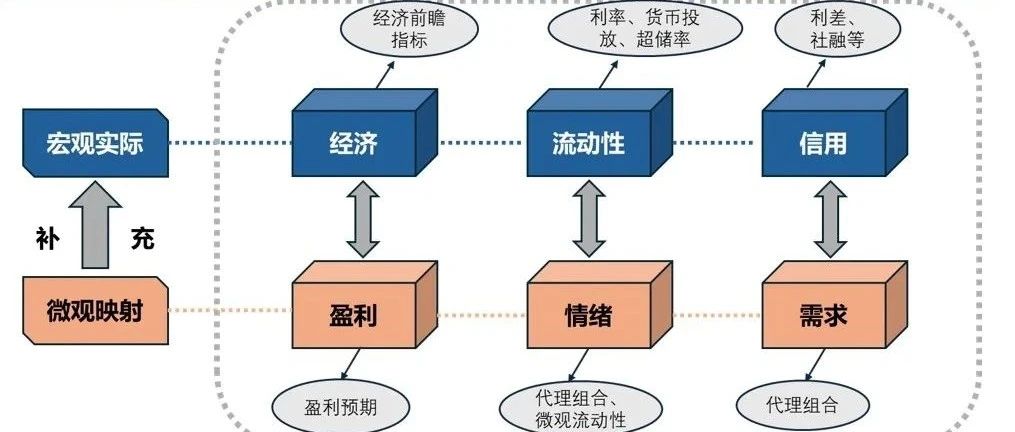
Group 1 - The core viewpoint emphasizes the continued significance of low volatility factors as resonance factors in investment strategies, integrating macroeconomic quantitative insights with factor momentum [1][2] - The analysis indicates that the economic recovery is ongoing, liquidity is returning to a neutral-tight state, and credit indicators are improving, with no need for adjustments based on micro mappings [1][2] - The stock pool configurations for various indices such as CSI 300 and CSI 1000 show a consistent preference for low volatility and growth factors, with value factors also being selected in the CSI 500 index [2] Group 2 - Economic leading indicators are positioned in the late stage of an upward trend, with expectations of reaching a peak by June 2025 and entering a downward cycle by December 2025 [3][8] - Specific indicators such as PMI and fixed asset investment are showing positive trends, suggesting continued economic growth in the near term [3][9] - The liquidity environment is tightening, with short-term interest rates rising above their moving averages, indicating a shift towards a tighter monetary policy [11][15] Group 3 - Credit indicators have shown improvement, with social financing stock increasing for two consecutive months, reflecting a more favorable credit environment [16][18] - The asset allocation strategy suggests reducing bond and US stock positions while increasing allocations in A-shares and commodities, reflecting a bullish outlook on domestic markets [18][22] - The focus on liquidity as a key variable driving market performance indicates that fluctuations in liquidity will significantly impact stock volatility and overall market dynamics [19][22]

公用事业行业今日净流入资金12.72亿元,国电电力等10股净流入资金超5000万元
Zheng Quan Shi Bao Wang· 2025-04-01 08:56
Market Overview - The Shanghai Composite Index rose by 0.38% on April 1, with 23 industries experiencing gains, led by the pharmaceutical and public utilities sectors, which increased by 3.34% and 1.78% respectively [1] - The main funds in the two markets saw a net outflow of 10.395 billion yuan, with 8 industries recording net inflows, primarily in the pharmaceutical sector, which had a net inflow of 3.402 billion yuan [1] Public Utilities Sector - The public utilities sector increased by 1.78%, with a total net inflow of 1.272 billion yuan, and out of 132 stocks in this sector, 123 rose while 6 fell [2] - The top three stocks in terms of net inflow were Guodian Power (1.72 billion yuan), China Nuclear Power (1.50 billion yuan), and Star Power (1.13 billion yuan) [2] Public Utilities Sector - Inflow and Outflow - The inflow list includes Guodian Power with a 3.60% increase and a turnover rate of 1.82%, followed by China Nuclear Power with a 1.74% increase [2] - The outflow list is led by Shaoneng Co. with a 5.93% increase but a net outflow of 40.658 million yuan, followed by Sheneng Co. and Chuan Investment Energy with net outflows of 25.416 million yuan and 23.768 million yuan respectively [4]



上证健康产业指数报1065.07点,前十大权重包含巨星农牧等
Jin Rong Jie· 2025-04-01 08:03
Group 1 - The Shanghai Health Industry Index closed at 1065.07 points, with a 2.99% increase over the past month, a 0.09% decrease over the past three months, and a 0.09% decline year-to-date [1] - The index comprises the 50 largest listed companies in the healthcare, food safety, and environmental protection sectors on the Shanghai Stock Exchange, using equal weighting to reflect the overall performance of these companies [1] - The top ten weighted companies in the index include Fulongma (3.18%), Borui Pharmaceutical (2.57%), Daotong Technology (2.44%), WuXi AppTec (2.37%), Yifeng Pharmacy (2.21%), Hanlan Environment (2.21%), Bright Meat (2.20%), Longjing Environmental Protection (2.16%), Huitai Medical (2.16%), and Juxing Agriculture and Animal Husbandry (2.15%) [1] Group 2 - The index samples are adjusted every six months, with adjustments implemented on the next trading day after the second Friday of June and December, with a sample adjustment ratio generally not exceeding 20% [2] - Weight factors are adjusted along with the sample changes, and remain fixed until the next scheduled adjustment unless a special situation arises [2] - Companies that are delisted or undergo mergers, acquisitions, or splits are handled according to the calculation and maintenance guidelines [2]

华润燃气(01193):接驳利润承压,看好公司燃气销售业务增长韧性
Tianfeng Securities· 2025-03-31 09:45
Investment Rating - The investment rating for China Resources Gas (01193) is "Buy" with a target price not specified [6]. Core Views - The company reported a revenue of HKD 102.68 billion for 2024, a year-on-year increase of 1.4%. The core profit was HKD 4.15 billion, showing a slight increase of 0.02%, while the profit attributable to shareholders decreased by 21.7% to HKD 4.09 billion [1]. - The gas sales business demonstrated resilience with a total gas sales volume of 39.91 billion cubic meters, up 2.9% year-on-year. The average gas sales cost decreased to HKD 2.89 per cubic meter, leading to a gross margin of HKD 0.53 per cubic meter, an increase of 0.02 year-on-year [2]. - The new user connection growth slowed down due to a decline in new construction in the real estate sector, with new residential users decreasing by 15.8% to 2.791 million. The profit from the connection business fell by 27.6% to HKD 2.93 billion [3]. - The comprehensive service business achieved a revenue of HKD 4.21 billion, with a profit of HKD 1.4 billion, while the comprehensive energy business saw a revenue increase of 13.8% to HKD 1.87 billion [4]. - The company maintained a stable dividend policy, proposing a core dividend of HKD 0.95 per share, a 3.4% increase year-on-year, with a payout ratio of 53% [5]. Summary by Sections Financial Performance - Revenue for 2024 was HKD 102.68 billion, a 1.4% increase year-on-year. Core profit was HKD 4.15 billion, with a slight increase of 0.02%. Profit attributable to shareholders decreased by 21.7% to HKD 4.09 billion [1]. Gas Sales Business - Total gas sales volume reached 39.91 billion cubic meters, up 2.9% year-on-year. The average gas sales cost was HKD 2.89 per cubic meter, down by HKD 0.1, resulting in a gross margin of HKD 0.53 per cubic meter, an increase of HKD 0.02 year-on-year. The profit from gas sales was HKD 7.975 billion, reflecting an 8.6% increase [2]. User Connections - New residential user connections decreased by 15.8% to 2.791 million due to a decline in real estate construction. The profit from the connection business fell by 27.6% to HKD 2.93 billion, with a profit margin of 31.6%, down approximately 5.5 percentage points [3]. Comprehensive Services and Energy - The comprehensive service business generated HKD 4.21 billion in revenue, with a profit of HKD 1.4 billion. The comprehensive energy business saw a revenue increase of 13.8% to HKD 1.87 billion, with a gross profit of HKD 360 million, a 33.6% increase [4]. Dividend Policy - The company proposed a core dividend of HKD 0.95 per share, a 3.4% increase year-on-year, with a payout ratio of 53% [5]. Profit Forecast and Valuation - The company expects pressure on connection business in 2025, but growth in gas volume and gross margin indicates resilience. Projected net profits for 2025-2027 are HKD 4.33 billion, HKD 5.02 billion, and HKD 5.87 billion, representing year-on-year growth of 5.9%, 15.9%, and 17% respectively [5].

公用事业行业资金流入榜:韶能股份、国电电力等净流入资金居前
Zheng Quan Shi Bao Wang· 2025-03-31 09:40
Core Points - The Shanghai Composite Index fell by 0.46% on March 31, with four industries rising, notably communication and home appliances, which increased by 0.58% and 0.37% respectively [1] - The public utility sector saw a slight increase of 0.15%, with a net inflow of 3.11 billion yuan in main funds [1][2] - A total of 26 industries experienced net outflows, with the power equipment sector leading at a net outflow of 5.83 billion yuan [1] Industry Summary - **Public Utility Sector Performance** - The public utility sector had 132 stocks, with 47 rising and 72 falling; three stocks hit the daily limit up while one hit the limit down [2] - The top three stocks with the highest net inflow were Shaoneng Co. (1.61 billion yuan), Guodian Power (1.19 billion yuan), and Huadian International (848.95 million yuan) [2] - The sector's net outflow stocks included ST Lingda, Mingxing Power, and China Nuclear Power, with outflows of 71.08 million yuan, 26.69 million yuan, and 25.52 million yuan respectively [3] - **Top Gainers in Public Utility Sector** - Shaoneng Co. increased by 9.98% with a turnover rate of 8.27% and a main fund flow of 161.06 million yuan [2] - Guodian Power rose by 1.83% with a turnover rate of 1.74% and a main fund flow of 118.66 million yuan [2] - Huadian International saw a rise of 4.55% with a turnover rate of 2.99% and a main fund flow of 84.89 million yuan [2] - **Top Losers in Public Utility Sector** - ST Lingda fell by 10.18% with a turnover rate of 16.58% and a main fund outflow of 71.08 million yuan [3] - Mingxing Power increased by 3.71% but had a main fund outflow of 26.69 million yuan [3] - China Nuclear Power decreased by 0.86% with a main fund outflow of 25.52 million yuan [3]



今日46只A股跌停 传媒行业跌幅最大
Zheng Quan Shi Bao Wang· 2025-03-31 03:52
注:本文系新闻报道,不构成投资建议,股市有风险,投资需谨慎。 今日各行业表现(截至上午收盘) | 申万行业 | 行业涨跌(%) | 成交额(亿元) | 比上日(%) | 领涨(跌)股 | 涨跌幅(%) | | --- | --- | --- | --- | --- | --- | | 银行 | 0.52 | 216.59 | 87.20 | 江阴银行 | 4.49 | | 公用事业 | 0.34 | 192.36 | 33.95 | 立新能源 | 10.00 | | 石油石化 | 0.17 | 57.60 | -6.02 | 和顺石油 | 10.01 | | 家用电器 | -0.14 | 204.52 | 29.27 | 宏昌科技 | -7.95 | | 煤炭 | -0.35 | 52.61 | 6.28 | 辽宁能源 | -8.71 | | 交通运输 | -0.48 | 124.87 | 18.48 | 龙洲股份 | -10.02 | | 通信 | -0.79 | 266.79 | 0.42 | 精伦电子 | -10.09 | | 美容护理 | -1.11 | 23.25 | 9.83 | 可靠股份 | - ...
情绪模型观点保持偏空,大盘价值占优——量化择时周报20250328
申万宏源金工· 2025-03-31 03:00
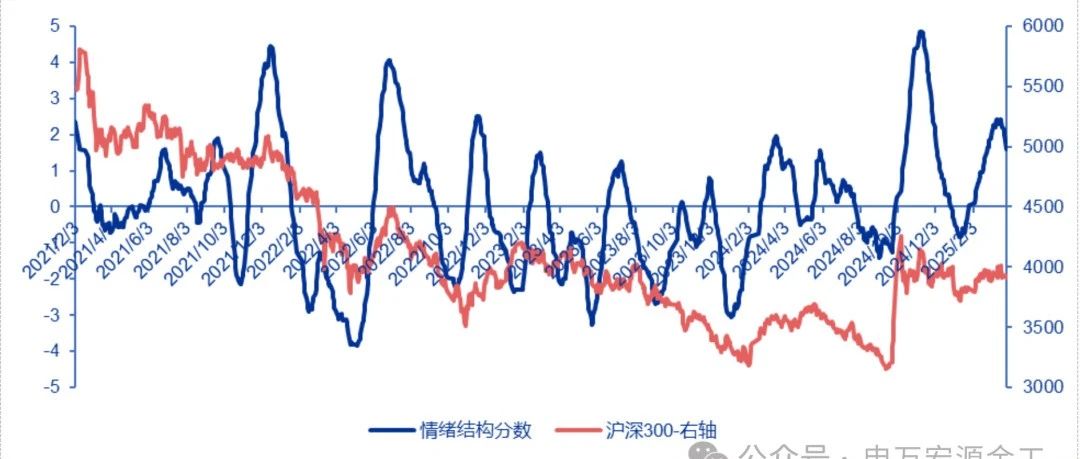
Group 1 - The core viewpoint of the article indicates that market sentiment has declined for two consecutive weeks, suggesting a bearish short-term outlook for market timing [1] - The market sentiment structure indicator was at 1.6 as of March 28, 2025, down 0.6 from the previous week, signaling a bearish outlook for the upcoming week [1] - The article highlights that the A-share market has experienced a decrease in trading volume, with a shift in funds from high-valuation growth sectors to low-valuation defensive sectors [5][9] Group 2 - The sentiment structure indicators show a negative signal, with trading volume decreasing and price-volume consistency declining to low levels [3] - The article notes that the overall trading volume in the A-share market has dropped to levels close to the beginning of the year, primarily due to a cooling off in the technology growth sector [5] - The article mentions that various industries have shown mixed performance, with a low degree of price-volume consistency, indicating a divergence in market sentiment [9] Group 3 - The cyclical defensive sectors are showing a predominantly bullish signal, with short-term trends favoring large-cap value stocks [12] - The public utilities sector continues to indicate a bullish signal, with other sectors like coal, transportation, and petrochemicals also showing positive short-term signals [12] - The relative strength indicators suggest that the large-cap and value styles are currently dominant, with a strong certainty of a shift towards large-cap and value stocks in the short term [14][15]
社保基金去年四季度抱团持有10股(附股)
Zheng Quan Shi Bao Wang· 2025-03-31 01:35
财报季,社保基金持股动向曝光!去年四季度末社保基金共现身154只个股前十大流通股东榜,新进39 只,增持44只。 证券时报数据宝统计显示,社保基金最新出现在154只个股前十大流通股东名单中,合计持股量42.98亿 股,期末持股市值合计630.47亿元。持股变动显示,不变26只,减持45只,新进39只,增持44只。 社保基金重仓股中,从前十大流通股东名单中社保基金家数来看,常熟银行(601128)、海信视像 (600060)等2只股有4家社保基金集中现身,持股量分别为26840.05万股、7523.57万股。 从持股比例看,社保基金持有比例最多的是常熟银行,持股量占流通股比例为8.90%,其次是赤峰黄金 (600988),社保基金持股比例为6.35%,持股比例居前的还有坚朗五金(002791)、航材股份、华特 达因(000915)等。持股数量方面,社保基金持股数量在1亿股以上的共有11只,社保基金持股量最多 的是常熟银行,共持有2.68亿股,钒钛股份(000629)、中国铝业(601600)等紧随其后,持股量分别 为2.00亿股、1.77亿股。 业绩方面,社保基金持有个股中,去年年报净利润同比增长的有99家,净 ...

【27日资金路线图】两市主力资金净流出近240亿元 医药生物等行业实现净流入
证券时报· 2025-03-27 11:40
Market Overview - The A-share market experienced an overall increase on March 27, with the Shanghai Composite Index closing at 3373.75 points, up 0.15%, the Shenzhen Component Index at 10668.1 points, up 0.23%, and the ChiNext Index at 2145.1 points, up 0.24% [1] - The total trading volume for both markets reached 11,906.9 billion yuan, an increase of 363.84 billion yuan compared to the previous trading day [1] Capital Flow - The net outflow of main funds from the two markets was nearly 240 billion yuan, with an opening net outflow of 151.33 billion yuan and a closing net outflow of 56.34 billion yuan, totaling 238.72 billion yuan for the day [2] - The CSI 300 index saw a net outflow of 31.82 billion yuan, while the ChiNext index experienced a net outflow of 82.42 billion yuan [4] Sector Performance - The pharmaceutical and biological sector saw a net inflow of 84.40 billion yuan, with a growth of 1.33%, led by Heng Rui Medicine [6] - Other sectors with net inflows included basic chemicals (26.01 billion yuan, up 1.36%) and banks (17.26 billion yuan, up 0.11%) [6] - Conversely, the machinery and equipment sector faced a significant net outflow of 97.87 billion yuan, down 1.21%, while the electric equipment sector saw a net outflow of 86.05 billion yuan, down 1.92% [6] Stock Highlights - The top stocks with net inflows included Zhejiang Huayuan (5318.77 million yuan, up 389.02%) and Hongbaoli (3306.35 million yuan, up 10.05%) [9] - Notable stocks with significant net outflows included South Precision (5479.37 million yuan, down 9.99%) and Dalian Heavy Industry (2081.08 million yuan, down 10.03%) [9] Institutional Focus - Institutions are currently focusing on stocks such as China Life (target price 48 yuan, current price 38.03 yuan, potential upside 26.22%) and China Pacific Insurance (target price 46.2 yuan, current price 32.20 yuan, potential upside 43.48%) [11]

公用事业行业资金流出榜:中国核电、韶能股份等净流出资金居前
Zheng Quan Shi Bao Wang· 2025-03-27 09:12
Market Overview - The Shanghai Composite Index rose by 0.15% on March 27, with 12 out of the 28 sectors experiencing gains. The top-performing sectors were pharmaceuticals and biotechnology, which increased by 1.88%, and food and beverage, which rose by 0.86% [1] - Conversely, the sectors with the largest declines were non-ferrous metals and social services, which fell by 1.30% and 1.29%, respectively. The public utilities sector ranked third in terms of decline [1] Capital Flow Analysis - The net outflow of capital from the two markets was 21.099 billion yuan, with 7 sectors seeing net inflows. The electronics sector led with a net inflow of 820 million yuan and a daily increase of 0.50%. The pharmaceuticals and biotechnology sector followed with a net inflow of 711 million yuan and a daily increase of 1.88% [1] - In contrast, 24 sectors experienced net capital outflows, with the power equipment sector leading at a net outflow of 5.14 billion yuan, followed by the machinery sector with a net outflow of 3.923 billion yuan. Other sectors with significant outflows included non-ferrous metals, telecommunications, and computers [1] Public Utilities Sector Performance - The public utilities sector declined by 1.15% with a total net outflow of 1.747 billion yuan. Out of 132 stocks in this sector, 11 stocks rose, including one that hit the daily limit, while 120 stocks fell, with one hitting the daily limit down [2] - The stocks with the highest net inflows in the public utilities sector included Meinuo Energy, which saw a net inflow of 35.31 million yuan, followed by Chuaneng Power and Chuan Investment Energy with net inflows of 23.76 million yuan and 18.90 million yuan, respectively [2] - The stocks with the largest net outflows included China Nuclear Power, which had a net outflow of 138.18 million yuan, followed by Shaoneng Shares and Huadian International with net outflows of 108.46 million yuan and 99.69 million yuan, respectively [2][4]