金融

Search documents
2026年度展望:海外政策&海外宏观
2025-11-26 14:15
Summary of Key Points from the Conference Call Industry and Company Overview - The discussion primarily revolves around the U.S. economy and the implications of the 2026 midterm elections under the Trump administration, focusing on fiscal and monetary policies, inflation, and investment opportunities in AI and gold. Core Insights and Arguments - **Economic Outlook**: The U.S. economy is expected to experience a rebound in the second half of 2026 after a short-term impact from government shutdowns, with fiscal and monetary policies driving expansion in Q3 and rising inflation pressures in Q4 [1][2] - **Fiscal Policy**: The Trump administration is likely to continue implementing expansionary fiscal policies, including a proposed $2,000 tax credit per person, to stimulate economic growth and garner voter support ahead of the midterm elections [1][8] - **Monetary Policy**: The new Federal Reserve chair is anticipated to focus more on economic downturn risks, potentially leading to more interest rate cuts than the market expects, with analysts predicting three rate cuts in 2026 [7] - **Inflation Trends**: Inflation is expected to remain sticky in the first three quarters of 2026, with a potential increase in inflationary pressures as the economy expands in Q4, raising concerns about a second wave of inflation risks [1][11] - **Investment Opportunities**: Gold and AI are identified as the best investment combinations, each representing half of the recommended portfolio, alongside stocks, commodities, and short-term U.S. Treasury bonds benefiting from loose fiscal and monetary policies [1][2][12] Additional Important Content - **Midterm Election Challenges**: The 2026 midterm elections pose significant challenges for Trump, with predictions indicating a 70% chance for Democrats to gain control of the House, which could lead to a divided government [3][4] - **Trade Policy**: Trump may leverage trade policies, including tariffs, to secure votes from key regions while also creating external conflicts to pressure the Federal Reserve into lowering interest rates [6] - **Market Sentiment**: While market sentiment may gradually improve, there are risks of sudden deterioration due to trade policy fluctuations and economic conditions [2] - **Asset Performance**: The macroeconomic environment is expected to favor lower dollar rates and a weaker dollar index, with gold prices likely to rise and stock and commodity markets benefiting from expansionary policies [13][14] This summary encapsulates the critical insights and projections regarding the U.S. economy, fiscal and monetary policies, and investment strategies as discussed in the conference call.
重庆“母城”将多举措深入推进中新合作
Zhong Guo Xin Wen Wang· 2025-11-26 13:56
Core Insights - Chongqing's Yuzhong District is set to deepen cooperation with Singapore in modern service industries and emerging sectors, marking the 10th anniversary of the China-Singapore (Chongqing) Strategic Connectivity Initiative [1][2] Group 1: Achievements in Cooperation - Over the past decade, Yuzhong District has attracted more than 50 new enterprises, including CapitaLand, accounting for 33% of the city's total [1] - The district has implemented over 30 key projects in collaboration with Singapore, with a total investment exceeding 5.6 billion USD, representing 20% of the city's investment in commercial and government cooperation projects [1] - Yuzhong has initiated 135 financial service projects with Singapore, securing financing of 19.26 billion USD, which constitutes over 50% of the city's total [1] Group 2: Future Initiatives - To enhance cooperation, Yuzhong will establish a dedicated operational team for the "Chongqing Raffles City China-Singapore Connectivity Project," focusing on information sharing and enterprise support [2] - A policy compilation titled "Deepening China-Singapore Cooperation" will be developed, featuring 21 actionable policies across ten areas, including financial technology and international consumer sectors [2] - Yuzhong aims to create a comprehensive service center for Singaporean enterprises, offering one-stop services such as business registration and policy consultation [2]
平保衍生品佈局:認股證與牛熊證的選擇策略
Ge Long Hui· 2025-11-26 13:31
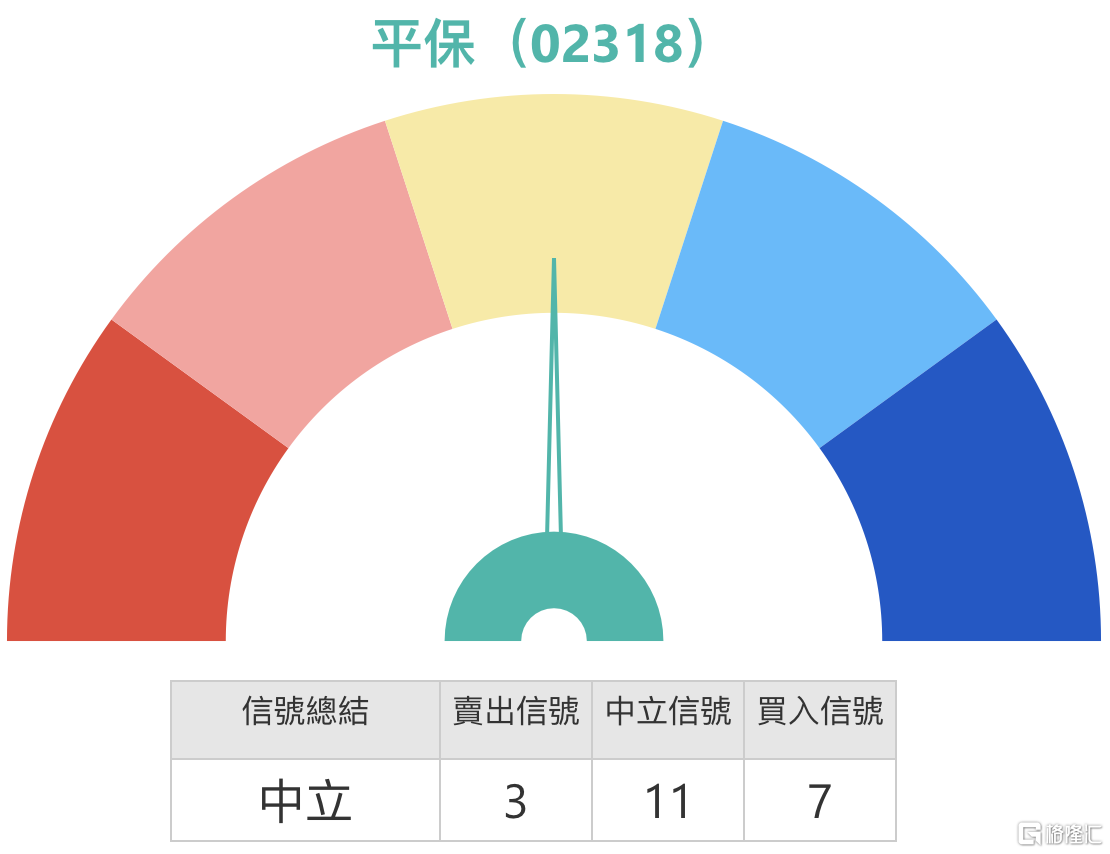
Core Viewpoint - Ping An's stock price rebounded by 1.86%, reaching 57.6 HKD, indicating a relatively stable trend compared to other financial stocks, with a 5-day volatility of 4.6%, suggesting potential value for investors seeking stable returns [1] Technical Analysis - Current technical indicators show a neutral pattern for Ping An, with a summary signal of "neutral" but a signal strength of 11, indicating balanced market forces [1] - The stochastic oscillator is in the oversold zone and has issued a buy signal, while the momentum oscillator and MACD both indicate sell signals, suggesting a potential turning point for Ping An [1] - Key price analysis reveals initial resistance at 59.1 HKD and stronger resistance at 60.3 HKD, with important support at 55.2 HKD and a further support level at 53.3 HKD if it breaks below [3] Derivative Products - For bullish investors, HSBC call warrant 18174 and Bank of China call warrant 18122 offer leverage of 24.2 times and 20.9 times, respectively, both with a strike price of 67.23 HKD [6] - For bearish investors, UBS put warrant 19360 and Bank of China put warrant 19397 provide leverage of 3.4 times and 3.5 times, respectively, with the latter offering a better balance of leverage and implied volatility [6] - In the recent performance of structured products, put warrants and bear certificates showed significant leverage effects during price declines, with Morgan Stanley bear certificate 54282 and UBS bear certificate 52561 recording a 21% increase when the underlying stock fell by 2.23% [3] Market Sentiment - The current stable trend and relatively low volatility of Ping An provide different risk-return characteristics for derivative product investors, raising questions about the potential direction of the stock's breakout [17] - Investors are encouraged to consider the different characteristics of call warrants and bull-bear certificates when selecting derivative products, as well as to share insights and trading strategies regarding Ping An's future market movements [17]

摩根大通:降息、减税若落地,印度股市有望在2026年底冲上30000点
Hua Er Jie Jian Wen· 2025-11-26 13:07
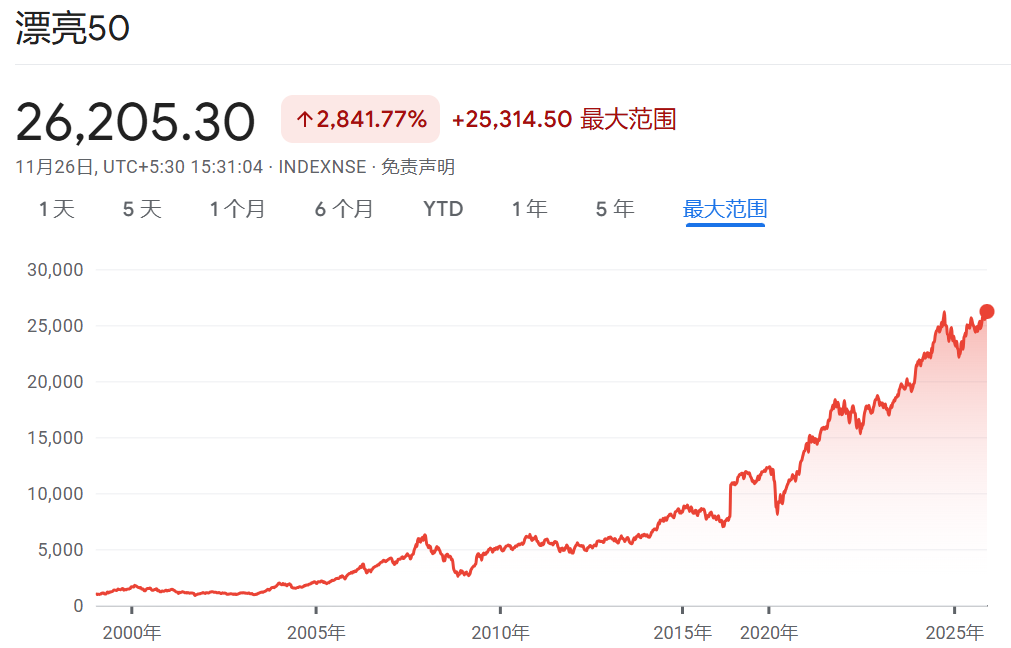
Core Viewpoint - Morgan Stanley predicts that the Indian benchmark Nifty 50 index is expected to rise to 30,000 points by the end of 2026, an increase of approximately 15% from current levels, driven by tax cuts and interest rate reductions [1] Market Performance - The Indian stock market experienced its strongest rebound in five months, with the Nifty 50 index surging 1.24% to 26,205.3 points, marking the highest closing level in 14 months [1] - The BSE Sensex index also rose 1.21% to 86,609.51 points, ending a three-day decline, with both indices recording their best single-day performance in five months [2] Economic Drivers - Morgan Stanley's report indicates that the Reserve Bank of India is expected to cut interest rates by 25 basis points in December, alongside recent tax cuts that have begun to boost consumption, corporate debt growth, and automobile sales, collectively driving domestic demand [3][4] - The report highlights that while the current valuation of the Indian stock market is at a premium compared to other emerging markets, it has fallen below long-term averages after 14 months of underperformance [4] Trade Relations - Analysts believe that the likelihood of a US-India trade agreement is high, which could lead to a short-term revaluation of the stock market. Increased oil imports from the US and reduced purchases from Russia may eliminate the possibility of punitive tariffs from the US [5] - The potential removal of the additional 25% tariff is expected to boost investor confidence, attract foreign capital, support the rupee, and benefit the IT and pharmaceutical sectors [5] Sector Preferences - Morgan Stanley maintains an "overweight" rating on sectors such as materials, financials, consumer goods, hospitals, real estate, defense, and power, while holding a "underweight" stance on IT and pharmaceutical sectors [7] - The analysis suggests that industries benefiting from domestic consumption growth and infrastructure development will perform better, with the financial sector poised to gain from the interest rate cycle and increased corporate debt demand [7]
摩根大通增持美图公司(01357)约977.22万股 每股作价约7.75港元
智通财经网· 2025-11-26 11:57
Core Viewpoint - Morgan Stanley has increased its stake in Meitu Inc. to approximately 5.01% by acquiring 9.772165 million shares at a price of HKD 7.7549 per share, totaling around HKD 75.7822 million [1] Company Summary - Morgan Stanley's latest shareholding in Meitu Inc. amounts to approximately 229 million shares [1] - The increase in shareholding reflects a strategic investment decision by Morgan Stanley in Meitu Inc. [1]
摩根大通增持宁德时代(03750)约68.35万股 每股作价约465.1港元
智通财经网· 2025-11-26 11:50
智通财经APP获悉,香港联交所最新数据显示,11月21日,摩根大通增持宁德时代(03750)68.3542万 股,每股作价465.0978港元,总金额约为3.18亿港元。增持后最新持股数目约为1115.12万股,持股比例 为7.15%。 ...

摩根大通增持国药控股(01099)约210.48万股 每股作价约20.11港元
智通财经网· 2025-11-26 11:50
Group 1 - Morgan Stanley increased its stake in China National Pharmaceutical Group (01099) by 2,104,841 shares at a price of HKD 20.1147 per share, totaling approximately HKD 42.34 million [1] - After the increase, Morgan Stanley's total shareholding in China National Pharmaceutical Group is approximately 67,182,200 shares, representing a 5% ownership stake [1]

世界经济论坛:全球金融体系出现断层,亟须加强监管合作
Zhong Guo Jing Ying Bao· 2025-11-26 11:02
(编辑:杨井鑫 审核:朱紫云 校对:张国刚) 该报告指出,金融碎片化的潜在风险为政策制定者和金融从业者选择另一条道路提供了充分理由——通 过加强监管合作、进一步标准化金融交易框架来重塑全球金融体系。借助区块链和人工智能等新兴技 术,各国可提升跨境支付透明度与效率。多方利益相关者协作能强化金融治理,有助于防范系统性风 险,确保金融市场公平高效运行。这种路径将增强全球经济体系的稳定性与韧性,促进各方互信。 中经记者 郝亚娟 夏欣 上海 北京报道 近日,世界经济论坛发布的一则报告显示,全球金融体系内部正在出现断层线,在不同地区和经济发展 水平层面都开始显现裂痕。尽管国际秩序和金融体系正变得更加多极化,但分析表明,全球化体系在短 期内可能仍将持续。然而,随着越来越多的政府将经济治国方略(即一个国家为实现外交政策和国内目 标所使用的经济工具和政策)的运用列为优先事项,金融体系存在进一步碎片化的风险。 ...
专访澳洲会计师公会金科:AI与互联网泡沫存在本质差异
2 1 Shi Ji Jing Ji Bao Dao· 2025-11-26 10:37
Core Insights - Concerns about an artificial intelligence (AI) bubble have led to market volatility, but the risk of a systemic collapse similar to the 2000 internet bubble is considered low due to fundamental differences between AI and the internet bubble [1][8][9] - The AI industry is experiencing localized overheating, but key indicators such as CAPEX growth, debt financing ratios, and profitability need to be monitored to assess potential risks [1][8] - AI applications in various industries are expanding, with 65% of surveyed companies in mainland China planning to increase AI usage in the next 12 months, a 17 percentage point increase from the previous survey [1][2] Industry Trends - AI is expected to accelerate vertical development across different industries, integrating closely with industry characteristics and business models [2][25] - The trend of "human-machine collaboration" is becoming more pronounced, with companies reducing entry-level accounting positions while increasing the hiring of AI-skilled professionals [3][4] - The employment market is shifting from "job replacement" to "value enhancement," focusing on high-value functions that AI cannot easily replace [4][10] Challenges in AI Adoption - Companies face three main challenges in AI implementation: cost and return on investment uncertainty, technology and organizational fit, and compliance and risk management pressures [4][5][6] - 40% of surveyed companies cite financial costs and low ROI as primary challenges, with 49% of small and medium-sized enterprises (SMEs) particularly sensitive to these issues [6][8] - The complexity of integrating AI with existing technology systems poses significant challenges, especially for SMEs that often lack technical talent [5][6] Strategic Recommendations - Companies should anchor their AI investments to application value, focusing on quantifiable outcomes rather than following trends blindly [10][11] - Balancing short-term costs with long-term capabilities is crucial, with SMEs encouraged to adopt lightweight third-party AI tools initially [11][17] - Organizations should establish a governance framework for AI that encompasses data collection, model training, and application deployment to mitigate risks and ensure compliance [12][13][19] Future Outlook - AI is expected to continue its integration into various sectors, with significant applications already seen in finance, accounting, and auditing [12][13] - The "14th Five-Year Plan" in China is anticipated to drive new productivity through AI, fostering innovative digital business models [2][25] - By 2026, companies are advised to focus on AI, data analytics, and business intelligence software as key areas for technological investment [25]
“反内卷”离不开扩需求政策的配合|宏观晚6点
Sou Hu Cai Jing· 2025-11-26 10:12
Group 1: Macro News - The first consumer promotion document after the Fourth Plenary Session has been released, focusing on enhancing the adaptability of supply and demand for consumer goods through 19 key tasks across five areas [1] - By 2027, the supply structure of consumer goods is expected to be significantly optimized, forming three trillion-level consumption fields and ten hundred-billion-level consumption hotspots [1] - By 2030, a high-quality development pattern characterized by positive interaction and mutual promotion between supply and consumption is anticipated, with a steady increase in the contribution rate of consumption to economic growth [1] Group 2: Corporate Actions - Guangdong Province is exploring the inclusion of mergers and acquisitions, as well as asset revitalization, into the performance evaluation system for state-owned enterprises [2] - The plan encourages listed state-owned enterprises to flexibly utilize financing tools such as targeted issuance, special convertible bonds, and acquisition loans to strengthen and expand their operations [2] Group 3: Telecommunications Industry - As of the end of October, the total number of 5G base stations reached 4.758 million, with a net increase of 507,000 compared to the end of the previous year [3] - 5G base stations account for 37% of the total mobile base stations, with an increase of 0.4 percentage points compared to the third quarter [3]