智能穿戴

Search documents
沪市公司前三季度净赚约3.8万亿元 新质生产力成重要动能
Jin Rong Shi Bao· 2025-11-04 02:09
Core Insights - The overall performance of companies listed on the Shanghai Stock Exchange has shown positive growth in both revenue and net profit for the third quarter of 2025, driven by effective macroeconomic policies [1] - The Science and Technology Innovation Board (STAR Market) has demonstrated robust growth, with significant increases in revenue and R&D investment among companies, particularly in high-tech sectors [2][3] - New consumption trends are emerging, with a notable rise in demand for smart and high-end products, as well as diversification in basic consumer goods [4][5] - The photovoltaic industry is transitioning from a focus on scale to quality and efficiency, aided by government policies aimed at reducing "involution" and promoting high-quality development [6][7] Group 1: Shanghai Stock Exchange Performance - In the first three quarters of 2025, companies on the Shanghai Stock Exchange achieved a total operating revenue of 37.58 trillion yuan, a slight year-on-year increase, and a net profit of 3.79 trillion yuan, up 4.5% year-on-year [1] - In Q3 2025, net profit and net profit after deducting non-recurring gains and losses increased by 11.4% and 14.6% year-on-year, respectively, with significant quarter-on-quarter growth [1] - A total of 501 companies have announced dividend plans, with cash dividends exceeding 600 billion yuan, reflecting a 3.3% year-on-year increase [1] Group 2: STAR Market Developments - The 588 companies on the STAR Market reported a combined operating revenue of 1.01 trillion yuan, marking a 6.6% year-on-year growth, with a median R&D intensity of 12.4% [2] - Among unprofitable companies on the STAR Market, those that disclosed Q3 reports showed a 35.1% increase in revenue and a 45.4% reduction in net losses, with a median R&D intensity of 44.3% [2] - High-tech manufacturing services invested 229.6 billion yuan in R&D, leading to a 10% increase in revenue and a 19% increase in net profit [2] Group 3: New Consumption Trends - Companies in the smart home sector, such as Ecovacs, reported a 131% year-on-year increase in net profit, while Haier's user co-creation initiatives led to a 15% increase in net profit [4] - In the smart wearable market, Huaqin Technology achieved over 50% growth in both revenue and net profit [4] - The food and beverage sector is expanding, with Kweichow Moutai's mid-to-high-end sales increasing by 20% year-on-year [5] Group 4: Photovoltaic and Lithium Battery Industries - The photovoltaic industry is shifting towards technological innovation and global expansion, with companies like Tongwei reporting significant reductions in losses [6] - In the lithium battery sector, companies like Huayou Cobalt and Putailai achieved net profit increases of 40% and 37%, respectively, through product optimization [7] - The steel and cement industries are also seeing improved profitability, with net profits increasing by 550% and 21% year-on-year, respectively, due to better pricing and cost management [7]
沪市公司前三季度净赚约3.8万亿元
Jin Rong Shi Bao· 2025-11-04 01:08
Group 1: Financial Performance of Companies - In the first three quarters of 2025, companies listed on the Shanghai Stock Exchange achieved a total operating revenue of 37.58 trillion yuan, a slight year-on-year increase [1] - Net profit reached 3.79 trillion yuan, representing a year-on-year growth of 4.5%, while the net profit after deducting non-recurring items was 3.65 trillion yuan, up 5.5% year-on-year [1] - In Q3 2025, net profit and net profit after deducting non-recurring items grew by 11.4% and 14.6% year-on-year, respectively, and by 16.9% and 19.2% quarter-on-quarter [1] Group 2: Development of Sci-Tech Innovation Board Companies - A total of 588 companies on the Sci-Tech Innovation Board reported combined operating revenue of 1.01 trillion yuan, marking a year-on-year increase of 6.6% [2] - The median R&D intensity of these companies reached 12.4%, with significant breakthroughs in various fields [2] - Among unprofitable companies on the Sci-Tech Board, 33 companies reported a revenue increase of 35.1% while reducing losses by 45.4% year-on-year [2] Group 3: Key Technological Breakthroughs - In the biopharmaceutical sector, 26 new class 1 drugs have been approved since 2025, including a globally first "rice-derived" innovative drug [3] - In high-end equipment, domestic high-end five-axis machine tools have achieved mass import substitution in key fields like aerospace [3] - In the communications sector, a global first four-channel ultra-low noise semiconductor single-photon detector has been mass-produced, setting a world record [3] Group 4: New Consumption Trends - The smart home sector is experiencing high growth, with companies like Ecovacs reporting a 131% year-on-year increase in net profit [4] - In the smart wearable market, companies like Huaqin Technology achieved over 50% growth in both revenue and net profit [5] - The food and beverage sector is expanding, with high-end yellow wine sales increasing by 20% year-on-year [5] Group 5: Industry Restructuring and Quality Improvement - The photovoltaic industry is transitioning from scale competition to quality and efficiency, with companies like Tongwei significantly reducing losses [6] - In the lithium battery sector, companies are achieving performance growth through process upgrades and product structure optimization, with Huayou Cobalt's net profit increasing by 40% [6] - The steel industry saw a 550% year-on-year increase in net profit, while the cement industry benefited from improved product prices and reduced costs [7]
华为商用智能手表首发智感窗技术,支持eSIM;亚马逊称Anthropic将采用其100万块定制AI芯片丨智能制造日报
创业邦· 2025-10-31 06:56
Group 1 - The core viewpoint of the article highlights significant developments in various industries, including logistics, semiconductor, wearable technology, and AI chip deployment [2][3][4]. Group 2 - The partnership between ProLogis Tianjin Airport Automotive Industrial Park and Fusheng Automotive Eco-Technology Group for the establishment of a national warehouse for after-sales parts of FAW Toyota, with an investment exceeding 100 million yuan to create a new generation automated and intelligent benchmark warehouse [2]. - The storage chip market is experiencing a supply shortage, with prices increasing by 60% to 80%, and some popular models seeing price hikes of up to 100%. This surge is attributed to a shift in production focus towards high-end chips for AI and data centers, alongside a cyclical recovery in the semiconductor industry [2]. - Huawei launched the H7556 smart watch featuring the "Smart Window" health monitoring technology and eSIM independent communication capabilities, marking a significant advancement in wearable technology [2]. - Amazon announced that Anthropic plans to utilize 1 million of its custom AI chips by the end of 2025, following the completion of its large data center project [2].


8点1氪|工行回应多名用户App内资产被清零;美方加征24%关税继续暂停一年;钟慧娟母女取代宗馥莉成为中国女首富
3 6 Ke· 2025-10-30 23:57
Group 1 - Industrial and Commercial Bank of China (ICBC) reported a net profit of 101.82 billion yuan for Q3, a year-on-year increase of 3.29% [22] - Construction Bank reported a net profit of 95.28 billion yuan for Q3, a year-on-year increase of 4.19% [23] - Agricultural Bank reported a net profit of 81.35 billion yuan for Q3, a year-on-year increase of 3.66% [24] Group 2 - BYD reported a net profit of 7.82 billion yuan for Q3, a year-on-year decrease of 32.60% [19] - SAIC Motor reported a net profit of 2.08 billion yuan for Q3, a year-on-year increase of 644.88% [20] - Spring Airlines reported a net profit of 1.17 billion yuan for Q3, a year-on-year decrease of 6.17% [21] Group 3 - Starbucks reported a revenue of $3.105 billion in the Chinese market for the fiscal year 2025, a year-on-year increase of 5% [26] - Netflix announced a 1-for-10 stock split to make shares more accessible to retail investors [27] - Meta Platforms received $125 billion in subscriptions for its latest bond issuance, setting a record for corporate bond offerings [32]

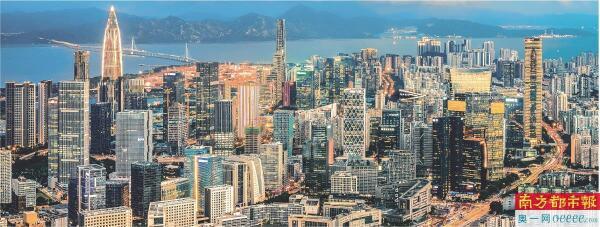
宝安何以成为“冠军”的摇篮?
Nan Fang Du Shi Bao· 2025-10-30 01:43
Core Insights - The announcement of the seventh batch of "specialized, refined, distinctive, and innovative" small giant enterprises highlights Shenzhen's Bao'an District, which has set a record with 102 companies selected in a single batch, bringing the total to 380, making it the leading district in the country [1][5] - The selected companies predominantly focus on core manufacturing sectors, with nearly 60% engaged in areas such as semiconductor packaging equipment and core components for robotics, showcasing their global competitiveness [1][5] Group 1: Company Characteristics - Shenzhen Youchuangyi Technology Co., Ltd. exemplifies the growth path of small giant enterprises by focusing on core technology rather than competing in the crowded consumer market, creating a competitive barrier that is difficult to replicate [2][5] - Youchuangyi addresses key industry pain points, such as Bluetooth connectivity stability and battery life, by investing heavily in data collection and algorithm development, achieving laboratory-level accuracy in health metrics [2][5] Group 2: Industrial Ecosystem - The "one-hour industrial circle" in Bao'an enhances efficiency, allowing rapid collaboration among chip manufacturers, component suppliers, and testing labs, which significantly reduces time to market for new products [6][11] - Bao'an's industrial ecosystem has evolved from a "world factory" into a high-density collaborative network, enabling quick problem-solving and innovation [6][11] Group 3: Government Role - The Bao'an government plays a crucial role in fostering innovation and building industrial clusters by introducing top research institutions and organizing technology matchmaking events to support enterprises [7][8] - The establishment of the "Specialized, Refined, Distinctive, and Innovative Headquarters Base" serves as an accelerator for enterprise growth, providing a collaborative ecosystem that connects state-owned enterprises with private firms [10][12] Group 4: Challenges and Future Directions - Experts note that while Bao'an's small giant phenomenon represents a successful transformation of traditional industrial zones, future challenges include achieving breakthroughs in source innovation and attracting top talent [13][14] - The combination of existing industrial foundations and government support is essential for sustaining growth and defining new heights in the global industrial landscape [13][14]
深圳新增“小巨人”数量领跑全国,背后是啥培育经?
Nan Fang Du Shi Bao· 2025-10-29 23:07
Core Insights - Shenzhen has emerged as the leading city in China with 347 enterprises recognized as "specialized, refined, distinctive, and innovative" (小巨人) in the latest batch, marking a historical high for the city [3][6] - The districts of Bao'an, Nanshan, Longgang, and Longhua collectively account for over 82% of the recognized enterprises in Shenzhen, with Bao'an alone contributing 102 enterprises [3][6] - The "specialized, refined, distinctive, and innovative" enterprises play a crucial role in the industrial ecosystem, representing key sectors and demonstrating significant innovation and competitiveness [4][18] Summary by District Bao'an District - Bao'an District has set a record with 102 enterprises recognized in this batch, making it the first district in the country to exceed 100 entries in a single batch [6][10] - Nearly 60% of these enterprises are rooted in core manufacturing sectors, showcasing strengths in strategic emerging industries such as semiconductors and robotics [6][11] - The district's vibrant industrial ecosystem supports rapid product development and innovation, exemplified by companies like Youchuangyi Technology, which focuses on core technology development [7][10] Nanshan District - Nanshan District has 84 enterprises recognized, bringing its total to 374, maintaining a leading position among urban districts [8][9] - The district's industrial ecosystem is characterized by spatial concentration and a robust support system, facilitating collaboration and resource access for enterprises [8][9] - Nanshan's policies provide comprehensive support across funding, talent, and space, ensuring that benefits reach the enterprises effectively [9][18] Longgang District - Longgang District has 53 newly recognized enterprises, increasing its total to 162, supported by its strong industrial base [10][11] - The district focuses on sectors like semiconductors, intelligent manufacturing, and high-end medical devices, fostering a conducive environment for "small giant" enterprises [10][11] - Companies like Zhengde Intelligent Control have thrived by specializing in high-efficiency micro-motors, leveraging opportunities in AI and robotics [11][12] Longhua District - Longhua District has 47 enterprises recognized, with a focus on establishing a systematic nurturing framework for quality SMEs [13][14] - The district's policies emphasize a tiered cultivation system, ensuring a structured approach to support the growth of specialized enterprises [14][19] - Companies like Yongyihao Electronics are committed to increasing R&D investment and exploring new sales channels to meet market demands [13][14] Expert Opinions - Experts highlight that Shenzhen's success in nurturing "small giant" enterprises stems from a highly market-oriented ecosystem that respects market dynamics and encourages entrepreneurial spirit [15][16] - The concentration of specialized enterprises is seen as a key indicator of regional industrial competitiveness, with potential for significant contributions to innovation and economic growth [15][16] - Recommendations include enhancing the innovation ecosystem, improving financial support mechanisms, and providing diverse application scenarios to further facilitate the growth of specialized enterprises [18][19]
喜娜AI速递:昨夜今晨财经热点要闻|2025年10月25日
Sou Hu Cai Jing· 2025-10-24 22:14
Group 1 - The core focus of the upcoming China-U.S. trade negotiations in Malaysia will be on technology export controls, tariffs, and China's rare earth exports, aiming to ease current trade tensions [2] - The "15th Five-Year Plan" has been approved, emphasizing technological self-reliance and a modern industrial system, which is expected to guide China's economic direction over the next five years [2] - On October 24, A-shares surged, with the Shanghai Composite Index reaching a ten-year high, driven by strong performance in the technology sector, particularly in communications and electronics [2] Group 2 - The U.S. September CPI data showed a lower-than-expected inflation rate, leading to increased market expectations for further interest rate cuts by the Federal Reserve [3] - As of October 17, the stock private equity position index reached 79.68%, indicating a bullish sentiment among private equity firms, with over 60% of large private equity firms fully invested [3] - Several companies reported significant growth in their Q3 earnings, with Huawu Co. seeing a net profit increase of 4202.15% year-on-year, boosting market confidence [3] Group 3 - International gold prices experienced short-term fluctuations, but the long-term outlook remains positive, with JPMorgan maintaining a bullish forecast for gold prices by the end of 2026 [4] - Alibaba launched its first self-developed AI glasses, which may set a new trend in the smart wearable market, featuring dual flagship chips and a comfortable design [5] - JD.com has implemented strict pricing requirements for merchants during the "Double 11" shopping festival, reflecting a shift in the e-commerce landscape and raising concerns about potential price monopolies [5] - The Central Bank of Russia cut its benchmark interest rate by 50 basis points to 16.5%, marking the fourth consecutive rate cut amid complex inflation dynamics [5]
向新、向智、向绿——第138届广交会第一期交出靓丽答卷
Shang Wu Bu Wang Zhan· 2025-10-22 17:36
Core Insights - The 138th Canton Fair focuses on "advanced manufacturing," showcasing innovations in new, intelligent, and green technologies, with a record number of high-quality enterprises participating [1] Group 1: Exhibits and Innovations - A total of 850,000 exhibits were presented, with new products, intelligent products, green low-carbon products, and products with independent intellectual property rights accounting for 16%, 15%, 25%, and 31% respectively [2] - Over 70% of the new products utilized new technologies, and the number of entries for the Canton Fair Design Innovation Award reached a record high, with intelligent products increasing by 30% [2] Group 2: Exhibitors and Quality - Among the 12,000 participating enterprises, over 5,600 were recognized as high-tech, specialized, or champions in their fields, while more than 4,000 were emerging companies in sectors like new energy vehicles and intelligent manufacturing [3] - 66% of the exhibitors adopted new technologies and models such as industrial internet, artificial intelligence, and green production [3] Group 3: International Participation - The fair attracted over 157,000 foreign buyers from 222 countries and regions, marking a 6.3% increase compared to the previous session, setting a historical record [4] - Notable growth was observed in buyers from the EU, the US, and Belt and Road Initiative countries, with 118 foreign business organizations attending, an increase of 8% [4] Group 4: Services and Experience - Various trade promotion activities were held, including domestic sales matching events and themed forums, enhancing market access for enterprises [5] - The fair introduced smart navigation services, with 214,000 users benefiting from the upgraded services, and the Canton Fair app added 24 new features, achieving 343,000 downloads [5] Group 5: Upcoming Events - The second phase of the Canton Fair will take place from October 23-27, focusing on "quality home goods," with an exhibition area of 515,000 square meters and approximately 25,000 booths [5]
长城会见证华为运动健康技术跃迁:血压管理带来新方式
Huan Qiu Wang· 2025-10-22 12:15
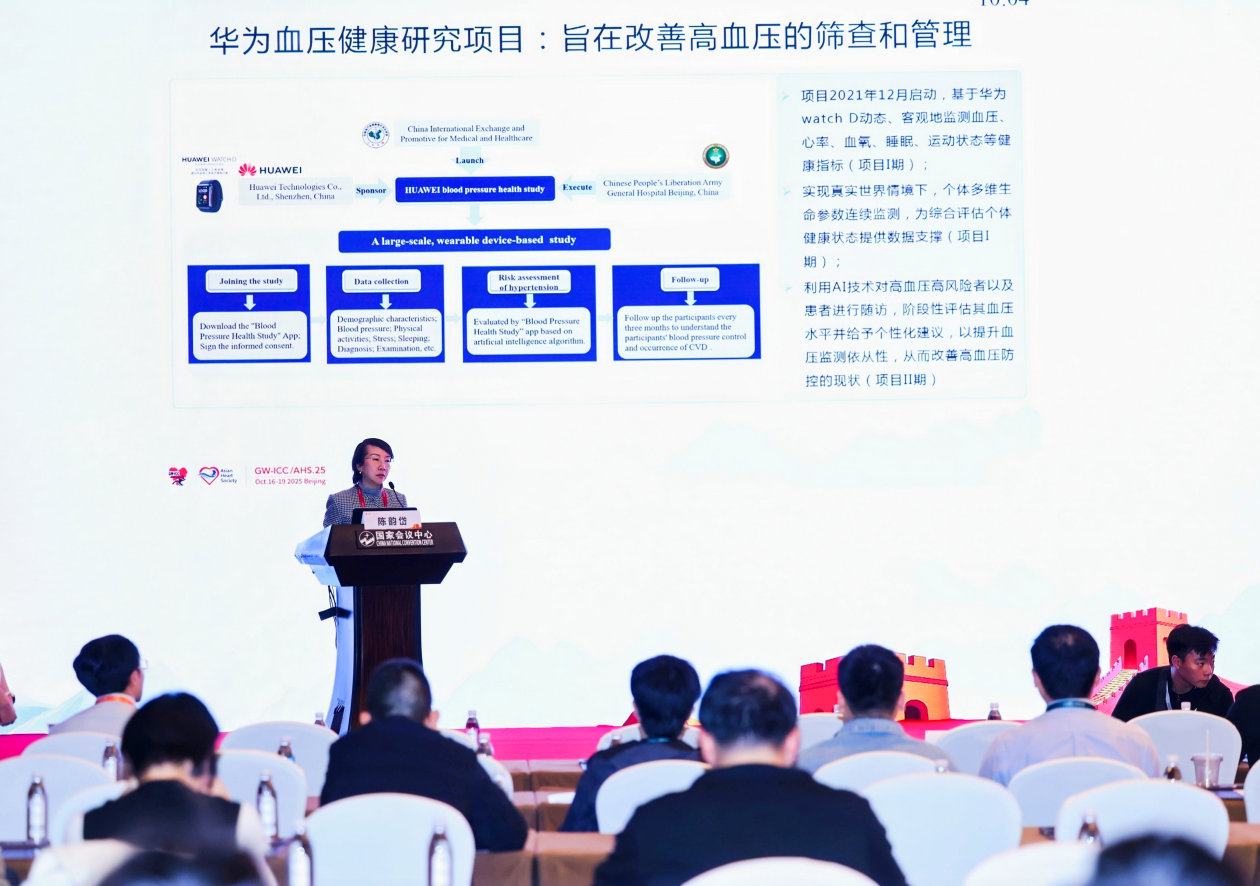
Core Insights - The 36th Great Wall Cardiology Conference and Asian Heart Congress will take place in Beijing on October 16, 2025, showcasing Huawei's advancements in wearable health technology, particularly in chronic disease management such as blood pressure and atrial fibrillation [1][11] Group 1: Technological Innovations - Huawei's wearable devices are integrating AI for blood pressure management, as demonstrated by a presentation from Professor Chen Yundai, highlighting the results of an AI-enabled wearable device blood pressure follow-up study [2] - The Huawei WATCH GT 6 provides continuous monitoring of atrial fibrillation frequency and duration, offering quantifiable data for stroke prevention, which traditional monitoring methods fail to capture [4] - The advanced technology behind Huawei's devices, including the 70+ detection indicators of the Ascend system, allows for comprehensive health assessments and proactive health management [6] Group 2: Product Development and Clinical Integration - Huawei has developed a closed-loop system for health research, with over 250 health studies and 14 million users contributing to data accumulation, facilitating a seamless transition from data collection to clinical application [7] - The Huawei WATCH D2 has received medical device certifications in multiple countries and features a 24-hour dynamic blood pressure monitoring capability, providing clinical-standard reports for healthcare professionals [9] Group 3: Industry Implications - The aging population presents challenges in cardiovascular disease management, and Huawei's innovations in wearable technology and AI aim to address these issues by extending health monitoring into daily life [11] - The integration of professional medical capabilities into everyday wearable devices positions Huawei's products as a potential first line of defense in family health management, contributing to a broader public health framework [11]
高市早苗当选日本女首相,宁德时代前三季净利490亿 | 财经日日评
吴晓波频道· 2025-10-22 00:41
Group 1: Political Developments in Japan - Takashi Sawa was elected as Japan's first female Prime Minister, winning 125 votes in the second round of the Senate election and 237 votes in the first round of the House of Representatives [2] - Sawa is a proponent of expansionary fiscal policies and plans to increase defense spending, which may delay the Bank of Japan's interest rate hike plans [2][3] - The new government may face internal challenges in policy implementation due to its cross-party coalition [3] Group 2: Semiconductor Industry and China-Netherlands Relations - The Netherlands is seeking dialogue with China to resolve the deadlock surrounding Nexperia Semiconductor, which has implications for global automotive chip supply chains [4][5] - The Dutch government's intervention in Nexperia's affairs was prompted by U.S. pressure and aims to prevent the transfer of business and intellectual property out of Europe [4] - The intervention has disrupted normal production and created uncertainty in the global automotive manufacturing sector [5] Group 3: Real Estate Market in Shanghai - Shanghai's Xuhui Riverside area set a new record for land prices, with China Overseas acquiring a plot for 44.65 billion yuan, resulting in a floor price of 148,500 yuan per square meter [6] - The new home sales in Shanghai showed a significant increase in September, with a 35.9% month-on-month rise [6] - The cancellation of housing type controls in Shanghai's land auction indicates a shift in real estate market regulation, allowing market demand to dictate new home sizes [7] Group 4: Smart Glasses Market Growth - The global smart glasses market is projected to reach 4.065 million units shipped in the first half of 2025, marking a 64.2% year-on-year increase [8] - Meta's recent launch of Ray-Ban Display smart glasses has generated significant consumer interest, indicating market potential [8] - Despite initial enthusiasm, challenges such as limited battery life and high prices remain barriers to mainstream adoption [9] Group 5: CATL Financial Performance - CATL reported a revenue of 283.072 billion yuan for the first three quarters, a 9.28% increase year-on-year, with a net profit of 49.034 billion yuan, up 36.2% [10] - The company's cash flow from operating activities was 80.66 billion yuan, reflecting a 19.6% increase [10] - CATL's profit growth is constrained by near-full production capacity and the need for new capacity expansion [11] Group 6: Lithium Carbonate Prices and Inventory Pressure - Lithium carbonate prices have started to recover, but CATL's battery prices have not followed suit, as the company focuses on maintaining product competitiveness [12] - The increasing share of energy storage products in CATL's sales has led to longer payment cycles and inventory pressure [12] Group 7: Cambrian Technology's Fundraising and Performance - Cambrian Technology completed a nearly 4 billion yuan private placement, raising approximately 3.985 billion yuan after expenses [13] - The company reported a 1332.52% year-on-year increase in third-quarter revenue, reaching 1.727 billion yuan, and a net profit of 567 million yuan, marking a turnaround [13] - Despite significant revenue growth, Cambrian's valuation remains high compared to global competitors, raising concerns about its long-term performance [14] Group 8: Kering's Sale of Beauty Business to L'Oréal - Kering announced the sale of its beauty division to L'Oréal for 4 billion euros, expected to close in the first half of 2026 [15] - The sale is part of Kering's strategy to reduce debt, which has reached 95 billion euros, amid declining performance in its core luxury brands [15][16] - L'Oréal aims to strengthen its position in the high-end fragrance market through this acquisition, while Kering focuses on its core business [16] Group 9: Stock Market Performance - The stock market experienced a rebound, with the Shanghai Composite Index rising 1.36% to 3916.33 points, and the ChiNext Index increasing over 3% [17] - Market sentiment has shifted positively due to easing tensions regarding the Russia-Ukraine conflict and expectations of supportive real estate policies [18] - The market remains volatile, with significant trading volume and a mix of sector performances, indicating ongoing investor interest [18]