
算力

Search documents
贵州有“度”量!看2025年刷屏全国的贵州“符号”
Xin Lang Cai Jing· 2025-12-31 05:29
Group 1 - Guizhou is leveraging its cultural and tourism integration, particularly with the release of "Nezha 2" during the 2025 Spring Festival, attracting nationwide audiences to its IMAX-GT cinema [2] - The city has over 3,000 coffee shops, leading the nation in density, and has become known for its "Morning Coffee, Evening Craft Beer" lifestyle, injecting new vitality into the consumer market [7] - The completion of the Huajiang Grand Canyon Bridge in September 2025, with a main span of 1,420 meters and a height of 625 meters above water, has improved regional transportation and activated a new ecosystem for bridge tourism integration [15] Group 2 - Guizhou's computing power has significantly supported the production of films, with over 40% of the special effects in "Nezha 2" backed by local computing capabilities, which reached a scale of 92 Eflops by July 2025 [19] - The opening of the Panxing High-Speed Railway on November 28, 2025, marks Guizhou as the first province in Southwest China to achieve high-speed rail coverage for all administrative centers, benefiting 2.98 million people [23] - The various developments in Guizhou reflect a comprehensive approach to development, connecting urban and rural areas, tradition and modernity, and domestic and international perspectives, showcasing the province's vibrant future [27]


将扩大有效需求 作为高质量发展的关键抓手
Xin Lang Cai Jing· 2025-12-30 20:11
Core Viewpoint - The Sichuan Provincial Economic Work Conference emphasizes the importance of expanding effective demand as a key strategy for promoting high-quality economic development, particularly in Chengdu as the core engine of the Chengdu-Chongqing economic circle [1] Consumption Expansion and Quality Improvement - Chengdu aims to enhance consumer spending through policies and innovative consumption scenarios, targeting a retail sales total of 8,291.7 billion yuan by the third quarter of 2025, reflecting a 6.5% year-on-year growth, surpassing the national average of 4.5% [1] - The "trade-in" policy has been pivotal in stimulating large-scale consumption, with over 58,000 applications for vehicle subsidies in the first half of 2025, leading to new car sales of 40 billion yuan [2] - Innovative consumption scenarios are reshaping the urban consumption ecosystem, with a 197.2% increase in retail sales of communication equipment and a 22.2% growth in sports and entertainment products by 2025 [3] Investment Precision and Infrastructure Development - Chengdu focuses on major projects in infrastructure, industry upgrades, and public welfare to enhance investment scale and efficiency, with significant infrastructure projects like the completion of the Jinsha River Silver River Hydropower Station by December 2025 [5] - The city is advancing new productive forces through investments in artificial intelligence and other emerging industries, with the first commercial supercritical carbon dioxide generator set to operate in 2025 [6] Social Investment and Quality of Life - Investment in public services such as education, healthcare, and elderly care is increasing, with plans to build or expand 20 schools and add 30 community elderly care complexes by 2025 [7] - This investment strategy aims to alleviate residents' financial burdens in education, healthcare, and elderly care, thereby enhancing consumer confidence and spending capacity [7] Regional Collaborative Development - Chengdu is breaking the urban-rural dual structure and promoting regional collaboration to extend the internal demand market from cities to rural areas, with rural residents' disposable income projected to grow by 5.8% by 2025 [8] - The Chengdu-Chongqing economic circle is expected to see a retail sales total exceeding 3 trillion yuan by 2025, becoming one of the fastest-growing regional consumer markets in the country [9] Reform and Innovation - Continuous optimization of consumption policies is essential to enhance consumer confidence and capability, with plans to expand the scope of trade-in subsidies and improve the quality of consumption scenarios [11] - The focus on breaking down barriers to resource allocation and promoting regional integration is crucial for expanding internal demand and enhancing market efficiency [12]
大利好,02469,直线拉升!“寒王”重回A股第一,国产算力持续高景气
Zheng Quan Shi Bao· 2025-12-30 10:38
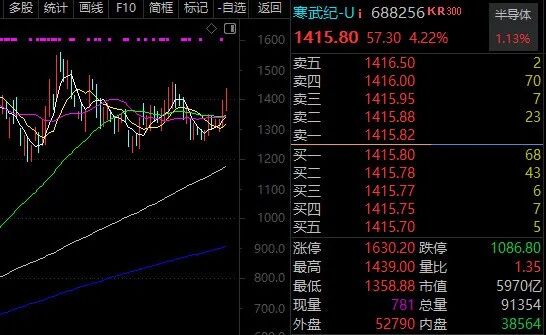
Group 1 - The core viewpoint of the news is the positive impact of government policies on the AI education sector, which has led to stock price increases for related companies like Fenbi (02469.HK) and Dou Shen Education [2][3] - The Ministry of Education plans to further promote AI in education, with policies expected to be released next year, aiming to enhance the educational system and cultivate high-quality talent for the intelligent era [2] - The implementation of the National Education Digital Strategy 2.0 has already shown progress in integrating AI across various educational applications [2] Group 2 - Companies like Century Tianhong are establishing AI+Education as a second growth curve, launching products such as Xiao Hong Assistant and automated grading tools, which have begun commercial trials with positive initial results [3] - The stock market has seen significant movements in the technology sector, particularly in robotics and computing power, with notable gains in companies like Tianming Technology and Hanwang Technology [4] - The stock price of Cambrian (寒武纪-U) has surged over 4%, reaching 1415.8 yuan, reclaiming its position as the top stock in A-shares, driven by strong market sentiment and strategic developments in the semiconductor industry [4][6] Group 3 - The "14th Five-Year Plan" emphasizes support for strategic emerging industries, including quantum technology and AI, which is expected to bolster the computing power sector [6] - Recent disclosures from companies like Chip Origin indicate a significant increase in new orders, with a 129.94% year-over-year growth, highlighting the robust demand in the computing power market [6] - Analysts predict that 23 stocks in the domestic computing power sector will see net profit growth exceeding 20% in 2026 and 2027, with some companies like Cambrian and Chip Origin expected to exceed 30% growth [6][7]

赛迪顾问发布 2026年IT趋势
Sou Hu Cai Jing· 2025-12-30 04:10
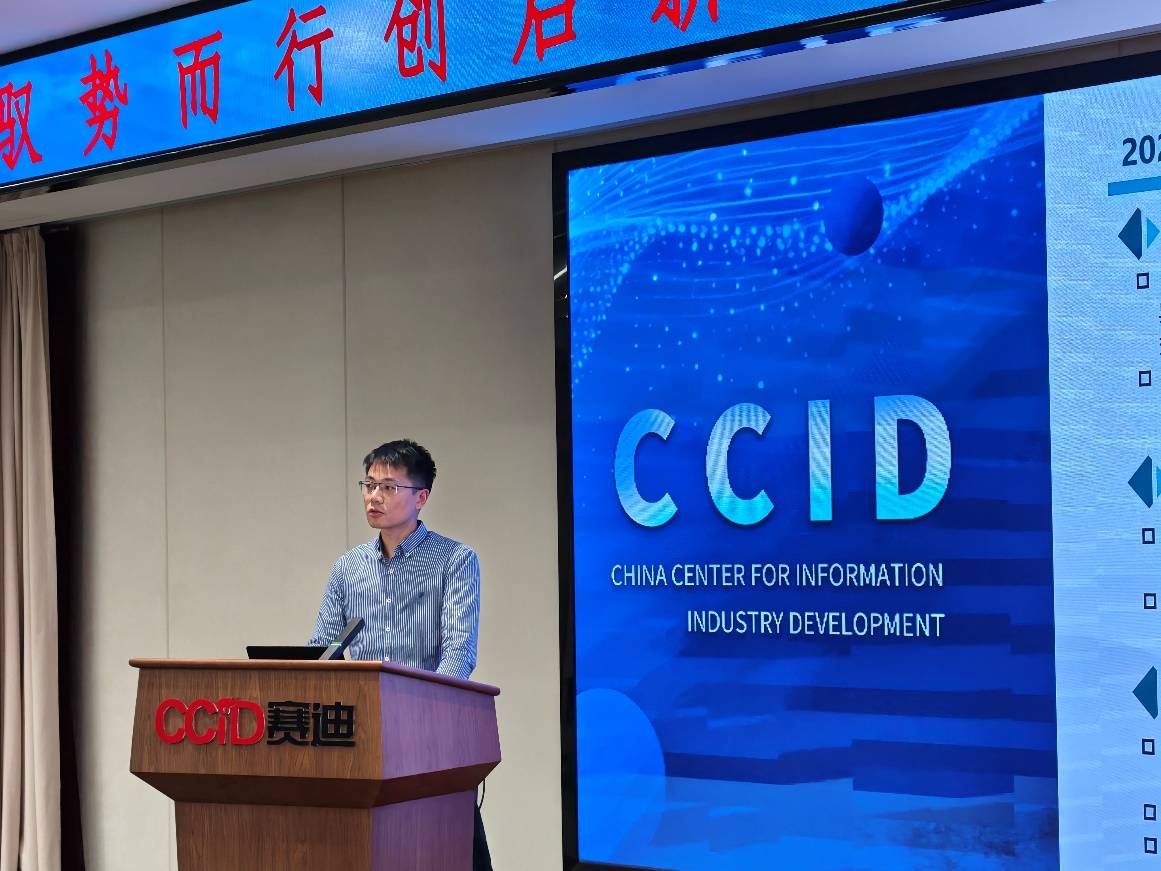
Core Insights - The report by CCID Consulting outlines key IT trends for 2026, focusing on areas such as computing power, storage, AI, industrial software, cybersecurity, satellite communication, industrial internet, financial digital transformation, and urban trusted data spaces [1] Group 1: Artificial Intelligence - The integration of cloud and data intelligence will solidify AI infrastructure, with AI-enhanced SaaS and task-oriented terminals accelerating adoption in key sectors like industry, government, and healthcare [1] - The new generation of AI technologies, represented by large models, is reshaping the operational logic of financial services and driving digital transformation in the financial sector [3] Group 2: Computing Power - The domestic computing power ecosystem is maturing, with local brands expected to sell over 280,000 computing servers in 2026, leading to large-scale implementation of interconnected computing services [1][2] Group 3: Storage Industry - The demand for AI is surging, combined with a shortage of mid-range production capacity, triggering a "super cycle" in the storage industry, with prices for consumer-grade SSDs potentially doubling [2] Group 4: Industrial Software - Industrial software is crucial for transitioning manufacturing from experience-driven to data-driven processes, enhancing efficiency and resource allocation in the industry [2] Group 5: Satellite Communication - Satellite communication is becoming a core pillar of national strategic technological strength, facilitating seamless coverage and driving future industries like low-altitude economy and space resource development [2] Group 6: Cybersecurity - The Chinese cybersecurity system is evolving to emphasize intelligent upgrades, collaborative interactions, and overall resilience, enhancing security capabilities across various levels and scenarios [3] Group 7: Financial Digital Transformation - The financial sector is experiencing breakthroughs in technology, data governance, intelligent risk control, and scenario innovation, significantly improving the quality of services to the real economy [3] - The advent of generative AI is accelerating penetration in vertical financial fields, transforming IT from a supportive tool to a core driver of financial innovation [3]
金鹰基金:科技自强和出海深化趋势进一步增强
Xin Lang Cai Jing· 2025-12-30 04:00
2025年以来中美科技股均取得亮眼成绩,算力板块涨幅领跑市场,模型和应用侧亦出现局部爆发机会。 尽管目前2025年AI应用尚未出现革命性产品,北美四大CSP仍坚定投入AI基建,践行"算力先行"逻辑, 认可AI应用的潜在巨大价值。展望2026年,北美算力出口持续收紧,国产替代持续突破,国产替代是 必然趋势。对于国内厂商,单卡性能提升上限低于海外算力芯片厂商,因此寻求通过通信能力强化提升 系统级算力能力的方式,或成为最佳选择之一。 此外,从战略定位看,我国"十五五"规划建议稿将"科技自立自强水平大幅提高"列入"十五五"时期经济 社会发展的主要目标,科技自立自强的政策支持料将更加有力。从细分领域看,"十五五"规划建议明确 提出"通过完善新型举国体制,采取超常规措施,全链条推动集成电路、工业母机、高端仪器、基础软 件等重点领域关键核心技术攻关取得决定性突破。国产半导体和算力产业链有望成为"十五五"期间政策 的主要着力点,国家集成电路产业投资基金、科创板政策倾斜等金融支持有望进一步深化。 对应到投资思路和方向:一方面,半导体设备、AI芯片等在海外管制下发展紧迫性增强,国产替代大 势所趋,2026年半导体自主可控在外部约 ...
瑞晟智能(688215):智能工厂装备领军者,算力机器人双轮驱动
Shanxi Securities· 2025-12-29 11:06
Investment Rating - The report assigns an "Accumulate-A" rating to the company for the first time [1][33]. Core Insights - The company, Ruisheng Intelligent, is a leader in smart factory equipment, driven by dual engines of computing power and robotics. It focuses on three vertical application scenarios: smart factories, smart logistics, and smart firefighting, gradually forming an integrated business layout that includes solutions, hardware, and software products [4][14]. - The company has recently won multiple computing power project orders, with a cumulative order scale of 276 million yuan (including tax), indicating a strong second growth curve [5][18]. - Strategic investment in Wuluo Wisdom, where the company holds a 25% stake, positions it to benefit from the rapid expansion of domestic computing power demand and the ongoing domestic GPU replacement policy [6][31]. Summary by Sections Company Analysis - Ruisheng Intelligent has established subsidiaries to expand into computing power devices and robotics, creating a comprehensive service system that integrates end-user applications, computing power, and robotics [4][14]. - The company is actively collaborating with domestic computing power chip manufacturers to seize opportunities in the domestic replacement market, which is expected to drive rapid business growth [4][6]. Market Demand and Growth - The global GPU market is projected to reach $472.45 billion by 2030, with a compound annual growth rate (CAGR) of 35.19% from 2024 to 2030, driven by the increasing application of GPUs in AI, smart driving, and cloud gaming [23][26]. - The Chinese AI chip market is expected to grow to 153 billion yuan by 2025, with a CAGR of 53% from 2020 to 2025, indicating significant growth potential for domestic GPU manufacturers [26][31]. Financial Projections - The company’s projected net profits for 2025, 2026, and 2027 are 35 million yuan, 122 million yuan, and 181 million yuan, respectively, reflecting year-on-year growth rates of 116.1%, 253.6%, and 47.9% [7][9]. - Revenue is expected to grow from 372 million yuan in 2023 to 2.146 billion yuan in 2027, with a CAGR of 52.6% [9][35].

央视马年春晚分会场落地 春晚的聚光灯打过来了,宜宾如何亮相?
Si Chuan Ri Bao· 2025-12-29 07:04
Group 1 - The 2026 Spring Festival Gala will have sub-venues in Yibin, Harbin, Yiwu, and Hefei, with Yibin frequently mentioned on social media [1] - The Spring Festival Gala serves as a significant cultural symbol for the Chinese community worldwide, enhancing the cultural and tourism appeal of cities [2] - Yibin is transforming its image from an industrial city to a modern cultural and tourism city, showcasing its unique cultural characteristics and development vitality [2][3] Group 2 - Yibin aims to become an international tourism city, focusing on creating three centers: cultural landmarks, ecological resorts, and wine culture hubs [3] - The city has hosted several major cultural and tourism events in 2023, increasing its attractiveness as a tourist destination [2][3] - The significance of hosting the Spring Festival Gala extends beyond a cultural event, providing Yibin with an opportunity to showcase its new city image and attract high-end development elements [5] Group 3 - To capitalize on the traffic generated by the Spring Festival Gala, Yibin must develop a comprehensive and attractive city experience system [5][6] - Emphasizing unique resources and core competitiveness will help Yibin convert temporary traffic into long-term growth [6] - The case of Lizhuang Ancient Town illustrates how historical sites can attract visitors and enhance the city's profile, with a significant increase in tourist numbers and revenue [6]
八连阳传递积极信号?华夏基金:以宽基锚定市场大势
Mei Ri Jing Ji Xin Wen· 2025-12-29 01:17
Group 1 - Offshore RMB broke 7, and A-share market completed a mid-term adjustment with an eight-day consecutive rise, approaching mid-November highs. The non-ferrous metals and power equipment sectors led the gains [1] - Institutional investors are optimistic about the continuation of the year-end rally, with expectations for an early spring market surge. Historical data shows that in bull markets, an eight-day consecutive rise often leads to stable upward trends, with average gains of 1.57% over the next five trading days and 15.95% over the next sixty trading days [1] - Two potential scenarios for the market outlook are identified: one where the market continues to rise, attracting new capital and expanding into various sectors, and another where the index remains volatile, potentially leading to adjustments in popular sectors [1][2] Group 2 - The market is currently in a valuation expansion phase, with strong long-term support factors such as new growth drivers, policy support, and low interest rates continuing to attract capital. The market has shown resilience with quick recoveries from previous adjustments [2] - Recommended strategies include a broad-based approach to capture market trends, focusing on high-growth sectors such as computing power, photovoltaic, energy storage, and non-ferrous metals. Investors are advised to prepare for both potential adjustments and continued strength in the market [2] - Relevant ETFs include broad-based options like the CSI 300 ETF and sector-specific ETFs for computing power, photovoltaic, power grid equipment, non-ferrous metals, and petrochemicals [3]
A股新纪元:指数剑指历史高点,日成交额站上3万亿大关!
Sou Hu Cai Jing· 2025-12-28 14:36
Core Insights - The Shanghai Composite Index has finally surpassed the 4000-point mark, marking a significant milestone after a decade, with a market driven by technology and a "slow bull" trend reshaping the Chinese capital market [1][3] - The total market capitalization of A-shares has historically exceeded 100 trillion yuan, indicating a robust recovery and potential for further growth [3] Historical Breakthrough - The Shanghai Composite Index briefly stayed above 4000 points ten years ago before entering a prolonged adjustment period, with the 2015 peak of 5178 points remaining a significant psychological barrier for investors [3] - In 2025, the A-share market has entered a new bull market, breaking through long-standing technical resistance levels, suggesting a departure from previous downward pressures [3] Trading Volume Records - The A-share market has achieved remarkable trading volume records in 2025, with total annual trading volume exceeding 400 trillion yuan, a significant increase from 255.8 trillion yuan in 2024 [5] - On August 25, 2025, the trading volume reached 3.14 trillion yuan, marking the second-highest level in history, reflecting strong market liquidity and activity [5] Three Pillars of the Current Bull Market - The current bull market, termed the "technology revaluation bull," is driven by technological breakthroughs, policy reforms, and increased capital inflows [7][8] - Key sectors such as artificial intelligence and advanced manufacturing are leading the market, supported by government policies aimed at protecting small investors and fostering market health [8] New Market Norms - The number of listed companies in the A-share market has nearly doubled from 2827 to 5448, with total market capitalization growing from 58.4 trillion yuan to 122.23 trillion yuan, indicating enhanced market breadth and depth [10] - The current price-to-earnings ratio of the CSI 300 is approximately 14 times, still below historical averages, suggesting potential for further upward movement in the index [10] Outlook for a Slow Bull Market - Looking ahead to 2026, the A-share market is positioned for a long-term "slow bull" trend, supported by ongoing macroeconomic policies, industry transformations, and continuous capital inflows [12] - The market's foundation appears more solid compared to 2015, with reduced volatility and increased investor willingness to hold stocks for the long term, indicating a healthier investment environment [12][14]

a股2026年十大预测
Soochow Securities· 2025-12-28 03:29
Group 1: Market Predictions - A-shares are expected to continue an upward trend, with a new volatility center established in 2026[7] - The rotation between growth and value styles will be crucial for trading success in 2026[12] - In the first half of 2026, the technology growth style is anticipated to lead, with a broadening trend in growth stocks[17] Group 2: Sector and Investment Trends - AI-related products, such as AI glasses, may replicate the growth seen in TWS earphones post-2019[25] - The "14th Five-Year Plan" will drive investment in emerging industries, including quantum technology and hydrogen energy[28] - Commodity prices are expected to reach a mid-term peak in the second quarter of 2026[31] Group 3: Economic Indicators - The Federal Reserve is projected to cut interest rates 1-2 times in the first half of 2026, then halt cuts in the second half[39] - The Producer Price Index (PPI) negative range is expected to continue narrowing, indicating potential economic recovery[42] - Risks include slower-than-expected economic recovery and geopolitical events that could impact market stability[3]