
外卖

Search documents
京东(9618.HK):核心零售预计保持强劲 外卖大战影响短期利润
Ge Long Hui· 2025-07-16 03:27
Core Viewpoint - The company is expected to see a 14.1% year-on-year revenue growth in Q2, driven by national subsidies and the "618" promotional event, with a projected adjusted net profit of 56 billion yuan [1][2] Group 1: Revenue and Growth Projections - The company's core e-commerce revenue is anticipated to maintain strong growth momentum [1] - JD Retail's revenue is expected to grow by 15% year-on-year in Q2, with the growth rate of electronic products likely outpacing that of daily necessities [1] - Despite some regions experiencing a temporary pause in national subsidies during the "618" event, the overall impact on the company's business has been minimal, with subsidies expected to continue until the end of the year [1] Group 2: Investment in Delivery Business - The company has made significant investments in the delivery market, with Q2 expenditures estimated at around 10 billion yuan [2] - During the "618" period, the company reported a peak daily order volume exceeding 25 million [2] - The delivery business is expected to further expand losses in Q3, although operational efficiency improvements may offset some of these losses [2] Group 3: Valuation and Rating - The target price has been adjusted to 146 HKD / 38 USD, maintaining a "Buy" rating [2] - The company's current stock price corresponds to a valuation of 7.3x P/E, which is considered low [2] - The adjusted net profit forecast for Q2 has been revised down to 56 billion yuan, while revenue predictions remain largely unchanged [2]
“0元购”现身“补贴大战”升级,外卖鏖战谁是赢家?
Bei Jing Ri Bao Ke Hu Duan· 2025-07-16 02:47
Core Viewpoint - The article discusses the ongoing "0 yuan purchase" promotional activities led by major instant retail platforms like Meituan, Alibaba, and JD, highlighting the intense competition and the resulting consumer excitement, while also raising concerns about service quality and long-term sustainability for businesses and platforms [1][8][11]. Group 1: Market Dynamics - The "0 yuan purchase" promotion has created a bustling market atmosphere, with consumers enjoying significant discounts on food and beverages [1][3]. - Major platforms have reported record-breaking order volumes, with Taobao Flash Sale and Ele.me surpassing 80 million daily orders, and Meituan reaching 1.5 billion orders as of July 12 [6][8]. - The promotional activities have led to a surge in orders for various food and beverage brands, creating a unique scene in stores overwhelmed with orders [6][8]. Group 2: Consumer Experience - Many consumers have shared their excitement on social media, showcasing the benefits of the "0 yuan purchase" promotions, which have allowed them to enjoy multiple items at minimal costs [3][6]. - However, some consumers have reported issues such as reduced portion sizes and longer wait times for orders, indicating a decline in service quality amidst the promotional frenzy [8][9]. Group 3: Business Challenges - Businesses are facing a dilemma; participating in the subsidy wars can lead to increased visibility but often results in minimal profit margins, as they bear a significant portion of the discounts [9][10]. - The CEO of a restaurant management company expressed concerns that the heavy reliance on subsidies is detrimental to the long-term viability of businesses, as it shifts consumer behavior away from dining in restaurants [9][14]. Group 4: Long-term Sustainability - Industry experts are questioning the sustainability of the current promotional strategies, suggesting that platforms need to transition from a subsidy-based model to one focused on service quality and customer loyalty [11][13]. - There is a consensus that achieving a balance between the interests of platforms, merchants, delivery personnel, and consumers is essential for sustainable development in the industry [14].


电商送外卖,外卖做电商?巨头混战背后:一场争夺产业互联网王座的暗战
Sou Hu Cai Jing· 2025-07-16 01:29
Core Viewpoint - The current food delivery battle is not merely a continuation of the consumer internet era but signifies a profound shift towards the industrial internet era, highlighting the evolving roles of industry players [3][4][9] Industry Changes - The food delivery war reflects a significant transformation in the industry, termed "industrial remix," where players are addressing their shortcomings and expanding their market reach to discover new growth opportunities [4][8] - Major players like Alibaba and JD are no longer confined to traditional roles but are adapting to the characteristics of the industrial internet cycle [3][4] Technological Evolution - The ongoing transformation is driven by technological advancements, particularly the integration of AI, which has led to a comprehensive upgrade of products and services among internet players [5][6] - AI technology is viewed as the foundational infrastructure of the industrial internet era, marking a shift from traditional internet technologies [6] Business Model Upgrade - The emergence of the S2B business model signifies a transition from the B2B model, where players are deeply involved in the industry and supply chain, creating new development opportunities [7][8] - The current food delivery battle exemplifies the upgrade from B2B to S2B, reflecting the true essence of the industrial internet era [8][9]
弘则科技 即时零售大战何时是底?
2025-07-16 00:55
Summary of Conference Call Records Industry Overview - The conference call discusses the intense competition in the instant retail sector, particularly among Alibaba, Meituan, and JD.com, indicating that the competition has entered a critical second phase with significant impacts on stock prices and market sentiment [2][4]. Key Points on Companies Alibaba - Alibaba has launched a 50 billion RMB subsidy plan aimed at enhancing e-commerce traffic and winning the instant retail market, focusing on increasing order volume and optimizing user experience [1][2]. - The company is integrating various departments, including Ele.me and Fliggy, to create a comprehensive consumption entry point, enhancing platform activity through AI assistance and resource sharing [3][17]. - The strategy emphasizes both short-term order volume increases and long-term service quality improvements, which are crucial for maintaining market position and user engagement [5][6]. - The 500 billion RMB subsidy for Taobao Flash Sale is expected to include budget reallocations from the e-commerce division, with an estimated new investment of 20-25 billion RMB for customer discounts [12][13]. - Recent performance metrics indicate that Taobao Flash Sale has increased the activity of the Taotian e-commerce platform by approximately 15-20%, with a user retention rate of 25-30% for new users [19][26]. Meituan - Meituan is adopting a defensive strategy, focusing on maintaining its market share in the food delivery sector through initiatives like 0 Yuan purchase promotions, although it faces long-term challenges [1][2][14]. - The company has increased its subsidy efforts in response to Ele.me's rapid order growth, indicating a strong execution capability [8][14]. - Meituan's delivery rider compensation has fluctuated, reflecting competitive pressures from Ele.me [8]. Tencent - Tencent has shown confidence in future growth through multiple stock buybacks and a robust performance in its advertising business, particularly in e-commerce and short video sectors [4][6]. - The company is diversifying its revenue sources by increasing investments in high-potential segments like Xiaohongshu and video accounts, leveraging AI technology to enhance advertising effectiveness [6][7]. JD.com - JD.com has faced challenges since initiating a retail war in February 2024, with a notable reduction in subsidy efforts by June 2024, raising concerns about its long-term sustainability [15][24]. - The company has seen a decline in order volume from a peak of approximately 25 million to around 10-15 million recently, indicating potential issues in maintaining market share [24]. Market Dynamics - The instant retail market is experiencing significant growth, particularly driven by Meituan, with order volumes increasing by 20-25% in 2023 [25]. - The market is characterized by a strong presence in first and second-tier cities, which account for 70% of GMV, while lower-tier cities are showing rapid growth [25]. - The competition is expected to continue, with companies needing to adapt their strategies to maintain market share and improve operational efficiencies [4][25]. Additional Insights - The integration of Ele.me into Taobao Flash Sale aims to enhance brand recognition and user engagement, shifting focus from mere order volume to user behavior metrics like retention and repurchase rates [9][10]. - The recent anti-monopoly discussions have led to operational changes that benefit Ele.me, allowing it to expand its lightning warehouse setup and improve service delivery [16]. - The collaboration between Taobao and B-end brand partners is enhancing supply chain efficiency, with initiatives to build regional warehouses and optimize inventory management [30][31]. This summary encapsulates the competitive landscape and strategic maneuvers of key players in the instant retail market, highlighting the ongoing adjustments and future directions of these companies.


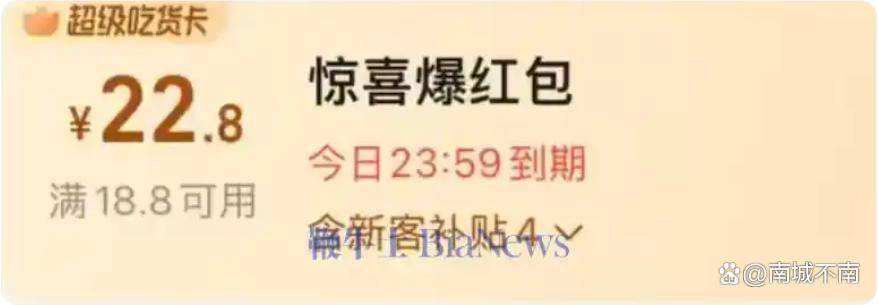
满18.8减22.8外卖负4元购!平台倒贴4元,骑手日赚1700,谁在买单
Sou Hu Cai Jing· 2025-07-16 00:13
Core Viewpoint - The recent "negative 4 yuan purchase" phenomenon highlights the intense competition among food delivery platforms, driven by aggressive subsidies and promotional strategies aimed at capturing market share in the instant retail sector [1][5][15]. Group 1: Market Dynamics - The competition among platforms like Meituan, Ele.me, and Taobao Flash has escalated, with subsidy amounts reaching unprecedented levels, such as "full 15 off 15" and "0 yuan milk tea coupons" [3][5]. - Daily order volumes have surged, with Meituan exceeding 150 million orders and Taobao Flash surpassing 80 million orders, leading to a 111% increase in average earnings for delivery riders [3][5]. - Platforms are investing heavily, with Alibaba committing 50 billion yuan and Meituan leveraging its WeChat ecosystem to attract users, as the instant retail market is projected to reach 2 trillion yuan by 2030 [5][6]. Group 2: Stakeholder Challenges - Delivery riders face a "sweet trap" with reported daily earnings exceeding 500 yuan, but this comes with increased workload and safety risks, including frequent traffic violations [8][10]. - Merchants experience a "false prosperity," as they are required to absorb 70% of the subsidy costs, leading to significant profit erosion and reliance on lower-quality ingredients to maintain margins [10][11]. - Consumers enjoy low prices but may face hidden costs, such as health risks from unhealthy food options and a decline in service quality due to increased order volumes [13][15]. Group 3: Future Implications - The subsidy war may lead to higher commission rates for merchants, reduced discounts for consumers, and a decline in service quality as platforms seek to recover costs [16][18]. - Regulatory scrutiny is increasing, with antitrust authorities urging platforms to protect the rights of merchants and riders, indicating potential policy interventions in the future [16][18]. - To break the cycle of unhealthy competition, platforms need to adopt tiered subsidy mechanisms, enhance service efficiency, and promote rational consumer behavior [18][23].
低价“卷”不动了!商家喊话外卖平台:禁止强制摊派补贴成本
Nan Fang Du Shi Bao· 2025-07-15 23:50
Core Viewpoint - The recent "subsidy war" among food delivery platforms has led to a surge in consumer orders but has also put significant pressure on merchants, prompting calls for a return to value-based competition in the industry [1][2]. Group 1: Industry Concerns - The China Chain Store & Franchise Association (CCFA) has issued a call to action against the escalating price competition driven by capital, which disrupts fair market practices and threatens the sustainable development of the industry [2][3]. - The CCFA urges platforms to cease coercive practices that force merchants into subsidy activities and to avoid monopolistic behaviors such as "exclusive cooperation" and "forced participation" in promotions [2][3]. Group 2: Recommendations for Platforms - The CCFA recommends that platforms publicly disclose their algorithm rules and subsidy mechanisms to ensure transparency in order distribution and subsidy allocation, allowing merchants to maintain control over their pricing and operational decisions [2][3]. - The association emphasizes the importance of adhering to safety and quality standards for products and services, discouraging practices that mislead consumers through inflated prices followed by discounts [2][3]. Group 3: Merchant Responses - Local merchant associations, such as the one in Zunyi, Guizhou, have echoed the CCFA's concerns, highlighting that extreme subsidy practices lead to a vicious cycle where merchants either lose customers by not participating or incur losses by participating [3]. - These associations advocate for the protection of merchants' rights, voluntary participation in promotional activities, and support for small businesses that do not engage in subsidy wars [3].

京东美团阿里:谁在为疯狂补贴埋单?
Sou Hu Cai Jing· 2025-07-15 22:03
Group 1: Core Insights - The article highlights the paradox of the subsidy war in China's food delivery market, where riders earn more at the expense of merchants' profits [4][6][12] - It emphasizes the dual nature of subsidies, acting as both a lifeline and a poison for businesses, leading to unsustainable practices [4][6] - The competition between platforms like Meituan and JD.com is characterized by aggressive price wars, resulting in significant profit compression for merchants [7][11] Group 2: Market Dynamics - The article contrasts the Chinese delivery model with the U.S. model, noting that U.S. platforms like DoorDash achieve profitability through technology and efficient cost management, while Chinese platforms rely heavily on subsidies [9][11] - It points out that the average commission rates for Chinese platforms exceed 22%, compared to a stable 15% for U.S. counterparts, indicating a less sustainable business model in China [9][11] - The report from Morgan Stanley suggests that the gross merchandise value (GMV) in China's instant retail market may be inflated by 30%, raising concerns about the market's health [9] Group 3: Challenges and Risks - The article discusses the operational challenges faced by delivery platforms, such as high loss rates due to strict supply chain demands, which are exacerbated by the subsidy model [6][12] - It mentions that the pressure to deliver quickly can lead to dangerous working conditions for riders, highlighting the human cost of the current business practices [6][12] - The article warns that without technological innovation, the current subsidy-driven model could collapse under its own weight, threatening the entire ecosystem [6][12] Group 4: Recommendations for Improvement - The article suggests that platforms should adopt supply chain upgrades and innovative practices, such as the "central kitchen" model used by DoorDash, to reduce waste [13] - It advocates for a reform in profit distribution, proposing a more equitable model that avoids zero-sum competition among platforms, merchants, and riders [14] - The article calls for government intervention to regulate subsidies and promote technological advancements, which could lead to a healthier market environment [15] Group 5: Future Outlook - The article concludes that the true victims of the subsidy war are small businesses, which are caught in the crossfire of capital-driven competition [16] - It emphasizes the need for platforms that can sustainably generate profits for small merchants to succeed in the long run [16] - The future of the industry lies in innovation and a more inclusive ecosystem, rather than continued price wars [16]


外卖补贴大战 餐饮人不可承受之重
Bei Jing Shang Bao· 2025-07-15 16:01
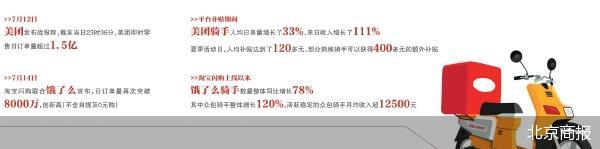
Core Viewpoint - The ongoing "delivery war" among major platforms like Meituan, Alibaba, and JD has led to a surge in order volumes, but this has not translated into significant profit growth for merchants, raising concerns about the sustainability of such aggressive subsidy strategies [1][12][15]. Group 1: Order Volume Surge - Meituan reported a daily order volume exceeding 150 million, while Alibaba's Taobao and Ele.me announced a record of over 80 million daily orders [3][4]. - Many merchants experienced a doubling of order volumes, with some stores reporting over a thousand orders in a single day, leading to chaotic scenes in stores [2][3]. - The influx of orders has resulted in operational challenges for merchants, with some unable to fulfill orders in a timely manner, leading to increased customer complaints and dissatisfaction [5][6]. Group 2: Rider Income Growth - Riders' daily order volume increased by 33%, and their income surged by 111%, with some riders earning over 400 yuan in additional subsidies during peak activity days [4][12]. - The number of active riders has also seen significant growth, with a 120% increase in crowd-sourced riders since the launch of Taobao's flash purchase service [4]. Group 3: Profitability Concerns - Despite the surge in order volumes, many merchants reported that their profit margins remained thin, with some experiencing a 10% increase in negative reviews due to delays in order fulfillment [5][6][7]. - Merchants are facing increased operational pressures, with staffing levels needing to double to manage the order influx, yet still struggling to meet demand [6][7]. Group 4: Industry Impact and Future Outlook - The aggressive subsidy strategies are seen as a threat to traditional dining establishments, as they divert customers from dine-in to delivery services, potentially harming the overall restaurant ecosystem [7][8]. - Experts suggest that the current subsidy-driven growth is unsustainable and may lead to a "three losses" scenario where platforms, merchants, and consumers all suffer in the long run [9][10]. - There are calls for platforms to reduce commission fees and for regulatory bodies to intervene to ensure fair competition and a balanced market environment [10][18].
和讯投顾徐斌箐:英伟达概念业绩好
He Xun Wang· 2025-07-15 14:08AI Processing
Group 1 - The performance of the CPU and PCB sectors has been outstanding, leading to significant market gains [1] - The upcoming deadline for semi-annual reports on July 15 has contributed to the positive market sentiment, particularly following the CPU earnings announcement [1] - The CPU sector has positively influenced the computing power segment and lifted the PCB sector, which is expected to report strong earnings [1] Group 2 - Despite the recent surge, the likelihood of continued large gains is low, and the current market environment is challenging for consecutive trading [2] - There is a lack of a core theme or mainline within the CPU and PCB sectors, with stocks from various segments being involved [2] - The recent trend of "rebound" trading has become difficult, suggesting that investors should avoid focusing on this strategy for the time being [2]
