
食品

Search documents
并购重组浪潮奔涌 产业并购渐成新共识
证券时报· 2025-07-31 03:08
Group 1 - The core viewpoint of the article emphasizes that mergers and acquisitions (M&A) are increasingly becoming a vital force for industrial upgrading and optimizing resource allocation in the context of profound changes in the global economic landscape [1][2] - Statistics indicate that from September 2024 to June 2025, there will be a total of 196 major asset restructurings in the A-share market, representing a year-on-year increase of 172% [1] - The technology sector is highlighted as particularly strong in the M&A market, with significant increases in average deal sizes in semiconductors, military industry, biomedicine, and media compared to the ten-year average [1][2] Group 2 - The M&A market is transitioning from "arbitrage M&A" to "industrial M&A," with 57.8% of transactions in 2024 aimed at horizontal or vertical integration, marking a steady increase over the past three years [2][3] - There has been a notable decline in shell listings and diversification M&A, with only 2 such deals recorded, the lowest in a decade, indicating a shift towards M&A that focuses on core business and real industry needs [2] - Companies are encouraged to enhance front-end industry research in M&A investments, emphasizing that M&A should aim for sustainable growth rather than short-term market value increases [2]


第四届数贸会将扩大数字国潮展区
Hang Zhou Ri Bao· 2025-07-31 02:23
"数字化领域涉足不深""年纪大规模小",这些问题成为老字号品牌负责人提到的共同痛点与难点。 毛源昌眼镜品牌总监彭倩以自身企业为例提出了建议:"作为一个渠道平台,我们在数字化方面拥抱AI 眼镜,目前已与众多AI智能眼镜品牌达成合作,也希望通过多种途径实现数字赋能。" "老字号插上数字的翅膀,是企业实现创新升级的重要路径。"径山书院联合创始人陈洁瑾说,"数 贸会上我们是'新人',我们期待届时能开出名贵、稀罕的'新花'、结出有竞争力的'新果'。"作为老字号 品牌集合展示的专区,径山书院的创新产品"径山素酱"作为农产品伴手礼,现已注册国际商标。 近日,第四届全球数字贸易博览会数字国潮展筹备座谈会上,20余家老字号品牌、企业与商务局相 关负责人面对面交流,共同探讨老字号数字赋能空间、国潮品牌消费转型升级,推进数字国潮展筹备工 作。 本届数字国潮展区位于数字文娱馆,面积将从以往的200平方米扩展至500平方米,展厅将划分为产 品展示、互动演绎、直播、数字文创四大区域。 当天,姚生记、鸿光浪花、万事利等耳熟能详的老字号品牌悉数到场,网易、遥望科技两家企业 携"老字号焕新合作计划"也参加了会议,介绍他们如何借力AI和赋能平台 ...
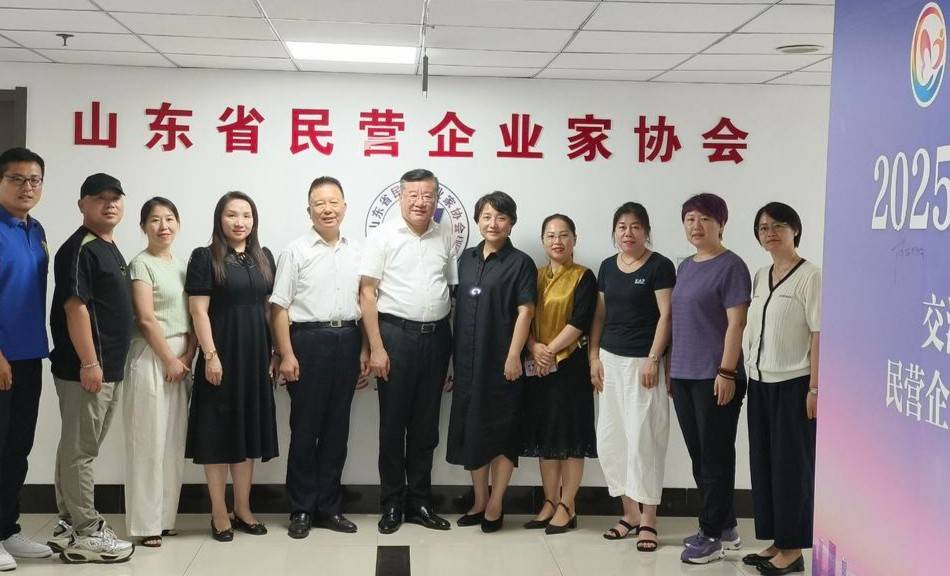
强信心·谋发展|山东省民营企业家协会与孕婴童产业协会共话未来
Sou Hu Cai Jing· 2025-07-31 01:13
Core Viewpoint - The meeting between the Shandong Provincial Infant and Child Industry Service Association and the Shandong Provincial Private Entrepreneurs Association aimed to strengthen communication and collaboration to promote high-quality development in the infant and child industry and the private economy in the province [3][5]. Group 1: Meeting Overview - The event featured representatives from both associations, including key figures such as Liu Deming, Vice President of the Shandong Provincial Private Entrepreneurs Association, and Zhao Na, Executive Vice President of the Shandong Provincial Infant and Child Industry Service Association [3][5]. - The theme of the meeting was "Strengthening Confidence through Communication and Collaborating for Development," focusing on key challenges and solutions for private enterprises [3][5]. Group 2: Key Presentations - Liu Deming shared insights on the current state of private enterprise economic development, highlighting five critical nodes in the development process and corresponding strategies to address challenges [5]. - High Kun, a director of the Shandong Provincial Private Entrepreneurs Association, emphasized the importance of the tax system in overall enterprise development and shared insights from the health industry [7]. Group 3: Acknowledgments and Future Collaboration - Zhao Na expressed gratitude for the organization of the event and the valuable insights shared by Liu Deming and High Kun, highlighting the importance of learning from experienced entrepreneurs to drive industry development [9].
并购重组浪潮奔涌 产业并购渐成新共识
Zheng Quan Shi Bao· 2025-07-30 19:04
Group 1 - The current global economic transformation is driving mergers and acquisitions (M&A) to become a significant force for industrial upgrading and resource optimization, which is crucial for high-quality economic development in China [1] - From September 2024 to June 2025, there will be a total of 196 major asset restructurings in the A-share market, representing a year-on-year increase of 172% [1] - The technology sector is particularly prominent in the national M&A market, with significant increases in average M&A amounts in semiconductor, military, biomedicine, and media industries compared to the ten-year average [1] Group 2 - The M&A market is transitioning from "arbitrage M&A" to "industrial M&A," with 57.8% of M&A transactions in 2024 aimed at horizontal or vertical integration, marking a steady increase over the past three years [2] - New Hope Group has built a complete industrial chain from agriculture to consumer products over 40 years, focusing on M&A in the food industry, including technology, branding, and supply chain [2] - The emphasis on pre-investment industry research is crucial for sustainable corporate growth, moving away from short-term market value increases to enhancing the enterprise ecosystem [2]

2025印度尼西亚国际零售优品展会开启参展招募
Sou Hu Cai Jing· 2025-07-30 09:52
Core Viewpoint - The 2025 Indonesia International Retail Expo will be held from September 3 to 5 in Jakarta, aimed at promoting Chengdu enterprises' international expansion and providing a platform for quality enterprises to connect with international buyers [1][2]. Group 1: Event Overview - The expo is designed to facilitate brand internationalization and precise market matching, targeting the needs of Indonesia and surrounding regions [1][2]. - The event is part of the "Rongqi Global Market Expansion Action" initiative, supported by the China Council for the Promotion of International Trade Chengdu Committee [2]. Group 2: Market Context - Indonesia is the largest economy in ASEAN and the fourth largest consumer market globally, with a population of approximately 282 million by the end of 2024 [2]. - In the first half of 2024, Indonesia's total imports reached $109.64 billion, with China being the largest source, accounting for 35.41% of total imports [2]. Group 3: Previous Event Highlights - The 2024 Indonesia Retail Expo attracted over 300 exhibitors and more than 22,000 buyers and attendees, with over 800 targeted matching sessions [3]. - Key product categories included food, consumer electronics, automotive, personal care, and household goods, indicating strong demand for procurement channels [3]. Group 4: Future Outlook - The expo will focus on digital products, home appliances, fashion, beauty, and pet supplies, aligning with the rising purchasing power of Indonesia's middle class [3]. - The event will utilize a model combining exhibitions, matchmaking, and cross-border e-commerce to support enterprises in entering overseas markets [3]. Group 5: Strategic Initiatives - Chengdu aims to enhance its role as an international consumption center and facilitate the dual circulation of domestic and international markets [4]. - The city is implementing measures to support enterprises in expanding internationally, including building cross-border e-commerce platforms and improving customs facilitation [4]. Group 6: Future Development - Chengdu plans to deepen high-level openness and improve the service system for SMEs looking to expand globally, leveraging the expo as a starting point for international market expansion [5].
小红书运营:新与心,2025大食饮行业消费者心智及决策链路研究白皮书
Sou Hu Cai Jing· 2025-07-30 03:19
Core Insights - The report titled "2025 Consumer Mindset and Decision-Making Pathway Research White Paper" focuses on the food and beverage industry, analyzing consumer psychology and decision-making processes [1][3] - Current trends indicate a shift from impulsive to "confirmation-based consumption," with consumers increasingly prioritizing health, emotional connections, and personalized choices [1][10] - The dual engines of "new" and "heart" drive brand growth, where "new" satisfies the desire for novelty and emotional projection, while "heart" relates to value and identity recognition [1][10] Industry Overview - The "big food and beverage" category includes five major sectors: food, beverages, dairy products, alcoholic drinks, and local dining [6][7] - The report highlights the evolving landscape of consumer preferences, emphasizing the importance of understanding underlying motivations behind food choices [10][20] Consumer Behavior Trends - Health consciousness is becoming a fundamental aspect of consumer choices, with 71% of consumers researching product ingredients and nutritional benefits before purchasing [32] - Emotional value plays a significant role in purchasing decisions, with 42% of consumers driven by the desire for relaxation and enjoyment [38][40] - Packaging is increasingly viewed as a form of social currency, influencing consumer choices and brand perception [47][54] Motivational Drivers - Five key motivational drivers for consumer choices in the food and beverage sector are identified: self-control/safety, cultural belonging, emotional value, social expression, and participation/ritual [78][80] - Each driver manifests differently across various product categories, reflecting the nuanced needs of consumers [81] Role of Social Media - Social media platforms, particularly Xiaohongshu, are becoming critical in shaping consumer decisions, facilitating brand connections and user engagement [1][10] - Over 65% of consumers express willingness to engage with food and beverage brands on social platforms, indicating a shift towards collaborative consumption experiences [58] Market Dynamics - The fast-moving consumer goods (FMCG) market is showing signs of recovery, with growth rates of 4.8% across various categories, including beverages and snacks [22][24] - The report suggests that brands must adapt to the changing landscape by recognizing and activating hidden consumer demands [29][30]

中行四川省分行:分层施策精准服务 助力川企共生共荣
Si Chuan Ri Bao· 2025-07-29 22:02
Group 1 - The Bank of China Sichuan Branch is committed to supporting various enterprises, enhancing financial services, and ensuring that financial resources reach those in need [2][3] - The Sichuan Branch plans to grant over 10 billion yuan in credit to Tongwei Group, a leading enterprise in the photovoltaic industry, to support its global industrial chain layout [3][4] - The establishment of a cross-border integrated fund pool for Tongwei has significantly improved fund flow efficiency, allowing the company to access over 400 million yuan in low-cost foreign funds [4] Group 2 - The Sichuan Branch has been actively involved in financing medium-sized enterprises, providing tailored financial solutions to support their growth and development [6][7] - The bank has launched various innovative financial products, such as "Tianfu Foreign Trade Loan," to assist local businesses in overcoming financing challenges [6][7] - The Sichuan Branch has integrated diverse financial resources to support emerging industries and facilitate the development of new production capabilities [7][8] Group 3 - The Sichuan Branch is focused on supporting small and micro enterprises, providing loans and financial services to stimulate market vitality [9][10] - The bank has introduced the "Wine Chain e-loan" to assist small distributors in the liquor industry, providing nearly 40 million yuan in credit support [10] - The bank has also responded to the needs of local food companies by reducing loan rates and fees, ensuring their production capabilities are maintained [10][11] Group 4 - The Sichuan Branch aims to deepen financial supply-side reforms and optimize service systems to contribute to the construction of a modern industrial system and promote high-quality economic development [11]

利润修复的“起点”? ——6月工业企业效益数据点评(申万宏观·赵伟团队)
赵伟宏观探索· 2025-07-29 16:04
Core Viewpoint - The recovery in June's profit growth is primarily due to improved cost pressures and a rebound in revenue's contribution to profit year-on-year. The profit growth rate for industrial enterprises in June increased by 4.6 percentage points to -4.4% [3][8][55] - The "anti-involution" policy is expected to limit the downward space for profits, as it helps alleviate cost pressures and supports the recovery of internal demand [4][24][56] Revenue and Profit Analysis - In June, industrial enterprises' cumulative revenue year-on-year was 2.5%, slightly down from the previous value of 2.7%. Meanwhile, cumulative profit year-on-year decreased by 1.8%, compared to a previous decline of 1.1% [2][7] - The actual revenue growth rate in June saw a rebound, with the consumption manufacturing chain benefiting significantly from exports, rising by 1 percentage point to 8.8% year-on-year. However, the coal and metallurgy chain's revenue growth continued to decline, falling by 0.3 percentage points to -0.9% [4][20][56] Cost Structure and Pressure - The cost pressure for industrial enterprises eased in June, primarily due to lower costs in the petrochemical and metallurgy chains. The cost rate for industrial enterprises was 85.2%, down 32.3 basis points year-on-year [3][13][55] - The cost rate for the petrochemical chain saw a significant decline, down 37.5 basis points to -0.1%. In contrast, the downstream consumer manufacturing sector faced higher cost rates, which increased by 82.1 basis points to 83.1% [3][13][55] Inventory Trends - The nominal inventory of industrial enterprises decreased by 0.4 percentage points year-on-year to 3.1% in June. However, the actual inventory, excluding price factors, increased by 0.3 percentage points to 7.3% year-on-year [42][57] - Upstream inventory growth showed a notable increase, rising by 3.9 percentage points to 21.5% [42][57] Sector Performance - The profit growth rate for state-owned and foreign enterprises showed significant improvement in June, with year-on-year increases of 12.5 percentage points to -8.4% and 17.9 percentage points to 10.9%, respectively [36][57] - In terms of revenue, the industrial sectors such as instruments, automobiles, and petroleum coal processing experienced substantial growth, with year-on-year increases of 7.2, 4.2, and 3.6 percentage points, respectively [34][57]

“十四五”期间累计新设外资企业比“十三五”期间增加2.5万家——中国支持鼓励外商在华再投资
Ren Min Ri Bao Hai Wai Ban· 2025-07-29 13:28
Core Viewpoint - The Chinese government is implementing measures to encourage foreign investment enterprises to reinvest domestically, aiming to attract and utilize foreign capital more effectively, especially in the context of a challenging global investment environment [1][4]. Group 1: Foreign Investment Statistics - During the "14th Five-Year Plan" period, China has attracted a total of $708.73 billion in foreign investment, with 229,000 new foreign enterprises established, an increase of 25,000 compared to the "13th Five-Year Plan" period [1]. - The proportion of foreign investment in high-tech industries in China is expected to reach 34.6% by 2024, an increase of 6 percentage points from 2020 [10]. Group 2: New Policies and Measures - The recent notice includes twelve specific measures to encourage foreign enterprises to reinvest, focusing on reducing costs, increasing efficiency, and optimizing management and services [4][6]. - Key measures include enhancing project service guarantees, optimizing land allocation, simplifying administrative processes, and providing financial support [4]. Group 3: Foreign Enterprises' Reactions - Foreign companies express optimism about the new policies, highlighting improved approval services and tax incentives as significant benefits for their operations in China [7][8]. - Companies like Karcher and Yihai Kerry have reported plans for expansion and new investments in response to the supportive policies, indicating a strong commitment to the Chinese market [5][7]. Group 4: Sector-Specific Insights - The notice is expected to facilitate investments in various sectors, including high-quality food production, digital services, and urban renewal projects, as companies adapt to changing market demands [10][11]. - The collaboration between foreign firms and local partners is anticipated to strengthen, with a focus on mutual benefits and long-term growth in the Chinese market [11][12].
“内部知情人”能举报哪些食品安全问题?市场监管总局回应
Xin Jing Bao· 2025-07-29 12:13
Core Viewpoint - The recent initiatives in food safety, including the establishment of an internal reporting reward mechanism and the launch of the "National Food Safety Internal Informant Reporting System," aim to enhance food safety management and encourage proactive reporting of risks by employees [1][2]. Group 1: Internal Reporting Reward Mechanism - The internal reporting reward mechanism is designed to address the complexities and challenges in food safety management, where traditional regulatory methods may fall short [2]. - It aims to improve internal management quality by fostering a culture of participation among all employees, thereby enhancing self-inspection and internal management processes [3]. - The mechanism facilitates early detection and resolution of potential risks by leveraging the insights of employees who are most familiar with operational processes and materials [3]. Group 2: National Food Safety Internal Informant Reporting System - The reporting system serves as a key platform for employees to report violations, allowing both current and former employees to participate [4]. - It encourages reporting of four main types of violations: personnel violations, material risks, environmental hazards, and management loopholes [6]. - The system ensures the protection of informants' identities and provides rewards for verified reports, thereby incentivizing employees to report issues without fear of repercussions [7].