
数据中心

Search documents
液冷行业点评:AI液冷海外市场空间有多大?
ZHESHANG SECURITIES· 2025-08-04 14:05
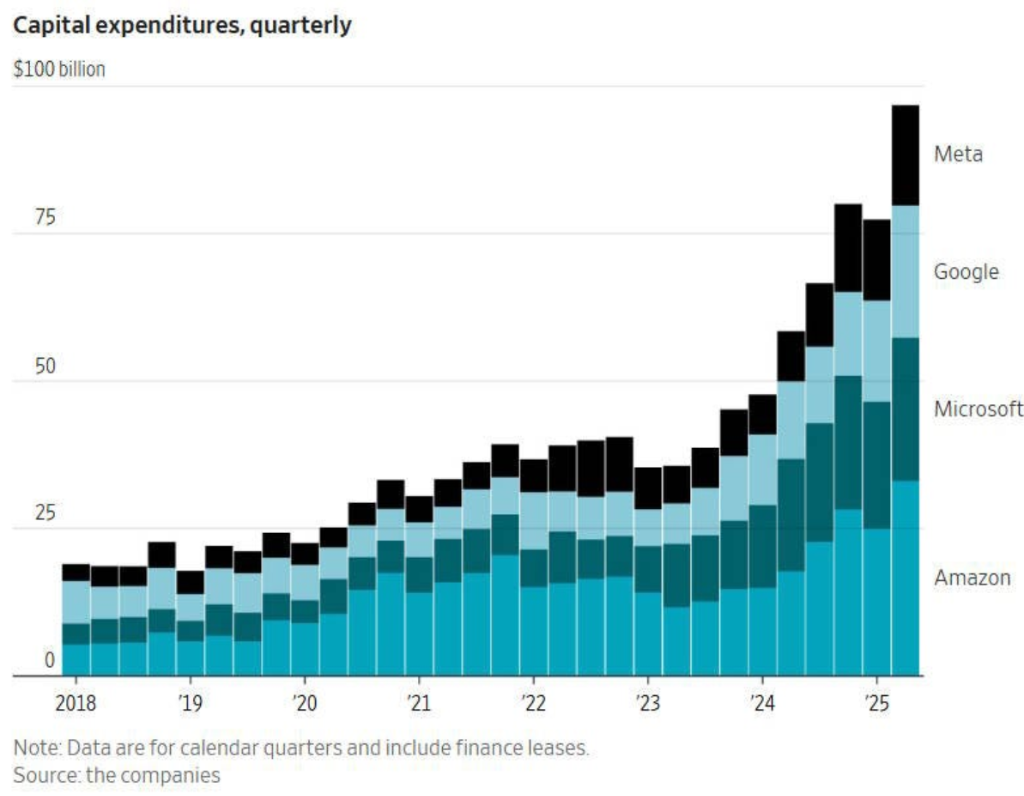
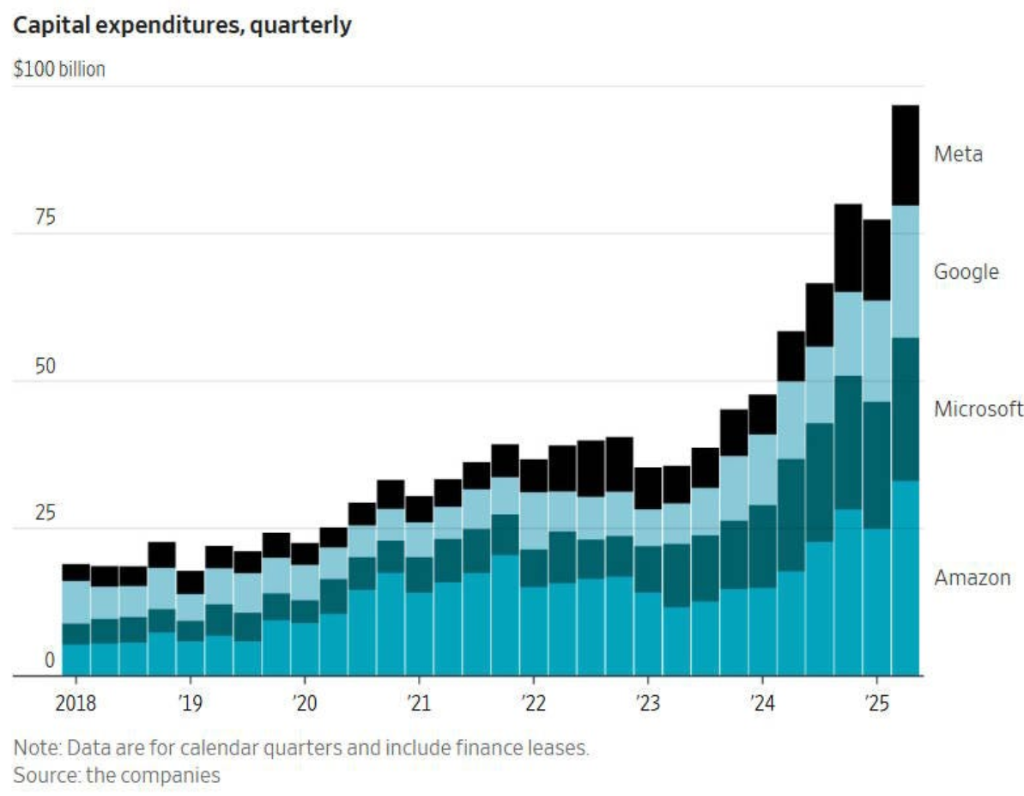
Investment Rating - The industry investment rating is "Positive" [4] Core Insights - The AI industry is experiencing a continuous cycle of investment and growth, with significant capital expenditure (Capex) increases from major overseas cloud service providers (CSPs) such as Microsoft, Google, Meta, and Amazon, which collectively reached $96.1 billion in Q2 2025, a year-on-year increase of 66% [1] - The liquid cooling market is expected to double in size next year, with projections indicating it could exceed $100 billion by 2027, driven by the increasing power consumption of GPU and ASIC chips [2][6] Summary by Sections Section 1: Market Growth and Demand - The demand for liquid cooling solutions is accelerating due to the adoption of high-power chips like NVIDIA's GB200 and Meta's MTIA T-V1, which are designed for liquid cooling [1] - The organic order growth for Vertiv in Q2 2025 was 15% year-on-year, reflecting strong market demand, with a backlog of $8.5 billion [1] Section 2: Liquid Cooling Market Projections - The projected liquid cooling market sizes for 2025, 2026, and 2027 are approximately 35.4 billion, 71.6 billion, and 108.2 billion yuan respectively, indicating robust growth driven by both NVIDIA GPUs and cloud providers' ASIC chips [6] - The estimated liquid cooling value per rack is around $78,820, with the average value per chip being approximately $1,095 [7] Section 3: Key Players and Investment Opportunities - Companies such as Yingweike, Shenling Environment, and Kexin New Source are highlighted as key players in the liquid cooling market, with strategies focused on expanding overseas [10][11][12] - Yingweike is actively pursuing overseas markets and has been included in NVIDIA's ecosystem as a qualified vendor [11] - Shenling Environment is focusing on Southeast Asia for data center business expansion, particularly in AI computing centers [12] - Kexin New Source is entering the supply chain of major enterprises and is expected to enhance customer relationships and overseas market channels through acquisitions [13]

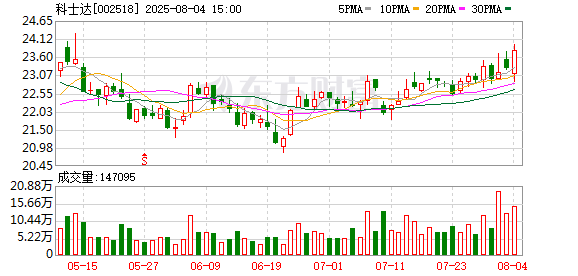
科士达:接受易方达、广发证券调研
Mei Ri Jing Ji Xin Wen· 2025-08-04 14:03
Group 1 - The core viewpoint of the article is that Keda (SZ 002518) announced a research meeting with E Fund and GF Securities, where key executives participated to address investor inquiries [2] - For the year 2024, Keda's revenue composition is as follows: Data center industry accounts for 65.93%, New energy industry accounts for 33.15%, and other businesses account for 0.92% [2]



马来西亚同意增加美国技术和液化天然气购买!五年斥资1500亿美元从美国跨国公司购买设备,对美投资700亿美元
Ge Long Hui· 2025-08-04 08:21
Group 1 - Malaysia plans to invest up to $150 billion over the next five years to purchase equipment from U.S. multinational companies in the semiconductor, aerospace, and data center sectors as part of a tariff reduction agreement with Washington [1] - The U.S. announced a 19% tariff on Malaysia starting August 8, down from the previously threatened 25% [1] - Malaysia's national oil company will purchase $3.4 billion worth of liquefied natural gas annually, and Malaysia commits to $70 billion in cross-border investments in the U.S. over the next five years to address trade imbalances [1]

马来西亚同意增加美国技术和液化天然气的购买
news flash· 2025-08-04 07:49
Core Insights - Malaysia has agreed to increase its purchases of technology and liquefied natural gas from the United States, committing up to $150 billion over the next five years for equipment in the semiconductor, aerospace, and data center sectors [1] - The agreement is part of a tariff reduction deal, with the U.S. announcing a 19% tariff on Malaysia starting August 8, down from a previously threatened 25% [1] - Malaysia's national oil company will purchase $3.4 billion worth of liquefied natural gas annually, while Malaysia commits to $70 billion in cross-border investments in the U.S. over the next five years to address trade imbalances [1]
“感知幸福中国行”参访团进宁夏,境内外网红大V解读幸福密码
Xin Jing Bao· 2025-08-04 07:48
Group 1 - Ningxia's unique industrial development is a solid foundation for the happiness of its people, with significant growth in six key agricultural sectors: wine, goji berries, milk, beef cattle, Tan sheep, and cool-season vegetables [2] - The area of wine grapes planted in the Helan Mountain region reaches 600,000 acres, accounting for approximately 40% of the national planting area, producing 140 million bottles of wine annually, making it one of the world's "golden wine regions" [2] - The comprehensive output value of Ningxia goji berries has surpassed 20.4 billion yuan, and the breeding volume of Tan sheep in Yanchi County has reached 3.3 million, with the brand value of "Yanchi Tan Sheep" exceeding 13 billion yuan [2] Group 2 - Ningxia's historical and cultural heritage, along with modern development, is a crucial part of the happiness narrative, highlighted by the inclusion of "Xixia Tombs" in the UNESCO World Heritage List, increasing China's total to 60 [3] - Ningxia is a national hub for new internet exchange centers and integrated computing networks, attracting renowned data centers like Amazon and Meiliyun, indicating a thriving digital information industry [3] - The region has established the world's largest single-set coal-to-oil project with a capacity of 4 million tons, and its differentiated spandex and para-aramid projects have achieved world-leading technology [3]
招商证券:海外AIDC需求强劲 HVDC逐步成为共识
智通财经网· 2025-08-04 07:27
Group 1 - The core viewpoint is that overseas cloud service providers (CSPs) are experiencing significant growth in capital expenditure, with a projected increase of 45% year-on-year to reach $334 billion by Q2 2025, driven by the demand for AI computing infrastructure [1][2] - Major CSPs such as Google Cloud, Microsoft Azure, and Amazon AWS reported double-digit revenue growth in Q2, exceeding market expectations, and have raised their capital expenditure targets for the year [2][3] - The AI-related infrastructure remains the primary focus for investment among these companies, indicating a strong commitment to enhancing their capabilities in this area [2] Group 2 - The performance of key players in the AI data center (AIDC) sector has been impressive, with companies like Vertiv exceeding market expectations in revenue and profitability, and achieving a record backlog of $8.5 billion in orders [3] - Vertiv has raised its full-year revenue guidance to $10 billion for the second time this year, reflecting strong demand and order conditions [3] - The trend of increasing power requirements for AI server racks is shifting from kilowatt to megawatt levels, highlighting the need for advanced power solutions [4] Group 3 - The HVDC (High Voltage Direct Current) solution is gaining recognition as an effective response to the limitations of traditional power systems in terms of space, copper usage, and efficiency [4] - The +/-400V HVDC solution is expected to leverage the established supply chain from the electric vehicle industry, potentially becoming a mainstream development in the future [4] - Companies like Nvidia and various upstream suppliers are actively promoting HVDC solutions, indicating a growing consensus in the industry regarding its advantages [4]

数据中心建设狂潮让美国重现“2008式金融危机”?如同1990年代的电信和1873年的铁路
美股IPO· 2025-08-04 07:22
Core Viewpoint - The current data center construction boom driven by AI is shifting funding sources from traditional equity financing to a growing and opaque "private credit" market, raising concerns about systemic risks similar to the 2008 financial crisis [1][3]. Group 1: Data Center Construction Boom - The capital expenditure of major tech companies in the U.S. has reached a record level, totaling $102.5 billion in the recent quarter, primarily driven by Meta, Google, Microsoft, and Amazon [3]. - AI-related capital expenditures have contributed more to U.S. economic growth than all consumer spending over the past two quarters [3]. - Current investments in AI infrastructure have surpassed the peak telecom investments of the late 1990s, with telecom capital expenditures reaching $120 billion in 2000, accounting for 1.2% of GDP at that time [6]. Group 2: Shift to Debt Financing - The growth rate of capital expenditures for tech giants has outpaced their cash flow growth, leading to an increased reliance on debt financing, particularly through private credit [7]. - Microsoft’s financing lease related to data centers has nearly tripled since 2023, indicating a significant rise in debt financing [7]. - Private credit is becoming a crucial funding source for the data center boom, with its scale rapidly expanding and becoming a significant part of the U.S. debt market [7][10]. Group 3: Systemic Risks and Financial Institutions - Banks are becoming increasingly exposed to private credit, with their loans to private credit companies rising from 1% in 2013 to 14% of total loans to non-bank financial institutions [12]. - The interconnectedness between banks and the private credit market poses potential risks, especially if there are unexpected defaults concentrated in the data center sector [12]. - Insurance companies, particularly life insurers, have significantly increased their exposure to below-investment-grade corporate debt, surpassing the scale of subprime mortgage-backed securities held in 2007 [13].





数据中心建设狂潮让美国重现2008式金融危机?如同电信和铁路
Hua Er Jie Jian Wen· 2025-08-04 05:18
Core Insights - The current data center construction boom, driven by AI investments, raises concerns about a potential infrastructure bubble reminiscent of past financial crises [1][2][5] - Major tech companies, including Meta, Google, Microsoft, and Amazon, have significantly increased capital expenditures, totaling $102.5 billion in recent quarters, with some companies spending over one-third of their total sales on these investments [1][2] - AI-related capital expenditures have contributed more to U.S. economic growth than consumer spending in recent quarters, indicating a shift in economic dynamics [2] Group 1: Investment Trends - The capital expenditure growth rate of tech giants has outpaced their cash flow growth, leading to increased reliance on debt financing, particularly through a large and opaque "shadow banking" system [2][7] - Private credit is emerging as a significant funding source for the data center boom, with companies like Meta negotiating loans up to $30 billion with private credit institutions [2][6][7] Group 2: Historical Context - Current investments in AI infrastructure have surpassed the peak telecom investments of the late 1990s, with telecom capital expenditures reaching $120 billion in 2000, accounting for 1.2% of GDP at that time [5] - Historical precedents, such as the railroad and telecom bubbles, ended in overbuilding and unmet demand, raising questions about the sustainability of current investments [5] Group 3: Financial System Implications - The increasing role of private credit in financing tech investments poses risks to traditional financial systems, as banks are becoming major lenders to private credit firms [11] - A report indicates that banks' loans to private credit companies have surged from 1% in 2013 to 14% of total loans to non-bank financial institutions, highlighting the interconnectedness and potential risks [11][13] - Insurance companies, particularly life insurers, have also increased their exposure to below-investment-grade corporate debt, reminiscent of the risks seen in the 2008 financial crisis [13]
数据中心建设狂潮让美国重现“2008式金融危机”?如同1990年代的电信和1873年的铁路
Hua Er Jie Jian Wen· 2025-08-04 04:24
Core Insights - The current data center construction boom, driven by AI, raises concerns about a potential infrastructure bubble reminiscent of past financial crises [1][4] - Major tech companies in the U.S. have reported record capital expenditures, totaling $102.5 billion, primarily from Meta, Google, Microsoft, and Amazon, with some companies spending over one-third of their total sales on capital investments [1] - AI-related capital expenditures have contributed more to U.S. economic growth than consumer spending in recent quarters [1] Group 1: Historical Context - The investment in AI infrastructure has surpassed the peak telecom investments of the late 1990s, with current spending exceeding 1.2% of GDP [4] - Historical precedents, such as the railroad and telecom booms, ended in overbuilding and unmet demand, leading to significant losses for investors [4] - The combination of asset price bubbles and credit growth poses a serious threat to the economy, as evidenced by past financial crises [4] Group 2: Financing Sources - The financing for the tech giants' data center investments comes from various sources, including internal cash flow, bond issuance, equity financing, venture capital, special purpose vehicles, and cloud service commitments [5] - As capital expenditure growth outpaces cash flow, debt financing is becoming increasingly important, with a significant rise in investment-grade bond issuance [6] - Private credit is emerging as a crucial funding source for the data center boom, with its scale rapidly expanding within the U.S. debt market [6] Group 3: Risk Exposure - Banks are major lenders to private credit firms, which have seen their share of total loans from banks increase from 1% in 2013 to 14% currently [10] - The interconnectedness between banks and private credit markets raises concerns about potential risks, particularly if there are unexpected defaults in the data center sector [10] - Insurance companies, especially life insurers, have also increased their exposure to lower-rated corporate debt, reminiscent of the pre-2008 financial crisis environment [12]
万和财富早班车-20250804
Vanho Securities· 2025-08-04 01:49
Domestic Financial Market - The Ministry of Finance and the State Taxation Administration announced that starting from August 8, 2025, interest income from newly issued national bonds, local government bonds, and financial bonds will be subject to value-added tax [4] - The Hong Kong "Stablecoin Ordinance" has officially come into effect, aiming to improve the regulation of virtual asset activities, maintain financial stability, and promote innovation [4] - The central bank is developing the offshore RMB market to promote a stable and comprehensive liquidity supply channel while continuing to implement a moderately loose monetary policy [4] Industry Updates - The Ministry of Industry and Information Technology issued a notice on the 2025 annual special energy-saving inspection task list for the polysilicon industry, with related stocks including Tongwei Co., Ltd. and Daqo New Energy [5] - The progress of autonomous driving in Guangzhou is accelerating, actively cultivating component enterprises, with related stocks including Wanji Technology and Desay SV [5] - A treatment plan for Chikungunya fever has been released, leading to a significant increase in sales of mosquito repellent products, with related stocks including Kangzhi Pharmaceutical and Runben Co., Ltd. [5] Company Focus - Kehua Data has launched a full lifecycle service for liquid-cooled data centers, with liquid-cooled containers already exported overseas [6] - New Aluminum Era plans to invest no less than 500 million yuan to build a project with an annual production capacity of 800,000 lightweight high-strength auto parts [6] - Hongxin Electronics' subsidiary is co-building a green intelligent digital infrastructure project with the Qingyang government, with a total investment expected to be 12.8 billion yuan [6] - Hikvision reported a revenue of 41.818 billion yuan for the first half of the year, a year-on-year increase of 1.48%, and a net profit attributable to shareholders of 5.657 billion yuan, a year-on-year increase of 11.71% [6] Market Review and Outlook - On August 1, the market opened lower but experienced a small rebound, followed by a day of continued downward fluctuation, with total trading volume in the Shanghai and Shenzhen markets at 1.6 trillion yuan, a decrease of 33.7 billion yuan from the previous trading day [7] - Sectors such as traditional Chinese medicine, education, photovoltaic, pharmaceuticals, logistics, and software development saw significant gains, while sectors like shipping, insurance, and semiconductors experienced varying degrees of pullback [7] - Despite the index decline, the number of rising stocks increased, with only 9 stocks hitting the limit down, indicating no signs of risk expansion [7] - The overall A-share market is showing signs of capital switching between high and low, with important support zones below the index, suggesting a potential balance between bulls and bears [7] - Structural market conditions are expected to remain a key feature, with recommendations to avoid overvalued dividend sectors and focus on low-position stocks benefiting from "anti-involution" policy-driven rebound opportunities [7]