
矿业

Search documents
美国降息预期发酵,俄乌解决方案进展有限
Dong Zheng Qi Huo· 2025-11-24 01:07
Report Industry Investment Ratings No relevant content provided. Core Views of the Report - The progress of the Russia-Ukraine solution proposed by the US is limited, with short - term market risk appetite stabilizing and the US dollar showing a volatile trend [2][15]. - The expectation of the Fed's interest rate cut is fermenting, the market sentiment is stabilizing, but concerns about the AI bubble remain. The US stock market rebounds, but the technology sector lags in gains [3]. - Although the A - share market has experienced a significant correction, it is expected to stabilize the decline in the future due to the easing of US liquidity expectations, support for AI performance, and China's policy support for the stock market [4]. - The prices of various commodities show different trends. For example, steel prices are expected to fluctuate in the short term; oil prices continue to decline; and the prices of some agricultural products are affected by factors such as production volume and policy [5][6]. Summaries by Directory 1. Financial News and Reviews 1.1 Macro Strategy (Gold) - New York Fed President Williams said there is room for an interest rate cut in December, and the Russian central bank sold some physical gold reserves. Short - term gold prices are expected to continue to fluctuate, with a risk of decline [11]. - Investment advice: Be cautious of the risk of decline in the short - term volatile gold market [12]. 1.2 Macro Strategy (Foreign Exchange Futures - US Dollar Index) - The US is reported to be ready to take action against Venezuela, and the European leaders think the US's Russia - Ukraine peace plan needs improvement. The US - Ukraine Geneva talks are considered "fruitful", but the Russia - Ukraine solution has limited progress, and the US dollar is expected to fluctuate in the short term [13][14][15]. - Investment advice: The US dollar index is expected to fluctuate in the short term [16]. 1.3 Macro Strategy (US Stock Index Futures) - Fed officials have different views on the December interest rate cut. The US service industry growth accelerated in November, while the manufacturing industry slowed down. The market's expectation of an interest rate cut has increased, and the US stock market is expected to fluctuate upward after the market volatility decreases [17][18]. - Investment advice: Be less pessimistic about the US stock market at the end of the year, and wait for the market volatility to decrease [19]. 1.4 Macro Strategy (Stock Index Futures) - The Trump administration may approve Nvidia's sales of some AI chips to China, and the Ministry of Housing and Urban - Rural Development held a national urban renewal work promotion meeting. The A - share market is expected to stabilize the decline [20][21]. - Investment advice: There may be a small rebound in the short term, but a trend - following opportunity requires more policy changes [22]. 1.5 Macro Strategy (Treasury Bond Futures) - The central bank conducted a 375 - billion - yuan 7 - day reverse repurchase operation. The bond market is affected by factors such as the redemption pressure of structured products and concerns about the stock market rebound. The bond market is expected to turn from volatile to bearish, and short - term short - selling strategies are recommended [23][24]. - Investment advice: The bond market may turn bearish, and short - term short - selling strategies can be considered [25]. 2. Commodity News and Reviews 2.1 Agricultural Products (Soybean Meal) - The soybean crushing volume of domestic oil mills last week was 2.3344 million tons, and it is expected to slightly decrease this week. The supply of soybean meal is sufficient, and the cost and supply - demand situation jointly affect the price. - Investment advice: The soybean meal market is currently "supported by cost and suppressed by supply - demand", and continue to pay attention to China's soybean procurement and South American production expectations [26]. 2.2 Agricultural Products (Soybean Oil/Rapeseed Oil/Palm Oil) - The US Department of Energy reorganized to prioritize fossil fuels and nuclear energy. From November 1 to 20, the production of Malaysian palm oil increased by 10.32% month - on - month. - Investment advice: For palm oil, wait and see on the long - short side and consider 1 - 5 reverse spread opportunities; for rapeseed oil, the overall trend is expected to be weakly volatile [27][28][29]. 2.3 Agricultural Products (Sugar) - In October 2025, China's imports of syrup and premixed powder decreased year - on - year. Indian sugar mills are gradually starting to crush, and the NFCSF urges the Indian government to raise the minimum sugar selling price. - Investment advice: Do not be optimistic about the downside space of ICE raw sugar and Zhengzhou sugar's January contract, and be cautious about short - selling [30][33][34]. 2.4 Agricultural Products (Cotton) - In October 2025, China's cotton imports decreased both month - on - month and year - on - year, while cotton yarn imports increased. The US cotton export sign - up continued to rise. - Investment advice: Zhengzhou cotton is expected to fluctuate in the short term, with an estimated range of 13,300 - 13,800 yuan; be cautiously optimistic in the long term and wait for opportunities to go long on dips [35][39][41]. 2.5 Black Metals (Rebar/Hot - Rolled Coil) - In 2025, China's long - product exports to Saudi Arabia almost doubled. In October, the global crude steel production was 143.3 million tons. - Investment advice: Adopt a volatile mindset when dealing with steel prices [42][44][46]. 2.6 Agricultural Products (Corn Starch) - The price difference between corn starch and tapioca starch widened. - Investment advice: The price difference is expected to fluctuate in the short term, and band trading is recommended [47][48][49]. 2.7 Agricultural Products (Corn) - The corn selling progress in Northeast and North China is faster than the same period last year. - Investment advice: Corn prices are expected to remain high and volatile in the short term. Wait and see for the near - month contracts and do not short them for now [50][52]. 2.8 Non - ferrous Metals (Copper) - Vedanta plans to invest $2 billion in Saudi copper and gold resources, and China Non - Ferrous Mining's Qianbixi Southeast Orebody is temporarily shut down. European copper manufacturers warn of a copper shortage. - Investment advice: Copper prices are expected to fluctuate widely in the short term. Consider going long on dips and wait and see for arbitrage [53][55][56]. 2.9 Non - ferrous Metals (Polysilicon) - Two leading silicon wafer companies lowered their quotes. The polysilicon market is affected by factors such as policy and demand. - Investment advice: The futures main contract of polysilicon may operate between 50,000 - 56,000 yuan/ton. Pay attention to range trading opportunities [57][59]. 2.10 Non - ferrous Metals (Industrial Silicon) - The shipments of northern silicon enterprises increased. The export of industrial silicon decreased more than expected. - Investment advice: The industrial silicon market may fluctuate between 8,800 - 9,500 yuan/ton in the short term. Pay attention to range trading opportunities [60][61]. 2.11 Non - ferrous Metals (Lithium Carbonate) - Ruitai New Materials plans to jointly invest 200 million yuan in Terui Lianteng. The futures price limit - down due to regulatory measures. - Investment advice: The short - term futures price may face pressure. Consider short - selling on rallies with a light position [62][64]. 2.12 Non - ferrous Metals (Nickel) - Some nickel intermediate product projects in an Indonesian park are expected to reduce production. - Investment advice: Existing short - positions can gradually take profits, and consider going long on dips with a light position. Evaluate the resource contraction in Indonesia in the medium term [66][67]. 2.13 Non - ferrous Metals (Lead) - The Garpenberg mine in Sweden was approved to expand its environmental permit. The LME lead inventory increased. - Investment advice: Take profits at low levels in the short term for the long - short side; wait and see for arbitrage and cross - market trading [68][69][70]. 2.14 Non - ferrous Metals (Zinc) - The LME 0 - 3 zinc premium is high, and the Garpenberg mine in Sweden was approved to expand its environmental permit. - Investment advice: Wait and see on the long - short side; hold long - spread positions for calendar spread arbitrage and short - spread positions for cross - market arbitrage in the short term [71][72]. 2.15 Energy Chemicals (Carbon Emissions) - On November 21, the closing price of the EUA main contract was 80.41 euros/ton. - Investment advice: The EU carbon price is expected to be strongly volatile in the short term [73][74]. 2.16 Energy Chemicals (Crude Oil) - The number of US oil rigs increased. Oil prices continued to decline. - Investment advice: Pay attention to the prospects of the Russia - Ukraine negotiations. Oil prices are expected to remain weakly volatile in the short term [75][76]. 2.17 Energy Chemicals (Pulp) - The prices of different pulp varieties in the import market showed different trends. - Investment advice: The pulp market is expected to fluctuate in the future [77]. 2.18 Energy Chemicals (Bottle Chips) - The export quotes of bottle chip factories were mostly lowered. - Investment advice: The short - term supply - demand contradiction of bottle chips is not prominent, and the absolute price mainly follows the fluctuations of polyester raw materials [78][81]. 2.19 Energy Chemicals (Soda Ash) - The price of soda ash in the South China market was stable on November 21. - Investment advice: In the short term, the soda ash market has certain support; in the medium term, adopt a bearish mindset and consider short - selling far - month contracts on rallies [82]. 2.20 Energy Chemicals (Float Glass) - The price of float glass in the Shahe market decreased on November 21. - Investment advice: The January contract of float glass is under pressure. Pay attention to the support at 950 yuan/ton and the risk of short - covering rebounds caused by news [83][84].
戛然而止!必和必拓(BHP.US)宣布不再考虑与英美资源集团合并
Zhi Tong Cai Jing· 2025-11-24 01:05
Core Viewpoint - BHP Group has announced that it will no longer pursue a merger with Anglo American Plc, marking a significant shift in its strategic direction [1] Group 1: Merger Decision - BHP stated that it is no longer advancing the merger discussions with Anglo American, which had previously received a merger proposal from BHP [1] - The decision comes less than three weeks before a vote by Anglo American's shareholders regarding a merger with Teck Resources [1] Group 2: Industry Context - The proposed merger aimed to create a new copper giant valued at over $60 billion, reflecting the ongoing trend of consolidation among major mining companies driven by the demand for copper [1] - Copper is increasingly recognized for its critical role in the electrification process, prompting mining companies to expand their copper operations [1] Group 3: BHP's Future Plans - In early October, BHP announced an investment of AUD 840 million (approximately USD 554 million) to expand its Olympic Dam underground copper mine in South Australia to increase copper production [1] - BHP anticipates a 70% increase in global copper demand by 2050 and has identified copper as a core growth business [1] - Over the next decade, BHP plans to invest over USD 10 billion in expanding its project portfolio in Chile, along with additional investments in Argentina and the United States to develop new mines [1]

五矿资源(01208)收购英美资源镍业务完成条件的最终期限延长至2026年6月30日
智通财经网· 2025-11-24 00:31
智通财经APP讯,五矿资源(01208)公布,就有关收购英美资源镍业务,公司与英美资源完成收购事项的 义务须待若干先决条件(条件)已获满足或豁免后方可生效,包括:于多个司法管辖区取得合并管制批准; 获中华人民共和国国家发展和改革委员会(发改委)接纳与收购事项有关的申报;以及获中华人民共和国商 务部(商务部)接纳与收购事项有关的申报。鉴于所有其他条件均已满足,欧盟委员会已将审查延长至第 二阶段审查。目前尚未确定欧盟委员会完成审查所需时间。 根据股份购买协议,完成条件的最终期限为2025年11月18日(最终截止日)。各方现已同意将最终截止日 延至2026年6月30日。公司将继续与英美资源集团及欧盟委员会合作,协助欧盟委员会进行审查。 ...
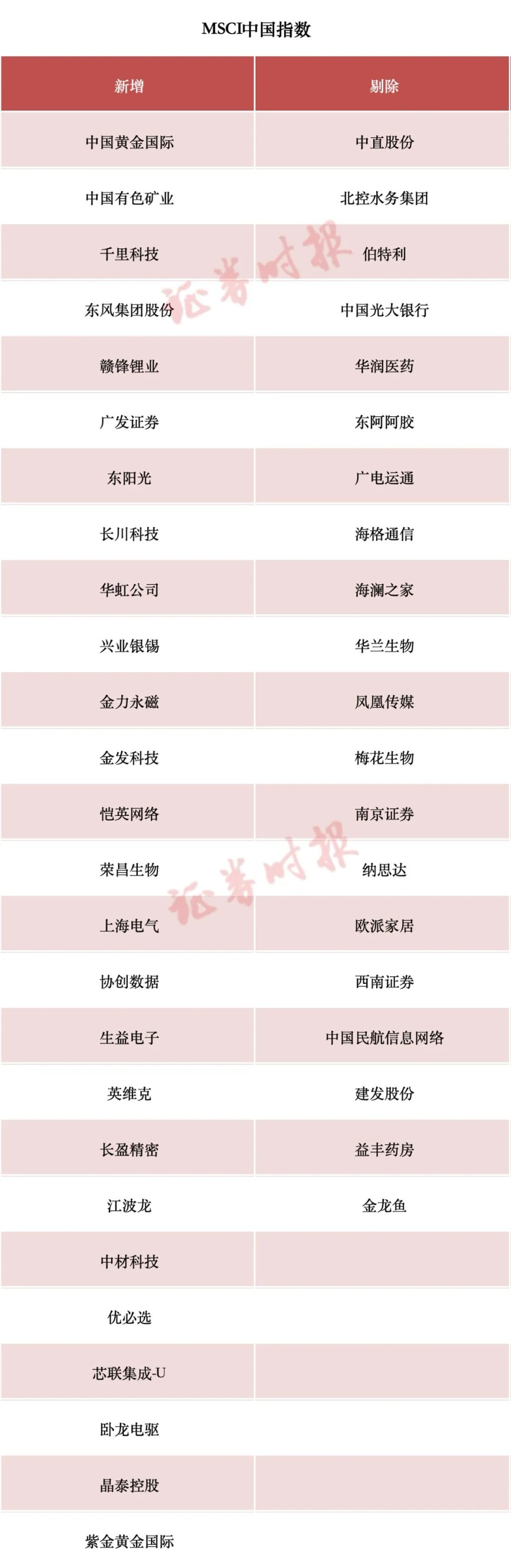
事关A股!MSCI中国指数调整将生效 纳入26只中国股票
Zheng Quan Shi Bao· 2025-11-23 23:12
重点关注 MSCI中国指数调整将生效 全球知名指数公司MSCI此前宣布了2025年11月份指数审核结果,此次调整将于11月24日收盘后正式生效。 本次调整中,MSCI中国指数新纳入26只中国股票,剔除20只,具体变动标的如下: | 新增 | 剔除 | | --- | --- | | 中国黄金国际 | 中直股份 | | 中国有色矿业 | 北控水务集团 | | 千里科技 | 伯特利 | | 东风集团股份 | 中国光大银行 | | 赣锋锂业 | 华润医药 | | 广发证券 | 东阿阿胶 | | 东阳光 | 广电运通 | | 长川科技 | 海格通信 | | 华虹公司 | 海澜之家 | | V. II+ 相 相 | 化工H-Am | MSCI中国指数被嵌套进MSCI新兴市场指数,因此股票进入MSCI中国指数,便意味着进入了MSCI全球标准指数系列,从 而获得被动资金跟踪。随着MSCI多个指数成份股调整,相关的指数基金也将随之调仓,新纳入的企业将得到更多的资金配 置;而被剔除的企业将会被相关指数基金被动卖出。资金流向上,根据指数调整的历史经验来看,被动型资金为了尽可能 地减少对于指数的追踪误差,通常会选在最后一天调仓,因 ...

中上协2025董事会、可持续发展及内部控制相关实践案例评选结果公布,甘肃累计7家公司入选
Zheng Quan Shi Bao Wang· 2025-11-23 07:12
Group 1: Corporate Governance - The China Securities Regulatory Commission has officially released the revised "Corporate Governance Guidelines for Listed Companies," marking a transition from "formal compliance" to "substantive effectiveness" in corporate governance [3] - The China Listed Companies Association has recognized 240 "Best Practice Cases," 190 "Excellent Practice Cases," and 156 "Typical Practice Cases" for corporate governance in 2025, highlighting the importance of effective board operations and governance structures [2] Group 2: Sustainable Development - Six companies from Gansu have been awarded for their sustainable development practices, with Dayu Water-saving (300021) recognized as a "Best Practice Case" for integrating smart water management and digital twin technology [4] - Jiu Steel Hongxing (600307) and Gansu Energy (000791) have been acknowledged for their innovative approaches to sustainability, including the development of a photovoltaic and ecological governance model [5] Group 3: Internal Control - Gansu Energy (000791) has been awarded for its compliance and risk control efforts that enhance its internal control system, while Dayu Water-saving (300021) received recognition for its transition from "risk prevention" to "value creation" [6]




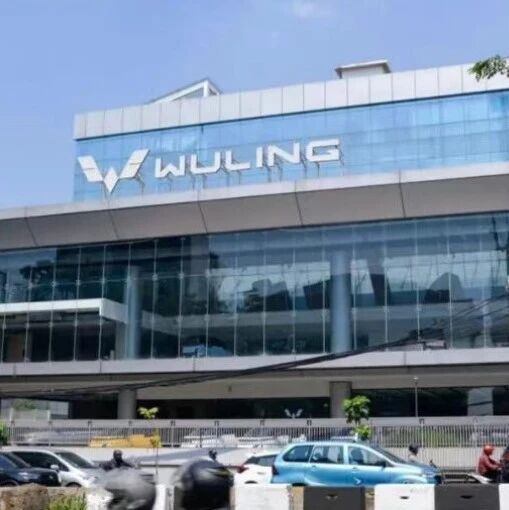
中国车企,到印尼搞矿
首席商业评论· 2025-11-23 03:33
Core Viewpoint - Chinese automotive companies are exploring new strategies for international expansion, particularly focusing on Indonesia for both market opportunities and resource acquisition [4][34]. Group 1: Market Entry and Challenges - Chinese automotive companies have traditionally targeted Western and Southeast Asian markets, but a new trend is emerging with a focus on Indonesia's mining sector [4][6]. - Major Chinese car manufacturers, including BYD, Wuling, Chery, Geely, and others, have established a presence in Indonesia, emphasizing a long-term commitment rather than immediate profits [6][7]. - The Indonesian market presents significant challenges, including poor traffic conditions and low national income levels, with Jakarta being the most congested city globally [9][11]. Group 2: Economic Landscape - Indonesia's population is largely low-income, with 8.47% living below the poverty line and 24.42% classified as economically vulnerable, indicating a challenging consumer market for automotive sales [14][16]. - The majority of the population falls into the lower income brackets, with less than 1% classified as wealthy, which impacts the overall purchasing power for vehicles [18][16]. Group 3: Regulatory Environment - Chinese companies must navigate complex regulations, including the requirement to establish local companies and meet local content requirements to benefit from government incentives [18][19]. - The automotive market is dominated by Japanese brands, which have established a strong foothold over decades, presenting a competitive challenge for Chinese entrants [19][22]. Group 4: Strategic Collaborations - Chinese automotive firms are increasingly forming partnerships with local companies to enhance their market entry strategies, such as CKD (Completely Knocked Down) assembly models [26][27]. - Collaborations extend to local infrastructure development, such as charging stations and financial services, which are crucial for supporting electric vehicle adoption [28][31]. Group 5: Resource Acquisition - Indonesia is rich in nickel resources, essential for battery production, making it a strategic location for Chinese companies looking to secure supply chains for electric vehicles [34][36]. - The partnership between Chinese firms and Indonesian mining companies is expected to enhance the value chain and support the growth of the electric vehicle market in both countries [40][41].
自然资源部:我国建成省级以上绿色矿山超5100家
Ren Min Ri Bao· 2025-11-22 03:06
Core Insights - China's green mining construction has made significant progress, with over 5,100 green mines established at the provincial level and above, achieving notable results in resource conservation, ecological restoration, and energy saving [1][2] Group 1: Current Status of Green Mining - As of now, there are 1,054 national-level green mines and 4,055 provincial-level green mines, accounting for 40.8% of the licensed operating mines [1] - In the first ten months of this year, more than 300 new provincial-level green mines were established [1] Group 2: Resource Utilization and Innovation - The construction of green mines has led to the establishment of numerous energy resource bases and national planning mining areas, promoting more intensive and large-scale resource development [1] - The number of large and medium-sized mines accounts for over 50% of the total, while their production capacity exceeds 80% [1] - Continuous innovation in process technology and equipment has significantly improved the level of comprehensive resource utilization [1] Group 3: Resource Growth and Longevity - Green mines have actively conducted re-evaluations of low-grade and associated resources, resulting in substantial increases in resource quantities, with cobalt and rhenium seeing over 100% growth, and nickel and indium over 30% [1] - This initiative has transformed many "stagnant mines" into "active mines" and "small mines" into "large mines," effectively extending the service life of the mines [1] Group 4: Future Plans and Standards - By the end of 2028, 90% of large mines and 80% of medium-sized mines are expected to meet green mining standards [2] - New mining projects are required to strictly adhere to green mining standards, while existing mines are encouraged to accelerate their green upgrades [2] - There is a push to develop industry standards for open-pit mining, geothermal mineral water, and marine oil and gas, further enhancing the green mining standard system [2]
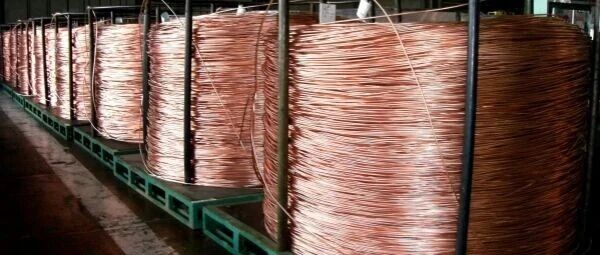
铜价步入1万美元时代
日经中文网· 2025-11-22 00:34
Group 1 - Copper prices have reached a new high, with the London Metal Exchange (LME) three-month futures touching $11,200 per ton, the highest since May 2024, and remaining strong into November [4] - Concerns over copper supply have intensified due to recent accidents at major mines in Indonesia, the Democratic Republic of Congo, and Chile, leading to multiple supply disruptions this year [4][8] - The International Copper Study Group (ICSG) forecasts a 3.0% increase in copper consumption in 2025 and a 2.1% increase in 2026, indicating a growing demand for copper in industries like data centers and electric vehicles [4] Group 2 - Goldman Sachs has reported that $10,000 will become the new price floor for copper, driven by supply constraints and increased demand from sectors such as artificial intelligence [7] - The average annual price of copper is projected to rise to approximately $9,750 per ton by November 2025, reflecting a 60% increase compared to the pandemic lows in 2020 [7] - Japanese smelting companies, including Mitsubishi Materials, have begun to reduce copper production due to deteriorating ore procurement conditions, with a 14% reduction planned for the second half of the fiscal year [8]
整合矿业权 建设集聚区 广西优化关键金属产业布局
Jing Ji Ri Bao· 2025-11-21 22:40
Group 1 - The core viewpoint of the articles emphasizes the high-quality development of the critical metals industry in Guangxi through various initiatives, including mining rights integration and the comprehensive governance of small and scattered enterprises [1][2] - Guangxi has rich reserves of critical metal resources such as tin, antimony, indium, and germanium, but has faced issues of extensive mining and low-level utilization, which have harmed the ecological environment and weakened overall industry competitiveness [1] - The plan aims to reduce the number of mining rights from 2,612 to below 1,800 by the end of 2027, increasing the proportion of large and medium-sized enterprises from 43% to over 60% [1] Group 2 - The recently released "14th Five-Year Plan" for the innovative development of the critical metals industry in Guangxi proposes the creation of a "nine chains and three clusters" industrial system and a spatial layout of "one area, two belts, and multiple groups" [1] - Guangxi is accelerating the construction of the Nandan Comprehensive Experimental Zone for high-quality development of critical metals, promoting the high-end, intelligent, green, large-scale, and park-oriented development of the non-ferrous and critical metals industries [1] - The Secretary of the Guangxi Zhuang Autonomous Region Party Committee expressed the desire to collaborate on industrial cooperation, focusing on deep processing of non-ferrous metals, new material research and development, recycling of metals, and high-end equipment manufacturing [2]
我国建成省级以上绿色矿山超5100家
Ren Min Ri Bao· 2025-11-21 22:12
Group 1 - The core viewpoint is that China's green mining construction has made significant progress, with over 5,100 green mines established at the provincial level and above, achieving notable results in resource conservation, ecological restoration, and energy saving [1] - As of October this year, more than 300 new provincial-level green mines have been established, totaling 1,054 national-level green mines and 4,055 provincial-level green mines, which accounts for 40.8% of the licensed operating mines [1] - The construction of green mines has led to the development of energy resource bases and national planning mining areas, promoting more intensive and large-scale resource development, with large and medium-sized mines accounting for over 50% of the total number and over 80% of the production capacity [1] Group 2 - By the end of 2028, 90% of large mines and 80% of medium mines are required to meet green mining standards, with a push for new mines to strictly adhere to these standards [2] - There is an emphasis on accelerating the green transformation and upgrading of existing production mines, as well as urging those that have not yet started green mining construction to do so promptly [2] - The establishment of a comprehensive green mining standard system is underway, with plans to develop industry standards for open-pit mining, geothermal mineral water, and marine oil and gas [2]