
物流

Search documents
刘强东乌镇演讲:5年内社会化物流成本占GDP比重能降到10%以内 |直击乌镇
Xin Lang Ke Ji· 2025-11-07 06:57
Core Insights - The main point of the article is that JD.com aims to significantly reduce China's social logistics costs, which are currently high compared to developed countries, by optimizing logistics operations and leveraging technology [1][2]. Group 1: Logistics Cost Analysis - JD.com entered the logistics industry due to China's social logistics costs being significantly higher than those in developed countries, primarily due to disorganized movement of goods and excessive handling [1][2]. - In 2006, China's social logistics costs accounted for over 18% of GDP, while in developed countries like the US and Europe, this figure was only 6-8%, and Japan's was below 6% [1][2]. - JD.com believes that by reducing logistics costs from over 14% to below 10% of GDP within five years, it could save enterprises trillions in net profits annually, which would foster technological advancement and improve employee wages [2]. Group 2: JD.com's Logistics Strategy - Since 2007, JD.com has been building its logistics system, focusing on warehousing and distribution, and has established a nationwide logistics network with over 3,600 warehouses and more than 660,000 frontline employees by mid-2025 [2]. - JD.com emphasizes minimizing handling and transportation distances by placing products closer to consumers, which is expected to significantly lower social logistics costs [2]. - The company is the only one in the industry that fully pays social insurance and housing funds for all frontline employees, including couriers and full-time riders [2].

不只高低切,更是反内卷
Huachuang Securities· 2025-11-07 06:46
Group 1 - The report highlights the ongoing "anti-involution" policies that have been catalyzed by recent government actions, which are expected to extend investment durations and shift market dynamics towards supply-side constraints and orderly competition [2][3][4] - The "anti-involution" policies are now integrated into the five-year plan, indicating a shift in focus from short-term inventory cycles to medium-term capacity cycles, which is anticipated to positively influence prices and performance in the coming year [3][4][14] - The report notes that the current bull market is transitioning from liquidity-driven to inflation-driven, with M1 and corporate cash recovery providing a conducive environment for inflation to return, thereby enhancing the elasticity of tightly supplied cyclical products [4][5][17] Group 2 - The report identifies specific industries that are likely to benefit from the "anti-involution" policies, particularly those with tight supply conditions, including non-ferrous metals, steel, coal, petrochemicals, and certain consumer sectors [6][26] - It emphasizes the importance of monitoring cyclical industries that are undervalued yet exhibit high elasticity, such as coal, steel, and construction materials, which are expected to see significant profit growth as the economic environment improves [5][26] - The report suggests that the recovery of commodity prices, such as polysilicon and coal, indicates a potential bottoming out of prices, which could lead to a new cycle of profit growth driven by the "anti-involution" measures [26]
涉及新兴领域、交通和绿色低碳等 一批重要国家标准发布
Xin Hua She· 2025-11-07 06:45
Emerging Fields - A total of 167 national standards related to rare earth permanent magnet materials, fine ceramics, and carbon fiber composite materials have been released to promote the iteration of new material technologies and guide standardized industrial development [1] - Four national standards in intelligent computing have been established to solidify the foundation for AI-enabled industrial upgrades [1] - Fourteen national standards concerning semiconductor equipment and materials have been introduced, focusing on electronic components and integrated circuit packaging testing to support the healthy development of the semiconductor industry [1] Transportation and Green Low-Carbon - Three national standards for urban rail transit vehicle alarm information and signaling systems have been published to enhance public rail transit safety [1] - Thirty national standards, including those for unmanned aerial vehicle registration and road traffic signs, aim to improve transportation safety [1] - Twenty-two national standards related to kitchen waste treatment equipment and greenhouse gas management systems have been introduced to enhance the green low-carbon standard system [1] - A total of 199 national standards for wind power generation systems and CNC plate rolling machines have been released to accelerate high-end equipment technology upgrades and improve product quality [1] Safety Production - Twenty-two national standards for gas transmission and distribution equipment and pressure pipelines have been established to strengthen the safety and stability of public facilities [2] - Mandatory national standards for fireworks safety and quality have been updated to improve safety performance requirements [2] - Eleven mandatory national standards for key fire safety products have been revised to enhance quality control and reliability [2] Economic and Trade Services - Three national standards for cross-border e-commerce and e-commerce platform transaction information have been introduced to guide risk prevention and provide technical references for transaction management [2] - Five national standards for logistics and multimodal transport have been established to improve the standardization of documentation and container usage [2] Agriculture and Rural Development - Thirty national standards related to feed, pesticides, and animal health have been released to ensure agricultural production safety [2] - Forty-six national standards for grain, oil, and forestry biomass materials have been introduced to support high-quality agricultural product supply [2] - Seven national standards for water conservation and agricultural product trading have been established to enhance agricultural production standardization [2] Daily Life - Ten national standards for smart home appliances and lithium-ion batteries have been released to promote the smart, green, and safe quality of home appliances [3] - Thirteen national standards for textiles and footwear have been introduced to guide production and enhance consumer experience [3] - Six national standards related to the elimination of iodine deficiency have been established to strengthen healthcare services [3]
刘强东希望物流最后50米由机器人拿
Xin Lang Cai Jing· 2025-11-07 06:30
11月7日,京东集团创始人、董事局主席刘强东现身乌镇互联网大会,并谈到物流到达小区时的配送问 题。他表示,京东在跟大量机器人企业合作,希望最后50米会由社区的机器人到社区门口,从无人车上 把包裹拿过来。(第一财经) ...

刘强东重返乌镇大会,阿里吴泳铭重磅宣布
2 1 Shi Ji Jing Ji Bao Dao· 2025-11-07 06:24
Group 1: Key Insights from Liu Qiangdong's Speech - JD.com plans to establish the world's first fully unmanned delivery station, which will utilize drones and autonomous vehicles for logistics [2] - Liu Qiangdong emphasized the potential reduction of social logistics costs in China to 6%, which could lead to an increase in corporate profits by trillions of yuan annually, fostering a positive economic cycle [2] - He expressed optimism that within five years, the ratio of social logistics costs to GDP in China could drop below 10%, surpassing the progress made in the past decade [2] Group 2: Insights on AI Development from Alibaba - Alibaba is investing in building a super-scale AI infrastructure to provide leading AI services to global developers, as stated by CEO Wu Yongming [4] - Wu outlined three stages of AI development: intelligent emergence, general artificial intelligence (AGI), and super artificial intelligence, with the current focus on the emergence of AGI [4][5] - The company aims to position Alibaba Cloud as a full-stack AI service provider, capable of meeting the massive computational demands of the new era [5]

一批重要国家标准发布 涉及新兴领域、交通和绿色低碳等方面
Zhong Guo Xin Wen Wang· 2025-11-07 06:23
Core Points - A batch of important national standards has been approved and released by the State Administration for Market Regulation, covering emerging fields, transportation, green low-carbon initiatives, safety production, and trade services [1][2][3][4] Emerging Fields - 167 national standards related to rare earth permanent magnet materials, fine ceramics, and carbon fiber composite materials have been published to promote the iteration and transformation of new material technologies [1] - 4 national standards concerning intelligent computing have been released, focusing on terminology, reference architecture, and testing methods to support industrial upgrades through artificial intelligence [1] - 14 national standards for semiconductor equipment and materials have been introduced, addressing electronic components and integrated circuit packaging testing to aid the healthy development of the semiconductor industry [1] Transportation and Green Low-Carbon - 3 national standards for urban rail transit vehicle alarm information and signal systems have been published to enhance public rail transport safety [2] - 30 national standards related to unmanned aerial vehicle registration, road traffic signs, and gas vehicles have been released to support safe transportation development [2] - 22 national standards for kitchen waste treatment equipment, waste incineration equipment, and greenhouse gas management systems have been introduced to improve the green low-carbon standard system [2] Safety Production - 22 national standards for gas transmission and distribution equipment, pressure pipelines, and small amusement facilities have been published to strengthen the safety and stability of infrastructure and public places [2] - Mandatory national standards for fireworks safety and quality have been released to enhance safety performance requirements [2] - 11 mandatory national standards for key fire-fighting products have been updated to improve performance and reliability through enhanced quality control [2] Trade Services - 3 national standards for cross-border e-commerce and e-commerce platform transaction information have been published to guide risk prevention and independent site construction [3] - 5 national standards for logistics documents and multi-modal transport have been introduced to enhance the standardization of logistics services [3] - National standards for the Chinese translation of geographical names from Sweden, Finland, Norway, Denmark, and Thailand have been released to support trade and cultural exchanges with Nordic and ASEAN countries [3] Agriculture and Rural Development - 30 national standards for feed, pesticides, animal health, fertilizers, and soil conditioners have been published to ensure agricultural production safety [3] - 46 national standards for grain, tobacco, and biomass materials have been introduced to support high-quality agricultural product supply [3] - 7 national standards for water-saving irrigation and agricultural product trading have been released to enhance agricultural production standardization [3] Daily Life - 10 national standards for smart home appliances and their materials have been published to promote the intelligence, greenness, and safety of home appliances [3] - 13 national standards for textiles and footwear have been introduced to guide production and enhance consumer experience [3] - 6 national standards for medical health, including iodine deficiency disease elimination, have been released to strengthen healthcare service guarantees [3] Additional Standards - The State Administration for Market Regulation has also released national standards in areas such as intelligent manufacturing, semiconductor equipment, and enterprise safety management [4]
刘强东强势“回归”乌镇,称“无人”时代每周只需工作一小时,建议向技术垄断企业征90%重税 | 巴伦独家
Sou Hu Cai Jing· 2025-11-07 06:00
Core Insights - Liu Qiangdong's return to the World Internet Conference signals a strong comeback for him in the internet sector after a low-profile period following an incident in 2018 [3][4] - His speech emphasized the future of logistics through automation and the potential for a significant reduction in logistics costs, which could enhance corporate profits and employee wages, thereby boosting consumer confidence and improving the economic structure [4][5] Group 1: Liu Qiangdong's Vision - Liu Qiangdong articulated a vision for "unmanned delivery" as the future of social logistics, with plans for the world's first fully unmanned delivery station to be operational by April next year [4][14] - He highlighted that reducing logistics costs from 14.1% to 6% of GDP could lead to substantial net profit increases for companies, which would in turn foster technological advancements and better employee compensation [11][12] Group 2: Strategic Moves by JD.com - JD.com has been actively expanding into new markets, including food delivery and the hospitality sector, indicating a shift from its traditional e-commerce platform image [6][8] - The company is investing heavily in robotics and AI technologies, aiming for a comprehensive layout in the robotics sector, which includes partnerships with various robotics companies [6][8] Group 3: Challenges and Considerations - The transition to unmanned logistics raises several challenges, including the need for advancements in solid-state battery production, safety regulations for autonomous vehicles, and user privacy concerns [8][12] - Liu Qiangdong's proposals for a reduced workweek and increased taxation on monopolistic tech companies to address social equity issues reflect a broader vision for the future of work and economic distribution [5][15]

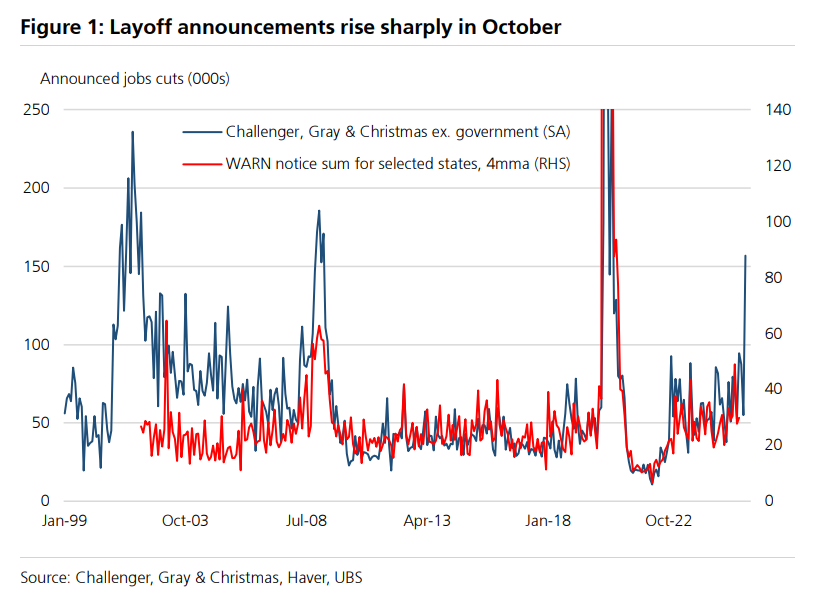
今年美国裁员人数已创2009年以来最高,“不招聘也不裁员”的就业市场认知正被打破
Hua Er Jie Jian Wen· 2025-11-07 05:45
Core Insights - UBS warns that the narrative of "low hiring, low layoffs" in the U.S. job market is collapsing, with cumulative layoffs reaching the highest level since 2009 as of October [1][4] - The latest Challenger job cut data shows that seasonally adjusted layoffs in October reached 192,000, a significant increase of 126,000 month-over-month [1] - Private sector layoffs surged to 157,000, the highest level for October on record, excluding government and non-profit sectors [1] - The technology sector saw layoffs of 25,000 in October, while the warehousing and logistics sector experienced a dramatic increase of 46,000 [1] - AI-related layoffs jumped from zero in September to 31,000 in October [1] Layoff Statistics - Cumulative layoffs for 2025 have reached 760,000, surpassing the 601,000 recorded in the same period of 2024 and marking the highest figure for any year since 2009 [4] - The average monthly layoffs over the past six months stand at 85,000, significantly higher than the pre-pandemic norm of 30,000 to 50,000 from 2014 to 2019 [7] Hiring Trends - Seasonal hiring plans for September and October totaled 400,000, well below the average of 625,000 from 2014 to 2019 and lower than the figures for 2023 and 2024 [8] - Amazon plans to maintain its seasonal hiring of 250,000 workers, which, despite appearing stable, indicates a cautious approach amid declining demand [8] - Target has ceased disclosing the number of seasonal positions, reflecting a lack of optimism in hiring [8] Market Implications - UBS warns that the widening cracks in the job market pose risks for investors betting on a "soft landing" for the U.S. economy, as record-high layoff data contrasts with ongoing debates over minor fluctuations in non-farm payroll data [8]
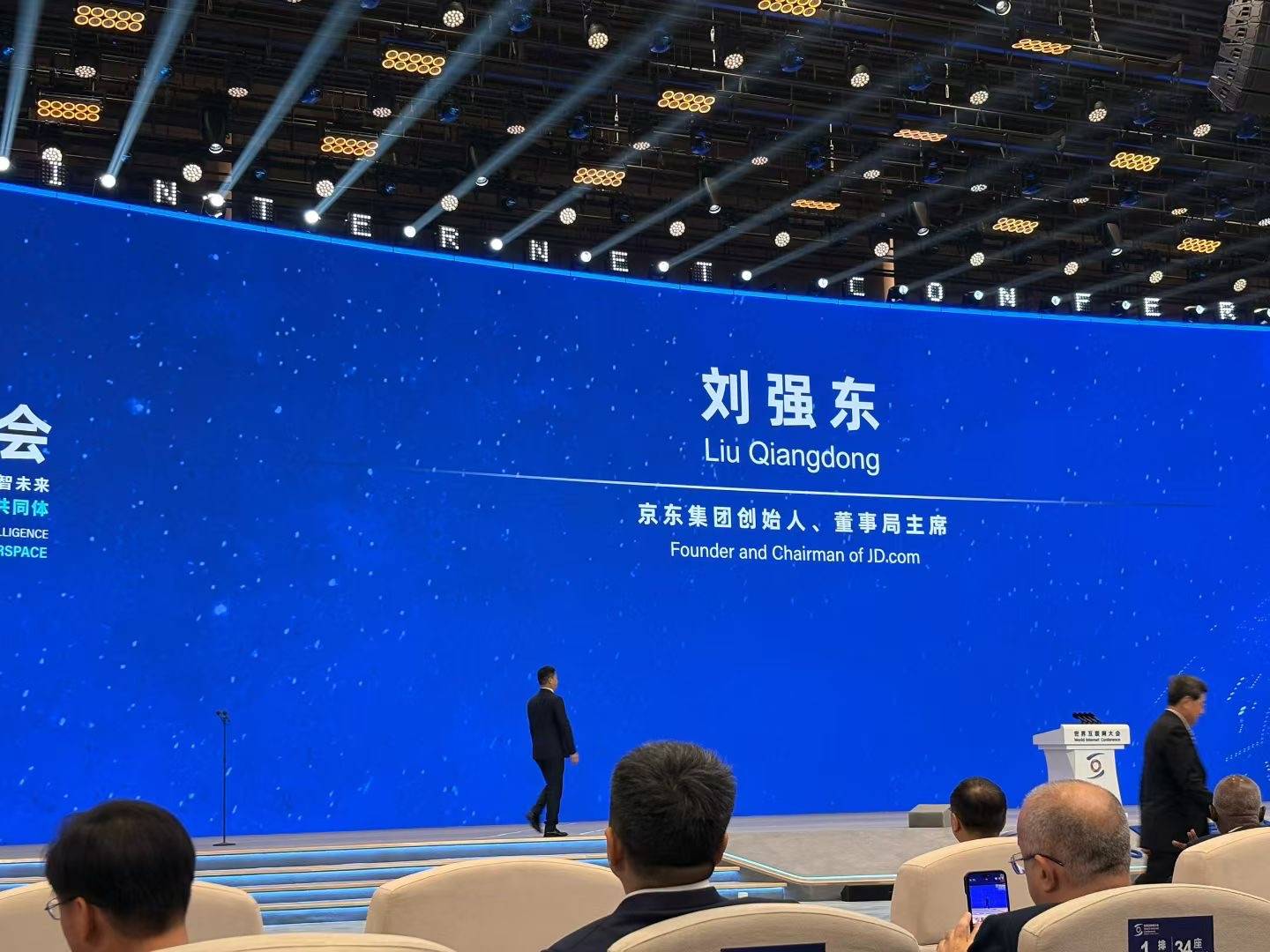
刘强东:未来或一周工作一天、一小时
第一财经· 2025-11-07 05:24
Core Viewpoint - JD Group's founder Liu Qiangdong announced advancements in autonomous delivery technology, including the testing of unmanned trucks and plans for a fully automated delivery station by April next year [1] Group 1: Technological Advancements - JD's unmanned trucks have been tested over hundreds of thousands of kilometers, indicating that the technology is mature and awaiting regulatory approval [1] - The company plans to establish the world's first fully unmanned delivery station globally by April next year [1] Group 2: Future of Work - Liu expressed concerns about job displacement due to automation but noted that the company is now more relaxed about the situation [1] - He suggested that employees may only need to work one day a week or even just one hour in the future, as delivery robots could autonomously deliver packages [1] Group 3: New Opportunities - The rise of automation is expected to create new service industry opportunities in areas such as culture, art, tourism, and exploration [1] - The global tourism market is projected to grow tenfold over the next five years, potentially generating numerous job opportunities in these sectors [1]

涉稀土永磁、集成电路等,一批国家标准发布
Shang Hai Zheng Quan Bao· 2025-11-07 05:04
Summary of Key Points Core Viewpoint - The National Market Regulation Administration has approved a series of important national standards aimed at enhancing quality of life, ensuring safety, and promoting sustainable development across various sectors. Emerging Fields - A total of 167 national standards have been released for new materials such as rare earth permanent magnet materials, fine ceramics, and carbon fiber composites, facilitating technology iteration and industry standardization [1] - Four national standards related to intelligent computing have been established, focusing on terminology, reference architecture, and testing methods to support AI-driven industrial upgrades [1] - Fourteen national standards concerning semiconductor equipment and materials have been introduced, which include electronic components and integrated circuit packaging testing, promoting healthy development in the semiconductor industry [1] Transportation and Green Low-Carbon - Three national standards for urban rail transit vehicles have been published to enhance public transportation safety [2] - Thirty national standards have been released for unmanned aerial vehicles, road traffic signs, and gas vehicles, contributing to the safety of transportation systems [2] - Twenty-two national standards related to waste treatment and greenhouse gas management have been established to improve the green low-carbon standard system [2] - A total of 199 national standards for high-end equipment technology upgrades have been introduced, promoting sustainable development in manufacturing [2] Safety Production - Twenty-two national standards for gas distribution equipment and pressure pipelines have been published to ensure the safety and stability of infrastructure [2] - Mandatory national standards for fireworks safety and quality have been established to enhance product safety requirements [2] - Eleven mandatory national standards for key fire safety products have been updated to improve performance and reliability in fire prevention [2] Economic and Trade Services - Three national standards for cross-border e-commerce and transaction information have been released to guide risk prevention and management for e-commerce platforms [3] - Five logistics and multimodal transport national standards have been introduced to enhance the standardization of logistics documentation and service contracts [3] - National standards for the Chinese translation of geographical names from Nordic and ASEAN countries have been published to support economic and cultural exchanges [3] Agriculture and Rural Development - Thirty national standards for feed, pesticides, and animal health have been established to ensure agricultural production safety [3] - Forty-six national standards for grain, tobacco, and biomass materials have been released to support high-quality agricultural product supply [3] - Seven national standards related to water conservation and agricultural trade have been introduced to enhance standardization in agriculture [3] Daily Life - Ten national standards for smart home appliances have been published to promote the intelligence, greenness, and safety of household products [3] - Thirteen national standards for textiles and footwear have been established to guide production and enhance consumer experience [3] - Six national standards related to health care, including iodine deficiency elimination, have been released to strengthen medical service guarantees [3] Additional Standards - The National Market Regulation Administration has also published standards related to smart manufacturing, semiconductor equipment, and enterprise safety management [4]