先进制造业

Search documents
展望“十五五” | 浙江省发布“十五五”规划建议:加快建设创新国企,健全科技创新投入机制
Xin Lang Cai Jing· 2025-12-24 10:32
Core Viewpoint - The Zhejiang Provincial Committee emphasizes the importance of high-quality development and the establishment of a common prosperity demonstration zone during the 14th Five-Year Plan period, highlighting significant achievements and outlining strategic goals for the upcoming 15th Five-Year Plan period [4][5]. Group 1: Achievements During the 14th Five-Year Plan - Zhejiang's GDP surpassed 9 trillion yuan, with per capita GDP expected to exceed 140,000 yuan, marking a significant economic milestone [4]. - The province's innovation capacity ranks 4th nationally, with R&D intensity reaching 3.22%, showcasing robust technological advancements [4]. - The region has optimized its business environment, achieving a "grand slam" in five categories for private enterprises for two consecutive years [4]. - Zhejiang's export scale ranks 2nd in the country, with the Ningbo-Zhoushan port's development index rising to 7th globally [4]. Group 2: Strategic Goals for the 15th Five-Year Plan - The 15th Five-Year Plan aims to solidify the foundation for high-quality development and common prosperity, addressing both opportunities and challenges [5][6]. - The guiding ideology will focus on Xi Jinping's thoughts, emphasizing the integration of economic and social development with a commitment to high-quality growth [7]. - Key objectives include narrowing urban-rural and regional income gaps, enhancing innovation capabilities, and fostering a modern industrial system [10][11]. Group 3: Development Requirements and Principles - The plan stresses adherence to the "Eight-Eight Strategy" as a fundamental guideline for long-term development [8]. - High-quality development is prioritized, with a focus on innovation, investment optimization, and deepening reforms [9]. - The strategy includes a commitment to meeting the people's needs and ensuring equitable distribution of development benefits [10]. Group 4: Economic and Social Development Goals - By 2030, the province aims to significantly enhance its economic strength and competitiveness, with per capita GDP approaching that of developed economies [10]. - The plan envisions a substantial reduction in income disparities and an increase in the overall well-being of the population [10][11]. - Major breakthroughs in innovation and the establishment of a modern industrial system are expected, with a focus on advanced manufacturing and artificial intelligence [11][12]. Group 5: Infrastructure and Open Economy - The plan includes the construction of a modern infrastructure system to support economic growth and enhance resilience [21]. - High-level openness is emphasized, aiming to strengthen resource allocation and global competitiveness [22][23]. - The strategy promotes the integration of domestic and international markets, enhancing trade and investment environments [26][27]. Group 6: Urban-Rural Integration and Ecological Development - The plan aims to promote urban-rural integration, enhancing the capacity of county towns and improving public services [37][38]. - Ecological development is prioritized, with initiatives to improve environmental quality and promote sustainable practices [14][15].


加计抵减 VS 加计扣除
蓝色柳林财税室· 2025-12-24 08:43
Summary of Key Points Core Viewpoint The article discusses the tax reduction policies related to value-added tax (VAT) and corporate income tax in China, specifically focusing on the preferential treatment for advanced manufacturing, industrial mother machines, and integrated circuit industries. Group 1: VAT Deduction Policies - Advanced manufacturing enterprises are allowed to deduct 5% of the current deductible input tax from their VAT payable [3] - Industrial mother machine enterprises can deduct 15% of the current deductible input tax from their VAT payable [4] - Integrated circuit design, production, packaging, testing, equipment, and materials enterprises can also deduct 15% of the current deductible input tax from their VAT payable [4] Group 2: Corporate Income Tax Deduction Policies - From January 1, 2023, R&D expenses that do not form intangible assets can be deducted at 100% in addition to the actual expenses incurred [5] - For R&D expenses that form intangible assets, the cost can be amortized at 200% for tax purposes [5] - The deduction rate for R&D expenses for integrated circuit and industrial mother machine enterprises has been increased to 120% [5][6] - Basic research expenditures can be deducted at 100% for tax purposes [6] - Wages paid to disabled employees can be deducted at 100% in addition to the actual wages paid [8]

商务部:持续鼓励引导外资投向先进制造业
Zheng Quan Shi Bao Wang· 2025-12-24 08:01
Core Viewpoint - The Chinese government has released the "Encouragement Directory for Foreign Investment Industries (2025 Edition)" to promote foreign investment in advanced manufacturing sectors [1] Group 1: Encouragement of Foreign Investment - The directory continues to prioritize manufacturing as a key area for foreign investment [1] - New additions to the directory include the development and production of nucleic acid drugs, research and production of zero-magnetic medical equipment, and manufacturing of intelligent detection equipment and instruments [1] - Other highlighted sectors include the development of high-speed cameras, smart energy management systems, underwater robots for deep-sea operations, key equipment for gas power generation, and essential components for robots [1]
实体为根 向新而行丨第十届中国制造强国年会即将在京召开
Xin Lang Cai Jing· 2025-12-24 05:17
Core Viewpoint - The 10th China Manufacturing Power Conference will focus on strengthening the foundation of the real economy and accelerating the cultivation of new productive forces, aligning with the strategic deployments of the 20th Central Committee of the Communist Party of China [1][7]. Group 1: Economic Strategy - The real economy is considered the foundation of a major country and a crucial support for future strategic advantages [3][9]. - The 20th Central Committee's proposal emphasizes building a modern industrial system and consolidating the foundation of the real economy as a top priority [3][9]. - The focus is on maintaining a reasonable proportion of manufacturing and constructing a modern industrial system centered on advanced manufacturing [3][9]. Group 2: Manufacturing Industry Performance - China's manufacturing industry has maintained its position as the world's largest for 15 consecutive years, showing remarkable performance during the 14th Five-Year Plan period [3][9]. - Key sectors such as new energy vehicles, photovoltaics, lithium batteries, 5G communication equipment, and high-end equipment have experienced significant growth [3][9]. Group 3: Challenges and Opportunities - The manufacturing sector faces challenges such as intensified technological blockades, frequent supply chain disruptions, and the reshaping of international competition rules [3][9]. - The 15th Five-Year Plan period is critical for achieving high-quality development and self-reliance in manufacturing [4][10]. Group 4: Conference Details - The conference will feature over 400 guests, including leaders from relevant government departments, industry experts, and representatives from mainstream media [5][11]. - The event aims to engage various stakeholders in discussions on the future of China's manufacturing industry [5][11].
南通出台全省首部民营经济专项立法,明年1月1日起施行
Yang Zi Wan Bao Wang· 2025-12-23 14:57
Group 1 - The core viewpoint of the news is the introduction of the "Decision on Promoting High-Quality Development of the Private Economy" by the Nantong Municipal Government, which aims to optimize the development environment for the private economy and ensure fair market competition for various economic organizations, effective from January 1, 2026 [1][2] - Nantong is a significant city for private economy in Jiangsu, with nearly 70% of the city's GDP coming from the private sector, and private enterprises contributing around 80% to tax revenue and employment [1][2] - The decision includes 30 articles focusing on industrial development, fair competition, resource assurance, investment promotion, enterprise services, and rights protection, which are crucial for enhancing the private economy's environment and fostering innovation [2][3] Group 2 - The decision emphasizes regional cooperation, particularly with cities in the Yangtze River Delta, to promote industrial integration, technological innovation, and transportation connectivity [3] - It addresses issues raised by enterprises by implementing measures such as accelerating the application of artificial intelligence in public resource bidding and enhancing regulatory oversight through a comprehensive regulatory platform [3][4] - The decision also aims to promote successful experiences in private investment and enterprise cultivation, encouraging private investment in key sectors like transportation, clean energy, and advanced manufacturing [4]
“十五五”时期 甘肃从五各方面推进新型工业化
Xin Lang Cai Jing· 2025-12-23 10:48
Group 1 - Gansu Province will continue to prioritize industrial strength and the development of a modern industrial system as a key task for high-quality development during the "14th Five-Year Plan" and beyond [1] - The province aims to build a national regional modern manufacturing base by implementing actions for upgrading traditional industries, promoting innovation, and developing future industries [1] - Gansu plans to enhance its status as a major base for renewable energy and equipment manufacturing, focusing on large-scale wind and solar power projects and improving energy transmission infrastructure [1] Group 2 - The province will strengthen its position as a national hub for integrated computing power networks by expanding computing capacity and enhancing collaboration with eastern regions [2] - Gansu aims to promote high-quality development in the service sector by integrating modern services with advanced manufacturing and modern agriculture [2] - The province will advance the construction of modern infrastructure, including major projects like the optimization of the Lanzhou railway hub and new highway corridors [2]
海南自贸港正式启动全岛封关鼓舞我省党员干部接续奋斗
Hai Nan Ri Bao· 2025-12-23 04:16
Core Viewpoint - The official launch of the full island closure of Hainan Free Trade Port marks a new phase in its development, aiming to transform policy advantages into high-quality growth and establish Hainan as a significant gateway for China's new era of opening up [2][3][14]. Policy Implementation and Economic Development - The full island closure is a milestone in the construction of Hainan Free Trade Port, emphasizing the need for effective implementation of policies to stabilize foreign trade and investment, expand consumption, and promote service industry development [3]. - Local governments are focusing on leveraging the unique resources and policies of Hainan Free Trade Port to attract investments in sectors like biomedicine, new-generation electronic information, and high-end food processing [3][4]. Infrastructure and Logistics - Yangpu Port has opened 65 shipping routes, serving as the largest maritime gateway for Hainan Free Trade Port, with plans to enhance logistics and industrial integration [4]. - The successful customs clearance of the first batch of duty-free goods at Qionghai Boao Airport signifies the deep integration of local economies into the Free Trade Port framework [5]. Industry Focus and Development Strategies - Various cities are developing modern industrial systems tailored to their unique advantages, such as Sanya's focus on deep-sea technology and tourism, and Qionghai's emphasis on medical tourism [3][5]. - The establishment of a "1243" modern industrial system in Lingao County aims to foster digital economy, green energy, and modern services, enhancing the region's economic resilience [7]. Social Welfare and Quality of Life - The full island closure is expected to enhance the development of social welfare initiatives, with local governments prioritizing education, healthcare, and employment opportunities to improve the quality of life for residents [8][9]. - Efforts are being made to ensure that the benefits of development are shared equitably among the population, with a focus on enhancing public services and social security systems [9][10]. Environmental Protection and Sustainability - Hainan Free Trade Port is committed to ecological preservation, with initiatives aimed at maintaining high environmental standards while promoting economic growth [11][12]. - Local governments are implementing measures to protect natural resources and promote green development, ensuring that ecological integrity is maintained alongside industrial growth [12][13].
海口“十五五”规划建议出炉
Xin Lang Cai Jing· 2025-12-22 17:14
Group 1: Health and Social Development - The initiative aims to enhance health promotion and education, targeting an increase in average life expectancy to 82.5 years by 2030, with key health indicators ranking among the top in the country [1][9] - The plan includes improving medical service quality and clinical capabilities, promoting the construction of urban medical groups, and introducing high-quality medical resources [9] Group 2: Economic Development and Trade - Haikou will focus on implementing free trade port policies, enhancing the integration of systems, and promoting the free and convenient trade of goods [1] - The city aims to develop into a significant trade hub for Southeast Asia by optimizing port functions and expanding international transit and bonded services [2] Group 3: Talent Development and Education - The "Worry-Free Plan" for youth aims to attract high-level talents in education, healthcare, and culture, while also focusing on the employment and entrepreneurship of college graduates [3][8] - The plan emphasizes the expansion of quality educational resources and the establishment of a matrix of high-quality schools [8] Group 4: Infrastructure and Urban Development - The city is set to enhance its transportation system, including major infrastructure projects like the Zhanhai High-Speed Railway, to improve connectivity [5] - There is a focus on upgrading urban road networks and communication infrastructure, including the deployment of 5G and exploration of 6G [5] Group 5: Tourism and Cultural Development - The initiative aims to enhance tourism offerings by introducing high-attraction international projects and striving for the establishment of 5A-level scenic spots [6] - Development of new cultural landmarks and high-end coastal vacation products is also a priority [7] Group 6: Real Estate and Housing - The strategy includes promoting high-quality real estate development, optimizing housing supply, and improving living conditions through renovations and infrastructure upgrades [10] - There is a focus on enhancing the safety and quality of existing residential buildings and community services [10]
看好市场向上趋势 基金经理为跨年行情做准备
Shang Hai Zheng Quan Bao· 2025-12-21 18:17
Group 1: Market Trends and Investment Opportunities - Recent preparations by professional investors for year-end market trends have been noted, with public funds conducting intensive research on companies such as Zhongke Shuguang, Haiguang Information, Luxshare Precision, Changan Automobile, and others, primarily in the manufacturing sector [1] - Institutions believe that the recent market adjustment will provide better investment opportunities for the upcoming year, with structural market trends making certain underperforming sectors more attractive [1] - Analysts from Penghua Fund and Xingzheng Global Fund express optimism about advanced manufacturing, cyclical stocks, and high-performing non-bank stocks, indicating that the upward market trend remains intact despite short-term fluctuations [1] Group 2: Sector-Specific Insights - The lithium battery industry is expected to maintain high demand due to the growth in electric vehicle sales and unexpected storage needs, leading to improved profitability across the supply chain [2] - The innovative drug sector in Hong Kong remains a focus for institutions, with a positive outlook on the industry’s fundamentals and the ongoing trend of innovative drugs going global, which is expected to enhance the upstream supply chain's performance [2] - The commercial aerospace and satellite industry is transitioning from speculative hype to a fundamentals-driven phase, with investment opportunities emerging across the supply chain, particularly in rocket and satellite manufacturing and related applications [3]






尹艳林:“十五五”时期我国实现年均5%左右增长是完全有可能的
Xin Lang Cai Jing· 2025-12-21 13:35
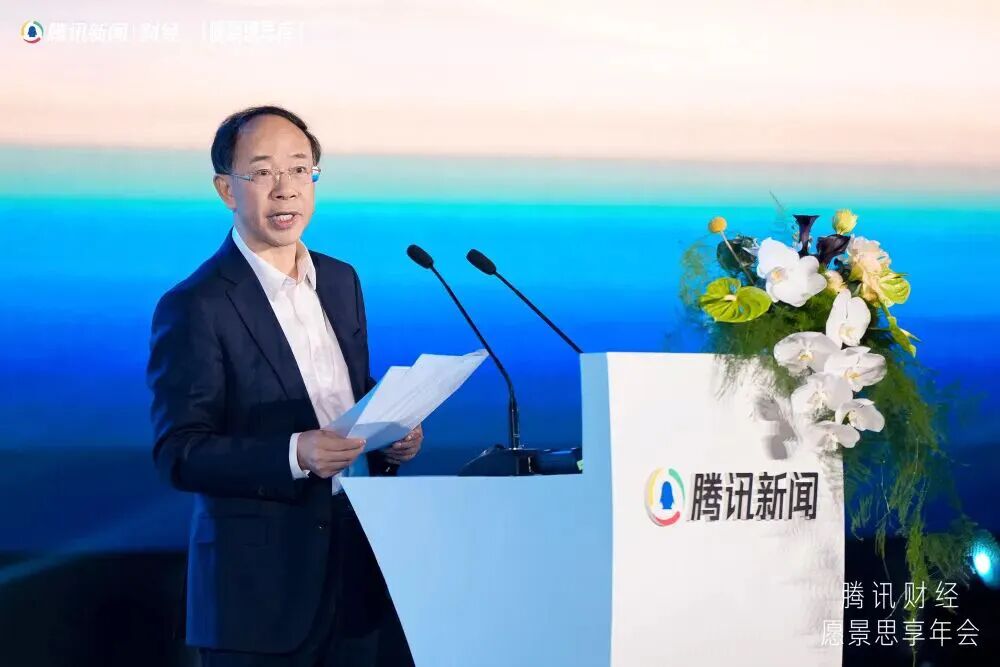
来源:经济学家圈 尹艳林:"十五五"时期我国实现年均5%左右增长是完全有可能的 很高兴应邀参加腾讯财经愿景思享年会。今天的主题是"智变之时"。在世界百年变局和智能科技重塑经济的时代潮流中,中国经济发展面临巨 大机遇和新挑战。特别是"十五五"时期成为实现2035年远景目标乃至第二个百年奋斗目标的关键阶段。从中长期来看,中国经济的转型升级还 有哪些难点,哪些领域的改革亟待重点突破,如何推进下一阶段的改革发展,这个是大家很关心的问题。下面我想就这些问题跟大家做一些分 享。 但是我们必须看到,"十五五"时期我国发展环境面临深刻复杂变化,战略机遇和风险挑战并存,特别是国内发展不平衡不充分问题仍然突出, 有效需求不足,国内大循环存在卡点堵点,超大规模市场优势的发挥遇到障碍;新旧动能转换任务艰巨,制造业中传统产业仍占80%,先进制 造业和新兴产业占比还不高,原始创新能力不强,重点领域关键核心技术仍有待攻关突破,企业创新能力有待加强;农业农村现代化相对滞 本 后,城乡基本公共服务水平差距仍然较大,农业转移人口进城落户面临体制性障碍;就业和居民收入增长压力较大,居民财产性收入增长渠道 不畅,养老、医疗、教育、住房等民生保障存在 ...