
农业种植

Search documents
树一个品牌 富一方百姓 助乡村振兴
Shan Xi Ri Bao· 2025-12-28 00:38
Core Insights - The development of labor brands in Shaanxi has significantly improved employment opportunities and income for local workers, with 158 labor brands recognized and nearly 4 million rural workers benefiting from these initiatives [1][2][3] Group 1: Labor Brand Development - Shaanxi has implemented a labor brand cultivation project that includes policy guidance, financial support, skills training, and promotion, resulting in the creation of distinctive labor brands [1][2] - The "Three Qin Series" labor brands have become important employment cards, enhancing the income and living standards of many families in the region [1][3] Group 2: Economic Impact - Labor brands like "Qianyang Apple Master" and "Huazhou Shadow Play Craftsman" have become key drivers for local economic development, providing stable employment and income for many individuals [2][4] - The "Purple Yang Foot Care Master" brand has created over 130 foot care enterprises, employing 54,400 people and generating 3.5 billion yuan in income, accounting for 70% of the county's labor income [5] Group 3: Skills Training and Employment - The focus has shifted from labor output to technical skills output, with various training programs developed to enhance the skill sets of workers, such as the "Yanliang Aviation Craftsman" brand which has trained over 4,000 professionals [7] - The "Cai Shui Ear Farmer" labor brand has successfully encouraged local villagers to engage in mushroom cultivation, creating a vibrant local economy and job opportunities [6][7] Group 4: Future Directions - Shaanxi plans to accelerate the upgrade of labor brands, focusing on high-quality service, mid-to-high-end skills, cultural tourism, and social welfare sectors to better support employment and industry development [7]
山东曲阜:片区联动 乡村共富
Xin Lang Cai Jing· 2025-12-27 19:44
Core Insights - The article highlights the successful implementation of rural revitalization initiatives in Qufu, Shandong, focusing on the integration of resources and collaborative development among villages [1][2][3] Group 1: Economic Development - The "保底租金+务工工资+盈余分红" model has been adopted in Qili Village, leading to a collective income of nearly 3 million yuan for the village [1] - The "强村公司" established in Yijia Village has generated over 100 million yuan in revenue within two years, attracting 2.1 million visitors [2] - The "圣府粮仓" rural revitalization demonstration area in Wangzhuang Town has created a complete food industry chain, achieving an annual output of 120 million jin of pancakes and a value of over 7.5 million yuan [2] Group 2: Community Collaboration - The establishment of a joint party committee among 16 administrative villages has facilitated the integration of 5 million yuan in support funds for the construction of a shared prosperity industrial park [1] - The collaboration among 12 villages under the "强村公司" has expanded its operational network, enhancing resource sharing and operational efficiency [2] - Qufu has created 22 rural revitalization areas covering 11 towns and 182 administrative villages, injecting sustainable momentum into rural development [3]
雪域“烟火”映发展
Xin Lang Cai Jing· 2025-12-27 19:44
当地干部介绍,称多县深耕本土资源,采用"公司+农户"模式,让芫根实现了从"土特产"到"香饽饽"的 蜕变,年销售额突破300万元。这让我们看到,县域产业无需追求"大而全",只要找准特色、做深链 条,就能让群众在产业链上分享发展成果,让特色资源成为"造血干细胞"。 在县城的绿地公园,有这样一片绿意盎然的天地:亭台楼阁错落有致,健身步道蜿蜒曲折,老人们在树 荫下聊天,孩子们在草坪上嬉戏。生态与民生双赢,是县域经济可持续发展的核心。称多县将公园改 造、草原修复与就业帮扶相结合,既让县城绿化覆盖率达到35%,又为牧民提供了生态管护岗位,实现 了"绿水青山"与"金山银山"的良性循环。 雪山、草原、县城构成一幅和谐美丽的画卷,称多县的实践让我深受触动:县域经济发展不必贪大求 全,扎根民生需求,就能让发展有温度;立足本地禀赋,就能让发展有特色;坚守生态底线,就能让发 展有韧性。在这片雪域高原上,称多县用实际行动证明:只要找准方向、久久为功,小县城也能书写大 文章,让每一份期待都绽放出幸福的模样。 连绵的雪山,成群的牦牛……在平均海拔4500米的玉树藏族自治州称多县,究竟藏着怎样的发展密码? 走访中,快递员次成它生的笑容、牧民 ...
“等新合作项目落定,我想再去一次中国”
Xin Lang Cai Jing· 2025-12-27 17:39
Core Viewpoint - The article highlights the transformative impact of Chinese hybrid rice seeds on Gambian agriculture, showcasing a successful collaboration between China and Gambia that has significantly improved rice production and farming practices in the region [6][7][9]. Group 1: Agricultural Transformation - The agricultural technology assistance project between China and Gambia began in 2019, focusing on modernizing rice farming techniques in the Sapu region, which previously relied on traditional methods [7]. - The introduction of controlled irrigation systems and mechanization has allowed for a significant increase in rice yields, with hybrid rice achieving stable production of over 7 tons per hectare, 2-3 times the local average [9][10]. - By 2025, the hybrid rice varieties are expected to maintain an average yield of 8.5 tons per hectare during the dry season, with peak yields reaching 10.8 tons per hectare [9]. Group 2: Training and Capacity Building - The project has conducted over 50 training sessions, benefiting more than 2,700 local personnel and establishing 38 hybrid rice demonstration sites covering over 300 hectares [11]. - The focus on "teaching to fish" rather than one-time aid has been a core principle, ensuring that local farmers can sustain improvements independently after the project's completion [11][12]. Group 3: Future Plans and Challenges - The farmer Musa plans to establish a professional agricultural team by 2026, collaborating with local universities to train young people in agriculture, providing them with land, seeds, and technical support [18]. - Despite the successes, challenges remain, including insufficient production capacity, a lack of skilled machinery operators, and supply chain issues for parts [17]. - Musa's collaboration with the World Food Programme aims to provide rice for school feeding programs, highlighting the broader social impact of the agricultural improvements [17].



赤心不改,忠诚如一——走近2025年“最美退役军人”
Xin Hua She· 2025-12-27 15:27
Group 1 - The article highlights the dedication and contributions of retired military personnel who continue to serve society in various capacities, showcasing their unwavering loyalty and commitment to public service [1][2] - It features inspiring stories of individuals who have transitioned from military service to impactful roles in emergency rescue, law enforcement, and community support, emphasizing their ongoing mission to protect and assist others [3][4][5] Group 2 - The article presents examples of retired veterans who have engaged in social welfare and community development, such as promoting agricultural initiatives and supporting education for underprivileged students [7][8] - It also highlights the achievements of veterans in various fields, including sports, technology, and education, demonstrating their resilience and ability to adapt to new challenges after military service [9][10][11]
南充首笔水土保持生态产品价值转化交易达成
Xin Lang Cai Jing· 2025-12-27 05:19
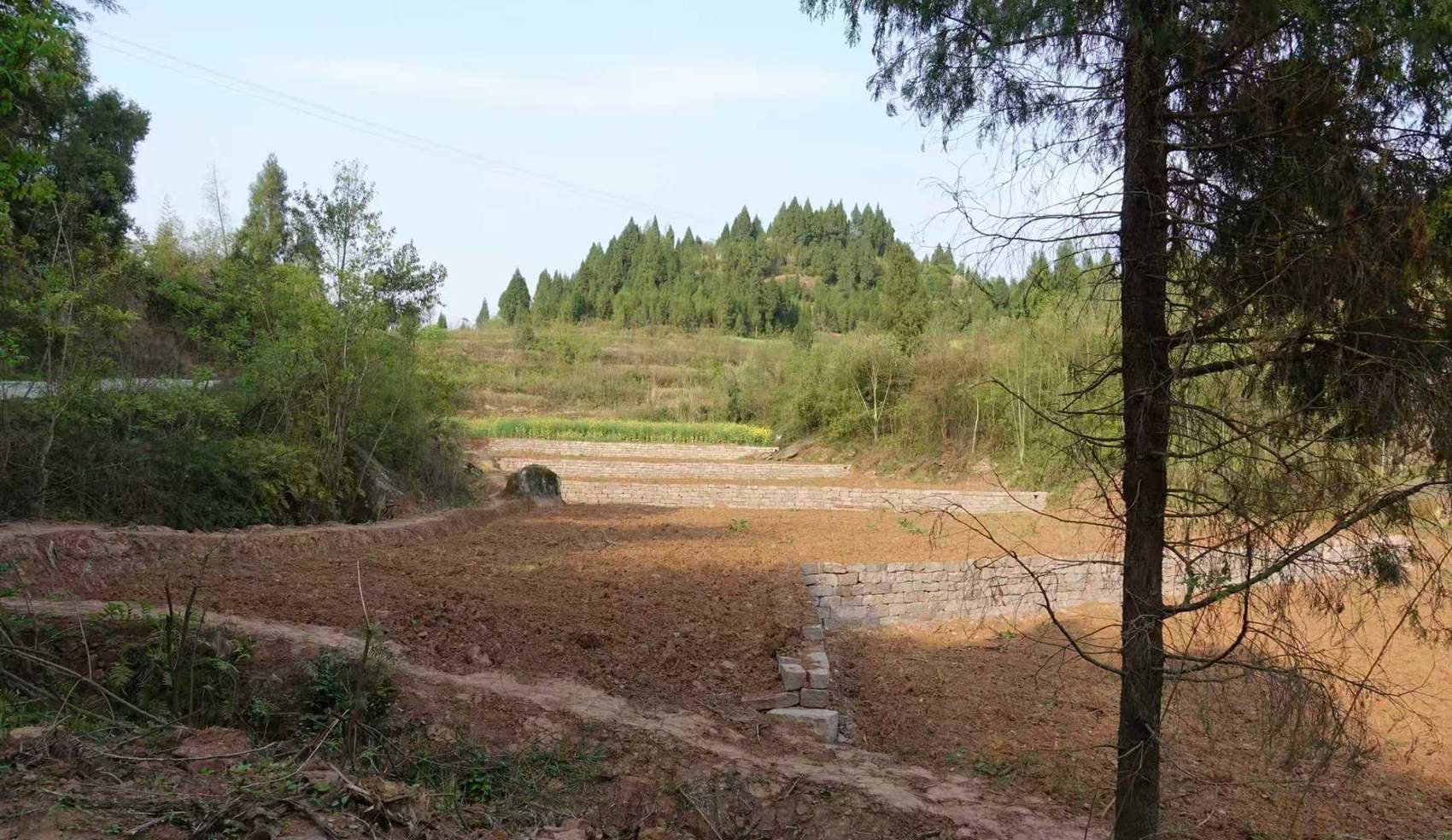
Core Viewpoint - The first water and soil conservation ecological product value conversion transaction in Nanchong has been successfully signed, indicating a new approach to managing and monetizing previously degraded land through ecological restoration efforts [2][3]. Group 1: Transaction Details - Nanchong's agricultural cooperative acquired the management rights for 642 acres of ecological products for 343,000 yuan over two years [2]. - The land, previously abandoned due to severe soil erosion, is now being restored and will be used for agricultural production [3]. Group 2: Soil Erosion Management - The region has implemented various measures, including the construction of drainage ditches, water storage pools, and sedimentation tanks, to combat soil erosion [6]. - The restoration efforts have significantly improved the land's fertility and irrigation conditions, making it more attractive for agricultural use [6]. Group 3: Economic Impact - The average annual rental income from the restored land is approximately 270 yuan per acre, benefiting over 200 local households [6]. - The ecological restoration has transformed previously unmanageable land into a valuable economic asset, demonstrating the potential for sustainable financial returns from environmental projects [6][8]. Group 4: Broader Implications - As of the end of 2020, Nanchong's soil conservation rate was only 58.86%, but it is projected to rise to 62.36% by 2024, reflecting significant progress in soil erosion management [8]. - The success of this project in Nanchong is expected to provide a model for similar ecological product value realization mechanisms in other regions [8].
“村播妇联”与“她乡好货”同频共振
Xin Lang Cai Jing· 2025-12-26 23:07
Core Insights - The "She Entrepreneurship Program - 'She Country Good Goods'" is a public welfare training initiative launched by the China Women's Development Foundation and Walmart (China), aimed at empowering rural women in Yunnan Province by enhancing their skills and practical knowledge [1][4] Group 1: Training and Practical Application - The program emphasizes practical training rather than theoretical lectures, focusing on skills such as live streaming techniques, video shooting, and the use of AI tools to effectively sell products [2] - Over 200 participants from 16 prefectures in Yunnan underwent intensive training, transitioning from novices to knowledgeable "new farmers" who understand both products and operations [2] Group 2: Storytelling and Community Engagement - Graduates of the program formed "Live Streaming Volunteer Service Teams" to promote local products through engaging storytelling and cultural presentations, enhancing the authenticity of their broadcasts [3] - The live streams have garnered significant viewer engagement, with comments supporting local products and interactions exceeding a thousand [3] Group 3: Systemic Empowerment and Future Outlook - The program aims to activate the intrinsic motivation of rural women through a multi-dimensional approach that combines training, practical experience, and resource integration [4] - The establishment of 133 "Village Broadcasting Women's Federations" in Yunnan has created a supportive network for women's digital entrepreneurship, with plans to further promote rural women's participation in the digital economy [4]
“双遗”辉映,续写千年农耕智慧
Xin Lang Cai Jing· 2025-12-24 23:56
Core Insights - The "Zhejiang Deqing Freshwater Pearl Composite Aquaculture System" was successfully included in the Global Important Agricultural Heritage Systems (GIAHS) list in May 2025, marking Huzhou's second world-class agricultural heritage following the "Sangki Fish Pond System" in 2017, making it one of the few cities in China with "dual heritage" status [3][4] Group 1: Agricultural Heritage - Huzhou is recognized for its rich natural resources, being known as the "land of fish and rice, and the capital of silk," and has developed two classic ecological circular paradigms that reflect a deep sustainable farming philosophy [3] - The "Sangki Fish Pond System" is a model of "land-based circulation," integrating planting and breeding into a near-zero waste production system, praised as a global sustainable agriculture benchmark [3][4] - The newly recognized "Zhejiang Deqing Freshwater Pearl Composite Aquaculture System" exemplifies "water-based circulation," focusing on a symbiotic ecosystem of "mussels and fish" to achieve efficient ecological balance and natural pearl cultivation [3] Group 2: Historical Significance - Both systems have a long history, with the Sangki Fish Pond dating back to the Spring and Autumn period and maturing during the Tang and Song dynasties, while pearl farming began in the Southern Song dynasty with the invention of the shell-attachment method by craftsman Ye Jinyang [4] - These systems represent local production wisdom and have influenced agricultural and pearl culture across East Asia and the world, being described by FAO experts as a "model of ancient wisdom combined with contemporary conservation" [4] Group 3: Modern Development - Huzhou is advancing active protection and innovative development with a holistic vision, creating a "Pearl Source" cultural community in Deqing and restoring traditional Sangki fish pond landscapes in places like Nanxun, revitalizing ancient ecological wisdom for contemporary engagement [5] - The city showcases its ecological circular models to the world, presenting an Eastern answer to sustainable agricultural development [5]
专访中国WTO研究会副会长霍建国:海南自贸港为全国制度型开放探路
2 1 Shi Ji Jing Ji Bao Dao· 2025-12-24 23:10
Core Viewpoint - The official launch of the Hainan Free Trade Port's full island closure operation on December 18 marks a significant step in China's high-level opening-up strategy, implementing a regulatory model of "one line open, two lines controlled, and free within the island" to enhance international trade and investment [1][3]. Group 1: Regulatory Framework and Tax Policies - Hainan Free Trade Port has expanded its "zero tariff" product list to approximately 6,600 items, increasing the proportion from 21% to 74%, with a broader range of beneficiaries [1]. - The management model of "one line open, two lines controlled" aims to fully connect the island with international markets, while the service sector's negative list for foreign investment is the most open in the country [2][4]. - Tax policies include significant breakthroughs, such as a preferential tax rate of 15% for corporate and personal income taxes, and even exemptions in certain cases [5]. Group 2: Economic Impact and Opportunities - The policy allowing enterprises to import raw materials tax-free and sell to the mainland after processing 30% value-added in Hainan is expected to significantly lower costs and attract industry clusters, boosting local economic growth [6]. - Inland enterprises can establish companies in Hainan to indirectly benefit from local tax and customs policies, facilitating international business connections and potentially higher profits [7]. Group 3: International Trade and Investment - Hainan is positioned to become a key hub for trade with ASEAN, leveraging its zero-tariff policy and geographical advantages to facilitate imports and exports [10]. - The establishment of a high-quality business environment is crucial for attracting foreign investment, with a focus on policy implementation and maintaining transparency and fairness in enforcement [9]. Group 4: Strategic Significance and Future Prospects - The construction of Hainan Free Trade Port serves as a demonstration of China's commitment to high-level opening-up and is expected to provide a model for other regions in implementing institutional reforms [3][13]. - Hainan's unique advantages in sectors like tropical agriculture and tourism, along with its potential for deepening cooperation with ASEAN, highlight its strategic importance in the regional economic landscape [12].
8个村集体经济收入达百万元
Xin Lang Cai Jing· 2025-12-24 19:52
Core Viewpoint - The agricultural economy in Chengxi District has shown significant growth, with collective income reaching 44.68 million yuan, a 21.36% increase compared to the same period in 2024 [1] Group 1: Economic Performance - As of the end of November, 12 villages in Chengxi District reported a collective economic income of 44.68 million yuan, marking a 21.36% increase year-on-year [1] - Eight villages achieved collective economic income exceeding 1 million yuan, while four villages reached 5 million yuan [1] Group 2: Policy Implementation - Chengxi District has deepened the implementation of rural revitalization strategies through policies such as the "Three Rural Projects" and "Strong Village Projects" [1] - A support fund of 10 million yuan for collective economic development has been established, along with management guidelines [1] Group 3: Project Development - The district has successfully completed various projects, including the renovation of Yangjiazai Village's Tiger Tai Hotel and nursing home, and the establishment of a comprehensive building for the elderly activity center in Pengjiazai Village [1] - Key collective economic projects, such as the Yinshan Tangshan Spring Water Plant and the Huodong Dahuang Planting Base, have been put into operation [1] Group 4: Future Plans - By 2025, the district aims to enhance the application of research findings through concentrated signing ceremonies for rural revitalization projects, leveraging a "regional coordination + village-enterprise co-construction" model [1] - The district has successfully attracted 180 million yuan in intended investments for key projects like the Linxie breeding in Huoxi Village and the logistics park in Yangjiabian [1]