
商业航天

Search documents
港股收盘(01.16) | 恒指收跌0.29% 半导体产业链走势强劲 航运股普遍承压
智通财经网· 2026-01-16 08:41
Market Overview - The Hong Kong stock market opened high but closed lower, with the Hang Seng Index down 0.29% to 26,844.96 points and a total turnover of HKD 255.08 billion. The Hang Seng China Enterprises Index fell 0.5% to 9,220.81 points, while the Hang Seng Tech Index decreased by 0.11% to 5,822.18 points. For the week, the Hang Seng Index rose 2.34%, the China Enterprises Index increased by 1.9%, and the Tech Index gained 2.37% [1] Blue-Chip Stocks Performance - Li Ning (02331) showed strong performance, rising 4.35% to HKD 20.4 with a turnover of HKD 54.6 million, contributing 3.16 points to the Hang Seng Index. Morgan Stanley's report indicates that Li Ning's revenue is expected to achieve moderate growth, with net profit margins stabilizing at high single digits, suggesting an upward revision in consensus net profit expectations [2] - Other blue-chip stocks included Techtronic Industries (00669) up 4.87%, Wharf Real Estate Investment (01997) up 2.78%, Alibaba Health (00241) down 5.16%, and Orient Overseas International (00316) down 4.98% [2] Sector Highlights Semiconductor Industry - The semiconductor sector showed strong performance, with companies like Zhaoyi Innovation (03986) up 16.74%, Tianyu Advanced (02631) up 13.5%, and Fortior (01304) up 8.21% [3] Power Equipment Stocks - Power equipment stocks generally rose, with Harbin Electric (01133) up 5.78%, Dongfang Electric (01072) up 4.92%, and Times Electric (03898) up 2.58%. The State Grid's investment plan of HKD 4 trillion for the 14th Five-Year Plan represents a 40% increase from the previous plan, indicating a positive outlook for the sector [4] Commercial Aerospace - The commercial aerospace sector saw a revival, with companies like Goldwind Technology (02208) up 3.52% and Junda Co. (02865) up 2.8%. The sector is expected to benefit from increased activity in space exploration and technology advancements [5] Robotics Sector - The robotics sector was active, with companies like Geekplus (02590) up 6.97% and Cloudwalk (02670) up 4.84%. A report from Omdia predicts significant growth in humanoid robot installations, with a forecast of 1.6 million units by 2025 [6] Shipping Sector - The shipping sector faced pressure, with Orient Overseas International (00316) down 4.98% and Seaspan (01308) down 3.96%. Maersk announced the resumption of operations through the Red Sea, which may lead to a 7%-8% increase in shipping capacity, potentially putting downward pressure on freight rates [7] Notable Stock Movements - MINIMAX (00100) led the AI sector with a rise of 22.35% to HKD 438, driven by its strategic focus on AI model breakthroughs [8] - Conant Optical (02276) reached a new high, up 10.52% to HKD 60.4, as Meta Platforms plans to double AI smart glasses production [9] - Derin Holdings (01709) rose 6.76% to HKD 2.21 after receiving conditional approval for digital asset consulting services [10] - Lithium stocks faced declines, with Ganfeng Lithium (01772) down 4.94% and Tianqi Lithium (09696) down 2.98%, as lithium futures prices fell [11]
“未来产业”主题系列报告(二):商业航天:跨越“卡门线”
Western Securities· 2026-01-16 08:07
Core Conclusions - The "singularity" of commercial aerospace is approaching, with a transition from "single satellite testing" to "constellation networking" underway. China's satellite deployment completion is currently around 1%, indicating significant room for growth in the coming years as rocket recovery and reusability technologies are mastered [1][9][10] - Commercial aerospace is a high-growth and scarce sector, with the successful launch of the "Zhuque-3" rocket, which has a capacity of 21.3 tons (non-recoverable), setting a strong foundation for mass satellite launches. The cost of commercial rocket launches in China is expected to decrease rapidly, further enhancing market potential [2][17][18] - The commercial aerospace sector is likely to evolve into a mainline market, with the second wave of market growth not being the endpoint. The satellite industry index has increased nearly 105% in a short period, indicating strong investor interest and potential for further growth as rocket recovery technologies mature [3][27][28] Group 1: The Singularity of Commercial Aerospace - Global commercial aerospace is at a critical stage, moving towards "constellation networking" with strict timelines set by the International Telecommunication Union (ITU) for satellite frequency and orbital resource applications [1][9] - China's satellite constellation construction is lagging, with significant room for improvement in launch frequency and completion rates. The largest constellation, SpaceX's Starlink, has a completion rate of approximately 18.9%, while China's major constellations are at about 1% [10][11] Group 2: High-Growth Potential - The bottleneck in China's commercial aerospace development is insufficient rocket capacity, leading to high satellite launch costs. However, the successful launch of the "Zhuque-3" rocket marks a significant breakthrough, with a theoretical capacity to launch multiple satellites simultaneously [17][18] - The market space for satellite launches is substantial, with an estimated annual demand for approximately 4,000 satellites based on the lifespan of existing constellations [2][17] Group 3: Transition to Mainline Market - The commercial aerospace sector is expected to transition from a thematic market to a mainline market as rocket recovery technologies mature. The current market dynamics suggest that the sector is in the middle of a long-term upward trend [3][27][31] - The performance of leading companies in the sector indicates that while there has been significant growth, there is still potential for further increases compared to other sectors like low-altitude economy and new energy vehicles [3][27] Group 4: Focus on Rocket Manufacturing and Satellite Services - The commercial aerospace market is expected to follow a clear sequence of development, with rocket manufacturing leading the charge, followed by satellite payloads and platforms. The downstream application and service market still lack clear business models, indicating room for growth [4][33][34] - As satellite launches increase, the need for operational and service capabilities will become critical, making satellite operations and services a key area of focus for future investment [4][33][34] Group 5: Industry Chain and Related Stocks - A comprehensive industry chain map for commercial aerospace has been developed, highlighting key players and stocks for investor reference. This includes segments such as rocket manufacturing, satellite payloads, platforms, testing, and operations [41][42]
【A股收评】大盘微调,半导体全线走高、领涨两市!
Sou Hu Cai Jing· 2026-01-16 07:57
Group 1: Market Overview - The three major indices experienced fluctuations, with the Shanghai Composite Index down 0.26%, Shenzhen Component Index down 0.18%, and ChiNext Index down 0.2%, while the STAR Market 50 rose by 1.35. Over 2200 stocks in the two markets saw gains, with a total trading volume of approximately 3.03 trillion yuan [2]. Group 2: Semiconductor Sector - The semiconductor sector showed strong performance, with notable gains in storage chips and semiconductor equipment concepts. Tianyue Advanced (688234.SH) rose by 20%, Baiwei Storage (688525.SH) increased by over 17%, and Jiangbolong (301308.SZ) rose by over 13%. Other companies like Xidian Co. (301629.SZ) and Tuojing Technology (688072.SH) also saw increases [2]. - TSMC reported its Q4 2025 revenue exceeding 1,046.09 billion NTD for the first time and plans to increase its capital expenditure for 2026 to a record high of up to 56 billion USD [2]. - TrendForce forecasts a price increase for DRAM contracts in Q1 2026, with general DRAM contract prices expected to rise by 55-60%, HBM-inclusive DRAM prices by 50-55%, and NAND Flash contract prices by 33-38% [2]. Group 3: Electric Grid Equipment Sector - The electric grid equipment sector performed strongly, with Hongxiang Co. (300427.SZ) rising by 11.33%, and other companies like Guangdian Electric (601616.SH), Senyuan Electric (002358.SZ), and Siyuan Electric (002028.SZ) increasing by 10% [3]. - The State Grid Corporation of China announced a projected fixed asset investment of 4 trillion yuan during the 14th Five-Year Plan period, representing a 40% increase compared to the previous plan, aimed at promoting high-quality development of the new power system supply chain [3]. Group 4: Humanoid Robot Sector - The humanoid robot sector also saw significant gains, with companies like Ningbo Huaxiang (002048.SZ), Henggong Precision (301261.SZ), and Fangzheng Electric (002196.SZ) experiencing substantial increases [4]. - A report from Guotai Junan Securities highlighted the potential for breakthroughs in the humanoid robot industry, driven by collaboration among leading companies both domestically and internationally, aiming to transition humanoid robots from laboratory settings to large-scale commercial applications [4]. Group 5: Commercial Aerospace Sector - The commercial aerospace sector performed well, with Xinke Mobile (688387.SH) rising by over 11%, and other companies like Aerospace Development (000547.SZ) and Zhenlei Technology (688270.SH) also seeing significant gains [5]. - Elon Musk announced that SpaceX aims to launch its Starship more than once an hour within three years, with a goal of producing 10,000 Starships annually. Additionally, the China Aerospace Science and Technology Corporation outlined plans for 2026 to advance manned lunar missions and deep space exploration [5].





A股收评 | 牛市节奏生变!多ETF巨量下跌
智通财经网· 2026-01-16 07:22
从个股看,两市上涨2371家,下跌2973家,128家涨幅持平。两市共67股涨停,共62股跌停。 截至收盘,沪指跌0.26%报4101.91点,成交13380亿元;深成指跌0.18%报14281.08点,成交16711亿 元。创业板指下跌0.20%,报3361.02点。 资金动向 今日主力资金重点抢筹半导体、消费电子、汽车零部件等板块,主力净流入居前的个股包括工业富联、 长电科技、三花智控等。 要闻回顾 今日市场宽幅震荡,截至收盘三大指数集体下跌。AI应用持续调整,商业航天获资金回流,半导体、 电力设备等板块全天强势。市场全天成交约3万亿,较上个交易日放量超千亿,两市下跌个股近3000 只。 值得关注的是,今日午后宽基ETF持续放量,其中沪深华夏沪深300ETF(510330)午后分时现放量下挫, 成交超220亿,创历史成交天量,嘉实沪深300ETF(159919)成交近100亿,富国中证1000ETF(159629)成 交额环比昨日增超10倍。 据券商中国,今天市场走弱可能系市场预期改变。第一,12月的M1增速回落,A股有"M1定买卖的传统 策略",市场担忧流动性传导仍不畅。第二,在昨天结构性"降息"之后, ...
蓝思科技涨超4% 机器人、商业航天领域等多领域布局
Zhi Tong Cai Jing· 2026-01-16 07:19
Core Viewpoint - Lens Technology (300433)(06613) has seen a stock increase of over 4%, currently trading at 29.8 HKD with a transaction volume of 475 million HKD, indicating strong market interest and confidence in the company's growth prospects [1] Group 1 - The company has successfully delivered humanoid robots, quadruped robots, and various modules to several leading robot clients both domestically and internationally, positioning itself among the top in assembly and shipment scale within the industry [1] - Lens Technology has been confirmed as a core supplier for a leading North American robot client, with head modules already certified by the client and structural components undergoing certification [1] - At CES 2026, the company showcased its self-developed aerospace-grade ultra-thin flexible glass (UTG) photovoltaic packaging solution, highlighting its innovation capabilities [1] Group 2 - According to Aijian Securities, the company is focusing on continuous process innovation in traditional consumer electronics while increasing production capacity in emerging fields such as robotics and server liquid cooling [1] - The company has established a leading technological layout in the cutting-edge commercial aerospace sector, leveraging its long-standing expertise in material processing and precision manufacturing [1] - The outlook remains positive for the company as it expands its business into consumer electronics, robotics, server components, and commercial aerospace sectors [1]


视频丨首台、首次、首飞!本周,我国科技接连实现硬核突破
Yang Shi Xin Wen Ke Hu Duan· 2026-01-16 07:14
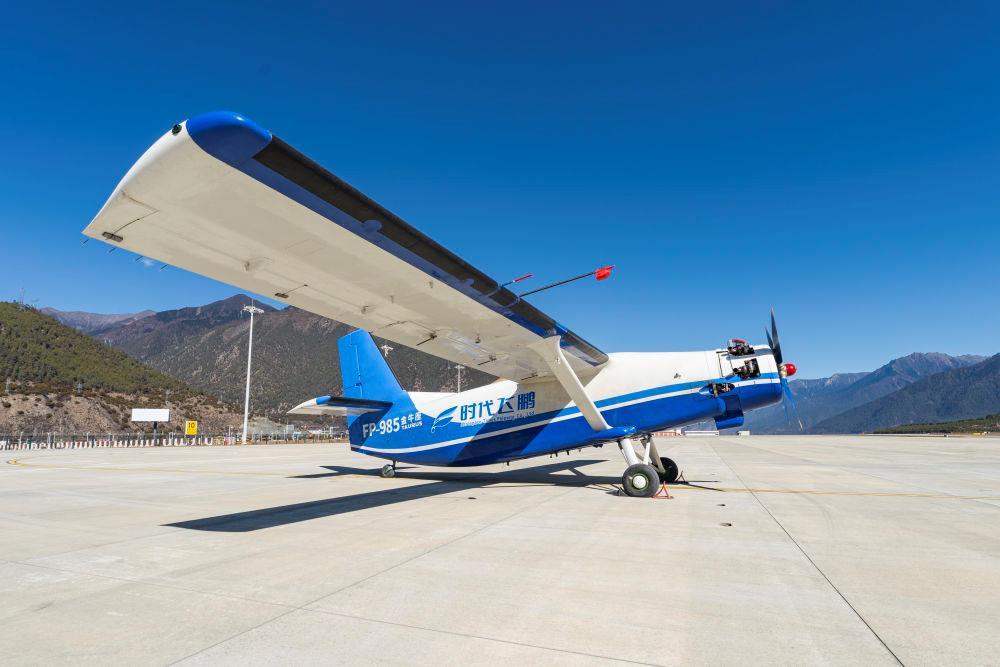
Group 1: Deep Sea Exploration - The first deep-sea drilling and in-situ monitoring robot developed by Guangzhou Marine Geological Survey Bureau successfully completed trial operations in the South China Sea, marking a significant breakthrough in deep-sea exploration and geological monitoring technology [2][4]. Group 2: Offshore Wind Power - The world's first 20-megawatt offshore wind turbine was successfully installed in the waters off Fujian, representing a major advancement in the development and construction of ultra-large capacity wind turbines [5]. - The installed turbine is located over 30 kilometers offshore and in water depths exceeding 40 meters, with an expected annual power generation of over 80 million kilowatt-hours, sufficient to meet the electricity needs of approximately 44,000 households for a year [7]. Group 3: High-Altitude Logistics - The FP-985 "Golden Bull" large fixed-wing drone successfully completed its first flight on a logistics route exceeding 1,100 kilometers from Linzhi, Tibet to Mianyang, Sichuan, establishing a solid foundation for an efficient and stable low-altitude logistics network in the western plateau region [8][10]. Group 4: Commercial Spaceflight - The "Lihong No. 1" spacecraft successfully completed its suborbital flight test at the Jiuquan Satellite Launch Center, marking the first domestic commercial suborbital parachute recovery test at an altitude of 100 kilometers [11]. - This spacecraft serves as a general-purpose suborbital scientific experimental platform, with low launch costs and high flexibility, aimed at microgravity scientific experiments and near-space in-situ detection [13].
2026投资风口解析:“0到1”的刺激与“1到N”的确定性
Mei Ri Jing Ji Xin Wen· 2026-01-16 06:52
Core Viewpoint - The article discusses the investment opportunities and risks associated with emerging sectors in 2026, emphasizing the importance of identifying "wind" sectors for investment strategies [1][2]. Group 1: Investment Phases - Industries typically progress through three stages: "0 to 1," "1 to n," and "n+," with the first two stages being critical for identifying investment opportunities [1]. - The "0 to 1" stage is characterized by rapid growth but high uncertainty, while the "1 to n" stage represents a more stable growth phase [2]. Group 2: Current "0 to 1" Opportunities - Current sectors in the "0 to 1" phase include commercial aerospace, brain-computer interfaces, and solid-state batteries, which are still in early development stages [1][2]. - The brain-computer interface market is limited, with a potential global market size of only a few billion dollars, yet companies in this space have valuations exceeding this potential [2]. Group 3: Transition to "1 to n" - Successful transition from "0 to 1" to "1 to n" can lead to super wind sectors, but failure to transition can result in investment losses [2]. - Artificial intelligence is highlighted as a sector currently in the "1 to n" phase, with significant growth potential and lower uncertainty compared to "0 to 1" sectors [3][4]. Group 4: AI and Computing Power - In the AI sector, focus should be on upstream computing power, which is essential for AI applications [5]. - The demand for computing power is expected to grow exponentially, driven by major tech companies deploying large-scale computing clusters [6]. Group 5: Semiconductor Equipment - The semiconductor equipment ETF (159516) has seen significant price increases due to advanced process expansions and rising storage prices [8]. - The growth in the semiconductor sector is linked to the need for advanced manufacturing equipment, particularly for high-performance storage chips [8][9]. Group 6: Future Trends - The "光入柜内" (optical integration into cabinets) trend is anticipated to expand the market size for optical modules significantly by 2027 [7]. - The semiconductor industry is advised to focus on upstream equipment and materials, as these areas are likely to benefit first from industry expansion [7].

今天,提示一下风险
Xin Lang Cai Jing· 2026-01-16 06:45
炒股就看金麒麟分析师研报,权威,专业,及时,全面,助您挖掘潜力主题机会! 港股"子"曰 | 今天,提示一下风险 个人感觉,有必要提示一下短期风险了。 近期,不论是A股还是港股,都已经陷入涨又涨不动,但随时可能下跌的窘境,所以对于面临的潜在短 期风险,决不能视而不见。 先说A股,前天(1月14日),沪深北交易所调整保证金比例,将投资者融资买入证券时的融资保证金 最低比例从80%调高至100%。这个政策,尽管有解读认为这还是比较温和的调控,市场影响不会太 大。但既然降杠杆的"牌"已经打出来了,那么管理层对市场降温的意图就很明显,不想市场太疯狂,还 是要维持慢牛、长牛。 A股疯狂吗?如果说上证指数,其实也不算太疯狂,但热门概念股的炒作,确实已经很疯了,尤其是商 业航天、存储芯片等板块。2026年才交易了不到两周,已经有个股翻倍,甚至还有翻两倍的。大量个股 飙升,投资者的短期情绪很快就达到顶点。所以,这个时候,管理层必须要给市场降温,提示风险。最 近两天,大家也可以看出来,A股主动性的调整非常明显。 再说港股,虽然港股表现没有A股疯,但投资者的情绪是会传染的。尤其是很多同时参与港股和A股的 大户、机构投资者,想赚大钱 ...

招商证券:国家战略与产业趋势共振 看好商业航天2026年投资机会
智通财经网· 2026-01-16 06:16
Core Viewpoint - The Chinese commercial aerospace industry is identified as a strategic emerging industry that resonates with national strategy and industrial trends, expected to see significant catalysts in 2026, including reusable rocket technology validation and IPO progress for commercial aerospace companies [1] Industry Status - The industry has developed a complete supply chain consisting of "satellites, rockets, and launch sites" over the past decade, with a current core issue being severe "insufficient capacity" in rocket launch capabilities, which is a bottleneck for scaling the industry [1] - In 2025, there will be a total of 323 orbital rocket launches globally, with the U.S. conducting 193 (SpaceX 165) and China 92 (Long March series 69), indicating a competitive landscape where the U.S. is currently leading [1] - The U.S. has deployed 3,724 satellites compared to China's 372, with the U.S. commercial launch market accounting for 82% of total capacity, approximately ten times that of China [1] Rocket Segment - The key to enhancing commercial aerospace capacity lies in reusable rocket technology, which transforms rocket hardware from "single-use" to "reusable assets," significantly reducing launch costs and increasing launch frequency and total payload [2] - SpaceX's Falcon 9 has achieved 32 reuse records by 2025, while China is expected to begin its first reusable rocket validation in 2026 [2] - The launch cost of Falcon 9 is approximately 18,000 yuan/kg, compared to 85,000 yuan/kg for Ariane 5, indicating a cost reduction of about 4-5 times due to reusable technology [2] Satellite Segment - As of now, SpaceX has launched 10,955 satellites with a long-term plan for about 42,000, while China's StarNet has launched 174 with a plan for 13,000 [3] - China has submitted an application for frequency and orbital resources for an additional 203,000 satellites to the ITU, marking the largest international frequency application action by China [3] - The current satellite deployment by China is just beginning, and with breakthroughs in reusable rocket technology, the satellite network in China is expected to experience significant growth [3] Investment Logic - Short-term: The supply chain for rocket capacity is expected to benefit from the current capacity shortage, with a focus on high-value components such as engines and structural parts [4] - Suggested investment opportunities include companies involved in 3D printing technology, high-barrier rocket materials, and high-quality structural components [4] - Long-term: The breakthrough in reusable technology is anticipated to shift the business model of rocket manufacturers from research and development to launch operations, enhancing profitability and operational efficiency [5] - The demand for satellites is expected to grow rapidly, with satellite companies being identified as having long-term inflationary attributes [6]

商业航天系列研究(一):国家战略与产业趋势共振,看好商业航天2026年投资机会
CMS· 2026-01-16 05:33
Investment Rating - The report maintains a positive outlook on the commercial aerospace industry, particularly focusing on the investment opportunities in the rocket supply chain due to existing supply gaps and the long-term potential of rocket manufacturers and satellite industry chains with commercial model advantages [1]. Core Insights - The Chinese commercial aerospace industry is identified as a strategic emerging industry that resonates with national strategies and industrial trends, expected to witness significant developments in 2026, including reusable rocket technology validation and IPO progress of commercial aerospace companies [1]. - The current core bottleneck in the industry is the insufficient launch capacity, which is crucial for the scaled development of the sector. The report highlights that in 2025, the global launch capacity is dominated by the US, with a significant gap compared to China [5][6]. - The report emphasizes the importance of reusable rocket technology, which can transform rockets from disposable assets to reusable ones, significantly reducing launch costs and increasing launch frequency and payload capacity [5][6]. Industry Overview - The commercial aerospace industry in China has developed a complete industrial chain consisting of satellites, rockets, and launch sites, gradually extending to measurement and control and applications [5]. - As of 2025, the US has conducted 193 rocket launches, while China has conducted 92, indicating a competitive landscape where the US currently leads [5]. - The report notes that the US has deployed 3,724 satellites compared to China's 372, highlighting the disparity in satellite deployment capabilities [5]. Investment Logic - Short-term opportunities are identified in the rocket supply chain due to the current launch capacity constraints, with specific recommendations for companies involved in high-value components and materials [6]. - Long-term prospects are focused on the transformation of rocket manufacturers' business models towards launch operations and the anticipated growth in satellite demand once the launch capacity bottleneck is resolved [6].