
芯片

Search documents
李彦宏要IPO敲钟了
盐财经· 2026-01-12 10:22
Core Viewpoint - Baidu's Kunlun Chip is preparing for an IPO in Hong Kong, marking a significant move in the Chinese semiconductor industry as it aims to capitalize on the rising demand for computing power [4][9][10]. Group 1: Company Background and Development - Kunlun Chip, originally part of Baidu's AI chip division, was spun off in 2021 with an initial valuation of 13 billion RMB [4][12]. - The chip development began in 2011, with significant milestones including the launch of the first Kunlun chip in 2018, which achieved a computing power of 260 Tops [7][8]. - By 2024, the third generation of Kunlun chips is expected to be mass-produced, targeting various industries such as finance, energy, and education [8]. Group 2: Financial Performance and Market Position - Kunlun Chip has attracted a diverse range of investors, including major firms like BYD and various state-owned enterprises, indicating strong market confidence [12][13]. - Projections suggest that Kunlun Chip's sales could reach 3.5 billion RMB in 2025 and 6.5 billion RMB in 2026, highlighting its growth potential [13]. - Baidu anticipates that the IPO will enhance Kunlun Chip's market image and allow for independent capital market access, optimizing financial resource allocation [13]. Group 3: Competitive Landscape and Strategic Importance - The IPO comes at a time when other Chinese semiconductor companies, such as Wallen Technology and Moore Threads, have recently achieved significant market valuations, creating a competitive environment [16][17]. - Baidu's Kunlun Chip is positioned to replicate the success of its competitors, with a current shipment volume of 69,000 units, placing it among the top domestic chip manufacturers [17]. - Analysts suggest that if Kunlun Chip receives a valuation similar to that of Cambricon, Baidu's stake could be valued at 22 billion USD, representing 45% of its total market capitalization [17].



7份料单更新!出售国巨、村田、华邦等芯片
芯世相· 2026-01-12 09:51
Group 1 - The article discusses the challenges of managing excess inventory, highlighting that holding 100,000 units incurs at least 5,000 in monthly storage and capital costs, leading to a potential loss of 30,000 over six months [1] - The company "Chip Superman" has served a total of 22,000 users and offers discounted inventory clearance, with transactions completed in as little as half a day [8][9] - The article emphasizes the difficulty in promoting and selling excess materials, suggesting that those struggling to find buyers or achieve better prices should consider using their platform [9] Group 2 - A detailed list of available surplus materials is provided, including various brands and models, with quantities ranging from 2,000 to 118,622 units [4][5] - The company has a substantial inventory, with a smart storage facility of 1,600 square meters housing over 5,000,000 chips valued at over 100 million [7] - The article also includes a request for specific materials, indicating ongoing demand in the market [6]

破发股创耀科技副总王万里拟减持 2022上市超募8.9亿
Zhong Guo Jing Ji Wang· 2026-01-12 08:22
截至公告披露日,王万里直接持有公司股份5,775股,占公司总股本的比例为0.0052%,上述股份来 源为集中竞价交易买入及公司利润分配资本公积转增股本取得,均为无限售条件流通股。 本次减持股份计划不会对公司治理结构及持续经营产生重大影响,不会导致上市公司控制权发生变 更。 中国经济网北京1月12日讯 创耀科技(688259.SH)昨日晚间披露《董事、副总经理、核心技术人 员减持股份计划公告》。 根据公告,公司董事、副总经理、核心技术人员王万里计划自公告披露之日起15个交易日后的3个 月内,通过集中竞价交易方式减持不超过1,443股,占公司总股本比例不超过0.0013%,且不超过其减持 前所持有公司股份总数的25%。减持期间为2026年2月3日至2026年5月2日。 创耀科技首次公开发行股票的发行费用总额为1.12亿元,其中保荐及承销费用8800.00万元。 创耀科技2024年年报显示,公司的控股股东为重庆创睿盈企业管理有限公司,实际控制人为 YAOLONG TAN,为美国国籍。 2023年年度权益分派实施公告显示,以方案实施前公司总股本80,000,000股扣减股权登记日公司回 购专用证券账户中的750,00 ...

杨德龙:2026年牛市行情愈演愈烈 赚钱效应明显提高
Xin Lang Cai Jing· 2026-01-12 07:31
Group 1 - The A-share market has started 2026 with a strong bullish trend, marked by a historic 17 consecutive days of gains in the Shanghai Composite Index [1][7] - The trading volume has significantly increased, surpassing 30 trillion yuan for two consecutive days, indicating a phase of rising prices and volumes, officially launching the spring offensive [1][7] - The current bull market is seen as a once-in-a-decade investment opportunity, with a substantial shift of household savings towards the capital market due to low bank deposit rates [1][7] Group 2 - The real estate market is still in an adjustment phase, with a fundamental change in expectations for housing price increases, particularly in second and third-tier cities [2][8] - The market has broken through the 4150-point mark, moving away from key integer levels and forming an upward trend, with a slow bull market expected to last 3 to 5 years or longer [2][8] - Investment opportunities are anticipated to expand beyond technology and banking sectors to include consumer staples, new energy leaders, non-ferrous metals, and military industries, enhancing the market's profitability [2][8] Group 3 - The current bull market is tasked with three historical missions: enhancing household wealth, stabilizing the real estate market through stock market wealth effects, and supporting the development of new productive forces, particularly in technology innovation [3][9] - Emerging industries such as commercial aerospace and brain-computer interfaces are showing active performance, with expectations for continued strength in technology sectors like robotics and semiconductors in 2026 [3][9] Group 4 - Investment in technology stocks, especially leading companies, should be viewed within the context of the AI revolution, representing a long-term trend opportunity [4][10] - The Hong Kong stock market has also seen a significant rebound, indicating a similar slow bull market trend as in the A-share market, with expanding investment opportunities [4][11]
清微智能:以可重构架构为基,改写AI芯片新格局
Xin Lang Cai Jing· 2026-01-12 07:25
Core Insights - The article discusses the significant advancements in AI chip technology, particularly focusing on the emergence of the "reconfigurable data flow architecture" (RPU) and its implications for the industry, highlighting the competitive landscape among major players like NVIDIA and Google [1][3][11]. Group 1: NVIDIA's Strategic Moves - NVIDIA's acquisition of Groq for $20 billion (approximately 140 billion RMB) is a strategic response to the rising threat from TPU and RPU technologies, which are encroaching on NVIDIA's market dominance [2][13]. - Groq's LPU chip technology, which allows for software-defined hardware, can achieve processing speeds 5-18 times faster than GPUs and a tenfold increase in energy efficiency, making it a critical asset for NVIDIA [2][13]. Group 2: Competitive Landscape - The AI chip market is evolving into three main factions: GPU, ASIC, and reconfigurable data flow architectures, with each having distinct advantages and challenges [4][15]. - The GPU faction, led by NVIDIA, remains dominant but faces limitations due to reliance on semiconductor breakthroughs and high power consumption [15]. - The ASIC faction, represented by Google TPU and others, focuses on highly efficient, algorithm-specific chips but risks obsolescence with algorithm changes [15]. Group 3: Rise of Reconfigurable Data Flow Architecture - The reconfigurable data flow architecture is gaining traction as it combines the efficiency of ASICs with the flexibility of GPUs, positioning itself as a key player in the AI chip ecosystem [4][15][16]. - Companies like 清微智能 (Qingwei Intelligent) are making significant strides in this area, with their RPU technology being comparable to Groq's LPU [3][14]. Group 4: Market Predictions and Future Trends - By 2028, it is projected that non-GPU products will account for nearly 50% of the AI accelerator card market in China, indicating a shift towards reconfigurable and ASIC technologies [11][19]. - The increasing investment in reconfigurable chip technologies by both domestic and international players suggests a robust future for this segment, with potential for significant market share and valuation growth [19].

押上整个美国的国运,要让中国倒退25年,特朗普的豪赌真的值得吗
Sou Hu Cai Jing· 2026-01-12 06:43
Core Viewpoint - The article discusses the implications of Trump's trade policies on the U.S. economy, highlighting that while trade data suggests a reduction in reliance on China, the actual manufacturing landscape has not improved as expected, leading to job losses and ongoing economic challenges [1][3][8]. Trade Data Analysis - In 2017, China accounted for approximately 21% of U.S. imports, but this figure is projected to drop to 9% by 2025, reflecting a return to levels seen when China joined the WTO in 2001 [3]. - Despite the reduction in trade dependency on China, the U.S. manufacturing sector continues to face job losses, with over 50,000 industrial workers having lost their jobs by 2025 [3][8]. Manufacturing Sector Status - Although there has been some growth in U.S. manufacturing output, it is not expected to return to 2023 levels by the end of 2025, indicating a disconnect from the so-called manufacturing golden age [7]. - The initial excitement surrounding investments in semiconductor and renewable energy sectors has waned, with construction spending in manufacturing declining for several months [7]. Tariff Policy Outcomes - Trump's tariffs and trade restrictions have not led to a reduction in the overall trade deficit, which is expected to increase by over 17% to nearly $890 billion by 2025 [8]. - The imposition of tariffs has resulted in higher costs for consumers, as companies pass on the additional expenses incurred from tariffs [8]. Supply Chain Dynamics - The idea that removing Chinese products from the U.S. market would significantly harm China is flawed, as other countries like Mexico and Vietnam have stepped in to fill the gap, with Mexico becoming the largest source of U.S. imports in 2023 [10][12]. - The shift in supply chains is not merely a relocation of orders but involves a comprehensive reconfiguration of production processes, with many Chinese companies establishing operations in other countries [12][16]. Economic Implications - Trump's strategy aims to reduce U.S. dependency on Chinese imports, revive manufacturing jobs, and position himself as a strong leader, but the actual outcomes have been mixed and challenging [16]. - The U.S. faces significant internal challenges, including an aging workforce, inadequate education and training, and political polarization, which hinder the feasibility of large-scale reindustrialization [16]. China's Strategic Response - China is not merely a passive player in this scenario; it has a robust industrial system and is likely to adapt by seeking new markets and enhancing its technological capabilities [16]. - The shift in U.S. trade policy serves as a reminder of the risks associated with reliance on a single market, prompting China to diversify its export strategies and improve its domestic demand resilience [16].

CES 2026揭示的AI三场变革:从眼镜到机器人、从家庭到工业
3 6 Ke· 2026-01-12 04:47
Core Insights - The CES 2026 event highlighted that AI is evolving from a mere tool to a foundational operating system in human life, with significant implications for various industries [3][5][38] - Major companies like NVIDIA and AMD are leading the charge, with NVIDIA's CEO predicting a "ChatGPT moment" for physical AI and AMD announcing a thousand-fold increase in AI chip performance over the next four years [3][5] - The event showcased a clear trend of AI integration into everyday life, with innovations in smart glasses, home automation, and personal assistants [4][6][14] AI Integration in Daily Life - AI is set to transform home life, with products like LumiMind's LumiSleep, a brainwave-controlled sleep aid, and various smart cleaning robots enhancing household efficiency [4][20][14] - Companies like BroadLink are addressing the smart home ecosystem's fragmentation, enabling seamless integration of non-smart appliances into smart home networks [26][28] Smart Glasses Revolution - The smart glasses market is poised for explosive growth, with over 50 companies showcasing innovations at CES 2026, indicating a shift away from traditional smartphones as the primary information interface [6][7] - Notable products include Rokid's AI glasses, which are lightweight and feature-rich, and INMO's GO3, which offers advanced translation capabilities [8][11][10] Industrial and Automotive Applications - AI's impact extends to transportation and industrial sectors, with companies like Black Sesame and Daotong showcasing advancements in autonomous driving and automated systems [29][34] - Black Sesame's new chips and Daotong's automated charging solutions represent significant strides in integrating AI into complex operational frameworks [29][34][35] Future Outlook - The CES 2026 event suggests that AI will redefine consumer electronics and industrial applications over the next decade, with a focus on embedding AI into physical systems rather than merely enhancing existing functionalities [5][37][38] - The participation of Chinese tech companies at CES indicates a growing influence in shaping the future technological landscape [7][38]

韩国1月前10天芯片出口同比飙升45.6%,但汽车出口大幅下滑
Xin Lang Cai Jing· 2026-01-12 04:08
Core Insights - South Korea's exports decreased by 2.3% year-on-year in the first 10 days of January, primarily due to weak performance in the automotive, shipbuilding, and steel sectors, despite strong demand for semiconductors [2][4]. Export Performance - Total exports for the period from January 1 to 10 reached $15.55 billion, down from $15.92 billion in the same period last year [3]. - Semiconductor exports surged by 45.6% to $4.64 billion, accounting for 29.9% of total exports, an increase of 9.8 percentage points compared to the previous year [4]. - Automotive exports fell by 24.7% to $1.01 billion [4]. - Shipbuilding exports decreased by 12.7% to $0.923 billion [4]. - Steel product exports declined by 18.7% to $0.976 billion [4]. Export Destinations - Exports to mainland China increased by 15.4% to $3.87 billion [4]. - Exports to the United States dropped by 14.7% to $2.27 billion [4]. - Exports to Taiwan rose significantly by 55.4% to $0.852 billion [4]. - Exports to the European Union fell by 31.7% to $1.1 billion [4].
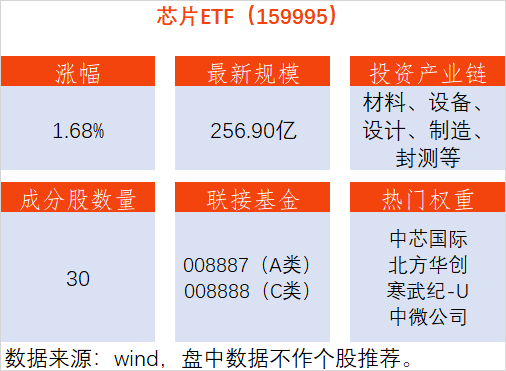
英伟达六大芯片协同升级!芯片ETF(159995)上涨1.68%,龙芯中科涨9.52%
Mei Ri Jing Ji Xin Wen· 2026-01-12 03:30
Group 1 - The A-share market showed mixed performance on January 12, with the Shanghai Composite Index rising by 0.25%, driven by gains in sectors such as internet, cultural media, and software, while motorcycle and energy equipment sectors faced declines [1] - The chip technology sector demonstrated strong fluctuations, with the chip ETF (159995) increasing by 1.68%. Notable individual stock performances included Longxin Technology rising by 9.52%, Changdian Technology by 7.09%, and Zhongwei Company by 6.77% [1] Group 2 - NVIDIA's founder and CEO Jensen Huang announced the launch of the Rubin platform at CES 2026, which consists of six new chips designed for building extraordinary AI supercomputers. These include Vera CPU, Rubin GPU, NVLink 6 switch, ConnectX-9 SuperNIC, BlueField-4 DPU, and NVIDIA Spectrum-6 Ethernet switch [3] - The Rubin platform is expected to significantly reduce training time and lower inference token costs, marking a new era in AI computing power. The collaborative design of these chips is anticipated to enhance performance and increase the value across multiple segments of the industry [3] - The chip ETF (159995) tracks the National Chip Index, comprising 30 leading companies in the A-share chip industry, including SMIC, Cambricon, Changdian Technology, and Northern Huachuang, indicating a robust investment landscape in the semiconductor sector [3]




百度集团-SW现涨超4% 昆仑芯赴港独立上市 百度持股价值或达220亿美元
Zhi Tong Cai Jing· 2026-01-12 03:19
Core Viewpoint - Baidu has announced the spin-off of its AI chip subsidiary Kunlun Chip, submitting a listing application to the Hong Kong Stock Exchange, which is expected to unlock significant value for the company [1] Group 1: Company Developments - Baidu's stock price increased by 4.22%, reaching HKD 143.2, with a trading volume of HKD 866 million [1] - The spin-off of Kunlun Chip is part of Baidu's strategy to evaluate its AI cloud infrastructure as an independent business segment, with an implied value exceeding USD 50 billion [1] Group 2: Market Valuation and Projections - Goldman Sachs estimates that if Kunlun Chip receives a valuation multiple similar to Cambricon (40 times sales), Baidu's 59% stake could be valued at USD 22 billion, representing 45% of Baidu's current total market capitalization [1] - Sales projections for Kunlun Chip indicate expected revenues of RMB 3.5 billion in 2025, increasing to RMB 6.5 billion in 2026, with JPMorgan's more aggressive forecast suggesting revenues could reach RMB 8.3 billion in 2026 [1]