食品

Search documents
液相色谱仪等714份标准将于7月1日起实施
仪器信息网· 2025-06-30 08:35
Core Viewpoint - The implementation of 714 new standards in July 2025 highlights the importance of analytical techniques such as chromatography, mass spectrometry, and environmental monitoring in advancing various industries including agriculture, environmental protection, healthcare, and manufacturing [2][4][5]. Group 1: Instrumentation and Standards - The update of the "GB/T 9008-2024 Liquid Chromatography Terminology" reflects the need for standardized terminology in liquid chromatography, enhancing clarity and consistency in the field [3][7]. - New standards like "GB/T 45139-2024" utilize high-performance liquid chromatography (HPLC) to accurately measure harmful components in food products, ensuring food safety [4][10]. - The introduction of "HJ 1399-2024" employs triple quadrupole mass spectrometry to detect antibiotic residues in water, demonstrating advancements in environmental monitoring technologies [5][10]. Group 2: Industrial Applications - Instrumentation technologies are driving innovation in industries such as steel and automotive, with standards like "SN/T 5691-2024" ensuring the safety of automotive materials by analyzing heavy metal content [8][10]. - The application of chromatography and mass spectrometry in monitoring air quality and pollution levels is crucial for environmental governance, as seen in standards like "HJ 1392-2024" [5][10]. Group 3: Food Safety and Environmental Monitoring - The new standards are pivotal in establishing a robust ecological monitoring network, with high-sensitivity detection methods being essential for effective environmental management [5][10]. - The focus on food safety through rigorous testing standards ensures that harmful substances are monitored and controlled, safeguarding public health [4][10].


日本征信机构调查:预计日本7月份将有更多种类的食品价格上涨
news flash· 2025-06-30 07:10
Core Insights - A survey by Japan's credit agency (TDB) indicates that a wider variety of food prices in Japan are expected to rise in July, with an increase four times higher than the same period last year [1] - 195 major food manufacturers plan to raise prices on 2,105 products in July, with an average increase of 15%, which is five times higher than the number of price hikes recorded last year [1]
国内宏观和产业政策周观察(0623-0629):脑机接口医疗器械首批国标启动制定
Huafu Securities· 2025-06-30 06:53
Group 1 - The report highlights the focus on policy improvement, risk prevention, and efficiency enhancement in key industries, aiming to solidify the operational foundation and governance capabilities of these sectors [2][12]. - The establishment of national standards for brain-computer interface medical devices has been initiated, indicating a regulatory push towards enhancing safety and technical standards in the medical device sector [2][12]. - The draft of the Medical Security Law has been reviewed for the first time, aiming to construct a legal framework for the medical insurance system, which is expected to improve the protection of insured individuals' rights [2][14]. Group 2 - In the automotive industry, there is a call for manufacturers to optimize rebate policies and shorten the rebate payment period to enhance dealer support and operational efficiency [13]. - The food safety law amendment focuses on enhancing regulation in high-risk areas, particularly concerning the transportation of liquid foods and the management of infant formula [18]. - The trust industry is moving towards standardizing insurance trust business practices, which is anticipated to improve the institutionalization and transparency of wealth management tools [2][19]. Group 3 - The A-share market showed mixed performance, with software services and defense industries leading the gains, while oil and telecommunications sectors experienced declines [3][23]. - Popular concepts this week included stock trading software and financial technology, which saw significant increases, while oil and gas extraction faced notable declines [3][26]. - Monthly performance highlights included substantial gains in optical modules and digital currencies, indicating strong investor interest in these sectors [3][27].
5月工业企业利润数据点评:利润边际走弱,政策有望积极
Haitong Securities International· 2025-06-30 02:36
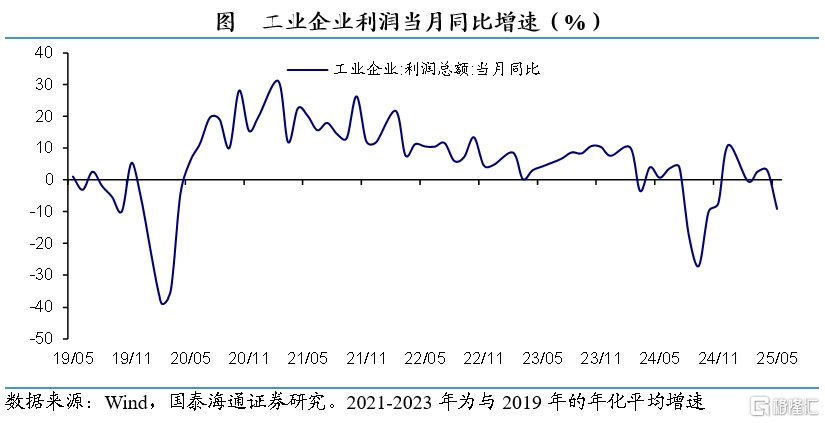
Profit Trends - In May, the profit growth rate of industrial enterprises fell to -9.1%, a decrease of 12.1 percentage points from April[3] - Cumulative profit growth from January to May was -1.1%, down from 3.2% in the previous four months[4] - The profit margin for May was 5.3%, slightly down from April, indicating a significant year-on-year decline due to high profit margins last year[5] Industry Performance - The share of profits from midstream industries dropped from 54% to 49%, reflecting weaker demand compared to upstream and downstream sectors[6] - Upstream industries faced profit declines primarily due to falling prices and volumes, while midstream sectors, particularly export-oriented ones, struggled to pass costs downstream[10] - Specific sectors like specialized equipment and electrical machinery saw profit growth rates drop by over 20 percentage points due to changing export dynamics[10] Economic Outlook - Active inventory reduction has continued for two months, with finished goods inventory growth at 3.5%[16] - Future profit recovery for enterprises will depend on the effectiveness of domestic demand policies amid ongoing external uncertainties[16] - The report anticipates that proactive policies will support domestic demand improvement, aiding in profit recovery for businesses[3]
齐云山冲刺港股上市;钟睒睒拟投资重组胶原蛋白公司|消费早参
Mei Ri Jing Ji Xin Wen· 2025-06-29 14:41
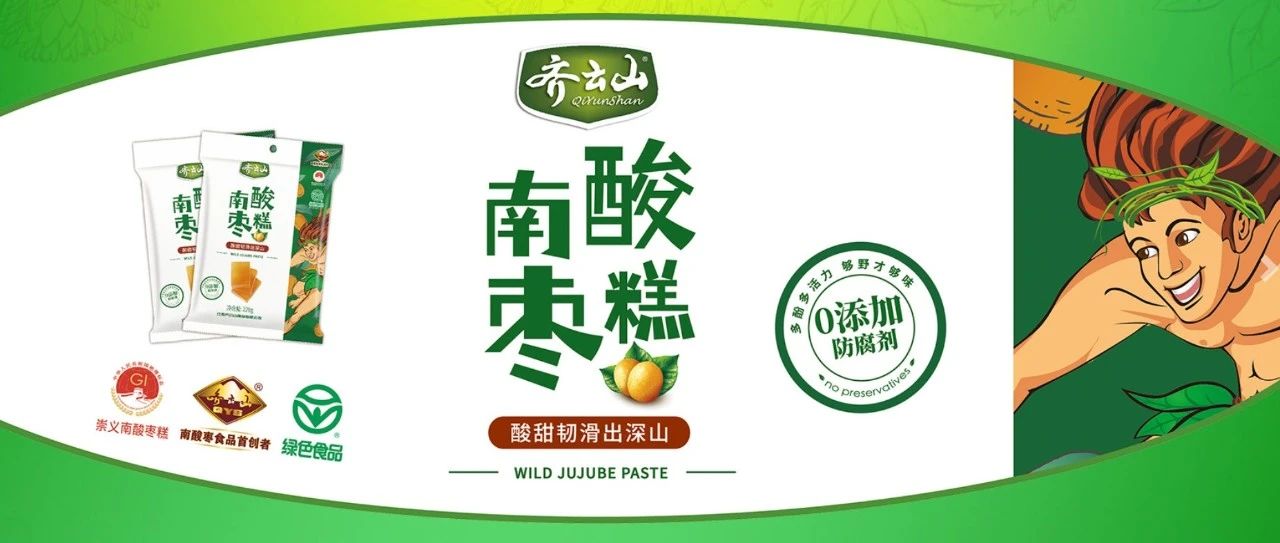
Group 1 - Qiyunshan Food Co., Ltd. submitted its prospectus to the Hong Kong Stock Exchange on June 27, aiming to expand its e-commerce network and enhance online promotion [1] - Qiyunshan holds a 32.4% market share in China's sour jujube food market, making it the industry leader [1] - The company plans to leverage its capital operations to increase brand influence and product value, although public awareness of sour jujube remains low [1] Group 2 - Jinbo Biological, a leading collagen company, disclosed a private placement plan to raise up to 2 billion yuan by issuing shares to Yangshengtang Co., Ltd. [2] - After the issuance, Yangshengtang will hold over 5% of Jinbo Biological, becoming its second-largest shareholder [2] - The collaboration is expected to enhance Jinbo Biological's brand promotion and product management, aligning well with Yangshengtang's anti-aging cosmetics focus [2] Group 3 - The China Consumers Association advocated against food waste and extreme eating broadcasts, emphasizing the importance of frugality and food conservation [3] - The association proposed a "three-party governance" approach involving consumers, content creators, and platform operators to foster a healthy online food environment [3] - This initiative reflects a strong sense of responsibility towards food security and social civility [3]
食品饮料行业周报:周观点:啤酒饮料正当旺季,持续关注渠道变化-20250629
GOLDEN SUN SECURITIES· 2025-06-29 07:31
Investment Rating - The report maintains an "Increase" rating for the food and beverage industry, indicating a positive outlook for the sector [4]. Core Insights - The beer and beverage sector is entering a peak season, with a focus on channel changes and growth opportunities. The report highlights three main investment lines for the liquor segment: leading brands, high-certainty regional brands, and elastic stocks benefiting from recovery and increased risk appetite [1][2]. - The white liquor industry is gradually bottoming out, with leading companies like Kweichow Moutai and Wuliangye showing low valuations and dividend value. The report emphasizes the importance of adapting to younger consumer preferences and enhancing brand quality [2]. - The beverage segment is characterized by high growth potential, with companies like Yanjing Beer and Zhujiang Beer being highlighted for their strong performance. The report also notes the introduction of new products by Xiangpiaopiao and the competitive landscape in the beverage market [3][6]. Summary by Sections White Liquor - Demand-side strategies focus on solidifying sales foundations, with companies actively managing supply and pricing to maintain strong sales [2]. - Supply-side initiatives include marketing transformations and product innovations aimed at younger consumers, such as low-alcohol and flavored products [2]. - The report indicates that the valuation of white liquor stocks has reached low levels, with current PE ratios around 17.7x, which is approximately 10% lower than the A-share market [2]. Beer and Beverage - The report notes the resignation of the chairman of China Resources Beer, which may present a buying opportunity post-adjustment [3][6]. - The beverage sector is experiencing intense competition, with new product launches and a focus on high-growth potential companies [6][7]. - The report highlights the ongoing transformation in retail, with companies like Sam's Club and Walmart leading in sales growth, indicating a shift in consumer purchasing behavior [7].
这家老字号食品要上市了!你吃过吗?
IPO日报· 2025-06-28 12:21
Core Viewpoint - Qiyunshan Food Co., Ltd. is preparing for an IPO, aiming to leverage its leading position in the southern hawthorn snack market, with significant revenue growth and a strong focus on R&D and offline sales channels [1][4][8]. Group 1: Company Overview - Qiyunshan Food was established in 1958, making it one of the oldest food manufacturers in the Ganzhou region, with a history of 67 years [3][4]. - The company specializes in southern hawthorn products, particularly the southern hawthorn cake, which has been on the market for 33 years [4][5]. - In 2024, Qiyunshan Food held a 32.4% market share in the southern hawthorn snack market, solidifying its position as the industry leader [4]. Group 2: Financial Performance - The company's revenue has shown consistent growth, reaching 2.17 billion, 2.47 billion, and 3.39 billion in 2022, 2023, and 2024 respectively, with a year-on-year increase of 40.8% in 2024 [4]. - Net profit figures for the same years were 25.63 million, 23.70 million, and 53.20 million, with a remarkable year-on-year growth of 124.42% in 2024 [2][4]. Group 3: Sales Channels and Strategy - Qiyunshan Food primarily relies on offline sales, with 89% of its revenue coming from this channel, supported by an increase in the number of third-party distributors from 140 to 199 [6][7]. - The company has a presence on e-commerce platforms like Tmall and Douyin, but has not yet established its own online sales platform, with online direct sales accounting for 9.7% of total revenue in 2024 [7]. - The company plans to use funds from the IPO to enhance R&D capabilities, expand production and storage, develop e-commerce infrastructure, and strengthen its distribution network [8].
国泰海通证券:5月工业企业利润边际走弱,政策有望积极
Ge Long Hui· 2025-06-28 01:48
Summary of Key Points Core Viewpoint - In May, industrial enterprise profits experienced a year-on-year decline of 9.1%, a significant drop of 12.1 percentage points compared to April, driven by falling volume, price, and profit margins due to disruptions in both domestic and external demand, as well as a decrease in commodity prices [1][2][4]. Group 1: Profit Trends - Cumulative profit growth for industrial enterprises from January to May was -1.1%, down from 3.2% in the previous period, with May's profit growth at -9.1% [2]. - The profit margin for May was reported at 5.0%, slightly up from the previous month, but the monthly figure of 5.3% showed a decline from April, indicating increased pressure on overall profits [4][9]. - The upstream sector faced significant profit margin declines due to falling international commodity prices, while the midstream sector struggled to pass on costs to downstream industries [9]. Group 2: Sector Performance - The share of profits from the midstream sector decreased from 54% to 49%, reflecting weaker demand compared to upstream and downstream sectors [5]. - In the upstream sector, only the chemical industry showed a narrowing profit decline, while other sectors experienced profit growth declines [7]. - The automotive sector saw a significant drop in profit growth, similar to trends in the midstream sector, while the pharmaceutical industry experienced a profit growth rebound [7][9]. Group 3: Inventory and Demand - Active inventory reduction has continued for two months, with a 3.5% increase in industrial product inventory from January to May [11]. - The overall revenue growth for enterprises from January to May was 2.7%, with May's growth at 0.8%, both showing a decline from previous months [11]. - Future profit recovery for enterprises will depend on the effectiveness of domestic demand policies amid ongoing external uncertainties [11].

(进博故事)瑞士中心解锁瑞中合作密码
Zhong Guo Xin Wen Wang· 2025-06-27 13:01
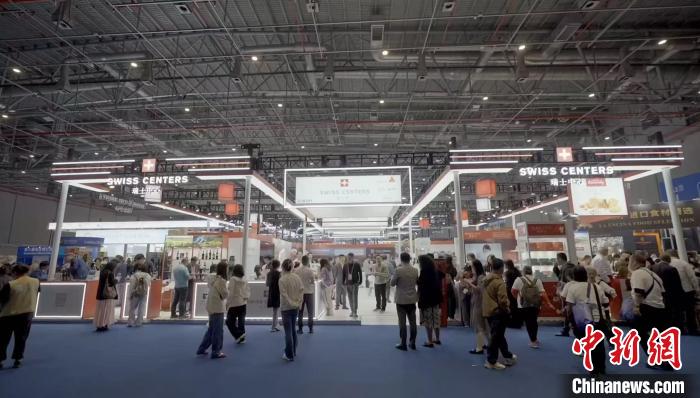
Core Insights - The China International Import Expo (CIIE) serves as a significant platform for enhancing Swiss-Chinese economic and trade cooperation, acting as a "multiplier" for Swiss companies to expand in the Chinese market [1][3] - The Swiss Center has evolved into a key navigator for Swiss enterprises entering the Chinese market, helping over 100 companies participate in CIIE since its inception [2][3] Group 1: Swiss Center's Role - The Swiss Center has been a consistent participant in CIIE, helping Swiss companies, especially SMEs, showcase products and find business partners [2] - The Center has witnessed a growing recognition and satisfaction among Swiss enterprises regarding CIIE, with participation expanding from four companies in the first year to 24 companies in the seventh year [8][11] Group 2: Innovations and Developments - The Swiss Center has introduced a Business Development department to specifically support Swiss consumer goods companies, reflecting the increasing number of exhibitors at CIIE [6] - A new position, "Customer Success Manager," was created to assist Swiss companies in successfully entering the Chinese market, with a focus on reducing the product entry cycle from 12 months to 3 months [6][7] Group 3: Market Opportunities - CIIE provides Swiss brands with opportunities to test products, expand sales channels, and enter the Chinese market, leading to high participation enthusiasm among Swiss enterprises [11] - The introduction of an innovation incubation area at CIIE aims to meet the needs of Swiss startups looking to enter the Chinese market, showcasing 14 medical technology companies [11]
2025年福建省莆田市新质生产力发展研判:以链式集群构建产业生态,莆田新质生产力加速集聚[图]
Chan Ye Xin Xi Wang· 2025-06-27 01:12
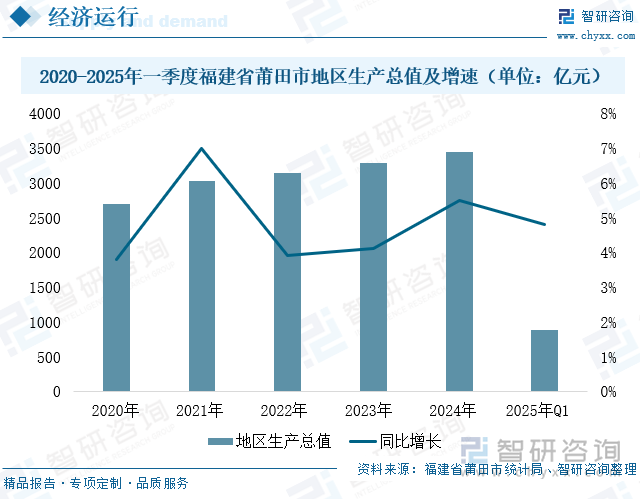
Core Viewpoint - Putian City is focusing on building a "three main, three new" modern industrial system, emphasizing advanced manufacturing, modern services, and characteristic modern agriculture, while nurturing four new driving forces: digital economy, marine economy, green economy, and cultural tourism economy [1][13]. Group 1: New Quality Productive Forces Overview - New Quality Productive Forces, introduced by President Xi Jinping, emphasize innovation as the main driving force, moving away from traditional economic growth models, characterized by high technology, efficiency, and quality [2][3]. - This concept is crucial for promoting high-quality economic development and constructing a modern industrial system [3]. Group 2: Economic Performance of Putian City - Putian City aims for a GDP of 344.27 billion yuan in 2024, with a year-on-year growth of 5.5%, and an optimized industrial structure of 4.4:46.8:48.8 [4]. - The secondary industry contributes significantly to economic growth, while the tertiary industry, driven by cultural tourism and digital empowerment, plays a key role in stabilizing growth [4]. Group 3: Industrial Development Strategy - The city is implementing a strategy of "industrial strength and innovation empowerment," focusing on new materials, intelligent manufacturing, and renewable energy to enhance industrial quality and efficiency [6][21]. - In 2024, the total industrial added value is expected to reach 140.93 billion yuan, with a growth rate of 5.9%, highlighting the acceleration of new quality productive forces [6]. Group 4: Modern Industrial System - Putian is constructing a modern industrial system characterized by advanced manufacturing, modern services, and characteristic agriculture, with a focus on upgrading traditional industries and developing new emerging industries [1][13]. - The "3+5+N" industrial layout aims to create a competitive advanced manufacturing base and a demonstration area for modern industrial integration [1][13]. Group 5: Policy Framework for New Quality Productive Forces - Putian City has introduced various policies to support high-tech industry development, new infrastructure construction, and green high-quality development, forming a comprehensive policy matrix [10][11]. - The government emphasizes the importance of innovation, talent cultivation, and infrastructure improvement to foster new quality productive forces [10][11]. Group 6: Trends in New Quality Productive Forces - Traditional industries are rapidly transitioning to intelligent and digital models, while emerging industries like new functional materials and renewable energy are experiencing significant growth [21][22]. - The city is focusing on industrial collaboration and integration, enhancing the synergy between upstream and downstream industries [23]. - Innovation-driven and green development strategies are being prioritized, with efforts to optimize the innovation ecosystem and promote sustainable practices [24].