房地产

Search documents
信用分析周报(2025/12/15-2025/12/19):利差低位走扩,品种表现分化-20251221
Hua Yuan Zheng Quan· 2025-12-21 14:01
1. Report Industry Investment Rating No relevant content provided. 2. Core Viewpoints of the Report - This week, the credit spreads of the AAA electrical equipment industry compressed significantly compared to last week, while the credit spreads of other industries and ratings widened to varying degrees. For urban investment bonds, the credit spreads of those with a maturity over 10 years compressed slightly by 1BP, while the spreads of other maturities widened by 3BP. For industrial bonds, most of the industrial credit spreads continued to widen, with the short - end widening more significantly than the long - end. For bank capital bonds, the short - end spreads of bank Tier 2 and perpetual bonds within 1 year widened slightly, while the long - end spreads over 10 years compressed slightly [3][4][30]. - In 2026, for urban investment bonds, short - duration (within 2Y) sinking urban investment bonds can be used as a base position, and high - quality urban investment entities with a moderately extended duration (3 - 5Y) can be selected. For industrial bonds, high - quality central and state - owned enterprise industrial bonds can be used as a base position with an extended duration, and attention should be paid to industries with marginal improvements. For Tier 2 and perpetual bonds, trading opportunities of those with good liquidity (preferably 3 - 5Y AAA -) should be grasped, and attention should be paid to high - quality city commercial banks and rural commercial banks in economically developed areas and areas with advanced debt resolution progress [5][7][44]. 3. Summary by Related Catalogs 3.1 This Week's Credit Hot Events - On December 19th, the Shanghai Stock Exchange issued a notice allowing eligible overseas institutional investors to conduct bond repurchase business on the Shanghai Stock Exchange, providing them with standardized liquidity management tools [11]. - On December 15th, the National Association of Financial Market Institutional Investors launched a self - regulatory investigation into Postal Savings Bank of China for suspected violations in the underwriting and issuance of debt financing instruments [12]. - On December 15th, Guizhou Rural Commercial United Bank Co., Ltd. was approved to open. It acquired the shares of 16 rural commercial banks and 5 rural credit cooperatives, with an increased registered capital of 10.458 billion yuan and new shareholders including the Guizhou Provincial Department of Finance and China Kweichow Moutai Group Co., Ltd. [13]. 3.2 Primary Market 3.2.1 Net Financing Scale - This week, the net financing of credit bonds (excluding asset - backed securities) was 116.1 billion yuan, a decrease of 128.1 billion yuan compared to last week. The total issuance was 365.5 billion yuan, a decrease of 99.1 billion yuan, and the total repayment was 249.3 billion yuan, an increase of 29 billion yuan. The net financing of asset - backed securities was 20.9 billion yuan, a decrease of 27 billion yuan compared to last week [14]. - By product type, the net financing of urban investment bonds was 21.3 billion yuan, an increase of 500 million yuan; the net financing of industrial bonds was 70.9 billion yuan, a decrease of 44.7 billion yuan; and the net financing of financial bonds was 24 billion yuan, a decrease of 83.9 billion yuan [15]. 3.2.2 Issuance Cost - This week, the issuance rates of AA industrial bonds and urban investment bonds were adjusted to over 2.8%, while the average issuance rates of other bonds with different ratings and types were below 2.8%. Specifically, the issuance rates of AA industrial bonds and urban investment bonds increased by 45BP and 27BP respectively compared to last week, and the issuance rate of AA + financial bonds increased by 58BP [17]. 3.3 Secondary Market 3.3.1 Transaction Situation - In terms of trading volume, the trading volume of credit bonds (excluding asset - backed securities) decreased by 44.3 billion yuan compared to last week. By product type, the trading volume of urban investment bonds was 259.4 billion yuan, a decrease of 13.7 billion yuan; the trading volume of industrial bonds was 367.4 billion yuan, an increase of 13.2 billion yuan; the trading volume of financial bonds was 627.5 billion yuan, a decrease of 43.8 billion yuan. The trading volume of asset - backed securities was 25.5 billion yuan, an increase of 1 billion yuan [24]. - In terms of turnover rate, the turnover rate of credit bonds showed a mixed trend compared to last week. Specifically, the turnover rate of urban investment bonds was 1.66%, a decrease of 0.1 pct; the turnover rate of industrial bonds was 1.89%, an increase of 0.06 pct; the turnover rate of financial bonds was 4.05%, a decrease of 0.29 pct; the turnover rate of asset - backed securities was 0.67%, an increase of 0.03 pct [24]. 3.3.2 Yield - This week, the yields of credit bonds with different ratings and maturities fluctuated within 3BP compared to last week. For example, the yields of AA, AAA -, and AAA + credit bonds within 1 year decreased by 2BP, 2BP, and 1BP respectively; the yields of AA and AAA + credit bonds with a 5 - year maturity increased by 2BP and 1BP respectively, while the yield of AAA - credit bonds decreased by 1BP; the yields of AA, AAA -, and AAA + credit bonds with a maturity over 10 years decreased by 1BP, 1BP, and less than 1BP respectively [25]. 3.3.3 Credit Spreads - Overall, the credit spreads of the AAA electrical equipment industry compressed significantly by 14BP compared to last week, while the spreads of other industries and ratings widened to varying degrees. For example, the credit spreads of the AA + leisure service industry widened by 20BP, and the spreads of the AA + media and light manufacturing industries widened by 9BP [30]. - **Urban Investment Bonds**: By maturity, the credit spreads of urban investment bonds with a maturity over 10 years compressed slightly by 1BP, while the spreads of other maturities widened by 3BP. By region, the top five regions with the highest credit spreads of AA - rated urban investment bonds were Guizhou, Yunnan, Jilin, Shandong, and Sichuan; for AA + urban investment bonds, they were Guizhou, Inner Mongolia, Gansu, Shaanxi, and Yunnan; for AAA urban investment bonds, they were Liaoning, Yunnan, Shaanxi, Jilin, and Tianjin [32][34]. - **Industrial Bonds**: Most of the industrial credit spreads continued to widen, with the short - end widening more significantly than the long - end. For example, the credit spreads of 1 - year AAA -, AA +, and AA private industrial bonds widened by 4BP, 4BP, and 7BP respectively compared to last week; the spreads of 10 - year AAA -, AA +, and AA private industrial bonds widened by 2BP, 2BP, and 2BP respectively [36]. - **Bank Capital Bonds**: The short - end spreads of bank Tier 2 and perpetual bonds within 1 year widened slightly, while the long - end spreads over 10 years compressed slightly. For example, the credit spreads of 1 - year AAA -, AA +, and AA Tier 2 capital bonds widened by 4BP, 3BP, and 3BP respectively compared to last week, and the spreads of 10 - year AAA -, AA +, and AA Tier 2 capital bonds compressed by 3BP, 2BP, and 2BP respectively [39]. 3.4 This Week's Bond Market Negative News - This week, the implied ratings of bonds issued by five issuers, including Nanjing Zijin Financial Leasing Co., Ltd. and Beijing Tianheng Yuanxin Capital Investment Management Co., Ltd., were downgraded. The "H20 Tianying 3" issued by Wuhan Tianying Investment Group Co., Ltd. and the "Hongda Debenture" issued by Hongda Xingye Co., Ltd. defaulted in essence [4][40]. 3.5 Investment Recommendations - In 2026, for urban investment bonds, short - duration (within 2Y) sinking urban investment bonds can be used as a base position to obtain stable coupon income, and high - quality urban investment entities with a moderately extended duration (3 - 5Y) can be selected to increase portfolio returns. For industrial bonds, high - quality central and state - owned enterprise industrial bonds can be used as a base position with an extended duration to obtain stable coupon income, and attention should be paid to industries with marginal improvements. For Tier 2 and perpetual bonds, trading opportunities of those with good liquidity (preferably 3 - 5Y AAA -) should be grasped, and attention should be paid to high - quality city commercial banks and rural commercial banks in economically developed areas and areas with advanced debt resolution progress [44].



行业比较周跟踪(20251213-20251219):A股估值及行业中观景气跟踪周报-20251221
Shenwan Hongyuan Securities· 2025-12-21 11:52
Valuation Summary - The overall valuation of A-shares as of December 19, 2025, shows the CSI All Share Index (excluding ST stocks) with a PE of 21.1 times and a PB of 1.8 times, positioned at the 77th and 39th historical percentiles respectively [2][5] - The Shanghai Composite Index has a PE of 11.7 times and a PB of 1.3 times, at the 61st and 40th historical percentiles [2][5] - The CSI 300 Index has a PE of 14 times and a PB of 1.5 times, at the 62nd and 34th historical percentiles [2][5] - The ChiNext Index has a PE of 39.9 times and a PB of 5.4 times, at the 32nd and 61st historical percentiles [2][5] Industry Valuation Comparison - Industries with PE valuations above the 85th historical percentile include Real Estate, Retail, and IT Services (Software Development) [2] - Industries with PB valuations above the 85th historical percentile include Electronics (Semiconductors) and Communications [2] - The Medical Services industry has both PE and PB valuations below the 15th historical percentile [2] Industry Economic Tracking New Energy - The photovoltaic industry chain prices remained stable, with battery cell spot prices rebounding by 8.1% [2] - The price of polysilicon futures increased by 6.4%, while the price of lithium carbonate rose by 7.4% [2] - Concerns about tightening lithium supply emerged due to local mining permit cancellations [2] Real Estate Chain - The average sales area of commercial housing in China from January to November 2025 decreased by 7.8% year-on-year, with a notable decline in real estate investment by 15.9% [3] - The price of rebar increased by 1.2%, while iron ore prices rose by 1.6% [3] Consumer Sector - The average price of live pigs increased by 0.9%, while the wholesale price of pork rose by 0.2% [3] - Retail sales from January to November 2025 grew by 4.0% year-on-year, showing a slight decline in growth rate compared to the previous ten months [3] Midstream Manufacturing - Manufacturing investment from January to November 2025 increased by 1.9% year-on-year, while infrastructure investment (excluding electricity) decreased by 1.1% [3] - Heavy truck sales in November 2025 surged by 65.4% year-on-year, with new energy heavy trucks seeing a significant increase in sales [3] Technology TMT - The production of integrated circuits and optoelectronic devices in China increased by 10.6% and 9.7% year-on-year respectively [3] Commodities - The price of Brent crude oil futures fell by 1.1% to $60.55 per barrel, amid rising supply pressures [3] - The price of thermal coal decreased by 5.6%, while coking coal prices rose by 0.5% [3]
行业比较周跟踪:A股估值及行业中观景气跟踪周报-20251221
Shenwan Hongyuan Securities· 2025-12-21 11:26
Investment Rating - The report does not explicitly provide an overall investment rating for the industry but highlights specific sectors with high and low valuation percentiles [2][8]. Core Insights - The report indicates that the overall valuation of the A-share market is at historical high percentiles, with the CSI All Share Index (excluding ST stocks) PE at 21.1x and PB at 1.8x, placing it at the 77th and 39th percentiles historically [2][6]. - The report identifies sectors with PE valuations above the 85th percentile, including Real Estate, Retail, and IT Services, while sectors like Medical Services are noted for being below the 15th percentile in both PE and PB valuations [2][8]. Industry Valuation Comparison - The report provides a detailed comparison of various indices and sectors, highlighting their PE and PB ratios along with their historical percentiles: - CSI 500 PE at 32.6x (61st percentile) and PB at 2.2x (46th percentile) [2][6]. - The ChiNext Index PE at 39.9x (32nd percentile) and PB at 5.4x (61st percentile) [2][6]. - Real Estate sector PE at 58.9x (94th percentile) and PB at 6.8x (9th percentile) [8]. - Semiconductor sector PE at 95.5x (73rd percentile) and PB at 6.3x (90th percentile) [8]. Industry Midstream Sentiment Tracking - In the New Energy sector, the report notes stable prices in the photovoltaic industry chain, with battery prices increasing by 8.1% due to rising silver prices [2][4]. - The Real Estate sector shows a decline in sales area by 7.8% year-on-year, with a significant drop in investment and new construction areas [2][4]. - The Consumer sector reports a 4.0% year-on-year growth in retail sales, although the growth rate has slowed compared to previous months [2][4]. - Manufacturing investment has increased by 1.9% year-on-year, while infrastructure investment has decreased by 1.1% [2][4]. Sector-Specific Insights - The report highlights that the steel prices have increased by 1.2% for rebar, while cement prices have risen by 0.4% [2][4]. - In the Technology sector, integrated circuit production has grown by 10.6% year-on-year, indicating a robust demand for electronic components [2][4]. - The report also notes fluctuations in commodity prices, with copper and aluminum prices rising by 2.8% [2][4].
主动量化周报:年末资金面扰动:逢低建仓,优先小盘-20251221
ZHESHANG SECURITIES· 2025-12-21 10:12
- The report discusses the impact of year-end liquidity disturbances on the market, suggesting that the recent adjustments are temporary and do not alter the upward trend[1][10] - The main investment theme is shifting from technology to cyclical sectors, with recommendations for chemical ETFs, dividend ETFs, and brokerage ETFs[1][10] - The report highlights the importance of the dollar depreciation as a key factor supporting the A-share market's slow bull trend[1][10] - The report mentions the use of a fund position monitoring model to track the allocation of funds, noting increased allocations in sectors like non-ferrous metals, chemicals, and transportation[1][11] - The report indicates that the technology sector's internal growth rate is slowing down, and the market is transitioning to cyclical sectors[1][11] - The report suggests that the recent market adjustments are due to year-end liquidity disturbances, with quantitative private equity products reducing their risk exposure significantly[1][12] - The report notes that the dollar depreciation trend, supported by lower-than-expected US CPI data, will continue to provide effective support for the A-share market's upward movement[1][13] - The report includes a section on timing strategies, mentioning the use of price segmentation systems and insider trading activity indicators[14][15] - The report provides industry monitoring data, including analysts' industry sentiment expectations and financing and securities lending trends[19][21] - The report discusses the performance of BARRA style factors, noting changes in market preferences and the performance of various factors such as turnover, financial leverage, and profitability volatility[24][25]
宏观经济周报:年末放缓,质量上扬-20251221
Guoxin Securities· 2025-12-21 07:42
Economic Growth - In November, the domestic GDP growth rate was approximately 4.1%, a decrease of 0.2 percentage points from October, continuing the trend of moderation[1] - To achieve the annual growth target of around 5%, the GDP growth in December needs to rebound to above 5.0%, which is unlikely given the current policy focus on quality improvement rather than short-term growth[1] - The expected GDP growth rate for Q4 2025 is about 4.3%, further declining from Q3, with an annual growth estimate of approximately 4.9%, remaining within the target range[1] Sector Performance - The main drag on economic growth in November came from the service sector, with the service production index's year-on-year growth rate falling by 0.4 percentage points[2] - The financial sector saw a year-on-year decline of 0.5 percentage points, while the real estate sector's investment and sales figures also worsened, contributing to the pressure on services[2] - Emerging sectors like leasing and business services showed resilience, with growth accelerating by 0.2 percentage points compared to the previous month[2] Consumption and Trade - Consumer activity showed signs of weakening, with logistics delivery volume experiencing its first negative year-on-year growth of -1.3% this year[12] - The average daily box office for movies was approximately 100.4 million yuan, a year-on-year increase of 186%, driven by the release of popular films[18] - Export container freight rates slightly increased to 1124.73, indicating stable shipping supply and demand relationships[22] Real Estate Market - The price decline in the real estate market continued to expand, with the price index for 70 large and medium-sized cities showing increased year-on-year declines for both new and second-hand homes[48] - Despite seasonal increases in transaction volumes, the absolute levels remain low, marking the worst performance for the same period in recent years[48] - The inventory turnover pressure remains significant, with the sales-to-inventory ratio recorded at 89.1, the highest for the same period since 2019[48]
郑州楼市:挂牌量降1100套,不是卖掉,是下架了!
Sou Hu Cai Jing· 2025-12-21 06:49
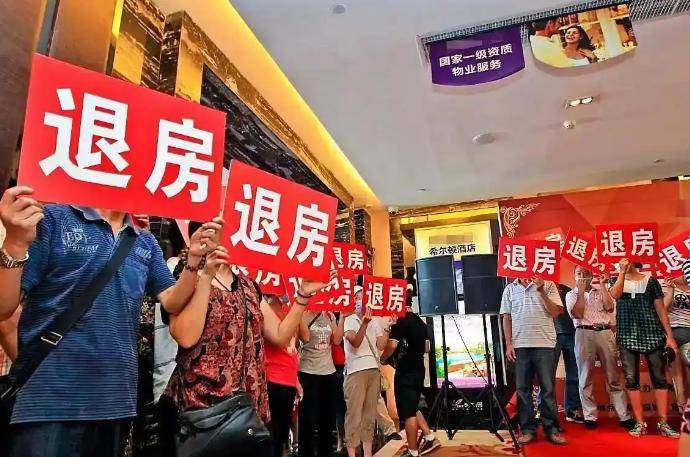
当下,郑州的二手房市场,正经历一场悄然的变局。最近的数据显示,其二手房的挂牌量,从125807套变成了 124671套,减少了1100套。但背后的原因并不是交易活跃,而是大量业主选择暂时撤牌观望。他们的心态是:"再 等等吧,万一明年春天能涨点呢?"这再次证实,市场信心的不足与价格博弈的僵局。 举个例子,位于二七区的"江山书香名邸",就是这一现象的缩影。该小区近期挂牌价跌到了每平方米5000元,已 经回到了2015年的价格水平。而周边新交付的楼盘,凭借中央空调、新风系统等现代化配置,单价为13000元,开 发商也推出"首付分期"等促销手段。这种现象,让二手房东陷入尴尬:"同样的地段,老房子既无品质优势,又无 金融支持,拿什么竞争?" 市场的分化,加剧了二手房流动的危机。根据"贝壳研究院"发布的数据显示,郑州二手房的平均成交周期,已经 延长到8个月以上,部分老旧小区,甚至一年内"零成交"。眼下,郑州业主的撤牌行为,更像是一种无奈的自保: 避免长期无人问津,导致心理预期进一步崩塌。 最后是房子的持有成本上升。房产税试点的预期、物业费的上涨等,让部分多套房的业主,选择了割肉离场。金 水区的一个业主,就把他自己算的一笔 ...


房价下跌已成定局?未来5年,全国一半的人可能将要直面这3大现实
Sou Hu Cai Jing· 2025-12-21 01:21
Core Viewpoint - The real estate market is experiencing significant changes, with declining property prices leading to challenges in property liquidity and increased mortgage burdens for homeowners [1][4][10]. Group 1: Property Market Dynamics - There is a noticeable decline in property transactions, with many sellers unwilling to lower their prices, resulting in a supply-demand imbalance [1][3]. - The phenomenon of property price differentiation is emerging, with some cities experiencing price drops while others remain stable or increase [1][7]. - The market is shifting towards a buyer's market, making it increasingly difficult for sellers to find buyers for their properties [3][4]. Group 2: Financial Implications for Homeowners - Homeowners may face challenges in liquidating their properties, impacting their financial planning and cash flow [3][4]. - The concept of "negative equity" is becoming prevalent, where the value of properties falls below the outstanding mortgage amounts, leading to financial strain [4][6]. - Rising mortgage burdens are exacerbated by the lag in mortgage rate adjustments compared to falling property prices, making loans relatively more expensive [4][6]. Group 3: Urban Differentiation and Its Effects - Urban differentiation is becoming more pronounced, with major cities attracting younger populations while smaller cities struggle with declining demand [7][8]. - The concentration of resources such as education and healthcare in larger cities further enhances their appeal, leading to a disparity in property values and investment opportunities [8][10]. - Homeowners in smaller cities may face significant risks of property devaluation, while those in larger cities may experience a decrease in purchasing power despite stable or high property prices [7][8]. Group 4: Future Outlook and Strategic Considerations - The next five years are expected to be a critical period for the real estate market, prompting individuals to reassess their financial and life strategies [10][11]. - Some may choose to focus on personal investment and skill development rather than relying solely on property appreciation for financial gain [11][12]. - A rational approach to property investment is essential, recognizing the risks involved and the potential for market fluctuations [11][12].
南财早新闻|互联网平台定价迎强监管;摩尔线程发布“花港”架构
2 1 Shi Ji Jing Ji Bao Dao· 2025-12-20 23:13
Company Developments - On December 20, Moore Threads held the first "MUSA Developer Conference" in Beijing, officially launching the new GPU architecture "Huagang" along with two chips based on this architecture, "Huashan" and "Lushan" [5] - According to Zhituo Finance, ByteDance reported a net profit of approximately $40 billion for the first three quarters, with the annual profit expected to reach about $50 billion. However, insiders indicated that the figures reported by foreign media for both the first three quarters and the full year are inaccurate and significantly deviate from reality [5] - On December 20, Beijing Tongrentang issued an apology regarding recent public concerns over "Antarctic krill oil," expressing sincere regret for the damage caused to consumer rights [6] - On December 20, Mixue Ice City officially opened its first store in the United States, located at 6922 Hollywood Boulevard, Los Angeles [6] - Sequoia China announced the acquisition of a controlling stake in the global fashion leader Golden Goose Group, with Temasek and its wholly-owned asset management company, Dymon Capital, participating as minority shareholders. The original shareholder, Permira, will retain a minority stake [6] Industry Insights - The A-share IPO market is expected to see 114 companies complete listings in 2025, raising a total of 129.6 billion yuan, representing a 94% year-on-year increase. Notably, 104 new stocks did not experience any price drops, with an average first-day closing increase of 257%, marking the best performance in three years [3] - The ETF market is experiencing intense competition, with the A500 ETF dominating the trading charts. The total market size of the A500 ETF has reached 245.935 billion yuan, with a net inflow of 32.7 billion yuan in the past week, accounting for nearly 70% of the total net inflow into stock ETFs. The leading product, Huatai-PB A500 ETF, has reached a size of 41.2 billion yuan, becoming the first ETF tracking this index to exceed 40 billion yuan, achieving a 10 billion yuan increase in just one week [3] - In 2025, international investors are reassessing the allocation value of Chinese assets as China's industrial global competitiveness improves, with the long-term value reassessment of Chinese assets continuing [4]
省政府年度12类45件民生实事即将“交卷”
Xin Hua Ri Bao· 2025-12-20 23:10
调研组检查的溧阳市古县街道溧天线等也已完工。今年全省要对2000公里普通公路安全设施进行精 细化提升。记者在扬中市扬中大道看到,崭新平整的路面新画了标识标线,临水路段新增具有醒目反光 提示的钢制护栏。这条县道长16.29公里,始建于上世纪60年代,交通流量一直很大,当地近年累计投 入400多万元分阶段进行提档升级,目前已完工通车。"我们进行了反光标更换等工作,安全性有了很大 提升。"扬中市交通运输局公路中心农路科科长于敏华说。 常州今年应新改建93公里农村公路、改造4座农村公路桥梁,任务均已完成。镇江应新改建58公里 农村公路,实施2座桥梁改造工程,实施农村公路安全生命防护工程934公里,部分项目任务已超额完 成。 老旧小区居住品质有了新提升 今年全省计划新开工改造700个城镇老旧小区,调研组选择了其中之一的常州市金坛区金城镇春风 二村实地检查。这是金坛最老的小区之一,于1997年建成。记者看到,小区35栋楼外墙均已出新完毕, 雨污分流工程、地下管网更新、飞线下地已完成,小区增添了绿化、增加了停车位,道路正在铺设沥 青,改造接近完成。 2025年"余额"所剩不多,年初省政府安排的12类45件民生实事完成得如何 ...
赵伟:2025年经济运行的转折性变化与政策思考——基于宏微观温差视角的分析
申万宏源宏观· 2025-12-20 16:03
Core Viewpoint - The article discusses the significant turning points in China's economy for 2025, highlighting the weakening of the "scar effect" post-pandemic, the diminishing impact of tariff conflicts, the reduced marginal drag from real estate adjustments, and the improved integration of short-cycle frameworks with long-term reform directions [4][5][8]. Group 1: Turning Points in Economic Operation - The impact of the post-pandemic "scar effect" is significantly weakening, as evidenced by improved travel data and a divergence between core CPI and PPI trends [5][6]. - The influence of tariff conflicts on China's economy is diminishing, with exports showing resilience and an improved structure of export goods, indicating a new phase of domestic transformation and upgrading [6][7]. - The marginal drag from real estate adjustments on economic growth is expected to weaken, with new construction leading investment growth and a shift in the housing market dynamics favoring new homes [7][8]. - The integration of short-cycle frameworks with long-term reform directions has improved, with a robust policy system focusing on high value-added production and human-centered demand management [8][9]. Group 2: Recent Economic Indicator Weakness - The decline in investment growth since mid-year is not attributed to a single industry but shows significant regional differentiation, partly due to the "crowding out effect" from accelerated debt reduction efforts [10][11]. - The implementation of "debt clearance" policies has also affected investment funds, creating a similar "crowding out effect," although this is expected to strengthen the microeconomic foundation in the long run [11][12]. - Some regions report insufficient project reserves, which has impacted current investment performance, but this is anticipated to improve in the upcoming planning year [12]. Group 3: Policy Recommendations Based on Macro-Micro Temperature Difference - The phenomenon of "macro-micro temperature difference" has become more pronounced, indicating a disconnect between macroeconomic indicators and micro-level experiences, which is essential for understanding policy directions [13][14]. - Restoring corporate profitability and increasing household income levels are critical policy directions to address the economic cycle issues, emphasizing the need for policies that consider micro-level incentives [15][16]. - Recommendations include focusing on improving residents' income, increasing leisure time, creating favorable consumption environments, and providing quality products, rather than relying solely on leveraging consumption [16].