
养老服务业

Search documents
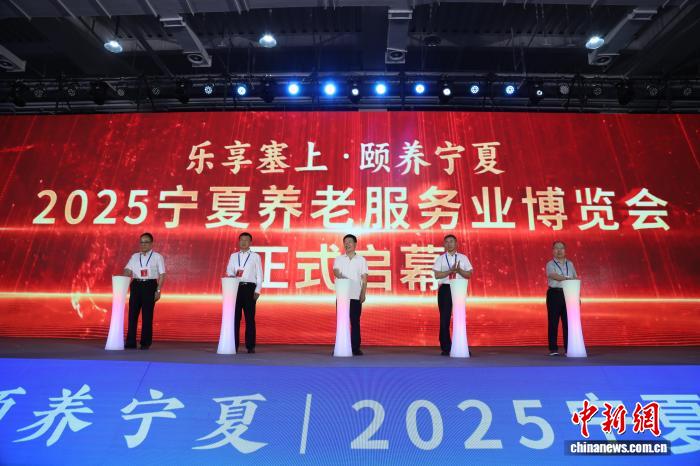
2025宁夏养老服务业博览会促成签约项目15个 签约资金1.66亿元
Zhong Guo Xin Wen Wang· 2025-09-15 08:48
Group 1 - The 2025 Ningxia Elderly Care Industry Expo facilitated 15 signed projects with a total funding of 166 million yuan [1][3] - The expo covered a total exhibition area of 20,000 square meters, featuring seven major exhibition areas including smart elderly care, elderly services, and health management [3] - The event attracted 182 enterprises from 22 provinces, including major cities like Beijing, Shanghai, and Guangdong [3] Group 2 - The expo included six special activities such as opening ceremonies, supply-demand matching, and elderly talent showcases, enhancing its professional and social visibility [3] - A dedicated 5,000 square meter "Silver Economy Exhibition Area" was set up to address the practical needs of the elderly in areas like food, housing, and healthcare [3] - The expo promoted collaboration between Beijing and Ningxia in the elderly care tourism industry, signing a strategic cooperation framework agreement [3]

中国部分试点地区将探索空域等新型要素配置方式
Zhong Guo Xin Wen Wang· 2025-09-11 11:40
Core Viewpoint - The Chinese government has approved pilot reforms in ten regions to explore market-oriented allocation of new factors, including airspace and frequency, aiming to create new development momentum while ensuring safety [1][2]. Group 1: Market-Oriented Allocation Reforms - The pilot reforms will focus on traditional factors like land and labor, as well as new factors such as data and services [1]. - The initiative aims to break down barriers for new factors entering industry and production systems, promoting innovative allocation of production factors [1]. Group 2: Service Industry Enhancements - In the context of the elderly care service sector, pilot reforms will be implemented in regions like Beijing's urban sub-center and key cities in southern Jiangsu to improve the supply system for elderly care [2]. - The government supports the use of innovative resources in pilot areas, including the application of international advanced technologies and allowing foreign professionals to provide specialized services under relevant regulations [2].
打造高质量养老服务人才队伍
Jin Rong Shi Bao· 2025-08-08 08:00
Core Viewpoint - The establishment of a vocational skills assessment system for elderly care service personnel is crucial for addressing the talent shortage and improving service quality in the aging service industry [1][4]. Group 1: Talent Shortage and Service Quality - The elderly care industry faces a severe talent shortage, with a lack of professional caregivers leading to inconsistent service quality and low social recognition for workers [1]. - The new policy aims to create a clear and authoritative skills evaluation standard, providing a growth pathway for caregivers from junior to senior technician levels [1][2]. Group 2: Impact on the Silver Economy - Establishing talent standards will enhance the dignity and attractiveness of elderly care as a professional field, linking skill levels to compensation and social status [2]. - A well-structured and skilled workforce will support the application of intelligent elderly care products and the integration of medical and elderly care services [2]. Group 3: Financial Services and Trust - The improvement of the talent system will inject confidence into elderly financial products, as high-quality service delivery is essential for the effectiveness of these financial tools [3]. - The skills assessment system will help financial institutions accurately evaluate service providers and enhance consumer trust in services and products [3]. Group 4: Long-term Vision and Implementation - The establishment of the skills assessment system is a key step in addressing the core shortcoming of insufficient high-quality elderly care talent supply [4]. - By clearly defining the value of talent, the quality of services can be reliably guaranteed, fostering a standardized and trustworthy ecosystem for the silver economy [4].

热力、活力、潜力——四川消费走势一线观察
Xin Hua She· 2025-08-05 09:37
Core Insights - The article highlights the growth of consumer spending in Sichuan, with a total retail sales of 1.42 trillion yuan in the first half of the year, marking a year-on-year increase of 5.6% and a 0.4 percentage point acceleration from the first quarter [1] Group 1: Cultural and Tourism Integration - Sichuan's cultural tourism sector is being developed as a pillar industry, with over 760,000 visitors to Emei Mountain in July, representing a year-on-year increase of 22.3% [2] - The province received over 2.8 million visitors to the Sanxingdui Museum in the first half of the year, contributing to a significant increase in inbound tourism, with 984,000 visitors to Chengdu, a 51.5% year-on-year surge [2] - The provincial government is actively promoting the integration of culture and tourism, with a focus on enhancing the cultural tourism industry through various policies [2][3] Group 2: Sports Events Driving Economic Growth - The launch of the "Dachudao 100 Trail Race" in Guangyuan and the "Follow the Event to Travel Sichuan" initiative are expected to boost tourism and consumption [4] - Sichuan is set to host over 80 high-level international and national sports events this year, with an anticipated sports consumption scale of 80 billion yuan and a total sports industry scale exceeding 150 billion yuan [4] - The province monitored 1,879 sports events this year, engaging 11.61 million participants and generating an estimated economic benefit of 6.165 billion yuan [5] Group 3: Innovations in Travel and Elderly Services - Sichuan has launched various travel products tailored for the elderly, including 159 special trains for seniors, serving 152,000 passengers this year [6][7] - The province is leveraging advancements in AI and robotics to enhance elderly care, with the introduction of companion robots in senior communities [7] - The cultural, sports, and entertainment sectors in Sichuan saw an 18.7% year-on-year increase in revenue in the first five months of the year, reflecting a diverse and rich consumer offering [7]
银发经济:应对老龄化的“必答题”与激活内需的“新引擎”
Jing Ji Guan Cha Bao· 2025-07-17 14:33
Core Viewpoint - The silver economy in China is experiencing significant growth, driven by an aging population, diverse consumer demands, and advancements in digital technology, positioning it as a crucial sector for economic development and internal demand stimulation [1][5]. Supply Side Summary - The supply of elderly care services is diversifying, with notable growth in sales revenue for various services: elderly care for disabled individuals increased by 40.9%, home care services by 14.1%, and social care services by 8.8%, all surpassing the national service industry average growth rates [2]. - The number of entities engaged in the production of silver products grew by 14.1%, with sales revenue for elderly fitness equipment, rehabilitation aids, and nutritional health products increasing by 14.7%, 12.1%, and 6.9% respectively, also exceeding the average growth rates of the manufacturing sector [2]. Demand Side Summary - The consumption potential of the elderly demographic is substantial, with three core drivers identified: essential needs, health, and self-enjoyment. Revenue from community care services grew by 30.4%, institutional care by 22.6%, and home care by 18% [3]. - Health-related consumption is particularly strong, with sales of mobility aids, nutritional products, and health monitoring devices increasing by 32.2%, 30.1%, and 7.5% respectively, indicating a shift towards proactive health management [3]. - Cultural and entertainment spending is also on the rise, with revenues from elderly tourism, health services, and cultural activities growing by 26.2%, 23.9%, and 20.7% respectively, reflecting a transition from mere survival to enjoyment in later life [3]. Trend Summary - The integration of digital technologies such as 5G, AI, big data, and IoT is becoming a new direction for the silver economy, with a 16.9% increase in spending on information technology services by silver economy enterprises and significant growth in smart elderly care technology and wearable devices [3]. - The rapid growth in service supply is closely linked to the increasing proportion of elderly individuals in the population, with a notable characteristic being that over 80% of the elderly are under 80 years old, indicating a healthier aging demographic [4]. Economic Implications - The development of the silver economy is seen as a necessary response to population aging and a new engine for stimulating internal demand, emphasizing the need for optimized elderly product services, innovative consumption scenarios, and a robust industrial ecosystem to support quality consumption and economic growth [5].
野村:未来几周是关税效应释放的关键窗口,美国滞胀风险加剧,美联储或等到12月才降息
华尔街见闻· 2025-07-12 09:03
Core Viewpoint - The global economy is entering an uncertain phase characterized by multiple risks, including inflationary pressures and geopolitical tensions, particularly influenced by U.S. policies under the Trump administration [1][3][6]. Economic Outlook - The U.S. is expected to face "stagflation" in the second half of the year, with rising inflation and slowing growth. The Federal Reserve is anticipated to be cautious, delaying interest rate cuts until December, with cuts likely lower than market expectations [1][3][6]. - Core CPI in the U.S. is projected to rebound to 3.3% in Q4, influenced by rising import costs and tariffs [1][4][20]. Tariff and Trade Policy - Trump's use of tariffs is not solely aimed at reducing the trade deficit but also serves various geopolitical and economic purposes. The effectiveness of these tariffs will depend on whether they are implemented as planned [4][10]. - The potential for retaliatory measures from the EU if high tariffs are imposed is significant, and ongoing negotiations are crucial [10]. Federal Reserve Independence - Concerns about the independence of the Federal Reserve are at their highest in decades, with political influences potentially impacting monetary policy decisions [2][25][28]. - The upcoming vacancies in the Federal Reserve Board may provide Trump with opportunities to influence monetary policy further [1][25][26]. Global Economic Dynamics - The global economic landscape is shifting, with the U.S. potentially moving from an exceptional growth phase to a more normalized economic state, leading to a diversification of investments away from the U.S. [6][34]. - Other central banks are expected to have more room for rate cuts compared to the Fed, which may further influence global capital flows [7][40]. Inflation Factors - Factors contributing to rising inflation include tariffs, labor shortages due to immigration policies, and potential fiscal expansions as midterm elections approach [21][22][23]. - The impact of artificial intelligence on inflation is acknowledged, but its deflationary effects are still in early stages and may not significantly counteract inflationary pressures in the short term [31][32].

宏观日报:持续关注上游行业价格变化-20250611
Hua Tai Qi Huo· 2025-06-11 05:09
Report Industry Investment Rating No information provided. Core View of the Report The report focuses on the current situation of different industries, including production and service industries, and analyzes the price trends, production status, and market pricing of upstream, midstream, and downstream industries. It also mentions that the overall industry credit spread has recently declined slightly [1][2][3][4]. Summary by Relevant Catalogs 1. Middle - View Event Overview - **Production Industry**: The US Trade Representative's Office has launched a public consultation on a proposed modification to ship - related policies, which is considered beneficial to the shipping and energy industries as it relaxes review and fee requirements for foreign ships and eases regulations on LNG carriers [1]. - **Service Industry**: The Ministry of Finance is actively cooperating to improve the "one - old - one - young" service system, advancing community - supported home - based elderly care services and promoting the high - quality development of inclusive childcare services [1]. 2. Industry Overview Upstream - **Energy**: International oil prices are rising [1]. - **Chemical**: The prices of urea and soda ash are falling [1]. - **Black**: There is a slight decline [1]. Midstream - **Chemical**: The PTA operating rate has rebounded, while the PX operating rate has recently declined [2]. - **Infrastructure**: The asphalt operating rate has been continuously rising recently [2]. Downstream - **Real Estate**: The sales of commercial housing in first - and second - tier cities are the same as last year and at a near - three - year low [3]. - **Service**: The number of domestic flights has decreased cyclically [3]. 3. Market Pricing The overall industry credit spread has recently declined slightly [4]. 4. Industry Credit Spread Tracking The report provides the credit spread data of various industries on June 11, 2025, including the values of the same period last year, a quarter ago, a month ago, last week, and this week, as well as the quantile [49]. 5. Key Industry Price Index Tracking The report shows the price index data of multiple industries on June 10, 2025, including the frequency, unit, update time, current value, year - on - year change, and the trend in the past 5 days [50].
设立十大展区,第十一届中国国际养老服务业博览会在北京举行
Xin Jing Bao· 2025-05-22 03:24
Core Insights - The 11th China International Elderly Care Industry Expo was held in Beijing, focusing on the diverse and multi-layered needs of elderly care services in the context of an aging population [1][2] - The expo featured over 220 exhibitors from more than 10 countries and regions, highlighting the global interest in elderly care solutions [2] - A new platform, "Zhongfu Hui Elderly Care Industry Platform," was launched to support the upgrade of the silver economy ecosystem [2] Group 1 - The expo was organized by the China Social Welfare and Elderly Care Association, with support from various international and national organizations [1] - The theme of the expo was "Join Hands to Promote New Quality Productivity and Explore the New Future of the Silver Economy," emphasizing international collaboration and resource sharing [2] - The event included over 10 forums and sharing sessions aimed at exploring new paths and models for the development of the elderly care industry [2][3] Group 2 - The concurrent 11th China International Elderly Care Industry Development Forum focused on innovative outcomes in elderly care services and the need for reform in response to aging demographics [3] - Various sessions addressed the increasing diversity and personalization of elderly care needs, including topics like smart elderly care technology and industry innovation [3] - Experts and representatives from various sectors discussed practical paths and theoretical support for the high-quality development of the elderly care industry [3]
第十一届中国国际养老服务业博览会5月21日起举行
Xin Jing Bao· 2025-04-03 11:46
Core Viewpoint - The 11th China International Elderly Care Service Expo will be held from May 21 to 23, 2025, in Beijing, focusing on the theme of "Collaborating to Promote New Productive Forces and Exploring the New Future of the Silver Economy" [1] Group 1: Expo Overview - The expo will feature over 220 exhibitors from more than 10 countries and regions, including government departments, social organizations, and brand institutions [1] - Various exhibition areas will be set up, including international and domestic brand zones, smart elderly care technology, elderly-friendly environment and equipment, talent training, elderly finance and legal services, health food, cultural tourism services, and immersive elderly experience zones [1] Group 2: International Participation - The expo has garnered significant attention from government departments and international organizations, with participation from the International Federation on Ageing, UNFPA, and embassies from countries such as Australia, Canada, and the UK [2] - It aims to showcase innovative concepts and technologies in elderly care services, facilitating international cooperation and accelerating the integration of China's elderly care industry with global standards [2] Group 3: Local Government Involvement - Local government departments and provincial elderly care industry associations are actively mobilizing and organizing local brand institutions to participate, showcasing innovative achievements in elderly care during the 14th Five-Year Plan [3] - This initiative aims to provide valuable experiences and references for the development of the national elderly care industry, promoting scale, clustering, and branding [3] Group 4: Market Potential and Service Innovation - The expo targets the diverse and personalized service needs of the elderly, aiming to unlock new market potential in the silver economy [4] - New exhibition areas will include financial and legal services tailored for the elderly, fashion and lifestyle products, health food, and smart home innovations, all designed to enhance the quality of life for seniors [4] Group 5: Talent Development and Industry Standards - A dedicated talent training exhibition area will showcase the 1+X elderly care vocational skill certification pilot project and promote collaboration between educational institutions and industry leaders [5] - The "Zhongfu Huiyang Silver Industry Platform" will be launched to address issues such as low service quality and fraud against the elderly, integrating technology, legal support, and services to enhance industry standards and market efficiency [5]