外交

Search documents
国家网信办会同中国证监会深入整治涉资本市场网上虚假不实信息【三分钟新闻早知道】
Xin Lang Cai Jing· 2025-12-19 22:31
Group 1 - The National Internet Information Office and the China Securities Regulatory Commission are intensifying efforts to address false information related to the capital market, taking legal action against accounts spreading rumors and illegal stock recommendations [3] - Specific accounts mentioned include "Eight Sister Invincible" for spreading regulatory rumors, "Financial Report Wind and Cloud" for aggregating false information about listed companies, and "Finance Weekend Teacher" for using AI to fabricate market information [3] - The authorities remind the public to establish correct investment concepts, enhance risk awareness, and improve the ability to discern financial information [3] Group 2 - The Ministry of Commerce reported that from January to November, the national online retail sales increased by 9.1%, with digital products growing by 8.2%, and online service consumption rising by 21.7% [3] - The Ministry of Education announced that the national master's degree entrance examination will take place on December 20-21, urging candidates to comply with examination regulations [3] - The State Administration for Market Regulation has amended the "Provisions on Prohibiting Monopoly Agreements," which will take effect on February 1, 2026, clarifying conditions for permissible vertical monopoly agreements [3]


“遮羞布”之战!欧盟本周将迎两场“大考”,成败关乎信誉与未来
Jin Shi Shu Ju· 2025-12-15 05:42
Core Points - The EU is at a critical juncture, facing deadlines to fund Ukraine without U.S. assistance and to diversify its supply chains away from the U.S. while expanding trade with South American countries [2][3] - Failure in either area could damage the EU's reputation and reinforce claims of European "weakness" made by former U.S. President Trump [2][3] Funding Ukraine - The EU's preferred funding solution for Ukraine involves utilizing billions of frozen Russian assets, proposing to loan €90 billion (approximately $106 billion) to Ukraine over the next two years [3][4] - Belgium opposes this plan due to concerns about potential legal repercussions if Russia regains access to these assets [4] - The urgency is heightened as Ukraine is expected to run out of funds by April next year, necessitating a swift agreement from the EU [5] Trade with South America - The trade agreement with the Mercosur countries (Argentina, Bolivia, Brazil, Paraguay, and Uruguay) is seen as a significant test of the EU's ability to provide a reliable alternative to U.S. influence [6][7] - This agreement is poised to be the largest in EU history and aims to counteract Trump's attempts to assert U.S. dominance in Latin America [7] - Concerns from France about domestic agricultural protests could delay the signing of the agreement, which is critical for maintaining EU credibility in global trade [8] Geopolitical Implications - The decisions regarding Ukraine and trade will serve as a litmus test for the EU's capability to assert itself as a geopolitical actor in a world increasingly dominated by major powers like the U.S. and China [9] - The EU's response to these challenges will determine whether it can maintain its influence and credibility on the global stage [9]
不费一兵一卒!美国操盘刚卢协议,收割非洲资源
Sou Hu Cai Jing· 2025-12-07 21:37
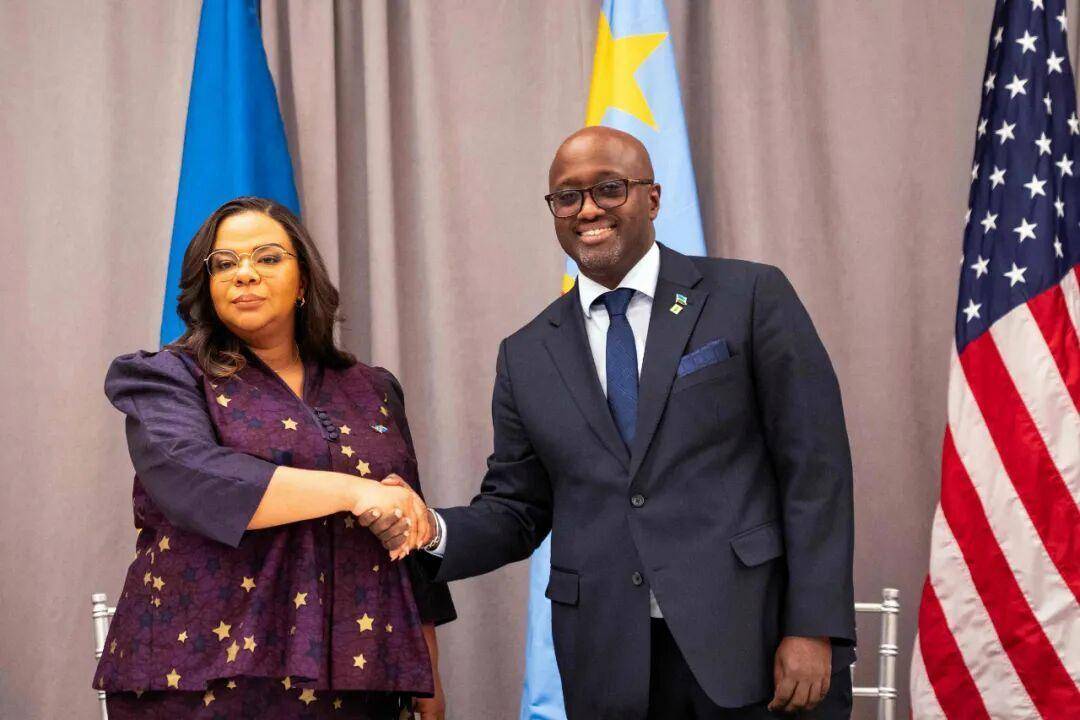
Group 1 - The core point of the article is that the peace agreement between the Democratic Republic of the Congo (DRC) and Rwanda, facilitated by the United States, serves as a strategic maneuver for the U.S. to secure key mineral resources and enhance its geopolitical influence in the African Great Lakes region [2][3][4] - The U.S. has successfully positioned itself in the African Great Lakes region, weakening the influence of China and Russia, which have been deepening their cooperation in Africa [3] - The agreement allows the U.S. to gain access to critical minerals such as cobalt, lithium, and copper from the DRC, which are essential for the renewable energy and electronics industries, thereby reducing reliance on external supply chains [2][3] Group 2 - The U.S. is transforming its policy towards Africa from aid-based to trade-based, as evidenced by the significant reduction of aid and the emphasis on commercial cooperation [3] - The peace agreement is seen as a testing ground for this new policy framework, allowing U.S. companies to enter the markets of both countries while optimizing the business environment for American capital [3] - The U.S. has crafted a diplomatic image as a "peace maker" through this agreement, which serves to bolster its reputation in Africa amidst declining influence [4] Group 3 - The article highlights a pattern of U.S. behavior that mirrors a "new colonial" approach, where the U.S. exacerbates conflicts and then positions itself as a mediator to extract resources and geopolitical advantages [4] - The DRC's offer to exchange mineral rights for security and Rwanda's access to U.S. capital for resource development exemplify this strategy, allowing the U.S. to reap benefits with minimal costs [4] - Ultimately, the peace agreement is portrayed as a game of resource distribution led by the U.S., where the peace aspirations of African nations are exploited for American gain [4]
重磅!特朗普发布第二任期《国家安全战略》(全文&与以前有何不同&美国媒体评论)
美股IPO· 2025-12-06 23:00
Group 1 - The article emphasizes the need for a coherent and focused global engagement strategy for the United States to maintain its status as the world's strongest and most influential nation [3][4][5] - It critiques past U.S. strategies post-Cold War for failing to align with core national interests and for misjudging the American public's willingness to bear global burdens [4][5] - The article highlights the importance of prioritizing core national interests in U.S. foreign policy, focusing on security, economic stability, and the protection of American values [7][10] Group 2 - The article outlines the core objectives of U.S. strategy, including the protection of national sovereignty, economic interests, and the well-being of its citizens [7][8] - It stresses the need for a resilient national infrastructure capable of withstanding various threats, including military attacks and foreign influence [8] - The article advocates for a strong military presence and advanced defense systems to safeguard U.S. interests and deter potential adversaries [8][9] Group 3 - The article discusses the importance of maintaining a robust economy as the foundation of U.S. power, emphasizing the need for a strong industrial base and innovative energy sector [8][9] - It highlights the necessity of protecting intellectual property and fostering technological advancements to sustain economic leadership [9] - The article calls for a focus on re-industrialization and energy independence to bolster economic resilience and reduce reliance on foreign sources [12][18] Group 4 - The article outlines the U.S. approach to foreign relations, advocating for a pragmatic and principle-driven diplomacy that prioritizes American interests [11][13] - It emphasizes the need for burden-sharing among allies and partners, particularly in defense spending and regional security responsibilities [14][15] - The article critiques the past U.S. approach to China, calling for a rebalancing of economic relations to ensure fairness and protect American economic independence [25][26] Group 5 - The article identifies the strategic importance of the Western Hemisphere, advocating for a return to Monroe Doctrine principles to safeguard U.S. interests in the region [16][18] - It discusses the need for a proactive stance against foreign adversaries in the Western Hemisphere, emphasizing cooperation with regional allies to combat illegal immigration and drug trafficking [19][20] - The article highlights the importance of economic partnerships and investment opportunities in the region to strengthen U.S. influence and counter external threats [22][23]
华尔街日报:美国在新安全政策中将欧洲而非俄罗斯描绘成反派
美股IPO· 2025-12-06 23:00
Core Viewpoint - The new U.S. National Security Strategy portrays Europe, rather than Russia, as the primary adversary, indicating a significant shift in U.S. foreign policy and potentially deepening divisions within the transatlantic alliance [1][2][6][7]. Summary by Sections U.S. National Security Strategy - The annual strategic document previously highlighted threats from Russia but now directs harsh criticism towards NATO allies in Europe, describing them as declining powers that have ceded sovereignty to the EU [2][6][10]. - The report warns that immigration could lead to the "civilizational extinction" of Europe, potentially transforming several NATO countries into nations dominated by "non-European" populations within two decades [7][10]. Critique of European Policies - The strategy criticizes the EU and other multinational organizations for undermining political freedom and sovereignty, accusing many European governments of subverting democratic processes without providing specific details [10][11]. - It emphasizes the need for Europe to correct its current trajectory and regain confidence, suggesting a paternalistic tone in its recommendations [10][11]. Shift in U.S.-Europe Relations - The document reflects a fundamental change in how the U.S. views its relationship with Europe, positioning the U.S. as an arbiter between Europe and Russia rather than a traditional ally against Russian threats [11][12]. - The strategy calls for an end to NATO's "ever-expanding alliance" and suggests a return to cooperation with Russia, which some analysts interpret as a strategy that undermines existing European structures [11][12]. European Response - European leaders are urged to reconsider their traditional transatlantic relationships in light of the new U.S. stance, with some experts suggesting that the document signals the end of the conventional alliance [7][8][12]. - The EU has rejected claims that it supports harmful immigration policies or undermines free speech, asserting that U.S. national security is closely tied to European security [12][14].
节省开支,英国评估出售海外使馆房产
Huan Qiu Shi Bao· 2025-11-30 22:42
Core Points - The UK government is attempting to identify sellable assets from its £2.5 billion overseas portfolio, including embassies and luxury apartments, which may significantly weaken its global diplomatic influence [1][2] - The Foreign Office is "optimizing" the management of approximately 6,500 properties to find "monetizable assets," with hundreds of buildings in poor condition [1] - The budget highlights the need to find cost-saving measures in expensive locations like New York, potentially including the sale of a £12 million luxury apartment purchased for diplomats [1] Group 1 - The UK government is under scrutiny for a series of measures that weaken its soft power, including significant cuts to the international aid budget [2] - The UK has previously sold its embassy in Bangkok and relocated to a new site [2] - The Foreign Office plans to reduce domestic staff by 30% and reassess the scale and location of its over 250 diplomatic missions in more than 150 countries [2]
欧洲快顶不住了,默克尔突然开炮:别怪我,要怪就怪波兰!
Sou Hu Cai Jing· 2025-10-12 03:41
Core Viewpoint - The recent statements by former German Chancellor Angela Merkel regarding the EU's approach to Russia have sparked significant controversy, highlighting deep divisions within Europe over foreign policy and energy dependence [1][3][5]. Background - In June 2021, Merkel and French President Macron proposed a direct dialogue between the EU and Russia to address issues related to energy, security, and borders, amidst rising tensions due to Russian military buildup near Ukraine [1][3]. - The proposal was met with strong opposition from Poland and the Baltic states, who feared it would undermine a unified EU stance against Russia and jeopardize Eastern European security [3][5]. Reactions from Eastern European Countries - Poland's government criticized Merkel for shifting blame and emphasized its support for EU unity against Russian aggression, highlighting military aid provided to Ukraine since 2022 [5][7]. - The Baltic states expressed outrage, with officials stating that Merkel's comments were misguided and that Germany's energy policies, particularly the Nord Stream pipeline, exacerbated Europe's reliance on Russian energy [7][9]. Russian Response - Interestingly, the Kremlin supported Merkel's assertions, claiming that Eastern European countries hindered peace efforts and that internal EU divisions left Russia with no choice but to act [9]. Economic Implications - Since 2022, the EU has paid over €213 billion to Russia for energy, indirectly funding military actions, while sanctions imposed on Russia have led to significant economic repercussions for Europe, including soaring inflation rates [7][9].
瓦努阿图部长驳斥外媒歪曲瓦中合作:两国友谊建立在互信和主权尊重基础上
Huan Qiu Shi Bao· 2025-09-23 22:56
Core Points - China is donating police equipment worth 1 million RMB to Vanuatu, which has attracted attention from Australian media [1] - Vanuatu's Interior Minister Napote emphasized that the agreement with Australia is unrelated to Vanuatu's cooperation with China, countering claims of Chinese interference [1][3] - The relationship between China and Vanuatu has reached unprecedented levels, based on mutual trust and respect for sovereignty [1] Summary by Sections China-Vanuatu Cooperation - China has been a significant development partner for Vanuatu, particularly in the security and police sectors, providing various forms of support including police training and equipment [1] - Recent donations include patrol boats, vehicles, motorcycles, and breathalyzers [1] Australia-Vanuatu Relations - Australia is pushing for a "Nakamal" agreement with Vanuatu, aiming to invest approximately 500 million AUD over 10 years in climate, security, and economic priorities [3] - The Australian government seeks to solidify its strategic position in the Pacific and exclude China from regional security matters [3] Vanuatu's Position - Napote stated that Vanuatu is a member of the Non-Aligned Movement, maintaining friendly relations with all while not being an enemy to any [3] - Vanuatu has signed memorandums of understanding with several countries regarding police matters, with China being the only country requiring a formal agreement [3] - The Vanuatu government insists on prioritizing national interests and exercising sovereignty in international partnerships [3]

中美刚打完电话,特朗普就逼30国对华加税,马斯克:美国病入膏肓
Sou Hu Cai Jing· 2025-09-14 06:36
Group 1 - The article discusses the recent escalation in U.S.-China relations, particularly focusing on Trump's push for tariffs against China and his attempts to rally support from other countries for punitive measures [1][3][5] - It highlights the ongoing high-level dialogues between Chinese and U.S. officials, indicating a willingness to communicate despite existing tensions [3][5] - The article notes that Trump's actions reflect a transactional approach to diplomacy, aiming to isolate China economically while strengthening U.S.-European alliances [5][8] Group 2 - Musk's critical remarks about the U.S. government's financial situation emphasize the severity of the national debt crisis, with interest payments exceeding $1 trillion [7][8] - The article contrasts Musk's concerns about domestic fiscal issues with Trump's aggressive foreign policy, suggesting that tariffs may not effectively address the underlying economic challenges [7][8] - It points out the internal divisions within the EU regarding Trump's proposed sanctions, with significant economic implications for European businesses [5][8]
沉默只会让恶霸大胆,莫迪访华前,中国大使通告全球:力挺印度对美强硬,特朗普坐不住了
Sou Hu Cai Jing· 2025-08-28 05:29
Core Viewpoint - The Chinese ambassador to India, Xu Feihong, publicly criticized the U.S. for imposing a 50% tariff on India, framing it as a geopolitical maneuver and expressing China's support for India in the face of U.S. pressure [1][3][7] Group 1: U.S. Tariff Impact - The U.S. tariff is not only an economic blow to India but also a blatant act of geopolitical suppression [3] - India has been caught between U.S. pressure and the desire to maintain relations with China, leading to a precarious diplomatic situation [4] - The recent U.S. tariffs have prompted India to reassess its foreign policy, moving towards a more balanced approach between the U.S. and China [4][6] Group 2: China-India Relations - China's support for India is seen as a significant diplomatic shift, with the ambassador's remarks providing a platform for India to stand firm against U.S. pressure [3][7] - The upcoming visit of Indian Prime Minister Modi to China for the SCO summit marks a new phase in China-India relations, indicating a thaw in previously strained ties [6] - China's commitment to supply critical resources to India, such as fertilizers and rare earths, underscores the importance of this partnership for India's economic stability [6] Group 3: Geopolitical Dynamics - The Chinese stance serves as a warning to the U.S. about the consequences of its bullying tactics, emphasizing the need for unity among nations facing similar pressures [7][9] - The support from China provides India with leverage in international negotiations, enhancing its bargaining power against the U.S. [9] - The U.S. response to China's support for India has been to escalate pressure, indicating a potential for increased tensions in the region [10]