
婴童用品

Search documents
《增强消费品供需适配性实施方案》政策解读:供需适配激活消费新引擎,打造三个万亿级消费领域
Lian He Zi Xin· 2025-12-16 11:37
Policy Overview - The "Implementation Plan" aims to enhance the adaptability of consumer goods supply and demand, targeting the formation of three trillion-level consumption sectors and ten hundred-billion-level consumption hotspots by 2027[6]. - The plan emphasizes a shift from broad-based consumption policies to a focus on quality supply that meets diverse consumer needs, aiming for structural optimization in supply-demand matching[3]. Key Objectives - By 2027, the consumer goods supply structure is expected to be significantly optimized, with specific focus on sectors such as elderly products, smart connected vehicles, and consumer electronics[6]. - The plan outlines five key tasks and nineteen specific initiatives, including accelerating new technology applications and expanding the supply of unique and innovative products[12]. Market Impact - The plan is projected to activate consumption potential through supply-side reforms, addressing mismatches where consumers want to buy but cannot find suitable products[6]. - The expected contribution of consumption to economic growth is set to increase steadily, with a goal of achieving a high-quality development pattern by 2030[6]. Industry Focus - Key consumption hotspots include baby products, smart wearables, cosmetics, fitness equipment, outdoor goods, pet supplies, and cultural fashion items[6]. - The plan encourages industries to focus on precise demand matching, technological empowerment, and the integration of consumption scenarios to maximize policy benefits[14]. Financial Support - The plan highlights the importance of financial support and aims to enhance the adaptability and convenience of consumer finance services, with a focus on promoting consumption through subsidies and incentives[18]. - The "old-for-new" subsidy policies are expected to continue into 2026, with an emphasis on targeted and expanded coverage[18].
中山市宝驾护航婴童用品有限公司成立 注册资本10万人民币
Sou Hu Cai Jing· 2025-12-11 06:05
Group 1 - A new company, Zhongshan Baojia Huhang Baby Products Co., Ltd., has been established with a registered capital of 100,000 RMB [1] - The company's business scope includes sales of maternal and infant products, household goods, daily necessities, toys, home appliances, electronic products, and more [1] - The company has completed real-name authentication or electronic signature on the Yue Business Pass APP [1] Group 2 - The company also engages in supply chain management services and professional cleaning, disinfection services [1] - It is authorized to sell first-class medical devices and pre-packaged food products through internet sales [1]
到2027年,我国将培育3个万亿级消费领域与10个千亿级消费热点
Sou Hu Cai Jing· 2025-12-03 11:44
Core Insights - The Chinese government has introduced an implementation plan to enhance the adaptability of consumer goods supply and demand, aiming for significant optimization of the supply structure by 2027, with the goal of creating three trillion-level consumption sectors and ten hundred-billion-level consumption hotspots [1][3]. Group 1: Consumption Trends and Market Potential - The development goals are based on a comprehensive assessment of current consumption trends, industrial foundations, and technological changes, focusing on both "stock optimization" and "incremental creation" [3]. - The elderly care market is projected to grow from 2.6 trillion yuan in 2014 to 5.4 trillion yuan by 2024, with a compound annual growth rate of 7.3%, highlighting its potential as a core driver of the silver economy [3][4]. Group 2: Key Consumption Sectors - The three trillion-level consumption sectors identified are elderly products, smart connected vehicles, and consumer electronics, which are seen as high-potential areas for growth [3][4]. - The ten hundred-billion-level consumption hotspots include diverse categories such as baby products, smart wearables, cosmetics, fitness equipment, outdoor products, pet supplies, civilian drones, trendy toys, jewelry, and national trend clothing, reflecting a vibrant and diversified market [4]. Group 3: Strategic Development Approach - The government plans to adopt a multi-faceted and layered approach to continuously cultivate and expand various consumption hotspots, enhancing the resilience and vitality of the domestic consumption market [4].

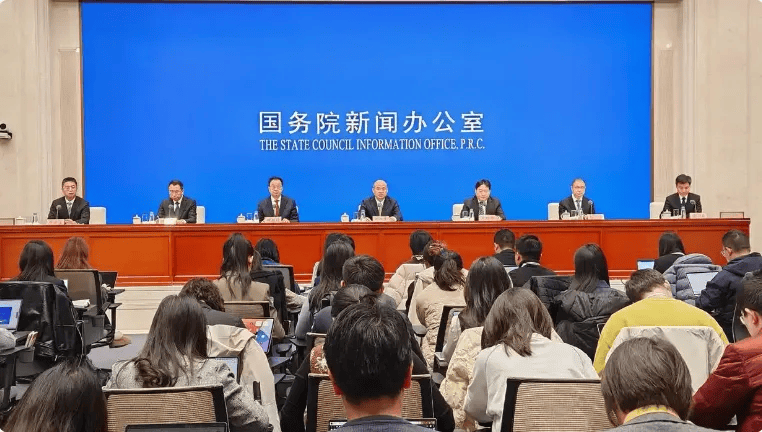
晶采观察丨六部门划定三大万亿级消费赛道 带来哪些利好?
Yang Guang Wang· 2025-12-02 01:29
Core Viewpoint - The implementation plan aims to enhance the adaptability of supply and demand in the consumer goods sector to address pain points in consumption [1][2] Group 1: Goals and Targets - The plan sets a target to cultivate three trillion-level consumption sectors and ten hundred-billion-level consumption hotspots by 2027 [2] - The three trillion-level sectors include elderly products, smart connected vehicles, and consumer electronics [2] - The ten hundred-billion-level hotspots focus on specific categories such as baby products, smart wearable devices, cosmetics, fitness equipment, outdoor products, pet food, civilian drones, trendy toys, jewelry, and national trend clothing [2] Group 2: Targeted Consumer Groups - For the young demographic, the plan emphasizes "individual expression" and "fashion leadership," supporting the development of culturally rich and fashionable products like national trend clothing and designer collaborations [2][3] - In addressing the needs of infants and students, the plan promotes the integration of traditional toys and stationery with smart technology, aiming for products that facilitate personalized interaction and learning [3] - For the elderly, the focus is on practical convenience and quality of life, with plans to enhance the development of products like elderly care robots, suitable clothing, and easy-to-swallow foods [3] Group 3: Market Dynamics - The plan anticipates the creation of a new consumption market worth trillions in key sectors by 2027, driven by both "stock optimization" and "incremental creation" [3] - Stock optimization refers to the growing popularity of culturally significant domestic products, while incremental creation involves developing new products and services for emerging demographics and scenarios [3] Group 4: Economic Impact - The multi-faceted approach is expected to significantly enhance the resilience and vitality of the domestic consumer market, providing solid support for the construction of a new development pattern [4] - The goal is to achieve a dynamic balance of supply and demand at a higher level within approximately five years, allowing consumers to enjoy higher quality products and services [4]
“十五五”扩内需,如何部署?——政策周观察第57期
一瑜中的· 2025-12-01 12:04
Core Viewpoint - The article emphasizes the importance of expanding domestic demand as a strategic foundation during the "14th Five-Year Plan" period, focusing on boosting consumer spending and effective investment to counter external uncertainties and enhance economic growth [2][13]. Summary by Sections 1. Boosting Consumer Spending - Current Situation: China's consumer spending rate lags behind developed countries by 10-30 percentage points, particularly in service consumption [2]. - Short-term Measures: Focus on optimizing supply, innovating consumption scenarios, and removing unreasonable restrictions in the consumption sector [2]. - Long-term Goals: Enhance residents' income and consumption capacity, ensuring that income growth aligns with economic growth and labor productivity [2][13]. 2. Expanding Effective Investment - Infrastructure Investment: Maintain a moderate growth in infrastructure investment while avoiding excessive expansion [3]. - Investment Focus: Target major projects in urban renewal, strategic transportation corridors, new energy systems, and significant water conservancy projects, as well as investments in consumer-related sectors [3][13]. - Support Measures: Reform the investment and financing system, utilize new policy financial tools, and improve the pricing mechanisms in transportation and energy sectors to enhance investment returns [3][13]. 3. Recent Policy Developments - Consumption Policy: The Ministry of Industry and Information Technology released a plan to enhance the adaptability of supply and demand in consumer goods, aiming to establish three trillion-level consumption sectors and ten hundred-billion-level consumption hotspots by 2027 [4][11]. - Industry Meetings: The People's Bank of China held a meeting to combat speculative trading in virtual currencies, and the Ministry of Industry and Information Technology discussed regulations in the battery industry [4][11]. 4. National Development Goals - The article outlines the goal of achieving a high-quality development pattern where supply and consumption interact positively by 2030, with a gradual increase in consumption's contribution to economic growth [11][12]. - Specific sectors identified for growth include elderly products, smart connected vehicles, and consumer electronics, with a focus on addressing the needs of an aging population [12][13].

增强消费品供需适配性 释放经济澎湃动力
Zheng Quan Ri Bao· 2025-11-30 16:22
Group 1 - The core viewpoint of the article emphasizes the implementation plan by six departments to enhance the adaptability of supply and demand in consumer goods, aiming for significant structural optimization by 2027 and a high-quality development pattern by 2030 [1][2] - The plan sets two main goals: to create three trillion-level consumption sectors and ten hundred-billion-level consumption hotspots by 2027, and to establish a mutually reinforcing interaction between supply and demand by 2030 [1][2] - The current consumer market in China is experiencing accelerated upgrades and faster segmentation, with diverse demands for personalized, high-quality, intelligent, and green products, while facing structural contradictions due to oversupply of homogeneous and low-end products [1] Group 2 - The plan focuses on the "silver economy" and children's products, targeting the growing elderly population and increasing birth rates as significant growth opportunities [2] - Key areas highlighted in the plan include smart connected vehicles, consumer electronics, smart wearables, and civilian drones, aligning with the development direction of new productive forces [2] - Cultural elements are integrated into products, with an emphasis on transforming traditional aesthetics and heritage skills into marketable goods, aiming to boost consumer confidence and drive consumption through cultural identity [2][3]
多部门最新回应,关于促进家电家居等大宗消费
Sou Hu Cai Jing· 2025-11-30 12:09
Core Insights - The Chinese government has introduced a plan to enhance the adaptability of supply and demand in consumer goods, aiming to create three trillion-level consumption sectors and ten hundred-billion-level consumption hotspots by 2027, with a focus on high-quality development by 2030 [1] Group 1: Development Goals - By 2027, China aims to establish three trillion-level consumption sectors and ten hundred-billion-level consumption hotspots [1] - By 2030, the goal is to achieve a high-quality development pattern where supply and consumption interact positively, with a steady increase in consumption's contribution to economic growth [1] Group 2: Key Consumption Areas - The three trillion-level consumption sectors include elderly products, smart connected vehicles, and consumer electronics [1] - The ten hundred-billion-level consumption hotspots cover categories closely related to daily life, such as baby products, smart wearables, cosmetics, fitness equipment, outdoor products, pet food, civilian drones, trendy toys, jewelry, and national fashion apparel [1] Group 3: Current Market Trends - In the first ten months of this year, the trade-in policy for consumer goods has generated over 2.4 trillion yuan in sales, benefiting more than 360 million people [3] - Retail sales of home appliances, furniture, and communication equipment have seen approximately 20% year-on-year growth, maintaining a rapid growth rate [3] Group 4: Regulatory and Standardization Efforts - The State Administration for Market Regulation has released 22 national standards related to energy and water consumption for daily consumer goods, enhancing the supply of quality products to meet consumer demand [3] - The plan emphasizes the development of energy-efficient and environmentally friendly products suitable for rural areas, including efficient range hoods, gas stoves, water heaters, and bathroom products [3][4]
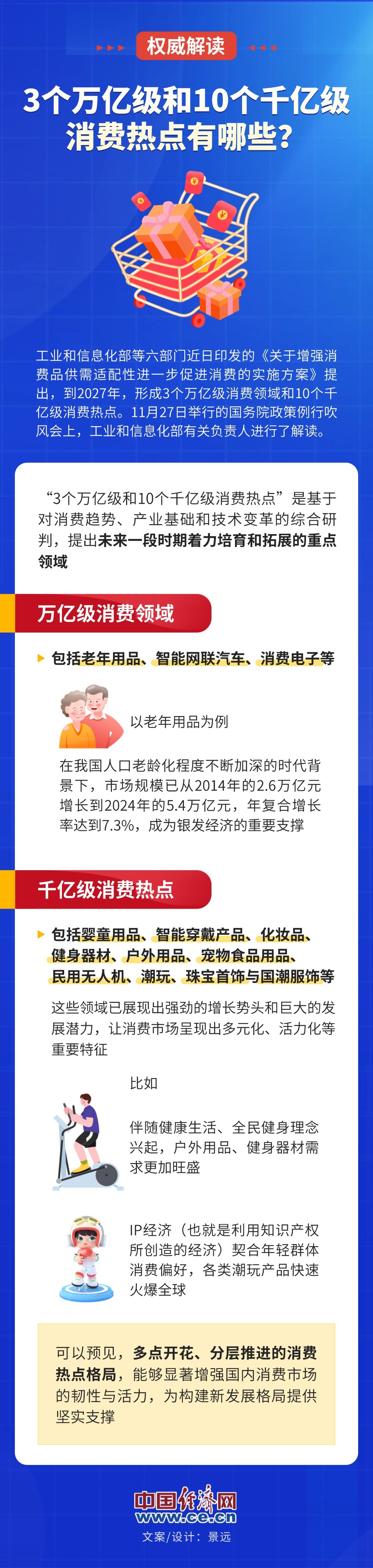
【图解】权威解读:3个万亿级和10个千亿级消费热点有哪些?
Zhong Guo Jing Ji Wang· 2025-11-29 01:34
Core Insights - The implementation plan by six departments, including the Ministry of Industry and Information Technology, aims to establish three trillion-level consumption sectors and ten hundred-billion-level consumption hotspots by 2027, based on comprehensive analysis of consumption trends, industrial foundations, and technological changes [3][4]. Trillion-Level Consumption Sectors - The three trillion-level consumption sectors identified include elderly products, smart connected vehicles, and consumer electronics. For instance, the market size for elderly products has grown from 2.6 trillion yuan in 2014 to an expected 5.4 trillion yuan by 2024, reflecting a compound annual growth rate of 7.3%, highlighting the significance of the silver economy [4]. Hundred-Billion-Level Consumption Hotspots - The ten hundred-billion-level consumption hotspots encompass a diverse range of products, including baby products, smart wearable devices, cosmetics, fitness equipment, outdoor goods, pet food, civilian drones, trendy toys, jewelry, and national trend clothing. These sectors are showing strong growth momentum and significant development potential, contributing to a diversified and vibrant consumer market [4][6]. Emerging Trends - The rise of health-conscious living and the concept of national fitness are driving increased demand for outdoor products and fitness equipment [6]. - The IP economy, which leverages intellectual property to create economic value, aligns with the consumption preferences of younger demographics, leading to a rapid global popularity of trendy toy products [8]. Market Resilience - The multi-faceted and layered approach to consumption hotspots is expected to significantly enhance the resilience and vitality of the domestic consumer market, providing solid support for the construction of a new development pattern [8].
消费新政“精准滴灌”激活细分市场新动能
Zheng Quan Ri Bao· 2025-11-28 17:14
Core Insights - The new consumption policy marks a shift from universal stimulus to targeted support, focusing on matching diverse consumer needs across different demographics [1] - The policy aims to cultivate three trillion-level consumption sectors and ten hundred-billion-level consumption hotspots, enhancing the resilience and quality of consumption growth [1] Group 1: Market Trends - The domestic retail sales of baby products (excluding food) are projected to exceed 560 billion yuan in 2024, indicating structural growth opportunities in the industry [2] - The cosmetics sector is experiencing significant differentiation, with over 430 billion yuan in retail sales, particularly in domestic skincare brands focusing on ingredient efficacy and male-targeted beauty products [2] Group 2: Policy Implications - The new consumption policy addresses safety concerns for children's products through a three-year action plan, enhancing quality management for key products [2] - The policy encourages the cultivation of independent designers and brands to tap into the "Guochao" (national trend) consumption enthusiasm among the youth [2] - It also emphasizes the development of age-friendly products to bridge the digital divide for the elderly, focusing on essential items like care robots and health monitoring devices [2] Group 3: Business Strategies - Companies are encouraged to gain insights into consumer needs, such as creating traceable products for babies and integrating traditional craftsmanship with modern design for the youth [3] - Businesses should leverage policy benefits by engaging in safety initiatives and participating in the development of industry standards [3] - A service ecosystem should be built around core products, enhancing user engagement through tailored services like parenting support and cultural experience activities [3]
推动供给与消费良性互动、相互促进
Ren Min Ri Bao· 2025-11-28 09:47
Core Insights - The Ministry of Industry and Information Technology, along with five other departments, has issued an implementation plan aimed at enhancing the adaptability of supply and demand in consumer goods, further promoting consumption [1] Group 1: Supply and Demand Transformation - The current supply of consumer goods in China has entered a new development stage characterized by high quality and price, but structural mismatches in supply and demand still exist in certain areas [2] - The implementation plan proposes five measures to address these mismatches, including expanding new product supply and accelerating the application of new technologies and models [2][3] Group 2: Market Segmentation and Consumer Needs - The plan emphasizes the need to cater to diverse consumer needs across different age groups, including initiatives for children's safety and elderly-friendly products [3][5] - It aims to create new consumption scenarios and business models, promoting platforms for product launches and exhibitions [3][6] Group 3: Economic Contribution and Growth - By 2027, the plan aims to create three trillion-yuan-level consumption sectors and ten hundred-billion-yuan-level consumption hotspots, including areas like elderly products and smart connected vehicles [4] - The contribution of consumption to economic growth is expected to steadily increase, with a goal of achieving a high-quality development pattern by 2030 [7] Group 4: Quality and Safety Standards - The National Development and Reform Commission plans to enhance supply quality by focusing on technology leadership and improving brand standards [8] - The State Administration for Market Regulation is set to strengthen the quality and safety of consumer goods, particularly for vulnerable groups such as the elderly and children [8]