
皮具

Search documents
精准对接需求 银企双向奔赴 湖南开展“行长走市县·金融送解优”行动
Jin Rong Shi Bao· 2025-09-30 03:40
Group 1 - The first domestically developed turbine engine in China has received production approval, highlighting the significant financial support from local banks to address funding challenges in the aerospace sector [1] - The People's Bank of China (PBOC) in Hunan has initiated the "Bank Leaders Visit Cities and Counties" campaign to enhance financial services for the real economy, resulting in 2,705 financing issues resolved and 141 financing events held, with a total signed amount of 155.3 billion yuan [1] - Local banks have actively engaged with enterprises, providing tailored financial solutions and support for various industries, including new materials and specialized manufacturing [2][4] Group 2 - The PBOC has organized over 380 financial policy promotion activities, reaching more than 5,460 market entities, and distributed 49,000 financial product manuals to enhance understanding of financial policies [3] - Financial institutions in Hunan have developed innovative financing products, such as "Xiang Porcelain Loan" and "Ceramic Master Loan," to support the local ceramics industry, with over 9.26 billion yuan in loans issued [6] - The PBOC has emphasized the importance of addressing financial service challenges for enterprises, establishing a system to track and resolve specific financial service requests from market entities [4][6] Group 3 - The PBOC has facilitated the establishment of a data asset value assessment system to support local enterprises in securing loans, exemplified by the first data asset pledge loan for a private enterprise in Zhangjiajie [7] - Customized financial products have been developed across various banks in Hunan, such as "Fireworks Loan" for the fireworks industry and specialized loans for agricultural enterprises, demonstrating a shift towards tailored financial services [8] - The collaboration between financial institutions and enterprises has led to significant loan approvals, such as 500 million yuan for a new materials company and 3.5 billion yuan for a steel structure enterprise [2][4]
精准帮扶、产业赋能、搭建平台 广州以全方位支撑助力个体工商户发展
Guang Zhou Ri Bao· 2025-09-28 01:42
Core Insights - Guangzhou's vibrant market environment supports the rapid growth of individual businesses, leveraging its extensive consumer base and market potential [2][4] - The city has implemented practical measures to assist small businesses, such as establishing foreign trade service centers and cross-border e-commerce platforms [2][3] - New initiatives, like the quality integrated service station for the leather industry, aim to enhance local businesses' operational efficiency and facilitate their transformation [3][4] Group 1: Support for Individual Businesses - The Guangzhou government provides targeted support for small businesses, exemplified by the establishment of a foreign trade service center in the Liuhua clothing wholesale market [2] - The integration of various services, including finance, logistics, and customs, has revitalized traditional businesses, allowing them to thrive in both online and offline markets [2][3] Group 2: Industry Empowerment and Cross-Border Opportunities - The launch of the quality integrated service station in Huadu Shiling aims to address challenges faced by local merchants, such as raw material control and brand development [3] - The "Belt and Road" trade service platform enhances cross-border trade opportunities, providing comprehensive services that facilitate international business connections [3][4] - This platform has been recognized for its effectiveness in bridging trade gaps for African merchants, thereby expanding Guangzhou's global trade influence [3]
LVMH老板探店两家中国“友商”,释放了什么信号?
3 6 Ke· 2025-09-18 00:35
Core Viewpoint - The luxury goods market remains sluggish, prompting LVMH's CEO Bernard Arnault to closely monitor the situation in China, including potential acquisition interests in local brands like Laopuhuang and Xiangshangyou Song [2][5]. Group 1: LVMH's Market Engagement - Bernard Arnault has been visiting China regularly since 2023, indicating a strategic focus on the Chinese luxury market [2][3]. - During his recent visits, Arnault inspected various LVMH brand stores and showed particular interest in Laopuhuang, a local jewelry brand, which is seen as a potential acquisition target due to its growth potential in the luxury segment [3][5]. - LVMH's jewelry segment is one of the few growth areas for the company, especially as its leather goods division faces significant declines [3][4]. Group 2: Competitive Landscape - Laopuhuang has a high consumer overlap rate of 77.3% with major international luxury brands, indicating its strong market position [3]. - LVMH's interest in domestic brands like Xiangshangyou Song suggests a strategy to understand and potentially compete with emerging local players in the mid-range luxury market [5]. - The brand Polène, which LVMH recently invested in, targets a similar consumer base as Xiangshangyou Song, focusing on affordability while maintaining a luxury image [4][5]. Group 3: Strategic Implications - Arnault's visits signal a proactive approach to adapt LVMH's strategy in response to the current market challenges in China [5]. - The potential for collaboration or inspiration from local brands could be a key strategy for LVMH to navigate the changing dynamics of the luxury market [5].
广州博然皮具有限公司成立 注册资本10万人民币
Sou Hu Cai Jing· 2025-08-27 06:43
Company Overview - Guangzhou Boran Leather Goods Co., Ltd. has recently been established with a registered capital of 100,000 RMB [1] - The company operates in various sectors including fresh fruit retail, automotive decoration products sales, and food internet sales (limited to pre-packaged food) [1] Business Scope - The business scope includes wholesale and retail of fresh fruits, aquatic products, hardware products, eyewear (excluding contact lenses), outdoor products, watches, gifts and flowers, daily necessities, personal hygiene products, textiles, arts and crafts (excluding ivory and its products), jewelry, stationery, and various consumer goods [1] - The company also engages in the wholesale of kitchenware, hats, clothing, cosmetics, electronic products, and automotive parts, as well as providing technical services, development, consulting, and technology transfer [1]
澳门第2季零售业销售额为159.7亿澳门元 跌幅明显收窄
智通财经网· 2025-08-23 09:34
Group 1 - The retail sales in Macau for Q2 2025 amounted to MOP 15.97 billion, reflecting a year-on-year decline of 1.4%, which is a significant improvement from the Q1 decline of 15.0% [1] - Key retail sectors showed recovery in Q2, with adult clothing and department stores recording year-on-year growth of 2.7% and 1.9% respectively, while declines in leather goods (-4.4%) and cosmetics and hygiene products (-3.6%) slowed compared to Q1 [1] - For the first half of the year, retail sales totaled MOP 33.55 billion, down 9.0% year-on-year, with leather goods and cosmetics experiencing declines of 15.8% and 14.3% respectively, while pharmacies and automobiles saw increases of 4.5% and 3.6% [1] Group 2 - According to retail merchants' opinions, 54.7% expect Q3 sales volume to be similar to the same period last year, while 40.0% anticipate a decrease, and 5.3% expect an increase [2] - A significant 76.0% of merchants predict that Q3 sales prices will remain at last year's levels, with 18.1% expecting a price drop and 5.9% anticipating a price increase [2]
激战超高端,爱马仕、LV靠美妆“御寒”没戏?
FBeauty未来迹· 2025-08-04 13:51
Core Insights - The luxury goods industry is undergoing a significant adjustment, with global market growth stagnating for two consecutive years and a notable decline in the Chinese market, reflecting a challenging environment since the 2008 financial crisis [2][4][5] Market Performance - According to Bain & Company, the luxury goods market is expected to experience zero growth in 2025, with the Chinese luxury market facing a dramatic decline of 18% [5][8] - The luxury sector's core businesses, such as leather goods and jewelry, are under pressure, while the beauty segment shows slight growth, indicating a shift in consumer preferences [4][10] Consumer Behavior - The Z generation's luxury spending dropped by 7% in 2024, equating to a market evaporation of $57 billion, as consumers become more discerning and shift their spending towards more stable assets like gold and jewelry [5][8] - Chinese consumers are increasingly rational in their luxury spending, with only 26% of high-end consumers planning to increase their spending in 2025, a significant drop from previous years [8][9] Brand Strategies - Major luxury brands are reassessing their strategies, with LVMH's revenue declining by 4% in the first half of 2025, prompting the company to consider selling its designer brand Marc Jacobs to alleviate performance pressure [11][17] - The beauty segment is emerging as a potential new growth engine for luxury groups, with brands like LVMH and Kering investing in beauty products to attract younger consumers [20][22] Competitive Landscape - The luxury beauty market is witnessing a transformation, with traditional high-end brands facing growth challenges while ultra-high-end brands maintain stable growth [21][29] - Local brands are gaining traction in China, appealing to consumers seeking personalized and culturally relevant products, which poses a challenge to established luxury brands [9][29] Future Outlook - The luxury goods industry must adapt to changing consumer preferences and market dynamics, focusing on emotional engagement and experiential offerings to navigate the current downturn [9][20][29]


首发经济“燃”动消费新引擎,三里屯累计引入300余家首店旗舰店
Bei Jing Ri Bao Ke Hu Duan· 2025-07-11 10:23
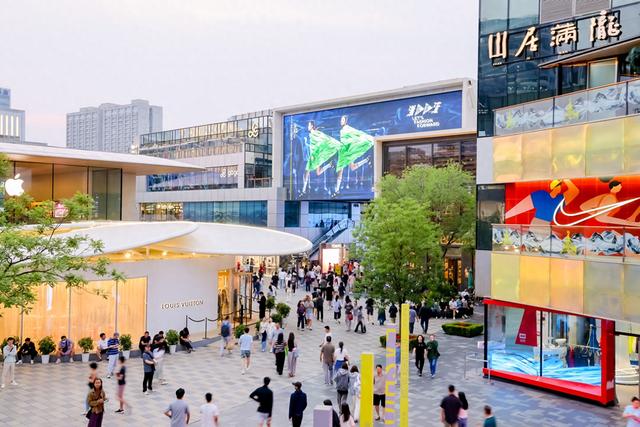
Core Insights - The article highlights the booming retail environment in the Sanlitun Taikoo Li area of Beijing, showcasing the introduction of over 300 high-quality flagship stores and first stores in the past decade, with a significant concentration of duty-free shops in the Chaoyang District [1][7] Group 1: Retail Development - Sanlitun Taikoo Li has become a preferred location for brands to open their first stores in Beijing, driven by its trendy and youthful positioning [4][7] - The area has seen a surge in consumer traffic, with brands like Tao Tao Ju and GB DAVID reporting strong sales performance and customer engagement since their openings [3][4] - The introduction of innovative retail formats, such as themed experience zones in stores like Pop Mart, has further attracted customers and enhanced brand visibility [5][4] Group 2: Tax Incentives and Support - The Chaoyang District Taxation Bureau has implemented a "Tax Concierge" service model to assist businesses in navigating tax incentives, including corporate income tax reductions for small enterprises [7] - The tax authority has streamlined processes for tax registration and invoice issuance, with over 90% of services now available online, facilitating easier compliance for businesses [7] - The expansion of duty-free shops in the Sanlitun area aligns with ongoing improvements in the duty-free tax policy, enhancing the shopping experience for international tourists [7][1]
龙虎榜复盘 | 军工持续大涨,RWA表现突出
Xuan Gu Bao· 2025-06-26 11:14
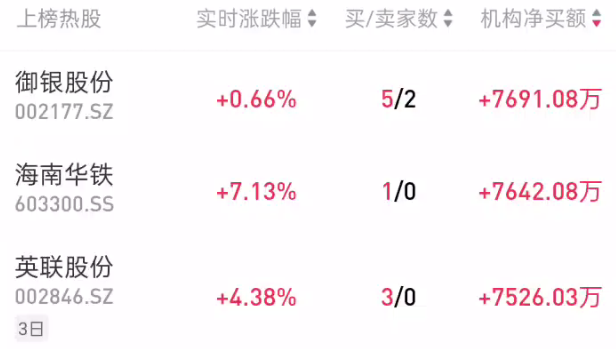
Group 1: Institutional Trading Insights - On the institutional trading leaderboard, 23 stocks were listed, with 12 experiencing net buying and 11 facing net selling [1] - The top three stocks with the highest net buying by institutions were: Yuyin Co., Ltd. (CNY 76.91 million), Hainan Huatie (CNY 76.42 million), and Dazhihui (CNY 65.62 million) [1][2] Group 2: Hainan Huatie's Strategic Involvement - Hainan Huatie has become a co-organizer of the "WCS·2025 RWA Industry Conference," focusing on the digitalization of real-world assets (RWA) [2] - The conference aims to promote technological innovation, industry integration, and globalization practices, facilitating the deep integration of Web3 with the traditional economy [2] Group 3: RWA Industry Developments - The RWA sector is gaining traction, with companies like Jingbeifang and Chutianlong actively participating in blockchain and digital currency infrastructure [5] - RWA is seen as a bridge between real-world assets and Web3.0, enabling the transformation of tangible and intangible assets into digital tokens on the blockchain [5]



万里马上市以来:融资7.8亿,亏损7.5亿,分红0.3亿,套现6亿!
市值风云· 2025-06-05 10:02
Core Viewpoint - The article highlights the significant decline in the company's performance, particularly in its group purchasing business, and the alarming trend of major shareholders liquidating their holdings, suggesting a "clearance sale" mentality regarding the company [1][45][56]. Company Overview - Wanlima (300591.SZ) was established in 2002 and went public in 2017, focusing on leather goods and personal protective products, primarily through an ODM model for international brands [4]. - The company operates through three proprietary brands and multiple agency brands, utilizing five main sales channels: group purchasing, direct sales, e-commerce, wholesale agents, and ODM [6]. Sales Channels and Clientele - Group purchasing is the core channel, primarily serving military, police systems, and state-owned enterprises, with products including shoes, belts, and protective gear [7][11]. - The top five clients accounted for 81% of sales in 2024, with the PLA's logistics department being the largest customer [11][12]. Financial Performance - The group purchasing channel has seen fluctuating revenues, with a notable decline from 2019 to 2021, followed by a recovery in 2022 and 2023, but still not reaching pre-pandemic levels [15][16]. - In 2024, the company's revenue was 590 million yuan, a year-on-year decline of 5.1%, with a significant drop of 32.5% in the first quarter of 2025 [19][28]. Profitability Challenges - The company has faced declining gross margins, with the gross margin for the group purchasing channel dropping to 3.4% in 2024 due to high production costs and limited pricing power [28][30]. - Cumulative net losses since 2020 have reached 750 million yuan, indicating a severe lack of profitability [34]. Shareholder Actions - Major shareholders have significantly reduced their holdings, with the controlling shareholders' stake dropping from 63.33% in 2017 to 21.09% by the end of 2024, raising concerns about the company's future [43][45]. - The total amount cashed out by shareholders through various means is approximately 5.9 billion yuan, indicating a lack of confidence in the company's prospects [55][56]. Industry Context - The leather goods industry is experiencing a phase of stagnant growth and declining profit margins, with companies like Aokang International and Red Dragonfly also reporting revenue declines [25]. - The market is characterized by intense competition, particularly in the mid to low-end segments, where Wanlima operates [23].


Ferragamo2025首季财报:皮具业务逆势增长9.6%
Jing Ji Guan Cha Bao· 2025-05-19 03:03
Core Insights - Salvatore Ferragamo reported a total revenue of €221 million for Q1 of FY2025, reflecting a year-on-year decline of 2.6% at current exchange rates, while the decline narrowed to 1.0% at constant exchange rates [1] - The core leather goods segment experienced a growth of 9.6%, indicating structural improvements during the strategic adjustment period [1] - The leather goods category contributed 44.2% to total sales, an increase of 4.2 percentage points compared to the same period last year, validating the product innovation strategy led by the new creative director Maximilian Davis [1] Regional Performance - The Japanese and Latin American markets showed robust development due to the recovery of tourism retail [1] - The Asia-Pacific region (excluding Japan) was primarily impacted by weak consumer demand in mainland China, becoming a major drag on overall performance [1] Future Outlook - The company maintains a full-year revenue growth expectation in the low single digits despite industry volatility [2] - CEO Marco Gobbetti noted that the strategic focus on high-margin categories is yielding results, with strong performance in leather goods offsetting some short-term market fluctuations [2] - Analysts suggest that balancing the iteration of classic products with the expansion into emerging markets will be crucial for Ferragamo's next phase of growth [2]