
软件业

Search documents
工信部:5G-A覆盖330城,开源鸿蒙装机近12亿台
Guan Cha Zhe Wang· 2026-01-21 06:52
Core Viewpoint - The digital industry in China is rapidly developing, significantly contributing to the integration of the real economy and the digital economy, and enhancing new productive forces during the "14th Five-Year Plan" period [1] Group 1: Scale and Growth - By the end of 2025, China's digital industry revenue is expected to reach approximately 38.3 trillion yuan, with profits of 3.1 trillion yuan, representing cumulative growth of about 39.5% and 48.4% compared to the end of the "13th Five-Year Plan" [3][4] - Major provinces such as Guangdong, Jiangsu, Beijing, and others are projected to contribute over 90% to the national digital industry revenue growth [3] Group 2: Innovation and New Drivers - The software industry is experiencing continuous innovation, with the Harmony operating system installed on nearly 1.2 billion devices, and the artificial intelligence sector is thriving with numerous innovative products emerging [4] - New digital products in emerging fields are driving a new round of consumption upgrades, becoming a new growth point for economic development [4] Group 3: Empowerment and Application - The industrial internet has achieved full coverage across major industrial categories, with over 100 million industrial devices connected to key platforms [4] - High-level 5G factories have shown an average capacity increase of 25%, product quality improvement of 21%, and operational cost reduction of 19% [4] - Support for 101 pilot cities for small and medium-sized enterprises' digital transformation has led to 45,000 enterprises engaging in digital upgrades [4] Group 4: Infrastructure and Connectivity - China has built the world's largest and most advanced information infrastructure, with 4.838 million 5G base stations and 65.9% of mobile phone users being 5G users [6][8] - The number of gigabit broadband users has reached 240 million, accounting for 34.5% of all broadband users [8] Group 5: Future Development and Technology - The Ministry of Industry and Information Technology has completed the first phase of 6G technology testing and has initiated the second phase, with over 300 key technology reserves [9] - Future plans include upgrading networks, accelerating technology iterations, and deepening applications across various sectors such as agriculture, transportation, and healthcare [9]


工信部:我国已有100家高水平的5G工厂达到全球领先水平
Xin Hua Cai Jing· 2026-01-21 05:29
Core Viewpoint - The Chinese government emphasizes the significant progress in the digital industry and its integration with the real economy, highlighting the achievements made during the "14th Five-Year Plan" period, particularly in digital transformation and innovation capabilities [1][2]. Group 1: Digital Industry Growth - By the end of 2025, China's digital industry revenue is projected to reach approximately 38.3 trillion yuan, with profits expected to be around 3.1 trillion yuan, reflecting cumulative growth of about 39.5% and 48.4% respectively since the end of the "13th Five-Year Plan" [1]. - Major provinces such as Guangdong, Jiangsu, Beijing, and others are expected to contribute over 90% to the national digital industry revenue growth [1]. Group 2: Innovation and New Growth Drivers - The software industry is experiencing rapid innovation, with the open-source Harmony operating system being installed on nearly 1.2 billion devices [2]. - The artificial intelligence sector is thriving, leading to a variety of innovative products and driving a new wave of consumer upgrades [2]. Group 3: Industrial Internet and Digital Transformation - The integration of industrial internet applications has achieved full coverage across major industrial categories, with over 100 million industrial devices connected to key platforms nationwide [2]. - The implementation of smart technologies in core manufacturing processes has resulted in an average capacity increase of 25%, a 21% improvement in product quality, and a 19% reduction in operational costs [2].
10万亿度电!中国用电量不仅超美两倍,更远超欧俄印日四国之和
Sou Hu Cai Jing· 2026-01-20 18:39
Core Insights - In 2025, China's total electricity consumption is projected to exceed 10.4 trillion kilowatt-hours, marking a historic milestone as the first single country to surpass this threshold [1] - China's electricity demand is more than double that of the United States and greater than the combined total of the EU, Russia, India, and Japan [1] Group 1: Electricity Consumption Breakdown - The primary sector consumed 149.4 billion kilowatt-hours, with a growth rate of 9.9%, reflecting advancements in modern agriculture such as greenhouse farming and smart irrigation [4] - The secondary sector accounted for 6,636.6 billion kilowatt-hours, representing 64% of total consumption, with a stable growth rate of 3.7%, indicating a solid industrial production base [4] - The tertiary sector consumed 1,994.2 billion kilowatt-hours, and urban and rural residential electricity usage was 1,588 billion kilowatt-hours, together contributing to half of the overall growth rate [4][5] Group 2: Emerging Sectors - The charging and swapping service industry saw an impressive electricity consumption growth rate of 48.8%, correlating with the rising number of new energy vehicles [8] - The information transmission and software industry experienced a 17% growth in electricity consumption, highlighting the significant energy demands of digital activities such as online shopping and video streaming [8] Group 3: Infrastructure and Technological Advancements - China's electricity consumption per capita is 7,400 kilowatt-hours, compared to the U.S. at 12,000 kilowatt-hours, but has shown significant improvement over the past decade [10] - The State Grid's recent "14th Five-Year Plan" involves a 4 trillion yuan investment not for building power plants but for upgrading the entire grid system [12] - The integration of ultra-high voltage transmission networks, virtual power plants, and intelligent scheduling systems enables efficient electricity distribution across vast distances [12][14] Group 4: Global Positioning and Future Outlook - China has built a unified national grid system, allowing for efficient electricity transfer across regions, unlike fragmented systems in the U.S. and EU [14] - In 2022, China accounted for over half of the world's new wind and solar power installations, showcasing its leadership in renewable energy [16] - The ability to self-manufacture critical components for ultra-high voltage and flexible direct current equipment enhances China's energy technology confidence [18] - The 4 trillion yuan investment aims to address weaknesses in rural electricity infrastructure while expanding energy capabilities, reflecting a comprehensive approach to energy security [18][20] Group 5: Economic Implications - The 10 trillion kilowatt-hours of electricity consumed is not just a statistic but represents the backbone of China's economic transformation, shifting from traditional coal-based energy to a diversified energy structure [20] - Electricity has become a stabilizer for economic growth and an accelerator for technological advancement, underpinning various modern activities [20] - China's advancements in energy management and infrastructure position it as a leader in the global energy landscape, challenging perceptions of its developmental status [20]

热点思考 | 设备投资,能否“持续高增”?(申万宏观·赵伟团队)
Xin Lang Cai Jing· 2026-01-06 16:25
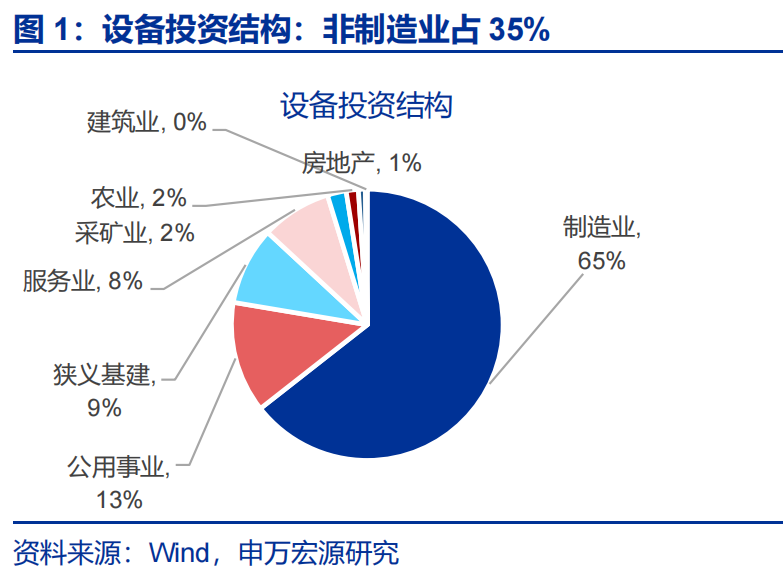
Group 1 - The core argument is that the high growth in equipment investment is not primarily driven by the "Two New" policies or the manufacturing Juglar cycle, but rather by strong investment in broad infrastructure and the service sector [1][8][69] - Equipment investment growth is significantly higher in sectors such as construction (65.5%), narrow infrastructure (46.1%), public utilities (16.5%), and services (13.9%) compared to manufacturing (6.5%), contributing an additional 8.1 percentage points to overall equipment investment [1][8][69] - In 2025, manufacturing investment growth is expected to decline to 1.9%, while equipment investment is projected to maintain high growth at 12.2%, driven by digital infrastructure and energy infrastructure [1][8][69] Group 2 - The strong growth in equipment investment is fueled by the establishment of a modern industrial system, which enhances digital infrastructure, alongside natural renewal cycles and recovering travel demand, thus boosting narrow infrastructure and construction equipment investment [3][24][69] - Key sectors such as software and computer services are experiencing growth rates of 53%, while aviation and road transport equipment investments are also high, correlating with a 17.9% year-on-year increase in civil aviation passenger transport [3][24][69] - The acceleration of energy transition and infrastructure investment in central and western regions, particularly since the intensification of the "dual carbon" policy in 2021, has led to a significant increase in public utility equipment investment [3][31][69] Group 3 - Fiscal policies have increased research spending and improved travel chain demand, leading to a notable rise in service sector equipment investment, which has outpaced construction investment since 2023 [4][40][69] - The growth rate for service sector equipment investment reached 13.9% in 2024, while construction investment only grew by 2.8% [4][40][69] - The recovery gap in service sector investment is estimated to be around 2-3 trillion yuan, indicating a strong potential for future growth in this area [4][56][69] Group 4 - Equipment investment is expected to continue its high growth into 2026, supported by both domestic and external demand chains [5][69] - Narrow infrastructure investment is anticipated to rebound significantly, particularly in digital infrastructure and hub-related investments [5][46][69] - The "dual carbon" policy is expected to further drive investment in equipment for carbon reduction, including modifications in high-energy-consuming industries and investments in renewable energy [5][51][69]
热点思考 | 设备投资,能否“持续高增”?(申万宏观·赵伟团队)
赵伟宏观探索· 2026-01-06 16:03
Core Viewpoint - The article argues that the high growth in equipment investment is not primarily driven by the "Two New" policies or the manufacturing Juglar cycle, but rather by strong investment in broad infrastructure and the service sector [2][9][71]. Group 1: Misconceptions about Equipment Investment Growth - Misconception 1: The strong equipment investment is attributed to the "Juglar cycle"; however, it is actually driven by robust growth in broad infrastructure and service sector investments. In 2024, the growth rates for equipment purchases in construction (65.5%), narrow infrastructure (46.1%), public utilities (16.5%), and services (13.9%) significantly outpaced manufacturing (6.5%), contributing an additional 8.1 percentage points to overall equipment investment [2][9][71]. - Misconception 2: The strong equipment investment is influenced by the "Two New" policies; however, the investment rhythm and structure contradict this view. Special government bonds supporting the "Two New" policies will intensify in the second half of 2024, but by February 2024, manufacturing investment and equipment purchase investment had already surged significantly [2][9][71]. - Misconception 3: The strong manufacturing investment is a result of strong equipment investment; in reality, it stems from construction and installation investments (expansion investments). Since 2024, while manufacturing and equipment purchase investments have grown simultaneously, the growth in equipment investment is not solely derived from manufacturing [3][21][71]. Group 2: Drivers of High Equipment Investment Growth - Reason 1: The establishment of a modern industrial system has driven strong digital infrastructure growth, combined with natural renewal cycles and recovery in travel demand, boosting narrow infrastructure and construction equipment investments. In 2024, narrow infrastructure equipment purchases contributed 4.3 percentage points to total equipment investment, exceeding manufacturing's contribution [4][25][77]. - Reason 2: The acceleration of energy transition and thermal power renovation investments in the central and western regions has strengthened public utility equipment investments, particularly since the intensification of the "dual carbon" policy in 2021. Public utility equipment investment has consistently outpaced construction investment by nearly 10 percentage points since 2021 [4][32][77]. - Reason 3: Increased fiscal spending on research and improvement in travel chain demand have boosted service sector equipment investments. Since 2023, service sector equipment investments have shown a trend of being stronger than construction investments, with significant growth in sectors like leasing and scientific research [5][42][77]. Group 3: Sustainability of High Equipment Investment Growth - Main Line 1: Narrow infrastructure is expected to rebound significantly, especially in digital infrastructure and hub-type investment construction. Recent policy measures, including the issuance of special bonds and financial tools, are set to support new infrastructure investments [6][48][79]. - Main Line 2: The "dual carbon" policy is expected to enhance investments in equipment for carbon reduction, including renovations in high-energy-consuming industries and investments in renewable energy [6][53][79]. - Main Line 3: Policies related to "investment in people" are likely to be significantly intensified, with service sector equipment investments related to consumer infrastructure expected to recover actively [6][58][79]. - Main Line 4: Equipment investments related to external demand are expected to remain resilient, particularly in sectors supporting the industrialization of emerging economies [6][63][79].

热点思考 | 设备投资,能否“持续高增”?(申万宏观·赵伟团队)
申万宏源宏观· 2026-01-06 11:19
Core Viewpoint - The article argues that the high growth in equipment investment is not primarily driven by the "Two New" policies or the manufacturing Juglar cycle, but rather by strong investment in broad infrastructure and the service sector [2][9][71]. Group 1: Misconceptions about Equipment Investment Growth - Misconception 1: The strong equipment investment is attributed to the Juglar cycle; however, it is actually driven by robust growth in broad infrastructure and service sector investments. In 2024, the growth rates for equipment purchases in construction (65.5%), narrow infrastructure (46.1%), public utilities (16.5%), and services (13.9%) significantly outpaced manufacturing (6.5%), contributing an additional 8.1 percentage points to overall equipment investment [2][9][71]. - Misconception 2: The strong equipment investment is influenced by the "Two New" policies; however, the investment rhythm and structure contradict this view. The special government bonds supporting "Two New" policies will only ramp up in the second half of 2024, while manufacturing and equipment purchase investments had already surged in February 2024 [2][9][71]. - Misconception 3: The strong manufacturing investment is a result of strong equipment investment; in reality, it stems from construction and installation investments (expansion investments). Since 2024, while manufacturing and equipment purchase investments have grown simultaneously, the growth in equipment investment is not solely derived from manufacturing [3][21][71]. Group 2: Drivers of High Equipment Investment Growth - Reason 1: The establishment of a modern industrial system has boosted digital infrastructure, combined with natural renewal cycles and recovering travel demand, driving equipment investment in narrow infrastructure and construction. In 2024, narrow infrastructure equipment purchases contributed 4.3 percentage points to total equipment investment, exceeding manufacturing's contribution [4][25][77]. - Reason 2: The acceleration of energy transition and thermal power renovation investments in central and western regions has strengthened public utility equipment investments, particularly since the intensification of the "dual carbon" policy in 2021 [4][32][77]. - Reason 3: Increased fiscal spending on research and improvements in travel chain demand have driven strong service sector equipment investments. Since 2023, service sector equipment investments have shown a trend of outpacing construction investments [5][42][77]. Group 3: Sustainability of High Equipment Investment Growth - Main Line 1: Narrow infrastructure is expected to rebound significantly, especially in digital infrastructure and hub-related investments. Recent policy measures, including a reduction in the proportion of special refinancing bonds, are anticipated to support a rebound in infrastructure investment in 2026 [6][48][79]. - Main Line 2: The "dual carbon" policy is expected to enhance investments in equipment for carbon reduction, including renovations in high-energy-consuming industries and investments in renewable energy [6][53][79]. - Main Line 3: Policies related to "investment in people" are likely to be significantly strengthened, with service sector equipment investments related to consumer infrastructure expected to recover actively [6][58][79]. - Main Line 4: Equipment investments related to external demand are expected to remain resilient, particularly in sectors supporting the industrialization of emerging economies [6][63][79].

宏观专题报告:设备投资,能否“持续高增”?
Shenwan Hongyuan Securities· 2026-01-06 03:41
Group 1: Misconceptions about Equipment Investment Growth - Equipment investment growth is not primarily driven by the "Juga Cycle" but rather by strong infrastructure and service sector investments, with construction industry growth at 65.5% and narrow infrastructure at 46.1% in 2024, contributing an additional 8.2 percentage points to overall equipment investment[2] - The notion that equipment investment strength is influenced by the "Two New" policies is misleading; significant increases in manufacturing investment and equipment purchases occurred as early as February 2024, with equipment purchase investment growth reaching 17%[2] - Manufacturing equipment purchase investment growth was only 6.5% in 2024, significantly lower than the overall equipment investment growth of 15.7%[3] Group 2: Drivers of Equipment Investment Growth - The establishment of a modern industrial system has driven strong digital infrastructure investments, with software industry growth at 53% and computer services at 35%, contributing to overall equipment investment[4] - Public utility equipment investment has surged since the "dual carbon" policy was intensified in 2021, with electricity and heat equipment investment growth at 17.6%[4] - Service sector equipment investment has outpaced construction investment since 2023, with growth rates of 13.9% compared to 2.8% for construction investment in 2024[5] Group 3: Sustainability of Equipment Investment Growth - Equipment investment is expected to continue high growth in 2026, supported by a rebound in narrow infrastructure, particularly in digital infrastructure and hub-related investments[6] - The "dual carbon" policy is anticipated to further enhance investment in carbon reduction technologies, including high-energy-consuming industry upgrades and renewable energy investments[6] - Policies focused on "investing in people" are likely to increase service sector equipment investment, with a projected growth rate of around 6% in 2026, surpassing the overall fixed asset investment growth of 3%[7]
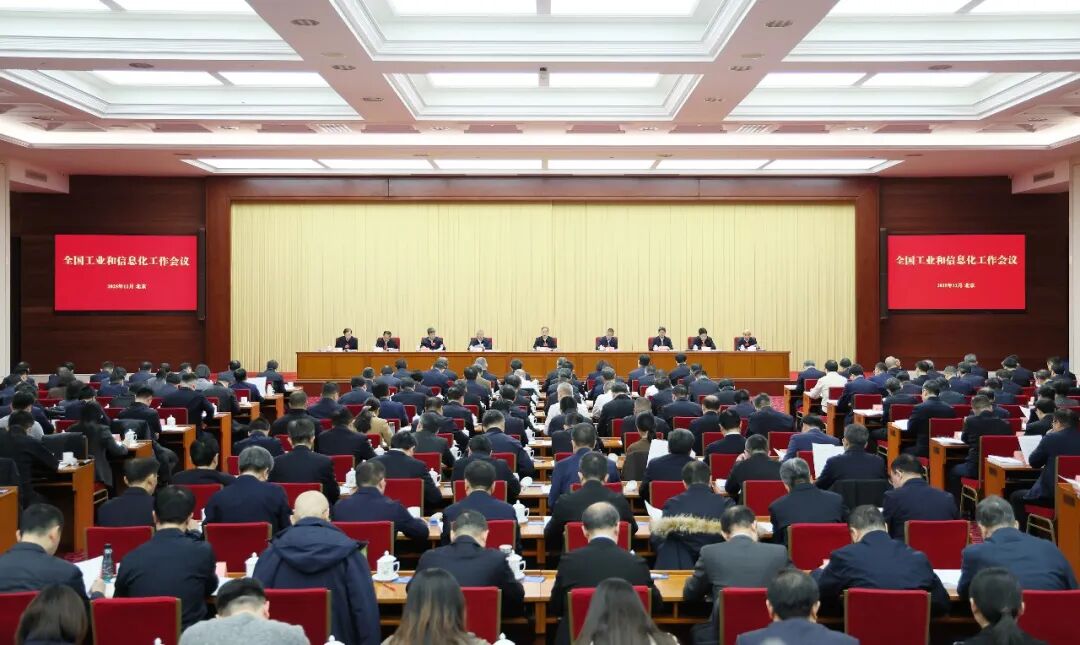
全国工业和信息化工作会议部署明年重点工作 锚定新型工业化 因地制宜发展新质生产力
Zheng Quan Shi Bao· 2025-12-26 22:51
Group 1 - The core viewpoint of the meetings is to implement the spirit of the Central Economic Work Conference, summarize the work of 2025 and the "14th Five-Year Plan" period, analyze new situations, and research key tasks for the "15th Five-Year Plan" period, while deploying key work for 2026 [1][2] - In 2025, the industrial economy is expected to achieve effective qualitative improvements and reasonable quantitative growth, with telecommunications business volume and software business revenue projected to grow by approximately 9% and 12% year-on-year, respectively [1] - The resilience of industrial and supply chains is continuously enhanced, with high-tech manufacturing and equipment manufacturing value-added growing by 9.2% and 9.3% year-on-year from January to November, respectively [1] Group 2 - The year 2026 marks the beginning of the "15th Five-Year Plan," focusing on achieving new industrialization, deepening reforms, and promoting the integration of technological and industrial innovation [2] - Ten key areas of work have been deployed for 2026, including consolidating the positive trend of the industrial economy, enhancing the resilience and safety of industrial chains, and promoting green low-carbon development in the industrial sector [2] - The Ministry of Industry and Information Technology plans to establish the first batch of national emerging industry development demonstration bases and create innovative industrial clusters [3]
工信部重要会议,2026年这样干!
Zheng Quan Shi Bao· 2025-12-26 11:33
Core Insights - The meeting focused on deploying key tasks for 2026, emphasizing the importance of new industrialization and the implementation of the 14th Five-Year Plan while preparing for the 15th Five-Year Plan [1][6] Summary by Sections Industrial Economic Performance - In 2025, under the leadership of the central government, the industrial economy is expected to show steady progress, with telecommunications and software business revenues projected to grow by approximately 9% and 12% respectively, and digital industry revenue also expected to increase by around 9% [3] - The resilience of industrial supply chains is improving, with significant advancements in key manufacturing sectors and breakthroughs in landmark technologies and products [3] Technological Innovation and Manufacturing Upgrades - From January to November, the added value of high-tech manufacturing and equipment manufacturing increased by 9.2% and 9.3% respectively, with the core AI industry exceeding 1 trillion yuan and exports of new energy vehicles surpassing 2 million units [3] - Over 7,000 advanced and 500 excellent smart factories have been established, with over 20,000 industrial 5G private networks and more than 8,000 5G factories [3] Key Focus Areas for 2026 - The meeting outlined ten key areas for focus in 2026, including consolidating the positive trend of the industrial economy, enhancing supply chain resilience, and accelerating technological innovation [7][8] - Emphasis was placed on fostering emerging industries such as integrated circuits, new materials, and biomedicine, while also promoting the deep integration of information technology and industrialization [8][9] Industry Governance and Policy Implementation - The meeting highlighted the need for improved industry governance, including the implementation of a series of plans for the industrial and information sectors during the 15th Five-Year Plan [10] - There is a strong focus on enhancing the quality of enterprises, with initiatives to support small and medium-sized enterprises and to eliminate overdue payments to businesses [9][10] Political and Organizational Support - The meeting underscored the importance of the Party's leadership in ensuring the success of various initiatives, emphasizing the need for political construction and the enhancement of talent and organizational capabilities [11] - It called for a unified approach to implementing the central government's decisions and fostering a positive political environment [12]
工业和信息化部:预计2025年规模以上工业增加值同比增长5.9%
Yang Shi Xin Wen· 2025-12-26 06:00
Group 1 - The core viewpoint is that the industrial economy in China is expected to maintain steady growth, with an estimated industrial added value growth of 5.9% year-on-year for 2025 [1] - From January to November, the added value of high-tech manufacturing and equipment manufacturing increased by 9.2% and 9.3% year-on-year, respectively [1] - The pace of manufacturing transformation and upgrading is accelerating, with over 7,000 advanced-level and over 500 excellent-level smart factories established [1] - A total of 6,430 national green factories and 491 green industrial parks have been cultivated, with a comprehensive utilization rate of industrial solid waste reaching 57% [1] - Six industries, including electrical and mechanical, contributed 58.2% to industrial growth [1] - Nine out of ten major industrial provinces have growth indices higher than the national level [1] - Industrial investment increased by 4% year-on-year from January to November, with manufacturing investment growing by 1.9% [1] - Over 600,000 technology and innovation-oriented small and medium-sized enterprises have been cultivated, along with 504,000 high-tech enterprises [1] - The Ministry of Industry and Information Technology emphasizes the need to consolidate the positive trend of the industrial economy and implement a new round of key industry growth plans [1] Group 2 - The digital industry business revenue is expected to grow by approximately 9% year-on-year in 2025 [2] - The total volume of telecommunications services and software business revenue is projected to increase by 9% and 12% year-on-year, respectively [2] - As of the end of November, the total number of 5G base stations reached 4.83 million, accounting for 37.4% of mobile base stations [2] - The number of 5G mobile phone users reached 1.193 billion, representing 65.3% of mobile phone users [2] - The "Artificial Intelligence + Manufacturing" initiative has been fully implemented, with a 30% penetration rate of AI applications in manufacturing enterprises [2] - A 60 billion yuan artificial intelligence industry investment fund has been established to promote the application of AI [2]