
数字经济

Search documents
杭州再推“春晖计划”升级版
Sou Hu Cai Jing· 2026-01-01 01:53
Core Insights - Hangzhou has officially launched the upgraded "Chunhui Plan," introducing 43 cost-reduction measures aimed at alleviating the financial burden on enterprises, with an expected annual savings of approximately 70 billion yuan [1] Group 1: Overview of the Chunhui Plan - The Chunhui Plan was first introduced in June 2024, featuring 32 cost-reduction measures across ten areas, including taxes, labor, energy, land use, logistics, government procurement, financing, innovation, market expansion, and institutional transaction costs [1] - The upgraded version retains 27 effective measures from 2024, optimizes 5, and adds 11 targeted initiatives to better address the needs of enterprises [1] Group 2: New Measures and Focus Areas - New measures directly address pain points for businesses, such as providing subsidies for foreign trade companies participating in domestic exhibitions and enhancing financing support for projects in digital economy, AI, low-altitude economy, and biomedicine [2] - The plan includes stricter regulations on administrative inspections to reduce redundancy and inefficiency, aiming to streamline the regulatory environment for enterprises [2] Group 3: Emphasis on Innovation and Financial Support - The upgraded plan emphasizes supporting the development of new productive forces, with 4 out of the 11 new measures specifically aimed at reducing innovation costs, including tiered support for R&D investments by tech SMEs and high-tech enterprises [3] - Financial support mechanisms have been enhanced, with the target for industry fund investments in private projects increased from 75% to no less than 80%, and new measures introduced to optimize "no-repayment renewal loans" for eligible enterprises [3] Group 4: Implementation and Future Outlook - The upgraded Chunhui Plan is set to take effect on December 26, 2025, with a commitment from the Hangzhou Development and Reform Commission to ensure effective policy implementation and service provision [3] - The initiative aims to create a favorable environment for high-quality development of the private economy through proactive policy promotion and efficient service delivery [3]
大兴区擘画发展蓝图,“6+5+3”产业布局激活发展新动能
Xin Jing Bao· 2025-12-31 05:09
Core Insights - Daxing is undergoing a significant transformation from a traditional agricultural area to a modern industrial city, leveraging national strategies and positioning itself as a new industrial hub [1][2] Group 1: Industrial Layout - Daxing has developed a "6+5+3" modern industrial development framework, focusing on six major sectors: air economy, biomedicine, future energy, digital economy, commercial aerospace, and agricultural technology [2][3] - The district has established five complementary industrial clusters, including business technology, new media, international finance, logistics, and agricultural technology, to support innovation and create a vibrant economic landscape [2][3] - The integration of three key areas—Yongding Bay, Daxing International Resort, and the industrial collaborative development demonstration zone—aims to enhance urban-rural integration and foster new growth points [2][3] Group 2: Sector Development - Daxing International Hydrogen Energy Demonstration Zone has attracted over 260 upstream and downstream enterprises, becoming a leader in the hydrogen energy industry in the Beijing-Tianjin-Hebei region [4][5] - The Daxing Biomedicine Base, branded as "China's Medicine Valley," has seen the influx of multinational pharmaceutical companies and 200 high-quality projects, positioning it as a preferred location for biomedicine enterprises [4][5] - The Beijing Digital Economy Demonstration Zone is driving initiatives like the establishment of the "Digital Economy Going Global International Cooperation Alliance" to enhance its digital economy [4] Group 3: Urban-Rural Integration - Daxing's planning emphasizes urban-rural integration, with the Yongding Bay area set to develop a 3+1+X industrial system centered on health, artificial intelligence, and green economy [8][9] - The transformation of traditional agricultural areas, such as the "Watermelon Town," into modern agricultural technology hubs reflects the district's commitment to integrating agriculture with technology [8][9] - Daxing is creating a network of characteristic towns that focus on specific industries, enhancing the overall economic landscape while maintaining a balance between urban development and rural vitality [8][9] Group 4: Investment and Growth - Daxing has allocated over 40,000 acres of diverse functional land to meet the needs of enterprises, improving approval efficiency and establishing a 4 billion yuan equity investment fund to support business growth [9] - The district is offering comprehensive talent packages, including housing, education, and healthcare, to attract and retain talent, ensuring a conducive environment for investment and development [9] - By 2025, Daxing aims to lead in multiple investment indicators within Beijing, creating a virtuous cycle of strong projects, stable investments, and robust future growth [9]
京口:奋楫“滨江宜居主城” 筑强“双创活力高地”
Xin Hua Ri Bao· 2025-12-31 00:00
Economic Growth and Development - The regional GDP is projected to reach 60.36 billion yuan in 2024, with an average annual growth rate of 6.9% [1] - Industrial output value has increased by 47.4% compared to 2020, with significant growth in new materials and grain and oil processing industries [1] - Fixed asset investment in the region has reached 54.007 billion yuan, with manufacturing investment at 12.854 billion yuan, providing a solid foundation for economic development [3] Industrial and Technological Advancements - The region has focused on strengthening the real economy, integrating advanced manufacturing with modern services [2] - A total of 536 industrial projects have been promoted since the beginning of the 14th Five-Year Plan, with four projects listed as major provincial projects this year [3] - The Duyushan Digital Cultural and Creative Zone has become a key area for digital economy development, attracting major companies like Huawei and Inspur [4] Talent Development and Education - The establishment of the "Jingcai" youth talent station and over 300 talent apartments aims to attract and support skilled professionals [5] - A digital economy talent training program has successfully supplied over 200 skilled workers to local enterprises [5] Urban Renewal and Cultural Development - The region has completed renovations of 42 old districts, covering approximately 2 million square meters, enhancing urban aesthetics and livability [6] - The cultural and sports sectors have thrived, with over 4,500 cultural events held in five years and the development of new sports facilities [9] Social Welfare and Governance - A comprehensive elderly health service system has been established, with 40 community-based elderly care centers providing various services [8] - The region has implemented a "grid + digital" governance model to enhance community service efficiency and safety [9] Future Development Goals - The focus for the 15th Five-Year Plan will be on enhancing industrial strength, innovation, urban-rural integration, and social welfare to contribute to a modernized urban landscape [10]
宋清辉:2026年股市将更看重确定性方向,应抓牢低估值高分红主线
Sou Hu Cai Jing· 2025-12-30 22:23
Group 1 - The A-share market in 2026 is expected to face significant challenges, including external uncertainties and uneven recovery in corporate profits, which may hinder a comprehensive market rally [1][9] - The macroeconomic environment in 2025 showed a moderate recovery, with external factors like geopolitical tensions and trade frictions continuing to affect market sentiment [4][8] - The investment landscape is evolving, with institutional investors gaining more influence and a shift towards a focus on fundamentals and long-term logic, leading to a more stable and mature A-share market [7][8] Group 2 - The A-share market in 2025 exhibited a range-bound performance, with structural trends emerging as blue-chip stocks showed resilience supported by valuation recovery and dividend attributes [7] - In 2026, the economic growth "bottom" is likely to be established, with policies aimed at stabilizing growth and promoting reforms expected to gradually improve economic conditions [8] - The market structure in 2026 is anticipated to be characterized by moderate index performance and active sector dynamics, with high-dividend, low-valuation assets remaining attractive in a low-interest-rate environment [8]

海南自贸港科创策源地引力足 12个项目集中落地
Zhong Guo Xin Wen Wang· 2025-12-30 17:38
Core Insights - The establishment of the Sanya Yazhou Bay Science and Technology City is aimed at enhancing its role as a key industrial investment hub and innovation source in Hainan Free Trade Port [1][2] - A total of 12 projects were signed on-site, covering various sectors including seed industry, deep-sea technology, life health, digital economy, and cross-border services [1] Group 1: Project Signings - The projects signed include a collaboration between Guotou Seed Technology Co., Ltd. and the Chinese Academy of Agricultural Sciences for corn germplasm resource innovation [1] - Sanya BGI Life Sciences Institute will develop a comprehensive service project for the biomanufacturing industry in Yazhou Bay Science and Technology City [1] Group 2: Industry Development - The Yazhou Bay Science and Technology City is transitioning to cover the entire seed industry chain, with 9 of the top 20 seed companies in China already established in the park [2] - A modern seed industry cluster was successfully created and inaugurated to promote high-quality development in the seed industry [2] Group 3: Support Services - A joint service entity was launched to provide full lifecycle support for outbound enterprises, linking global resources to create a professional cross-border service ecosystem [2] - The city is evolving from a "policy highland" to a "functional platform," leveraging the benefits of institutional innovation from the Hainan Free Trade Port [2]
从“强省会”到“昆明率先”,云南对昆明有哪些期待?
Di Yi Cai Jing· 2025-12-30 15:43
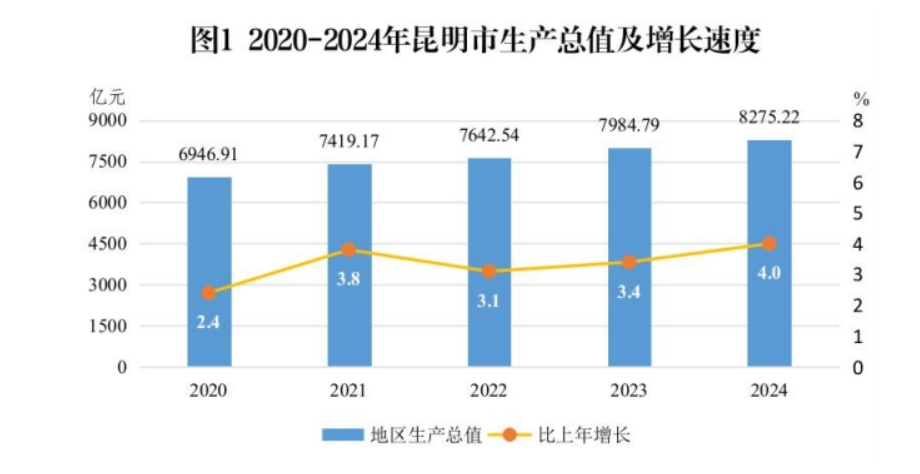
Core Viewpoint - Yunnan province has outlined a strategic plan for regional development over the next five years, emphasizing the importance of Kunming as a leading city to drive the economic growth of the central Yunnan region [2][8]. Group 1: Strategic Development Plans - The "15th Five-Year Plan" for Yunnan aims to create a coordinated development pattern with Kunming at the forefront, promoting regional collaboration and economic corridors [2]. - By 2025, Kunming's GDP is expected to account for over 30% of the province's total economic output, with strategic emerging industries contributing over 17% [2]. - The "Strong Provincial Capital" initiative has been implemented to support Kunming's development through various policies and funding mechanisms [2][3]. Group 2: Economic Performance and Contributions - Kunming's contribution to Yunnan's economic growth increased from 13.3% in 2020 to 31.9% in 2024, showcasing its role as a "locomotive" for the province [3]. - In 2024, Kunming's GDP is projected to be 827.52 billion, while the province's total GDP is expected to reach 3,153.41 billion, indicating a slight decrease in Kunming's share of the provincial GDP from 26.61% in 2021 to 26.24% in 2024 [4]. - Despite challenges from the pandemic and real estate sector, Kunming's industrial development has shown promise, with significant contributions from emerging industries [7]. Group 3: Future Outlook - The absence of the "Strong Provincial Capital" terminology in the new plan suggests a continued focus on elevating Kunming's economic status and city prominence [8]. - Analysts believe that the ongoing "Strong Provincial Capital" actions will persist, aiming for Kunming's economic metrics to align with provincial goals [8].
大兴区“十五五”规划建议全文公布
Bei Jing Ri Bao Ke Hu Duan· 2025-12-30 14:37
Core Viewpoint - The Daxing District of Beijing aims to establish itself as a model for collaborative development and a new gateway for openness, focusing on high-quality economic and social development during the 15th Five-Year Plan period. Group 1: Achievements During the 14th Five-Year Plan - Daxing's GDP has surpassed 100 billion, with public budget revenue stabilizing above 10 billion, and fixed asset investment consistently ranking in the top five of the city [2] - The number of market entities has increased by 128% since 2020, with high-tech enterprises growing at an annual rate of 11.3% [2] - Daxing International Airport has handled 188 million passengers since its opening, with international passenger traffic expected to exceed 10% by 2025 [2] - The region has made significant progress in ecological improvements, with PM2.5 levels dropping to 33 micrograms per cubic meter [2] Group 2: Challenges Facing the 15th Five-Year Plan - Daxing must enhance the role of the international airport and strengthen its leading industries, as it still faces issues of small economic scale and structural weaknesses [4] - The district has a unique geographical advantage, being the closest plain city to the capital's core, and must leverage this for future growth [3] Group 3: Development Goals for the 15th Five-Year Plan - The plan emphasizes the need for high-quality development, focusing on six leading industries and a "6+5+3" industrial layout [6][17] - Key goals include enhancing the capital's functional service capabilities, improving economic strength, and achieving significant advancements in international openness [9][10] Group 4: Principles for Economic and Social Development - The development strategy will prioritize new quality productivity, high-level openness, and a people-centered approach [7][8] - Emphasis will be placed on green development and ensuring safety in economic activities [8] Group 5: Industrial Development Strategy - Daxing aims to create a modern industrial system with international competitiveness, focusing on six key industries including air transport, biomedicine, digital economy, future energy, commercial aerospace, and new agricultural technology [16][17] - The district plans to establish specialized industrial clusters and enhance the integration of various sectors [19][20] Group 6: Urban and Rural Development - The strategy includes a focus on urban renewal, improving infrastructure, and enhancing the quality of life in rural areas [31][34] - Daxing will promote the development of distinctive towns, each with unique characteristics and industries [35] Group 7: Cultural Development - The district aims to enhance its cultural identity and promote a diverse and innovative cultural environment [36][37] - Efforts will be made to integrate cultural resources with economic development, enhancing the overall quality of life for residents [36]
南京壹城·数创未来中心正式开园
Yang Zi Wan Bao Wang· 2025-12-30 12:34
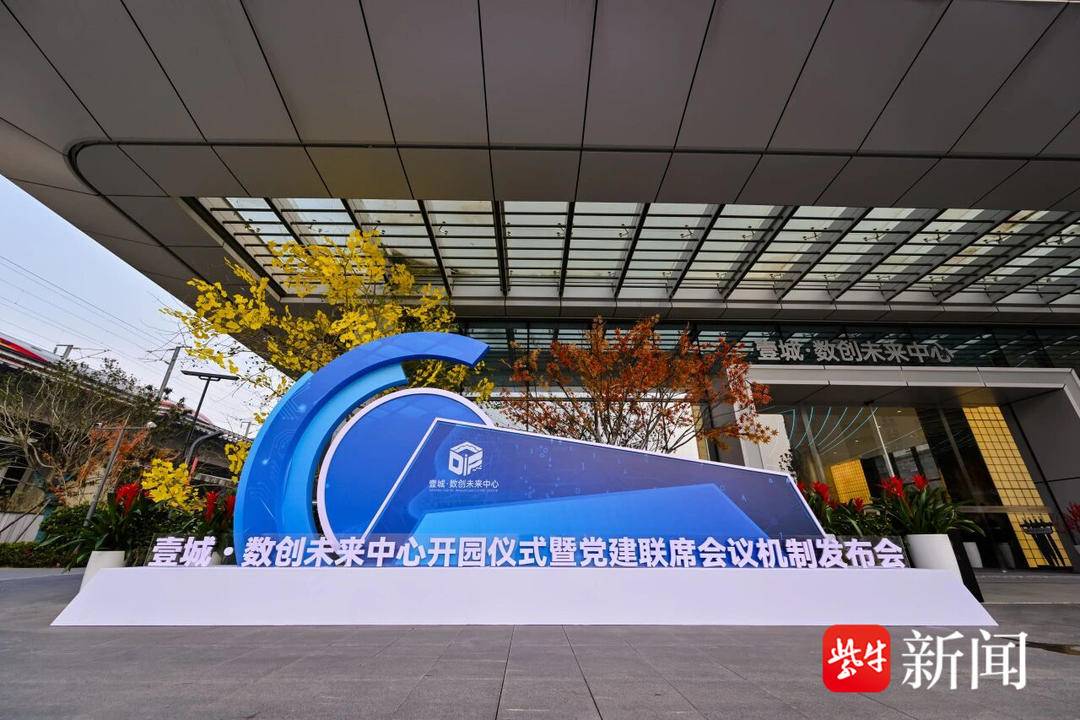
Core Viewpoint - The opening ceremony of the Yicheng Digital Innovation Future Center marks a significant step in the development of a digital economy ecosystem, emphasizing the integration of advanced technologies and industry collaboration [2][3][5]. Group 1: Project Overview - The Yicheng Digital Innovation Future Center is strategically located at No. 9 Guangjing Road in Qinhuai District, designed as a benchmark community for the 4.0 industrial ecosystem, focusing on big data, cloud computing, and artificial intelligence [5]. - The project encompasses five buildings with a total construction area of 118,000 square meters, including 70,000 square meters of office space and 48,000 square meters of various supporting facilities [5]. Group 2: Facilities and Services - The park is designed to meet the full lifecycle development needs of enterprises, featuring diverse industrial spaces such as headquarters offices, R&D bases, and customized standalone buildings, along with business support facilities like multimedia presentation halls and shared meeting rooms [8]. - A comprehensive service platform is established, covering aspects such as business registration, talent acquisition, legal support, and financial services, providing extensive support and value enhancement for resident enterprises [8]. Group 3: Digital Empowerment and Operations - The project aims to enhance the operational experience of resident enterprises through digital empowerment, integrating cutting-edge technologies like digital twins and industrial big data maps to create a high-standard digital exhibition hall [10]. - Prior to the official opening, over 30 quality enterprises have signed contracts, with a total leased area of approximately 18,000 square meters, achieving a nearly 30% completion rate in leasing [10]. Group 4: Future Development Plans - Yicheng Group plans to maintain high standards in industrial attraction and enterprise services, aiming to establish a distinctive, high-quality, and ecologically sound digital industrial park by 2026 [12].
【发展之道】以产业创新助力消费增长
Zheng Quan Shi Bao· 2025-12-29 19:29
Core Viewpoint - Expanding domestic demand is essential for maintaining long-term economic health in China and meeting the growing needs of the population for a better life. The shift from high-speed to medium-high-speed growth necessitates increasing the consumption rate and addressing consumption shortfalls through industrial innovation and high-value-added industries, particularly in high-tech sectors like artificial intelligence [1][2]. Group 1: Economic Context - China's economy faces long-term pressures from an aging population, with the consumer rate at approximately 39.6% in 2023, significantly lower than developed countries (50%-70%) and the global average for middle-income countries (55%) [1]. - The traditional approach of income distribution adjustment is limited, necessitating a focus on industrial innovation to create new consumption demand and enhance overall economic growth [1][2]. Group 2: Industrial Innovation and Consumption - Developing high-value and high-tech industries is crucial for expanding economic growth during the medium-high-speed growth phase. Historical examples from the U.S. and Japan illustrate how technological advancements in sectors like information technology and healthcare have led to significant increases in service consumption [2]. - Artificial intelligence is identified as a key driver for consumption growth, enhancing production efficiency and creating high-income jobs, particularly in sectors like smart manufacturing and new energy vehicles [3]. Group 3: Synergy Between Technology and Consumption - The integration of artificial intelligence in consumer sectors is transforming traditional products into smarter, higher-end offerings, while also tailoring services to meet consumer needs. For instance, online retail sales are projected to account for 26.8% of total retail sales by 2024, with AI systems improving conversion rates by over 40% [4]. - The growth in high-tech industries has led to an average annual real income growth of 6.1% for residents from 2013 to 2024, with incomes in high-tech sectors growing faster than in traditional industries, highlighting the positive impact of industrial innovation on income distribution [4]. Group 4: Policy and Market Dynamics - The pathway of "industrial policy—developing domestic demand—expanding growth—income distribution—promoting consumption" has shown significant advantages over mere income distribution adjustments, creating new value through technological innovation and industrial upgrades [5]. - Initiatives like the trade-in policy for consumer goods and the promotion of AI in consumption are fostering a positive interaction between policy guidance, industrial upgrades, and consumption expansion, benefiting both industry and consumer welfare [5]. Group 5: Future Outlook - China is at a critical juncture for industrial and consumption upgrades, with a vast market of 1.4 billion people and a growing middle-income group providing ample opportunities for industrial innovation [5]. - Focusing on key sectors such as artificial intelligence, high-end equipment, and biomedicine, while optimizing income distribution, is essential for activating consumption potential and ensuring domestic demand becomes a primary driver of economic growth [5][6].
专访迟福林:海南对标高标准经贸规则 以制度型开放应对逆全球化
2 1 Shi Ji Jing Ji Bao Dao· 2025-12-29 16:24
Core Insights - The Hainan Free Trade Port officially commenced its closure operation on December 18, 2023, marking a significant transformation in China's economic landscape and showcasing the country's commitment to high-level openness [1][2] Group 1: Economic Impact - In the first week of operation, Hainan Customs supervised over 400 million yuan worth of "zero tariff" imports and over 20 million yuan of domestic processing goods exempt from tariffs [1] - Hainan saw the addition of 1,972 foreign trade registered enterprises, a year-on-year increase of 230% [1] Group 2: Institutional Reform - The concept of institutional openness focuses on internationalization and legalization of rules, regulations, management, and standards, moving beyond traditional policy incentives [4][5] - The core of institutional openness is to establish a stable, transparent, and predictable system to attract global high-end resources [5] Group 3: Global Trade Dynamics - Hainan's closure operation serves as a "pressure test" for China's high-level openness and aims to counteract rising global protectionism and unilateralism [2] - The initiative is designed to align with international high-standard trade rules, enhancing China's participation in global competition and cooperation [2] Group 4: Regional Cooperation - Hainan is positioned to implement "unilateral openness" towards ASEAN, offering lower tariffs or zero tariffs on goods and higher levels of service trade openness [3] - The region aims to enhance economic resilience and upgrade the China-ASEAN Free Trade Area through proactive regional cooperation [3] Group 5: Future Development Potential - The "zero tariff, low tax rate" policies combined with Hainan's geographical and ecological advantages are expected to drive growth in green low-carbon industries, digital economy, and high-end tourism [8][9] - Hainan is anticipated to attract foreign investment by reducing the negative list and allowing foreign control in sectors like healthcare and education [9] Group 6: Legal and Regulatory Framework - The Hainan Free Trade Port Law grants significant legislative power to ensure policy stability and predictability post-closure, focusing on the development of local regulations in trade, investment, finance, and ecology [6][7] - Key tasks include establishing an international commercial court and a diversified dispute resolution mechanism to enhance legal frameworks [6]