
物流

Search documents
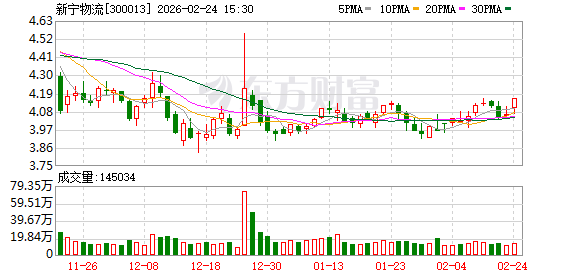
新宁物流:截至2026年2月13日公司股东人数为21329户
Zheng Quan Ri Bao· 2026-02-24 12:09
Group 1 - The core point of the article is that Xinning Logistics has reported its shareholder count as of February 13, 2026, which stands at 21,329 households [2] - The company will regularly update its shareholder numbers through the "Company Voice" platform on the interactive platform [2] - Investors can check and follow the updates regarding shareholder numbers on the mentioned platform [2]


股市下跌,投资者对人工智能带来的行业冲击感到不安
Xin Lang Cai Jing· 2026-02-24 11:34
Group 1 - Global stock markets experienced significant declines for the second consecutive trading day due to multiple factors, including uncertainty surrounding President Trump's tariff policies, geopolitical tensions, and renewed concerns about the economic disruption caused by artificial intelligence [1][6] - The U.S. Supreme Court ruled that Trump's emergency tariff policy was illegal, leading to the announcement of a 10% comprehensive tariff, which officially took effect on Tuesday. Trump indicated a potential increase to 15%, but the timeline and implementation remain unclear [1][3] - The MSCI Global Index fell for the second day, while the Stoxx 600 index in Europe stabilized near historical highs [1] Group 2 - Concerns about the impact of artificial intelligence on employment and global economic growth have led to investor panic, with the S&P 500 index dropping 1.0% and the Nasdaq Composite index falling 1.1% [1][7] - A report from Citrini Research highlighting potential global economic risks further exacerbated investor anxiety [1][7] - Despite recent volatility, the S&P 500 index is only about 2.5% below its historical peak, indicating that these factors have not yet caused a catastrophic impact on the stock market [2][7] Group 3 - Nvidia, a key player in the artificial intelligence chip manufacturing sector, is set to release its earnings report, which could become a focal point for the market [2][7] - The company's market capitalization accounts for approximately 8% of the S&P 500 index, emphasizing its significant influence on market movements [2][7] Group 4 - The new tariffs introduced by the U.S. are based on Section 122 of the Trade Act of 1974, adding to the confusion surrounding U.S. trade protectionism [3][8] - FedEx has filed a lawsuit seeking a refund for tariffs already paid, reflecting the impact of these policies on global logistics companies [3][8] Group 5 - In the cryptocurrency market, Bitcoin and Ethereum experienced declines of 2.2% and 2.1%, respectively, indicating broader market pressures [4][9]
美政府24日起停征违法关税,三大期指齐涨;联邦快递起诉美政府,要求全额退还关税费用;特斯拉1月欧盟注册量下降17%【美股盘前】
Mei Ri Jing Ji Xin Wen· 2026-02-24 11:07
Group 1 - The U.S. government will stop collecting illegal tariffs on imported goods starting February 24, leading to a rise in major stock index futures [1] - Amazon plans to invest $12 billion in building advanced data centers in Louisiana, creating 540 full-time jobs and 1,710 full-time equivalent positions [1] - Tesla's new car registrations in the EU fell by 17% in January, with sales dropping to 8,075 vehicles from 9,733 year-over-year, resulting in a market share decline from 1.0% to 0.8% [1] Group 2 - Anthropic will hold a live event to showcase its AI assistant Claude, targeting corporate executives, amid market anxiety contributing to a significant drop in stock indices [2] - PayPal has attracted interest from potential buyers, with at least one major competitor exploring a full acquisition, while others focus on specific assets [2] - The White House is pressuring tech executives to commit to covering the costs of data center operations without passing expenses onto consumers [3] Group 3 - FedEx is suing the U.S. government for a full refund of tariffs it has paid, seeking reimbursement for all IEEPA tariffs [3] - Apple plans to produce some new Mac Mini models in the U.S. later this year, with manufacturing set to begin at a Foxconn facility north of Houston [3] - Uber announced its acquisition of parking app SpotHero to enhance its app's parking reservation capabilities for events and venues [4]
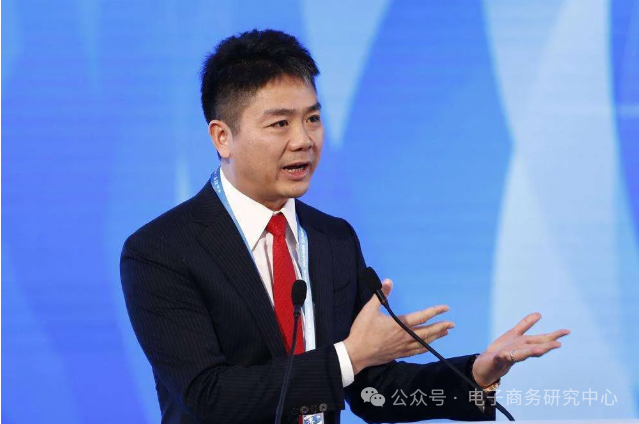
2025各头部电商平台主要高管大动作——刘强东:布局外卖与欧洲市场 进军酒旅与千亿员工保障
Xin Lang Cai Jing· 2026-02-24 11:06
Core Viewpoint - In 2025, JD Group's founder Liu Qiangdong is driving a series of high-intensity, focused actions aimed at returning the company to its supply chain essence and improving organizational efficiency, demonstrating a strong commitment to reinforcing core capabilities [1][23]. Group 1: Major Actions - Action 1: JD officially entered the food delivery market and launched a 10 billion yuan subsidy plan, planning to invest over 10 billion yuan within a year to attract users through "universal subsidies + direct price reductions" [4][25]. - Action 2: A 200 billion yuan special fund was announced to support foreign trade enterprises transitioning to domestic sales, providing zero commission for three months and free store decoration for businesses joining JD's platform [6][29]. - Action 3: JD is entering the hotel and travel industry with a goal to reduce industry costs by two-thirds through supply chain optimization, aiming to create new value for the sector [8][32]. Group 2: International Expansion - Action 4: JD made a significant move by acquiring German retail giant Ceconomy for over 18 billion yuan, marking the highest amount for a Chinese e-commerce company entering the European market [12][34]. - Action 5: JD Industrial was listed on the Hong Kong Stock Exchange, raising approximately 2.827 billion HKD, and is recognized as the largest service provider in China's industrial supply chain technology and services market [14][35]. Group 3: Employee Welfare and Logistics Integration - Action 6: A 22 billion yuan housing plan was announced to improve living conditions for delivery personnel, aiming to provide 150,000 housing units over five years [16][39]. - Action 7: JD is accelerating the integration of Deppon Logistics, planning to acquire the remaining shares to eliminate competition and enhance its logistics capabilities [19][42].

广东“新春第一会”,信息量爆棚
Xin Lang Cai Jing· 2026-02-24 11:06
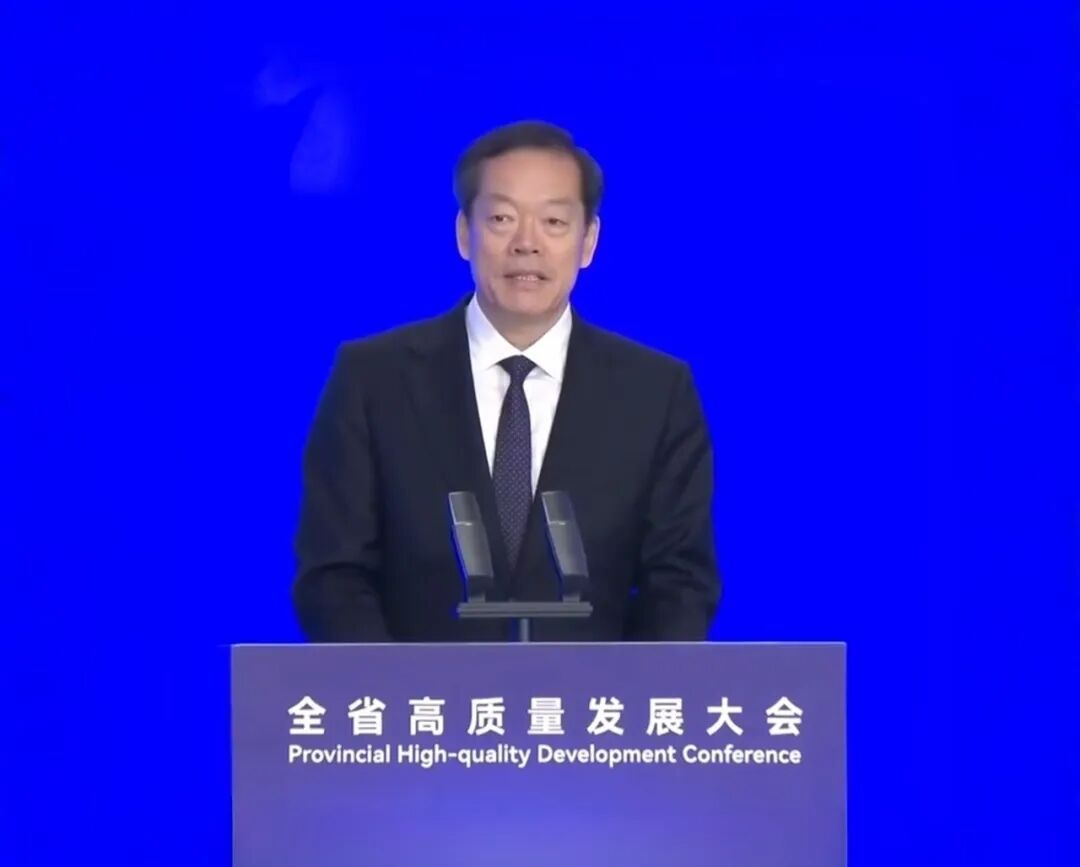
Group 1 - The core theme of the Guangdong Provincial High-Quality Development Conference is the collaborative development of manufacturing and service industries [1][24] - Guangzhou aims to build a modern industrial system with international competitiveness, focusing on traditional, emerging, and future industries through a "Ten-Hundred-Thousand" project plan [1][24] - Shenzhen has achieved the highest industrial output value and industrial added value among cities in China for four consecutive years, with modern service industry value accounting for 77% of the service sector [3][26] Group 2 - Zhaoqing is developing into a significant hub for cross-border e-commerce in South China, with over 370 million square meters of warehousing and an annual shipping value exceeding 100 billion yuan [5][28] - Shaoguan is working to establish itself as the "City of Computing Power" in South China, with plans to expand its computing cluster and achieve a scale of 100 billion yuan in related industries within 3-5 years [7][30] - Shunde aims to reach a GDP of 446.9 billion yuan by 2025, with a focus on the integration of manufacturing and service industries, and the growth of emerging sectors [9][32] Group 3 - Chao'an is set to achieve a GDP of over 72 billion yuan by 2025, with manufacturing value contributing 52.8% to GDP growth, focusing on the synergy between manufacturing and service industries [11][34] - Huawei emphasizes the importance of building an open-source AI ecosystem to enhance industrial value and technological progress [14][37] - Siemens is promoting the integration of industrial AI technologies in Guangdong, aiming to create a high-level industrial AI innovation base [16][39] Group 4 - Xiyin plans to invest over 10 billion yuan to establish a smart supply chain headquarters in Guangdong, enhancing the digitalization of factories and supporting cross-border e-commerce initiatives [18][41] - The Guangdong-Hong Kong-Macao Greater Bay Area Fund, with a total scale of 50.45 billion yuan, aims to support startups and inject vitality into the collaborative development of industries [22][45] - The Guangdong region is recognized as a prime location for innovation and entrepreneurship, with significant advantages in supply chain efficiency and cost-effectiveness compared to Silicon Valley [20][43]
评论丨从“两业协同”感悟广东乡村振兴的三重境界
Nan Fang Nong Cun Bao· 2026-02-24 07:35
Core Viewpoint - The article discusses the integration of manufacturing and service industries in Guangdong as a key strategy for rural revitalization, highlighting the transformation of agriculture and the emergence of new talent and urban-rural connections. Group 1: Industry Integration - The deep integration of agriculture with manufacturing and service industries is redefining the value boundaries of "three rural issues" [10][11] - The Jiangmen Xinhui Agricultural Machinery Service Center has established a service system covering the entire rice industry chain, with an annual service area exceeding 30,000 acres [12][13] - The use of advanced agricultural equipment and technologies, such as drones and robots, is becoming prevalent, with the central government's recent policy promoting AI in agriculture [17][18] Group 2: Talent Development - The concept of "investing in people" is extending from urban areas to rural regions, with training programs transforming former workers into professional managers in rural operations [27][29] - The implementation of a "rural craftsman" title evaluation system aims to recognize and standardize skills across various fields, with a target of over 10,000 skilled talents by the end of 2025 [32][33] - The demand for talent in cold chain logistics is rising due to the intelligent transformation of the seafood processing industry, linking education with industry needs [38][39] Group 3: Urban-Rural Connectivity - The "Hundred Thousand Project" has led to significant breakthroughs in county-level revitalization, with Bo Luo County projected to exceed a GDP of 100 billion yuan by 2025 [43][44] - Industrial strong counties like Huizhou and Zhaoqing are accelerating their efforts to join the "100 billion club," with notable industrial outputs [45][46] - The integration of industry and tourism is expanding income channels for farmers, moving beyond traditional agriculture to include processing and service sectors [55][56]

区域宏观经济观察及信用债分析系列专题之二:地方经济发展有什么抓手
Guolian Minsheng Securities· 2026-02-24 07:08
1. Report Industry Investment Rating No information about the report industry investment rating is provided in the given content. 2. Core Viewpoints of the Report - In 2026, national ministries and commissions offer policy and financial support for local economic development, aiming to encourage local governments to implement projects related to "investment in things and people" and promote the development of industrial clusters [5]. - The macro - economic indicators show a fluctuating trend. In 2025, China achieved the GDP growth target of 5%. Despite the "reciprocal tariff" measures from the US, China's import and export volume continued to grow, with exports increasing by 6.1% for the whole year and 5.2% in December [5]. - Fiscal expenditure expansion has multiple sources, including the 2026 fiscal deficit, central budget - inner investment funds, super - long - term special treasury bonds, local government special bonds, and transfer payments [5]. - Cultivating emerging industries may be a key way for local governments to expand effective investment. Local governments can develop high - tech and equipment manufacturing industries according to local conditions, and cultivate more "specialized, refined, distinctive, and innovative" enterprises [5]. - Encouraging local governments to cooperate with state - owned central enterprises can bring greater help to local economies. Central enterprises have strategic advantages in many fields, and cooperation can have a multiplier effect [5]. 3. Summary According to the Directory 3.1 Local Economic Development: What Are the Levers? - **Macro - economic Performance in 2025** - GDP reached 1,401,879 billion yuan, growing by 5.0% year - on - year. The growth rates in different quarters were 5.4%, 5.2%, 4.8%, and 4.5% respectively [8]. - The added value of large - scale industries increased by 5.9% year - on - year. The added value of equipment manufacturing and high - tech manufacturing increased by 9.2% and 9.4% respectively, faster than the overall industrial growth [9]. - The added value of the service industry increased by 5.4% year - on - year. Some sub - sectors such as information transmission, software and information technology services had relatively high growth rates [10]. - The total retail sales of social consumer goods reached 501,202 billion yuan, growing by 3.7% year - on - year. Rural consumer goods retail sales grew faster than urban ones [11]. - The total fixed - asset investment (excluding rural households) decreased by 3.8% year - on - year. Infrastructure investment decreased by 2.2%, while manufacturing investment increased by 0.6%, and real estate development investment decreased by 17.2% [11]. - The total volume of goods import and export reached 454,687 billion yuan, growing by 3.8% year - on - year. Exports increased by 6.1%, and imports increased by 0.5% [12]. - **Policy Support in 2026** - The central bank, the Ministry of Finance, and the National Development and Reform Commission continue to strengthen policy support and provide financial cooperation to encourage local governments to implement projects and promote the development of industrial clusters [5]. - The Ministry of Finance will implement a more proactive fiscal policy, including increasing the total amount of fiscal expenditure, optimizing the structure, improving efficiency, and enhancing internal impetus [17]. - The National Development and Reform Commission will focus on "three坚持" to promote economic development, including expanding domestic demand, developing the real economy, and promoting the construction of a unified national market [26]. - **Development of Emerging Industries** - High - tech manufacturing and equipment manufacturing continue to lead the way. High - tech manufacturing PMI remained at a relatively high level, and equipment manufacturing PMI was in the expansion range [28]. - Local governments can cultivate "specialized, refined, distinctive, and innovative" enterprises in emerging and future industries, and the Ministry of Industry and Information Technology has put forward development ideas for emerging industries, future industries, and new materials industries [30]. - **Cooperation between Local Governments and Central Enterprises** - Central enterprises have made significant investments in strategic emerging industries in 2025, with a high R & D investment intensity and a large number of R & D personnel and platforms [35]. - The State - owned Assets Supervision and Administration Commission has planned the development of emerging industries, including deepening industrial ecosystem cooperation, promoting the layout of emerging industries, and strengthening system empowerment and coordinated development [35]. 3.2 Investment Strategy - **Focus on Economically Strong Provinces** - Provinces such as Guangdong, Jiangsu, Zhejiang, Fujian, Anhui, Shanghai, and Beijing have relatively good development momentum and debt management. Their provincial, prefecture - level, and district - county - level platforms are relatively stable, and the bond duration can be appropriately extended to 5 years [51]. - **Focus on Regions with Debt - Resolution Policies** - Regions such as Chongqing, Tianjin, Guangxi, Inner Mongolia, Liaoning, Jilin, Heilongjiang, Gansu, Guizhou, and Yunnan, where there are significant debt - resolution policies or actual capital inflows, can be considered for short - term investments (duration within 3 years) [51]. - **Focus on Prefecture - level Cities with Strong Industrial Bases** - Prefecture - level cities with strong industrial bases and financial support, such as those in Hunan, Hubei, Henan, Sichuan, Chongqing, Shaanxi, Guangxi, Shanxi, and Jiangxi, can be considered for investments with a duration of 3 - 5 years [53].
默茨访华行程公布,随行阵容庞大
Bei Jing Ri Bao Ke Hu Duan· 2026-02-24 06:44
Group 1 - German Chancellor Merz is scheduled to visit China from February 25 to 26, with a focus on strengthening economic ties between Germany and China [1][4] - Merz will lead a large business delegation of approximately 30 senior representatives from major companies such as Bayer, Volkswagen, Siemens, and Mercedes-Benz [3][8] - The visit comes amid increasing pressure on Merz to adopt a firmer stance towards China, while also balancing economic interests [4][9] Group 2 - Recent data indicates that China has surpassed the United States to become Germany's largest trading partner, with projected trade volume between China and Germany reaching €251.8 billion by 2025, a 2.1% increase from 2024 [4][9] - In contrast, trade between Germany and the U.S. is expected to decline by 5% to €240.5 billion due to tariff disputes, highlighting the shifting dynamics in international trade relationships [4][9] - Germany imports goods worth approximately €170.6 billion from China, which is more than double its exports to China [4][9]

快递1月数据点评:春节错期影响一月量价,快递公司加速全面复工
Shenwan Hongyuan Securities· 2026-02-24 05:44
Investment Rating - The industry investment rating is "Overweight" indicating a positive outlook for the logistics and express delivery sector [7]. Core Insights - The report highlights that the express delivery companies have shown varied performance in January, with significant year-on-year revenue growth for companies like YTO Express and Shentong Express, while SF Express experienced a slight decline in revenue [1]. - The report emphasizes the recovery of the logistics sector post-Chinese New Year, with expectations for sustained high growth in business volume for SF Express in February due to the delayed peak season [1]. - Recommendations include focusing on companies like ZTO Express and YTO Express, which are expected to continue expanding their market share and profitability, while also monitoring Shentong Express for its performance elasticity [1]. Summary by Sections January Performance Data - SF Express reported a total revenue of 26.86 billion yuan in January, a year-on-year increase of 2.22%, with express logistics revenue at 20.40 billion yuan, down 1.77% [1]. - YTO Express achieved a revenue of 6.61 billion yuan, up 23.82%, with a business volume of 2.943 billion parcels, increasing by 29.75% [1]. - Shentong Express's revenue reached 5.973 billion yuan, a growth of 43.26%, with a business volume of 2.540 billion parcels, up 25.57% [1]. - Yunda's revenue was 4.802 billion yuan, reflecting an 18.01% increase, with a business volume of 2.231 billion parcels, up 10.83% [1]. Market Dynamics - The report notes a divergence in growth rates among major express delivery companies, with YTO leading in business volume growth [1]. - The report suggests that the industry is entering a seasonal slowdown post-Chinese New Year, but the focus on high-quality development remains unchanged [1]. Investment Recommendations - The report recommends ZTO Express and YTO Express for their continued advantages in the market, while also suggesting to keep an eye on Shentong Express for potential performance rebounds [1]. - SF Express is highlighted for its management adjustments and potential bottom-fishing opportunities [1].



佑驾创新(02431)与地上铁、壁虎科技达成战略合作,开启无人物流规模化新阶段
智通财经网· 2026-02-24 02:54
Core Viewpoint - The strategic partnership between Youjia Innovation, Di Shang Tie Green Technology, and Shenzhen Wall Gecko New Energy Vehicle Technology aims to advance the design, production, and delivery of vehicle-grade unmanned logistics vehicles, addressing market gaps and enhancing market share in the unmanned logistics sector [1][2]. Group 1: Strategic Partnership Details - The three companies will integrate their resources to create a collaborative system that spans from technology research and development to mass production and market implementation [1]. - Youjia Innovation will focus on meeting national and industry vehicle-grade certification standards, ensuring the core technology for unmanned logistics vehicles is robust and reliable [1]. - Wall Gecko Technology will lead the development of the chassis system for unmanned logistics vehicles, providing essential hardware support for overall vehicle performance [1]. Group 2: Market Context and Opportunities - The logistics industry increasingly demands efficiency improvements and cost control, with unmanned logistics vehicles offering continuous operation and reduced labor costs as key solutions [2]. - Currently, there is a lack of mature, scalable, vehicle-grade products in the market, and this partnership aims to fill that gap, creating significant scale effects [2]. - The Xiaozhu unmanned vehicle has successfully completed practical application verification in various complex scenarios, demonstrating its reliability and adaptability [2]. Group 3: Expected Outcomes - The collaboration is expected to lower logistics costs and provide a replicable model for cost reduction and efficiency enhancement in the industry [2]. - The partnership marks a significant breakthrough for Youjia Innovation in the large-scale application of unmanned logistics, further expanding its market influence [2].