
自动驾驶

Search documents
美股异动丨文远知行盘前涨约3% 携手Uber再下一城 Robotaxi商业化落地阿布扎比
Ge Long Hui· 2026-02-12 09:35
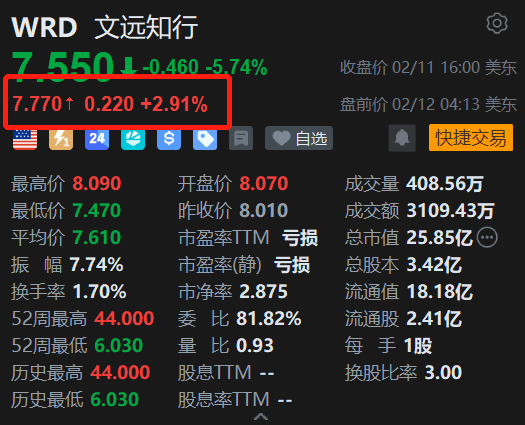
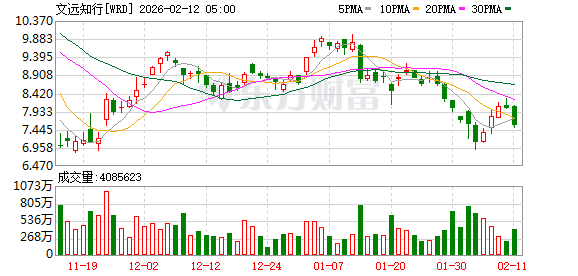
Core Insights - The key point of the news is that WeRide (WRD.US) has officially launched its first Robotaxi commercial operation service in downtown Abu Dhabi in partnership with Uber, marking the first deployment of autonomous vehicles in the city center [1] Group 1: Company Developments - WeRide's stock price increased by 2.9% to $7.71 in pre-market trading following the announcement of the Robotaxi service launch [1] - The Robotaxi service now covers approximately 70% of the core areas in downtown Abu Dhabi, indicating significant expansion in operational reach [1] - Since the commencement of the Robotaxi commercial operation in December 2024, the fleet size of the partnership has quadrupled, showcasing rapid growth in service capacity [1] Group 2: Market Performance - The closing price of WeRide on February 11 was $7.55, with a pre-market price of $7.77 on February 12 [2] - The stock experienced a trading volume of 4.0856 million shares, with a price range between $7.47 and $8.09 [2] - WeRide's total market capitalization stands at $2.585 billion, with a total share count of 342 million [2]


Robotaxi首次开进阿布扎比市中心 文远知行携手Uber再拓商业运营版图
Zheng Quan Ri Bao Wang· 2026-02-12 08:46
Core Insights - WeRide and Uber have officially launched the first Robotaxi commercial operation service in downtown Abu Dhabi, marking the deployment of autonomous vehicles in the area [1] - The Robotaxi service now covers approximately 70% of Abu Dhabi's core areas, with the fleet size increasing fourfold since the service began in December 2024 [1] - The expansion of the Robotaxi service is expected to enhance urban connectivity and convenience, supporting the UAE's vision for smart mobility [1] Company Developments - WeRide and Uber plan to scale their Robotaxi fleet in the Middle East to thousands of vehicles in the coming years, with a commitment to deploy at least 1,200 Robotaxis by 2027 across Abu Dhabi, Dubai, and Riyadh [2] - The first L4 level fully autonomous Robotaxi commercial operation in the Middle East was launched on Yas Island, Abu Dhabi, in November 2025, following the acquisition of a city-level operational permit for fully autonomous Robotaxis [2]

商业化落地提速!文远知行获麦格理首评“跑赢大市”,目标价46港元
Jin Tou Wang· 2026-02-12 07:33
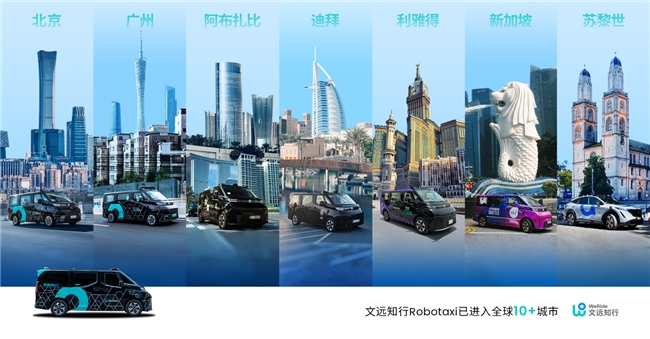
Core Viewpoint - Macquarie has initiated coverage on WeRide (WRD.US, 0800.HK) with an "Outperform" rating, setting target prices of HKD 46 for its Hong Kong stock and USD 17.5 for its U.S. stock, recognizing the company's core competitiveness and growth potential in the global autonomous driving sector [1] Group 1 - WeRide's core advantages lie in its diversified L4 autonomous driving product matrix and strong strategic partnerships, positioning it favorably in building a scalable and global autonomous driving service network [1] - The company is the only tech firm globally to hold autonomous driving licenses in eight countries, including China, UAE, and Singapore, and has developed a comprehensive product matrix that includes autonomous taxis, minibuses, freight vehicles, sanitation vehicles, and L2 driver assistance systems [1] - WeRide's global layout is supported by its extensive application scenarios in smart mobility, smart freight, and smart sanitation, establishing a solid foundation for its international expansion [1] Group 2 - WeRide's recent overseas expansion efforts have gained momentum, with a partnership with Uber announced on February 6 to deploy at least 1,200 Robotaxis in the Middle East by 2027, covering key markets such as Abu Dhabi, Dubai, and Riyadh [2] - WeRide has a four-year first-mover advantage in Abu Dhabi, where its Robotaxi fleet is nearing single-vehicle breakeven and has initiated fully autonomous commercial operations, becoming a benchmark in the Middle East's autonomous driving sector [2] Group 3 - As of January 12, 2026, WeRide's global Robotaxi fleet has reached 1,023 vehicles, operating in over ten major cities worldwide, with successful fully autonomous commercial operations launched in Guangzhou, Beijing, and Abu Dhabi [5] - WeRide is the first autonomous driving tech company to be dual-listed on both U.S. and Hong Kong stock exchanges, gradually realizing its commercial value through proprietary technology, diverse product offerings, and global expansion, gaining significant attention and recognition from the capital markets [5]
文远知行:与优步正式启动阿布扎比市中心首个Robotaxi商业运营服务
Mei Ri Jing Ji Xin Wen· 2026-02-12 06:42
Core Insights - The collaboration between WeRide and Uber has officially launched the first Robotaxi commercial operation service in downtown Abu Dhabi, marking the deployment of autonomous vehicles in the area [2] - The Robotaxi service now covers approximately 70% of the core areas in downtown Abu Dhabi, indicating significant expansion in operational reach [2] - Since the commencement of the Robotaxi commercial operation in December 2024, the fleet size of the partnership has increased fourfold, showcasing rapid growth in service capacity [2]
Robotaxi首次开进阿布扎比市中心!文远知行携手Uber再拓商业运营版图
Ge Long Hui· 2026-02-12 06:25
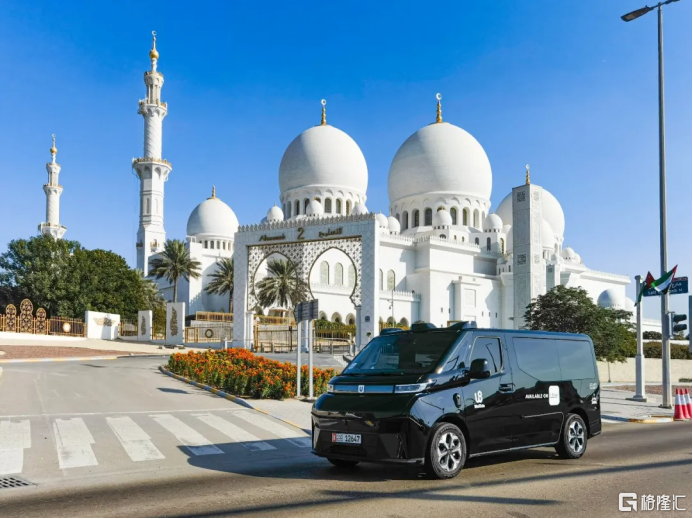
Core Insights - WeRide and Uber have officially launched the first Robotaxi commercial operation service in downtown Abu Dhabi, marking the deployment of autonomous vehicles in the city center [1] - The Robotaxi service now covers approximately 70% of Abu Dhabi's core areas, with a fourfold increase in fleet size since the service began in December 2024 [1] Group 1: Service Expansion - The Robotaxi service area has been extended to include Khalifa City, Masdar City, Rabdan, and the Corniche Road area leading to the Sheikh Zayed Grand Mosque, connecting key landmarks and popular hotels [2] - The service aims to enhance urban connectivity and convenience in Abu Dhabi, supporting the UAE's vision for smart mobility [4] Group 2: Operational Details - Passengers can access the WeRide Robotaxi GXR through Uber Comfort or Uber X options, with a dedicated "Autonomous" category available in the Uber app [4] - Currently, each Robotaxi is equipped with a safety operator, with plans to transition to fully autonomous operation in phases [4] Group 3: Market Position and Future Plans - WeRide has deployed over 200 Robotaxis in the Middle East and plans to expand the fleet to thousands in the coming years [5][6] - By February 2026, WeRide and Uber aim to deploy at least 1,200 Robotaxis across Abu Dhabi, Dubai, and Riyadh [6] - WeRide has maintained a competitive edge in Abu Dhabi since 2021 and became the first company in the UAE to obtain a national-level autonomous driving license in 2023 [8]
希迪智驾(03881):投资价值分析报告:深耕矿野无人境,智启商用车新征程
EBSCN· 2026-02-12 04:43
Investment Rating - The report initiates coverage on Xidi Zhijia (3881.HK) with a "Buy" rating [3][13]. Core Insights - Xidi Zhijia is positioned as a leading provider of autonomous driving technology and solutions for commercial vehicles, focusing on mining trucks and logistics vehicles. The company is one of the first in China to achieve "no safety personnel normal operation" for autonomous mining trucks and logistics vehicles [1][20]. - The market for autonomous mining truck solutions in China is projected to reach CNY 1.9 billion by 2024, with a total potential market size of CNY 550 billion. The market is expected to grow to CNY 39.6 billion by 2030, with a CAGR of 65.3% from 2024 to 2030 [2][39]. - Xidi Zhijia has three core advantages: technological differentiation, strong scene integration capabilities, and rapid commercialization, which are expected to solidify its leading position in the industry [3][34]. Summary by Sections Company Overview - Established in 2017, Xidi Zhijia focuses on autonomous driving technology for commercial vehicles, particularly in mining and logistics. The company has developed the world's largest mixed fleet of autonomous mining trucks without safety personnel [1][20]. Market Potential - The autonomous mining truck market is anticipated to expand significantly, driven by increasing demand for intelligent mining solutions and the maturity of technology. The penetration rate of autonomous mining trucks in mining transportation is expected to rise, enhancing market size and commercialization [2][39]. Business Model and Revenue - Xidi Zhijia's core business includes three segments: autonomous driving, V2X solutions, and intelligent perception. The autonomous driving segment accounted for 92.7% of revenue in the first half of 2025, primarily due to the commercialization of mining trucks [33][34]. Financial Projections - Revenue forecasts indicate a significant increase, with expected revenues of CNY 978 million in 2025, CNY 1.98 billion in 2026, and CNY 3.46 billion in 2027. The company is projected to achieve Non-IFRS net profits of CNY 0.75 million in 2026 and CNY 3.57 million in 2027 [4][13]. Competitive Landscape - Xidi Zhijia is distinguished from competitors by its product-driven model, which mitigates operational risks and enhances product development efficiency. The company is expected to maintain a competitive edge through superior technology and integration capabilities [10][11]. Catalysts for Growth - Short-term catalysts include the company's inclusion in the Hong Kong Stock Connect, acquisition of new orders for autonomous mining trucks, and progress in partnerships with OEMs. Long-term catalysts involve increased penetration of autonomous mining trucks and expansion into overseas markets [12][13].
小马智行被纳入MSCI中国指数|公司头条
Sou Hu Cai Jing· 2026-02-12 03:28
Group 1 - The core point of the article is that Xiaoma Zhixing has been included in the MSCI China Index, becoming the first and only autonomous driving company in this index, reflecting the recognition of its business model and long-term value by the international mainstream capital market [1][3] Group 2 - The MSCI China Index is considered an important reference for global investment institutions to allocate Chinese assets, with over $100 billion in funds tracking this index [3] - Xiaoma Zhixing was included in the index just three months after its Hong Kong IPO, providing a significant foundation for establishing long-term connections with the international capital market and attracting passive funds that track the MSCI index [3] - The founder and CEO of Xiaoma Zhixing, Peng Jun, stated that the Robotaxi industry has entered a new stage of large-scale production and commercialization, and the company is further solidifying its operational capabilities and capital efficiency [3] - As of December 31 of the previous year, Xiaoma Zhixing's Robotaxi fleet has expanded to 1,159 vehicles, exceeding its annual target, and the company announced the rollout of its first mass-produced Platinum Smart 4X Robotaxi, marking a significant breakthrough in large-scale deployment and operational capabilities [3]
小马智行被纳入MSCI中国指数,成为该指数中首家且唯一的自动驾驶公司
Jing Ji Guan Cha Wang· 2026-02-12 02:45
Group 1 - The core point of the article is that Xiaoma Zhixing has been included in the MSCI China Index, becoming the first and only autonomous driving company in this index [1] - The inclusion in the MSCI China Index is expected to improve liquidity and reflects the company's recognition in terms of growth potential, stability, and industry representation by mainstream capital markets [1] - Xiaoma Zhixing has completed a dual primary listing on NASDAQ and the Hong Kong Stock Exchange and is accelerating the scale operation of its Robotaxi service [1] Group 2 - As of December 31, 2025, the company aims to have a Robotaxi fleet size of 1,159 vehicles and is working towards achieving a positive unit economic model for its seventh-generation Robotaxi in Guangzhou [1]
小马智行与摩尔线程战略合作,股价上涨,MSCI纳入提振市场信心
Jing Ji Guan Cha Wang· 2026-02-11 22:41
Group 1 - The core viewpoint of the news highlights the strategic partnership between Xiaoma Zhixing and the domestic GPU company Moore Threads, aimed at enhancing L4 autonomous driving technology through the application of domestic AI computing power [1] - Xiaoma Zhixing's stock price has shown an upward trend, with a 9.42% increase over the past week, reaching a peak of 119.60 HKD on February 11, 2026, following the announcement of the strategic cooperation [2] - The company anticipates a significant reduction in annual losses for 2025, projecting a loss of 69 million to 86 million USD, a decrease of 68.7% to 74.9% compared to the previous year, primarily due to increased fair value gains from investments [3] Group 2 - Zhongyou Securities reported that Xiaoma Zhixing is a leader in smart driving, with its Robotaxi commercialization path showing initial validation, supported by a light-asset model and cost optimization [4] - The report forecasts revenues for Xiaoma Zhixing to be 81.92 million, 122 million, and 236 million USD for the years 2025 to 2027, although net profits are expected to remain negative during this period [4]
文远知行获多家机构看好但股价疲软,行业竞争与盈利担忧成主因
Jing Ji Guan Cha Wang· 2026-02-11 18:38
Core Viewpoint - The company has received positive ratings from multiple institutions, but its stock performance remains weak due to concerns over market liquidity, industry competition, and profitability outlook [1]. Institutional Opinions - Macquarie initiated coverage with an "Outperform" rating, optimistic about the company's overseas light-asset model and Middle East Robotaxi deployment plan [2]. - JPMorgan reiterated a "Buy" rating but noted that the stock has underperformed relevant indices this year, with market concerns regarding competition in the Robotaxi sector [2]. - China International Capital Corporation maintained a "Buy" rating, forecasting over 70% quarter-on-quarter revenue growth by Q4 2025, but believes the stock price does not fully reflect this expectation [2]. Recent Stock Performance - Despite favorable ratings, the company's stock has declined in both US and Hong Kong markets, indicating low liquidity. Year-to-date, the stock has seen significant declines, reflecting cautious investor sentiment towards the high-valuation autonomous driving sector [3]. Industry and Risk Analysis - The Robotaxi sector is highly competitive, and the company is still in a loss-making phase, leading the market to focus more on short-term profitability validation [4]. - The commercialization of Level 4 autonomous driving is still in its early stages, with uncertainties in policy and technological advancements potentially suppressing valuations [4]. Reasons for Stock Price Fluctuations - Recent positive developments, such as partnerships with Uber and integration with Alipay, have been priced in, leading some investors to take profits after a short-term price increase [5]. Future Development - Institutions generally recognize the company's technological advantages and global expansion plans, but the market is more concerned about its profitability timeline. Although there has been progress towards breakeven in the Middle East operations, investors remain worried about cash flow pressures from expansion [6].