电池制造

Search documents
安孚科技:聘任刘剑波为公司财务总监
Mei Ri Jing Ji Xin Wen· 2025-09-01 02:31
Group 1 - Anfu Technology announced the resignation of its Chief Financial Officer, Ye Lianwu, due to reaching the statutory retirement age, and he will not hold any other positions after resignation [1] - Liu Jianbo has been appointed as the new Chief Financial Officer, with his term lasting until the current board's term expires [1] - For the year 2024, Anfu Technology's revenue composition is as follows: battery manufacturing sales account for 89.24%, agency business accounts for 10.62%, and other businesses account for 0.14% [1] Group 2 - Other companies mentioned include Nongshang Environment, which saw the resignation of its Chief Financial Officer, Wang Xiaojun [2] - Wanbangde appointed Jin Zheng as its Chief Financial Officer [2] - *ST Baoshi appointed Li Li as its Chief Financial Officer [2]

固态电池设备详解与现状分析
2025-09-01 02:01
固态电池设备详解与现状分析 20250831 摘要 全固态电池生产线价值量高昂,单 G 瓦时规模化后预计价值 5 亿以上, 目前前段工序(干粉混合、制膜)占比 35%,中段(叠片、等静压)占 比 30%,后段(化成分容、检测封装)占比 30%。 干法工艺成本优势显著,无需溶剂和烘干,更适配硫化物全固态电池, 但干粉混合均匀性和滚压速度是技术难点。湿法工艺成熟稳定,但溶剂 残留可能影响能量密度和导电性能。 干法固态电池生产核心设备包括干粉混合机(确保均匀性)、高精密滚 压机(电极膜压实)、高速涂布机和叠片机(控制张力)、等静压机 (稳定界面)。 半固态电池市场已初步应用,青草、未来、泰兰等非上市公司订单量较 大,宁德时代等传统厂商也有新产品推出。全固态电池仍处于中试阶段, 赣锋锂业等公司积极开发,订单量较小。 固态电池设备公司竞争激烈,先导智能在终端表现突出,丽源亨专注于 叠片机,海木星在激光和叠片方面有突破,航可科技在后端真空注液及 高压三化成方面有优势。 Q&A 未来全固态产业进展及趋势如何? 当前行业仍处于探索阶段,两条路线(湿法、干法)并行发展,没有终极路线 确定。从长远来看,干法因其降本增效、更适用于 ...
【私募调研记录】保银投资调研博力威
Zheng Quan Zhi Xing· 2025-09-01 00:08
Core Insights - The company BoLiWei is experiencing growth in both revenue and net profit for the first half of 2025, driven by its rapid entry into the electric two-wheeler battery swap market and successful partnerships with leading clients in the shared battery swap sector [1] - The recovery of the European market has further boosted the company's electric two-wheeler shipment volumes, while its North American energy storage business has also seen increased shipments [1] - The company has achieved full production capacity for its large cylindrical battery cells, with an 80% self-use ratio, and is advancing its semi-solid/solid battery technology towards industrial application [1] - The global battery swap service market for two-wheelers is projected to reach 107.48 billion yuan by 2031, with a compound annual growth rate (CAGR) of 17.1% over the next few years [1] Company Developments - BoLiWei has successfully built and commenced operations at its factory in Indonesia, focusing on local supply chain development and is about to obtain its first certificate of origin [1] - The company aims to become a leading player in the niche market of two-wheeler battery swapping, capitalizing on the growth opportunities in this sector [1]

天能动力(00819.HK):非经/利息收入减少减薄业绩 主营业务盈利改善较显著
Ge Long Hui· 2025-08-31 19:23
Core Viewpoint - The company's 1H25 performance fell short of expectations, with significant declines in revenue and challenges in the trade business, while lithium battery operations showed growth and reduced losses [1][2]. Group 1: Financial Performance - The company reported 1H25 revenue of 24.19 billion yuan, a year-on-year decrease of 51.5% and a quarter-on-quarter decrease of 9.6% [1]. - The net profit attributable to shareholders for 1H25 was 820 million yuan, down 11.7% year-on-year but up 282.7% quarter-on-quarter [1]. - The decline in revenue was attributed to a contraction in trade business scale and reduced demand in the aftermarket, alongside decreased government subsidies and interest income [1]. Group 2: Business Segments - The lead-acid battery segment saw a slight year-on-year decline in shipments in 1H25, with a significant improvement in gross margin, estimated at 14.5-15%, up 1.5-2 percentage points year-on-year [1]. - The company shipped 53.5-54 GWh of lead-acid batteries in 1H25, representing a year-on-year decrease of 4.5-5%, generating revenue of approximately 18.29 billion yuan, down about 5% [1]. - The lithium battery business achieved revenue of 501 million yuan in 1H25, a year-on-year increase of 174.6%, driven by increased demand in the domestic and U.S. markets [2]. Group 3: Future Outlook - The company has adjusted its revenue forecasts for 2025 and 2026 down by 30% and 28% to 61.21 billion yuan and 65.51 billion yuan, respectively, due to a slower-than-expected recovery in the aftermarket and fluctuations in non-operating income [2]. - Net profit forecasts for 2025 and 2026 have been reduced by 17% to 18.03 billion yuan and 21.57 billion yuan, respectively [2]. - Despite the challenges, the company maintains a positive outlook on its market position in the two-wheeler segment and the potential for growth in lithium battery operations, with a target price of 8.5 HKD per share [2].
上汽MG4半固态电池版,定价9.98万元
DT新材料· 2025-08-31 16:04
Core Viewpoint - SAIC Group is aggressively implementing a pricing strategy to accelerate the commercialization of its semi-solid-state battery technology, supported by a recent equity structure adjustment in its battery joint venture [2][3]. Group 1: Pricing Strategy and Product Launch - SAIC Group announced the pricing of its new MG4 model at 99,800 RMB for the semi-solid-state battery version after limited-time subsidies, significantly lower than market expectations for similar new technologies [2]. - The battery supplier for this model is the joint venture SAIC Qingtao, established with solid-state battery technology company Qingtao Energy [2]. Group 2: Equity Structure Adjustment - Two days prior to the pricing announcement, SAIC Group's subsidiary Huayu Automotive announced the acquisition of 49% of SAIC Qingtao from its parent company for 206 million RMB, changing the shareholder identity from a complete vehicle manufacturer to a parts supplier [2][3]. - This adjustment is seen as a key step in SAIC's strategy to neutralize its battery supply chain, allowing SAIC Qingtao to better attract external customers without concerns related to its "SAIC system" identity [3]. Group 3: Investment and Production Plans - SAIC Group and its investment funds have invested over 2.9 billion RMB in Qingtao Energy, making it the largest industrial investor with approximately 15.29% ownership [3]. - Qingtao Energy plans to establish its first full solid-state battery production line by the end of 2025, with an initial capacity of 0.5 GWh, indicating a steady transition from semi-solid to full solid-state technology [3]. Group 4: Market Expansion and Competitiveness - Qingtao Energy is expanding its customer base, supplying semi-solid-state batteries to companies like Nanjing Iveco and Beiqi Foton for commercial vehicles [3]. - The company is also extending its reach into upstream raw materials and downstream energy storage markets, with a 50,000-ton solid-state battery material project entering trial production and a recent contract for a large energy storage project valued at 440 million RMB [4].


国内已现“月销万辆”大圆柱车型
高工锂电· 2025-08-31 11:04
Core Viewpoint - The company, Zhongchuang Xinhang, has significantly enhanced its profitability, with a revenue increase of 31.7% to 16.419 billion RMB and a profit surge of 80.4% to 753 million RMB, indicating strong cost control and growth amidst industry competition [3]. Group 1: Financial Performance - Revenue increased by 31.7% to 16.419 billion RMB, while profit rose by 80.4% to 753 million RMB, reflecting effective cost management [3]. - Gross margin improved by nearly 2 percentage points to 17.5% quarter-on-quarter, showcasing the company's operational efficiency [3]. Group 2: Key Products and Market Position - The company's key products, the large cylindrical battery and the 5C ultra-fast charging battery, are driving scale effects and technological benefits [4]. - Zhongchuang Xinhang has achieved mass production of the high-power lithium iron phosphate R46 large cylindrical battery, primarily serving major clients like Geely and Dongfeng [4]. - Geely's sales data supports the order scale for Zhongchuang Xinhang's large cylindrical batteries, with the Galaxy Xingyao 8 model achieving sales of 10,187 units in May alone [5][6]. - The collaboration with Geely is stabilizing, with cumulative orders for the Galaxy A7 model exceeding 30,000 units since its launch [6]. Group 3: Technological Advancements - The company has successfully mass-produced high-nickel 46 large cylindrical cells with an energy density of 310 Wh/kg for a leading eVTOL client [6]. - The 800V 5C ultra-fast charging battery has been exclusively supplied to XPeng Motors for their new P7 model, allowing for rapid charging from 10% to 80% in just 12 minutes [6]. - The 5C ultra-fast charging technology has been applied to various XPeng models, establishing a competitive edge in the mainstream market [6]. Group 4: Market Expansion and Share - In the pure electric sector, the company has achieved monthly sales exceeding 20,000 units for its 5C ultra-fast charging batteries [7]. - Zhongchuang Xinhang has entered the supply chains of major global automakers, including Volkswagen, Hyundai, and Toyota, with a significant 30 GWh supply contract signed with Hyundai [7]. - The company's domestic market share reached a record high of 8.25% in July, indicating a clear "release of technological dividends" [8].

双登股份发布中期业绩,收入22.46亿元,同比增加26.21%
Zhi Tong Cai Jing· 2025-08-31 10:50
Group 1 - The company reported a revenue of 2.246 billion yuan for the six months ending June 30, 2025, representing a year-on-year increase of 26.21% [1] - The profit attributable to the parent company was 161 million yuan, with basic earnings per share of 0.45 yuan and a gross profit of 336 million yuan, which increased by 0.43% year-on-year [1] - The lead-acid battery business experienced a revenue growth of 40% year-on-year, driven by the rapid growth of the AIDC data center market [1] Group 2 - The company possesses significant advantages in technology, customer base, and market share in the AIDC data center energy storage sector, allowing it to benefit from industry growth trends [1] - The continuous introduction of new products in lithium and sodium battery technologies will enhance the company's product line, better meet diverse customer needs, and improve market competitiveness and product added value [2] - The ongoing development of new technologies is expected to translate into actual productivity and economic benefits, supporting the company's business growth and optimizing its profit structure [2]
技工强省这几年|王绪彪:高技能人才为新能源产业注入“硬核”动力
Sou Hu Cai Jing· 2025-08-31 01:38
人民网记者 李希蒙 技能人才对于企业发展有多重要? 除了人才规模的快速扩充,"技工强省"建设还帮助企业优化了人才结构,提高了员工稳定性。 "过去,企业技能人才队伍中存在中级占比高、高级技能人才短缺的'橄榄型'问题。如今,在政府培训补贴、技能等级认定等政策的支持下,企业能够大力 推动员工参加各类等级培训项目。"王绪彪介绍说,仅2024年公司就组织超3000人参加"电池制造工"职业技能等级认定,通过率超70%。随着高技能人才占 比稳步提升,队伍结构逐渐健康化、金字塔化。 结合"尊重技能、崇尚工匠"的社会氛围,企业推出技能津贴、项目激励和职业发展双通道,让技能人留得住、有奔头。目前,国轩高科已实现核心技能人 才"零流失",有力保障了工艺传承和项目运行的连续性。 不仅如此,政府还通过培训补贴、税收优惠等方式切实减轻了企业的育才负担。对符合政策要求的培训项目,可按不同技能等级申请每人数百至数千元的补 贴,这让企业更有底气加大投入。此外,政府支持企业自主开展技能人才评价,国轩高科借此制定了覆盖电池制造全流程的11个工种评价标准,使人才遴选 更贴近生产实际,大幅提升了人岗匹配效率。 创新能力的提升,则是"技工强省"建设带来 ...

国轩高科营收利润双增,拟80亿加码电池产能
2 1 Shi Ji Jing Ji Bao Dao· 2025-08-30 13:59
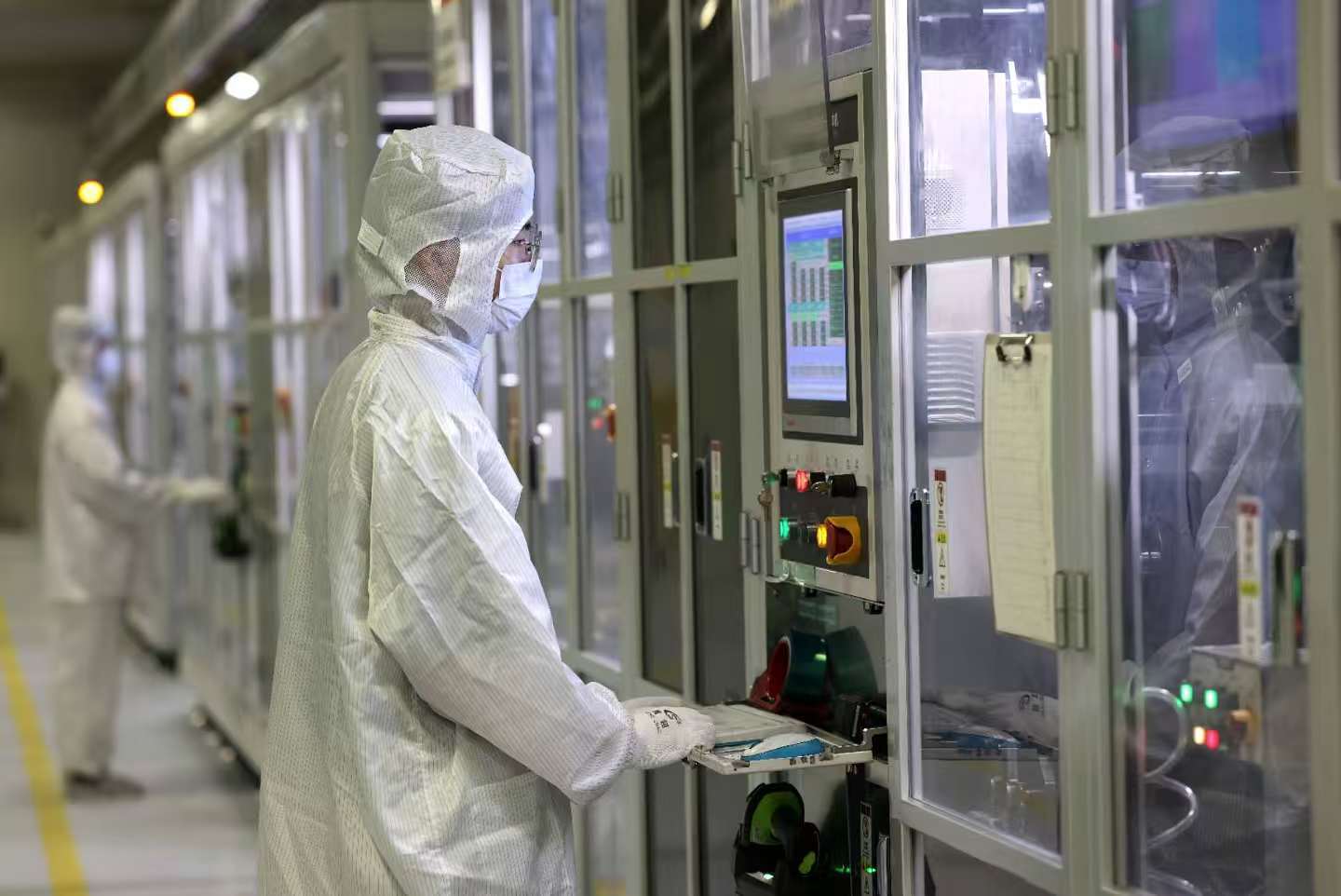
Core Viewpoint - Guoxuan High-Tech (002074.SZ) reported significant growth in both net profit and operating cash flow for the first half of 2025, with a notable increase in revenue and market share in the power battery sector [1][3]. Financial Performance - The company achieved operating revenue of 19.394 billion yuan, a year-on-year increase of 15.48% [1]. - Net profit attributable to shareholders reached 367 million yuan, up 35.22% year-on-year, while the non-recurring net profit was 72.87 million yuan, growing by 48.53% [1]. Market Position - Guoxuan High-Tech's global market share for power battery installations rose to 3.6%, with domestic market share increasing to 5.18%, ranking fourth in the industry [1][3]. - The gap with the third-ranked company, Zhongxin Hang, has narrowed to less than 1.5 percentage points [3]. Business Segments - Power battery revenue was 14.034 billion yuan, reflecting a year-on-year growth of 19.94% [3]. - Energy storage battery revenue reached 4.562 billion yuan, with a year-on-year increase of 5.14% [3]. R&D and Production Capacity - The company invested 1.382 billion yuan in R&D during the first half of 2025, a 13.34% increase from the previous year [5]. - Guoxuan High-Tech is advancing its solid-state battery technology, with plans for a 2GWh production line and a 12GWh quasi-solid-state battery production line [1][6]. Investment Plans - The company announced plans to invest up to 4 billion yuan in two new battery manufacturing bases, one in Nanjing and another in Wuhu, each with a capacity of 20GWh [2]. Strategic Initiatives - Guoxuan High-Tech is exploring the small power battery sector, aiming to tap into a market with significant growth potential [4].
重卡电池15分钟完成补能 欣旺达超充领域再创重要成果!
第一商用车网· 2025-08-30 13:21
Core Viewpoint - XWANDA is making significant strides in the commercial vehicle new energy sector through deep collaborations with well-known enterprises, aiming to promote the adoption and technological innovation of ultra-fast charging heavy trucks [1][3]. Group 1: Market Trends and Challenges - The sales volume of electric heavy trucks in China increased by 186% year-on-year in the first half of 2025, with a penetration rate exceeding 20% for four consecutive months, indicating a new stage in the industry [3]. - Current challenges include low fast-charging efficiency and an inadequate charging network, which hinder the transition of electric heavy trucks from closed to open scenarios, posing a bottleneck for comprehensive logistics electrification [3][6]. Group 2: Technological Advancements - The megawatt ultra-fast charging technology addresses the issues of range anxiety for electric heavy truck users and reduces logistics costs, showcasing significant economic, industrial, and social value [3]. - XWANDA has successfully developed the world's first megawatt-level ultra-fast charging battery specifically designed for heavy trucks, achieving a fourfold increase in charging efficiency, comparable to refueling speed [6][8]. Group 3: Strategic Collaborations and Market Position - XWANDA's collaboration with industry giants like XCMG to promote the deployment of megawatt ultra-fast charging heavy trucks demonstrates its market strength and commitment to expanding the coverage of electric heavy trucks across various logistics scenarios [8][17]. - The company has successfully delivered 180 million high-rate hybrid batteries, showcasing its market share and technological prowess [5]. Group 4: Economic Benefits and User Engagement - A detailed cost analysis presented at a recent conference highlighted the significant reduction in annual operating costs for ultra-fast charging heavy trucks compared to traditional fuel vehicles [12]. - Key technical indicators of XWANDA's ultra-fast charging battery include the ability to charge 80% in 15 minutes and maintain performance in extreme cold conditions, providing tangible economic value to drivers [13]. Group 5: Financial Support and Future Outlook - Financial support is crucial for the construction of the ultra-fast charging network, with XWANDA actively participating in investments related to charging stations and energy storage through various leasing products [15]. - The rise of XWANDA and the megawatt ultra-fast charging ecosystem reflects China's dual carbon goals and signifies a leap in new energy technology, with the company poised to accelerate its strategic resource integration in the future [17].