
现代服务业

Search documents
优化“零关税”政策加速产业集聚海南自贸港释放竞争优势
Zheng Quan Shi Bao· 2025-08-01 17:44
Group 1 - The core viewpoint of the news is the significant optimization of the "zero tariff" policy in Hainan Free Trade Port, which will cover approximately 6,600 tax items, accounting for 74% of all product tax items, benefiting various enterprises and institutions across the island [1][2] - The optimization of the "zero tariff" policy is expected to lower production and operational costs for local enterprises, enhance industrial added value, and accelerate the formation of high-end manufacturing and modern service industry ecosystems [1][3] - The expansion of the "zero tariff" product list will reduce raw material costs for registered enterprises and encourage deeper processing activities, thus improving profitability [2][3] Group 2 - The optimized processing value-added policy will drive the industrial chain towards higher value-added segments, particularly benefiting industries reliant on imported raw materials, such as biomedicine and medical devices [3][4] - The unique tax arrangements in Hainan are designed to create a hub for small and medium-sized enterprises, fostering a high-end manufacturing and modern service industry ecosystem [4][5] - The "zero tariff" policy aims to enhance the competitiveness and attractiveness of Hainan's leading industries, promoting the extension of industrial and supply chains [4][7] Group 3 - Hainan Free Trade Port is positioned as a key platform for deepening economic cooperation with ASEAN countries, leveraging its location within the Regional Comprehensive Economic Partnership (RCEP) [5][6] - There are still gaps compared to international high-standard free trade zones, such as those in Dubai and Singapore, particularly in terms of trade liberalization and financial openness [7][8] - To strengthen international competitiveness, Hainan Free Trade Port needs to enhance financial openness and explore innovative tax policies for service trade [7][8]
国家发改委:坚决制止新兴领域盲目跟风、一哄而上、一哄而散
Sou Hu Cai Jing· 2025-08-01 05:47
Group 1: Investment and Economic Measures - The National Development and Reform Commission (NDRC) has fully allocated the 800 billion yuan "two heavy" construction project list, with 735 billion yuan of central budget investment also largely disbursed [1] - A fourth batch of 690 billion yuan for consumer goods replacement will be allocated in October, completing the annual plan of 300 billion yuan [2] - The NDRC aims to enhance domestic demand and support new consumption development while preventing blind following and excessive competition in emerging sectors [3][4] Group 2: Policy Implementation and Economic Monitoring - The NDRC plans to maintain policy continuity and stability while enhancing flexibility and foresight to stabilize the economy and employment [4] - The NDRC will conduct regular economic monitoring and policy research to ensure timely responses to actual needs [4] - The NDRC is focused on optimizing the artificial intelligence ecosystem and promoting its large-scale commercial application [5][6] Group 3: Logistics and Trade - The logistics cost as a percentage of GDP has decreased to 14%, achieving the lowest level since records began, saving over 130 billion yuan in logistics costs [7] - Trade cooperation with Belt and Road Initiative countries has seen a 4.7% increase in imports and exports, totaling 11.29 trillion yuan in the first half of the year [9] Group 4: Infrastructure and Energy - The highest cross-regional electricity transmission reached 148 million kilowatts, marking a new historical high [10] - The NDRC is working on a plan to deepen the construction of a unified national market, with inter-provincial trade sales accounting for 40.4% of total sales revenue [11][12] Group 5: Market Regulation and Competition - The NDRC is committed to regulating disorderly competition among enterprises and will implement measures to clean up market access barriers [13][15] - The NDRC plans to accelerate the implementation of significant reform measures to enhance economic stability and consumer confidence [15] Group 6: Consumer Services and Economic Growth - The NDRC will focus on enhancing consumer capacity and promoting service consumption in areas such as culture, tourism, and healthcare [16] - The NDRC aims to foster a positive cycle of consumption and investment by improving infrastructure and promoting domestic products [16]
市政府党组传达学习市委全会精神
Hang Zhou Ri Bao· 2025-08-01 02:26
Group 1 - The meeting emphasized the significance of building a higher-level innovative and vibrant city, focusing on the deep integration of technological and industrial innovation [1][2] - The government plans to support collaboration between universities and enterprises in Hangzhou, enhancing the growth mechanism for technological innovation investment [2] - The construction of an artificial intelligence innovation hub is prioritized, aiming to leverage Hangzhou's advantages and make AI a key driver for the city's development [2] Group 2 - The meeting outlined four key areas for the second half of the year: expanding domestic demand, stabilizing foreign trade, creating a model city for common prosperity, and balancing high-quality development with safety [2] - The government aims to promote advanced manufacturing and modern service industries, as well as accelerate the development of the cultural industry to gain more initiative in high-quality development [2]
海口江东新区上半年投资类项目签约70亿元
Hai Nan Ri Bao· 2025-08-01 01:36
Group 1 - The core achievement of Haikou Jiangdong New District in the first half of the year includes a signed investment project amounting to 7 billion yuan, ranking first in the city, with actual foreign investment exceeding 1.3 billion yuan and 35 key projects successfully landed [1][2] - Jiangdong New District is leveraging its advantages in business-to-business investment attraction to inject "fresh water" into the region's economic high-quality development [2] - The establishment of four specialized committees within the Jiangdong Enterprise Federation aims to attract new members and promote the gathering of upstream and downstream industries through high-quality activities [2] Group 2 - Jiangdong New District is committed to optimizing its business environment by enhancing "soft power," strengthening policy support as "hard support," and improving the industrial ecosystem [2] - The district provides a full-process "concierge-style" service to facilitate enterprise negotiations and project landing, demonstrating sincere commitment to businesses [2] - Jiangdong New District aims to create a highland for investment and business development, ensuring that every enterprise can attract, retain, and thrive [2]
海南自贸港为何不会取代香港、上海、广深
Jing Ji Guan Cha Wang· 2025-07-29 09:44
Core Viewpoint - The Hainan Free Trade Port will officially start its full island closure operation on December 18, 2025, marking a significant milestone in China's highest level of openness in free trade zone construction [1] Group 1: Historical Context and Economic Development - Hainan was established as a province in 1988, separating from Guangdong, and has struggled to surpass the national average GDP per capita, with figures at 75.38% of the national average in 2019 and 79.31% in 2023 [1] - The strategic decision to build a free trade port was made in 2018, coinciding with the 30th anniversary of Hainan's establishment as a province, giving it a new mission [1] Group 2: Strategic Advantages - Hainan's geographical advantages include proximity to Guangdong and Hong Kong, as well as access to ASEAN markets, covering a consumer base of 2.1 billion people [2] - The island's unique geographical characteristics facilitate the implementation of bonded policies and customs supervision, making it an ideal location for a free trade port [2] Group 3: Economic Transformation - Hainan has diversified its economy beyond tourism and agriculture, developing four pillar industries: tourism, modern services, high-tech industries, and tropical agriculture, which now contribute 67% of the province's GDP [4][5] - The province has seen significant growth in specific sectors, such as the marine industry growing at an annual rate of 13.9% and the offshore duty-free shopping market capturing 8% of the global market share [5] Group 4: Foreign Investment and Talent Attraction - Over the past five years, Hainan has attracted $9.78 billion in foreign investment, with an annual growth rate of 97%, and established 8,098 new foreign enterprises [6] - The province's population has increased by 530,000 over the past five years, aided by improved ecological conditions and tax incentives, leading to a significant rise in high-level talent [6] Group 5: Regional Cooperation - Hainan's development will not undermine the advantages of cities like Hong Kong and Shanghai but will create synergistic effects, with a focus on complementary strengths and mutual benefits [7] - The "Golden Triangle" cooperation framework among Hainan, Guangdong, and Hong Kong aims to leverage Hainan's policies, Guangdong's industry, and Hong Kong's services for regional development [7] Group 6: Future Outlook - Hainan is positioned as a leader in China's high-level opening-up strategy, expected to drive deep reforms and optimize the business environment [9] - The free trade port is seen as a testing ground for various market entities, providing a platform for shared reform dividends and high-quality development [9]
滨州:上半年交出了“产城人”深度融合的优异答卷
Zhong Guo Fa Zhan Wang· 2025-07-29 07:01
Core Viewpoint - Shandong Province's Binzhou City is advancing a people-centered new urbanization strategy, aiming for high-quality urbanization development by 2025, focusing on key areas and breakthroughs in the integration of industry, city, and population [1] Group 1: Development Achievements - The integration of industry and city is deepening, with a GDP growth of 6.1%, surpassing the provincial average by 0.5 percentage points, ranking fourth in the province [2] - The per capita disposable income for residents reached 20,743 yuan, with a growth rate of 5.8%, the highest in the province [2] - Urban residents' per capita disposable income was 25,098 yuan, growing by 5.2%, while rural residents' income was 14,789 yuan, with a growth of 6.1%, narrowing the urban-rural income gap to 1.7 [2] - A total of 20,216 new urban jobs were created, significantly enhancing population agglomeration effects [2] Group 2: Urban and Rural Quality Improvement - Significant progress in urban renewal, with 220 million square meters of new green buildings and 34 old community renovation projects initiated [3] - The rural land transfer rate reached 64.3%, and county logistics shared delivery rate was 100% [3] - Basic public service levels improved, with six county-level medical service centers established and 715 new childcare positions created [3] Group 3: Pilot Construction and Integration - The development matrix for characteristic towns is being established, with eight towns generating over 7.73 billion yuan in revenue and employing 67,000 people [4] - The urban-rural integration pilot areas are promoting coordinated development, with a platform output value of 2.3 billion yuan [4] - The capacity of county towns is being enhanced, with a focus on developing leading industries and a three-dimensional aluminum industry ecosystem in Zouping City [4] Group 4: Potential Areas Urbanization - The implementation of urbanization level enhancement actions in potential areas is underway, with a focus on tailored strategies for each county [5] - The city plans to continue promoting new urbanization and urban-rural integration, leveraging the national-level pilot in Huimin County to optimize population structure and accelerate the urbanization of agricultural transfer populations [5]
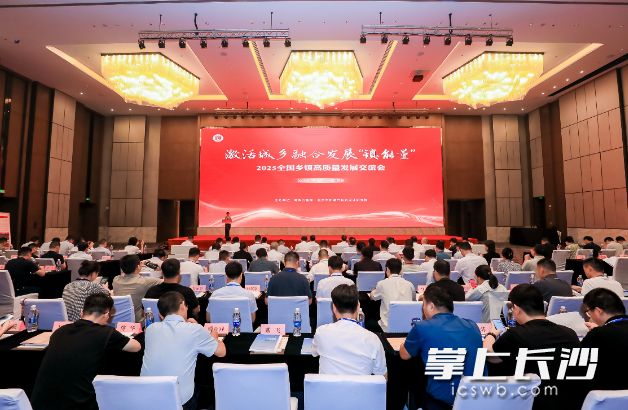
长沙县3镇上榜!中国乡镇综合竞争力报告2025发布
Chang Sha Wan Bao· 2025-07-26 13:12
Core Insights - The "2025 Township High-Quality Development Exchange Conference" was held in Suzhou, Jiangsu, where the "China Township Comprehensive Competitiveness Report 2025" was released, highlighting the competitive rankings of various towns [1][3] - Huanghua Town ranked 30th among the top 100 towns in the country, improving by 5 positions from the previous year, and has maintained its status as the top town in Central China for three consecutive years [1][3] - Huangxing Town and Jiangbei Town also made it to the Central China top 100 towns list, ranking 44th and 86th respectively [1][3] Economic Development - The report evaluates towns based on economic scale, vitality, and per capita levels, excluding streets, farms, and groups [3] - Huanghua Town has transformed from "the first town in Hunan" to "the first town in Central China," achieving significant growth through a complete industrial chain ecosystem supported by leading enterprises like SANY and Lens Technology [3] - The town has implemented over 40 major projects, including the expansion of Huanghua Airport and logistics initiatives, forming a trillion-level industrial cluster focused on air economy, intelligent manufacturing, and modern logistics [3] Innovative Development Models - Huanghua Town has adopted an innovative "1+3+N" development model, integrating village collectives, enterprises, and farmers, serving as a model for "light asset leverage for common prosperity" [3] - Huangxing Town has established a comprehensive transportation system and a "5+N" industrial development framework, focusing on modern services, air manufacturing, smart logistics, and modern agriculture [4] - Jiangbei Town has shown significant economic growth, with industrial output reaching 2.123 billion and fixed asset investment at 1.512 billion in the first half of the year, alongside a net increase of 399 market entities [4]

【广发宏观吴棋滢】6月财政数据简评
郭磊宏观茶座· 2025-07-26 11:34
Core Viewpoint - The overall performance of public finance in the first half of 2025 is stable, with a slight decline in revenue growth, indicating the need for continued improvement in tax and government fund income through PPI and land market enhancements [5][23]. Group 1: Public Finance Revenue - In the first half of 2025, public finance revenue showed a cumulative year-on-year decline of 0.3%, slightly lower than the previous year's growth of 1.3% [1][6]. - Tax revenue decreased by 1.2% year-on-year, an improvement compared to last year's decline of 3.4%, while non-tax revenue growth significantly slowed from 25.4% last year to 3.7% this year [1][8]. - The decline in non-tax revenue is attributed to a high base last year and a reduced reliance on non-tax income by the government [1][6]. Group 2: Monthly Performance - In June, tax revenue increased by 1.0% year-on-year, slightly higher than the previous value, while non-tax revenue fell by 3.7%, indicating an expanded decline [2][9]. - Domestic value-added tax and corporate income tax recorded year-on-year increases of 5.0% and 2.7%, respectively, contributing positively to June's fiscal revenue growth [2][11]. - The equipment manufacturing industry, modern services, and cultural sports entertainment sectors showed strong tax performance, reflecting the economic recovery in these areas [2][11]. Group 3: Fiscal Expenditure - Narrow fiscal expenditure in June saw a year-on-year decline of 0.4%, down from 2.6% previously, influenced by a decrease in non-tax revenue and a lull in infrastructure funding [3][12]. - Technology spending led the expenditure categories with an 18.1% year-on-year increase, while infrastructure-related expenditures showed weak performance, particularly in transportation and agriculture [3][14]. - The overall expenditure progress for the first half of the year was at 47.6%, indicating a slower pace compared to previous years, with expectations for acceleration in the second half [3][13]. Group 4: Government Fund Income - Government fund income in the first half of 2025 decreased by 2.4% year-on-year, primarily due to continued weakness in the land market, with land transfer income down 6.5% [4][19]. - In June, government fund budget revenue surged by 20.8%, marking a significant increase, although July data showed a notable decline, raising questions about the sustainability of this recovery [4][19]. - Government fund budget expenditure rose sharply by 79.2% year-on-year, largely driven by the issuance of special bonds, indicating a significant increase in overall fiscal spending [4][20].

上半年财政账单出炉:税收下降1.2%,土地收入下降6.5%
Sou Hu Cai Jing· 2025-07-26 11:24
Group 1 - In the first half of the year, the securities transaction stamp duty increased by 54.1% year-on-year, while corporate income tax decreased by 1.9%, personal income tax increased by 8%, domestic consumption tax increased by 1.7%, vehicle purchase tax decreased by 19.1%, and tariffs decreased by 7.7% [2] - The national government fund budget revenue for the first half of the year was 1.9442 trillion yuan, a year-on-year decrease of 2.4%. The income from the transfer of state-owned land use rights was 1.4271 trillion yuan, down 6.5% year-on-year [2] - From April, monthly tax revenue has shown year-on-year growth, with April increasing by 1.9%, May by 0.6%, and June by 1% [2] Group 2 - Non-tax revenue growth has slowed, with declines of 2.2% and 3.7% in May and June respectively. Revenue from the paid use of state resources increased by 4.8%, while administrative fees grew by 1% [3] - The Ministry of Finance has implemented a more proactive fiscal policy, focusing on boosting consumption and stabilizing employment and the economy. In the first half of the year, central government transfers to local governments reached 9.29 trillion yuan, accounting for 89.8% of the annual budget [3] - A total of 2.6 trillion yuan in new local government bonds were issued in the first half of the year to support major projects [3] Group 3 - The Ministry of Finance has increased efforts to ensure basic livelihoods and introduced new measures to boost consumption, including childcare subsidies and gradually implementing free preschool education [4] - Two batches of long-term special bond funds totaling 162 billion yuan were allocated for the replacement of old consumer goods [4] - A pilot project for providing consumption subsidies to elderly individuals with moderate to severe disabilities has been initiated to alleviate their care costs [4]

1月至6月全国财政运行整体平稳 重点领域支出保障良好
Yang Guang Wang· 2025-07-26 00:42
Group 1 - The central government has implemented a more proactive fiscal policy in the first half of the year, increasing expenditure intensity and optimizing expenditure structure to ensure support for key areas [1][2] - National general public budget expenditure reached 14.13 trillion yuan, a year-on-year increase of 3.4% [1] - Key areas of expenditure include social security and employment (up 9.2%), education (up 5.9%), health (up 4.3%), and science and technology (up 9.1%) [1] Group 2 - National general public budget revenue for the first half of the year was 11.56 trillion yuan, with major tax categories showing stable growth [1] - From April, monthly tax revenue has maintained year-on-year growth for three consecutive months, with domestic VAT, consumption tax, and personal income tax increasing by 2.8%, 1.7%, and 8% respectively [1] - Central government transfer payments to local governments reached 9.29 trillion yuan, accounting for 89.8% of the annual budget [2] Group 3 - The issuance of new local government general and special bonds amounted to 2.6 trillion yuan to support major projects [2] - The sales of consumer goods under the "old for new" program reached 1.6 trillion yuan, indicating positive results in stimulating consumption [2] - The Ministry of Finance has allocated additional special bond funds to support local consumption initiatives, with 690 million yuan allocated in the third batch [2]