
航运业

Search documents
中远海控(01919.HK)首次回购A股股份606万股
Xin Lang Cai Jing· 2025-11-05 10:20
Core Viewpoint - The company, COSCO Shipping Holdings (01919.HK), has initiated its first A-share buyback, indicating a strategic move to enhance shareholder value and confidence in the company's stock performance [1] Group 1: Buyback Details - The company repurchased 6.06 million A-shares, which represents 0.0391% of the total share capital as of October 31, 2025 [1] - The buyback was conducted through the Shanghai Stock Exchange's centralized bidding system [1] - The highest purchase price was RMB 14.98 per share, while the lowest was RMB 14.86 per share, with a total expenditure of RMB 90.6 million (excluding transaction fees) [1]

中远海控(601919.SH):暂未开展A股股票回购
Ge Long Hui· 2025-11-04 21:20
Core Viewpoint - China COSCO Shipping Holdings Co., Ltd. has announced that as of October 31, 2025, the company has not yet initiated its A-share stock repurchase plan and will consider implementing this plan based on market conditions [1] Summary by Category - **Company Actions** - The company has not commenced its A-share stock repurchase as of the specified date [1] - Future implementation of the repurchase plan will depend on market conditions [1]
中远海能:携手全球合作伙伴打造安全、高效、绿色、智慧的能源航运新格局
Zhong Zheng Wang· 2025-11-04 11:33
Core Insights - The conference highlighted the commitment of COSCO Shipping Energy Transportation to its mission of "linking the world and delivering energy," emphasizing the successful integration of energy and chemical logistics supply chains [1] - The company aims to enhance its service capabilities and deepen its integration into the global energy transportation industry chain, contributing to collaborative development within the sector [1] Group 1: Key Consensus from the Conference - Safety is paramount, with a focus on maintaining stable and safe operations as the foundation for high-quality industry development [2] - Emphasis on digital transformation and low-carbon initiatives, leveraging technology to upgrade supply chains and explore new avenues in energy transportation [2] - A commitment to open collaboration and mutual benefit, fostering cooperation across the industry chain to seize new market opportunities [2] Group 2: Digital Innovations Announced - Launch of a digital supply chain collaboration platform that integrates big data, AI, and blockchain to enhance service efficiency and provide customized solutions for clients [3] - Introduction of the Smart Navigation Solution, utilizing IoT and data analytics for optimizing vessel operations and ensuring safety and efficiency in maritime logistics [3] Group 3: Future Directions - COSCO Shipping Energy Transportation plans to continue developing an integrated global network for oil, gas, chemicals, and storage, focusing on safety, efficiency, and sustainability in energy shipping [4]
中远海控截至10月末暂未开展 A 股股票回购
Zhi Tong Cai Jing· 2025-11-04 09:25
Core Viewpoint - China COSCO Shipping Holdings (中远海控) has not yet initiated its A-share stock repurchase plan as of October 31, 2025, and will consider implementing the buyback based on market conditions [1] Summary by Categories - **Company Actions** - The company has not commenced the A-share stock repurchase [1] - Future implementation of the buyback plan will depend on market conditions [1]
国航远洋(920571):持续推进绿色转型、新运力投入内贸,2025Q1-3实现营收6.93亿元
KAIYUAN SECURITIES· 2025-11-03 14:12
Investment Rating - The investment rating for the company is maintained at "Outperform" [5] Core Insights - The company achieved total revenue of 693 million yuan in the first three quarters of 2025, representing a year-on-year growth of 1.83%. However, the net profit attributable to the parent company was only 205,100 yuan, a significant decrease of 99.75% year-on-year, primarily due to vessel impairment and increased financial costs [5] - The company is adjusting its profit forecasts for 2025, while maintaining forecasts for 2026 and 2027. Expected net profits for 2025-2027 are 49 million, 149 million, and 182 million yuan respectively, with corresponding EPS of 0.09, 0.27, and 0.33 yuan [5] - The company is benefiting from a strong demand for domestic bulk commodity transportation, with revenue from the domestic trade segment reaching 214 million yuan in the first half of 2025, a year-on-year increase of 100.63% [6] - The company is actively pursuing a green transition, with over 30% of its fleet now consisting of green vessels. It plans to phase out older vessels to reduce costs and improve efficiency [7] Financial Summary - For 2025, the company is projected to achieve total revenue of 1,067 million yuan, a year-on-year increase of 14.0%. The net profit attributable to the parent company is expected to be 49 million yuan, reflecting a year-on-year increase of 115.4% [9] - The gross margin is expected to stabilize at 20.3% for 2025, with a net margin of 4.6% [12] - The company's P/E ratio is projected to decrease from 125.4 in 2025 to 33.7 by 2027, indicating an improving valuation as earnings grow [9][12]
黄金税收政策新规出台,中国10月PMI不及预期
Dong Zheng Qi Huo· 2025-11-03 00:42
1. Report Industry Investment Ratings - Gold: Short - term bearish, pay attention to decline risks [12][13] - Foreign exchange futures (US dollar index): Short - term volatile [16][17][18] - US stock index futures: Short - term high - level volatile, bullish in the long - term with profit support [20] - Stock index futures: Long - position balanced allocation [24] - Treasury bond futures: Short - term slightly bullish with limited upside, pay attention to rhythm and odds [27] - Palm oil: Short - term expected to open lower, pay attention to long - position opportunities around 8500 yuan [31] - International soybean oil: Short - term bottom - supported, expected to be volatile [31] - Domestic soybean oil: Short - term expected to be volatile [31] - Power coal: Price supported in the fourth quarter, pay attention to weather and policy [32] - Iron ore: Short - term volatile, pay attention to policy changes [34] - Bean粕: Follow import cost, pay attention to US soybean purchase and Brazilian output [36] - Sugar: Short - term expected to be volatile [41] - Cotton: Short - term expected to be volatile, long - term cautiously bullish [46] - Rebar/Hot - rolled coil: Short - term volatile [50][51] - Red dates: Wait - and - see, pay attention to price game and purchase progress [52] - Corn starch: 11 - contract CS - C expected to strengthen further, 01 - contract may have price - difference repair [54][55] - Corn: If government - stored wheat is used for feed, there may be short - selling opportunities [56] - Alumina: Wait - and - see [59] - Copper: Short - term expected to be volatile after reaching a high, recommend buying on dips [63] - Lead: Low - inventory, short - term bullish with high uncertainty, positive spread arbitrage possible [65] - Zinc: Short - term wait - and - see, pay attention to mid - line positive spread arbitrage [70][71] - Polysilicon: Policy and fundamentals in game, long - position holders can hold, consider call options [74] - Industrial silicon: Buying on dips is cost - effective [76] - Lithium carbonate: Short - term range - bound, mid - line short - selling after demand peaks, pay attention to positive spread arbitrage [80][81] - Nickel: Q4 nickel ore price expected to rise, recommend long - position on dips or option strategies [84] - Carbon emissions: Short - term volatile [87] - Crude oil: Volatile [89] - Bottle chips: Short - term supply - demand conflict not prominent, marginal weakening expected [91] - Container freight rates: Volatile, consider long - position on dips [93] 2. Report's Core View The report analyzes multiple financial and commodity markets. In the financial market, factors such as gold tax policy, Fed officials' attitudes towards interest rates, and economic data impact market trends. In the commodity market, supply and demand, policy, and seasonal factors affect prices. Overall, most markets are expected to be volatile in the short - term, and investors need to pay attention to various influencing factors and risks [12][16][30]. 3. Summaries by Relevant Catalogs 3.1 Financial News and Reviews 3.1.1 Macro Strategy (Gold) - New gold tax policy: VAT on standard gold for investment is refunded immediately, and related taxes are exempted. Physical gold demand may be suppressed, and short - term price is bearish [12]. 3.1.2 Macro Strategy (Foreign exchange futures (US dollar index)) - Fed officials oppose December rate cuts due to high inflation, and the US dollar is expected to be volatile [15][16][17]. 3.1.3 Macro Strategy (US stock index futures) - Market expectations for rate cuts are adjusted, and short - term risk appetite declines. The market is volatile at a high level [19][20]. 3.1.4 Macro Strategy (Stock index futures) - October PMI shows production slowdown, and the stock index is expected to be volatile at a high level. Long - position balanced allocation is recommended [22][23][24]. 3.1.5 Macro Strategy (Treasury bond futures) - October manufacturing PMI declines, and November is a policy window period. The bond market is expected to be slightly bullish, but the upside is limited [25][26][27]. 3.2 Commodity News and Reviews 3.2.1 Agricultural Products (Soybean oil/Rapeseed oil/Palm oil) - Indonesian palm oil reference price rises slightly, and Malaysia's October palm oil exports increase. Palm oil price is under pressure in the short - term but may be supported later. Soybean oil is expected to be volatile [29][30][31]. 3.2.2 Black Metals (Power coal) - Indonesian low - calorie power coal price is stable. Coal price is expected to be stable in the short - term and strong in the fourth quarter [32]. 3.2.3 Black Metals (Iron ore) - Third - quarter iron ore sales increase. Demand is affected by environmental protection, and price is expected to be volatile [34]. 3.2.4 Agricultural Products (Bean粕) - Oil mill operation rate is high, and bean粕 price follows import cost. Pay attention to US soybean purchase and Brazilian output [35][36] 3.2.5 Agricultural Products (Sugar) - Brazilian sugar production increases, and Indian sugar industry requests export policy. Zheng sugar is expected to be volatile [40][41] 3.2.6 Agricultural Products (Cotton) - US cotton inspection progress is slow, and drought area decreases. Cotton price is expected to be volatile [42][44][46] 3.2.7 Black Metals (Rebar/Hot - rolled coil) - Iron water output declines, and steel price is affected by Sino - US relations. Price is expected to be volatile [47][50][51] 3.2.8 Agricultural Products (Red dates) - Xinjiang red dates are in the drying period, and inventory increases. Price is expected to be volatile, wait - and - see [51][52] 3.2.9 Agricultural Products (Corn starch) - September starch export declines, and October export may increase. 11 - contract CS - C and 01 - contract may strengthen [53][54][55] 3.2.10 Agricultural Products (Corn) - Domestic corn price is stable with narrow fluctuations. Pay attention to government - stored wheat auction [55][56] 3.2.11 Non - ferrous Metals (Alumina) - Inventory increases, and the market is in oversupply. Wait - and - see [57][58][59] 3.2.12 Non - ferrous Metals (Copper) - Multiple copper projects have new progress. Price is affected by the US dollar and inventory, expected to be volatile [60][63] 3.2.13 Non - ferrous Metals (Lead) - LME lead is in contango. Low - inventory supports price, pay attention to delivery risk [64][65] 3.2.14 Non - ferrous Metals (Zinc) - Some zinc mines' output changes. Price is affected by market sentiment and inventory, expected to be volatile [66][69][70] 3.2.15 Non - ferrous Metals (Polysilicon) - Polysilicon futures rise, and price is in a policy - fundamentals game. Pay attention to policy progress [72][73][74] 3.2.16 Non - ferrous Metals (Industrial silicon) - Southwest production is expected to decrease. Price is expected to be supported, recommend long - position on dips [75][76] 3.2.17 Non - ferrous Metals (Lithium carbonate) - Company negotiates to sell lithium project stake. Price is affected by supply - demand and inventory, expected to be volatile [77][78][81] 3.2.18 Non - ferrous Metals (Nickel) - Company's nickel self - supply increases. Price is affected by inventory, season, and demand, expected to be volatile [82][83][84] 3.2.19 Energy Chemicals (Carbon emissions) - EUA price is volatile. Market trading activity decreases, and signal is neutral [85][86][87] 3.2.20 Energy Chemicals (Crude oil) - OPEC decides to increase production in December and pause in Q1 2026. Price is expected to be volatile [87][88][89] 3.2.21 Energy Chemicals (Bottle chips) - Bottle chip factory price is adjusted, and supply - demand is expected to weaken marginally [90][91] 3.2.22 Shipping Index (Container freight rates) - Shipping company adjusts surcharge. Freight rate is expected to be volatile, consider long - position on dips [92][93]

【广发宏观贺骁束】高频数据下的10月经济:价格篇
郭磊宏观茶座· 2025-11-01 00:25
Core Viewpoint - The article discusses the mixed performance of various commodity prices in October, highlighting the resilience of the non-ferrous metals sector amid macroeconomic factors such as the Federal Reserve's interest rate cuts and supply disruptions from Indonesia [1][4]. Group 1: Commodity Price Trends - The BPI index recorded 870 points as of October 30, reflecting a 0.6% increase from the end of September, with energy prices down 0.6% and non-ferrous metal prices up 2.2% month-on-month [1][4]. - In the domestic market, prices of thermal coal and coking coal futures saw significant increases of 9.2% and 19.1% respectively, while chemical products, cement, and glass prices showed notable declines of -1.9%, -3.1%, and -10.6% respectively [8][10]. - The South China comprehensive index remained flat month-on-month, with a year-on-year average decrease of 0.3% compared to a previous increase of 6.0% [8]. Group 2: Real Estate Market - The second-hand housing price index in major cities continued to adjust, with declines of -1.2%, -0.7%, -1.7%, and -0.9% in Beijing, Shanghai, Guangzhou, and Shenzhen respectively as of October 20 [10]. Group 3: Emerging Industries - Prices in emerging sectors such as storage chips and lithium carbonate remained strong, while the photovoltaic industry saw a price decline, with the photovoltaic industry composite index (SPI) down 0.5% month-on-month [2][11]. - The DXI index, representing the semiconductor (DRAM) industry, surged by 93.5% month-on-month, indicating a robust outlook for the memory sector [2][11]. Group 4: Shipping and Logistics - In the export shipping sector, the China Container Freight Index (CCFI) fell by 6.1% month-on-month, while the WCID container freight indices for routes to Los Angeles and New York increased by 5.5% and 8.9% respectively [13]. - The average value of the road logistics price index showed a year-on-year decrease of 0.1%, indicating a gradual decline from the peak observed in June [15]. Group 5: Food Prices - Food prices exhibited mixed trends, with the average wholesale price of pork declining by 7.8% and key vegetable prices rising by 13.6% month-on-month [3][15].


中远海发前三季度实现营收195.66亿元
Zheng Quan Ri Bao Zhi Sheng· 2025-10-31 09:08
Core Insights - COSCO Shipping Development Co., Ltd. reported a revenue of 19.566 billion RMB for Q3 2025, with a net profit attributable to shareholders of 1.391 billion RMB, reflecting a year-on-year growth of 0.71% [1] - The company plans to initiate a new round of A+H share buybacks, targeting the repurchase of 40 million to 80 million A-shares, and has completed a mid-year dividend distribution totaling approximately 290 million RMB [1] - The company is actively seizing opportunities in the green and low-carbon transformation of the shipping industry, expanding its fleet and enhancing its container manufacturing business [1] Financial Performance - Revenue for Q3 2025 reached 19.566 billion RMB [1] - Net profit attributable to shareholders was 1.391 billion RMB, a year-on-year increase of 0.71% [1] - The net profit excluding non-recurring gains and losses was 1.363 billion RMB, showing a year-on-year growth of 20.99% [1] - Basic earnings per share stood at 0.1045 RMB [1] Strategic Initiatives - The company is expanding its fleet with the addition of 23 bulk carriers and 6 VLCC oil tankers in the first three quarters of the year [1] - COSCO Shipping Development is enhancing its container sales and leveraging industry chain synergies to create new direct delivery channels in the Yangtze River Delta region [1] - The company has been recognized for its smart transformation, with its Ningbo factory awarded as a "National Excellent Smart Factory" [2] Technological Advancements - The iFlorens container trading platform developed by the company won the "Pioneer Award" at the Global Digital Trade Expo [2] - The company is advancing the construction of its container CFP&EPD platform, with nearly 300,000 containers certified with the "CFP&EPD" label [2] - COSCO Shipping Development is focusing on new material applications and technology upgrades, successfully delivering the world's first batch of bio-based refrigerated containers [2] Future Outlook - The company aims to embrace market changes, focus on its core responsibilities, and deepen the integration of production and finance [2] - COSCO Shipping Development is committed to driving technological innovation and enhancing its core competitiveness and industry influence [2] - The company will continue to prioritize investor returns and explore pathways for value realization to create long-term stable returns for shareholders [2]

央行研究局局长王信:加大融资支持,降低轻资产、绿色服务贸易企业的融资门槛和成本|快讯
Hua Xia Shi Bao· 2025-10-31 07:16
Core Viewpoint - The development of green service trade is a significant driver for global economic growth and structural adjustment, focusing on both the green transformation of traditional service trade and the digital delivery of inherently green low-carbon services [2] Group 1: Financial Support for Green Service Trade - The People's Bank of China emphasizes the importance of financial tools such as green credit, green bonds, and green equity funds in empowering the development of green service trade [3] - Examples include green credit supporting carbon reduction in the shipping industry, with a notable loan of 273 million yuan provided to COSCO Shipping Energy for transformation [3] - Green bonds are being issued to support low-carbon technology research and application in shipping, with the issuance of blue bonds by China Shipbuilding (Hong Kong) Leasing Company aimed at enhancing energy efficiency and sustainable transport [3] Group 2: Future Directions for Financial Support - The People's Bank of China plans to focus on promoting the application of green finance and transformation finance standards, supporting innovative financing methods such as credit, bonds, and equity [4] - Financial institutions are encouraged to increase financing support for production service sectors like research and design, logistics operations, and carbon emission certification, thereby reducing financing barriers for light-asset green service trade enterprises [4] - There is a push to support the issuance of green financial products in global markets, providing more Chinese green assets to global investors [4]
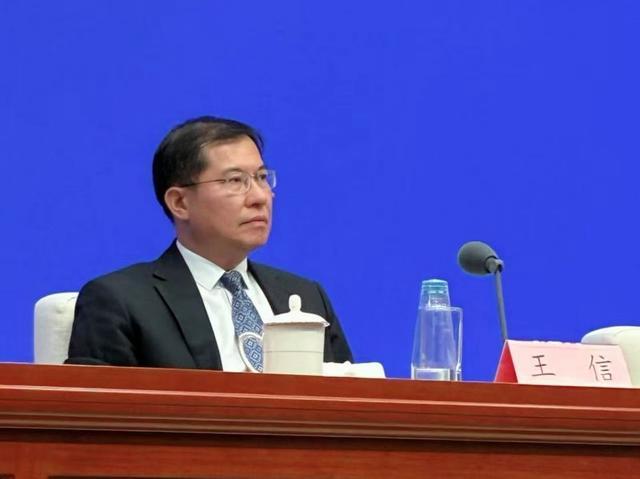
央行:通过绿色信贷、绿色债券、绿色股权基金等工具,赋能绿色服务贸易发展
Zhong Guo Xin Wen Wang· 2025-10-31 05:29
Core Viewpoint - The People's Bank of China is leveraging green financial tools such as green credit, green bonds, and green equity funds to empower the development of green service trade [1][2]. Group 1: Importance of Green Service Trade - Green service trade is becoming a significant driver of global economic growth and structural adjustment, focusing on the green transformation of traditional service trade and the development of digital delivery services with low-carbon characteristics [2]. - The development of emerging service industries, such as carbon emission certification and carbon finance, is reshaping global production and consumption networks, significantly impacting high-quality international economic and trade development [2]. Group 2: Financial Tools Supporting Green Service Trade - Green credit is being utilized to support shipping service entities in reducing carbon emissions, exemplified by a 273 million yuan transformation loan provided to COSCO Shipping Energy by the Bank of Communications [2][3]. - Green bonds are facilitating the research and application of low-carbon technologies in shipping, with companies like China Shipbuilding (Hong Kong) issuing green and blue bonds to support energy efficiency upgrades and sustainable transportation [3]. - Green shipping funds and equity financing are providing medium to long-term funding for green service trade projects, addressing funding challenges and mitigating risks during the green transition in the shipping industry [3]. Group 3: Future Directions for Support - The People's Bank of China will focus on promoting the application of green finance and transition finance standards, supporting innovative financing methods such as credit, bonds, and equity [4]. - Financial institutions are encouraged to increase financing support for productive service sectors, including research and design, logistics operations, and waste resource recovery, thereby lowering financing thresholds and costs for asset-light green service trade enterprises [4]. - There is a commitment to support the issuance of green financial products in global markets, providing more Chinese green assets to global investors and enhancing the innovative development of green service trade through the opening of the financial sector [4].