房地产业

Search documents
新华全媒头条·2025中国经济回眸|筑牢发展安全根基 守住风险防控底线——解码中国经济稳健前行的底气
Xin Hua She· 2025-12-09 16:26
Group 1 - The core viewpoint emphasizes the importance of safety as a prerequisite for development and vice versa, highlighting China's efforts to balance development and security under the leadership of the central government [1] - Energy security is identified as a strategic foundation for high-quality economic development, with ongoing efforts to enhance safety capabilities across key sectors [3][4] - The construction of major infrastructure projects is seen as a stabilizing force for safe development, with significant financial support and private capital involvement [6][7] Group 2 - The real estate market is being stabilized through various policies, with over 60 cities implementing measures to support housing demand, resulting in a reduction in the sales decline of new homes [11] - Financial stability is crucial, with measures taken to address risks in small financial institutions, including the establishment of a new bank to enhance risk resistance [12][13] - Local government debt risks are being effectively mitigated through a series of measures, including the issuance of special bonds to replace hidden debts, which has saved significant interest expenses [14] Group 3 - The importance of reform in addressing development challenges and risk mitigation is highlighted, with initiatives aimed at creating a new model for real estate development and improving market mechanisms [20] - The release of a new generation of ultra-high-speed oscilloscopes is noted as a significant advancement for China's semiconductor and 6G communication sectors, enhancing the country's technological capabilities [21] - The overall economic outlook remains positive, with expectations for the total economic output to reach 140 trillion yuan, reinforcing China's position as the world's second-largest economy [7]
“幽灵注册”再现!广州一地多个住宅被登记公司,部门回应
Nan Fang Du Shi Bao· 2025-12-09 14:00
Core Viewpoint - The issue of "ghost registrations" in residential buildings has been reported in Guangzhou, specifically at 71 Huanhua West Road, where nearly 20 companies have been registered at different units of the same building, raising concerns about the integrity of the registration process [2][3][5]. Group 1: Incident Overview - Residents reported that multiple companies were registered at their residential address, with five companies registered in April and May 2025, all marked as small enterprises without contact information [3]. - A resident noted that out of eight households on their floor, six had been registered under false names, with registration dates primarily in 2019 and May 2025 [5]. - The local market supervision authority confirmed that all companies registered under the main affected units have been revoked, while others are under investigation [8]. Group 2: Registration Process and Concerns - The registration process for companies in Guangzhou has been streamlined through an online platform, allowing for quick registration, but this has raised concerns about the verification of submitted materials [6][7]. - Residents expressed confusion over the strictness of the deregistration process compared to the leniency observed during the initial registration [5]. - The local market supervision bureau has stated that they will enhance oversight of business entities to prevent future occurrences of false registrations [8][10]. Group 3: Historical Context and Broader Implications - This incident is not isolated; similar cases have occurred in Guangzhou, with previous reports of residential addresses being used for company registrations without the owners' knowledge [9]. - Concerns have been raised that even if the fraudulent companies are revoked, the underlying issues that allow such registrations to occur remain unaddressed, potentially leading to future problems [9][10]. - Legal experts suggest that stricter management of residential address registrations is necessary to protect homeowners and prevent misuse [12][13].


闽东电力:12月9日召开董事会会议
Mei Ri Jing Ji Xin Wen· 2025-12-09 11:20
Group 1 - The core point of the article is that Mindong Electric Power (SZ 000993) held a temporary board meeting on December 9, 2025, to discuss the proposal regarding the controlling shareholder's intention to postpone the fulfillment of the non-competition commitment [1] - For the first half of 2025, Mindong Electric Power's revenue composition was as follows: 89.7% from the production and supply of electricity, steam, and hot water; 8.93% from real estate; and 1.37% from other sources [1] - As of the time of reporting, Mindong Electric Power had a market capitalization of 6.5 billion yuan [1]

【环球财经】东京股市两大股指微幅上涨
Xin Hua Cai Jing· 2025-12-09 07:32
Core Points - The Tokyo stock market experienced slight gains on December 9, with the Nikkei 225 index rising by 0.14% and the Tokyo Stock Exchange index increasing by 0.02% [1][2] - The market opened higher but quickly turned to decline due to increased selling pressure from major tech stocks like Advantest and SoftBank Group, leading to fluctuations around the previous day's closing levels [1] - Investor sentiment is cautious as they await upcoming monetary policy announcements from major central banks, resulting in adjustments to their holdings in key stocks [1] Market Performance - The Nikkei index closed up by 73.16 points at 50655.10 points, while the Tokyo Stock Exchange index rose by 0.61 points to 3384.92 points [2] - Among the 33 industry sectors on the Tokyo Stock Exchange, most sectors saw declines, with notable losses in other products, real estate, and pulp and paper sectors [2] - Conversely, sectors such as rubber products, marine transportation, and pharmaceuticals experienced gains [2]
每日债市速递 | 重磅会议要求实施更加积极有为的宏观政策
Wind万得· 2025-12-08 23:12
Group 1: Open Market Operations - The central bank conducted a 7-day reverse repurchase operation on December 8, with a fixed rate and a total amount of 122.3 billion yuan, at an interest rate of 1.40% [1] - On the same day, 107.6 billion yuan of reverse repos matured, resulting in a net injection of 14.7 billion yuan [1] Group 2: Funding Conditions - The interbank market funding conditions remained stable, with the weighted average interest rate of DR001 slightly rising but still at a low level of 1.3% [3] - Overnight quotes in the anonymous click (X-repo) system remained at 1.28%, indicating ample supply [3] - Non-bank institutions borrowed overnight funds using credit bonds as collateral, with quotes slightly decreasing to the range of 1.45%-1.47% [3] Group 3: Interbank Certificates of Deposit - The latest transaction for one-year interbank certificates of deposit among major banks was at 1.66%, unchanged from the previous day [7] Group 4: Government Bond Futures - The closing prices for government bond futures showed a decline in the 30-year main contract by 0.29%, while the 10-year main contract increased by 0.02% [12] Group 5: Economic Policy Insights - The Central Political Bureau of the Communist Party of China emphasized the need for a stable yet progressive economic approach for 2026, advocating for a more proactive fiscal policy and moderately loose monetary policy [13] - Key focuses include enhancing domestic demand, fostering innovation, and promoting high-quality development while ensuring risk management in critical areas [13] Group 6: Global Economic Context - The U.S. Federal Reserve is expected to announce a potential interest rate cut of 25 basis points in its upcoming meeting, influenced by recent weak employment data [16] - Japan's government submitted a supplementary budget for 2025, with general account expenditures reaching a record high post-COVID, primarily funded through additional bond issuance [16] - Japan's GDP for Q3 showed a larger-than-expected contraction, confirming the first decline in six quarters [16]


黄金、股票、房子……到底哪个更能守住钱袋子?这份对比指南说透了
Sou Hu Cai Jing· 2025-12-08 16:32
Core Viewpoint - The article discusses the challenges of low interest rates on bank deposits and suggests alternative investment strategies to preserve wealth in a low-yield environment [1][3]. Group 1: Investment Strategies - **Investing in Gold**: Gold is highlighted as a reliable asset for wealth preservation, especially during economic volatility and inflation. It is recommended to allocate 10% to 20% of bank savings into physical gold or recognized gold products like ETFs [3][4]. - **Quality Bank Stocks**: Investing in stable, dividend-paying bank stocks is compared to owning property in a prime location, providing both dividend income (4%-6% yield) and potential capital appreciation. This strategy is suitable for investors with a higher risk tolerance and a long-term investment horizon [4][5]. - **Core Real Estate Investments**: The article emphasizes the importance of selecting high-quality properties in prime locations for long-term value retention. The focus should be on properties that can generate stable rental income and appreciate over time, requiring careful consideration of location and market conditions [7]. Group 2: Personal Development - **Investing in Self**: The article stresses the significance of personal development and acquiring financial knowledge as the most effective investment. Enhancing professional skills can lead to higher income, while understanding financial tools aids in making informed investment decisions [9][10].
晚间公告|12月8日这些公告有看头
Di Yi Cai Jing· 2025-12-08 15:10
Group 1 - Lichong Group signed a framework procurement agreement with Beijing Weijing Intelligent Technology for 5,000 humanoid robot components, with a total contract value of approximately 75 million yuan over a 5-year period [2] - Vanke A decided not to adjust the coupon rate for the "21 Vanke 02" bond, maintaining a rate of 3.98% for the next two years, with investors having the option to sell back their bonds [3] - Aerospace Power clarified that its main business does not involve commercial aerospace and that revenue from processing rocket engine components accounts for less than 2% of total revenue [4] Group 2 - Tailong Pharmaceutical's controlling shareholder has reached an agreement regarding a potential change in company control, with stock resuming trading on December 9, 2025 [5] - Cambridge Technology plans to increase its investment in its U.S. subsidiary CIG by $100 million to expand production capacity for high-speed optical modules in North America and Southeast Asia [6] - Zhejiang Rongtai intends to invest approximately 54.49 million yuan in a project in Thailand to produce 14,000 tons of mica paper, 4,500 tons of mica products, and 7 million sets of robot components [7] Group 3 - China Metallurgical Group plans to sell 100% equity of China Metallurgical Real Estate and other assets for a total transaction price of 60.68 billion yuan [8] - Hezhong China announced abnormal stock fluctuations with a cumulative increase of 336.83% over 16 trading days, despite reporting a net loss of 5.05 million yuan in Q3 2025 [9] Group 4 - Kemin Foods reported a 110.77% year-on-year increase in sales revenue from live pigs in November 2025, with total sales of 50.90 million pigs from January to November 2025, up 62.01% year-on-year [11] - Poly Developments reported a 21.80% year-on-year decline in signed contracts for the first 11 months of 2025, totaling 240.87 billion yuan [12] - Yisheng Co. reported a 276.76% year-on-year increase in sales revenue from breeding pigs in November 2025 [13] Group 5 - Wentai Technology's second-largest shareholder reduced its stake by 11.84 million shares, decreasing its holding from 7.77% to 6.82% [15] - Three Gorges Group increased its stake in Changjiang Electric Power by acquiring 103 million shares, raising its holding from 52.58% to 53.00% [16] - ST Green Kang announced that a major shareholder plans to reduce its stake by up to 3% due to funding needs [17] Group 6 - Zhongfutong is a candidate for the China Mobile procurement project, with expected amounts of 411 million yuan and 162 million yuan [20] - China Shipbuilding signed a contract for a new shipbuilding project worth approximately 50 billion yuan, involving 87 vessels [21] - Tunnel Holdings won a bid for a highway project worth 6.49 billion yuan, with a cooperation period of 33.25 years [22] - Jicheng Electronics was selected as a candidate for multiple State Grid projects, with a total bid amount of approximately 215 million yuan [23]
中央经济工作会议传递的信号:逆周期与跨周期结合发力
ZHESHANG SECURITIES· 2025-12-08 14:19
证券研究报告 | 宏观专题研究 | 中国宏观 逆周期与跨周期结合发力 ──中央经济工作会议传递的信号 核心观点 中共中央政治局 12 月 8 日召开会议,分析研究 2026 年经济工作,重点如下: 一是为实现经济高质量发展,仍应注重科技自立自强水平提高,但稳中求进也指向 2025 年作为十五五开局之年,经济增速目标设置在 5%左右的概率较大。 二是宏观政策更加积极有为的同时,也应注重效能提升。对应政策基调由去年 12 月政 治局会议的"加强超常规逆周期调节"转变为"加大逆周期和跨周期调节",意味着相较 于政策力度的扩张,政策效能的提升更为重要,尤其是集中财力保障国家重大战略任 务,做到"小钱小气,大钱大方"。要注重发挥存量政策和增量政策集成效应。 具体政策来看:货币政策方面,预计 2026 年货币政策全年降准 50BP,降息 10BP,小 步慢跑。财政政策方面,我们上修 2026 年赤字率预期至 4.0%~4.2%左右,但广义赤 字率可能小幅回撤。 ❑ 提质增效更加注重高质量发展,"超常规"退出 中共中央政治局 12 月 8 日召开会议,分析研究 2026 年经济工作,会议指出,明 年经济工作要坚持稳中求进、 ...
万达被恢复执行17亿元,刚赎回的万达广场仅1天又转让
凤凰网财经· 2025-12-08 14:15
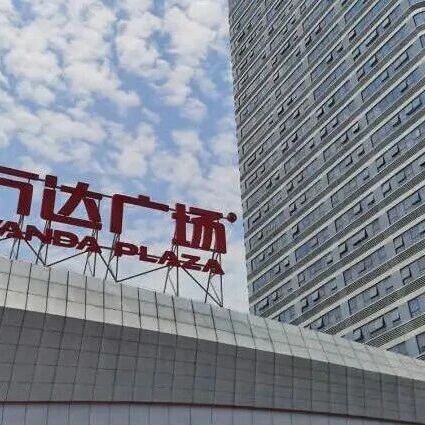
大连万达集团股份有限公司成立于1992年9月,法定代表人为王健林,注册资本10亿人民币,经营范围包括商业地产投资及经营、酒店建设投资及经 营、连锁百货投资及经营、电影院线等文化产业投资及经营等。股东信息显示,该公司由大连合兴投资有限公司、王健林共同持股。风险信息显示, 目前,该公司存在10余条被执行人信息,被执行总金额超69亿元。 | | 草外宫 | 查表版 直关系 查风险 | | | | | --- | --- | --- | --- | --- | --- | | 在用的商业查询工具 | | 新输入公司名称、老胶进名。品牌名称号 | 大原一 品应用 - | 商务合作 企业级产品· 物理公园· | ■ 招级风 ... | | 天圆查 > 案件详情 | | | | | | | 兰州万达城开发有限公司相关案件 | | | | | ◎ 案件监控 | | 执行案件 | | | | | | | 案件审理频道 | | | | | | | 恢复执行 | | | | | | | 案号:(2025) 甘95执恢4号 | | | | | | | 法院:日常可区人民法院 | | 板执行人:方达地产渠团有限公司,大连方达集团股份有 ...
【笔记20251208— 王石应该感谢姚老板】
债券笔记· 2025-12-08 13:19
我们要有主动长时间空仓的预期和准备,才能在交易中放平心态,冷静地等待市场中符合自己系统的机会。 ——笔记哥《交易》 【笔记20251208— 王石应该感谢姚老板(-股市偏强-出口数据表现较好+政治局会议未超预期+资金面均衡偏松=微上】 资金面均衡偏松,长债收益率微幅上行。 央行公开市场开展1223亿元7天期逆回购操作,今日有1076亿元逆回购到期,净投放147亿元。 | | | | 银行间资金 | (2025. 12. 08) | | | | | | --- | --- | --- | --- | --- | --- | --- | --- | --- | | 回购代吗 | 加权利率 | 变化 | 利率走势 | 最高利率 | 变化 | 成交量 | 变化量 | 成交节占 | | | (%) | (bp) | (近30天) | (%) | (bp) | (亿元) | (亿元) | 比 (%) | | R001 | 1.37 | 0 | NA | 3.00 | 200 | 69496. 10 | -477.03 | 88.91 | | R007 | 1.49 | 10 | NN. | 1.80 | 12 | 723 ...