
AI应用

Search documents
内资逃外资抄,监管连夜发声!A股关键点位全透视,这三类股成资金避风港
Sou Hu Cai Jing· 2026-01-19 17:22
Market Overview - The A-share market experienced significant volatility last Friday, with the Shanghai Composite Index closing down 0.26% at 4101.91 points, barely holding above the 4100-point mark [1] - The ChiNext Index fell by 0.2%, closing at 3361.02 points [1] - Total market turnover exceeded 30 trillion yuan, reaching 30,263 billion yuan, but nearly 3000 stocks declined, indicating clear market differentiation [1] Policy Signals - The China Securities Regulatory Commission (CSRC) emphasized the need to "firmly prevent large fluctuations in the market" during a meeting on January 15, 2026, and announced measures to combat market manipulation [3] - On January 18, the CSRC clarified its intention to guide long-term capital into the market and curb excessive speculation [3] - A significant reduction in the down payment ratio for commercial property loans was implemented over the weekend, while the Shanghai and Shenzhen stock exchanges conducted over 800 regulatory actions against abnormal trading [3] Capital Flow - On January 16, northbound capital saw a net inflow of 8.6 billion yuan, marking a new single-day high for 2026, with a focus on the semiconductor sector [3] - However, main capital has seen a net outflow for nine consecutive trading days, with over 40 billion yuan withdrawn on that day, particularly from high-position stocks in computing and media [3] - The adjustment of the financing margin ratio to 100% was officially implemented on January 19, which is expected to moderately suppress market leverage [3] Sector Performance - The semiconductor sector surged by 4.26%, with significant inflows exceeding 23.7 billion yuan, driven by strong performance in storage chips and advanced packaging [4] - Conversely, the media sector dropped by 4.6%, with multiple stocks in AI applications and gaming hitting the daily limit down, while the computing sector saw a net outflow of 16.8 billion yuan [4] - The commercial aerospace sector faced negative sentiment due to news of satellite launch failures, potentially impacting related stocks [4] Investment Trends - Capital is increasingly flowing towards hard technology with industrial logic, while speculative high-position stocks are being sold off [5] - The semiconductor industry chain has become a recent market highlight, benefiting from the explosive demand for AI computing power and an upward cycle in global storage chip prices, with a projected 40% increase in storage chip prices in Q1 2026 [9] - Low-valuation financial and real estate sectors are seeing valuation recovery opportunities supported by policy changes, such as the reduction of the commercial property down payment ratio to 30% [10] Market Dynamics - The market is expected to exhibit three potential scenarios on Monday, depending on whether the Shanghai Composite Index can maintain the 4100-point level and the performance of the semiconductor sector [6][7] - If the index falls below the 4090-point support, further declines to around 4070 points may occur, necessitating caution regarding high-position stock corrections [7] - The central bank's structural interest rate cuts and the release of over 1.2 trillion yuan in long-term low-cost funds are aimed at providing liquidity support while curbing speculation [8] Technical Analysis - The Shanghai Composite Index is oscillating between 4091.81 and 4140.23 points, with the 4090-point level serving as a critical support area [3] - If this support is breached, the next strong support is around 4070 points, while resistance is found in the 4120-4130 point range [3] - The market's trading volume is crucial; maintaining around 30 trillion yuan indicates market activity, while a drop below 28 trillion yuan could signal a need for caution [8]

帮主郑重:午盘震荡,个股普涨!市场在玩“跷跷板”?
Sou Hu Cai Jing· 2026-01-19 12:51
Core Viewpoint - The market is experiencing a structural shift from a "disorderly broad rise" to a "structured market" where funds are moving towards sectors with clear policy support and performance growth, indicating a healthy market adjustment [4][5]. Group 1: Market Dynamics - The market is currently characterized by a split, with over 3,300 stocks rising while major indices like the ChiNext Index and Shanghai Composite Index show mixed performance, indicating a "seesaw" effect in fund allocation [1][2]. - Sectors that previously saw excessive growth, such as AI applications and CPO, are undergoing significant corrections, with many popular stocks hitting their daily limit down [3][4]. Group 2: Key Sectors - The electric grid equipment sector is experiencing a surge, driven by a substantial investment plan from the State Grid, which anticipates fixed asset investments of 4 trillion yuan during the 14th Five-Year Plan, a 40% increase from the previous plan [3][4]. - Precious metals are benefiting from geopolitical tensions and risk-averse sentiment, while the tourism and hotel sector is seeing positive trends due to the upcoming Spring Festival and improving booking data [3][4]. Group 3: Investment Strategy - Investors are advised to focus on sectors with long-term policy backing, such as electric grid equipment, which offers opportunities for deeper exploration of core segments and quality companies [4]. - Caution is recommended for high-flying stocks that have seen significant price increases but are yet to deliver corresponding earnings, as these may face further adjustments [4]. - Balanced allocation is encouraged, with attention to sectors that may attract new capital as funds rotate out of overvalued areas, particularly in consumer and pharmaceutical niches that may be poised for recovery [4].

超300份预告折射产业冷暖,业绩驱动取代概念博弈成市场主线
第一财经网· 2026-01-19 10:13
Core Viewpoint - The A-share market is experiencing a clear divergence in industry performance as over 350 companies have released their 2025 earnings forecasts, highlighting strong growth in the semiconductor and non-ferrous metals sectors, while the photovoltaic industry faces significant losses due to overcapacity and price competition [1] Semiconductor Industry - The semiconductor sector is benefiting from the global AI infrastructure wave and rising storage chip prices, with leading companies like 澜起科技 (Lianqi Technology) forecasting a net profit of 2.15 billion to 2.35 billion yuan for 2025, representing a year-on-year growth of 52.29% to 66.46% [2] - 佰维存储 (Baiwei Storage) expects to achieve record revenue of 10 billion to 12 billion yuan, with a net profit forecast of 850 million to 1 billion yuan, reflecting a staggering year-on-year growth of 427.19% to 520.22% [2] Photovoltaic Industry - The photovoltaic sector is struggling with overcapacity, low prices, and rising raw material costs, leading to significant losses among leading companies. 通威股份 (Tongwei Co.) anticipates a net loss of 9 billion to 10 billion yuan, while TCL中环 (TCL Zhonghuan) expects a loss of 8.2 billion to 9.6 billion yuan [3] - The total projected losses for major photovoltaic companies have exceeded 32 billion yuan, with several firms reporting substantial deficits [3] Real Estate Industry - The real estate sector is also under pressure, with companies like 华夏幸福 (China Fortune Land Development) forecasting a net loss of 16 billion to 24 billion yuan, attributed to insufficient market demand and weak social expectations [4] Non-Ferrous Metals Industry - The non-ferrous metals sector has seen significant price increases, benefiting from global monetary easing and fiscal expansion, with companies reporting strong earnings growth. For instance, 紫金矿业 (Zijin Mining) expects a net profit of 51 billion to 52 billion yuan, a year-on-year increase of 59% to 62% [5][6] - The performance of the rare earth sector is also notable, with 北方稀土 (Northern Rare Earth) projecting a net profit of 2.176 billion to 2.356 billion yuan, reflecting a year-on-year growth of 116.67% to 134.60% [7] Concept Stocks and Emerging Industries - Emerging sectors like commercial aerospace and AI applications are facing challenges, with many companies reporting losses despite previous market enthusiasm. For example, 上海瀚讯 (Shanghai Hanxun) and 三维通信 (Sanwei Communication) are expected to incur losses in 2025 [8][9] - 中文在线 (Zhongwen Online) anticipates a net loss of 580 million to 700 million yuan, driven by high promotional costs in its overseas short drama business [9]





热点跟不上?6 位大咖2026年配置思路大起底!
天天基金网· 2026-01-19 08:32
Core Insights - The article provides insights from various fund managers regarding investment opportunities and strategies for 2026, focusing on sectors like commercial aerospace, innovative pharmaceuticals, AI applications, and humanoid robotics [1][2]. Group 1: Commercial Aerospace - The commercial aerospace industry has transitioned from a conceptual phase to one focused on capacity and delivery, with predictions of China's operational satellites increasing from 100 to 10,000 [3]. - The industry is expected to experience rapid growth and volatility, similar to the telecommunications sector, with cost reduction being a reasonable strategy at this stage [3]. Group 2: Innovative Pharmaceuticals in Hong Kong - The innovative pharmaceutical sector in Hong Kong is anticipated to show significant changes starting in the second half of 2024, with an increase in licensing agreements and expectations of profitability for leading companies within 2-3 years [4]. - Institutional investments are expected to surge in 2025, with the current stock prices of Hong Kong-listed innovative pharmaceutical companies showing a notable discount compared to their A-share counterparts, indicating long-term investment potential [4]. Group 3: AI Applications - The AI application sector is moving into a "third phase," shifting from speculative hype to a focus on genuine profitability, emphasizing the importance of cost control for scalable AI solutions [5][6]. - Companies demonstrating clear profit release in their financial reports and those capable of effectively reducing costs are seen as key players in this sector [5]. Group 4: Technology in Hong Kong - Despite the competitive edge of Hong Kong tech giants like Alibaba and Tencent, their valuations remain significantly lower than global AI leaders, with the Hang Seng Tech Index trading at a P/E ratio of 24 compared to 36 for the Nasdaq 100 [7]. - Market optimism regarding the earnings outlook for these companies in 2026 supports the potential for valuation recovery [7]. Group 5: Humanoid Robotics - The humanoid robotics sector is characterized as a "long slope with thick snow," indicating steady growth opportunities both now and in the future [8]. - Key developments are expected in Q1 2026, including product launches and mass production from major players like Tesla, which may catalyze market activity [8]. Group 6: Asset Allocation Strategies for 2026 - The focus for 2026 should remain on technology investments while also considering consumer sectors driven by policy support for domestic demand [10]. - A "dumbbell" strategy combining technology and consumer sectors is recommended to balance portfolios and reduce volatility, with a focus on broad market indices and targeted investments in technology and consumer stocks [10]. Group 7: Micro-Cap Stocks and Quantitative Strategies - There are misconceptions about micro-cap stocks, particularly regarding their performance in low liquidity conditions, which do not always correlate with market indicators [11]. - A quantitative strategy that combines value investing with active quant methods aims to capture market opportunities quickly, especially in a volatile environment [12].

盘中必读|今日共103股涨停,创指低开低走跌近1%,电网设备板块爆发
Xin Lang Cai Jing· 2026-01-19 07:40
Market Performance - The A-share market showed mixed performance on January 19, with the Shanghai Composite Index rising by 0.29% and the Shenzhen Component Index increasing by 0.09, while the ChiNext Index fell by 0.7% [1] - The total trading volume in the Shanghai and Shenzhen markets was approximately 27,084.27 billion yuan, a decrease of about 3,178.95 billion yuan compared to the previous trading day [1] Sector Highlights - The electric grid equipment sector experienced a significant surge, with over 20 stocks including Sanbian Electric, Senyuan Electric, and Hanlan Co. hitting the daily limit [1] - The robotics sector also saw a strong performance, with stocks like Fenglong Co. and Riying Electronics reaching their daily limit [1] - The commercial aerospace sector showed signs of recovery, with stocks such as Beimo High-Tech and Aviation Power Technology hitting the daily limit [1] - The precious metals sector rose again, with stocks like Sichuan Gold and Zhaojin Gold reaching their daily limit [1] - AI application concepts saw localized gains, with stocks like New Mileage and Tian Di Zai Xian hitting their daily limit [1] - Conversely, the semiconductor sector experienced a decline [1]
帮主郑重收评:资金大迁徙!电网黄金涨停潮,明日关键看一点
Sou Hu Cai Jing· 2026-01-19 07:24
Core Viewpoint - The market is experiencing significant divergence, with major indices showing mixed results while over 3,500 stocks are rising, indicating a large-scale "relocation" of funds rather than an exit from the market [1] Group 1: Market Dynamics - The market is characterized by a stark contrast, with the electric grid equipment sector experiencing a strong surge, driven by a substantial investment plan from the State Grid amounting to 4 trillion yuan, indicating a long-term growth trajectory [3] - Conversely, the AI application sector and semiconductor stocks are facing significant declines, reflecting a shift of funds away from previously high-flying tech stocks towards sectors with clear policy support and performance pathways [3] Group 2: Investment Strategy - Focus on identifying opportunities within the electric grid equipment sector, particularly in areas like ultra-high voltage, smart grids, and power IoT, which have not yet fully appreciated in value [4] - Exercise caution with high-flying sectors like AI applications and semiconductors, waiting for signs of stabilization before considering investments [4] - Utilize market volatility to optimize portfolio structure by reallocating from overvalued speculative stocks to sectors with stronger fundamentals and lower valuations, such as electric grid and quality consumer stocks [4] Group 3: Key Market Indicators - The sustainability of the electric grid sector's appeal to investors and the maintenance of active trading volumes will be crucial for market performance moving forward [4]
中证A500的优势似乎越来越明显了
Xin Lang Cai Jing· 2026-01-19 06:07
Core Viewpoint - The market is increasingly favoring the CSI A500 index, which has shown significant outperformance compared to the CSI 300 index, particularly driven by high-tech sectors like communication semiconductors and AI applications [1][2][3]. Performance Summary - In 2025, the CSI 300 index rose by 17.66%, while the CSI A500 index increased by 22.43%, resulting in an excess return of nearly 5% [1]. - As of January 16, 2026, the CSI 300 index gained 17.74% over the last six months, whereas the CSI A500 index surged by 24.83%, leading to an excess return exceeding 7% [3]. - Since its inception on December 31, 2004, the CSI 300 index has appreciated by 371.31%, while the CSI A500 index has risen by 488.94%, yielding an excess return of over 110% [3][16]. Fund Flow and Investment Strategy - In the past 20 days, the CSI A500 ETF has seen a net inflow of over 11.2 billion, indicating strong investor interest and confidence in its value [3][17]. - The CSI A500 index is designed to be more balanced, reducing weight in traditional sectors like finance and food & beverage, while increasing exposure to emerging sectors such as computing, electronics, pharmaceuticals, and military [3][17]. - The index incorporates ESG evaluations and industry-neutral strategies, focusing on leading companies within each sector, thus providing a well-rounded investment approach [3][17]. Market Outlook and Strategy - The current market environment suggests that while there may be short-term adjustments, the overall bullish trend remains intact, with potential for further upward movement [20]. - A "broad-based core and satellite enhancement" strategy is recommended to navigate market fluctuations effectively, allowing for both stability and growth [22][24]. - The satellite allocation should focus on sectors that are either recovering or innovating, creating a balanced portfolio that can withstand volatility while maximizing returns [25].
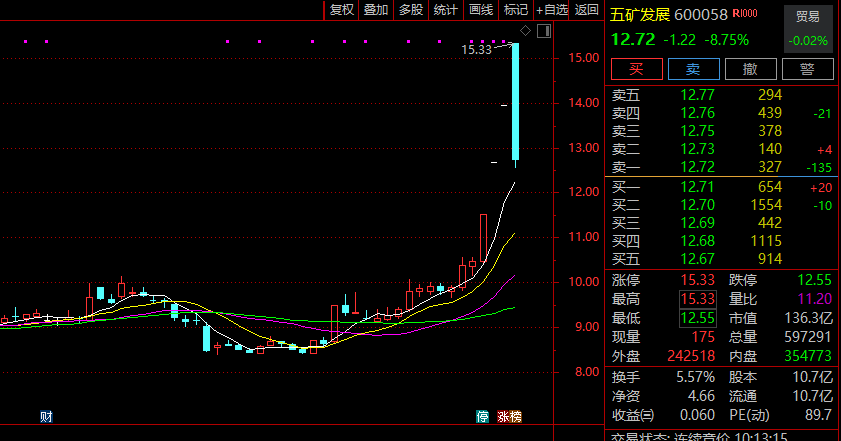
600058,盘中“天地板”,此前3连涨停
Zheng Quan Shi Bao· 2026-01-19 03:08
Market Overview - The A-share market opened lower on January 19, but all three major indices turned positive by the time of reporting. Sectors such as trade agency, storage chips, and semiconductors saw significant gains, while AI marketing, internet, software services, communication equipment, and media entertainment sectors experienced notable declines [1] - In the Hong Kong market, both the Hang Seng Index and the Hang Seng Tech Index were in the red. Notable movements included a more than 9% increase in Changfei Optical Fiber and Cable, while Alibaba fell nearly 3% and Xiaomi Group and SMIC dropped over 1% [1] Company Specifics - WISCO Development (600058) experienced a "limit-up and limit-down" trading session after three consecutive days of stock price increases. The company announced plans to swap major assets related to its original business with 100% equity of WISCO Mining and Lu Zhong Mining held by its controlling shareholder, WISCO Group. The transaction will involve issuing shares and cash payments to acquire the assets, with the original business assets being divested and the new assets focusing on iron ore mining and processing [4][5] Industry Insights - The electric grid equipment sector showed active trading, with companies like Hancable and Senyuan Electric achieving consecutive gains, and Guodian Electric hitting the daily limit. Analysts noted that the National Grid Company plans to invest 4 trillion yuan in fixed assets during the 14th Five-Year Plan, representing a 40% increase from the previous plan. This investment is expected to drive growth in the electric grid equipment industry, especially with rising power demand driven by AI capabilities [9] - The AI application sector is experiencing a rebound, with companies like Baina Qiancheng and Giant Network seeing significant stock price increases. OpenAI's recent announcement to test advertising in its free and subscription tiers indicates a shift towards commercialization in the AI field, as the underlying model technology matures and costs decrease [11][13]
A股早评:三大指数集体低开,AI应用继续调整,黄金白银价格再创历史新高,贵金属板块高开,容百科技竞价跌停
Ge Long Hui· 2026-01-19 01:53
Core Viewpoint - The A-share market opened lower with all three major indices declining, influenced by rising safe-haven demand due to Trump's tariff threats, leading to record highs in gold and silver prices [1] Market Performance - The Shanghai Composite Index opened down 0.27% at 4090.72 points [1] - The Shenzhen Component Index opened down 0.41% [1] - The ChiNext Index opened down 0.6% [1] Sector Movements - Precious metals sector opened higher due to increased demand for safe-haven assets [1] - AI application concept stocks continued to adjust downwards [1] Company Specifics - Rongbai Technology (688005) faced a limit down in trading after the China Securities Regulatory Commission initiated an investigation into misleading statements related to a significant contract announcement [1]

中信建投:主动降温下跨年行情的变化
Ge Long Hui· 2026-01-19 00:59
Core Viewpoint - The report from CITIC Securities indicates that the cross-year market trend has intensified since the beginning of the year, and after a recent cooling period, adjustments in hotspots have emerged. The purpose of this cooling is to mitigate potential short-term severe consequences of an overheated market, while maintaining a generally positive long-term outlook. The implementation of this policy is noted to be more mature and forward-looking [1] Industry Configuration - From an industry allocation perspective, sectors such as AI computing power, non-ferrous metals, innovative pharmaceuticals, and automotive are showing significant signs of prosperity [1] - Previous market hotspots like commercial aerospace and AI applications may undergo phase adjustments, suggesting a shift in investment focus [1] Emerging Themes - Other thematic investment opportunities to consider include ultra-high voltage, brain-computer interfaces, and controllable nuclear fusion, indicating a diversification in potential growth areas [1]
