
军工

Search documents
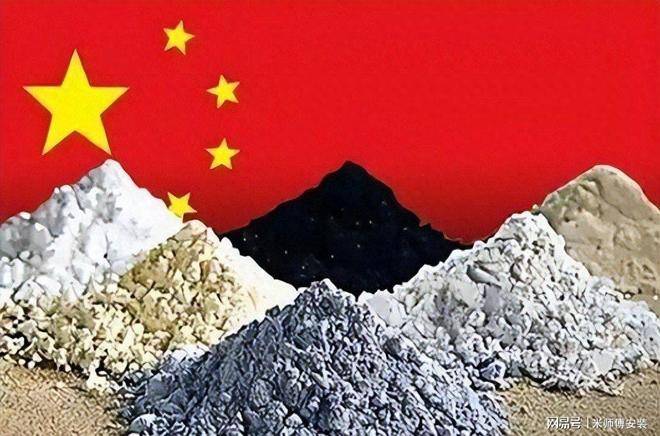
特朗普号令50国成立稀土联盟,中国又有一场硬仗要打?
Sou Hu Cai Jing· 2026-02-08 07:50
Core Viewpoint - The United States is attempting to form a rare earth alliance with over 50 countries to counter China's dominance in critical mineral resources, indicating a potential escalation in the resource battle between the two nations [1][3]. Group 1: U.S. Strategy and Actions - The U.S. government is actively inviting global participation for a key minerals ministerial meeting, aiming to reshape global mineral resource distribution rules and create a "mineral NATO" that excludes China [3]. - The U.S. is breaking its long-standing free market principles by intervening directly in the critical minerals market, which it claims has become dysfunctional due to price volatility and dominance by specific countries [3]. - The U.S. decision to establish a price floor mechanism for minerals, promising government buyouts during market downturns, may lead to increased costs for American industries, particularly in defense and high-tech manufacturing [10]. Group 2: Challenges and Risks - The U.S. decision-makers are perceived to be underestimating the complexities of mineral extraction and refining, which are deeply rooted in a large industrial system, rather than being isolated commercial activities [5][6]. - The extraction of rare metals like gallium and indium is primarily a byproduct of aluminum, zinc, and steel industries, which the U.S. lacks due to decades of deindustrialization [8]. - The proposed U.S. mineral alliance may face internal conflicts, as resource-exporting countries like Australia and Canada may benefit from rising prices, while manufacturing nations like Europe and Japan rely on stable, low-cost raw materials [12]. Group 3: China's Position and Advantages - China has maintained a competitive edge in the rare earth sector for over 30 years, supported by its vast steel and electrolytic aluminum industries, which allow for low-cost extraction of rare metals [8][14]. - China's strategy includes increasing domestic exploration and establishing a global presence in mineral sourcing, leveraging its comprehensive industrial system to counter U.S. financial maneuvers [14]. - The U.S. approach, which relies on financial and geopolitical strategies, may not effectively address the fundamental industrial challenges posed by mineral extraction and processing [16].

特朗普被指向盟友施压
Xin Lang Cai Jing· 2026-02-08 07:09
Core Viewpoint - The article discusses President Trump's executive order prioritizing the export of U.S. weapons to countries that enhance their defense capabilities, indicating a strategy to pressure allies like Japan to increase defense spending [1] Group 1: Executive Order Details - The executive order emphasizes that U.S. military equipment is of world-class quality and aims to utilize arms exports as a diplomatic tool [1] - Three criteria for prioritizing arms exports are outlined: investment in national defense, significant roles in U.S. military operations, and contributions to U.S. economic security [1] Group 2: Implications for Allies - U.S. Defense Secretary Esper has adopted a tough stance on allies increasing defense spending, warning that countries not contributing will face serious consequences and that "free-riding" will not be tolerated [1] - The move may also aim to stimulate the U.S. domestic defense industry through increased arms sales [1]
华金证券:春季行情未完 持股过节
Xin Lang Cai Jing· 2026-02-08 07:05
Group 1 - The short-term performance of A-shares before the Spring Festival may influence the market after the holiday, with historical data showing that in 16 years since 2010, there were 9 instances where the Shanghai Composite Index rose or fell in the first five trading days before the festival and then moved in the opposite direction on the first trading day after the festival [8][2] - Economic and profit expectations during the Spring Festival may improve, with anticipated favorable data for travel and consumption, as well as a potential rebound in real estate sales due to low base effects and strong policy support [9][2] - Liquidity is expected to remain loose during the Spring Festival, with the central bank likely to increase net injections to counter seasonal tightening, and stock market funds may maintain a certain level before accelerating back after the holiday [9][2] Group 2 - After a short-term adjustment, technology growth and cyclical sectors are expected to outperform, supported by policy and industry trends, with historical patterns indicating that leading sectors may regain strength post-adjustment [10][3] - Current observations suggest that technology growth and certain cyclical industries are likely to remain dominant, driven by supportive policies and ongoing industry trends, particularly in commercial aerospace and AI [10][3] - The consumption sector's short-term rebound may be a result of valuation recovery, but its sustainability is uncertain due to weak consumer confidence and the absence of a profit turning point [11][3] Group 3 - Industry allocation recommendations suggest a balanced approach towards technology growth, certain cyclical sectors, and consumption, with specific industries like automotive, military, beauty care, machinery, and communication expected to perform well in 2025 [11][3] - The current sentiment towards growth sectors such as pharmaceuticals, automotive, and computing is relatively low, indicating potential for future gains [11][3] - Suggested low-entry allocations include sectors with upward policy and industry trends, such as electronics (semiconductors, AI hardware), media (AI applications, gaming), and healthcare [11][3]
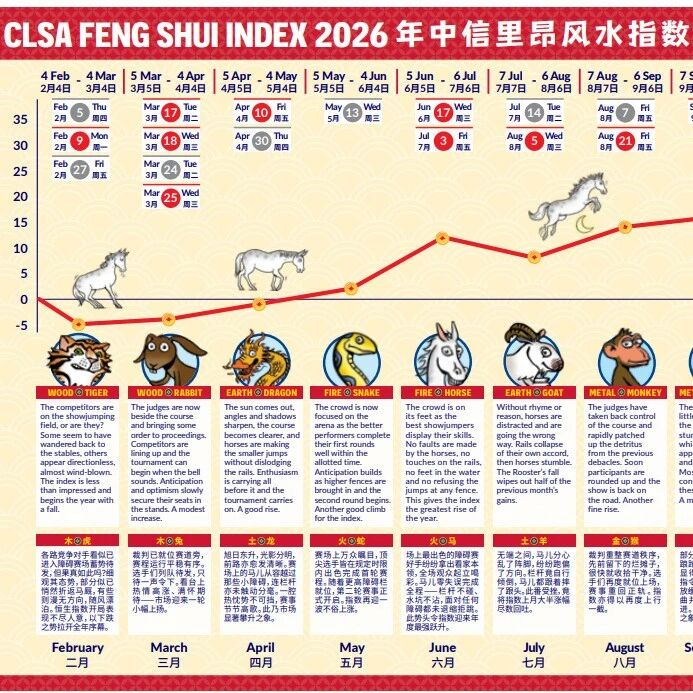
看好2026年恒生指数!中信里昂,再出风水研报
券商中国· 2026-02-07 23:29
Core Viewpoint - The report from Citic Lyon emphasizes that 2026 will mark a departure from the hesitant trials of the Year of the Snake, with the Year of the Horse bringing a confident and powerful momentum to the market [5]. Market Predictions - The report provides a month-by-month forecast for the Hang Seng Index in 2026, predicting a poor start in February, followed by a series of upward movements from March to June, with the strongest performance expected in June. A significant decline is anticipated in December, before a rebound in January 2027 [5][6]. Industry Predictions - **Wood Sector**: Expected to be the strongest throughout the year, with a rebound anticipated towards the end of the year, benefiting agriculture and related industries [6]. - **Fire Sector**: Predicted to perform well, particularly in energy production and communication, but may face challenges in the last two months of the year due to excessive water influence [6]. - **Earth Sector**: Expected to have a moderate performance, with potential strength in construction materials like sand and cement, while real estate may struggle [6]. - **Metal Sector**: Forecasted to have a strong year, particularly in machinery manufacturing and construction steel, with a focus on innovation in financial products [6]. - **Water Sector**: Anticipated to be the weakest element, with stagnation expected in shipping and tourism, and limited growth in trade-related sectors [7]. Review of 2025 Predictions - The report reflects on the unpredictable nature of 2025, highlighting significant fluctuations in the Hang Seng Index, including unexpected declines and rebounds, aligning with earlier predictions of market behavior [8][10].
任泽平:此轮牛市十年一遇
泽平宏观· 2026-02-07 16:06
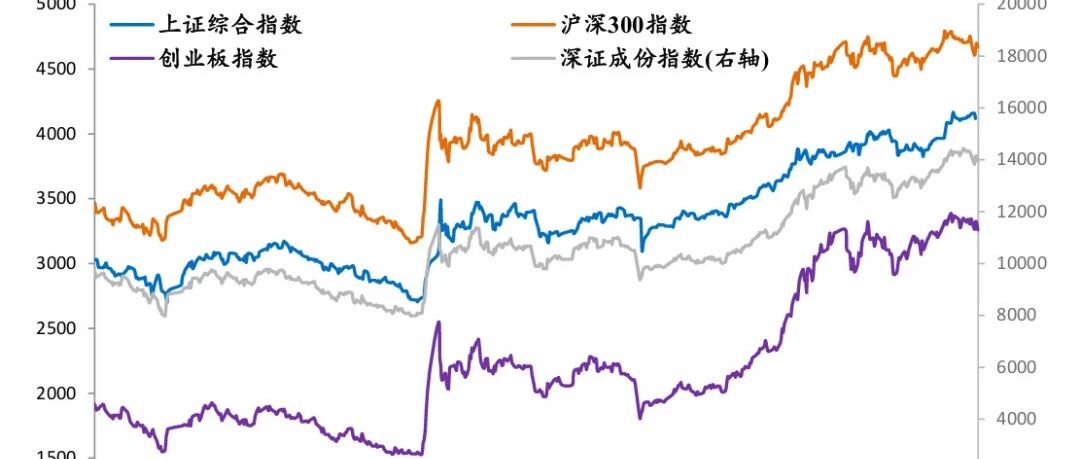
Core Viewpoint - A new bull market has begun since September 2024, driven by strong policy support, a new technological revolution, and abundant liquidity, marking it as a once-in-a-decade opportunity for investors [2][10]. Group 1: Characteristics of the Current Bull Market - This bull market is described as "epic" and is the third significant bull market since 2000, following the "super cycle bull" from 2004-2007 and the "reform bull" from 2014-2015 [3][5]. - The current bull market is characterized by a significant rise in stock indices, with the Shanghai Composite Index increasing by 56.2% and the ChiNext Index rising by 122.2% from their respective lows [6]. - Trading volume has surged, with daily trading exceeding 3 trillion yuan, compared to a few hundred billion before September 2024 [9]. Group 2: Driving Forces Behind the Bull Market - The bull market is supported by three main drivers: continuous policy easing, a new technological revolution, and abundant liquidity, creating a "confidence bull" [11]. - Policy easing includes significant monetary policy adjustments, such as interest rate cuts and relaxed housing market regulations, which have greatly exceeded market expectations [11]. - The technological revolution is marked by advancements in artificial intelligence, robotics, and semiconductor industries, which are leading the market's growth [12]. - The liquidity situation has led to a phenomenon of "asset scarcity," with increased household savings and a surge in retail investor participation, as evidenced by a 213.1% year-on-year increase in new A-share accounts [11][12]. Group 3: Historical Missions of the Bull Market - This bull market is seen as fulfilling three historical missions: supporting the development of new productive forces, aiding in major power competition, and repairing household balance sheets [14]. - The growth of new productive forces is crucial for transitioning to high-quality economic development, with the stock market providing necessary capital for high-tech and innovative enterprises [15]. - The bull market plays a strategic role in the context of U.S.-China competition, particularly in high-tech sectors, which are vital for national security and economic stability [15]. - The recovery of household balance sheets is essential, as the real estate market has seen significant declines, and the stock market's growth can help offset these losses and stimulate consumer spending [16]. Group 4: Future Prospects and Outlook - The sustainability of the bull market depends on continued macroeconomic policy easing, including further interest rate cuts and fiscal measures to stimulate demand [19][20]. - There is a need for deep reforms in the capital market to ensure a healthy development environment, which could lead to a prolonged bull market rather than volatile fluctuations [20]. - Historical patterns indicate that the A-share market has experienced shorter bull markets compared to longer bear markets, highlighting the need for structural changes to achieve a more stable market environment [21].
春季行情未完,持股过节
Huajin Securities· 2026-02-07 08:15
Group 1 - The report suggests maintaining a balanced allocation in technology growth, certain cyclical, and consumer sectors before the holiday, with potential outperformers including automotive, military, beauty care, machinery, and communication industries for the 2025 annual report performance [1][3] - The consumer sector's short-term rebound may be a valuation correction, with its sustainability under observation due to weak consumer confidence, lack of profit inflection points, and significant valuation recovery already observed [1][3][36] - Current valuations in growing sectors such as pharmaceuticals, automotive, computers, and machinery are relatively low, indicating potential for future growth [1][3] Group 2 - Historical analysis indicates that after adjustments in the spring market, leading sectors supported by policy and industry trends may regain their advantage, particularly technology growth and cyclical sectors [1][3][24] - The report highlights that sectors with strong annual report performance growth forecasts, such as automotive (471.5%), military (398.4%), beauty care (378.3%), machinery (275.6%), and communication (242.1%), are likely to perform well in the short term [1][3][32] - The consumer sector has shown a long-term downtrend since 2021, with six rebound instances averaging 21.56% in magnitude, driven by consumer confidence, low valuations, and profit growth [1][3][36]
20cm速递|科创100ETF国泰(588120)涨超0.7%,机构关注制造业与科技景气扩散
Mei Ri Jing Ji Xin Wen· 2026-02-06 07:07
Core Viewpoint - The technology and manufacturing sectors are experiencing a positive expansion in economic conditions, with a notable focus on the AI industry cycle driving growth beyond just the tech sector [1] Group 1: Market Performance - The Cathay Innovation 100 ETF (588120) rose over 0.7% on February 6, indicating institutional interest in the manufacturing and technology sectors [1] - The Cathay Innovation 100 ETF tracks the Innovation 100 Index (000698), which includes 100 securities with large market capitalization and good liquidity from the Sci-Tech Innovation Board [1] Group 2: Sector Analysis - In the TMT (Technology, Media, and Telecommunications) sector, the pre-earnings expectations for electronics and communications remain stable for 2024, while improvements are seen in computing and media [1] - The AI industry cycle is not only impacting the tech sector but is also spreading to midstream manufacturing sectors such as machinery, chemicals, power equipment, and military [1] Group 3: Profitability Trends - Export growth is contributing to profitability across various industries, with performance improvements being validated in most sectors [1] - The current economic landscape is characterized by a "K-shaped" recovery in profitability, where high-quality companies are seeing a recovery in earnings first, while weaker firms are accelerating their exit from the market [1]
巩固战略支点、助伊朗增强军力,俄罗斯在中东打出组合拳
Zhong Guo Xin Wen Wang· 2026-02-06 06:20
Group 1 - The core viewpoint of the articles highlights Russia's active role in the Middle East, particularly in strengthening its military influence through strategic partnerships with Syria and Iran [1][2][3] - Russia is reshaping its military presence in Syria by negotiating the retention of key military bases while withdrawing from certain strategic locations, allowing for a more concentrated military force [1][2] - The relationship between Russia and Syria is deepening, with Syria expressing gratitude for Russian support in stabilizing its internal situation amidst external challenges [2][4] Group 2 - Russia's military support to Iran includes the delivery of advanced weaponry, such as the Mi-28NE helicopters and a planned sale of 48 Su-35 fighter jets, which will enhance Iran's military capabilities [3][4] - The Su-35 fighter jets, despite having slightly weaker stealth capabilities, are comparable in firepower and operational range to Israel's current aircraft, potentially altering the balance of air power in the Middle East [4] - The ongoing military cooperation between Russia and Iran is seen as a response to U.S. pressure on Iran, reinforcing their strategic partnership [4]
英媒:法国希望英国支付20亿英镑,加入欧盟对乌贷款计划
Huan Qiu Wang· 2026-02-06 03:40
Core Viewpoint - France is seeking up to £2 billion (approximately 188 billion RMB) from the UK to join the EU's €90 billion (approximately 736.5 billion RMB) loan plan for Ukraine [1][3]. Group 1: Loan Plan Details - The EU has reached a preliminary agreement allowing UK defense companies to participate in bidding for contracts related to the €90 billion loan plan for Ukraine [3]. - Ukraine can utilize €60 billion of the loan over the next two years to support its resistance against Russian military actions, while the remaining funds will be allocated for general budget support [3]. - The EU plans to finance the loan by issuing a combination of short-term and long-term bonds, as there are currently no available funds within the EU or its member states [3]. Group 2: Interest Payment Discussions - Initial discussions suggested that France proposed the UK cover 10% to 12% of the total interest payments, which could amount to €24 billion over seven years, although this was denied by a French source [3][4]. - The interest expenses will be uniformly borne by the EU budget to prevent additional debt pressure on Ukraine [3]. Group 3: UK Participation in Defense Plans - The Netherlands and Germany are leading efforts among EU member states to overcome French resistance to UK participation in EU defense plans [4]. - The UK is preparing for discussions with the EU regarding a potential second round of the "European Security Action" (SAFE) plan, which aims to enhance defense operations across Europe [4][6]. - The first round of negotiations for the SAFE plan, which has a total scale of €150 billion, collapsed in November 2025, with differing opinions on the reasons for the failure [6].

航天发展股价跌5.13%,华宝基金旗下1只基金重仓,持有57.03万股浮亏损失93.54万元
Xin Lang Ji Jin· 2026-02-06 02:22
Group 1 - The core point of the news is that Aerospace Development Co., Ltd. experienced a decline of 5.13% in its stock price, reaching 30.36 yuan per share, with a trading volume of 4.948 billion yuan and a turnover rate of 9.86%, resulting in a total market capitalization of 48.529 billion yuan [1] - The company, established on November 20, 1993, and listed on November 30, 1993, is located in Fuzhou, Fujian Province, and its main business includes electronic blue army, command communication, electromagnetic security, and power generation equipment [1] - The revenue composition of the company's main business includes: marine equipment and power equipment at 32.51%, communication and command products at 32.01%, blue army equipment and related products at 26.09%, data security application products at 9.19%, and space information application products at 0.20% [1] Group 2 - From the perspective of fund holdings, only one fund under Huabao holds Aerospace Development, specifically the Huabao CSI Military Industry ETF (512810), which held 570,300 shares in the fourth quarter, accounting for 2.5% of the fund's net value, ranking as the eighth largest holding [2] - The Huabao CSI Military Industry ETF (512810) was established on August 5, 2016, with a latest scale of 753 million yuan, and has achieved a return of 6.68% this year, ranking 1384 out of 5564 in its category; over the past year, it has returned 48.49%, ranking 1105 out of 4288; and since inception, it has returned 69.51% [2] - The fund manager of Huabao CSI Military Industry ETF (512810) is Hu Jie, who has a cumulative tenure of 13 years and 117 days, with the fund's total asset scale at 101.358 billion yuan, achieving the best return of 162.35% and the worst return of -98.01% during the tenure [3]
