
轨道交通

Search documents
新华财经晚报:商务部已批准部分稀土出口通用许可申请
Xin Hua Cai Jing· 2025-12-18 14:41
Key Focus - The Ministry of Commerce strongly opposes the European Commission's intensive investigations into multiple Chinese companies, highlighting the discriminatory nature of these actions and calling for a fair business environment for foreign investment in Europe [2][3] - The Ministry of Commerce has approved some general license applications for rare earth exports, indicating progress in compliance and export management [3] - The Ministry of Industry and Information Technology plans to strengthen capacity regulation in the photovoltaic industry, aiming for a dynamic balance of production capacity by 2026 [3] - The State Administration for Market Regulation is focused on optimizing the business environment and addressing "involution" competition to promote healthy market order [4] Domestic News - The State Council has issued opinions on combating illegal activities related to tobacco, emphasizing strict measures against counterfeiting, smuggling, and illegal sales to protect national interests and consumer rights [1] International News - The U.S. President Trump is expected to announce a nominee for the next Federal Reserve Chair, advocating for significant interest rate cuts [6] - The Norwegian central bank has maintained its policy rate at 4%, indicating no urgency to lower rates despite market expectations [6] - Japan's government is increasing its sensitivity to market conditions, particularly regarding the yen's performance and long-term interest rates [6] - Israel has approved a significant natural gas export agreement with Egypt, marking a historic milestone for the country [6]

多图直击!深圳地铁13号线一期北段,计划今年年底投入运营
Nan Fang Du Shi Bao· 2025-12-18 08:57
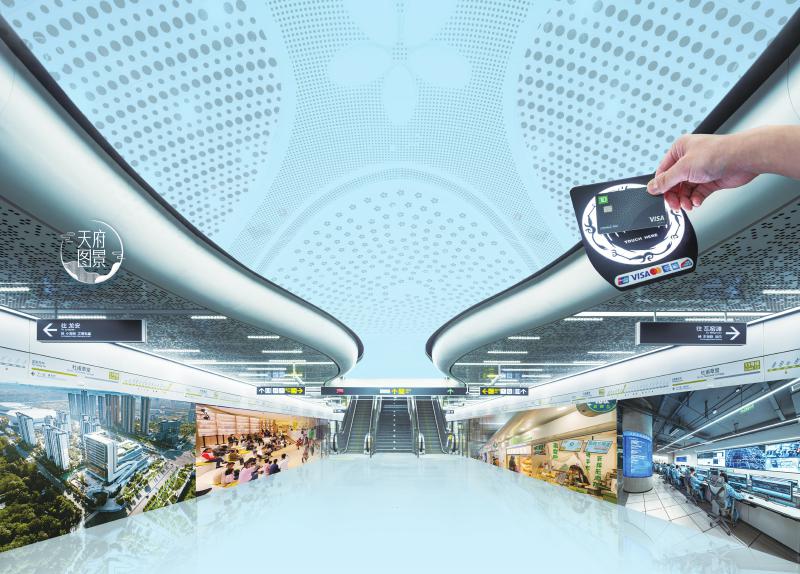
Core Viewpoint - The Shenzhen Metro Line 13 Phase I North Section has successfully passed completion acceptance and is set to open by the end of this year, enhancing public transportation efficiency and convenience for citizens [1][3]. Group 1: Project Overview - The Line 13 Phase I runs from Shenzhen Bay Port Station to Shangwu Station, with a total of 9 stations in the North Section, while the South Section has already been operational since the end of 2024 [1]. - The operational time for the line will align with the Shenzhen Metro network, running from 6:30 AM to 11:00 PM, reducing travel time from Shangwu Station to Shenzhen Bay Port Station to 37 minutes [2]. Group 2: Technological and Ecological Features - The design of Line 13 Phase I incorporates a "Technology + Ecology" concept, aiming to create a warm, comfortable, and vibrant subway environment [2]. - The stations will feature smart customer service centers, equipped with intelligent ticketing terminals and self-service machines, allowing passengers to complete various operations independently [2]. Group 3: Economic and Regional Impact - The operation of Line 13 Phase I will expand the coverage of Shenzhen's metro network, alleviate north-south traffic pressure in the central and western regions, and enhance commuting efficiency [3]. - The line is expected to accelerate the flow of technology, industry, and talent resources along its route, contributing to high-quality regional development and facilitating economic collaboration between Shenzhen and the Greater Bay Area [3]. Group 4: Station Design and Cultural Integration - The design of the stations follows principles of functionality, cost-effectiveness, and low carbon emissions, with a theme of "Sunshine + Sharing" that highlights technological and ecological cultural elements [4]. - Each station features unique designs that reflect local cultural characteristics, such as the Shigu Station inspired by drone technology and the Shiyan Station that integrates natural elements from nearby parks [4].
四川长虹转型记:从家电巨头到国产航空动力“核心心脏”
Sou Hu Cai Jing· 2025-12-18 05:42
Core Viewpoint - Changhong has successfully transformed from a traditional home appliance manufacturer into a key supplier in the aerospace power sector, showcasing significant advancements in technology and innovation [1][5]. Group 1: Company Transformation - Changhong's transition is rooted in its historical background as a state-owned enterprise established in 1958, originally focused on military engineering, which has facilitated its entry into high-end manufacturing sectors like aerospace and new energy [1][3]. - The company has leveraged state-owned enterprise reforms to accelerate its transformation, balancing its core home appliance business with investments in emerging industries [1][5]. Group 2: Aerospace Achievements - In 2023, Changhong's self-developed main/APU battery pack was used in the C919, China's first domestically produced passenger aircraft, achieving the country's first CTSOA certification for aviation batteries [3]. - The company has become one of China's largest suppliers of emergency power systems for aviation, holding over 70% market share domestically and supplying to international clients like Boeing and Airbus [3][4]. Group 3: Investment and Innovation - Changhong invested over 5 billion yuan in 2024, supporting more than 190 major innovation projects and holding 149 patents, with a global research and development network established [4][5]. - The company has implemented a mixed-ownership reform, attracting 1.669 billion yuan in social capital and initiating an employee stock ownership plan to enhance innovation and engagement [5]. Group 4: Financial Performance - In 2024, Changhong's total revenue surpassed 103.7 billion yuan, with emerging industries contributing 9.3 billion yuan, reflecting a 57% year-on-year growth [5]. - The home appliance segment remains a strong foundation, generating 45.092 billion yuan in revenue, a 15.29% increase from the previous year, while innovations in aerospace and transportation are enhancing the overall product offerings [5].

众合科技(000925.SZ):目前主要业务不涉及光刻机业务
Ge Long Hui· 2025-12-16 13:08
Group 1 - The core business of the company does not involve lithography machines [1] - The company is focusing on consolidating its existing businesses in rail transportation and semiconductor materials [1] - The company is continuously concentrating on space information business to create a "three-dimensional transportation" scenario [1]

祥和实业(603500):前三季度营收净利双增 拟发可转债募投扩张产能+布局新产品
Xin Lang Cai Jing· 2025-12-16 08:29
Core Viewpoint - The company reported significant growth in revenue and net profit for Q1-Q3 2025, indicating improved profitability and operational efficiency [1] Financial Performance - For Q1-Q3 2025, the company achieved revenue of 591 million yuan and a net profit attributable to shareholders of 110 million yuan, representing year-on-year growth of 18.46% and 183.59% respectively [1] - The gross margin reached 33.65%, an increase of 8.6 percentage points year-on-year [1] - Operating cash flow increased by 388.47% year-on-year, amounting to 46 million yuan [1] Fundraising and Investment Plans - The company plans to issue convertible bonds not exceeding 400 million yuan to enhance production capacity in high polymer modified materials and develop new railway inspection products [1] - Of the raised funds, 280 million yuan will be allocated to the "Intelligent Equipment Production Base Project," aimed at producing 450 smart railway inspection vehicles annually [1] - 50 million yuan will be used for a new production line for modified plastic materials, and 70 million yuan will supplement working capital [1] - The company intends to invest 2 million yuan to acquire a 5% stake in Hezhixiang, a company specializing in polymer material modification [1] Market and Product Applications - The irradiated modified PTFE can be applied in various fields, including mechanical seals, automotive thermal management, and defense technology [2] - Hezhixiang has engaged in technical exchanges with companies like Sanhua Automotive and Shuanghuan Transmission, exploring potential collaborations [2] Future Projections - The company is expected to achieve revenues of 813 million yuan, 952 million yuan, and 1.095 billion yuan for 2025-2027, with net profits of 141 million yuan, 174 million yuan, and 202 million yuan respectively, reflecting growth rates of 86.5%, 23.6%, and 16.4% [2] - Corresponding EPS for these years are projected to be 0.42 yuan, 0.52 yuan, and 0.61 yuan, with PE multiples of 27X, 22X, and 19X based on the current stock price [2]

轨道交通“第四城” 又有了新目标
Mei Ri Jing Ji Xin Wen· 2025-12-16 06:45
Core Insights - Chengdu is transitioning from a "metro era" to a "city evolution" phase, leveraging its rail transit system to drive industrial upgrades and urban development [1][13] - The opening of Line 30 marks a significant advancement in smart rail technology, enhancing operational efficiency and safety through autonomous systems [2][10] - Chengdu's rail transit industry has evolved into a comprehensive ecosystem, with over 570 related enterprises contributing to a high local supply rate [3][4] Industry Development - Chengdu's rail transit has expanded its operational mileage to 758.245 kilometers, solidifying its position as the fourth-largest rail transit city in China [1] - The city is fostering a "smart" rail environment, with Line 30 being the first in the country to implement "regular full automation + train-to-train communication" technology [2] - The rail transit sector has achieved a local supply rate exceeding 75%, with a focus on self-sufficiency across various core systems [3] Urban Planning and Development - The TOD (Transit-Oriented Development) model is being implemented to optimize urban space and enhance industrial growth, positioning rail stations as new urban hubs [6][8] - Chengdu aims to become a TOD model city, integrating mixed-use developments around transit stations to facilitate population and industry clustering [7][8] - The city is rethinking urban competition by redefining the role of rail stations as multifunctional urban centers, enhancing connectivity and quality of life [7][11] Economic Impact - The rail transit system is seen as a catalyst for economic growth, facilitating the efficient flow of capital, talent, and technology within the Chengdu metropolitan area [10][12] - The integration of rail transit with urban development is expected to create a vibrant, livable city that attracts businesses and residents alike [9][13] - Chengdu's rail network is not just a transportation system but a strategic engine for urban transformation, influencing spatial layouts and economic dynamics [13]
轨道交通“第四城”,又有了新目标
Mei Ri Jing Ji Xin Wen· 2025-12-16 06:38
Core Insights - Chengdu's metro system is evolving from merely transporting people to becoming a catalyst for urban development, industry upgrade, and talent attraction as it approaches a milestone year in 2025 [2] - The city is transitioning from a phase of expansion to one focused on value creation, with a goal to enhance the modern transportation system as part of high-quality urban development [2] Group 1: Metro Expansion and Technology - Chengdu's metro system will add 87.5 kilometers of new lines this year, bringing the total operational length to 758.245 kilometers, solidifying its position as the fourth-largest metro system in China [2] - The newly opened Line 30 is the first in the country to utilize "conventional full automation + train-to-train communication" technology, enhancing operational efficiency and safety [5] - The introduction of train-to-train communication has optimized ground equipment, making the system more integrated and reliable [5] Group 2: Industry Ecosystem and Innovation - Chengdu is becoming a global testing ground for rail transit technology, with over 570 companies in the rail transit supply chain, achieving a local supply rate exceeding 75% [7] - The collaboration model among leading companies like CRRC Chengdu has fostered a robust ecosystem, with 188 local firms acting as stable suppliers [9] - The rail transit industry cluster in Chengdu is projected to exceed 400 billion, driven by a comprehensive approach to manufacturing and innovation [9] Group 3: Urban Development and TOD Model - Chengdu is adopting a Transit-Oriented Development (TOD) model, which integrates urban planning with rail transit to enhance city functionality and attract industries [10][12] - The TOD approach emphasizes high-density station development, mixed-use land, and collaborative transportation and land development, creating a sustainable urban environment [12] - The city aims to optimize urban space through the TOD model, positioning itself as a leading example in urban governance and development [14][16] Group 4: Economic and Social Impact - The metro system is seen as a vital artery for the urban economy, facilitating the efficient flow of capital, talent, and technology [18][20] - Chengdu's rail network is reshaping the spatial layout of industries, promoting a new growth logic that clusters around transit lines [21] - The ongoing development of the metro system is expected to enhance Chengdu's attractiveness as a modern international city, contributing to its evolution into a globally influential urban center [22][25]
2026-2032中国固定型辙叉行业市场供需、竞争格局、投资策略分析报告
Sou Hu Cai Jing· 2025-12-16 01:59
Group 1 - The core viewpoint of the articles emphasizes the strong support and development of the rail transit industry in China, driven by national policies and strategic plans aimed at enhancing transportation infrastructure [2][3][4]. - The rail transit industry is categorized into two main systems: railway systems and urban rail transit systems, both of which play a crucial role in the national economy and urban population management [3][4]. - The investment in fixed assets for railways reached 764.5 billion yuan in 2023, with new lines totaling 3,637 kilometers, indicating a robust growth trajectory in railway infrastructure [4]. Group 2 - According to the "14th Five-Year Plan," China's railway operating mileage is projected to increase from 146,000 kilometers in 2020 to 165,000 kilometers by 2025, with high-speed rail expected to grow from 38,000 kilometers to 50,000 kilometers [7]. - By the end of 2024, the total railway operating mileage is anticipated to reach 162,000 kilometers, with high-speed rail accounting for 48,000 kilometers, highlighting significant growth in the sector [7]. - The demand for railway system products, such as switches and crossings, is expected to rise due to ongoing infrastructure development and the need for maintenance as existing facilities age [10].
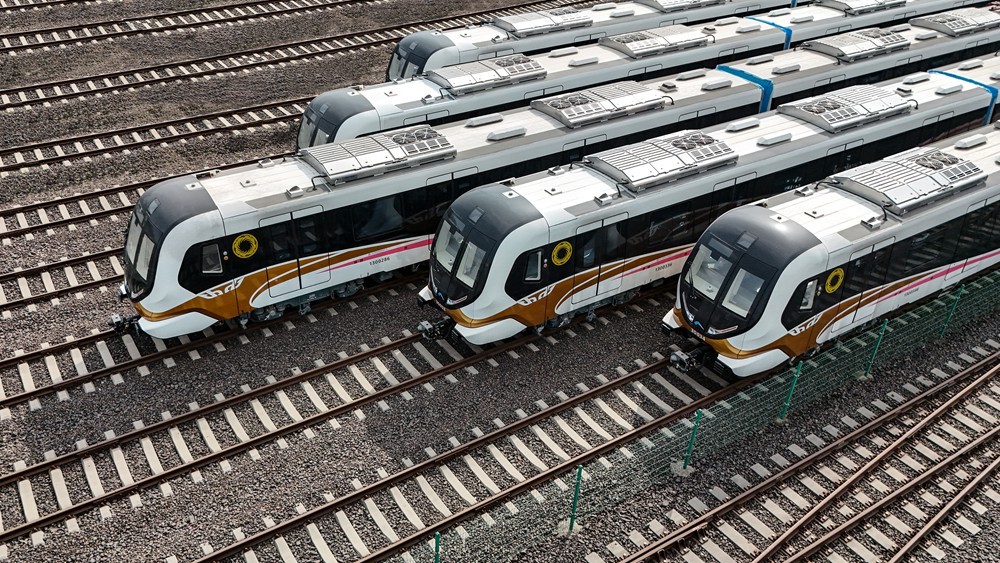
成都轨道交通运营里程突破750公里 世界级轨道交通线网 改变的不只是出行
Si Chuan Ri Bao· 2025-12-16 00:04
Core Insights - Chengdu's metro system has expanded to 18 lines and over 750 kilometers, marking a significant milestone in urban transportation development [2][5][20] - The evolution of Chengdu's metro network reflects a shift from merely facilitating transportation to reshaping urban living and social interactions [7][10][19] Group A: Transportation Development - The recent opening of the first phase of Line 13 and Line 30 enhances Chengdu's metro network, which began with the first line in 2010 [2] - Chengdu's metro system is now a primary mode of transportation for citizens, with a projected daily ridership of 6.15 million by 2025 [6][20] - The green travel rate in Chengdu has reached 77.6%, the highest among major cities in China [6] Group B: Urban Transformation - The metro network's structure has evolved into a "ring + radial + tangential" model, facilitating urban expansion and regional development [10][11] - The opening of new lines has accelerated the development of surrounding areas, leading to the emergence of modern urban centers [11][12] - Chengdu's metro is a catalyst for a multi-center urban structure, enhancing connectivity and resource sharing among cities in the Chengdu metropolitan area [12][20] Group C: Economic Impact - Chengdu's metro system has fostered a comprehensive industrial ecosystem, with a local supply rate of 71.63% for the new trains on Line 13 [17] - The city has attracted over 570 rail-related enterprises, creating a full industrial chain that includes R&D, design, construction, and maintenance [18] - A new rail transit industry fund has been established to invest in key technology and innovative enterprises within the "pan-rail transit" sector [19]
世界级轨道交通线网 改变的不只是出行
Si Chuan Ri Bao· 2025-12-15 21:57
Core Insights - Chengdu's rail transit system is recognized for its role in promoting green travel and urban development, with a daily passenger volume projected to reach 6.15 million by 2025 and a green travel ratio of 77.6%, the highest among major Chinese cities [2][3] - The concept of transportation is evolving from merely facilitating travel to reshaping lifestyles and social interactions, as seen in the shift towards Transit-Oriented Development (TOD) [3][4] - Chengdu's TOD projects have led to the development of over 11 million square meters of urban space, integrating residential, commercial, and recreational areas, thereby enhancing the quality of life for residents [4][5] Group 1: Urban Development and Transportation - The rail network in Chengdu is transforming the city's geographical layout, facilitating the growth of new urban areas and enhancing regional development [5][6] - The opening of new lines, such as the 18th line connecting the city center to the Eastern New District, is accelerating the development of modern urban centers and promoting a multi-center urban structure [5][6] - The integration of surrounding cities into the Chengdu metropolitan area is being supported by the expansion of rail services, fostering industrial clusters and collaborative development [5][6] Group 2: Economic Impact and Industry Growth - Chengdu's rail transit system is not only driving passenger numbers but also fostering a robust industrial ecosystem, with a local supply rate of 71.63% for new trains, indicating strong local manufacturing capabilities [9][10] - The city has attracted over 570 rail transit-related enterprises, creating a comprehensive industrial chain that includes research, design, construction, and maintenance services [10][11] - A new urban transit industry fund has been established to invest in key technology firms within the rail sector, promoting innovation and collaboration among various stakeholders [11][12] Group 3: Community and Lifestyle Changes - The TOD model is reshaping community interactions and living patterns, encouraging residents to choose homes along transit lines and fostering social activities around transit hubs [3][4] - Events like community sports activities highlight the role of rail transit in enhancing local engagement and community spirit [3][4] - The development of vibrant commercial spaces around transit stations is creating new social and economic opportunities for residents [4][5]