
人形机器人

Search documents
半导体板块,逆势走强
财联社· 2026-01-16 07:15
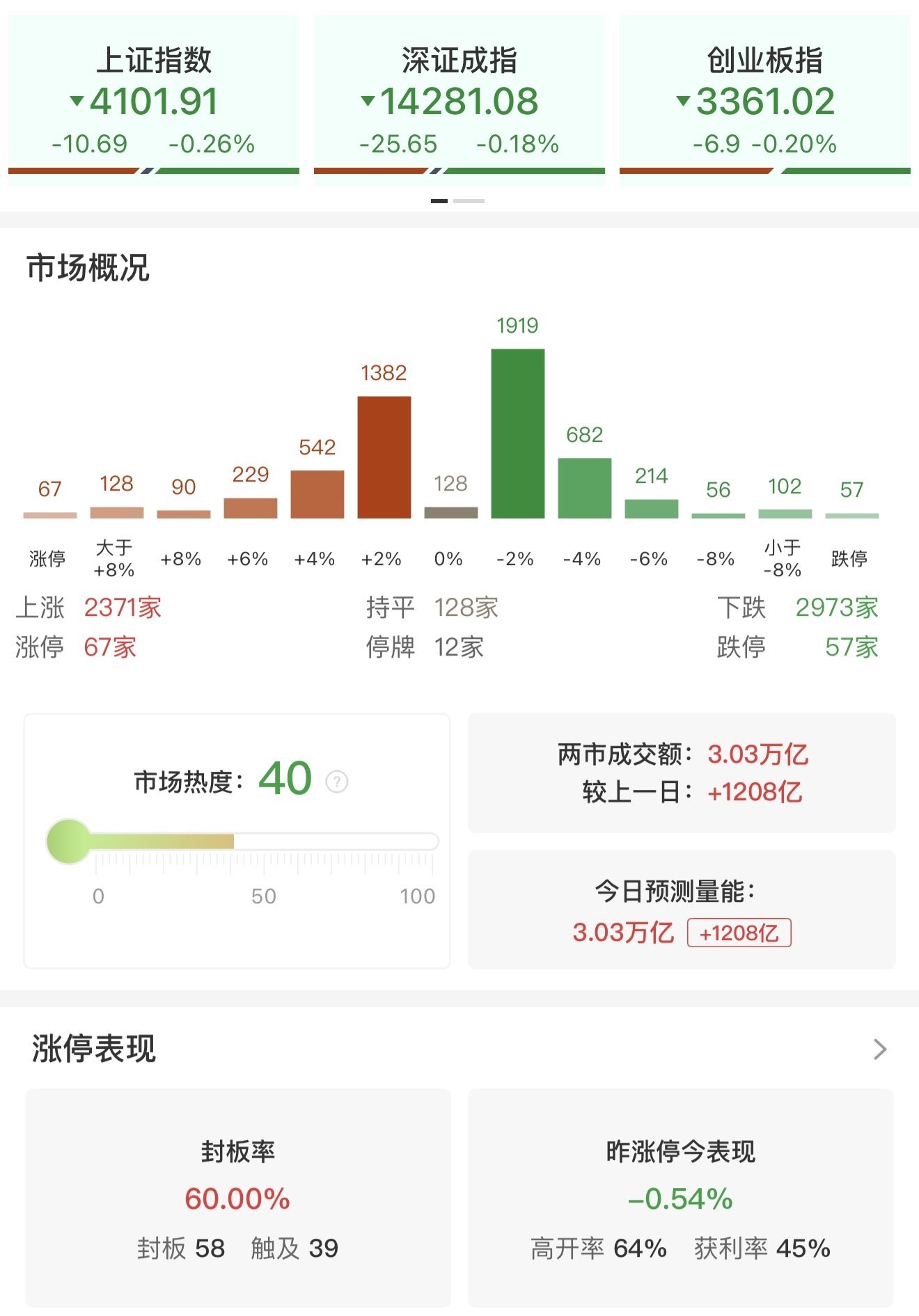
Market Overview - The A-share market opened high but closed lower, with all three major indices declining. The Shanghai and Shenzhen markets had a total trading volume of 3.03 trillion, an increase of 120.8 billion compared to the previous trading day. Over 2900 stocks in the market fell [1][6]. Sector Performance - The semiconductor industry chain showed strong performance, with Changdian Technology hitting the daily limit and reaching a 5-year high. Other stocks like Meike Technology, Kangqiang Electronics, and Shenghui Integration also hit the daily limit. The storage chip concept continued to rise in the afternoon, with Bawei Storage and Jiangbolong reaching historical highs. The humanoid robot concept also saw gains, with stocks like Wuzhou Xinchun and Fangzheng Electric hitting the daily limit. The electric grid equipment sector was active, with Siyuan Electric and Guangdian Electric also hitting the daily limit [1]. Declining Sectors - The oil and gas and AI application sectors experienced significant declines, with the AI application sector facing a wave of limit-downs, including stocks like Xinhua Du, Tianxia Xiu, and Visual China [2]. Index Performance - By the close, the Shanghai Composite Index fell by 0.26%, the Shenzhen Component Index decreased by 0.18%, and the ChiNext Index dropped by 0.2% [3][4].





A股收评:沪指跌0.26%险守4100点、创业板指跌0.2%,半导体、存储芯片及人形机器人概念股走高,AI应用股遭遇跌停潮
Jin Rong Jie· 2026-01-16 07:14
Market Performance - The A-share market experienced a high opening but closed lower, with the Shanghai Composite Index down 0.26% at 4101.91 points, the Shenzhen Component down 0.18% at 14281.08 points, and the ChiNext Index down 0.2% at 3361.02 points. The STAR Market 50 Index rose by 1.35% to 1514.07 points [1] - The total trading volume in the Shanghai and Shenzhen markets reached 3.03 trillion yuan, with over 2900 stocks declining [1] Sector Performance - The semiconductor industry chain showed strong performance, with stocks like Changdian Technology hitting the daily limit and reaching a five-year high. Other stocks such as Meige Technology, Kangqiang Electronics, and Shenghui Integration also hit the daily limit [1][4] - The storage chip concept saw a significant rise in the afternoon, with stocks like Baiwei Storage and Jiangbolong reaching historical highs [1] - The human-robot concept gained traction, with stocks like Wuzhou New Spring and Founder Electric hitting the daily limit [1] - The electric grid equipment sector remained active, with stocks like Siyuan Electric and Guangdian Electric also hitting the daily limit [2] Investment Insights - According to Dongfang Securities, the spring market is not over, and a slow bull market is expected to continue. The market is gradually returning to a healthy and rational state, with recent hot sectors experiencing larger corrections [7] - Shenwan Hongyuan noted that the market is currently in a "structural bull" high area, anticipating some corrections but with limited magnitude. They expect a phase of adjustment after the spring market [8] - China International Capital Corporation (CICC) forecasts a continued slowdown in financial growth in the first half of 2026, with a focus on quality over quantity in fiscal policy [8] Notable Developments - The electric grid company is expected to invest 4 trillion yuan during the 14th Five-Year Plan period, a 40% increase from the previous plan, aimed at promoting high-quality development in the new power system supply chain [2] - The carbon fiber sector saw a rise in stocks like Zhongjian Technology and Huayang Co., with the successful production of domestically made T1000-grade carbon fiber, which will be used in various high-tech applications [3] - The optical module concept also saw a resurgence, with stocks like Shijia Technology and Kechuan Technology hitting the daily limit, driven by an increase in long-term shipment expectations for Google's TPU chips [6]

收评:沪指跌0.26%险守4100点,半导体产业链逆势走强
Feng Huang Wang Cai Jing· 2026-01-16 07:11
Market Overview - The market opened high but closed lower, with all three major indices experiencing declines [1] - The total trading volume in the Shanghai and Shenzhen markets reached 3.03 trillion yuan, an increase of 120.8 billion yuan compared to the previous trading day [1] - Over 2900 stocks in the market fell [1] Sector Performance - The semiconductor industry chain showed strong performance, with Longji Technology hitting the daily limit and reaching a 5-year high, along with other stocks like Meike Technology and Kangqiang Electronics also hitting the daily limit [1] - The storage chip concept saw continued gains in the afternoon, with stocks like Baiwei Storage and Jiangbolong reaching historical highs [1] - The humanoid robot concept rose, with stocks such as Wuzhou New Spring and Founder Electric hitting the daily limit [1] - The electric grid equipment sector was active, with stocks like Siyuan Electric and Guangdian Electric also hitting the daily limit [1] Declining Sectors - The oil and gas sector, along with AI applications, experienced significant declines, with the AI application sector facing a wave of limit-downs [1] - Stocks such as Xinhua Du, Tianxiao, and Visual China all hit the daily limit down [1] Index Performance - The Shanghai Composite Index fell by 0.26%, the Shenzhen Component Index decreased by 0.18%, and the ChiNext Index dropped by 0.2% [1]
收评:沪指跌0.26%险守4100点 半导体产业链爆发
Xin Lang Cai Jing· 2026-01-16 07:04
Market Overview - The market experienced a pullback in the afternoon, with all three major stock indices closing lower [1] - The Shanghai Composite Index closed at 4101.91 points, down 0.26%; the Shenzhen Component Index closed at 14281.08 points, down 0.18%; and the ChiNext Index closed at 3361.02 points, down 0.20% [1] Sector Performance - The semiconductor industry chain continued to strengthen, with stocks such as Huicheng Co., Bawei Storage, and Jiangbolong rising over 10% [1] - The CPO sector was actively trading, with stocks like Sanan Optoelectronics, Changdian Technology, and Tongfu Microelectronics hitting the daily limit [1] - The humanoid robot sector was also active, with stocks like Wuzhou New Spring and Ningbo Huaxiang reaching the daily limit [1] - Conversely, the AI application sector saw a significant decline, with Kunlun Wanwei and BlueFocus dropping over 10%, and stocks like Xinhua Du and Oriental Pearl hitting the daily limit [1] - The tourism and hotel sector faced a pullback, led by a decline in Zhongxin Tourism [1] Overall Market Sentiment - Overall, there were more declining stocks than advancing ones, with over 2900 stocks falling [1]
A股午评 | 股指宽幅巨震,宽基ETF成交额再次放大!AI应用板块持续走低
智通财经网· 2026-01-16 03:55
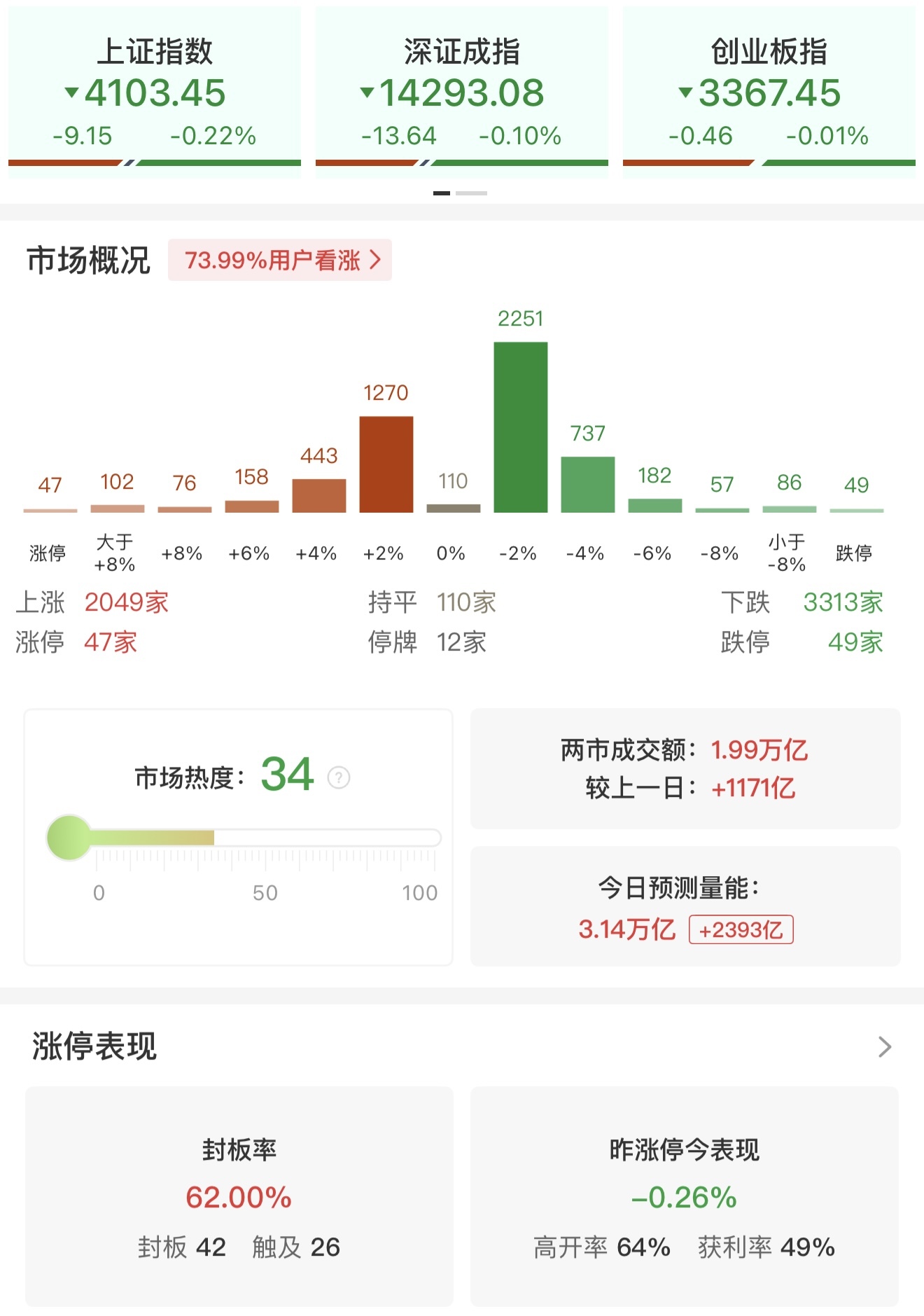
Market Overview - A-shares opened higher but retreated, with all three major indices closing in the red. The Shanghai Composite Index fell by 0.22%, the Shenzhen Component Index by 0.1%, and the ChiNext Index by 0.01%. The half-day trading volume in the Shanghai and Shenzhen markets reached 1.99 trillion yuan, an increase of 117.1 billion yuan compared to the previous trading day [1] ETF Trading Activity - Several broad-based ETFs saw increased trading volumes, with the Huatai-PB CSI 300 ETF, Southern CSI 500 ETF, Huatai-PB A500 ETF, and Huaxia A500 ETF each exceeding 10 billion yuan in trading volume. Additionally, multiple ETFs surpassed 5 billion yuan in trading volume, indicating significant investor interest [1] Sector Performance Strong Sectors - **Electric Grid Equipment and Power Stocks**: Continued to show strength, with stocks like Siyuan Electric, Guangdian Electric, and Huayin Power hitting the daily limit [3] - **Semiconductor Industry**: The entire semiconductor supply chain saw gains, particularly in materials, equipment, and packaging, with stocks like Kangqiang Electronics and Shenghui Integration reaching the daily limit [4] - **Optical Module Concept**: Stocks such as Sijia Technology and Kecuan Technology surged, driven by positive forecasts for Google's TPU chip shipments [5] - **Humanoid Robot Concept**: Stocks like Rifei Co., Henggong Precision, and Slin Intelligent Drive performed well, with significant gains observed [6] Weak Sectors - **AI Applications**: Experienced a significant pullback, with major stocks like Xinhua Net and People's Daily hitting the daily limit down [2] - **Oil and Gas Stocks**: Showed volatility, with companies like Tongyuan Petroleum and Keli Co. dropping over 10% [2] - **Lithium Battery Sector**: Continued to decline, with stocks like Tianji Co. and Lingpai Technology falling more than 8% [2] - **Tourism and Retail**: Both sectors faced corrections, with stocks like Zhongxin Tourism and Sanjiang Shopping hitting the daily limit down [2] Institutional Insights - **Dongfang Securities**: Anticipates that the spring market is not over, predicting a slow bull market continuation. The Shanghai Composite Index is expected to fluctuate between 4,000 and 4,200 before the Spring Festival, focusing on growth styles, especially in future industries [7] - **Shenwan Hongyuan**: Indicates that the market is currently in a "structural bull" phase, with expected corrections but limited amplitude. A significant bull market is likely concluding, leading to a potential phase of quarterly adjustments [8] - **CICC**: Projects that financial growth rates may continue to slow in the first half of 2026, influenced by government debt expansion and a focus on quality over quantity in fiscal policy [9]
A股午评:沪指跌0.22%,电网设备、半导体板块逆势上涨,AI应用板块回调
Ge Long Hui· 2026-01-16 03:43
A股三大指数早盘高开低走,截至午间收盘,沪指跌0.22%报4103.45点,深证成指跌0.1%,创业板指跌 0.01%,北证50涨0.37%。全市场成交额20063亿元,较上日成交额放量1111亿元,全市场超3300只个股 下跌。盘面上,4万亿新型电力系统投资敲定,电网设备板块大涨,汉缆股份、森源电气涨停封板;台 积电财报超预期且展望乐观带动半导体及光刻机板块上涨,蓝箭电子、佰维存储涨超10%;工程机械、 人形机器人概念涨幅居前。AI应用板块继续回调,油气、医疗服务、旅游及酒店板块走低。 ...
午评:沪指高开低走跌0.22%,AI应用端集体调整
Feng Huang Wang· 2026-01-16 03:43
1月16日,市场早盘高开回落,三大指数集体翻绿。沪深两市半日成交额1.99万亿,较上个交易日放量1171亿。 盘面上热点快速轮动,全市场超3300只个股下跌。截至收盘,沪指跌0.22%,深成指跌0.1%,创业板指跌0.01%。 从板块来看,半导体产业链集体走强,长电科技涨停创5年多新高,美埃科技、康强电子、圣晖集成涨停。人形机器人概念走强,宁波华翔、方正电机等多 股涨停。商业航天概念震荡回升,城建发展反包涨停。电网设备概念表现活跃,思源电气涨停。下跌方面,AI应用端集体大跌,省广集团、视觉中国、人 民网、新华网跌停。 涨停表现 封板 42 触及 26 封板率 62.00% -0.26% 高开率 64% 获利率 昨涨停今表现 ...
镁行业系列报告一:奇点已至,镁业腾飞
Orient Securities· 2026-01-16 02:21
Investment Rating - The report maintains a "Positive" investment rating for the magnesium industry [7]. Core Viewpoints - The magnesium industry is approaching a "singularity moment" as the penetration of magnesium alloys in the electric vehicle and humanoid robot sectors accelerates, with leading manufacturers expected to see a rapid release of orders [4][14]. - The magnesium-aluminum ratio is at a historical low, opening up cost-effective opportunities for magnesium to replace aluminum in various applications [10][12]. - Technological advancements are addressing the corrosion resistance and processing challenges of magnesium alloys, facilitating broader application [10][11]. Summary by Sections 1. Lightweight Cycle Review - The penetration rate of magnesium alloys has lagged behind expectations, particularly in the electric vehicle sector, where the aluminum usage per vehicle is significantly higher than that of magnesium [23][24]. 2. Low Magnesium-Aluminum Ratio - The magnesium-aluminum ratio has dropped below 1, indicating that magnesium alloys are becoming more economically viable compared to aluminum [10][12]. - The supply of aluminum remains tight due to high overseas electricity prices and operational challenges, while the magnesium supply is gradually stabilizing [34][46]. 3. Technological Breakthroughs - Advances in semi-solid forming technology are improving the mechanical properties and corrosion resistance of magnesium alloys, thus expanding their application potential [10][11][32]. - The demand for lightweight materials in electric vehicles and humanoid robots is increasing, with projections indicating a significant rise in magnesium alloy usage [10][12][41]. 4. Summary - The magnesium industry is expected to experience growth driven by increasing demand and supply optimization policies, benefiting leading magnesium refining companies [54][56]. 5. Listed Companies - Key investment targets include Baowu Magnesium Industry (002182, Buy) and Xingyuan Zhuomag (301398, Not Rated), both of which are positioned to benefit from the industry's growth [4][14].


新增贷款超16万亿元!金融“活水”激发经济活力
Xin Hua She· 2026-01-15 23:45
Core Insights - The financial data for 2025 indicates a robust performance, with new loans totaling 16.27 trillion yuan, reflecting the effectiveness of moderately loose monetary policies and sustained credit demand from businesses and households [1][2] - The total social financing scale increased by 35.6 trillion yuan, with M2 money supply exceeding 340 trillion yuan and RMB loan balance surpassing 270 trillion yuan, showcasing a solid financial system supporting economic stability and internal demand [1] Monetary Policy Impact - The past year saw precise monetary policy actions, including a 0.5 percentage point reduction in the reserve requirement ratio and a 0.1 percentage point cut in policy interest rates, which have led to reasonable growth in social financing and maintained low loan interest rates [1][3] - By December 2025, the weighted average interest rate for newly issued corporate loans was around 3.1%, a decrease of 2.5 percentage points since the second half of 2018, reducing financing costs for businesses [1] Loan Distribution and Economic Trends - In 2025, new loans to enterprises amounted to 15.47 trillion yuan, indicating that over 90% of new loans were aligned with corporate needs, with more than half of these being medium to long-term loans, reflecting stable expectations for future development [2] - Key sectors attracting loans included technology (11.5% growth), green initiatives (23% growth), inclusive finance (10.3% growth), elderly care (60.2% growth), and digital fields (14.6% growth), all surpassing the overall loan growth rate [2] Structural Policy Enhancements - Continuous optimization of structural monetary policy tools has been observed, including increased quotas for loans supporting technological innovation and agricultural financing, as well as the introduction of risk-sharing tools for technology innovation bonds [3] - The financial sector is supporting rapid growth in industries such as humanoid robotics, biomedicine, and high-end equipment manufacturing, contributing to the high-quality development of the economy [3] Future Outlook - The People's Bank of China has committed to maintaining a moderately loose monetary policy in 2026, focusing on counter-cyclical adjustments to expand domestic demand and optimize supply, thereby fostering a stable economic growth environment [3] - As financial support quality improves, the alignment between financial supply and high-quality development of the real economy is expected to strengthen, contributing to a positive economic trajectory [3]
瑞银:短期中国出现AI泡沫概率低 看好半导体与机器人上游产业链
Zheng Quan Shi Bao Wang· 2026-01-15 12:03
Group 1: AI Market Outlook - The probability of an AI bubble in China is significantly lower than in the US, with no clear signs of an AI bubble emerging in the short term [2][3] - Chinese leading AI firms rely on cash flow from parent companies for R&D, making funding sources more sustainable compared to the US [2] - Capital expenditure by major Chinese internet companies is pragmatic and cautious, with a projected capital expenditure of approximately 400 billion RMB in 2025, only one-tenth of that of their US counterparts, yet achieving similar model capabilities [2][3] Group 2: Semiconductor Industry - The semiconductor market is expected to reach over $700 billion by 2025, with projections of $1 trillion by 2026, driven by AI demand [5][6] - Semiconductor equipment investments are anticipated to grow by 10% in 2026, benefiting from advanced process production demands [6] - Domestic semiconductor companies are increasingly listing in Hong Kong, which may enhance their valuation and attract overseas talent [6] Group 3: Humanoid Robotics Sector - Global shipments of humanoid robots are projected to reach 30,000 units by 2026, with potential market size reaching $1.4 to $1.7 trillion by 2050 [7] - The industry is still in its early stages, facing challenges such as the lack of large-scale datasets for training and the absence of specialized AI models for humanoid robots [7][8] - The upstream supply chain, including components like screws, sensors, and core chips, is expected to benefit first from the growth in humanoid robotics, while midstream manufacturers face cash flow pressures [7][8]