
农产品种植

Search documents
诺普信:拟募资14.5亿元加码蓝莓产业 资产负债率达64.95%
2 1 Shi Ji Jing Ji Bao Dao· 2025-11-26 02:02
Core Viewpoint - Nopson plans to raise up to 1.45 billion yuan through a private placement of A-shares to no more than 35 specific investors, primarily to fund the expansion of its blueberry base and the construction of an international research and development center for small berries [1] Group 1: Fundraising and Allocation - The company intends to allocate 1.1 billion yuan for the expansion of the blueberry base, 150 million yuan for the small berry international R&D center, and 200 million yuan for working capital [1] - The total amount to be raised is capped at 1.45 billion yuan after deducting issuance costs [1] Group 2: Financial Performance - The net profit attributable to shareholders for 2024 and the first nine months of 2025 was 585 million yuan and 576 million yuan, respectively [1] - The rapid growth of the company's fresh food consumption business contributed significantly to this profit, with revenue increasing from 161 million yuan in 2022 to 2.139 billion yuan in 2024 [1] - As of September 30, 2025, the company's asset-liability ratio stood at 64.95% [1] Group 3: Previous Fundraising and Project Adjustments - In 2021, the company raised approximately 344 million yuan through a private placement, with all funds fully utilized by September 30, 2025 [2] - The company made significant adjustments to the use of previously raised funds, redirecting 113 million yuan originally intended for R&D upgrades to the construction of the Yunnan blueberry base [2] - The adjusted Yunnan blueberry base project generated benefits of 107 million yuan in 2024 and the first nine months of 2025 [2]

中国若要战胜美国,要打掉特朗普嚣张的本钱:农业
Sou Hu Cai Jing· 2025-11-25 17:53
Core Insights - The trade tensions between the US and China have escalated, particularly under Trump's administration, which has implemented significant tariffs on Chinese goods, impacting various sectors, especially agriculture [2][3][5] - The US agricultural sector, despite its strength, is facing challenges due to retaliatory tariffs from China, leading to a sharp decline in exports and financial strain on American farmers [3][5][10] - China is actively seeking alternative sources for agricultural imports, reducing its reliance on US products, which has implications for global trade dynamics [5][8][10] Group 1: US Agricultural Sector - The US is a leading agricultural exporter, with corn production reaching 386 million tons in 2023, significantly outpacing China [2] - The agricultural workforce constitutes only 1.5% of the US population, yet it supports 18% of global food supply, showcasing high efficiency and productivity [2] - In response to tariffs, US agricultural exports to China have plummeted, with soybean exports dropping nearly 50% in the first half of 2025 [3][10] Group 2: China's Response and Strategy - China has imposed retaliatory tariffs of up to 34% on US agricultural products, targeting key exports like soybeans and corn, which directly affects US farmers [3][5] - China is diversifying its agricultural imports, increasing purchases from Brazil and Argentina, which have seen significant growth in their export volumes to China [5][8] - The Chinese government is investing in agricultural technology and practices to enhance productivity and reduce dependency on US imports, including initiatives like the "vegetable basket project" [8][10] Group 3: Trade Dynamics and Future Outlook - The ongoing trade war is reshaping global supply chains, with companies relocating to other Asian countries to avoid US tariffs, while Chinese firms are seizing opportunities to invest in manufacturing [10][12] - Despite temporary agreements, the core issues remain unresolved, and the agricultural sector in the US continues to face significant challenges due to the tariffs [10][12] - The long-term outlook suggests that China's agricultural sector is strengthening, potentially leading to a shift in the balance of power in global agriculture [12][13]


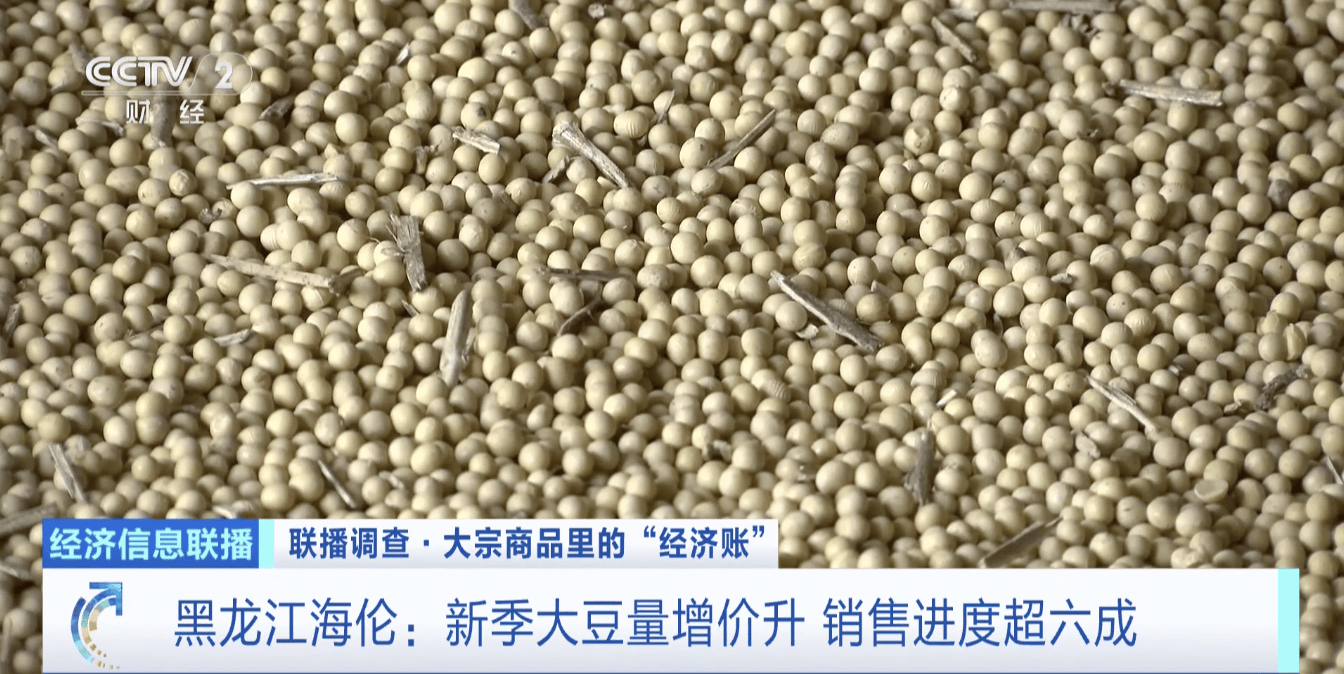
黑龙江海伦新季大豆量增价升 销售进度超六成
Sou Hu Cai Jing· 2025-11-25 15:19
Core Insights - Soybeans are a crucial commodity in China, with planting areas exceeding 1.5 million acres for three consecutive years [1] - The new season of domestic soybeans is entering a concentrated listing period, raising questions about harvest outcomes and price trends [1] Group 1: Harvest and Yield - In Heilongjiang Province, a farmer reported a yield of over 35,000 pounds from 75 acres, marking the best harvest in five years [3] - Favorable growing conditions in Northeast China have led to high soybean yields, contributing to an overall increase in total production [11] Group 2: Pricing Trends - Current soybean prices range from 1.9 to 2.3 yuan per pound, reflecting an increase of 0.1 to 0.3 yuan compared to the same period last year [9] - The price of soybean futures on the Dalian Commodity Exchange has risen by 200 yuan per ton since late September, currently standing at 4,108 yuan per ton [9] Group 3: Sales Dynamics - By mid-November, over 60% of the new season's soybeans had been sold, a 10% increase compared to the same period last year [7] - Many farmers are opting to sell their soybeans immediately after harvest due to previous experiences of price declines when holding onto their crops [7]
守护“菜篮子”,农业农村部每季度开展风险监测
Xin Jing Bao· 2025-11-25 10:25
Core Viewpoint - The agricultural product quality safety risk monitoring network is expanding to cover various agricultural products consumed by the public, ensuring comprehensive oversight from production to transportation [1][2] Group 1: Monitoring and Regulation - The State Administration for Market Regulation held a press conference on food safety, emphasizing the importance of full-chain sampling and regulation [1] - The Ministry of Agriculture and Rural Affairs conducts quarterly quality safety risk monitoring in key regions and for key agricultural products [1] - Each monitoring round involves random selection of two prefecture-level cities per province, covering 3-4 counties in each city, ensuring a wide range of sampling [1] Group 2: Sampling and Coverage - The sampling includes production bases, breeding farms, slaughterhouses, storage facilities, transportation vehicles, and wholesale markets to ensure comprehensive coverage [1] - The monitoring plan is dynamically adjusted each year based on departmental reports, public concerns, and actual agricultural production practices [1] Group 3: Results and Accountability - Monitoring results serve as a critical indicator of national agricultural product quality safety levels, with a focus on practical issues and problem-oriented approaches [2] - Quarterly meetings are held with various agricultural departments and experts to assess risks, analyze issues, and propose solutions [2] - Non-compliant sample information is promptly reported to local agricultural departments for enforcement actions, ensuring that substandard products do not reach the market [2]
农产品日报:晚富士客商参与度分化,红枣价差因品质扩大-20251125
Hua Tai Qi Huo· 2025-11-25 05:45
Group 1: Report Investment Ratings - Apple strategy rating: Neutral to bullish [4] - Red dates strategy rating: Neutral [9] Group 2: Core Views - Apple: The current expectations of apple inventory volume and structure are reflected in the price. Future focus should be on terminal consumption recovery, inventory structure differentiation, and pre - holiday merchants' inventory adjustment. Apple futures prices declined slightly, while the spot market was stable but with general shipments. The new - season apple inventory was lower than last year, and the consumption was under pressure due to high prices and competition from citrus [3][4]. - Red dates: If the terminal market can accept and digest the high - priced new - season red dates, it will drive the futures price to return to the new - season spot price. Otherwise, the new - season spot price may continue to decline. The red dates futures price rose significantly, but the market was facing inventory pressure and the supply - demand contradiction was not alleviated. The market was in a critical period of season and season - change, and the consumption situation would be the focus [8][9]. Group 3: Market News and Important Data Apple - Futures: The closing price of the apple 2601 contract was 9379 yuan/ton, down 61 yuan/ton (-0.65%) from the previous day [1]. - Spot: The price of 80 first - and second - grade late Fuji in Shandong Qixia was 3.75 yuan/jin, unchanged from the previous day; the price of over 70 semi - commercial late Fuji in Shaanxi Luochuan was 4.15 yuan/jin, unchanged from the previous day. The spot basis AP01 - 1879 and AP01 - 1079 increased by 61 respectively [1]. Red dates - Futures: The closing price of the red dates 2601 contract was 9225 yuan/ton, up 230 yuan/ton (+2.56%) from the previous day [5]. - Spot: The price of first - grade grey dates in Hebei was 8.90 yuan/kg, up 0.20 yuan/kg from the previous day. The spot basis CJ01 - 325 decreased by 30 [5]. Group 4: Market Analysis Apple - The apple futures price declined slightly. The late Fuji spot market in the warehouse was stable but with general shipments. The new - season apple inventory was lower than last year by over 10%, the inventory structure changed, and the consumption was under pressure due to high prices and competition from citrus [3]. Red dates - The red dates futures price rose significantly. The market arrival quality was uneven, the price difference widened, and the acceptance of ordinary goods was low. The new - season red dates were in the process of being picked, the purchase enthusiasm was low, and the inventory pressure was high [8]. Group 5: Strategy Apple - Neutral to bullish. Pay attention to terminal consumption recovery, inventory structure differentiation, and pre - holiday merchants' inventory adjustment, and be cautious about chasing high prices [4]. Red dates - Neutral. Focus on the terminal market's acceptance of new - season red dates and the inventory situation in the circulation link. The near - month contract may have some room to fall [9].
深耕本土资源 激活乡村活力 姚桥镇农文旅融合书写振兴答卷
Zhen Jiang Ri Bao· 2025-11-24 23:25
Group 1 - The core idea of the news is the development of agricultural and cultural tourism in Yaoqiao Town, focusing on the integration of traditional farming practices with modern tourism initiatives [1][2][4] - The "Huangnitang Shared Vegetable Garden" project aims to engage urban families in farming activities through a land-sharing model, with an app expected to launch in January 2026 [1] - The establishment of a comprehensive service system by Fucao Agricultural Development Co., which includes planting, management, drying, processing, storage, and sales, is set to enhance the local agricultural value chain [2] Group 2 - The renovation of the old Shiqiao Middle School into a leisure and entertainment complex called "Shiguangli·Baiyushi Hall" showcases local intangible cultural heritage, specifically the production of the traditional snack "Baiyu Bing" [3] - The live streaming initiative from Ruli Village promotes local tourism by highlighting cultural sites and engaging audiences with the village's history and traditions [4] - Ruli Village plans to create an interactive educational tourism route that combines cultural heritage with modern learning experiences, focusing on family values and traditional Chinese culture [4]
CBOT大豆震荡略涨,关注美豆出口和南美天气
Guo Fu Qi Huo· 2025-11-24 11:45
Report Industry Investment Rating No relevant information provided. Core Viewpoints The report comprehensively analyzes the market trends, supply - demand situations, and price movements of soybeans, soybean meal, and soybean oil in both domestic and international markets. It emphasizes the importance of factors such as weather conditions in South American soybean - producing areas, US soybean export demand, and domestic inventory changes in China for market dynamics [8][15][23]. Summary by Directory 1. Market Review - **Soybeans**: As of November 21, the CBOT soybean 01 contract closed at 1126.50 cents per bushel, up 0.36% from the previous week. The price was affected by factors like NOPA's higher - than - expected US soybean crush in October and USDA's report of soybean sales to China. The US soybean harvest rate was 96%, slightly lower than historical and five - year average levels. The supply was expected to be sufficient, but the cumulative year - on - year decline in exports widened [8]. - **Soybean Meal**: CBOT soybean meal prices fell. The 12 - contract closed at $315.8 per short - ton, down 1.83%, and the 01 - contract at $319.8 per short - ton, down 1.20%. DCE soybean meal 01 contract closed at 3012 yuan per ton, down 2.59%. The decline was due to factors such as USDA's soybean sales report to China and high domestic inventory. Spot basis fluctuated slightly higher [13][15]. - **Soybean Oil**: CBOT soybean oil prices rose slightly. The 12 - contract closed at 50.28 cents per pound, up 0.26%, and the 01 - contract at 50.61 cents per pound, up 0.26%. DCE soybean oil 01 contract closed at 8190 yuan per ton, down 0.80%. The decline was affected by falling prices of related domestic vegetable oils and high domestic inventory. Spot basis remained volatile [20][23]. 2. Production Area Weather - **Brazil**: In the past week (11.14 - 11.21), rainfall was slightly lower than normal, and temperatures in the southern part were lower. In the next week (11.23 - 11.30), both rainfall and temperatures in the southern part are expected to be lower than normal [25][27]. - **Argentina**: In the past week (11.14 - 11.21), rainfall and temperatures were normal. In the next week (11.23 - 11.30), rainfall is expected to be lower than normal, and temperatures higher [33][35]. 3. International Supply and Demand - **US Soybeans**: - **Crop Conditions**: As of November 16, the harvest rate was 95%, lower than last year's 98% and the five - year average of 96% [40]. - **Export Inspection & Sales**: The weekly export inspection volume met expectations, but the cumulative year - on - year decline widened. The 25/26 annual export sales met expectations, and the cumulative year - on - year decline narrowed [41]. - **Soybean Crush**: In August 2025, the crush volume was 5940000 tons, up 18.19% year - on - year. As of October, the cumulative crush volume in the 25/26 season was 426 million bushels, up 12.8% year - on - year [43]. - **D4 RINs Price**: As of November 21, it was 100.5 cents, down 0.75 cents from November 14 [51]. - **Other News**: The US Department of Energy reorganized, prioritizing oil and nuclear resources [53]. - **Brazilian Soybeans**: - **Yield Forecast**: Various institutions' forecasts for the 25/26 season range from 167.683455 million tons to 178.5 million tons [55]. - **Sowing Progress**: As of November 15, the sowing rate was 69.0% according to CONAB. Different states had different sowing progress and crop conditions [55][56]. - **Export Sales**: Anec raised the November export forecast to 4.71 million tons. As of the second week of November, the cumulative export in 2025 was 102.91 million tons, up 7.49% year - on - year [61]. - **Soybean Premium**: As of November 21, the premium quotes showed mixed trends [63]. - **Soybean Crush Profit & Volume**: The crush profit rose this week. In September 2025, the crush volume was 4.144 million tons, down 11.05% year - on - year [66][69]. - **Inventory**: As of September, the oil mill's soybean inventory was 14.39 million tons, up 12.36% year - on - year; the soybean oil inventory was 526000 tons, up 52.27% year - on - year; and the soybean meal inventory was 2.52 million tons, down 2.79% year - on - year [71]. - **Argentine Soybeans**: - **Sowing Progress**: As of November 20, the sowing rate was 25%. The sowing area forecast for the 25/26 season was lowered [74]. - **Farmer Sales**: The weekly sales of farmers increased. As of the 46th week of 2025, the 2025 sales progress was 82%, and the 2026 pre - sale progress was 6.2% [78]. - **Export Sales**: In October 2025, the soybean export volume was 1.296 million tons, up 1217.5% year - on - year. The export volumes of soybean meal and soybean oil also increased [81]. - **Soybean Crush Profit & Volume**: The crush profit fell this week. In October 2025, the crush volume was 4.036 million tons, down 2.66% year - on - year [85][87]. - **Inventory**: As of November 1, the oil mill's soybean inventory was 2798823 tons, up 10.07% year - on - year; the soybean oil inventory was 296624 tons, down 14.94% year - on - year; and the soybean meal inventory was 1050328 tons, up 7.44% year - on - year [89]. 4. Domestic Supply and Demand - **Soybean Oil Supply and Demand**: - **Import Procurement**: In October 2025, China imported 9.4025 million tons of genetically modified soybeans. As of October, the cumulative import was 95.1637 million tons, up 6.86% year - on - year [94]. - **Inventory**: As of November 14, the port inventory was 9.926 million tons, down 408000 tons week - on - week; the oil mill inventory was 7.4771 million tons, down 142400 tons week - on - week [95]. - **Arrival and Crush**: The arrival volume decreased, while the crush volume and operating rate increased [100]. - **Trading Volume**: The trading volume decreased this week [103]. - **Production and Apparent Consumption**: Both production and apparent consumption increased [104][106]. - **Inventory**: As of November 14, the commercial inventory was 1.1485 million tons, down 0.87 million tons week - on - week [108]. - **Soybean Meal Supply and Demand**: - **Production and Apparent Consumption**: Both production and apparent consumption increased [111]. - **Inventory**: The oil mill's inventory decreased, while the feed mill's physical inventory days increased [113]. - **Trading and Pick - up**: Both trading volume and pick - up volume increased [116]. - **Downstream Demand**: The losses in pig - raising and piglet - purchasing increased, and the pig price and pig - grain ratio decreased [118]. - **Warehouse Receipts**: As of November 21, the registered warehouse receipts on the DCE were 40357 lots [120]. 5. Domestic and International Oil Futures and Spot Prices, and Spreads - **Basis, Monthly Spreads, and Variety Spreads**: Analyzed the basis, monthly spreads of soybean oil and soybean meal, and variety spreads such as soybean oil - palm oil and rapeseed oil - soybean oil [124][129][132]. - **FOB Quotes**: Provided FOB quotes for soybean oil, soybean meal from different regions [137][139][140]. - **CFTC Positions**: Showed the net long positions of managed funds in CBOT soybean, soybean meal, and soybean oil [142][143].
培育壮大乡村特色产业,广汉市高坪镇园龙村把产业链做长做精 田里拓路 折耳根“种”出千万产值
Si Chuan Ri Bao· 2025-11-23 01:27
Core Insights - The increasing popularity of "Zhe Er Gen" (a type of herb) and its expanding use in hot pot and cold dishes are driving it towards a broader market [3] - Yuanlong Village has developed a mature industrial system for "Zhe Er Gen," utilizing its leaves for fresh dishes, flowers and roots for tea, and dried old leaves for medicinal purposes, ensuring year-round production [3][6] Industry Overview - Yuanlong Village has been cultivating "Zhe Er Gen" since the 1980s, with over 1,000 acres planted and an average annual output value of approximately 20 million yuan [4] - The village's unique geographical conditions, including suitable altitude, climate, and fertile soil, contribute to the exceptional quality of its "Zhe Er Gen" leaves [4] Market Dynamics - Price fluctuations are common, with prices ranging from 5 yuan per kilogram at peak times to over 2 yuan recently, but the village maintains a stable annual output value due to a well-structured industrial chain [6] - The village has established a comprehensive utilization system for "Zhe Er Gen," separating roots and leaves for different markets, effectively doubling the value of the resources [6] Sales and Distribution - The sales network, supported by seven professional cooperatives, allows "Zhe Er Gen" from Yuanlong Village to penetrate markets in Chengdu and other provinces, including Chongqing and Shaanxi [6] - The village emphasizes ecological farming practices, avoiding pesticides to ensure high-quality leaves, which enhances demand from buyers [6] Future Development - The village is exploring further product development, including "Zhe Er Gen" tea and pickles, and aims to enhance rural tourism by creating experiences centered around "Zhe Er Gen" [7]

今日关注:宜居宜游
Jing Ji Ri Bao· 2025-11-22 23:34
Core Viewpoint - The city of Lincang in Yunnan is actively promoting its tourism and cultural heritage, leveraging its unique ecological and cultural resources to create a vibrant travel destination that enhances visitor engagement and emotional connection [9][10]. Group 1: Events and Activities - The 2025 Yunnan Fengqing Dianhong Trail Running Race attracted over 2,500 trail running enthusiasts, showcasing the region's natural beauty [1]. - The 9th Iceland Tea Festival and the Dai New Year Water-Splashing Festival were held in the Shuangjiang Lahu, Wa, Blang, and Dai Autonomous County, blending traditional customs with modern cultural tourism [4]. - A themed event titled "October Rice Field Natural Exploration" took place in Gengma County, promoting the integration of agriculture, culture, and tourism [5]. Group 2: Tourism Development - Lincang is focusing on building a "creative training and wellness" tourism destination, aiming to create a brand that resonates with visitors as a home away from home [9]. - The city is enhancing its tourism infrastructure by developing smart tourism platforms, improving service levels, and innovating cultural and tourism integration models [10]. - In the first ten months of the year, Lincang saw a 25.27% year-on-year increase in tourism visitors, indicating a growing interest in the region [10]. Group 3: Ecological and Cultural Resources - Lincang boasts unique natural resources, including 2.63 million acres of macadamia nut plantations and over 400,000 acres of wild ancient tea tree groves, alongside 230,000 acres of coffee plantations [10]. - The city is actively preserving and promoting its intangible cultural heritage, with 9 national-level and 45 provincial-level intangible cultural heritage items being actively passed down [10].

宜居宜游——云南省临沧市打造“遇见临沧如回故乡”品牌
Jing Ji Ri Bao· 2025-11-22 22:06
Core Insights - Lincang City in Yunnan Province is leveraging its unique geographical and ecological advantages to develop a comprehensive tourism destination that integrates creative research, competitive training, and wellness [1][2] - The city aims to enhance its cultural tourism brand "Meeting Lincang is like returning home," focusing on building a smart tourism platform and improving service levels to foster a sense of belonging among visitors [2] Group 1: Tourism Development - Lincang is positioned as a key node on the "Southern Silk Road" and "Southwest Silk Tea Ancient Road," with diverse natural landscapes and rich biodiversity [1] - The city is actively promoting the "creative training and wellness" tourism model, which includes the development of immersive cultural tourism spaces and the establishment of demonstration bases [2] - In the first ten months of this year, the number of tourists in Lincang increased by 25.27% year-on-year, indicating a growing interest in the region [2] Group 2: Cultural and Ecological Resources - Lincang boasts unique resources such as macadamia nuts, tea, and coffee, with significant cultivation areas including 2.63 million acres for macadamia and 230,000 acres for coffee [1] - The city has successfully integrated numerous intangible cultural heritage resources, achieving the active transmission of 9 national and 45 provincial-level heritage items, enhancing the cultural experience for visitors [2]