
半导体存储

Search documents
江波龙:目前生产经营正常,内外部经营环境未发生重大变化
Xin Lang Cai Jing· 2025-10-27 10:58
Core Viewpoint - Jiangbolong announced that its stock price experienced an abnormal fluctuation, with a cumulative increase of over 30% in closing prices over two consecutive trading days on October 24 and October 27, 2025 [1] Summary by Relevant Sections - **Stock Price Movement** - The stock price of Jiangbolong showed a significant increase, with a cumulative rise exceeding 30% over two trading days [1] - **Company Operations** - The company confirmed that its production and operations are normal, and there have been no significant changes in its operational conditions or external business environment [1] - **Disclosure of Information** - Jiangbolong stated that there are no undisclosed significant matters related to the company that should have been disclosed, nor are there any major matters in the planning stage [1]
存储器板块走强 机构圈出这些机会
Di Yi Cai Jing· 2025-10-27 04:42
Group 1 - The storage sector is experiencing a strong performance, with companies such as Zhongdian Port and Dawi Co., Ltd. hitting the daily limit, while Purain Co., Ltd. and Jiangbolong have increased by over 8% [1] Group 2 - Guojin Securities highlights the continuous improvement in AI application effects, recommending a focus on the storage industry chain that is experiencing sustained growth [2] - Dongguan Securities notes that the recent price increases by overseas storage giants are primarily driven by the explosion of AI applications, leading to a surge in demand for high-performance storage chips used in AI servers and data centers, which in turn drives up prices across the storage market [2] - It is suggested to pay attention to segments benefiting from this trend, including storage modules, niche storage, and materials for storage supporting equipment [2]


湘财证券:存储价格大幅上涨 看好存储市场景气度
智通财经网· 2025-10-27 03:48
Core Viewpoint - The report from Xiangcai Securities indicates a sustained recovery in the consumer electronics sector since 2025, driven by the continuous release of new foldable smartphones and advancements in artificial intelligence (AI) technology, which is boosting demand for AI infrastructure and related hardware upgrades [1][2]. Group 1: Market Trends - The market report from TrendForce on October 20 shows that the DRAM spot market continues to exhibit strong performance, with spot prices for DDR4 and DDR5 chips increasing by 15% to 20% [1]. - The NAND Flash spot market also maintains a strong upward trend, with average price increases of 15% to 20% across various capacities [1]. - On October 25, reports indicated that major players Samsung and SK Hynix have notified clients of a potential contract price increase of up to 30% for DRAM and NAND in the fourth quarter [1]. Group 2: Storage Demand and Pricing - The demand for storage is significantly driven by AI, leading to substantial price increases in storage components. The shift of manufacturers towards HBM, DDR5, and high-capacity NAND has resulted in even higher price increases for DDR4 and low-capacity NAND [2]. - The rising storage prices have catalyzed downstream stockpiling demand, further driving up storage prices [2]. - Due to the lengthy time required for storage capacity expansion, the storage market is expected to maintain a high level of prosperity, benefiting from strong growth in AI computing demand [2].
杀疯了!存储掀起涨停潮,还能上车吗?
格隆汇APP· 2025-10-26 14:03
Core Viewpoint - The storage chip sector in the A-share market has experienced a significant surge, with the storage index rising over 60% this year, indicating a historic turnaround in the industry [4][6]. Market Performance - The storage chip sector has seen stocks like Shannon Chip and Puran Co. hit the 20% daily limit, while other stocks in the sector have risen over 10% [5]. - The price of DRAM has skyrocketed, with September prices nearly doubling year-on-year, and certain DDR4 models increasing over 300% since April [9]. Price Trends - The price increase trend is expected to continue into the fourth quarter, with Samsung Electronics notifying clients of price hikes for DRAM (15%-30%) and NAND (5%-10%) [11][10]. Supply and Demand Dynamics - The demand for storage chips has surged due to the expansion of High Bandwidth Memory (HBM) driven by AI applications, with AI servers requiring 8-10 times more storage than traditional servers [14]. - HBM's profit margins are significantly higher (50%-60%) compared to traditional DRAM (30%-40%), prompting manufacturers to shift production towards HBM and DDR5 [15]. Production Capacity Shift - The production capacity for HBM consumes over three times the wafer capacity of standard DRAM, leading to a squeeze in traditional DRAM supply [17]. - Major manufacturers are strategically reducing DDR4 production, with plans to cease production entirely by 2026 [28]. Inventory Levels - The average inventory for DRAM has dropped to just 8 weeks, significantly below the healthy level of 10-12 weeks, indicating a tightening supply [20][21]. Future Outlook - The current market dynamics suggest a structural supply shortage rather than a temporary spike in demand, making it unlikely for manufacturers to revert to DDR3/DDR4 production in the short term [22][23]. - The long-term production cycle for new capacity means that even if new facilities are built, they will not alleviate current shortages quickly [25]. Conclusion - The storage industry is undergoing an irreversible capacity shift, with AI demand and production constraints driving prices higher, making it difficult for the market to cool down in the near term [27].


存储的超级周期,还能上车吗?
Hu Xiu· 2025-10-26 02:04
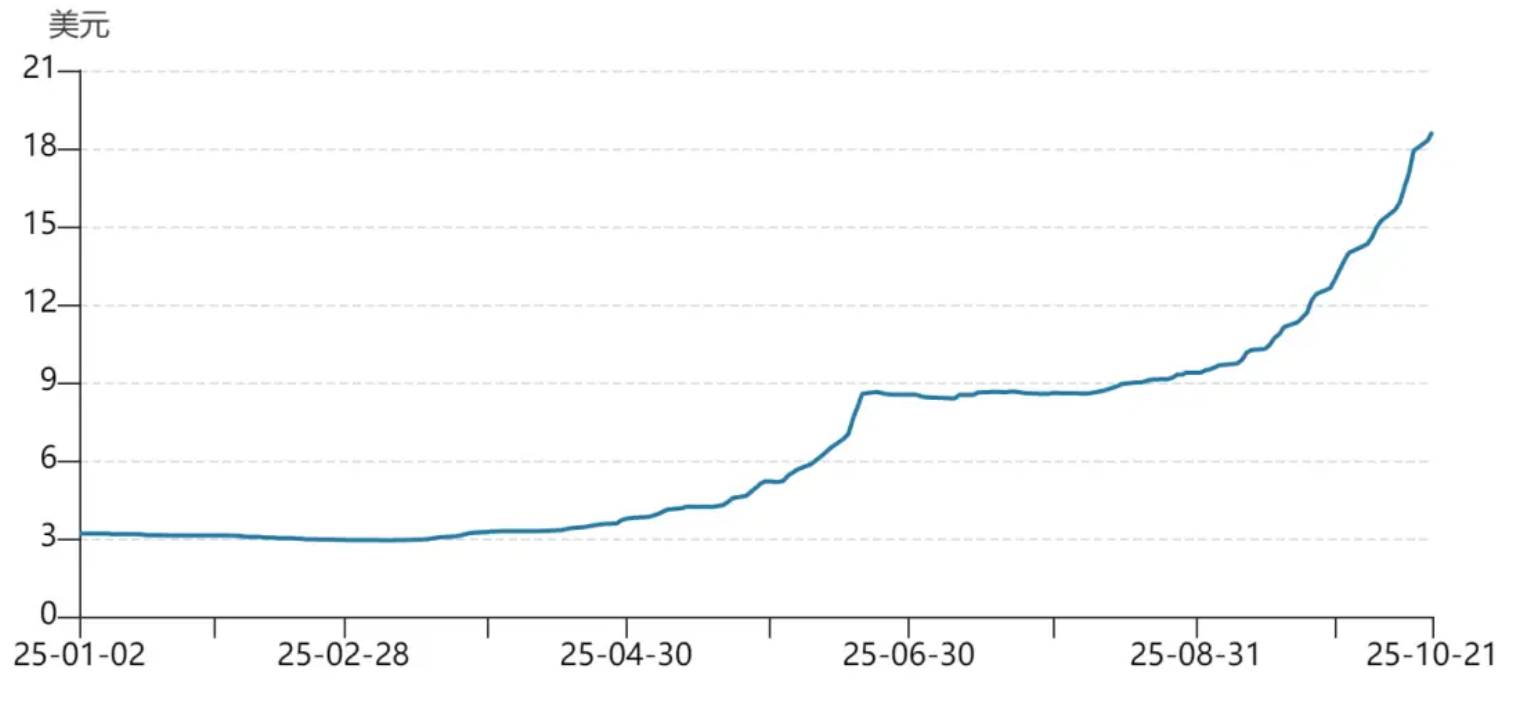
Core Viewpoint - The storage chip market is experiencing a significant price surge, driven by the demand from AI applications, leading to a "storage super cycle" as predicted by Morgan Stanley [3][5][34]. Group 1: Market Dynamics - As of October 21, 2023, the average spot price of DRAM:DDR4 has increased by 484%, reaching $18.63 [1]. - The last cycle ended in September 2023, and a new upward cycle has begun due to strong demand for large model training [5][6]. - The storage chip industry is characterized by cyclical demand and supply, typically alternating every 3-4 years [3][6]. Group 2: Beneficiaries of the Cycle - The primary beneficiaries of the current cycle are HBM (High Bandwidth Memory) and DRAM, as they are crucial for AI performance [7][10]. - HBM is a high-end variant of DRAM, offering significantly higher performance and price, with projections indicating a market size of $50-60 billion by 2026 and $100 billion by 2030 [8][9]. - Major players in the DRAM market, including Micron, Samsung, and SK Hynix, control over 90% of the market share [10]. Group 3: Geopolitical Implications - The rising prices of storage chips are beneficial for the U.S. and South Korea but pose challenges for China, which relies on these technologies for AI development [9][10]. - U.S. pressure on South Korea to restrict HBM exports to China could hinder China's progress in AI model training [10][12]. Group 4: Domestic Market Developments - China is accelerating efforts to develop domestic storage chip capabilities, with policies favoring local manufacturers [13][14]. - Companies like Shannon Semiconductor and GigaDevice are making strides in the enterprise DRAM sector, while consumer-grade DRAM remains competitive [16][17]. Group 5: Valuation Insights - A comparison of valuations shows that A-share storage companies have significantly higher P/E ratios than their U.S. counterparts, indicating a premium that may not be justified by performance [21][22]. - Despite rising prices, many domestic firms have not yet seen corresponding profit increases, suggesting that current stock price increases are driven more by market sentiment than by actual performance [23][24]. Group 6: Future Outlook - Micron's strong performance and optimistic guidance for future earnings highlight the potential for continued growth in the storage sector [28][30]. - The ongoing demand for AI infrastructure and the potential for a prolonged storage cycle could lead to further valuation adjustments for companies in this space [32][33].
国际存储原厂持续涨价 殃及下游池鱼
Zhong Guo Jing Ying Bao· 2025-10-24 15:43
Core Insights - The global memory market is experiencing a significant price surge driven by an imbalance in supply and demand due to the AI boom, with both DRAM and NAND flash prices rising sharply [1][2][3] - Major players like Samsung and SK Hynix have announced contract price increases of up to 30% for DRAM and NAND flash in Q4, further intensifying market pressures [2][4] - The current inventory cycle for DRAM has dropped to a historical low of 8 weeks, prompting downstream companies to increase procurement to mitigate potential shortages [3][4] Price Surge - The price of mainstream DDR4 1Gx8 3200MT/s chips rose from $7.219 to $7.931, marking a week-on-week increase of 9.86%, while NAND flash prices surged by 15% to 20% [2] - The price of 512Gb TLC wafers increased by 27.96% in a single week, reaching $4.576 [2] Financial Performance - Samsung's total sales of memory chips reached $19.4 billion from July to September, a 25% increase from the previous quarter, while SK Hynix reported $17.5 billion in sales, up 13% year-on-year [3] - Samsung's Q3 operating profit hit 12.1 trillion KRW (approximately $8.5 billion), the highest in over three years, exceeding market expectations [4] Market Dynamics - The current market is characterized as a "strong shortage cycle," with industry experts cautioning against labeling it a "super cycle" until certain conditions are met, such as inventory turnover and capital expenditure [4][5] - Downstream companies are facing dual challenges of limited wafer supply and rapidly rising prices, which are outpacing their product pricing, leading to reduced profit margins [6] Strategic Responses - Companies are advised to implement long-term pricing agreements with suppliers to stabilize costs and mitigate the impact of market fluctuations [7][8] - Diversifying supply chains and exploring alternative storage technologies are recommended strategies to manage rising costs and maintain competitiveness [8]
深圳存储芯片商冲刺港交所!全球第二,年入37亿
Sou Hu Cai Jing· 2025-10-24 14:18
Core Insights - The company, Jingcun Technology, has officially submitted its application to the Hong Kong Stock Exchange on September 29, 2023, aiming to fully embrace edge AI technology [2]. - Jingcun Technology, established in December 2016, merged with Miaocun Technology in 2020, gaining capabilities in flash memory controller chip development and launching storage products equipped with self-developed embedded controller chips [5][16]. Market Position - As of 2024, Jingcun Technology ranks second among independent embedded storage manufacturers with a market share of 1.6%, while the top five independent manufacturers hold a combined market share of 7.1% [7][8]. - In the LPDDR segment, Jingcun Technology leads with a market share of 2.6%, while the top five LPDDR independent manufacturers collectively hold 6.2% [8][9]. Product Portfolio - The product range includes consumer-grade, industrial-grade, and automotive-grade embedded storage products, serving applications in smartphones, laptops, tablets, educational electronics, smart homes, wearables, robotics, industrial sectors, and automotive systems [11]. - High-performance LPDDR products have been adopted by leading domestic chip and system solution providers for their computing servers and edge acceleration cards [11]. Financial Performance - In 2022, Jingcun Technology reported revenue of 2.096 billion RMB, which increased to 2.401 billion RMB in 2023, and is projected to reach 3.714 billion RMB in 2024 [16][20]. - The net profit for the first half of 2025 is reported at 1.15 billion RMB, with a gross margin improvement from 7.6% in 2022 to 14.4% in the first half of 2025 [16][18]. Sales and Distribution - The company employs a dual sales model combining direct sales and distribution, with sales of embedded storage products reaching 140 million units in 2024 [30][32]. - The average selling prices of major product categories have fluctuated, with a notable decline in 2023 followed by a rebound in 2024 [32][33]. Supply Chain and Production - Jingcun Technology operates two smart manufacturing centers in Shenzhen and Zhongshan, with a combined production capacity exceeding 700 million GB in the first half of 2025 [27][28]. - The company sources its main raw materials, including DRAM and NAND flash wafers, from a concentrated market dominated by a few major suppliers, with the top five suppliers accounting for 80.8% of total procurement in 2025 [39].
存储龙头江波龙4个月暴涨200%,蔡氏姐弟坐拥390亿财富
Huan Qiu Lao Hu Cai Jing· 2025-10-24 11:55
Core Viewpoint - The storage chip sector in A-shares has shown strong performance, with leading companies like Jiangbolong experiencing significant stock price increases driven by rising demand for storage chips due to AI applications [1][3]. Industry Overview - The storage chip market is witnessing a price increase, with major suppliers like Samsung and SK Hynix planning to raise DRAM and NAND Flash prices by up to 30% in Q4 [1][3]. - The demand for storage chips is expected to surge, with global AI training data projected to reach 1.2ZB by 2025, which is 15 times the amount in 2022 [3]. Company Performance - Jiangbolong's stock price has increased over 200% since June, closing at 222.00 yuan per share, with a market capitalization exceeding 930 billion yuan [1][3]. - In the first half of 2025, Jiangbolong reported revenue of 10.196 billion yuan, a year-on-year increase of 12.80%, but net profit dropped by 97.51% to 14.7663 million yuan [4]. Mergers and Acquisitions - Jiangbolong has built a diversified brand matrix through acquisitions, including brands like FORESEE, Zilia, and Lexar [1][5]. - The company has accelerated its acquisition strategy, including the purchase of 81% of SMART Brazil and 70% of Powertech Technology (Suzhou) [6][7]. Financial Position - Jiangbolong's financial reports indicate a rising debt burden, with interest-bearing liabilities projected to increase from 1.325 billion yuan in 2022 to 7.7 billion yuan in 2024, while cash reserves are declining [1][7]. Leadership and Growth - Jiangbolong's founders, Cai Huabo and Cai Lijiang, have seen their wealth increase significantly, with a combined net worth exceeding 39 billion yuan due to the company's rising stock price [8][10].
公司快评丨四年半累亏超7.5亿元,时空科技豪赌半导体存储能否摆脱跨界“魔咒”?
Mei Ri Jing Ji Xin Wen· 2025-10-24 06:56
Core Viewpoint - The stock price of Shikong Technology surged to its daily limit after the announcement of a major asset restructuring plan, which involves acquiring 100% of Shenzhen Jiahe Jinwei Electronics Technology Co., aiming to enter the lucrative semiconductor storage sector [2][3]. Group 1: Company Overview - Shikong Technology was established in 2004, initially focusing on landscape lighting, and went public in 2020. However, the company has faced declining revenues and continuous losses since its first year of listing [3]. - Despite a slight recovery in revenue in 2024, the net loss has further expanded, with a 10.95% year-on-year revenue decline in the first half of 2025, resulting in over 750 million yuan in net losses over four and a half years [3]. Group 2: Acquisition Details - The acquisition of Jiahe Jinwei will be executed through a combination of share issuance and cash payment, with a share price set at 23.08 yuan [2]. - Jiahe Jinwei is recognized as a domestic memory module manufacturer with established partnerships with major wafer manufacturers like Samsung and Micron, showing growth in revenue and net profit from 2023 to August 2025, particularly achieving profitability in 2024 [2]. Group 3: Market Potential and Challenges - The semiconductor storage industry presents significant growth opportunities, and if the acquisition is successful, it could provide Shikong Technology with new profit growth points and enhance its sustainable profitability [3]. - However, challenges exist due to Shikong Technology's previous unsuccessful cross-industry attempts, indicating potential shortcomings in business integration and operational management. The competitive nature of the semiconductor storage sector and rapid technological advancements pose additional risks [3].

深圳市大为创新科技股份有限公司 2025年第三季度报告
Zheng Quan Ri Bao· 2025-10-23 23:24
Core Viewpoint - The company reported a steady growth in its business segments, particularly in semiconductor storage, automotive parts, and new energy lithium batteries, with a revenue increase of 9.90% year-on-year for the first nine months of 2025, reaching 879 million yuan [5][6]. Financial Performance - The company achieved a revenue of 879 million yuan, representing a year-on-year growth of 9.90% [5]. - The net profit attributable to shareholders was a loss of 7.5262 million yuan, indicating a reduction in losses compared to the previous year [5]. - The semiconductor storage business generated 794 million yuan in revenue, marking a significant year-on-year increase of 28.68%, accounting for 90.33% of total revenue [5][6]. Business Segments - The semiconductor storage segment showed robust performance, benefiting from a favorable market environment, with DRAM and NAND markets stabilizing at high levels [6]. - The company’s lithium carbonate project team effectively analyzed market dynamics and utilized financial tools to hedge against price fluctuations, contributing to profitability [6]. Corporate Governance - The company plans to abolish the supervisory board, transferring its responsibilities to the audit committee of the board of directors, in compliance with the new Company Law effective from July 1, 2024 [11][12]. - The company’s articles of association will be revised accordingly, and the changes will be submitted for approval at the upcoming shareholders' meeting [11][12]. Shareholder Information - The company will hold its first extraordinary general meeting of 2025 on November 10, 2025, to discuss various proposals, including the revision of the articles of association and the appointment of the accounting firm [21][24][80]. - The meeting will allow shareholders to vote both in person and via online platforms [25][32]. Accounting and Audit - The company intends to renew its contract with Beijing Dehao International Accounting Firm for the 2025 fiscal year, pending approval from the shareholders' meeting [45][66]. - The audit committee and board of directors have expressed no objections to the renewal, affirming the firm's qualifications and independence [46][66].