电动车

Search documents
新国标打碎了雅迪们的高端幻觉
Feng Huang Wang· 2025-12-19 07:45
Core Viewpoint - The new national standard for electric bicycles has sparked significant consumer dissatisfaction due to design choices that prioritize compliance over user comfort and practicality [1][2][4]. Group 1: Issues with the New Standard - Many complaints from consumers focus on the uncomfortable design features of new electric bicycles, such as narrow seats and the absence of rear seats, which are perceived as impractical [2][3]. - The core requirements of the new standard include a maximum weight of 55 kg, a speed limit of 25 km/h, and the necessity for pedal riding capability, but many design elements criticized by consumers are not mandatory [2][4]. - Some companies have adopted an "exam-oriented" mindset, leading to overly simplistic designs that meet the minimum requirements but fail to address user needs [2][3]. Group 2: Industry Response and Challenges - The introduction of the new standard has created a dilemma for electric bicycle manufacturers, as strict compliance may lead to loss of market share while non-compliance risks penalties [4][5]. - The first batch of new standard models is largely seen as "exam products," prioritizing compliance over user experience, with comfort and practicality expected to be improved in future iterations [4][5]. - The market is experiencing a shift, with brands like Yadea facing a significant drop in sales, from 16.5 million units in 2023 to 13.02 million in 2024, a decrease of 21.18% [6]. Group 3: Market Dynamics and Future Outlook - The new standard has accelerated industry consolidation, with established brands like Niu and Ninebot quickly adapting to produce compliant and user-friendly models, while smaller brands struggle to keep up with the technological demands [6][7]. - There is a growing trend among major brands to introduce improved versions of new standard models, incorporating features like wider seats and modular designs to enhance user experience [7][8]. - The ongoing adjustments in the industry reflect a broader transition in urban transportation in China, moving from unregulated growth to a more structured development approach [7][8].



销量腰斩,车企停产,美国电动车进入寒冬
Xin Lang Ke Ji· 2025-12-19 02:44
Core Viewpoint - The cancellation of federal electric vehicle tax credits by the Trump administration has plunged the U.S. electric vehicle industry into a downturn, leading to a significant drop in sales and a shift in focus among traditional automakers towards hybrid and gasoline vehicles [1][2][4]. Group 1: Impact of Policy Changes - The federal electric vehicle tax credit, which provided $7,500 for new electric vehicle purchases and $4,000 for used ones, was abruptly terminated, causing a dramatic 30.3% year-on-year drop in electric vehicle sales in October [2][3]. - In November, electric vehicle sales further declined by 40% year-on-year, with a total of 76,000 units sold, marking a return to early 2022 sales levels [3][4]. - The market share of electric vehicles fell to 5.1% in November, down from a peak of 12.4% in September, indicating a severe contraction in consumer demand [3][4]. Group 2: Traditional Automakers' Response - Major automakers like General Motors and Ford are scaling back their electric vehicle ambitions, shifting focus to hybrid and gasoline models due to the financial losses in their electric vehicle divisions [9][10]. - Ford announced a $1.95 billion asset write-down, with $8.5 billion attributed to its electric vehicle division, and is now prioritizing hybrid models and small electric vehicles [11][12]. - General Motors has delayed the production of electric trucks and reduced its electric vehicle production targets, citing changes in government policy and a slowdown in electric vehicle adoption [10][11]. Group 3: Market Dynamics and Consumer Behavior - The average price of electric vehicles remains significantly higher than gasoline vehicles, with a price gap of 25%, exacerbated by the removal of tax credits [6][7]. - Consumer concerns about charging infrastructure and the practicality of electric vehicles persist, with a lack of charging stations and high insurance costs further deterring potential buyers [6][7]. - The U.S. electric vehicle market is heavily reliant on government incentives, and the abrupt policy changes have led to a loss of consumer confidence and demand [4][5]. Group 4: Comparison with China - In contrast to the U.S. market, China's electric vehicle sales reached 11 million units last year, accounting for 40% of global sales, highlighting a significant disparity in market performance [4][5]. - The U.S. electric vehicle industry faces structural issues, including a lack of policy continuity and predictability, which hampers long-term planning for automakers [5][6]. - Traditional automakers in the U.S. are recognizing the technological advancements of Chinese electric vehicle manufacturers, which are perceived to be ahead in terms of cost, quality, and digital integration [14][15].


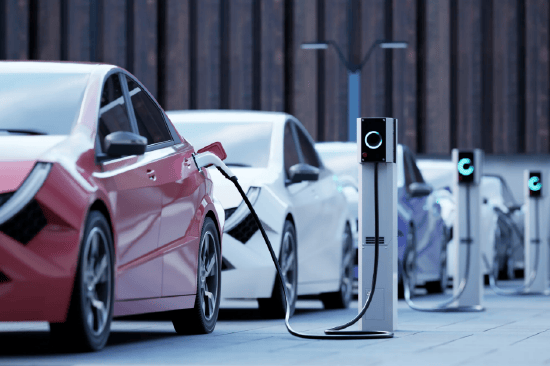
销量腰斩,车企停产,特朗普取消联邦购车退税补贴,美国电动车行业进入寒冬!中美电车行业为何冰火两重天?
Sou Hu Cai Jing· 2025-12-19 01:28
Core Viewpoint - The cancellation of federal electric vehicle tax credits by the Trump administration has plunged the U.S. electric vehicle industry into a downturn, leading to a significant drop in sales and a shift in focus among traditional automakers towards hybrid and gasoline vehicles [2][3][7]. Group 1: Impact of Policy Changes - The federal electric vehicle tax credit, which provided $7,500 for new electric vehicle purchases and $4,000 for used ones, was abruptly terminated, causing a dramatic decline in electric vehicle sales [3][10]. - In September, prior to the policy change, electric vehicle sales surged by 40% year-on-year, but in October, sales plummeted by 30.3% year-on-year and 49% month-on-month, resulting in only 91,000 units sold [3][4]. - By November, sales further declined by 40% year-on-year to 76,000 units, with the market penetration rate dropping to 5.1%, a level not seen since early 2022 [4][6]. Group 2: Market Dynamics and Brand Performance - Tesla's sales fell by 35% and 23% in October and November, respectively, yet its market share increased from 43% to 57% [6]. - Other automakers faced even steeper declines, with Kia's EV6/EV9 sales down 71% and 68%, Ford's Mach-E/F-150 Lightning down 61%, and Honda's Prologue down 80% and 87% [6]. - Rivian was one of the few brands to show growth, with a 7.6% increase in November despite a 15% drop in October [6]. Group 3: Structural Issues in the U.S. Market - The U.S. electric vehicle market's reliance on government support has been highlighted, with analysts predicting a continued decline in demand due to the lack of incentives [7][9]. - The U.S. electric vehicle market is expected to see a slight decline in sales and penetration rate next year, with projections indicating a return to single-digit penetration rates by 2025 [9][10]. - The cancellation of subsidies and the lack of consistent policy have created an unpredictable environment for automakers, hindering long-term planning [9][10]. Group 4: Consumer Sentiment and Market Conditions - The price gap between electric and gasoline vehicles remains significant, with electric vehicles averaging $59,200 compared to $47,500 for gasoline vehicles, a 25% difference [10][11]. - The cancellation of subsidies exacerbates this price disadvantage, making electric vehicles less appealing to consumers, especially as gasoline prices decline [10][11]. - Concerns about charging infrastructure and the overall cost of ownership further deter potential buyers, with a significant shortage of charging stations relative to the number of electric vehicles [13][14]. Group 5: Traditional Automakers' Strategic Shifts - Traditional automakers are scaling back their electric vehicle ambitions, shifting focus to hybrid and gasoline models in response to market realities [14][15]. - General Motors announced a $1.6 billion impairment loss related to its electric vehicle business and adjusted its production targets downward [15][18]. - Ford reported a $19.5 billion asset impairment, with significant losses in its electric vehicle division, leading to a strategic pivot towards hybrid models [19][21]. Group 6: Competitive Landscape and Global Context - The U.S. electric vehicle market is lagging behind China, which accounted for 1.1 million electric vehicle sales last year, representing a 40% year-on-year growth [9][24]. - Ford's CEO acknowledged the technological gap between U.S. and Chinese electric vehicle manufacturers, emphasizing the need for U.S. companies to adapt and innovate [24][26].
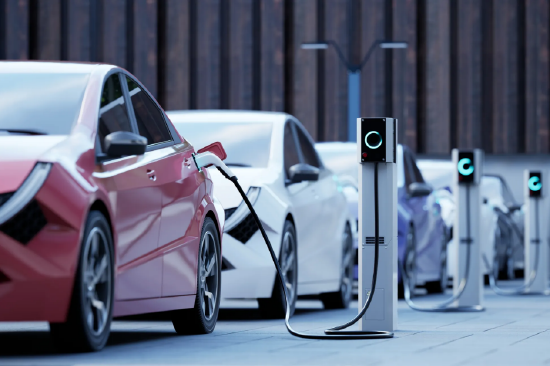
销量腰斩,车企停产,美国电动车进入寒冬|硅谷观察
Xin Lang Cai Jing· 2025-12-19 00:06
Core Viewpoint - The cancellation of federal electric vehicle tax credits by the Trump administration has plunged the U.S. electric vehicle industry into a downturn, leading to a significant drop in sales and a shift in focus by traditional automakers towards hybrid and gasoline models [2][28]. Group 1: Impact of Policy Changes - The federal electric vehicle tax credit, which provided $7,500 for new electric vehicle purchases and $4,000 for used ones, was terminated on October 1, marking a significant turning point for the industry [3][29]. - Following the announcement, electric vehicle sales surged by 40% in September, but plummeted by 30.3% year-over-year and 49% month-over-month in October, with sales dropping to 91,000 units and market penetration falling to 5.8% [3][29]. - November saw an even steeper decline, with sales down 40% year-over-year to 76,000 units and market penetration further decreasing to 5.1% [4][30]. Group 2: Market Dynamics and Brand Performance - Tesla's sales fell by 35% and 23% in October and November, respectively, yet its market share increased from 43% to 57% [6][32]. - Other automakers faced severe declines, with Kia EV6/EV9 sales down 71% and 68%, Ford's Mach-E/F-150 Lightning down 61%, and Honda's Prologue down 80% and 87% [6][32]. - Rivian was one of the few brands to show growth, with a 7.6% increase in November despite a 15% decline in October [6][32]. Group 3: Structural Issues in the U.S. Market - The U.S. electric vehicle market's reliance on government support has been highlighted, with analysts predicting a continued decline in sales and market penetration in the coming years [7][33]. - The lack of continuity and predictability in U.S. electric vehicle policies has created challenges for long-term planning among automakers [9][35]. - The average price of electric vehicles remains significantly higher than gasoline vehicles, with a $5,920 difference, exacerbated by the removal of tax credits [10][36]. Group 4: Traditional Automakers' Strategic Shifts - Traditional automakers are shifting from aggressive electrification goals to more conservative strategies, focusing on hybrid and gasoline models due to the current market conditions [14][40]. - General Motors announced a $1.6 billion impairment loss related to its electric vehicle business and adjusted its production targets downward [15][42]. - Ford has also made significant adjustments, including a $19.5 billion asset impairment and a shift in focus from electric to hybrid models, with plans to halt production of the F-150 Lightning electric truck [19][45]. Group 5: Comparison with China - The disparity between the U.S. and Chinese electric vehicle markets is stark, with China accounting for a significant portion of global electric vehicle sales [7][33]. - U.S. automakers face challenges not only in sales but also in technological advancements, with executives acknowledging the need to catch up with Chinese competitors [24][50].
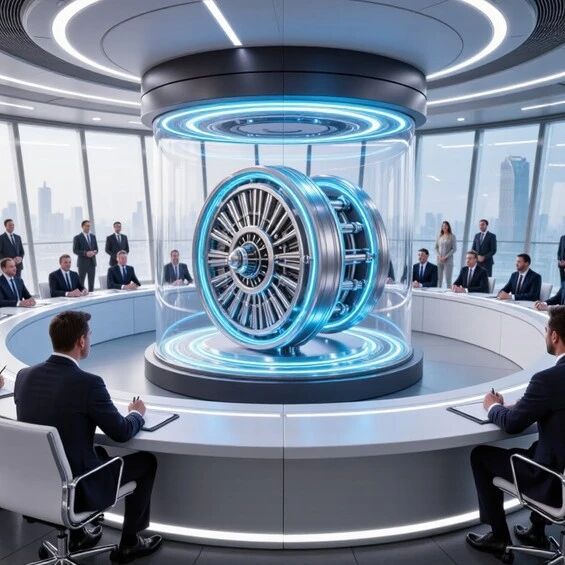
一份报告,勾勒AI迈向2049之路
3 6 Ke· 2025-12-18 23:53
Core Insights - The article discusses the historical significance of the Lunar Society in the context of the Industrial Revolution and draws parallels to the current AI technology explosion, emphasizing the need for collaboration between academia and industry to overcome commercialization challenges [3][12][25] Group 1: Historical Context and Significance - The Lunar Society, formed in Birmingham in 1765, consisted of 14 scientists and inventors, including Watt and Priestley, and aimed to create a platform for cross-disciplinary dialogue [1] - The society facilitated a "production-academia-research" loop that directly contributed to the improvement of the steam engine and its commercialization, highlighting the importance of open communication for scientific discoveries to translate into industrial applications [3][12] Group 2: Current Technological Landscape - The report "Technology Forecast and Future Vision 2049" outlines ten technological visions and future scenarios, including human-machine symbiosis, universal robots, and AI-driven molecular medicine [4][6] - The concept of the "intelligent agent internet" is highlighted as a key area of focus, predicting that by 2030, the number of global intelligent agents will exceed 200 billion, with trillions of network nodes by 2049 [8] Group 3: Challenges and Opportunities in AI - The report identifies five core challenges for universal robots, including data scarcity and high costs, predicting that these issues will gradually be resolved by 2030, allowing robots to enter households by 2049 [9] - The article emphasizes the disconnect between rapid technological advancements and their application in real-world scenarios, with only 36% of companies reporting improved profitability from AI [18][21] Group 4: Future Scenarios and Implications - Future transportation is expected to evolve significantly, with autonomous driving projected to begin trial applications by the end of 2027 and achieve widespread use by 2049, alongside the development of intelligent traffic infrastructure [11] - The report serves as a call to action for collaboration across sectors to bridge the gap between technology and application, ensuring that advancements in AI benefit humanity [24][25]

马斯克一句“愚蠢至极”,又得罪了整个硅谷
虎嗅APP· 2025-12-18 13:57
Core Viewpoint - Elon Musk criticized the pursuit of small nuclear fusion reactors on Earth, arguing that the sun serves as a free and efficient nuclear fusion reactor, and called for a halt to investments in such projects unless they are purely for scientific experimentation [5][7]. Group 1: Investment Landscape in Nuclear Fusion - In Silicon Valley, nuclear fusion is viewed as a long-term infrastructure investment rather than a fleeting trend, with nearly $10 billion in private capital expected to flow into the sector by July 2025 [9]. - Major tech figures, including Bill Gates and Jeff Bezos, have made significant investments in nuclear fusion, with Gates' Breakthrough Energy Ventures focusing on long-term clean energy strategies [9][10]. - Commonwealth Fusion Systems (CFS) has raised nearly $3 billion, emerging as a leading contender in the fusion startup space due to its high-temperature superconducting tokamak technology [10][11]. Group 2: The Narrative of Nuclear Fusion - Nuclear fusion is often framed as an "infinite energy" solution, promising abundant fuel sources and minimal carbon emissions, which is particularly appealing in the context of rising energy demands from AI [16]. - The International Energy Agency (IEA) projects that global data center electricity demand will approach 945 terawatt-hours (TWh) by 2030, with AI-specific loads increasing fourfold [16]. - 84% of fusion companies believe they can achieve grid connection by the 2030s, with over half targeting completion by 2035, driven by technological advancements like high-temperature superconductors [16]. Group 3: Challenges and Criticism of Nuclear Fusion - Musk highlighted significant engineering challenges facing terrestrial nuclear fusion, including the need for reactors to produce more energy than they consume, which remains unproven [18][19]. - The cost of building the first commercial fusion reactors is projected to be in the hundreds of billions, with construction timelines exceeding ten years, raising questions about economic viability [19]. - Musk argues that solar energy, which has seen a cost reduction of over 89% in the past decade, is a more practical and cost-effective solution compared to the uncertain future of nuclear fusion [19]. Group 4: Alternative Energy Strategies - Musk advocates for solar energy and storage technologies as the most viable and economically sound energy solutions, proposing that a solar panel area of 100 miles by 100 miles could power the entire United States [20]. - Tesla is actively working on solar products and energy storage systems to address the intermittency issues of traditional solar energy [20][21]. - Musk's vision includes deploying solar energy satellites in space, which would provide continuous power without atmospheric interference, further enhancing energy reliability for AI applications [21][22]. Group 5: Conclusion on Energy Transition - The debate between Musk and other tech leaders reflects differing philosophies on risk and return in energy technology, with fusion representing high-risk, high-reward potential, while solar energy offers more immediate and certain returns [25]. - The future of energy will require balancing the uncertainties of emerging technologies like nuclear fusion with the pressing need for reliable energy sources in the AI era [25].
一份报告,勾勒AI迈向2049之路
远川研究所· 2025-12-18 13:03
Core Viewpoint - The article draws parallels between the historical "Lunar Society" of the Industrial Revolution and the current AI technology explosion, emphasizing the need for cross-disciplinary collaboration to transform scientific discoveries into practical applications [5][12]. Group 1: Historical Context and Significance - The "Lunar Society," formed in Birmingham in 1765, consisted of 14 scientists and inventors, including Watt and Priestley, who met to foster dialogue between theory and practice [2][5]. - The society created a "production-academic-research" loop that facilitated the commercialization of innovations like the improved steam engine, highlighting the importance of collaboration in scientific advancement [5][12]. Group 2: Current AI Landscape - The report "Technology Forecast and Future Vision 2049," released by a panel of experts, outlines "ten technological visions" and "ten future scenarios" for AI, indicating a structured approach to predicting technological advancements [9][10]. - Key visions include human-machine symbiosis, general robotics, and AI in molecular medicine, with a focus on the intelligent internet of agents, which is expected to grow significantly by 2030 and 2049 [10][12]. Group 3: Challenges and Opportunities in AI - The report identifies five core challenges for general robotics, including data scarcity and high costs, predicting that these will be addressed by 2030, allowing robots to become commonplace by 2049 [12]. - The article highlights a disconnect between rapid technological advancements and their practical applications, with only 36% of surveyed companies reporting improved profitability from AI [22][24]. Group 4: Future Scenarios and Implications - Future transportation scenarios predict the widespread adoption of autonomous vehicles by 2049, with significant reductions in traffic congestion and a shift towards "mobility as a service" [16][13]. - The article emphasizes the need for a collaborative approach across technology and application sectors to ensure that AI advancements translate into societal benefits, drawing lessons from historical technological revolutions [28][26].

2026怎么投?在韧性和再平衡中前行
点拾投资· 2025-12-18 09:53
导读:时光飞逝,即将过去的2025年注定将成为金融历史上的重要分水岭。如果说2020到2024年是疫情后经济修复与 通胀博弈的"旧常态"尾声,那么2025年则开启了全新的宏观范式。 在这一年中,我们罕见的看到以全球股市为代表的风险资产和以黄金为代表的避险资产同时出现了上涨。"地缘政治阿 尔法"(Geopolitical Alpha)取代了传统的风险溢价模型,成长资产配置的核心锚点。 特别是美国总统特朗普4月2日的关税政策引发市场短期剧烈的波动后,资金重新涌向了更具自主可控能力的资产:美国 的国防工业和AI,中国的科技和高股息红利资产,突破3000美元大关的实物黄金等。而那些依赖"旧世界"全球化分工秩 序的欧洲新能源和新兴市场中高估值的印度股市,都出现了较大调整。 在"冲突"中上涨的资本市场,带来了更多的不确定性。展望2026年,我们又该如何应对新的宏观和投资范式呢?近期, 我们阅读了全球资管巨头景顺集团(Invesco)的2026年度投资展望报告,为我们布局未来提供了一盏"明灯"。 在这份2026投资展望报告中,景顺的关键词是:韧性与再平衡 韧性体现在私营部门展现出抵御经济冲击的非凡能力,企业和家庭整体的负债 ...


霓星AI电摩正式发布
Huan Qiu Wang· 2025-12-18 09:47
霓星SC系列的核心竞争力源于其全系搭载的N³深度智能生态。官方介绍,该系统并非单一功能的叠加,而是由三大核心组成的有机 整体。其中NEXA星云数据架构作为霓星深智生态的硬件基础,如同车辆的"神经网络",负责协同管理全车超过100个智能传感模 块,实现对动力、温控、补能等维度的精细化集中控制;neonOS整车级系统是车辆的底层操作系统,承担基础的交互逻辑,支持全 场景智慧投屏(如导航)、无感解锁(NFC/蓝牙/APP)及OTA远程升级等功能,为用户提供常用常新的流畅体验;NIM智能体基 于AI算法,能够全面学习用户的骑行习惯、实时路况和车辆状态,实现AI自适应动力调节、深度故障风险预判等功能。 空间方面,SC5系列拥有30L全盔级座桶空间、120mm前置物槽以及可容纳20英寸登机箱的踏板空间。在舒适性上,SC车型设计了 138°的斜踏角度,配合370mm(SC3)/420mm(SC5)的踏板长度以及5段可调的后减震,显著提升了骑行舒适度。 续航方面,SC系列铅酸电池版本续航里程在60—80km之间,满足日常通勤。该系列原生兼容DC超快充、AC慢充、家用220V充电 及换电柜换电多种模式,实现全场景补能自由。 在 ...

2000台新车订单落袋,贾跃亭一夜翻身!
商业洞察· 2025-12-18 09:23
Core Viewpoint - The article discusses the recent positive developments for Faraday Future (FF) and its founder Jia Yueting, highlighting significant orders and strategic shifts that indicate a potential turnaround for the company in the competitive electric vehicle market [4][12][32]. Group 1: Recent Developments - Jia Yueting announced a significant contract with Golden Hill Investment LLC for 2,000 units of the FX Super One, with all non-refundable deposits already received [4][6][7]. - This order marks a successful entry into the Florida market, a key state for electric vehicle consumption in the U.S. [7]. - FF has completed six out of eight planned state expansions ahead of schedule [8]. Group 2: Business Model and Strategy - The company is utilizing a co-creation ecosystem and direct online sales model, which is a departure from traditional dealership models, allowing for reduced marketing and sales costs [9][18]. - FF is focusing on high-end markets, targeting luxury vacation rentals and time-sharing, which aligns with the needs of affluent consumers [18]. - The B2B2C sales approach allows FF to reach target users quickly through partnerships, effectively turning scenarios into sales channels [18]. Group 3: Financial Performance and Challenges - FF reported an operating loss of $206.8 million (approximately 1.468 billion RMB) for the third quarter [20]. - Jia Yueting aims to achieve a market valuation of $10 billion to address domestic debts, with a commitment to repay all debts by the end of 2026 [21][26]. - The company has restructured its debts under U.S. law and is taking concrete steps to manage domestic guarantees [23]. Group 4: Future Outlook - The recent orders and business developments lend credibility to Jia Yueting's previous claims of returning to China and resolving debt issues [26]. - The article suggests that the current trajectory of FF, including its strategic focus on the U.S. market, may be the best path forward for the company [30].