
零食

Search documents
金添动漫赴港上市:渠道、IP依赖症难解 与奥特曼授权方分道?
Xin Lang Zheng Quan· 2025-11-21 10:26
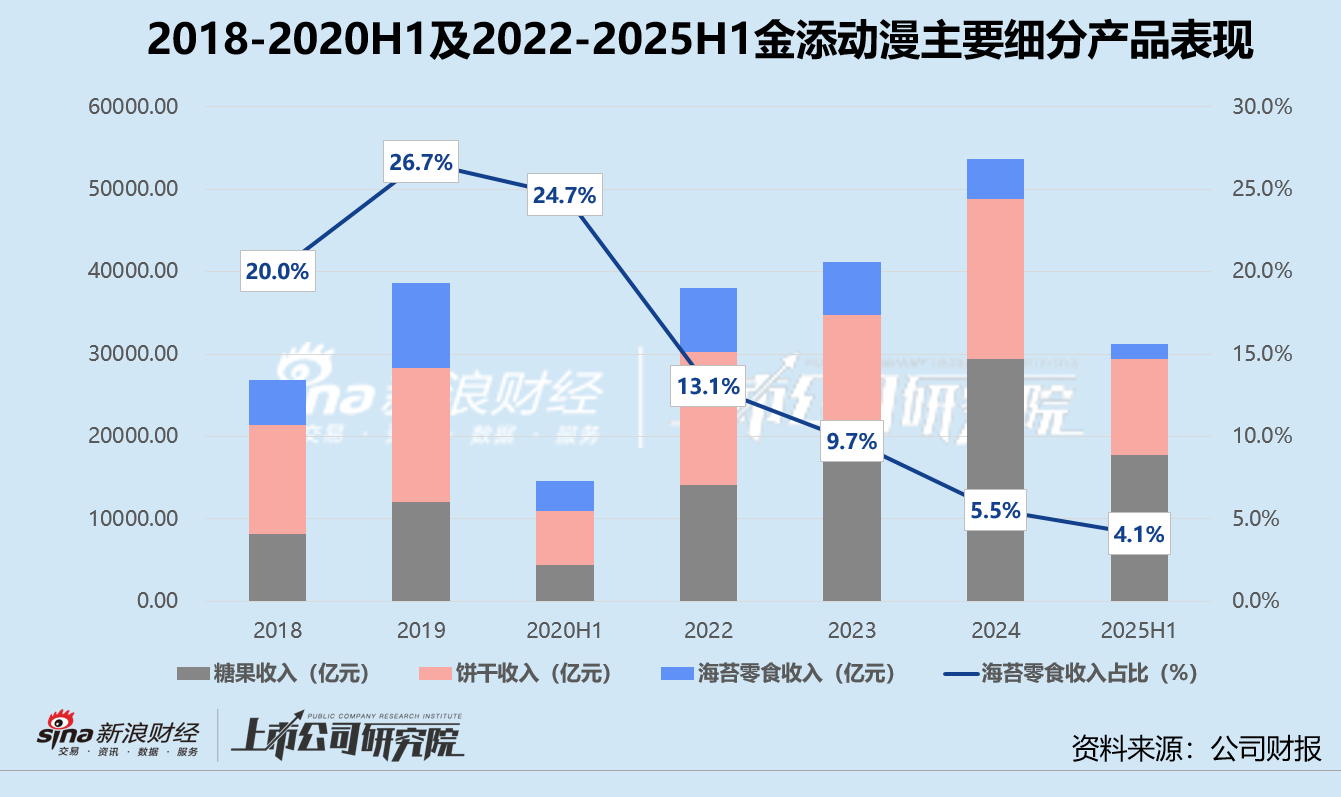
Core Viewpoint - The company Guangdong Jintian Animation Co., Ltd. (Jintian Animation) is preparing for an IPO on the Hong Kong Stock Exchange, aiming to capitalize on the growing market for IP-based consumer products, despite facing challenges in sales growth and reliance on key IPs like Ultraman [1][10]. Financial Performance - Jintian Animation's revenue is projected to grow from 5.96 billion RMB in 2022 to 8.77 billion RMB in 2024, with a compound annual growth rate (CAGR) of approximately 20.9% [1]. - Adjusted net profit is expected to rise from 36.86 million RMB in 2022 to 131 million RMB in 2024, reflecting a CAGR of 52.6% [1]. Sales and Inventory Challenges - The company has experienced a slowdown in growth, with revenue and adjusted net profit for the first half of 2025 increasing by only 9.8% and 13.4%, respectively [2]. - Sales of key product categories, including puffed snacks, chocolate, and seaweed snacks, have declined significantly, with year-on-year decreases of 25.0%, 31.8%, and 30.0% respectively in the first half of 2025 [3]. - Inventory levels have been rising, with total inventory reaching 76.18 million RMB in the first half of 2025, which is 93.6% of the total inventory for 2024 [5]. Customer Concentration and Sales Model Shift - The company has shifted its sales strategy from relying on distributors to direct sales to retail chains, with direct sales revenue increasing from 3.5% in 2022 to 43.2% in the first half of 2025 [6]. - This shift has led to increased customer concentration, with the top five customers accounting for 39.5% of total revenue by mid-2025, compared to only 4.1% in 2022 [7]. IP Dependency and Market Trends - Jintian Animation holds 26 licensed IPs, with Ultraman being the primary revenue driver, contributing 62.6% of total revenue in 2022, but its share has declined to 43.9% in the first half of 2025 [10]. - The company faces risks related to the expiration of IP licenses, with approximately 57.1% of its agreements set to expire within two years [11]. Management and Ownership Changes - Key management figures, including the actual controller of the Ultraman IP, have divested their stakes in the company, raising concerns about the future of the company's IP agreements and overall stability [14].

中信建投万字报告!展望2026年经济、债市、全产业链投资策略
Sou Hu Cai Jing· 2025-11-20 23:47
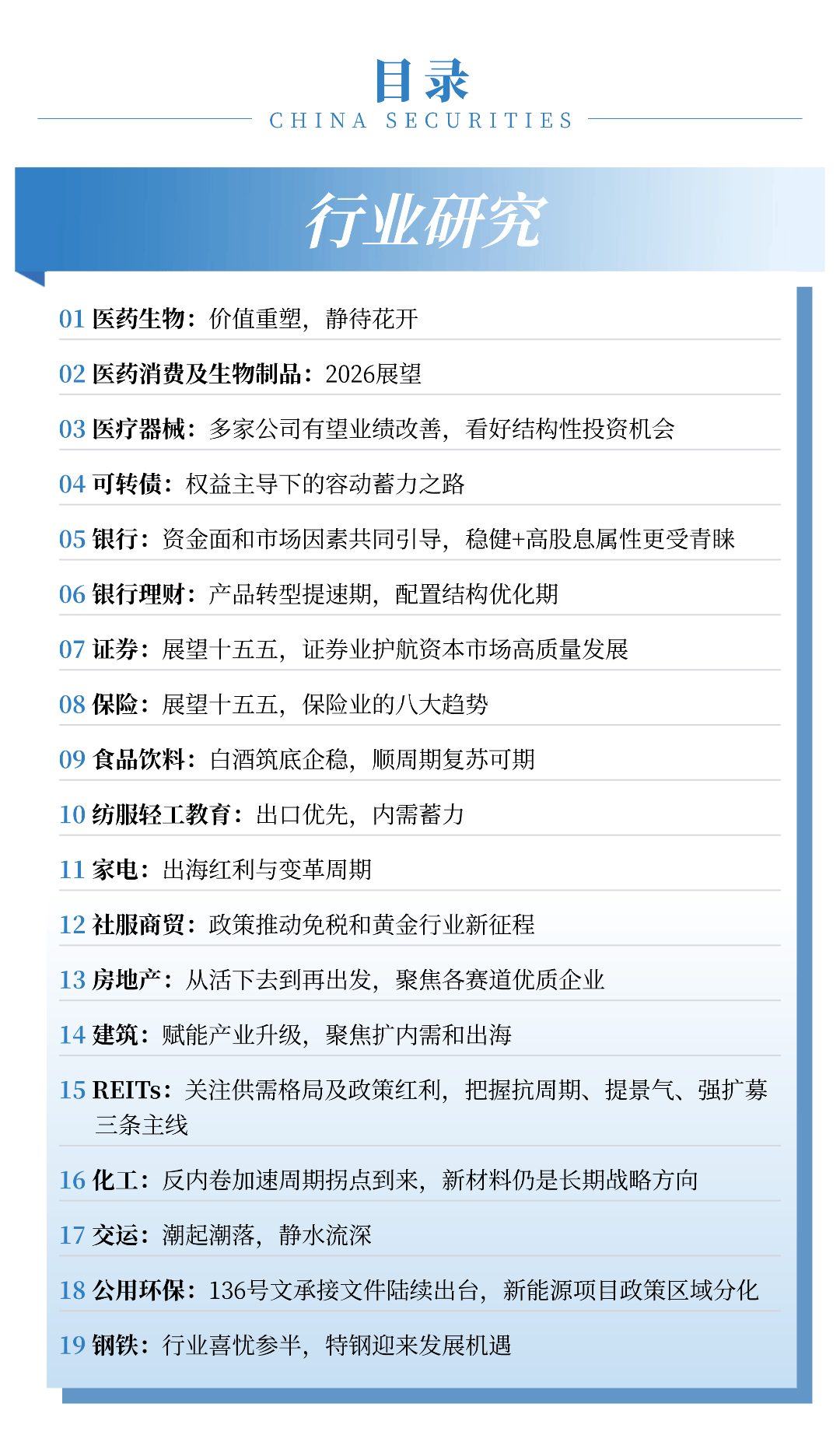
Group 1: Investment Strategies Overview - CITIC Securities released a comprehensive report on investment strategies for 2026, covering global capital markets, macroeconomic policies, A-shares, overseas markets, bond markets, asset allocation, and industry investment strategies [1] - The report includes insights from 19 research teams and spans approximately 30,000 words [1] Group 2: Pharmaceutical and Biotech Investment Strategies - The Chinese pharmaceutical industry is entering a critical phase characterized by "innovation realization + global layout," supported by population and domestic demand, as well as manufacturing capabilities [3][4] - The industry needs to focus on internal supply chain security and compliance while exploring diversified international expansion [3] - Key investment opportunities for 2026 include innovation commercialization, global breakthroughs, policy optimization, and industry mergers and acquisitions [3][5][6] Group 3: Medical Device Investment Strategies - The medical device sector is expected to see performance improvements in 2026 due to policy easing, new product launches, and international expansion [14] - The long-term investment opportunities in this sector stem from innovation, internationalization, and mergers and acquisitions [14] - The industry is witnessing a shift towards high-value consumables and innovative technologies such as brain-computer interfaces and AI in healthcare [14][15] Group 4: Consumer Healthcare and Bioproducts - The traditional Chinese medicine sector is expected to recover from short-term pressures, with improved demand anticipated by year-end [9] - The blood products industry is focusing on supply growth and consolidation, with significant demand for immunoglobulin and factor products [10] - The vaccine sector is under pressure but is expected to improve with new product sales and international expansion [10] Group 5: Banking Sector Investment Strategies - The banking sector is expected to continue its weak recovery in 2025, with a focus on high dividend strategies [25][26] - The sector's fundamentals are stabilizing, with credit growth projected at 7%-8% and non-interest income expected to improve [26] - High dividend yield strategies are favored, particularly for state-owned banks and those with solid fundamentals [27] Group 6: Wealth Management and Financial Products - The wealth management sector is entering a phase of product transformation and structural optimization, with an expected growth rate of 10% in 2026 [28][33] - The focus is on multi-asset and multi-strategy products, with a significant increase in mixed product offerings anticipated [29][30] - The integration of AI and digital technologies is expected to enhance risk management and operational efficiency in wealth management [30] Group 7: Non-Banking Financial Institutions - The securities industry is poised for a new growth cycle, driven by policies that enhance capital market inclusivity and adaptability [35][36] - The industry is experiencing a shift from self-operated models to collaborative, light-asset business strategies [36][37] - The internationalization of Chinese securities firms is gaining momentum, providing new opportunities for growth [38][39] Group 8: Insurance Sector Trends - The insurance industry is expected to undergo significant changes during the "14th Five-Year Plan" period, focusing on balancing interests among insurers, channels, and customers [43][44] - Key trends include the transformation of savings products, innovation in health insurance, and the development of new distribution channels [43][44] - The sector is anticipated to benefit from improved performance and valuation recovery, presenting investment opportunities [43][44] Group 9: Food and Beverage Sector - The food and beverage sector is recovering from a prolonged downturn, with a focus on premium products like liquor and health-oriented snacks [48][49] - The liquor industry is expected to stabilize as consumer confidence improves, with a focus on high-quality brands [49][50] - The snack and beverage segments are seeing growth driven by health trends and innovative product offerings [52][53]

食品饮料&农林牧渔行业2026年投资策略
2025-11-20 02:16
Summary of Industry and Company Insights from Conference Call Records Industry: Dairy Products - Liquid milk revenue has declined, with ambient yogurt significantly impacted by competition from tea beverages, but leading dairy companies have achieved slight growth in dairy drinks through product innovation and market expansion [1][2][3] - Solid dairy products show weak demand for cheese in the A-end, while B-end domestic alternatives are accelerating; milk powder demand is improving due to population growth [1][2] - The upstream raw milk supply is expected to reach a supply-demand balance by mid-2026, potentially leading to a rebound in milk prices, with large dairy companies benefiting from scale advantages [1][3] - Major dairy companies like Yili and Mengniu are expected to see a recovery in market share as their valuations are at a low point [3] Industry: Snack Foods - The snack food industry is experiencing slowed growth, with high raw material costs and intense competition; however, categories like konjac and bulk channels still show potential [4] - Recommended companies include Wei Long and Ximai Foods, which have advantages in multi-channel distribution and are positioned well in the konjac category [4] Industry: Seed Industry - The seed industry is anticipated to see a turnaround in the second half of 2026, with opportunities for investment in companies like Kangnong Seed, which has achieved growth through its flagship product [5] - The sales area for Kangnong's product is expected to exceed 10 million mu, indicating strong performance potential [5] Industry: Grain and Economic Crops - If grain prices rise in the second half of 2026, the industry may see improved conditions, with companies like Suqian Agricultural Development showing significant earnings elasticity [6] - In the economic crop sector, companies involved in natural rubber and blueberry cultivation are highlighted for their growth potential [6] Industry: Agricultural Product Processing - The agricultural processing sector should focus on health-related investment opportunities, with companies like COFCO Sugar showing strong stock performance [7] - The tomato processing segment is showing signs of price stabilization, which could benefit companies like Guannong [7] Industry: Functional Food Ingredients - The functional food ingredients market is expected to grow significantly, driven by improvements in profitability and new product releases [8][9] Industry: Livestock and Poultry - The livestock industry is projected to bottom out and gradually recover, with recommendations for cost-leading companies like Wens Foodstuffs and DeKang Agriculture [10][12] - The pig market has seen price fluctuations, with expectations of continued pressure in early 2026 but potential recovery later in the year [11][12] Industry: Pet Food - The pet food sector has shown resilience, with domestic demand remaining strong and companies like Zhongchong and Guibao Pet Food achieving significant growth [15] Industry: Restaurant Supply Chain - The restaurant supply chain is facing weak demand, but leading companies are gaining market share through innovation and new product development [16][20] - Companies like Hai Tian and Anjing Foods are highlighted for their strong performance despite industry challenges [21][22] Key Investment Opportunities - Focus on companies with strong growth potential in their respective sectors, such as Wei Long in snacks, Kangnong in seeds, and Anjing Foods in the restaurant supply chain [4][5][22]


便宜零食,到底便宜了谁?
远川研究所· 2025-11-19 13:14
Core Viewpoint - The article discusses the challenges faced by snack brands like Three Squirrels in the e-commerce era, highlighting a shift in consumer preferences towards "bulk snack stores" and the impact of rising competition and costs in the online market [4][9][12]. Group 1: Industry Overview - The snack industry has low entry barriers but is highly fragmented, with the top five companies holding only 5.9% market share [8]. - The rise of bulk snack stores has significantly changed the competitive landscape, with these stores capturing 37% of the market share in 2024, surpassing e-commerce and supermarkets [13][15]. - The average profit margin in the snack industry is around 5%, making it sensitive to rising costs and competition [11]. Group 2: Company Performance - Three Squirrels has seen a decline in profitability, with net profit dropping from 411 million to 129 million in 2022 [9]. - The company has shifted its focus back to e-commerce, particularly on platforms like Douyin, which now accounts for 26.98% of its revenue [11]. - Despite the challenges, Three Squirrels remains a significant player, but its growth has stagnated, with revenue increasing without corresponding profit growth [6][9]. Group 3: Market Dynamics - The emergence of bulk snack stores has led to a price war, with these stores offering products at prices 20%-75% lower than supermarkets and 7%-59% lower than e-commerce [18][20]. - The rapid expansion of bulk snack stores, such as "Mingming Very Busy," has resulted in over 40,000 locations across China, with a significant number of stores located in lower-tier cities [15][22]. - The competition between bulk snack store brands has intensified, leading to aggressive marketing strategies and store openings in close proximity to competitors [30]. Group 4: Consumer Behavior - Consumers are increasingly drawn to lower-priced options, leading to a decline in brand loyalty among traditional snack brands [8][26]. - The rise of private label and lesser-known brands in bulk snack stores has contributed to the profitability of these stores, with private label products accounting for 60-65% of their inventory [26][30]. - The shift in consumer preferences towards bulk purchasing and lower prices has created a challenging environment for established snack brands [23][30].



食品饮料行业2025年三季报综述:白酒报表端承压,关注高质量增长的大众品龙头
CHINA DRAGON SECURITIES· 2025-11-19 13:01
Investment Rating - The report maintains an investment rating of "Recommended" for the food and beverage industry [3][8]. Core Insights - The food and beverage industry experienced a slight revenue increase of 0.17% year-on-year in the first three quarters of 2025, but the net profit attributable to shareholders declined by 4.58% [3][15]. - The third quarter of 2025 saw a significant decline in both revenue and profit, with revenues dropping by 4.75% year-on-year and net profits decreasing by 14.61% [3][15]. - The report highlights that the macroeconomic policies aimed at boosting domestic demand are expected to lead to a recovery in performance and valuation for the food and beverage sector [16]. Summary by Sections 1. Industry Overview - The food and beverage sector's overall revenue for the first three quarters of 2025 was CNY 8309.16 billion, with a net profit of CNY 1711.64 billion [3][15]. - The third quarter alone generated revenue of CNY 2500.62 billion, with a net profit of CNY 434.96 billion [3][15]. 2. Subsector Performance 2.1 Baijiu (Chinese liquor) - The baijiu sector faced significant pressure, with revenues and net profits declining in the third quarter of 2025 [24]. - Major brands like Moutai and Fenjiu performed relatively well despite the overall downturn [24]. - The report notes a 20%-30% decline in sales during traditional festive periods, with regional variations in performance [24]. 2.2 Beer - The beer sector maintained steady demand, achieving a revenue of CNY 620.52 billion in the first three quarters, up 2.02% year-on-year, and a net profit of CNY 94.84 billion, up 11.82% [29]. - The third quarter saw revenues of CNY 203.20 billion, with a net profit increase of 11.30% [29]. 2.3 Snacks - The snack sector showed positive growth, with revenues and net profits increasing in the third quarter [3][29]. 2.4 Soft Drinks - The soft drink sector experienced a strong performance, particularly in the third quarter, with leading companies showing significant growth [3][29]. 2.5 Dairy Products - The dairy sector continued to face demand challenges, but there were signs of marginal improvement as raw milk prices stabilized [4][29]. 2.6 Condiments - The condiment sector is undergoing intense competition, but leading companies are outperforming the overall market [4][29]. 3. Investment Recommendations - The report suggests focusing on resilient companies with strong growth potential, such as Dongpeng Beverage, Yili, and Moutai, among others [8][24].



加速出清行业寻底,预期先行板块启动
East Money Securities· 2025-11-19 06:56
Investment Highlights - The report indicates a clear turning point for the food and beverage industry following accelerated clearance, with expectations for leading sectors to initiate recovery [2][7] - The overall revenue for the food and beverage sector showed a slight increase of 0.2% year-on-year, while net profit decreased by 4.6% in the first three quarters of 2025 [18][20] - In Q3 2025, the sector experienced a significant decline, with revenues and net profits dropping by 4.9% and 14.6% respectively [18][20] Sector Review 1. Overall Review - The food and beverage sector faced continuous pressure and adjustments, with traditional consumption accelerating clearance while new consumption trends continued to grow [18][20] - The white liquor segment saw a revenue decline of 18.4% and a net profit decline of 22.2% in Q3 2025, indicating significant pressure on the sector [20][22] - In contrast, sectors like snacks and beverages maintained double-digit growth due to product and channel innovations [20][21] 2. White Liquor - The white liquor industry is undergoing accelerated clearance, with varying rhythms among companies. The demand has weakened, leading to noticeable declines in revenue and net profit for most companies [22][25] - High-end liquor maintained some growth, with Moutai achieving a revenue increase of 0.3% in Q3 2025, while other brands like Wuliangye saw declines exceeding 50% [23][25] - The report emphasizes the importance of supply-demand balance and pricing as key indicators for the industry's recovery [22][23] 3. Low-Alcohol Beverages and Drinks - The beer segment showed stable performance with a revenue increase of 2.0% and a net profit increase of 11.8% in the first three quarters of 2025 [21][22] - The report highlights the potential for recovery in demand for low-alcohol beverages and drinks, driven by health trends and product innovation [22][23] 4. Consumer Goods - The dairy sector is gradually stabilizing, with upstream supply clearing and downstream processing demand increasing, leading to a potential balance in the raw milk cycle [31][33] - The snack sector, particularly the konjac and oat categories, is expected to maintain high growth rates, supported by the expansion of new retail channels [31][36] - The report notes that the overall demand for dining remains weak, but specific segments like Western-style condiments and frozen baking show structural opportunities [31][33] Investment Recommendations - The report suggests focusing on companies that are early in their clearance processes and have strong brand momentum, such as Gujing Gongjiu and Luzhou Laojiao [11][12] - For low-alcohol beverages, attention is drawn to leading companies like Kweichow Moutai and Tsingtao Brewery, which are expected to benefit from demand recovery [11][12] - In the consumer goods sector, companies with strong performance and cost advantages, such as Yili and Modern Dairy, are recommended for investment [11][12]



中信证券:大众品基本面触底在即 关注乳品及餐供板块
智通财经网· 2025-11-19 00:42
Core Viewpoint - The consumer goods sector is expected to gradually bottom out in demand by 2026, with a narrowing of price declines, although the potential for upward recovery may be limited due to intense competition and weakening raw material cost advantages [1][2]. Group 1: Consumer Goods Industry Overview - The consumer goods sector experienced weak demand and intense competition in the first three quarters of 2025, leading to a decline in both volume and price [2]. - The demand for consumer goods is anticipated to stabilize in 2026, supported by a healthy inventory level and the upcoming consumption peak due to the Spring Festival preparations [2]. - Despite the expected stabilization in demand, the consumer goods sector may still face slight pressure on terminal prices due to ongoing weak demand and a trend towards cost-effective consumption [2]. Group 2: Dairy Products - The liquid milk sector faced a decline in demand due to weakened consumer purchasing power, but the rate of decline has slowed compared to 2024 [3]. - Improvements in raw milk supply and demand are expected, with milk prices projected to stop declining and potentially recover in the second half of 2026 [3]. - The liquid milk industry is anticipated to stabilize at its fundamental bottom in 2026, with reduced promotional pricing and a narrowing of price declines [3]. Group 3: Snacks - The snack industry is expected to continue benefiting from channel growth in 2025, particularly in bulk snack channels and membership supermarkets, despite a slowdown in e-commerce and traditional channels [4]. - The profitability of the snack sector is under pressure due to rising raw material costs and increased competition [4]. - In 2026, the focus will be on growth stocks within the snack sector, particularly those benefiting from the ongoing trends in specific product categories [4]. Group 4: Food Supply Chain - The food supply chain sector is closely tied to the performance of the downstream restaurant industry, which is currently experiencing weak overall conditions [5]. - Structural highlights include resilient leading companies gaining market share and the acceleration of mergers and acquisitions to expand categories and channels [5]. - The sector is expected to show signs of marginal improvement in 2026, with potential recovery in demand and easing competitive pressures [5]. Group 5: Beverage Industry - The beverage sector experienced fluctuations in demand in 2025, with a negative growth trend emerging in the third quarter due to price wars on delivery platforms [6]. - The health and functional beverage categories performed better than others, and despite intense competition, many companies managed to improve net profit margins [6]. - A recovery in beverage demand is anticipated in 2026, with expected growth in the mid to high single digits, contingent on market demand and raw material prices [6][7].

有友食品跌2.04%,成交额8356.58万元,主力资金净流出481.59万元
Xin Lang Cai Jing· 2025-11-18 06:47
Core Viewpoint - Youyou Food's stock price has experienced fluctuations, with a year-to-date increase of 32.85% but a recent decline of 6.03% over the past five trading days [2] Financial Performance - For the period from January to September 2025, Youyou Food achieved a revenue of 1.245 billion yuan, representing a year-on-year growth of 40.39% [2] - The net profit attributable to the parent company for the same period was 174 million yuan, reflecting a year-on-year increase of 43.34% [2] - Cumulative cash dividends since the company's A-share listing amount to 925 million yuan, with 547 million yuan distributed over the past three years [3] Stock Market Activity - As of November 18, Youyou Food's stock price was 12.94 yuan per share, with a market capitalization of 5.534 billion yuan [1] - The stock has seen a net outflow of 4.8159 million yuan in principal funds, with large orders accounting for 6.23% of total buying and 12.00% of total selling [1] - The company has appeared on the "Dragon and Tiger List" five times this year, with the most recent appearance on June 23, where it recorded a net buy of -36.2174 million yuan [2] Shareholder Information - As of September 30, 2025, the number of shareholders for Youyou Food was 23,600, an increase of 40.75% from the previous period [2] - The average circulating shares per person decreased by 28.95% to 18,141 shares [2] - The top ten circulating shareholders include notable funds such as Penghua Consumer Preferred Mixed Fund and Yinhua Shengshi Selected Flexible Allocation Mixed Fund [3]

消费场景有序恢复,餐饮供应链边际改善
Guoxin Securities· 2025-11-17 13:22
Investment Rating - The report maintains an "Outperform the Market" rating for the food and beverage sector [4][5][68]. Core Views - The food and beverage sector is expected to benefit from a gradual recovery in consumer scenarios and improvements in the restaurant supply chain [1][3]. - The report highlights a differentiated performance across categories, with beverages outperforming food and alcoholic beverages [2][3]. - The outlook for 2026 is optimistic, with expectations of continued demand recovery and valuation expansion [3][16]. Summary by Relevant Sections Market Performance - The food and beverage sector saw a cumulative increase of 2.93% this week, with A-shares rising by 2.83% and H-shares by 4.33% [1]. - The top five performers in the sector included companies like Huanlejia and Sanyuan [1]. Alcoholic Beverages - The report suggests a focus on high-quality companies in the liquor sector, particularly as the industry enters a bottoming phase [2][11]. - Recommendations include Luzhou Laojiao, Shanxi Fenjiu, and Guizhou Moutai, with an emphasis on the upcoming December liquor distributor conference [2][11]. Beverages - The beverage sector is experiencing a positive trend, with stable demand recovery in dairy products and strong performance from leading companies like Nongfu Spring and Dongpeng Beverage [2][15]. - The report recommends focusing on companies with strong growth potential and ongoing internal reforms [2][15]. Snacks - The report emphasizes the importance of selecting alpha-type stocks in the snack category, particularly those benefiting from the growth of konjac snacks [2][12]. - Leading companies in this space, such as Weilong and Yanjinpuzi, are highlighted for their competitive advantages [2][12]. Restaurant Supply Chain - The report indicates that the restaurant supply chain is showing signs of stabilization, with major companies optimizing their expense management [13]. - Recommendations include Yihai International and Haitian Flavoring, which are expected to perform well as the industry recovers [13]. Dairy Products - The dairy sector is projected to see a gradual recovery in demand, with leading companies like Yili expected to benefit from improved margins [14][15]. - The report suggests a focus on companies with a safety margin in valuations [14][15]. Investment Recommendations - The recommended investment portfolio includes Guizhou Moutai, Baba Foods, Dongpeng Beverage, Weilong, and Luzhou Laojiao, with an average increase of 4.24% [16]. - The report anticipates continued growth in the beverage sector, particularly for energy drinks and tea products [15][16].
食品饮料周报(25年第42周):消费场景有序恢复,餐饮供应链边际改善-20251117
Guoxin Securities· 2025-11-17 11:41
Investment Rating - The report maintains an "Outperform the Market" rating for the food and beverage sector [4][5][68]. Core Views - The food and beverage sector is expected to benefit from a gradual recovery in consumer scenarios and improvements in the restaurant supply chain [1][3]. - The report highlights a differentiated performance among categories, with beverages outperforming food and alcoholic beverages [2][3]. - The investment outlook for 2026 is optimistic, with expectations of valuation recovery and a focus on health innovation and digital supply chains [3][16]. Summary by Sections Market Overview - The food and beverage sector saw a cumulative increase of 2.93% this week, with A-shares rising by 2.83% and H-shares by 4.33% [1]. - The top five performers in the food and beverage sector this week included companies like Huanlejia and Sanyuan [1]. Alcoholic Beverages - The report indicates that the liquor sector is in a bottoming phase, with a focus on identifying quality companies ahead of the December liquor distributor conference [2][11]. - Recommendations include Luzhou Laojiao, Shanxi Fenjiu, and Guizhou Moutai, with a focus on companies with pricing power and regional influence [2][11]. Beverages - The beverage sector is experiencing a favorable environment, with stable demand recovery and leading companies outperforming [2][15]. - Key recommendations include Nongfu Spring and Dongpeng Beverage, which are expanding their national presence and platform capabilities [2][15]. Food - The snack segment is advised to focus on strong alpha stocks, particularly in the konjac snack category, where companies like Weilong and Yanjinpuzi are highlighted for their competitive advantages [2][12]. - The restaurant supply chain is showing signs of stabilization, with recommendations for leading companies like Yihai International and Haitian Flavoring [2][13]. Key Companies and Earnings Forecasts - Guizhou Moutai is projected to have revenues of CNY 183.52 billion in 2025, with a net profit of CNY 90.59 billion, maintaining an "Outperform the Market" rating [4][16]. - Dongpeng Beverage is expected to achieve revenues of CNY 20.9 billion in 2026, with a net profit of CNY 5.8 billion, also rated as "Outperform the Market" [4][16]. - WeLong is forecasted to have revenues of CNY 7.53 billion in 2025, with a net profit of CNY 1.47 billion, maintaining an "Outperform the Market" rating [4][16].
