高端制造

Search documents
基金经理投资笔记 | 基于周期阶段的2026年资产优先级选择
Sou Hu Cai Jing· 2025-12-06 05:46
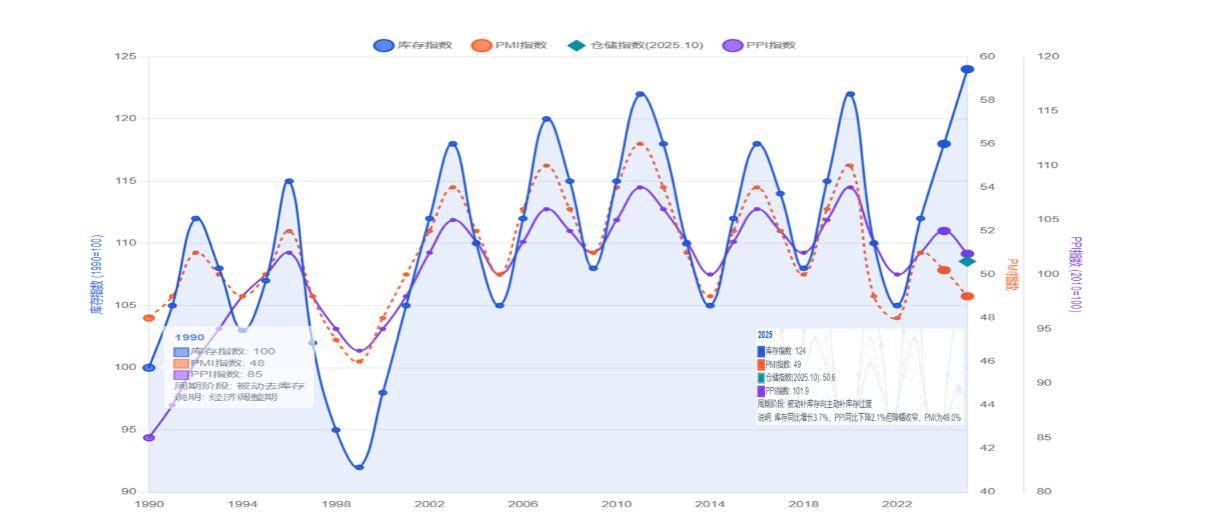
Core Viewpoint - The article discusses the transition in economic cycles and the implications for wealth management, emphasizing the importance of structural debt and fiscal policy over monetary policy in the context of liquidity changes expected in 2026 compared to 2025 [1] Economic Cycle Analysis Framework - Economic cycle analysis should not be confined to traditional macro asset allocation frameworks, as it emphasizes structural issues rather than aggregate concepts [2] - The economic cycle consists of regular expansions and contractions, categorized into long, medium, and short cycles, including the Kondratieff, Juglar, Kuznets, and Minsky cycles [2] Phases of the Real Cycle - The real cycle is divided into three main cycles: Kondratieff, Juglar, and inventory cycles [3] Kondratieff Cycle: Technological and Energy Revolutions - The Kondratieff cycle spans approximately 60 years, focusing on technological changes and resource dynamics, with current consensus highlighting AI and its supporting infrastructure as key drivers [4] - The cycle illustrates the interplay between technological efficiency and resource consumption, leading to a demand cycle [4] Juglar Cycle: Equipment Investment - The Juglar cycle, lasting 7-11 years, is driven by periodic changes in equipment investment and capital expenditure, with China currently in the early recovery phase of its sixth Juglar cycle [6][7] - Key characteristics of the current Juglar cycle include the transition from old to new driving forces, accelerated technological iteration, and significant industry differentiation [8][9] Inventory Cycle: Transition from Passive to Active Inventory Management - The inventory cycle consists of four stages, with the current phase indicating a shift from passive to active inventory management, influenced by internal market dynamics [10] - Recent data shows a decline in manufacturing PMI, indicating weak demand and a challenging environment for inventory management [10][11] Phases of the Financial Cycle - The financial cycle focuses on real estate and debt cycles, with China still undergoing a significant adjustment in its real estate market since 2020 [13][14] - The Minsky cycle describes a pattern of credit expansion leading to financial instability, with current conditions characterized by low interest rates and a gradual rise in macro leverage [17][18] Asset Prioritization Based on Cycle Phases - The asset allocation strategy for 2026 emphasizes the resonance between the Kondratieff and Juglar cycles, focusing on new productive forces while maintaining defensive positions in a low-interest environment [19] - Specific investment areas include AI computing, industrial robotics, and green energy, while avoiding high-risk assets related to the ongoing real estate adjustment [19]

(机遇香港)11月港股IPO“量增质优” 年末上市热度持续攀升
Sou Hu Cai Jing· 2025-12-05 12:13
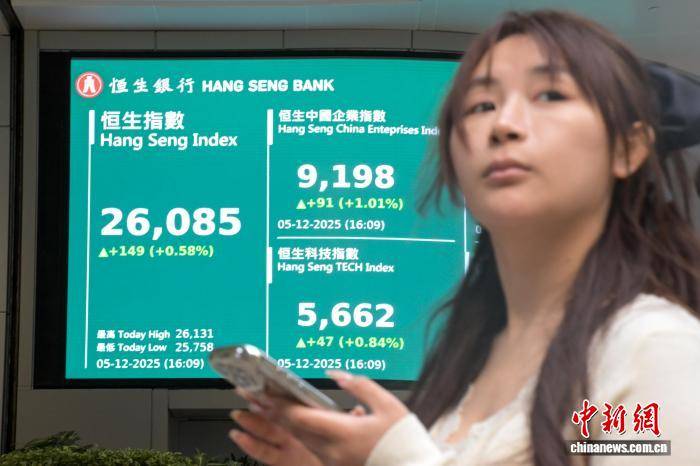
Market Performance - The Hong Kong stock market showed a rebound on December 5, with the Hang Seng Index returning to the 26,000-point mark, significantly boosting market sentiment [1] - The Hang Seng Index closed at 26,085.08 points, up by 149.18 points, representing a 0.58% increase, with a total trading volume of 210.473 billion HKD [3] - The Hang Seng Technology Index rose by 0.84% to 5,662.46 points, while the National Enterprises Index increased by 1.01% to 9,198.3 points, indicating active trading in technology and non-ferrous metal sectors [3] IPO Market Activity - In the first 11 months of 2025, there were 93 new listings in the Hong Kong securities market, a 52% increase from 61 in the same period last year, with IPO fundraising amounting to 259.4 billion HKD, up 228% from 79.1 billion HKD [3] - The total fundraising amount exceeded 259.8 billion HKD, marking a significant year-on-year increase of 228% [3] - The IPO pipeline consists of 306 companies, with 14 having passed the hearing, indicating a sustained interest in new listings as the year ends [3] Sector Analysis - The leading sectors for IPOs towards the end of the year include new energy vehicles, biomedicine, and high-end manufacturing, with 6 out of the top 10 IPOs coming from A-share listed companies [4] - The dual engines driving the IPO activity in Hong Kong are new consumption and hard technology [4] Future Outlook - According to a report by Ernst & Young, the IPO activities in mainland China and Hong Kong are showing growth on a global scale, with a diversified base of cornerstone investors reflecting the international appeal of Hong Kong stocks [4] - A recent survey by the Australian Institute of Chartered Accountants indicated that 66% of respondents expect an increase in new stock activities in 2026, while 63% anticipate continued economic growth in Hong Kong [4] - It is projected that the new stock fundraising amount in Hong Kong will exceed 300 billion HKD next year, solidifying its position as the leader in global new stock fundraising [5]

20cm速递|科创综指ETF国泰(589630)飘红,科创行业有望继续打开估值上限
Mei Ri Jing Ji Xin Wen· 2025-12-05 04:10
每日经济新闻 (责任编辑:董萍萍 ) 【免责声明】本文仅代表作者本人观点,与和讯网无关。和讯网站对文中陈述、观点判断保持中立,不对所包含内容 的准确性、可靠性或完整性提供任何明示或暗示的保证。请读者仅作参考,并请自行承担全部责任。邮箱: news_center@staff.hexun.com 华创证券指出,科创行业在康波周期下的科技竞赛有望继续打开估值上限,政策聚焦卡脖子与未来 产业制高点,重视端侧稳健增长、应用侧ToB商业化落地。从PEG/资本开支视角看,半导体、光学元 件、PCB、集成电路等细分领域具备配置价值。科技板块短期需关注业绩兑现消化静态高估值,中期则 需观察AI能否成为新一轮康波周期的核心驱动。此外,电子、通信设备等高出海占比且高景气的领域 也值得重视,全球视角下中国制造业的产能出海将提升全球竞争力。 科创综指ETF国泰(589630)跟踪的是科创综指(000680),单日涨跌幅达20%,该指数覆盖科创 板几乎所有符合条件的上市公司,市值覆盖率接近100%。科创综指聚焦于半导体、生物医药、高端制 造等"硬科技"产业,行业分布均衡,能够全面反映科创板上市公司的整体表现与成长潜力。 注:如提及个股仅 ...
银行理财打新“踩油门” 为何集体顶上科创板?
Zhong Guo Jing Ying Bao· 2025-12-04 11:04
Group 1 - The core viewpoint of the articles highlights the increasing participation of wealth management companies in new stock IPOs, particularly focusing on technology companies and the STAR Market [1][2][3] - Wealth management products are increasingly adopting a "fixed income + new stock subscription" structure, with over 80% of funds allocated to bond assets and a small portion for new stock purchases, balancing returns and volatility [1][2] - The number of wealth management companies participating in new stock subscriptions remains limited, but leading institutions are setting a demonstration effect, with a noticeable increase in new products since September [1][2] Group 2 - There is a growing trend of wealth management products focusing on new stock subscriptions, particularly in sectors like semiconductors, new energy, and high-end manufacturing, reflecting a strategic alignment with national priorities [2][3] - The frequency of new stock subscriptions by bank wealth management subsidiaries in the STAR Market indicates a shift in asset allocation strategies from traditional fixed income to diversified equity investments [3] - The expectation is that by 2026, new stock subscription products will expand into various lines, competing directly with public offering funds and extending into strategic placements and private equity [3][4]
连云港海州区:40亿元产业基金集群赋能高质量发展
Sou Hu Cai Jing· 2025-12-04 09:58
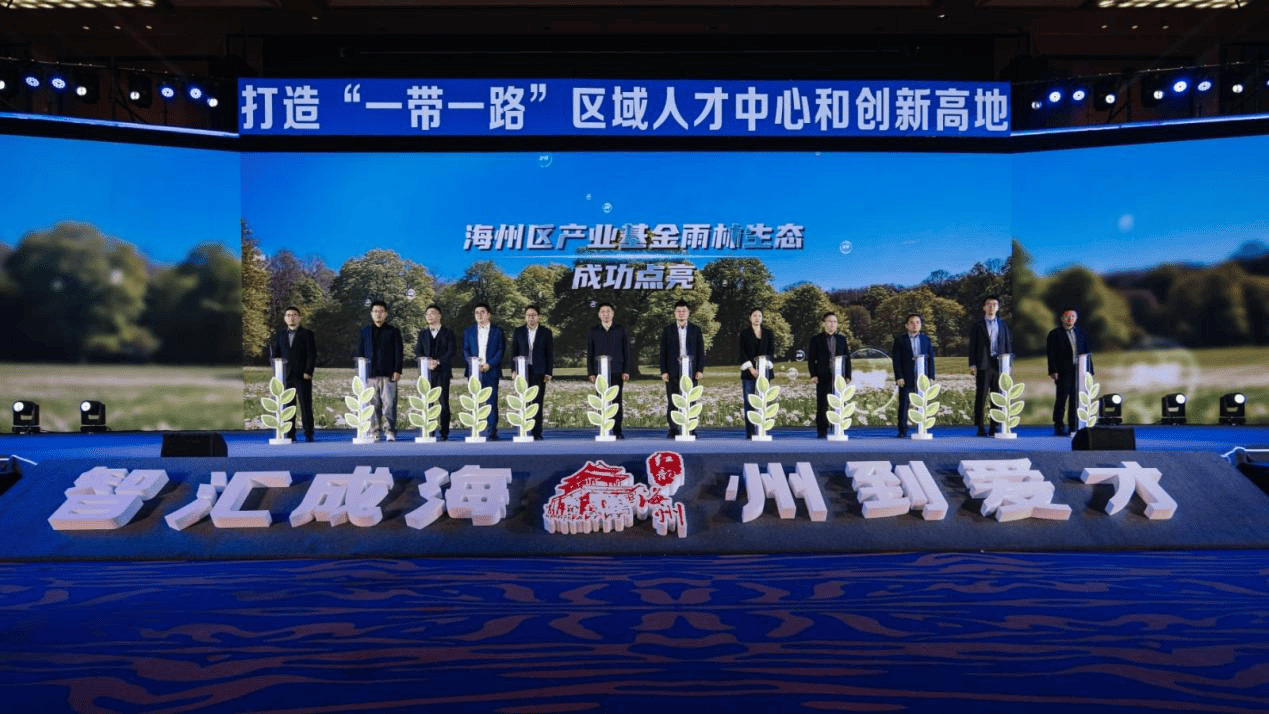
Core Insights - The Lianyungang Haizhou District has launched a "2+N" industrial fund cluster with a total scale of 4 billion yuan, aiming to inject strong capital momentum into regional industrial upgrades [1][4] - The Lianyungang High-tech Industry Mother Fund, a key component of the fund cluster, has already completed nearly 500 million yuan in investments this year and aims for a total investment of nearly 2 billion yuan by the end of 2024 [4][5] - The fund cluster has successfully facilitated the landing of 9 return investment projects with a total investment exceeding 1 billion yuan, creating a virtuous cycle of "investment - landing - development" [5] Investment Strategy - The fund cluster focuses on precise investment in key sectors such as biomedicine and high-end manufacturing, with investments in 8 quality projects including Zhongwei Biomedicine and Dongpu Precision Ceramics [4][5] - A special investment fund of 100 million yuan has been established to prioritize projects that win innovation and entrepreneurship competitions, creating a mechanism for incubating quality projects [5] Economic Impact - By the end of 2025, five projects including Hanchitech are expected to land, contributing over 1 billion yuan in annual industrial output value and over 100 million yuan in tax revenue for the Haizhou District [5] - The fund cluster aims to enhance the full-cycle refined services and further integrate capital empowerment with ecological cultivation to support high-quality economic development in the region [5]

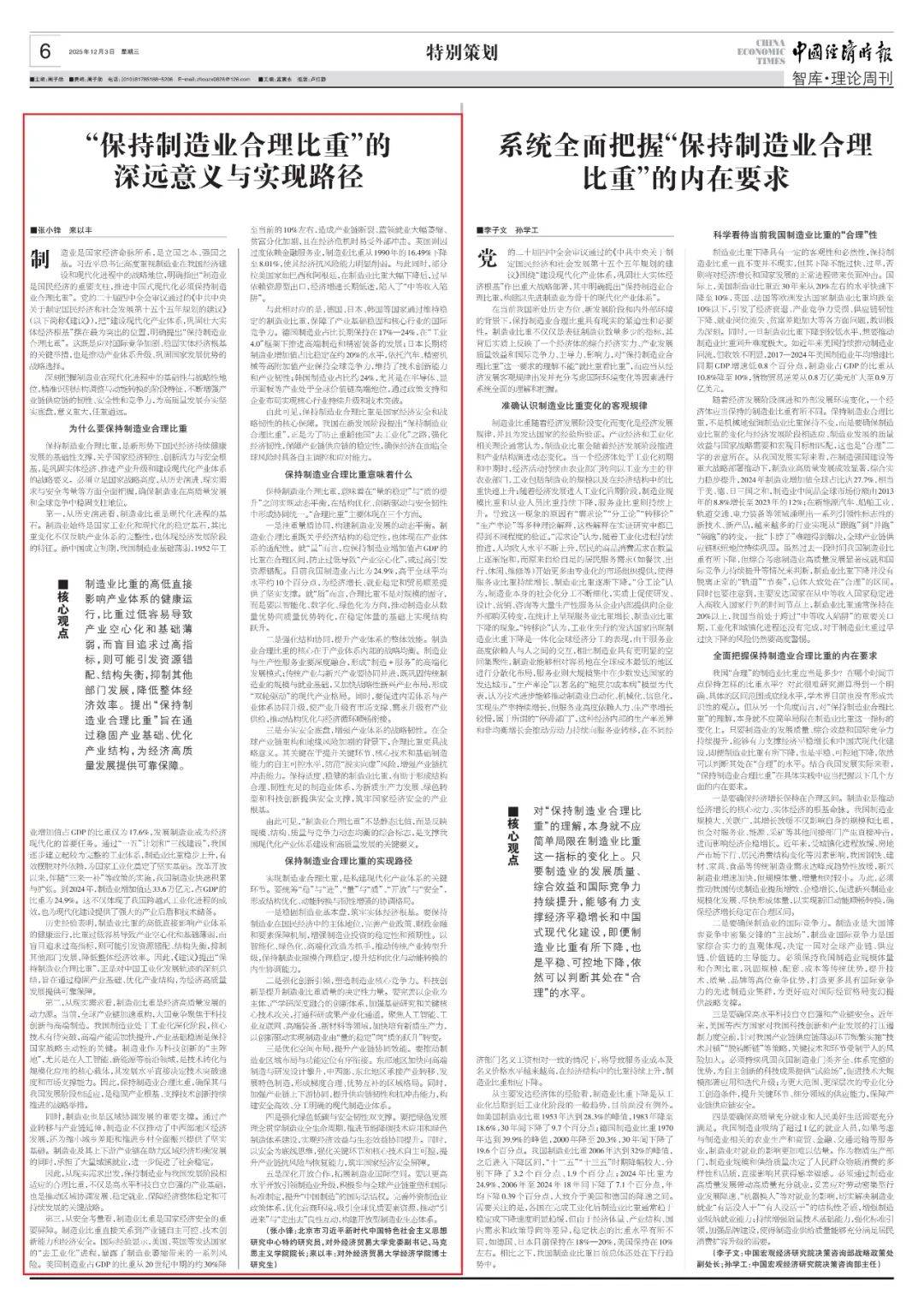
特别策划丨“保持制造业合理比重”的深远意义与实现路径
Sou Hu Cai Jing· 2025-12-04 05:48
Core Viewpoint - The proportion of manufacturing directly impacts the health of the industrial system, with too low a ratio leading to hollowing out and weakness, while blindly pursuing a high ratio may cause resource misallocation and structural imbalance, ultimately reducing overall economic efficiency. The aim of "maintaining a reasonable proportion of manufacturing" is to stabilize the industrial foundation and optimize the industrial structure, providing reliable support for high-quality economic development [2][5][10]. Historical Perspective - Manufacturing is the cornerstone of modernization, with its proportion reflecting the integrity of the industrial system and the characteristics of economic development stages. In 1952, the industrial added value accounted for only 17.6% of GDP, making the development of manufacturing a primary task for economic modernization. By 2024, the added value of manufacturing is expected to reach 33.6 trillion yuan, with a GDP proportion of 24.9%, demonstrating the effectiveness of China's leapfrog industrialization [4][3][13]. Current Needs - The proportion of manufacturing is a driving force for high-quality economic development. As global industrial chains undergo rapid restructuring, major power competition focuses on technological innovation and high-end manufacturing. The manufacturing sector is crucial for technological innovation, especially in fields like artificial intelligence and new energy, and its development level directly influences the speed of technological breakthroughs and market support [5][6][15]. Regional Development - Manufacturing supports regional coordinated development by promoting industrial transfer and chain extension, aiding economic growth in central and western regions, and providing a solid foundation for narrowing urban-rural gaps and advancing rural revitalization. It also plays a significant role in job creation, further enhancing social stability [6][15]. Economic Security - The proportion of manufacturing is a critical barrier to national economic security, directly related to the autonomy of the industrial chain, technological innovation capabilities, and overall economic safety. Historical experiences from countries like the U.S. and the U.K. show that deindustrialization can lead to significant risks, including industrial chain disruptions and increased inequality. In contrast, countries like Germany, Japan, and South Korea maintain stable manufacturing proportions to ensure robust industrial foundations and international competitiveness [7][16][15]. Definition of Reasonable Proportion - Maintaining a reasonable proportion of manufacturing means achieving a dynamic balance between "quantity stability" and "quality improvement," focusing on structural optimization, innovation-driven growth, and safety resilience. The current manufacturing proportion in China is 24.9%, which is about 10 percentage points higher than the global average, providing solid support for economic growth, employment stability, and trade surplus [8][10][17]. Implementation Pathways - To achieve a reasonable manufacturing proportion, it is essential to stabilize the manufacturing base, enhance core competitiveness through innovation, optimize spatial layout, and strengthen green and safety resilience. This involves maintaining the manufacturing sector's dominant position in the economy, improving investment stability, and promoting traditional industry upgrades while fostering new manufacturing sectors [11][18][19].
外资,正稳健加仓中国股票
Zhong Guo Zheng Quan Bao· 2025-12-04 04:36
Core Viewpoint - Morgan Stanley's 2026 outlook for China's economy and stock market indicates a significant shift in global investors' perception, moving from a market lacking clear growth potential to one rich in growth opportunities, particularly in sectors like AI, new consumption, automation, and biotechnology [1][2]. Group 1: Foreign Investment Trends - Foreign investment sentiment towards the Chinese market is improving, with expectations for continued inflows in 2026 following a substantial valuation recovery in 2025 [2]. - The MSCI China Index has shown significant valuation recovery, marking a milestone for A-shares and Hong Kong stocks, leading to a renewed interest from global investors [2]. - Passive funds have seen a notable increase in inflows, while active funds remain cautious, with less than 5% of their global investment capacity allocated to Chinese stocks [3]. Group 2: Positive Economic Changes - Three positive changes in the Chinese economy have emerged since the "9·24" policy shift: 1. Enhanced policy responsiveness, with a focus on development and flexible adjustments [4]. 2. Resilience and innovation among Chinese enterprises, showcasing advancements in AI, smart vehicles, and biopharmaceuticals [4]. 3. A shift in global investor focus from dollar assets to diversified allocations, with a growing interest in China's tech innovations [4]. Group 3: Policy and Infrastructure Investment - The 2026 fiscal policy is expected to prioritize infrastructure investments in new areas such as underground pipeline renovations and green transition projects, driven by carbon reduction goals [5]. - Increased support for consumption through measures like birth subsidies and social security enhancements reflects a flexible and rich policy toolbox [5]. Group 4: Market Dynamics and Investment Strategy - The market's driving logic is set to change in 2026, with a completed valuation recovery and a stable, reasonable valuation level that can attract new capital [7]. - The anticipated easing of global liquidity, including three expected interest rate cuts by the Federal Reserve in the first half of 2026, will support stock assets [7]. - Investment strategies should focus on high-growth sectors aligned with China's long-term development, such as high-end manufacturing, AI, and biotechnology, while also including quality dividend-paying sectors like insurance [7].
永元证券|当恒生指数企稳时,创业板的机会来了吗
Sou Hu Cai Jing· 2025-12-04 02:31
Group 1 - The Hang Seng Index's stabilization signals a shift in market sentiment from defensive to offensive, raising interest in the ChiNext board as a potential investment opportunity [1][3] - The ChiNext board, which includes many technology-driven companies in sectors like new energy, biomedicine, and high-end manufacturing, is seen as a concentrated representation of assets with long-term growth potential [3][4] - Historical data shows a strong correlation between A-share growth style and market risk appetite, with the ChiNext typically demonstrating resilience during periods of liquidity easing and economic recovery [3][4] Group 2 - There are significant internal differences within the ChiNext, with some leading companies showing strong profitability and others facing challenges, indicating that opportunities are more structural rather than broad market rallies [4] - External factors, such as the end of the U.S. interest rate hike cycle and a weaker dollar, are favorable for capital inflows into emerging markets, supporting valuation expansion for the ChiNext [4] - The overall price-to-earnings ratio of the ChiNext remains high compared to the main board, and potential economic recovery shortfalls or significant adjustments in overseas tech stocks could disrupt growth stocks [4][5] Group 3 - The ChiNext presents a window for observation, offering long-term investors opportunities for gradual positioning rather than immediate explosive growth [5] - The true opportunities lie in companies that are making significant technological advancements and gaining influence in the global supply chain, which are essential for restoring market confidence [5]


深市公司海外路演搭建资本市场合作桥梁 传递创新活力与投资价值
Zheng Quan Ri Bao Wang· 2025-12-03 12:36
Core Viewpoint - The Shenzhen Stock Exchange organized a roadshow in Germany to promote the investment opportunities in China's capital market and showcase the technological advancements of listed companies in the Shenzhen market [1] Group 1: Roadshow Overview - The roadshow featured five listed companies, including Sungrow Power Supply, Weichai Power, Aier Eye Hospital Group, Robotech Intelligent Technology, and Hailiang Co., all of which are from key sectors such as digital economy, high-end manufacturing, and green low-carbon industries [2] - The event aimed to enhance understanding of China's economic development prospects during the 14th Five-Year Plan and facilitate better communication between local investors and Shenzhen-listed companies [1][2] Group 2: Company Highlights - Sungrow Power Supply is leveraging the green energy transition in Germany by providing high-performance photovoltaic inverters and energy storage systems through its Munich subsidiary [3] - Weichai Power's strategic acquisition of Kion Group in 2012 has led to significant revenue growth, with Kion's revenue increasing from €4 billion to over €10 billion, showcasing a successful cross-border collaboration [3] - Aier Eye Hospital has established a global presence over the past decade, becoming one of the largest ophthalmology chains worldwide, while Hailiang Co. has expanded its operations to 23 production bases across over 130 countries [3] Group 3: ESG Practices - Shenzhen-listed companies are increasingly focusing on ESG practices, integrating sustainable development into their operations, which has garnered recognition from German long-term investment institutions [4] - Weichai Power aims to become a world-class multinational group with a focus on technology leadership and green development, embedding ESG principles into its strategic planning [4] Group 4: Investor Response - The roadshow attracted significant interest from German investment institutions, which recognized the micro-level vitality of Chinese companies in their global, digital, high-end, and green transformations [5] - There is a growing interest among German investors in China's market, shifting focus from cost advantages to technology innovation and supply chain collaboration [6] - The successful event highlighted the strong demand for capital and industrial cooperation between China and Germany, fostering deeper exchanges between Chinese listed companies and European investors [6]
登陆法兰克福!5家深市新质生产力龙头圈粉欧洲资本
Zheng Quan Shi Bao Wang· 2025-12-03 11:27
Group 1 - The event organized by Shenzhen Stock Exchange in Frankfurt aimed to promote the high-quality development prospects of China's economy during the "14th Five-Year Plan" and enhance understanding of investment opportunities in the Chinese capital market among local investors [1] - Five Shenzhen-listed companies participated in the roadshow, covering sectors such as renewable energy, high-end manufacturing, and healthcare, aligning with Germany's "Industry 4.0" and ESG investment concepts [1] - German institutional representatives noted that Sino-German cooperation is expanding from traditional sectors like automotive and chemicals to emerging fields such as artificial intelligence and renewable energy, highlighting investment opportunities in Shenzhen-listed companies [1] Group 2 - Under the EU's "REPowerEU" energy autonomy strategy, Sino-German industrial collaboration is shifting towards emerging sectors, with direct investment and cross-border mergers becoming standard practices [2] - Companies like Sungrow Power Supply have capitalized on Germany's green energy transition, while Weichai Power's acquisition of KION Group has significantly increased revenue, demonstrating effective synergy [2] - Robotech's acquisition of ficonTEC aims to break the domestic monopoly in high-end equipment, addressing critical issues in the photonic device packaging sector and promoting a self-controlled industry chain [2] Group 3 - Shenzhen-listed companies are enhancing global competitiveness through a combination of globalization and localization strategies, leading to new revenue growth curves [3] - Sungrow Power Supply has established a localized presence in over 100 countries, while Weichai Power's overseas revenue is projected to exceed 100 billion yuan in 2024 [3] - Aier Eye Hospital has expanded its medical network across three continents, becoming the largest ophthalmology chain globally, while Hailiang Holdings has established 23 production bases worldwide [3] Group 4 - ESG is a key driver for high-quality development among listed companies, with many integrating ESG principles into their strategic decision-making and operations [4] - Companies like Sungrow Power Supply and Weichai Power have adopted sustainable practices, attracting long-term investors [5] - Aier Eye Hospital's MSCI ESG rating has improved to A, reflecting its commitment to sustainable development [5] Group 5 - The successful event indicates a strong demand for capital and industrial connections between China and Germany, with local investors increasingly confident in the long-term investment value of Chinese assets [6] - The Shenzhen Stock Exchange plans to enhance services for cross-border investment and financing activities, promoting deeper connections between Shenzhen-listed companies and foreign investors [6]