
广告

Search documents
海南将免征归属地方收入的文化事业建设费
Zhong Guo Xin Wen Wang· 2025-09-18 06:52
Core Points - Hainan Province will exempt the cultural industry construction fee, which is a government fund based on 3% of the sales revenue from advertising and entertainment services, starting from October 1, 2023 [1][2] - The exemption applies to the entire Hainan Island, excluding Sansha City, and is aimed at supporting the development of the cultural industry in the region [1][2] - The policy does not set an expiration date, providing long-term stability for market participants [2] Summary by Sections - **Policy Background**: The exemption is in accordance with the Hainan Free Trade Port Law, allowing for the reduction or exemption of government funds based on development needs [1] - **Implementation Details**: The tax authority will implement an automated system for the exemption, allowing taxpayers to easily apply and confirm their exemption status [2] - **Cultural Industry Development**: The policy aims to enhance the cultural industry in Hainan, which currently lags behind other advanced regions in terms of scale and quality [2]
基石金融附属与Excellent Investment Services Limited订立买卖协议
Zhi Tong Cai Jing· 2025-09-17 12:59
Group 1 - The core point of the announcement is that Focus Media Network Limited has agreed to sell its entire issued share capital of Focus Media Singapore Pte. Limited to Excellent Investment Services Limited for a cash consideration of HKD 3 million [1] - Focus Media Singapore Pte. Limited is a wholly-owned subsidiary of the seller and primarily provides outdoor advertising services in Singapore [1] Group 2 - The advertising industry is undergoing a structural transformation, shifting from traditional media spending to online and social media platforms [2] - The sale agreement is expected to provide the group with opportunities to achieve a premium above the book value of the target company [2] - The transaction will allow the group to streamline operations and allocate management and financial resources to markets with stronger local expertise [2] - The sale is anticipated to generate immediate cash inflow to enhance the group's overall working capital and meet future business development funding needs [2] - The transaction aligns with the group's business strategy, enabling resilience in business development while retaining financial resources for growth opportunities [2]
基石金融(08112)附属与Excellent Investment Services Limited订立买卖协议
智通财经网· 2025-09-17 12:53
Group 1 - The core transaction involves the sale of all issued shares of Focus Media Singapore Pte. Limited for a total cash consideration of HKD 3 million [1] - The target company is a wholly-owned subsidiary of the seller, providing outdoor advertising services in Singapore [1] - The agreement is expected to provide opportunities for the group to realize a premium above the book value of the target company [2] Group 2 - The transaction will allow the group to streamline operations and allocate management and financial resources to markets with stronger local expertise [2] - It is anticipated to generate immediate cash inflow to enhance the group's overall working capital and meet future business development funding needs [2] - The sale aligns with the group's business strategy, enabling resilience in business development while retaining financial resources for growth opportunities [2]
基石金融(08112.HK)拟300万港元出售Focus Media Singapore Pte全部股本
Ge Long Hui· 2025-09-17 12:52
Group 1 - The company, Focus Media Network Limited, has entered into a conditional sale agreement to sell its entire issued share capital in Focus Media Singapore Pte. Limited for a cash consideration of HKD 3 million [1] - Upon completion of the sale, the company will no longer hold any interest in the target company, which will cease to be a subsidiary of the group, resulting in the target company's financial performance, assets, and liabilities no longer being consolidated into the group's financial statements [1] - The target company is a limited liability company registered in Singapore, primarily providing outdoor advertising services [1] Group 2 - The advertising industry is undergoing structural changes, with a significant shift in marketing expenditures from traditional media to online and social media platforms [2] - The company believes that the sale agreement will provide opportunities to achieve a premium above the book value of the target company, streamline operations, and allocate management and financial resources to markets with stronger local expertise [2] - The sale is expected to generate immediate cash inflow to enhance the group's overall working capital and meet future business development funding needs, aligning with the group's business strategy to maintain resilience and retain financial resources for growth opportunities [2]
地区生产总值突破3000亿关口!看上海市静安区“十四五”如何高质量发展
Zheng Quan Shi Bao Wang· 2025-09-16 15:08
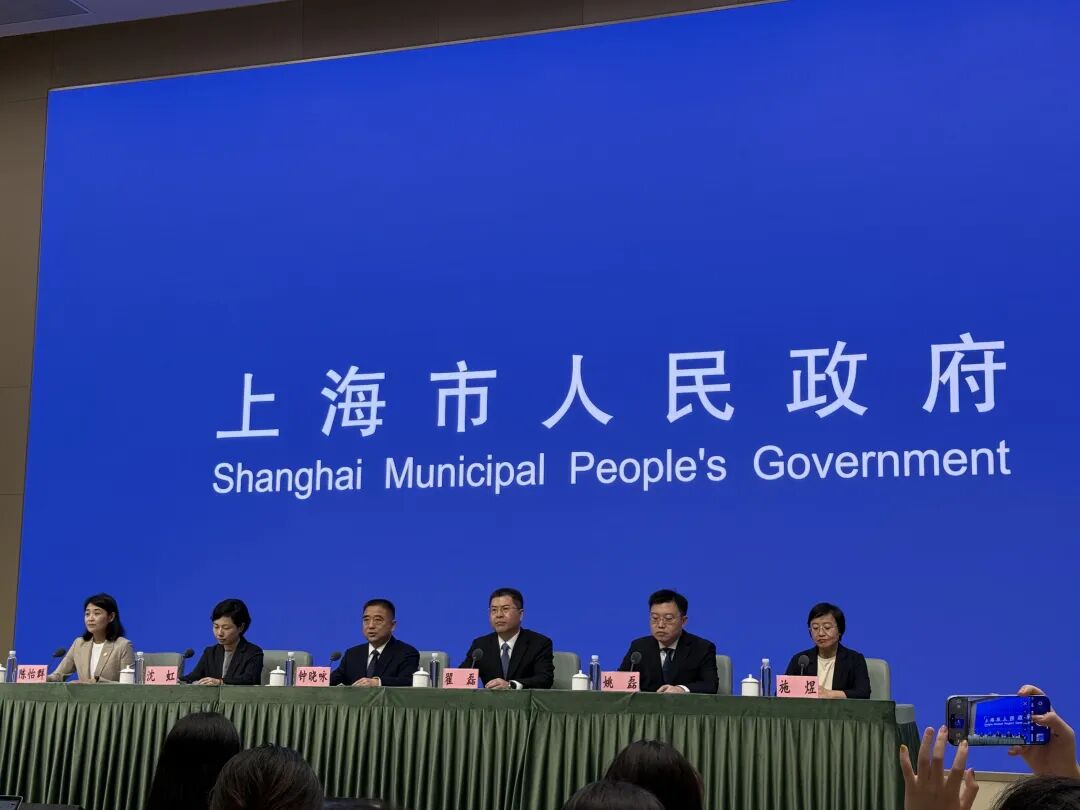
Core Viewpoint - The Shanghai government is showcasing the achievements of the "14th Five-Year Plan" through a series of press conferences, highlighting the high-quality development and results from various districts, particularly focusing on Jing'an District's efforts to build a modern international urban area [1][3]. Economic Development - Jing'an District's GDP is projected to reach 336.99 billion yuan in 2024, surpassing the 300 billion yuan mark, with a per capita GDP of 360,000 yuan, which is 1.5 times that of 2020 [4]. - The district's public budget revenue is expected to reach 30.22 billion yuan, ranking among the top in the city [4]. - Jing'an has attracted 991 new stores since 2021, making it a hotspot for consumer activity, with retail sales leading among central districts [4]. Headquarters Economy - Since the beginning of the "14th Five-Year Plan," Jing'an has added 85 new regional headquarters of multinational companies, totaling 142, with an annual tax contribution growth of 11.1% from headquarters economy [4][5]. Industrial Development - Six key industries contribute over 85% to the regional economy, with a significant increase in high-end service brands from 48 to 103 [5]. - The professional services sector's tax contribution rose from 15.8% in 2020 to 22.1% last year [5]. Innovation and Technology - Jing'an has become a hub for emerging industries, housing one-third of the city's core data intelligence companies and a significant number of global pharmaceutical firms [6]. Reform and Opening Up - From 2021 to 2024, Jing'an attracted 1,122 foreign direct investment projects, with a total contracted foreign capital of 4.83 billion USD, marking a significant increase compared to the previous five years [7]. - The district has implemented 693 measures to optimize the business environment, leading to a 1.8 times increase in new market entities compared to the previous five years [7]. Urban Renewal - Jing'an has focused on urban renewal, completing the renovation of 47 old residential areas and enhancing public services, including the construction of rental housing [8][9]. Social Development - The district has improved public services, particularly in elderly care and childcare, and has enhanced cultural offerings, maintaining a leading position in public cultural facilities [10]. Future Outlook - As Jing'an approaches the end of the "14th Five-Year Plan," it aims to set higher goals for the next decade, focusing on excellence and contributing significantly to the city's overall development [11].

美股前瞻 | 三大股指期货齐涨 “恐怖数据”公布在即
智通财经网· 2025-09-16 12:07
Market Movements - US stock index futures are all up ahead of the market opening, with Dow futures up 0.02%, S&P 500 futures up 0.18%, and Nasdaq futures up 0.22% [1] - European indices are down, with Germany's DAX down 0.54%, UK's FTSE 100 down 0.26%, France's CAC 40 down 0.15%, and the Euro Stoxx 50 down 0.16% [2][3] - WTI crude oil is up 0.54% at $63.64 per barrel, while Brent crude oil is up 0.34% at $67.67 per barrel [3][4] Economic Data - US retail sales for August are expected to show a month-on-month increase of 0.2%, with core retail sales (excluding autos and gas) expected to rise by 0.4%, indicating consumer spending may be a bright spot despite overall economic weakness [4] Company News - Oracle (ORCL.US) shares are up over 5% in pre-market trading as it is reported to be participating in a consortium to maintain TikTok's operations in the US [7] - Tesla (TSLA.US) is under investigation by the National Highway Traffic Safety Administration regarding potential issues with the electronic door handles of certain Model Y vehicles [8] - Nvidia's (NVDA.US) new RTX6000D chip for the Chinese market is facing low demand, with major companies showing little interest due to high pricing and perceived lack of value [8] - TSMC (TSM.US) has seen its market share in the semiconductor foundry market rise to 38% in Q2 2025, driven by strong AI demand and Chinese subsidies [9] - Google's (GOOGL.US) proposal to divest part of its advertising technology business has been rejected by the Justice Department, which is seeking a complete separation of its AdX platform [9] - Corteva (CTVA.US) is reportedly evaluating a potential split of its seed and pesticide businesses, but this move has raised concerns among Wall Street analysts [10] - Webtoon (WBTN.US) shares surged over 39% in pre-market trading after Disney (DIS.US) announced a partnership to develop a digital platform for classic comic content [10]





四会兴成包装有限公司成立 注册资本10万人民币
Sou Hu Cai Jing· 2025-09-16 07:23
Core Viewpoint - Recently, the establishment of Si Hui Xing Cheng Packaging Co., Ltd. was registered with a capital of 100,000 RMB, indicating a new player in the packaging industry focusing on various services and products [1] Company Summary - Si Hui Xing Cheng Packaging Co., Ltd. has a registered capital of 100,000 RMB [1] - The company operates in general projects including the manufacturing of paper and paperboard containers, retail and wholesale of hardware products, and various technical services [1] - The company is also involved in advertising services, digital technology services, and supply chain management [1] Industry Summary - The company is part of the packaging industry, which includes manufacturing and logistics services [1] - It offers a wide range of services such as domestic cargo transportation agency and unloading and handling services [1] - The company is subject to regulatory approvals for certain projects, particularly in road cargo transportation [1]
中国银河证券:暑期档收官同比微增 游戏行业高景气度
智通财经网· 2025-09-16 01:26
Group 1: AI Development and Industry Impact - The underlying large model capabilities are continuously iterating, establishing a technical foundation for AI applications across various industries [1] - The B-end commercialization progress is accelerating, particularly evident in the media sector, with overseas AI technology having an earlier start and more mature commercialization [1] - Continuous updates of large models are expected to accelerate the iteration of underlying technologies, enhancing AI applications and enabling autonomous decision-making and task execution [4] Group 2: Box Office and Film Industry Performance - The summer box office for 2025 reached 11.96 billion yuan, showing a year-on-year increase of 2.7% [1] - Notable films such as "Nanjing Photo Studio" and "Wang Wang Mountain Little Monster" contributed significantly to the monthly box office, with 1.984 billion and 1.44 billion yuan respectively [1] - The total box office for August 2025 was 5.991 billion yuan, reflecting a year-on-year increase of 48.59% and a month-on-month increase of 47.27% [1] Group 3: Gaming Market Trends - The domestic gaming market's actual sales revenue reached 29.084 billion yuan in July 2025, marking a year-on-year growth of 8.14% [2] - The PC game market showed significant growth, with sales in June and July reaching 5.866 billion and 6.637 billion yuan respectively, with year-on-year growth rates of 0.81% and 13.14% [2] - Self-developed games in the overseas market generated actual sales revenue of 1.693 billion USD, reflecting a year-on-year increase of 8.18% [2] Group 4: Advertising Market Performance - The overall advertising market expenditure increased by 1.5% year-on-year from January to July 2025 [3] - In July 2025, the monthly advertising expenditure grew by 6.8% year-on-year and 5.7% month-on-month, indicating a stable upward trend [3] - Significant increases in advertising spending were observed in the entertainment and leisure, telecommunications, and personal care sectors, with year-on-year increases of 53.1%, 45%, and 30.8% respectively [3]

【提示】关于职场新人工资的这些问题,快来看解答→
蓝色柳林财税室· 2025-09-15 14:22
Group 1 - The article discusses whether a company can pay salaries every two months under an annual salary system, highlighting that it is permissible as long as both parties agree [1] - It addresses the legality of reducing trial period salaries to 80% of the agreed amount, indicating that this practice is not allowed unless specified in the contract [3] - The article explains the circumstances under which a company can withhold wages, such as for social security, housing fund, and taxes, which are considered lawful deductions [5] Group 2 - The calculation of sick leave pay is outlined, indicating that employees on sick leave during their probation period may receive a reduced salary based on their contract terms [7] - It provides a table detailing the percentage of salary employees can receive during sick leave based on their years of service and the duration of the leave [9]

中金:广告板块存在分化 关注AI赋能行业各环节
Zhi Tong Cai Jing· 2025-09-15 09:20
Core Insights - The overall advertising sector showed moderate growth in Q2 2025, with online advertising maintaining a low double-digit growth rate, while offline advertising faced revenue pressure due to macroeconomic conditions and business adjustments [1][2] - Key areas of focus for the second half of the year include the sustainability of growth in internet advertising, structural growth in segments like automotive, telecommunications, and AI, as well as new advertising models such as "touch" ads and AI search ads [1][2] Industry Performance - The advertising industry experienced a slight increase of 0.6% in overall spending in the first half of 2025, with online advertising revenue growing by 7% year-on-year in Q2, driven by e-commerce and community content ecosystems [2] - Offline advertising saw strong performance in certain segments, with companies like Focus Media (002027) showing improved growth rates in Q2 2025 [2] AI Integration - Companies actively embraced AI across various advertising processes, including material creation, review, recommendation algorithms, and automated placement, leading to improved click-through rates, conversion rates, and effective cost per mille (eCPM) [3] - The application of AI in the overseas advertising market is accelerating, with major players like Meta and Google optimizing their search models through AI to enhance conversions [3]