电子设备

Search documents
港股午评:恒生科技指数跌1.67% 小鹏汽车跌超9%
Zheng Quan Shi Bao· 2025-11-18 04:26
Group 1 - The Hang Seng Index closed down by 1.47% [1] - The Hang Seng Tech Index decreased by 1.67% [1] - Hua Hong Semiconductor saw an increase of over 4% [1] Group 2 - Xpeng Motors experienced a decline of over 9% [1] - Lenovo Group fell by over 4% [1]
每天三分钟公告很轻松 | ST中迪停牌核查已完成 18日起复牌
Shang Hai Zheng Quan Bao· 2025-11-17 15:50
Core Points - ST Zhongdi has completed its suspension review and will resume trading on November 18, 2025 [1] - Ningde Times has preliminarily set the share transfer price at 376.12 yuan per share [8] - Shengyi Electronics plans to raise no more than 2.6 billion yuan for the construction of an AI computing HDI production base and other projects [1] - Dahua Technology intends to spin off its subsidiary Huairui Technology for an independent listing on the Hong Kong Stock Exchange [2] - Aystar Chemical plans to acquire 100% equity of Tianyi Chemical for a major asset restructuring [3] - Zhu Mian Group intends to transfer 100% equity of Gree Real Estate for 5.518 billion yuan [3] - Daimeis plans to establish a wholly-owned subsidiary for robotics business with an investment of 100 million yuan [10] - Lianang Microelectronics plans to invest 2.262 billion yuan in a project to produce 1.8 million pieces of 12-inch heavily doped substrate wafers [11] Focus One - Shengyi Electronics plans to issue A-shares to raise no more than 2.6 billion yuan, which will be used for the construction of an AI computing HDI production base, smart manufacturing high-layer circuit boards, and to supplement working capital and repay bank loans [1] Focus Two - Dahua Technology plans to spin off its subsidiary Huairui Technology for an independent listing, which will help enhance Huairui's capital strength and broaden financing channels [2] Major Transactions - Aystar Chemical intends to acquire 100% equity of Tianyi Chemical through a combination of share issuance and cash payment, with the transaction expected to constitute a major asset restructuring [3] - Zhu Mian Group plans to transfer its 100% equity of Gree Real Estate for a confirmed price of 5.518 billion yuan, marking a significant asset restructuring [3] Other Significant Events - Huaxia Happiness has received a court decision appointing a temporary administrator for its pre-restructuring period [4] - Mengke Pharmaceuticals has decided to terminate its plan to issue shares due to disagreements among major shareholders [5] - Hubei Broadcasting has received a notification regarding the transfer of equity in Chutian Network, which will not change the controlling shareholder [6] - Da'an Gene is undergoing a significant share transfer that may result in a change of indirect control [7]
【太平洋科技-每日观点&资讯】(2025-11-18)
远峰电子· 2025-11-17 13:11
Market Overview - The main board saw significant gains with stocks like Hubei Broadcasting (+10.08%), Dahua Intelligent (+10.07%), and Huasheng Tianc (+10.03%) leading the charge [1] - The ChiNext board experienced a surge, highlighted by Zhongfutong (+20.02%) and Zhongfu Information (+20.00%) [1] - The Sci-Tech Innovation board also performed well, with Tengjing Technology and Borui Data both increasing by 20.00% [1] - Active sub-industries included SW Marketing Agency (+5.20%) and SW General Software (+2.50%) [1] Domestic News - TCL Huaxing launched groundbreaking 0.28-inch full-color silicon-based Micro LED display products, achieving a resolution of 1280×720 and a pixel density of 10262 PPI, with brightness exceeding 500,000 nits [1] - Taiwan announced modifications to its strategic high-tech goods export control list, adding 18 new items, including advanced semiconductor equipment and quantum computers [1] - Domestic GPU manufacturer Feiteng reported a successful bid for 36,000 desktop computers based on its D3000 processor, holding over 90% market share in financial machines [1] - TCL Huaxing's 5.5-generation printed OLED panel production line is expected to reach a shipment volume of one million units next year [1] Company Announcements - Lingyun Guang announced the reallocation of surplus fundraising of 200.82 million yuan to other projects, including an industrial AI base [2] - Aojie Technology reported a change in shareholder equity, with Alibaba reducing its stake from 15.00% to 13.99% [2] - Tonglian Precision disclosed a plan for a share transfer involving 4,841,937 shares, representing 3.00% of total equity [2] - Shengjing Micro announced expected related party transactions totaling 14 million yuan, involving purchases and sales with a related party [2] Overseas News - According to TrendForce, the global semiconductor market faces uncertainty in 2026, with forecasts for smartphone and laptop production being downgraded [3] - Samsung and SK Hynix announced plans for significant semiconductor facility investments, with Samsung's new factory expected to be completed by 2028 [3] - The global electronic sensor market is projected to reach $41.2 billion by 2032, growing from $23.7 billion in 2024, with a CAGR of 6.65% [3] - The memory market is experiencing price increases due to reduced supply, with expectations for record high market size in Q4 [3]


除了“反制日本”概念大涨 今天A股还有哪些看点?
Mei Ri Jing Ji Xin Wen· 2025-11-17 07:54
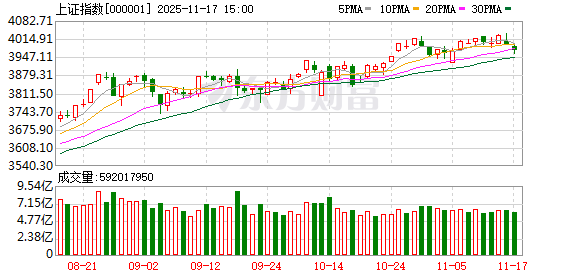
Market Overview - The A-share market experienced a weak fluctuation on November 17, with the Shanghai Composite Index falling by 0.46%, the Shenzhen Component Index down by 0.11%, and the ChiNext Index decreasing by 0.2% [2] - The overall market showed a roughly balanced performance, with 100 stocks hitting the daily limit up [2] - The trading volume in the Shanghai and Shenzhen markets was 1.91 trillion yuan, a decrease of 47.3 billion yuan compared to the previous trading day [2] Sector Performance - Energy metals, military industry, and AI applications sectors saw significant gains, while precious metals and pharmaceuticals sectors experienced declines [2] - Fujian local stocks, such as Pingtan Development and Haixia Innovation, performed strongly, with the Hainan sector also showing notable performance [6][8] Japanese Market Influence - Recent news related to Japan has drawn attention, particularly concerning safety warnings for Chinese citizens traveling to Japan due to rising crime rates [2] - Japanese stocks showed weakness, particularly in retail and tourism sectors [7] Military and Technology Sectors - The military sector showed signs of activity, with concepts related to military equipment and information technology experiencing gains, potentially linked to a sentiment of "countering Japan" [8] - Technology stocks displayed a "weak to strong" trend, with significant movements in areas such as CPO, storage chips, and AI applications [11] Notable Company Developments - Alibaba announced the public beta of its "Qianwen" project, which aims to integrate various life scenarios into a single app, indicating potential for significant AI ecosystem growth [14] - Berkshire Hathaway, led by Warren Buffett, made a notable investment in Alphabet, which may represent a significant strategic move before Buffett's retirement [14] New Energy Sector Dynamics - The new energy sector showed mixed performance, with solar and wind energy stocks declining, while lithium battery stocks experienced a rebound after initial declines [17] - The average transaction price for VC (Vinyl Carbonate) increased to 132,500 yuan per ton, indicating a rise in material costs that could impact related companies [19]
日本旅游、消费股大跌,GDP负增长!其外务省高官今日访华
Jin Rong Shi Bao· 2025-11-17 02:55
Group 1: Market Reaction - The Nikkei 225 index opened with a rapid decline, touching a low of 49,846 points, falling over 1% before slightly narrowing the loss [1] - Several consumer stocks in Japan experienced significant drops, with FOOD&LIFE COMPANIES down over 14%, Japanese electronics down over 11%, and Shiseido down over 9% [1] - Other notable declines included Mitsukoshi Isetan down over 8%, Japan Eyewear down over 6%, and Nissan down over 4% [1] Group 2: Travel Warnings - The Chinese Ministry of Culture and Tourism issued a warning for Chinese tourists to avoid traveling to Japan due to rising safety concerns [1] - The Chinese Ministry of Education also released a study abroad warning, highlighting the deteriorating security situation for Chinese citizens in Japan [2] Group 3: Economic Indicators - Japan's GDP reported a year-on-year decline of 1.8% for the third quarter, marking the first negative growth in six quarters [3] - The actual GDP, adjusted for price changes, decreased by 0.4% compared to the previous quarter [4] Group 4: Diplomatic Engagement - A senior official from Japan's Foreign Ministry is visiting China to discuss recent comments made by Japan's Prime Minister regarding Taiwan and to emphasize the importance of maintaining personnel exchanges despite differences [5]
音频 | 格隆汇11.17盘前要点—港A美股你需要关注的大事都在这
Ge Long Hui A P P· 2025-11-16 23:01
Group 1 - The Chinese government is focusing on enhancing the resilience and stability of the capital market during the "14th Five-Year Plan" period, aiming for a more inclusive and attractive regulatory framework [1] - Major upcoming events include Nvidia's earnings report and the release of the US September non-farm payroll report [1] - The WTI crude oil futures closed at $60.09, while spot gold fell by 2.2% [1] - The cryptocurrency bear market has intensified, leading to Bitcoin erasing its gains for the year [1] - Apple plans to shift to biannual iPhone launches starting in 2026 [1] - Berkshire Hathaway has purchased shares in Google [1] - Bridgewater reduced its holdings in Nvidia during Q3 [1] - Goldman Sachs increased its positions in Nvidia, Apple, Microsoft, and Google in Q3 [1] - Hillhouse Capital's HHLR disclosed a significant increase in its US stock holdings, with a total market value surge of $7 billion, continuing to increase its allocation in Chinese assets [1] - The US government has removed certain agricultural products from the "reciprocal tariff" list [1] - Shipping giant CMA CGM warned of a potential downturn in the shipping industry by 2026 [1] - Tesla reportedly requested suppliers to avoid using Chinese-made parts in the production of vehicles in the US [1] - The People's Bank of China conducted a 800 billion yuan reverse repurchase operation with a six-month term [1] - The State Council of China is deploying measures to enhance the adaptability of supply and demand for consumer goods [1] - The Market Supervision Administration released a draft for public consultation on antitrust compliance guidelines for internet platforms, highlighting eight risk scenarios [1] - Huawei is set to unveil breakthrough technologies in AI that may address efficiency issues in computing resource utilization [1] - Several smartphone manufacturers have postponed storage chip purchases, with some facing inventory shortages of less than three weeks [1] - Ski equipment sales have surged, with one platform reporting a year-on-year increase in transaction volume exceeding 10 times [1] - Duan Yongping's latest holdings include a new investment in ASML [1] - Yushutech has completed its IPO counseling [1] - Ganfeng Lithium's Li Liangbin stated that if lithium carbonate demand growth exceeds 30% next year, prices could surpass 150,000 yuan per ton [1] - CATL's shareholder Huang Shilin plans to transfer 1% of his shares through an inquiry [1] Group 2 - New listings today on the Hong Kong stock market include Zhongwei New Materials and Baili Tianheng [2] - Southbound funds have significantly net purchased shares of Alibaba and Tencent [2] - Puxin Technology plans to invest 2.5 billion yuan in an integrated film coating project [2] - ST Dazheng's shareholder Zhou Zhenke's 0.81% stake is set to be forcibly sold [2] - Dongbai Group lacks the qualifications for duty-free operations and does not engage in duty-free goods business [2]
段永平用两个字赚了千亿
3 6 Ke· 2025-11-16 21:59
Group 1 - The core viewpoint of the articles revolves around Duan Yongping's humble approach to success in both business and investment, emphasizing his belief in understanding the companies he invests in rather than chasing market trends [1][12] - Duan Yongping's background includes founding the Xiaobawang brand and later establishing the BBK Electronics Company, which led to the creation of several successful brands like OPPO and Vivo [4][9] - His investment philosophy is characterized by a focus on understanding the business model and value of the companies he invests in, such as NetEase, Apple, and Moutai, rather than merely speculating on stock prices [11][12] Group 2 - Duan Yongping's "not-to-do list" includes avoiding OEM production, which he believes would hinder brand development and competitiveness [8][9] - He emphasizes the importance of making decisions based on what is right rather than solely on financial gain, which he considers a key to achieving financial freedom [5][6] - His notable investment in NetEase during the internet bubble, where he bought shares at a low price, showcases his ability to remain calm and rational in the face of market panic, leading to significant returns [11][12]



A slowing wartime economy pushes the Kremlin to tap consumers for revenue
Yahoo Finance· 2025-11-16 04:02
Economic Overview - After two years of growth driven by military spending related to the Ukraine war, Russia's economy is now slowing, with declining oil revenues and an increasing budget deficit [1] - The Kremlin is looking to ordinary citizens and small businesses to stabilize its finances [1] Tax Increases - A proposed increase in value-added tax (VAT) from 20% to 22% is expected to generate up to 1 trillion rubles (approximately $12.3 billion) for the state budget, effective from January 1 [2] - The legislation also lowers the VAT collection threshold for businesses from 60 million rubles ($739,000) to 10 million rubles ($123,000) by 2028, targeting tax avoidance schemes [2] Impact on Small Businesses - The new VAT regulations will affect previously exempt businesses, including corner stores and beauty salons, potentially leading to financial strain [3][2] - Concerns have been raised that the requirement for small businesses to collect VAT may lead to closures, resulting in lower budget revenues instead of the intended increase [6] Additional Tax Proposals - The government is considering increasing taxes on various goods, including spirits, wine, beer, cigarettes, and vapes, with specific increases outlined for stronger spirits [4] - Other proposed fee increases include those for renewing driver's licenses and a potential tech tax on digital equipment, which could reach up to 5,000 rubles ($61.50) for high-priced items [4] Public Sentiment - The economic slowdown and tax increases indicate that both President Putin and ordinary Russians will face difficult choices between military spending and consumer welfare [5] - Public reactions in Moscow reflect a mix of dismay and resignation, particularly regarding the impact of higher food prices on poorer regions and low-income individuals [5]
9点1氪丨上海“绿捷食安事件”8名责任人被捕;1299元起的iPhone Pocket多款开售即告罄;理想汽车内部就两起事故问责
3 6 Ke· 2025-11-15 01:16
Group 1 - Shenzhou 21 manned spacecraft successfully landed on November 14 [1] - Apple faced rejection from the UK Competition Appeal Tribunal regarding its antitrust ruling appeal [1][9] - Fujian province announced the suspension of automobile replacement and subsidy programs [5] Group 2 - Ideal Auto held internal accountability for two quality incidents, processing 18 employees [2] - DJI showcased its new long-range high-precision lidar factory for the first time [6] - ASEAN has surpassed the EU to become Zhejiang's largest trading market, with a total import and export value of 4.6 trillion yuan in the first ten months, a year-on-year increase of 5.3% [6] Group 3 - WeChat announced that mini-programs will support virtual payments on iOS [4] - The first Chinese ship compliant with international standards for transporting new energy vehicles was completed [9] - OpenAI launched a group chat feature for ChatGPT, allowing collaborative work [12] Group 4 - Qingdao Beer plans to continue its diversification strategy despite the termination of its acquisition of Jimo Huangjiu [13] - Zaiqi Pharmaceutical announced plans to issue H-shares and list on the Hong Kong Stock Exchange [14] - Dealism completed a $15 million angel round of financing [14] Group 5 - Dexmal completed A+/A round financing, raising nearly 1 billion yuan [15] - Baidu AI glasses Pro were officially released, featuring a new multimodal AI assistant [17] - China Communications Signal Company received operational approval for its ETCS-400T onboard product in Austria [18]


日本存储巨头业绩爆雷丨今日财讯
Sou Hu Cai Jing· 2025-11-15 00:32
Group 1: Real Estate Market - In October, the sales prices of new commercial residential properties in first-tier cities decreased by 0.3% month-on-month, consistent with the previous month. Shanghai saw a price increase of 0.3%, while Beijing, Guangzhou, and Shenzhen experienced declines of 0.1%, 0.8%, and 0.7% respectively [2] - Second-tier cities reported a month-on-month price decline of 0.4%, unchanged from the previous month. Third-tier cities experienced a larger decline of 0.5%, an increase of 0.1 percentage points compared to the previous month [2] Group 2: Mining Industry - The Ministry of Natural Resources announced the discovery of China's first thousand-ton-level, low-grade super-large gold mine in Liaoning Province, with a proven ore volume of 2.586 billion tons and a gold resource amount of 1,444.49 tons, averaging 0.56 grams per ton. This is the largest single gold mine discovered since the founding of New China [2] Group 3: Public Sector Employment - The Central Organization Department and the National Health Commission have adjusted the medical examination standards for civil servant recruitment, including three key changes regarding specific health conditions [4] Group 4: Technology and Finance - Apple launched a "Mini Program Partner Program" on November 14, coinciding with WeChat's announcement of supporting virtual payments for mini programs on iOS. Tencent has reportedly reached an agreement with Apple, allowing Apple to take a 15% cut from payments made through WeChat mini games and programs [5] Group 5: Healthcare Fraud - A hospital in Shanxi Province was involved in a fraudulent scheme to defraud nearly 10 million yuan from the national medical insurance fund, with the main perpetrator establishing the hospital and orchestrating the fraud since its approval as a reimbursable hospital in 2018 [7] Group 6: Corporate Updates - Anshi China reassured its employees that all salaries and benefits are normal despite facing external challenges, emphasizing its capability and commitment to maintain employee compensation [9] - Kweichow Moutai's stock surged due to market interest in its new product launch, although the company clarified it has no association with a specific product that generated buzz [7] Group 7: International Investment - South Korea and the United States signed a $350 billion investment agreement, with $150 billion allocated for the U.S. shipbuilding industry and $200 billion for sectors including energy, semiconductors, pharmaceuticals, critical minerals, and artificial intelligence [9] Group 8: Corporate Earnings - Japan's Kioxia reported a significant decline in its adjusted net profit for Q2 of FY2025, dropping over 60% year-on-year to 40.7 billion yen, falling short of market expectations. Revenue also decreased by 7% year-on-year to 448.3 billion yen [10]