通信

Search documents
未知机构:东财策略每日复盘20260227一市场概况2月27日A股结-20260228
未知机构· 2026-02-28 02:30
Summary of Key Points from Conference Call Records Company/Industry Overview - The records pertain to the A-share market in China, specifically focusing on the performance of various sectors and macroeconomic indicators as of February 27, 2026 [1][2]. Core Insights and Arguments - **Market Performance**: - The Shanghai Composite Index increased by 0.39% to close at 4162 points, while the Shenzhen Component Index decreased by 0.06% and the ChiNext Index fell by 1.04% [1]. - Total trading volume reached 2.49 trillion yuan, an increase of over 500 billion yuan compared to the previous day [1]. - A total of 3271 stocks rose, while 2068 stocks declined throughout the day [1]. - **Sector Performance**: - The top five performing sectors included: - Steel: +3.37% - Coal: +3.20% - Non-ferrous Metals: +3.10% - Utilities: +2.27% - Agriculture, Forestry, Animal Husbandry, and Fishery: +2.06% [1]. - The bottom five performing sectors were: - Building Materials: -1.45% - Telecommunications: -1.38% - Electronics: -0.71% - Automotive: -0.41% - Home Appliances: -0.39% [1]. - **Thematic Insights**: - The CPO concept faced declines due to external market pressures, while the commercial aerospace sector continued to rise, and rare earth permanent magnets showed strength [2]. - AI applications experienced a rebound [2]. Additional Important Information - **Monetary Policy**: - The People's Bank of China announced a reduction in the foreign exchange risk reserve ratio for forward foreign exchange sales from 20% to 0%, effective March 2, 2026, to support enterprises in managing exchange rate risks [2]. - **Space Exploration Initiatives**: - The China Manned Space Engineering Office plans to implement two manned flight missions and one cargo spacecraft supply mission in 2026, with astronauts from Hong Kong and Macau expected to participate [2]. - **Supply Chain Challenges**: - U.S. aerospace and semiconductor suppliers are facing significant rare earth shortages, leading at least two suppliers to refuse certain customer orders [2]. - **Market Outlook**: - High trading volumes indicate ample market liquidity, suggesting a continuation of structural rotation and a volatile upward trend [2]. - Short-term focus on domestic computing power hardware is advised, with potential price increases in rare earths and strategic metals driven by supply constraints and value reassessment [2]. - The upcoming Two Sessions and the emphasis on the 14th Five-Year Plan are expected to enhance interest in new productive forces [2]. - Attention is warranted on U.S. and European trade policies towards China, which may impact market risk appetite [2].
烽火通信科技股份有限公司股票交易异常波动公告
Zhong Guo Zheng Quan Bao - Zhong Zheng Wang· 2026-02-28 01:14
Core Viewpoint - The stock of Fenghuo Communication Technology Co., Ltd. experienced an abnormal trading fluctuation, with a cumulative closing price increase of over 20% in two consecutive trading days, prompting a review of the situation by the company [2][4]. Group 1: Stock Trading Abnormality - The company's stock price increased by a cumulative deviation of 20% on February 26 and 27, 2026, which is classified as an abnormal trading fluctuation according to the Shanghai Stock Exchange rules [4][10]. - The company has conducted a self-examination and confirmed that there are no undisclosed significant matters that should have been disclosed [2][6]. Group 2: Business Operations - The company reported that its production and operational activities are normal, with no significant changes in the internal or external business environment, market conditions, or industry policies [5]. - The main business of the company focuses on the integration of information technology and communication technology, providing reliable optical communication products and services to key sectors such as telecommunications, government, finance, and transportation [7]. Group 3: Major Events and Media Reports - The company confirmed that it does not produce commercial aerospace-related satellites, and the revenue from low-orbit satellite routing and inter-satellite laser communication accounts for less than 1% of total revenue, contributing minimally to profits [7]. - There have been no significant media reports or market rumors affecting the company's stock price during the abnormal trading period [8]. Group 4: Other Sensitive Information - The company has not identified any trading activities involving its directors, senior management, controlling shareholders, or actual controllers during the period of stock price fluctuation [8]. - The company assures that there are no other significant matters that could impact the stock price beyond what has already been disclosed [11].

资源股与科技股双线开花 A股三大股指马年首周收涨
Zhong Guo Zheng Quan Bao· 2026-02-27 22:55
Core Viewpoint - The A-share market has shown a collective rise in major indices during the first trading week after the Spring Festival, with active trading and a focus on resource and technology sectors as key market themes [1][2][3] Market Performance - As of February 27, the Shanghai Composite Index closed at 4162.88 points, up 1.98% for the week; the Shenzhen Component Index rose 2.80% to 14495.09 points, while the ChiNext Index increased by 1.05% to 3310.30 points [2] - Daily trading volume averaged 2.44 trillion yuan, a 15% increase compared to the previous week [2] Sector Performance - Resource and technology sectors have been the main focus, with steel, non-ferrous metals, and coal seeing significant gains due to rising international commodity prices and domestic PPI data [3] - The steel sector led with a weekly increase of 12.27%, while non-ferrous metals and basic chemicals also performed well [3] - In the technology sector, both communication and electronics industries saw weekly gains exceeding 4% [3] Capital Flow - Major funds have been flowing into both resource and technology sectors, with the electronics sector attracting nearly 60 billion yuan in net inflows over five trading days, leading all sectors [4] - The non-ferrous metals sector followed closely with net inflows of 43.11 billion yuan [4] Market Outlook - Analysts believe that the trend of price increases will be a key trading theme for 2026, with implications for market stability and sector performance [5] - The upcoming months are seen as a critical window for validating the price increase logic, with expectations of further price rises across various sectors [5][6] Investment Recommendations - Investors are advised to focus on growth and cyclical sectors, particularly in oil and gas, non-ferrous metals, and energy storage [1][7] - Specific areas of interest include AI-related sectors, human-robot interactions, and industries benefiting from rising commodity prices [7]
资源股与科技股双线开花A股三大股指马年首周收涨
Zhong Guo Zheng Quan Bao· 2026-02-27 20:43
Market Overview - The A-share market experienced a collective rise in the first trading week after the Spring Festival, with the three major indices closing higher as of February 27, 2023 [1][2] - The daily trading volume remained active, with an average daily turnover exceeding 2.2 trillion yuan, reflecting a more than 15% increase compared to the previous week [2][3] Sector Performance - Resource and technology sectors were the main focus, with significant gains observed in steel, non-ferrous metals, communication, and electronics [1][3] - The steel sector led with a weekly increase of 12.27%, while non-ferrous metals and basic chemicals also showed strong performance [3] Capital Flow - There was a notable inflow of funds into both resource and technology sectors, with the electronic sector seeing a net inflow of nearly 60 billion yuan over five trading days, the highest among all sectors [4] - Non-ferrous metals followed closely with a net inflow of 43.11 billion yuan [4] Price Trends and Market Sentiment - Price increases are viewed as a key driver for market sentiment and sector performance, with expectations that this trend will continue into March and April [5][6] - Analysts suggest that the market's focus may shift towards cyclical stocks and value stocks as the year progresses, driven by improving corporate earnings and price trends [5][6] Investment Recommendations - Investors are advised to focus on growth and cyclical sectors, particularly in oil and gas, non-ferrous metals, electric grid equipment, energy storage, and petrochemicals [1][7] - Specific areas of interest include AI-related sectors, human-shaped robots, and industries benefiting from rising commodity prices [7]
科创、海外市场策略深度报告:春季行情之后,AI投资向何处走?
ZHESHANG SECURITIES· 2026-02-27 15:31
Core Insights - The report discusses the seasonal patterns in industry trend investments driven by economic cycles, emphasizing that "no industry, no bull market" is a key principle. The current bull market, which began in September 2024, is primarily driven by the AI upstream infrastructure represented by computing power [1][2][10] - The report outlines that the first wave of investment typically starts around mid-year, with a second wave at year-end, followed by high volatility in March to April of the following year. The sustainability of these trends depends on whether high economic conditions can continue into the next year [2][3][11] Seasonal Patterns in Industry Trend Investments - Historical analysis from 2013 to 2015 in the computer sector, 2019 to 2021 in semiconductors, and 2020 to 2021 in new energy shows clear seasonal patterns in investment opportunities driven by economic cycles [2][13] - The first wave of investment usually begins around mid-year, driven by the clarity of quarterly reports, while the second wave starts at year-end due to valuation shifts. High volatility typically occurs in March to April of the following year [11][13] AI Investment Trends and Main Lines - The current bull market cycle is characterized by AI upstream computing power, with significant seasonal patterns. The first wave of investment occurred from May to September 2025, followed by a second wave from November 2025 to February 2026 [3][43] - Looking ahead to March and April, the report anticipates a phase of volatility in computing power investments, influenced by valuation and crowding constraints. The sustainability of the computing power market in 2026 will depend on the continuation of high economic conditions [3][46] - The report suggests that the leading sub-sectors within AI upstream computing may shift in 2026 compared to 2025, with specific sub-sectors needing validation during the earnings season around May [12][46] Capital Expenditure Insights - The report highlights significant projected increases in capital expenditures from major cloud service providers for 2026, with Amazon expected to spend $200 billion (a 50% increase), Google between $175 billion and $185 billion (almost doubling), and Meta between $115 billion and $135 billion (close to doubling) compared to 2025 [46][48]
\十五五\蓝图绘就,宏观政策协同发力:策略点评报告:2026年2月政治局会议精神学习点评
Huafu Securities· 2026-02-27 14:25
Group 1 - The report highlights the significance of the February 27 meeting of the Central Political Bureau, which discussed the draft outline of the "14th Five-Year Plan" and the "Government Work Report," marking a critical transition from the "14th Five-Year" to the "15th Five-Year" period [1][7] - The meeting established the "15th Five-Year" period as a key phase for solidifying the foundation and comprehensively advancing the goal of achieving socialist modernization, emphasizing a more proactive fiscal policy and moderately loose monetary policy [1][9] - The report suggests that the macroeconomic environment's certainty will significantly increase, leading to the emergence of structural investment opportunities in various sectors [1][9] Group 2 - The "15th Five-Year" strategy focuses on high-quality development rather than mere quantitative expansion, aiming for qualitative improvements and reasonable growth, particularly in areas related to "new productive forces" and "technological self-reliance" [1][8] - The report indicates that fiscal policy will likely see a notable increase in the fiscal deficit ratio and local government special bond quotas, with an emphasis on enhancing the effectiveness of fiscal spending [1][9] - The monetary policy is expected to maintain a moderately loose stance, allowing for potential reductions in policy interest rates and structural tool rates to lower financing costs for the real economy, especially in technology innovation and green development [1][9] Group 3 - The report emphasizes the importance of expanding domestic demand and optimizing supply, with a focus on innovative supply-side measures to create demand, particularly in service consumption sectors [1][12] - It highlights the significance of technological innovation and the development of a unified national market, with policies favoring hard technology sectors such as artificial intelligence and biomanufacturing [1][13] - The report stresses the need for risk prevention and mitigation in key areas, with a focus on stabilizing employment, enterprises, and market expectations, while also promoting green transformation and improving public welfare [1][14] Group 4 - Investment strategies should focus on sectors aligned with the "new productive forces," including advanced technologies such as nuclear fusion, artificial intelligence, and solid-state batteries, as well as indices reflecting national industrial development [1][17]
世界首次五百强断崖差,日本149家,美国151家,中国3家,现在呢?
Sou Hu Cai Jing· 2026-02-27 13:53
Core Insights - The global economic landscape has shifted from a US-Japan dominance to a US-China rivalry, with Japan losing its prominence and falling to a third-tier position [2][4]. Group 1: US Economic Performance - The US maintains a strong economic presence, with a slight decrease in the number of Fortune 500 companies from 151 in 1995 to 138 in 2025, reflecting a loss of only 13 companies [4]. - Major US tech companies like Apple, Microsoft, and Amazon dominate the high-value sectors, achieving an average profit of $9.7 billion, which is more than double that of Chinese firms [4]. Group 2: Japan's Decline - Japan's representation in the Fortune 500 has drastically decreased from 149 companies in 1995 to only 38 in 2025, a decline of over 70% [4]. - The once-strong Japanese electronics and automotive sectors have either been surpassed by Chinese and Korean competitors or have gradually diminished, with only Toyota and Mitsubishi UFJ Financial Group remaining in the top 100 [4]. Group 3: China's Rise - China has seen a remarkable increase in Fortune 500 companies, growing from 3 in 1995 to 130 in 2025, making it the second-largest country in terms of representation, just behind the US [6][10]. - The rise of Chinese companies is attributed to a gradual process, starting with state-owned enterprises in energy and finance, followed by the emergence of private firms like BYD and Pinduoduo, which have quickly climbed the rankings [6][10]. Group 4: Financial Performance of Chinese Companies - The top Chinese companies by revenue include State Grid Corporation with ¥42,322.24 million and China National Petroleum Corporation with ¥31,844.66 million, showcasing significant earnings [7]. - Despite the increase in quantity, the average profit of Chinese firms is only $4.2 billion, significantly lower than that of US companies, indicating a need for improvement in quality and international presence [7][8]. Group 5: Economic Transition - The last thirty years have seen a shift in the global economic center, driven by different developmental paths: the US leveraging innovation and globalization, Japan lagging due to industrial upgrades, and China capitalizing on reform and a complete industrial chain [8][10].


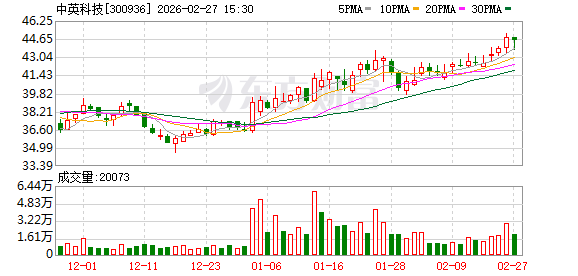
300936 重大资产重组!不停牌
Zhong Guo Ji Jin Bao· 2026-02-27 12:47
Group 1 - The core point of the article is that Zhongying Technology plans to acquire at least 51% of the shares of Yingzhong Electric in cash, which will result in a significant asset restructuring and related party transaction [2][4] - The acquisition is expected to enhance Zhongying Technology's asset quality and overall competitiveness, as Yingzhong Electric will become a subsidiary included in the consolidated financial statements after the transaction [4][6] - The shareholders of Yingzhong Electric include Yu Yingzhong (60%), Yu Biao (30%), and Zhu Lijuan (10%), with familial relationships among them, which classifies the transaction as a related party transaction [4][5] Group 2 - Zhongying Technology has faced declining performance, with a revenue of 275 million yuan in 2024, a decrease of 0.96% year-on-year, and a net profit attributable to shareholders of 31.64 million yuan, down 78.33% year-on-year [8] - The company anticipates further declines in 2025, projecting a net profit of between 1.8 million and 2.7 million yuan, representing a year-on-year decrease of 91.47% to 94.31% [8] - Despite the poor performance, Zhongying Technology maintains a strong asset position, with a debt-to-asset ratio of only 6.06% at the end of 2023 and 8.42% at the end of 2024, which supports its ability to finance the cash acquisition [9]

从“参与”到“主导”:华为开源之路越走越宽
Sou Hu Cai Jing· 2026-02-27 11:44
Core Insights - Huawei has rapidly evolved from using open-source software to becoming a major contributor to various large open-source projects since 2010, with over 6,000 employees involved in development [1][3]. Group 1: Open Source Contributions - Huawei is a top player in the global open-source field, being a founding member of several prominent international open-source foundations and contributing core code to many communities [3]. - The company has initiated over ten significant open-source projects, particularly in foundational software, which has garnered widespread support from global developers [3]. Group 2: AI and Computing Frameworks - Huawei's CANN architecture, launched in 2019, facilitates AI developers in utilizing underlying computing power and is set to be fully open-sourced by 2025, allowing clients to optimize their usage [4]. - The CANN community is actively collaborating with universities to cultivate professional talent, enhancing the AI ecosystem [4]. Group 3: Hardware and Software Ecosystem - Huawei's Kunpeng processor, launched in 2019, has made significant strides in supporting major open-source software, addressing the challenges posed by the dominance of X86 architecture [5]. - The company has developed the Kunpeng DevKit and BoostKit to improve computing performance through software-hardware synergy, boosting the Kunpeng ecosystem's attractiveness [5]. Group 4: Operating Systems and Databases - The openEuler operating system, based on Linux, has attracted over 2,100 enterprises and institutions, with more than 26,000 contributors, and is projected to exceed 16 million installations by the end of 2025 [6]. - Huawei's openGauss project, a relational database, is gaining traction in critical industries and will continue to enhance its capabilities to support distributed architectures and multi-modal data [7]. Group 5: Strategic Vision - Huawei's strategy in the computing sector focuses on hardware openness, software open-sourcing, enabling partners, and talent development to drive innovation in China's computing industry [7].

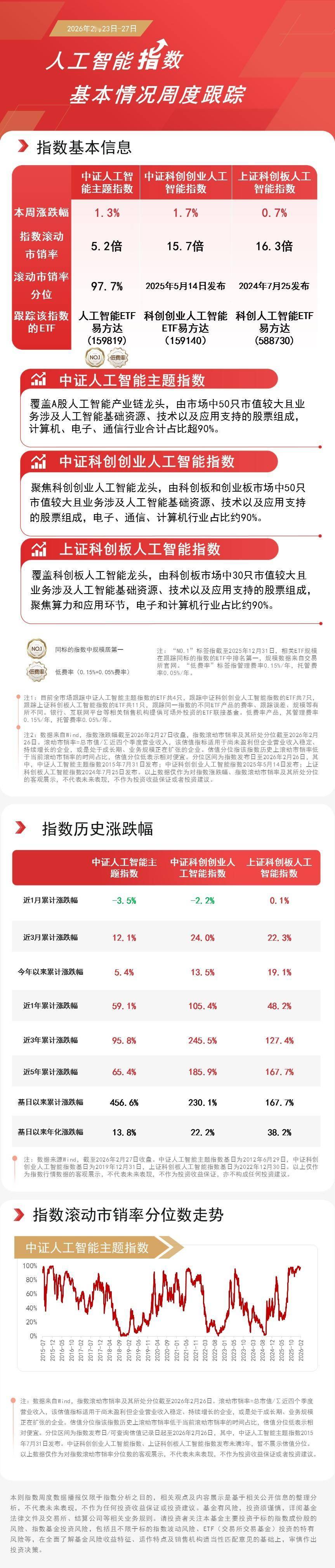
AI硬件方向局部活跃,科创创业人工智能ETF易方达(159140)、人工智能ETF易方达(159819)标的指数本周涨超1%
Sou Hu Cai Jing· 2026-02-27 11:35
Group 1 - The core viewpoint of the news highlights the active performance of AI hardware sectors such as HBM, circuit boards, and copper-clad laminates in the first week after the holiday, with various AI-related indices showing positive growth [1][5][6] - The CSI AI Theme Index increased by 1.3%, the CSI Sci-Tech Innovation and Entrepreneurship AI Index rose by 1.7%, and the SSE Sci-Tech Innovation Board AI Index saw a 0.7% increase [1][3] - The AI ETF managed by E Fund (159819) attracted over 100 million yuan in the first three trading days of the week [1] Group 2 - The CSI Sci-Tech Innovation and Entrepreneurship AI Index focuses on leading companies in AI, comprising 50 stocks with significant market capitalization involved in AI foundational resources, technology, and application support, with approximately 90% from the electronics, communication, and computer sectors [5] - The SSE Sci-Tech Innovation Board AI Index includes 30 major stocks from the Sci-Tech Innovation Board, also focusing on AI foundational resources and applications, with a similar industry composition [6] - The rolling price-to-sales ratio for the CSI AI Theme Index is 5.2 times, while the corresponding ratios for the other indices are 15.7 times and 16.3 times respectively [3]