
新茶饮

Search documents
规模效应开始显现,古茗半年净利润超去年全年:三条业绩“驱动链”能否抵御下半年行业风险?
Mei Ri Jing Ji Xin Wen· 2025-08-27 15:25
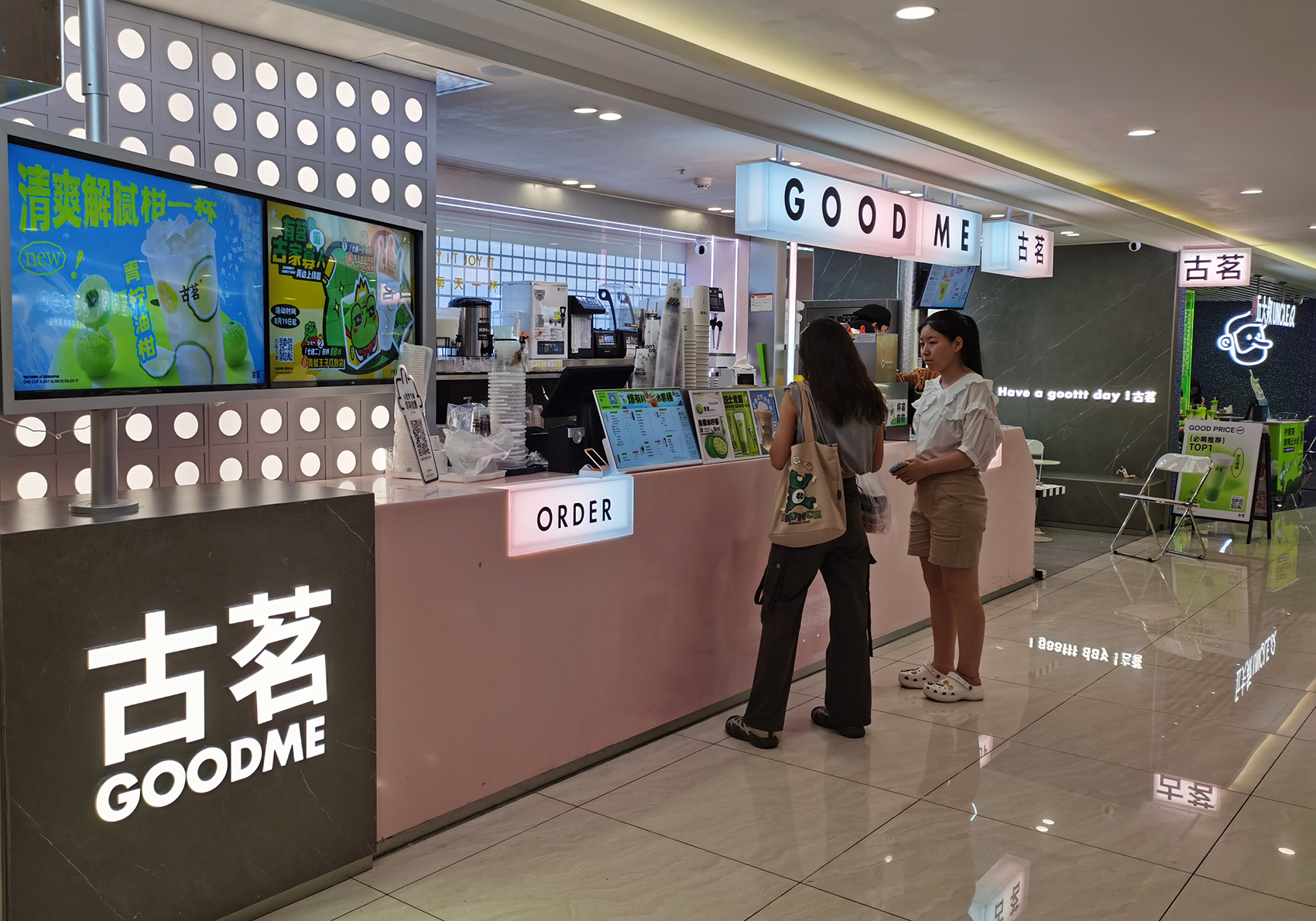
每经记者|王紫薇 每经编辑|董兴生 8月26日,新茶饮品牌古茗(01364.HK)交出了上市后的首份中期成绩单。财报显示,2025年上半年,公司收入达56.63亿元,同比增长41.2%;净利润为 16.25亿元,同比大增121.5%,甚至超过去年全年水平(14.79亿元);基本每股净收益为0.72元,同比提升84.6%。 《每日经济新闻》记者发现,古茗的这份"炸裂"成绩单得益于三条"增长链":一是大举扩张门店网络,二是单店效率提升,三是供应链与数字化沉淀。 而行业人士向记者分析,这三条互相驱动的"增长链"是古茗实现增长的主要原因。另一方面,今年下半年的行业竞争加剧,外卖平台补贴战升级、加盟商回 报周期拉长等风险因素,可能对古茗的增长节奏构成挑战。 图片来源:每经记者 孔泽思 摄 半年净利润超去年全年,古茗也有了规模效应 在瑞幸门店达到1万家时,其品牌规模效应开始显现。在此次报告期内,古茗门店数量也超过了1万家,并且同样展现出规模效应的威力。 所谓规模效应,是指品牌在门店数量达到一定程度后,品牌逐渐积累了更强的获客优势,从而可以提高营收;而广泛密集的门店形成的门店网络,还将不断 摊薄供应链的运营成本,让企业进入 ...

古茗王云安:出海机会没那么可观,泡沫可能大于红利
Guo Ji Jin Rong Bao· 2025-08-27 14:57
Core Viewpoint - Gu Ming (01364.HK) reported strong financial performance for the first half of 2025, with revenue of 5.663 billion and a net profit attributable to shareholders of 1.625 billion, reflecting year-on-year growth of 41.2% and 121.5% respectively [2] Group 1: Financial Performance - The company achieved a revenue of 5.663 billion, marking a year-on-year increase of 41.2% [2] - Net profit attributable to shareholders reached 1.625 billion, showing a significant year-on-year growth of 121.5% [2] Group 2: Store Expansion - As of the end of the first half of the year, Gu Ming had a total of 11,179 stores, making it the second-largest brand in China's ready-to-drink tea market [2] - The company plans to add over 3,000 new stores this year, having already met its internal growth guidance for the year [2][3] - Gu Ming adopts a cautious approach to store expansion, focusing on increasing store density within single provinces to achieve scale effects and reduce supply chain costs [3] Group 3: Market Strategy and International Expansion - Gu Ming is currently the only major ready-to-drink tea brand that has not yet expanded internationally [2] - The management indicated that while the company is preparing for international expansion, it remains a lower priority compared to domestic market growth [3] - The founder expressed that international expansion presents both opportunities and challenges, and the potential benefits may be overstated compared to the risks involved [2][3]
沪上阿姨交上市后首份半年度成绩单:净利增速跑赢营收,加盟商开新店速度明显放缓
Mei Ri Jing Ji Xin Wen· 2025-08-27 13:54
Group 1 - The core viewpoint of the article highlights the financial performance of the newly listed tea beverage company, Hu Shang A Yi, which reported a revenue of 1.818 billion yuan for the first half of 2025, representing a year-on-year growth of 9.7%, and a net profit of 203 million yuan, up 20.9% year-on-year [1][2] - The company's gross profit margin for the first half of the year was 31.4%, showing no significant fluctuation compared to the same period last year [1] - Three out of four major expenses for the company decreased during the first half of the year, including a 4.9% decline in sales and marketing expenses, a 1.1% decrease in research and development expenses, and a 37.8% reduction in financial costs, indicating a focus on cost reduction and efficiency improvement [1] Group 2 - As of the end of June, Hu Shang A Yi operated a total of 9,436 stores across its three brands, with 24 being directly operated stores and 9,412 franchise stores [1] - The growth in store numbers during the first half of the year was primarily driven by franchise stores, which net increased by 260 stores, while the number of directly operated stores remained unchanged [2] - The company has a limited international presence, with only one self-operated store opened in Kuala Lumpur, Malaysia, in February 2024 [2] - The board of directors proposed a mid-term dividend of 6.76 yuan per 10 shares (including tax), totaling a proposed distribution of 71.12 million yuan [2]
沪上阿姨半年报亮眼,获纳入恒生综合指数彰显长期价值
Bei Jing Shang Bao· 2025-08-27 13:18
Core Viewpoint - The company, Hu Shang A Yi, reported its first financial results post-IPO, showcasing solid revenue growth and profitability, while also being included in the Hang Seng Composite Index, indicating strong market recognition and potential for future growth [1][5]. Financial Performance - For the first half of 2025, the company achieved revenue of 1.818 billion RMB, a year-on-year increase of 9.7% - Gross profit reached 572 million RMB, up 10.4% year-on-year - Net profit for the period was 203 million RMB, reflecting a 20.9% increase year-on-year - Adjusted net profit stood at 244 million RMB, a 14.0% year-on-year growth - Basic earnings per share were 1.97 RMB, marking a 19.4% increase year-on-year - The company proposed a mid-term dividend of 6.76 RMB per ten shares, totaling approximately 71.12 million RMB, pending shareholder approval [1]. Market Strategy - The company has successfully expanded its store network to 9,436 locations as of June 30, 2025, with nearly 1,000 new stores added year-on-year - Stores in third-tier and lower cities account for 51.1% of the total, reflecting a strategic focus on underdeveloped markets with high growth potential [2]. Supply Chain and Franchise System - The company operates a robust supply chain network consisting of 13 logistics bases, 4 equipment warehouses, 7 fresh produce warehouses, and 14 cold chain warehouses - It has established a mutually beneficial partnership with 5,706 franchisees, operating 9,412 franchise stores, enhancing operational efficiency and brand loyalty - The company has 131.4 million registered members on its WeChat mini-program, with an average quarterly active user count of 15.8 million and a quarterly repurchase rate of 40.6% [3]. Brand and Product Innovation - The company has developed a multi-brand strategy with three main brands: Hu Shang A Yi, Cha Pu Bu, and Hu Ka, targeting different market segments and price points - In the first half of 2025, the company launched 136 new products, focusing on health-oriented offerings that appeal to younger consumers - Marketing efforts have generated significant attention, with new product launches achieving high sales volumes and online exposure [4][5].
蜜雪冰城上市后首份中报:坐拥5.3万家门店,日赚1488万元
Guo Ji Jin Rong Bao· 2025-08-27 12:35
Core Viewpoint - The company, Mixue Group, reported strong financial performance in its first half of the year, with significant revenue and profit growth driven by an expanding store network and increased marketing efforts [2][4]. Financial Performance - In the first half of the year, Mixue Group achieved revenue of 14.875 billion yuan, a year-on-year increase of 39.3%, and a net profit attributable to shareholders of 2.693 billion yuan, up 42.9% [2]. - The company earned an average of 14.88 million yuan per day over the 181 days of the first half [2]. Store Network Expansion - As of the end of June, Mixue Group had over 53,000 stores globally, with approximately 48,300 located in mainland China, marking an increase of nearly 10,000 stores compared to the same period last year [3][4]. - The number of stores in third-tier and lower cities reached 27,800, representing 57.6% of the total, while first-tier cities accounted for 2,356 stores, increasing their share to 4.9% [2]. Franchise Model - Out of the 53,000 stores, only 21 are company-owned, with the majority being franchise stores [3]. - The franchise count at the beginning of the year was 46,462, with 7,721 new openings and 1,187 closures in the first half, resulting in a closure rate of 2.55%, which is still relatively low compared to other new tea beverage companies [3][4]. Marketing and Competition - The company increased its marketing expenditure to 914 million yuan, a rise of 50.24% year-on-year, in response to intense competition in the domestic new tea beverage market [4]. International Expansion - Mixue Group has the largest overseas presence among new tea beverage brands, with 4,733 stores outside mainland China as of mid-year [4]. - The company is focusing on Southeast Asia for expansion, with adjustments made in Indonesia and Vietnam to optimize existing stores, while also entering the Central Asian market with a new store in Kazakhstan [4]. - The coffee brand, Lucky Coffee, has also begun its international expansion, opening its first overseas store in Malaysia and planning to establish four more [4][5]. Lucky Coffee Growth - Lucky Coffee has accelerated its expansion, increasing its store count from 4,800 to 5,700 in just three months, and reaching over 7,800 stores by August 22, with a target of 10,000 stores for the year [6].
大涨!蜜雪公布→
Zhong Guo Jing Ji Wang· 2025-08-27 11:33
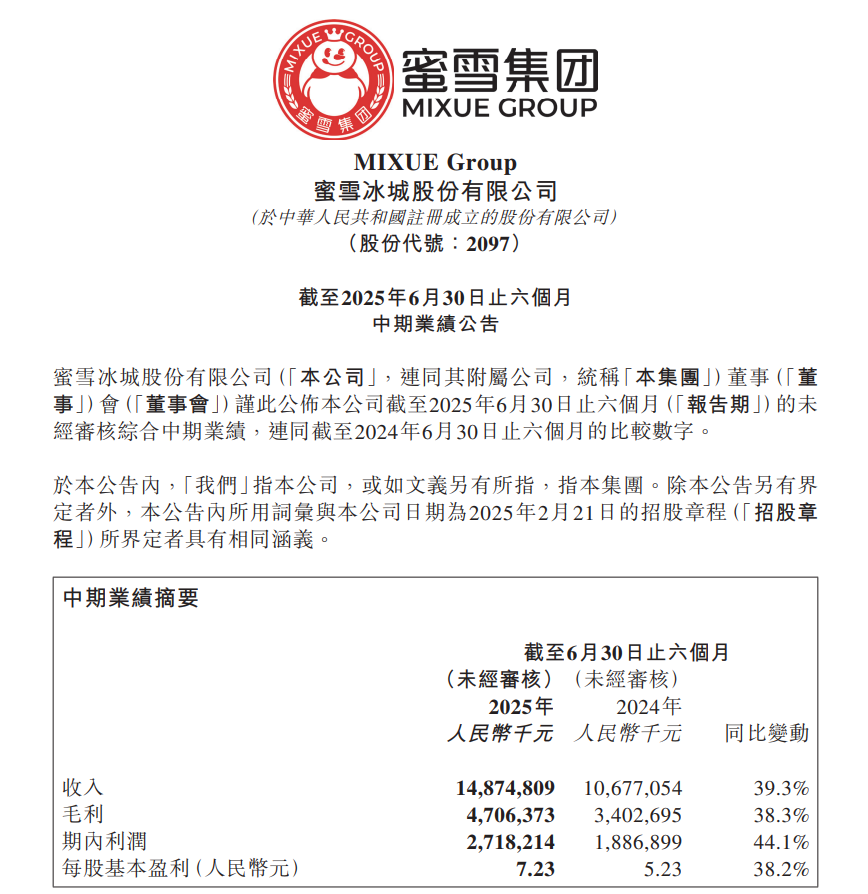
Core Insights - The article highlights the robust growth of Mixue Group's performance in the first half of 2025, driven by supply chain enhancement, brand IP development, and store operation optimization [2] - Mixue Group reported a revenue increase of 39.3% year-on-year, reaching RMB 14.87 billion, with a net profit growth of 44.1% to RMB 2.72 billion [2] - The total number of Mixue Group's global stores reached 53,014, marking a year-on-year growth of 22.67% [2] Financial Performance - Revenue for the first half of 2025 was RMB 14,874,809 thousand, compared to RMB 10,677,054 thousand in 2024, reflecting a 39.3% increase [2] - Gross profit was RMB 4,706,373 thousand, up 38.3% from RMB 3,402,695 thousand in the previous year [2] - Basic earnings per share increased by 38.2% to RMB 7.23 from RMB 5.23 [2] Market Dynamics - The decline in gross margin from 31.87% to 31.64% was attributed to rising raw material costs and changes in revenue structure [3] - Significant price increases for key raw materials like lemons and coffee beans were noted, impacting the cost structure of Mixue Group [4] - Another leading tea beverage company, Gu Ming, also reported substantial growth, with a revenue increase of 41.2% to RMB 5.66 billion in the same period [4][6] Competitive Landscape - Both Mixue Group and Gu Ming are focusing on expanding their store networks and leveraging franchise models to capture market opportunities [7] - Mixue Group emphasizes a "food supply chain" approach, utilizing standardized and large-scale industrial production for cost leadership, while Gu Ming focuses on a "fresh supply chain" supported by infrastructure like cold chain logistics [7]
新茶饮巨头业绩大涨!
Zhong Guo Ji Jin Bao· 2025-08-27 09:30
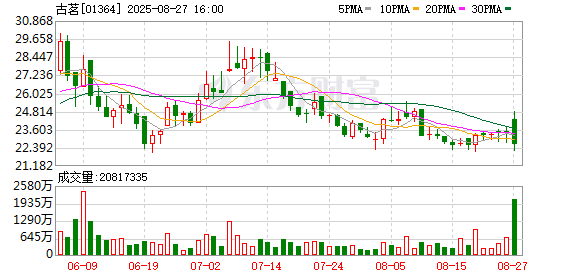
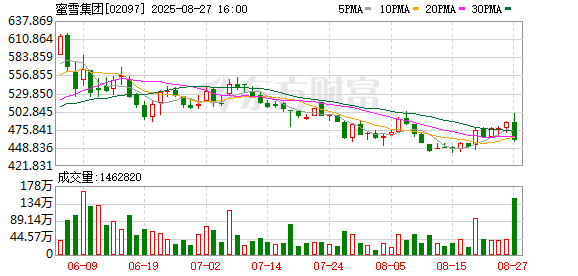
Core Viewpoint - The news highlights the strong mid-year performance of Mixue Group, with significant revenue and profit growth, despite a slight decline in gross margin due to rising raw material costs and changes in revenue structure [2][3][4]. Financial Performance Summary - For the first half of 2025, Mixue Group reported revenue of 14.875 billion RMB, a year-on-year increase of 39.3% from 10.677 billion RMB in 2024 [3]. - The gross profit for the same period was 4.706 billion RMB, reflecting a 38.3% increase compared to 3.403 billion RMB in 2024 [3]. - Net profit reached 2.718 billion RMB, up 44.1% from 1.887 billion RMB in the previous year [3]. - Basic earnings per share were 7.23 RMB, a 38.2% increase from 5.23 RMB in 2024 [3]. Operational Highlights - As of June 30, 2025, Mixue Group had a total of 53,014 stores globally, marking a 22.67% increase year-on-year [3]. - The company attributes its robust growth to a focus on supply chain enhancement, brand IP development, and optimization of store operations [3]. Industry Context - The report also mentions that another leading tea beverage company, Gu Ming, experienced significant growth, with a revenue of 5.663 billion RMB, up 41.2% year-on-year [4][5]. - Gu Ming's net profit for the same period was 1.626 billion RMB, reflecting a remarkable 119.8% increase [5]. - Both Mixue Group and Gu Ming are noted for their strategies in expanding store networks and appealing to consumer preferences for high-quality, affordable products [6]. Market Reaction - Despite strong financial results, the stock prices of both Mixue Group and Gu Ming fell on August 27, with Mixue Group down 5.27% and Gu Ming down 3.75% [7][10]. - Analysts suggest that the market's reaction may be influenced by overall market sentiment and expectations, rather than the companies' performance [10].
奈雪的茶被送检出含反式脂肪酸与胆固醇 暂时未回应
Zhong Guo Jing Ji Wang· 2025-08-26 08:04
Core Insights - A recent inspection revealed that five out of eight popular tea brands, including Nayuki, were found to contain trans fats and high levels of sugar and sodium [1][2]. Company Overview - Nayuki, founded in 2015, pioneered the "tea + soft European bread" dual-category model and has established three main business segments: "freshly made tea drinks," "Nayuki tea," and "RTD bottled tea" [2]. - As of June 30, 2021, Nayuki was officially listed on the Hong Kong Stock Exchange, raising HKD 50.94 billion [2]. - The company operates under Shenzhen Pindao Catering Management Co., Ltd., which was established in 2014 and is primarily engaged in wholesale activities [2]. - Nayuki has expanded its presence to nearly 100 major cities in China, with over 1,200 stores [2].
新茶饮检测引热议,五问新茶饮中的反式脂肪酸
Xin Jing Bao· 2025-08-26 05:18
Core Viewpoint - Recent reports indicate that several mainstream tea beverage brands, including Heytea and Nayuki, have been found to contain trans fatty acids in their products, raising concerns among consumers about the safety of these beverages [1][2] Group 1: Source of Trans Fatty Acids - Trans fatty acids can originate from natural sources such as dairy products and certain meats, with natural foods containing about 2%-5% trans fatty acids in total fat [2] - The presence of trans fatty acids in tea beverages may be misleading, as brands like Heytea claim to use high-quality ingredients that meet safety standards, asserting that their products contain "0 trans fatty acids" [2][3] Group 2: Regulatory Standards - The detected levels of trans fatty acids in various tea beverages, such as Heytea's Black Sugar Boba Milk Tea (0.113g/100g) and Nayuki's Golden Mountain Pearl Milk Tea (0.0144g/100g), comply with national food safety standards, which allow for levels below 0.3g/100g [4] - Processed foods contribute significantly to trans fatty acid intake, with 71.2% of total intake coming from such foods, primarily from hydrogenated oils [4] Group 3: Consumer Perception and Misunderstanding - There is a prevalent misunderstanding among consumers that equates the use of plant-based creamers (植脂末) with the presence of trans fatty acids, despite advancements in technology allowing for "0 trans fatty acids" formulations [7][10] - A report from the China Chain Store & Franchise Association highlights that high sugar content and the use of plant-based creamers are common misconceptions that contribute to consumer resistance against new tea beverages [9] Group 4: Industry Developments - Companies like Jiahe Foods have initiated plans to eliminate artificial trans fats from their products, indicating a shift towards healthier formulations in the industry [10] - The beverage industry is currently revising standards for plant-based creamers to address concerns regarding trans fatty acid content and improve overall product safety [11]
“消费刺客”退烧
Hu Xiu· 2025-08-26 00:07
Core Viewpoint - The controversy surrounding the founder of Baiguoyuan's statement on "educating consumers" highlights the disconnect between brand management and consumer expectations, leading to significant financial losses for the company [1][7][11]. Group 1: Company Performance - Baiguoyuan issued a mid-year earnings warning on August 15, 2025, predicting a revenue decline of up to 25% year-on-year, with a net loss estimated between 330 million to 380 million yuan [2]. - The actual revenue reported was 4.376 billion yuan, a year-on-year decrease of 21.8%, with a net loss of 342 million yuan and a reduction in store count by approximately 27% to 4,386 stores [2][6]. Group 2: Market Trends - The rapid shift in consumer sentiment and market dynamics indicates that brands resisting these changes will incur significant costs, as seen with Baiguoyuan [3][4]. - The high-priced consumer segment is facing pressure, with the narrative of consumption upgrading being challenged as market realities shift [4][9]. Group 3: Consumer Behavior - Baiguoyuan's previous model relied on high-quality fruit to justify premium pricing, but issues with product quality have eroded consumer trust [5][6]. - The founder's comments reflect a misalignment with consumer expectations, as consumers are becoming more price-sensitive and pragmatic [7][11]. Group 4: Industry Dynamics - The new consumption landscape is marked by a decline in high-priced brands across various sectors, including tea and coffee, as companies adjust pricing strategies to remain competitive [10][11]. - The oversupply in the market has led to increased competition, with many brands struggling to differentiate themselves, resulting in a significant number of closures in the beverage sector [15][19]. Group 5: Future Outlook - The industry is transitioning towards two distinct business models: cost-driven efficiency and value-driven experience, with brands needing to adapt to survive [30][32]. - Baiguoyuan must either establish advantages in scale and cost control or create unique value propositions to avoid being squeezed out of the market [36][37].