
保险业

Search documents
深圳:鼓励保险机构细化智能驾驶车辆保险产品供给
Jin Rong Jie· 2026-01-22 07:16
Core Viewpoint - The Shenzhen Municipal Financial Management Bureau has released a draft action plan aimed at enhancing the insurance industry's support for technological innovation and industrial development, particularly focusing on the new energy vehicle (NEV) insurance market [1] Group 1: New Energy Vehicle Insurance - The plan proposes to optimize the supply of NEV insurance by researching and launching a "basic + variable" insurance product combination [1] - Insurance institutions are encouraged to adapt to the trends of intelligent driving by collaborating with developers, manufacturers, and operators to accumulate risk analysis data and refine insurance product offerings for intelligent driving vehicles [1] Group 2: Industry Standards and Practices - The initiative aims to explore a "vehicle-battery separation" model for commercial auto insurance products in specific urban traffic scenarios [1] - There is a push to establish comprehensive repair and claims standards to reasonably reduce the maintenance and usage costs of new energy vehicles [1] - The plan promotes cross-industry data sharing to guide consumers in developing good driving habits and to establish a risk reduction management ecosystem [1]
上海:创新股权和债权投资方式,开展不动产信托盘活存量地产
Xin Lang Cai Jing· 2026-01-22 07:11
Core Viewpoint - The Shanghai Financial Regulatory Bureau has issued the "Action Plan for High-Quality Development of Pension Finance in the Banking and Insurance Sectors," focusing on innovative investment methods and enhancing pension financial services for the elderly [1] Group 1: Investment Innovations - The plan encourages innovative equity and debt investment methods to support the development of pension finance [1] - Trust companies are supported to offer customized family trusts, family service trusts, and insurance trusts to integrate diverse family assets and meet the comprehensive pension needs of the elderly [1] Group 2: Real Estate and Trust Services - The initiative includes the development of real estate trusts to activate existing real estate assets, thereby enriching the sources of pension funds [1] - There is an ongoing exploration of new types of pension service trusts and special needs service trusts in the fields of elderly care and assistance [1] Group 3: Financial Leasing and Products - Financial leasing companies are encouraged to engage in financing leasing for the elderly care service industry [1] - Support is provided for pension financial products that invest in long-term quality assets matching the characteristics of pension needs [1]
2026年1月中英人寿福满佳C款分红险:低利率时代稳健之选
Cai Fu Zai Xian· 2026-01-22 03:41
Core Viewpoint - The article emphasizes the growing demand for safe and profitable financial tools in the savings insurance market, highlighting the unique features of the "Fumanjia C" whole life insurance product launched by Zhongying Life, which combines guaranteed returns with dividends to meet various financial needs [1]. Product Design - The Fumanjia C product features a dual return structure of "guaranteed returns + floating dividends," balancing safety and growth, making it an ideal tool for the current economic cycle [2]. - The guaranteed portion of the policy provides a safety net, ensuring that benefits are secure regardless of market fluctuations, thus safeguarding wealth [2]. - The floating dividends allow policyholders to share in the insurance company's investment success, offering potential returns that exceed inflation, which is crucial in the current low-interest-rate environment [2]. Fund Flexibility - The product offers high flexibility in dividend usage, allowing policyholders to choose how to manage their dividends, breaking away from traditional rigid distribution methods [3]. - There are four options for handling dividends: cash withdrawal, accumulation with interest, premium offset, and additional coverage purchase, catering to different financial needs [4][5]. Value Growth - The Fumanjia C product demonstrates rapid cash value growth, with the cash value exceeding total premiums paid by the fourth year, significantly reducing liquidity concerns [6]. - The internal rate of return (IRR) surpasses 2.0% by the fifth year, indicating strong mid-term growth potential, making it suitable for short to medium-term financial planning [6][7]. Asset Utilization - The product features clear and transparent rules for reducing coverage, allowing for orderly access to funds, which is crucial for liquidity [8]. - The contract stipulates a maximum reduction limit of 20% of the basic coverage, ensuring reliability and legal protection for policyholders [8]. Insurer Strength - Zhongying Life is backed by strong shareholders, including COFCO Group and Aviva, combining local resources with global expertise [9]. - The company boasts robust financials, with total assets exceeding 108.3 billion and a solvency ratio well above regulatory requirements, indicating strong risk resilience [9][10]. - The company has maintained a high risk rating of "AAA," reflecting its financial stability and operational integrity, which supports the long-term viability of its dividend insurance products [10]. Target Audience and Recommendations - The Fumanjia C product is particularly suitable for investors seeking stable mid to long-term returns, families planning for education or retirement, and high-net-worth individuals focused on efficient asset transfer [11]. - It is recommended that investors consider this product as part of a broader financial strategy, especially in a low-interest-rate environment, to build a protective wealth framework [11].
大摩闭门会:金融、汽车、交运、电力、物管行业更新 -纪要
2026-01-22 02:43
Summary of Key Points from Conference Call Records Industry Overview Financial Industry - The financial industry is expected to gradually return to a positive cycle by 2026, with economic sustainability improving despite not entering a significant upturn [2] - The central bank has implemented flexible interest rate cuts and reserve requirement ratio reductions, with a total of 7 trillion yuan in special re-loans to support small and micro technology enterprises [2][3] - December social financing data shows stable loan issuance, with a slight rebound in medium- and long-term loan growth, supporting infrastructure and helping to exit deflation [2] Automotive Industry - The automotive market in early 2026 is experiencing a downturn, with retail and wholesale sales significantly declining due to overdrawn demand for new energy vehicles and consumer hesitance regarding promotional subsidies [7][9] - A forecasted decline of 5-7% in passenger vehicle sales for Q1 2026, with an expected overall wholesale decline of 3% for the year [9] - The cost pressure in the automotive sector is increasing due to rising raw material prices, with an estimated increase in single vehicle costs by 6,000 to 8,000 yuan, impacting gross margins by 4-5 percentage points [11] Wind Power Industry - The wind power sector is expected to maintain a positive growth trajectory during the 14th Five-Year Plan, with annual new installations projected between 100-120 GW [15] Property Management Industry - The property management sector is anticipated to maintain low growth, with increasing differentiation among companies [16] - Major players like China Resources Mixc Life, Greentown Service, and Country Garden Service are expected to show strong performance due to stable cash flow and favorable dividend policies [17] Company-Specific Insights SF Express and Jitu - SF Express and Jitu have entered into a cross-shareholding agreement, with SF acquiring 10% of Jitu and Jitu acquiring 4.3% of SF, which is expected to have limited short-term EPS impact but potential long-term benefits due to resource synergy [4] - The collaboration is expected to enhance market presence in both domestic and overseas markets, particularly in cross-border logistics [5] China Resources Mixc Life - Recent stock price fluctuations for China Resources Mixc Life are attributed to slightly lower-than-expected earnings forecasts, but long-term growth potential remains intact with a projected EPS growth rate of 5-6% [18] Greentown Service and Country Garden Service - Greentown Service is expected to maintain a stable cash return due to its high-quality project structure, while Country Garden Service is anticipated to exceed shareholder return expectations with strong cash flow [17] Additional Considerations - The financial sector is benefiting from a shift in household financial asset allocation, with an annual growth rate of approximately 12% expected [3] - The automotive industry faces challenges from rising costs and cautious promotional strategies, with a need for adaptation to new policies impacting sales [8][12] - The property management sector is seeing a healthier profit structure as major companies release impairment pressures and rationalize non-core business operations [16]

1.22犀牛财经早报:国际金价屡创新高 回调风险需警惕
Xi Niu Cai Jing· 2026-01-22 02:08
Group 1: Gold Market - International gold prices have reached a historic high, surpassing $4800 per ounce, driven by geopolitical concerns and increasing volatility risks [1] - The Shanghai Gold Exchange also saw record prices during the same period, indicating strong demand [1] Group 2: Bond Market - The 30-year treasury futures have rebounded significantly, supported by institutional demand and foreign capital inflows, reaching new highs for the year [1] - However, experts suggest that the bond market may face short-term fluctuations rather than a clear trend due to stabilizing policy expectations [1] Group 3: Banking Sector - Major banks have seen large-denomination deposit rates drop into the "0" range, with many products offering rates below 1% for one-year terms [1] - This structural change is a response to ongoing pressure on net interest margins and aims to align with the declining financing costs for the real economy [1] Group 4: ETF Market - According to a report by CICC, the ETF market is expected to grow significantly by 2025, with an increase in market share within the public fund sector [2] - However, the growth rate may slow down this year, and asset management institutions need to focus more on attracting institutional funds [2] Group 5: Insurance Sector - The latest research value for the standard interest rate of ordinary life insurance products is set at 1.89%, indicating no immediate need for adjustments [3] - The insurance industry is expected to maintain its current interest rate levels throughout the year [3] Group 6: Corporate Performance - Over 600 listed companies have issued performance forecasts for 2025, with emerging industries like semiconductors and AI showing strong growth [4] - Companies attribute their performance to technological innovations and improvements in industry chain conditions [4] Group 7: Regulatory Environment - The China Securities Regulatory Commission has signaled an upgrade in its "zero tolerance" approach to financial fraud and market manipulation [4] - This shift aims to enhance the effectiveness and deterrent power of regulatory enforcement [4] Group 8: Automotive Industry - Ford is recalling over 119,000 vehicles in the U.S. due to a fire risk associated with engine block heaters [7] - This recall highlights ongoing safety concerns within the automotive sector [7] Group 9: Quantum Computing - Quantum computing company Liangxuan Technology has completed a multi-billion C round financing, indicating strong investor confidence in the sector [8] - The company aims to expand its global reach and enhance its product reliability [8]
江苏亮出“十四五”时期高含“金”量金融成绩单多个“全国第一”,彰显高质量发展硬实力
Xin Hua Ri Bao· 2026-01-22 00:00
Core Insights - Jiangsu's financial development during the "14th Five-Year Plan" period has achieved significant milestones, including leading the nation in social financing scale, new loan increments, and the number of listed companies on the Sci-Tech Innovation Board and Beijing Stock Exchange [1][2]. Group 1: Financial Growth and Support for the Real Economy - From 2021 to 2024, Jiangsu's annual social financing increment averaged 3.35 trillion yuan, with a total of 3.09 trillion yuan added from January to November 2025, ranking first in the country and increasing by 446.1 billion yuan year-on-year [2][3]. - By the end of 2025, the total RMB loan balance in Jiangsu is projected to reach 28.25 trillion yuan, with an average annual growth rate of 12.8% from 2021 to 2025, consistently outpacing the nominal GDP growth rate [2][3]. - The balance of technology loans reached 5.2 trillion yuan, benefiting over 148,000 enterprises, while green loans and inclusive small and micro loans also saw significant growth [2][3]. Group 2: Capital Market Development - Jiangsu added 259 new domestic listed companies during the "14th Five-Year Plan," the highest in the nation, bringing the total to 722, with direct financing reaching 6.97 trillion yuan [4][5]. - The issuance of Sci-Tech bonds increased by 183% year-on-year in 2025, with a cumulative total of 70.6 billion yuan issued in the province [5]. - The province's financial ecosystem has been strengthened through various initiatives, including the establishment of a securities service platform and a resource pool for listed companies [5][6]. Group 3: Support for Private Enterprises and Risk Management - Jiangsu has implemented policies to support the growth of private enterprises, including the establishment of 105 financial service points and nearly 300 specialized financial service events [6][7]. - The province's insurance sector has shown resilience, with cumulative compensation reaching 892.9 billion yuan and a financing guarantee balance exceeding 1.16 trillion yuan [7][8]. - Jiangsu has maintained a "zero default" record in the bond market for 35 consecutive months and has established a provincial-level financial work coordination mechanism to enhance regulatory effectiveness [8].
杨华曌:避险情绪升温全球市场外溢效应显著 黄金价格暴涨
Xin Lang Cai Jing· 2026-01-21 11:00
全球债券投资者越来越看空日本政府债务,因其正面临财政担忧和利率逐步走高的压力。这激起了人们 对长期被称为"寡妇制造者"的交易的兴趣——做空日本国债,当收益率飙升时将获利。 1月21日,随着财政担忧加剧,日本一度沉寂的债券市场的波动性自去年年初以来一直在上升,并对全 球产生了显著的外溢影响。在此之前,日本央行取消了收益率曲线控制政策并开始减少购买日本国债。 周二的抛售加剧了持有巨额政府债券投资组合的日本人寿保险公司的压力。日本一家大型人寿保险公司 的投资经理表示,对未来稳定性的担忧将使这些保险公司很难重返日本国债,即使利率变得更具吸引 力。 市场"抛售美国"浪潮自周二全面展开。上周六特朗普威胁对八个欧洲国家征收关税,这与美国控制格陵 兰岛直接相关,已将地缘政治推到了资产定价的核心。投资者纷纷减持美国风险资产,导致主要指数创 下自10月以来最差单日表现,并将标普500指数和纳斯达克指数拖入年内负值区间。 美国股市、国债和美元的同时抛售,是此次事件引人注目的原因。历史上,风险规避事件往往支撑国债 和美元。但这一次,两者与股票一同遭到抛售,这表明市场信心的丧失,而非美国市场内部简单的避险 轮动。 周二的抛售加剧了持有 ...
普通型人身险产品预定利率研究值降至1.89% 业内:预计今年人身险预定利率会维持现有水平
Sou Hu Cai Jing· 2026-01-21 09:41
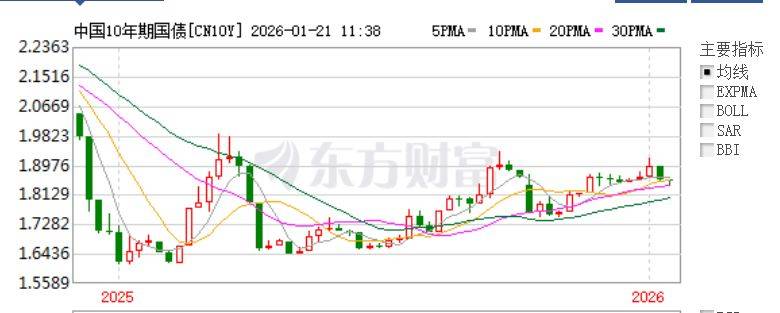
Core Viewpoint - The predetermined interest rate for personal insurance products has been updated to 1.89%, marking a fourth consecutive decline, but the rate of decrease is narrowing, indicating a stabilization trend in the market [2][3]. Group 1: Predetermined Interest Rate Updates - The China Insurance Industry Association announced the latest predetermined interest rate for personal insurance products as 1.89% on January 20, 2025, following a quarterly release schedule [2]. - The predetermined interest rates for the previous quarters were 2.34%, 2.13%, 1.99%, and 1.90% for January, April, July, and October 2025, respectively, showing a consistent downward trend [2]. - The decline in the predetermined interest rate is attributed to the stabilization of the ten-year government bond yield, which currently hovers around 1.8% [3]. Group 2: Market Dynamics and Predictions - Analysts expect the downward adjustment of the predetermined interest rate to continue to narrow due to the stabilization of long-term interest rates and the recovery of capital markets since September 2024 [6][9]. - The insurance industry is likely to maintain the current level of predetermined interest rates through 2026, as the ten-year government bond yield is not expected to drop below 1% [8][9]. - The relationship between the predetermined interest rate and the ten-year government bond yield is crucial, as the latter provides a support level for the former, especially in light of recent market conditions [8][9].

焦点精选!东京股市下跌 日经股指五连跌
Xin Hua She· 2026-01-21 09:14
Core Viewpoint - The Tokyo stock market experienced a slight decline on January 21, with both major indices falling, influenced by a significant drop in the New York stock market the previous night [2] Market Performance - The Nikkei 225 index closed down by 0.41%, while the Tokyo Stock Exchange Price Index fell by 0.99% [2] - The Nikkei index has now recorded five consecutive days of decline, marking the first occurrence of such a streak since mid-January 2025 [2] Influencing Factors - The Tokyo stock market opened lower due to the comprehensive decline of the three major indices in New York [2] - Despite the downward trend, some investors increased their buying activity at lower prices, which helped to narrow the overall decline [2] Closing Figures - At the close, the Nikkei index was down by 216.46 points, settling at 52,774.64 points; the Tokyo Stock Exchange index decreased by 35.90 points, ending at 3,589.70 points [2] Sector Performance - Most of the 33 industry sectors on the Tokyo Stock Exchange saw declines, with the banking, insurance, and service sectors experiencing the largest drops [2] - Conversely, sectors such as non-ferrous metals, petroleum and coal products, and electric and gas industries showed gains [2]

甘肃省静宁县牛产业综合保险项目再启动
Zheng Quan Ri Bao Wang· 2026-01-21 09:03
作为"平凉红牛"的核心产区,当前,静宁县正依托万头肉牛育肥基地、牛肉深加工冷链物流项目等载体,推动产业向数字 化养殖、精深加工、品牌营销延伸,而"保险+期货"带来的收益稳定性,加速"养牛大县"向"养牛强县"迈进,充分展现了中投公 司和银河证券等金融帮扶从"输血"到"造血"的核心升级。银河期货、太平洋财险、深圳溯安智能科技等为静宁县14个参保乡镇 的负责人,以及养殖户代表60余人作出相关专业培训。 (编辑 张昕) 本报讯 (记者王宁)近日,2025年度"金融赋能红牛产业暨'保险+期货'培训会"在甘肃省静宁县举行,同时,预示着新一 期牛产业综合保险项目再度落地实施。 据悉,在中国投资有限责任公司(以下简称"中投公司")和银河证券的大力帮扶下,新一期牛产业综合保险项目由银河期 货联合太平洋财险共同实施,总保费1200万元,承保规模进一步扩大,覆盖静宁县14个乡镇的红牛4万余头,将进一步保障养 殖户收益,助力全县红牛产业稳定、持续发展。 静宁县委常委、副县长尚超表示,在静宁县政府和中投公司、银河证券等帮扶单位的共同努力下,从2018年开始,连续8 年实施的苹果"保险+期货"项目,探索走出了一条金融助力乡村振兴的新路子 ...