工业母机

Search documents
工业母机赛道利好来袭!上半年净利润规模居前的概念股名单出炉
Zheng Quan Shi Bao· 2025-09-02 00:55
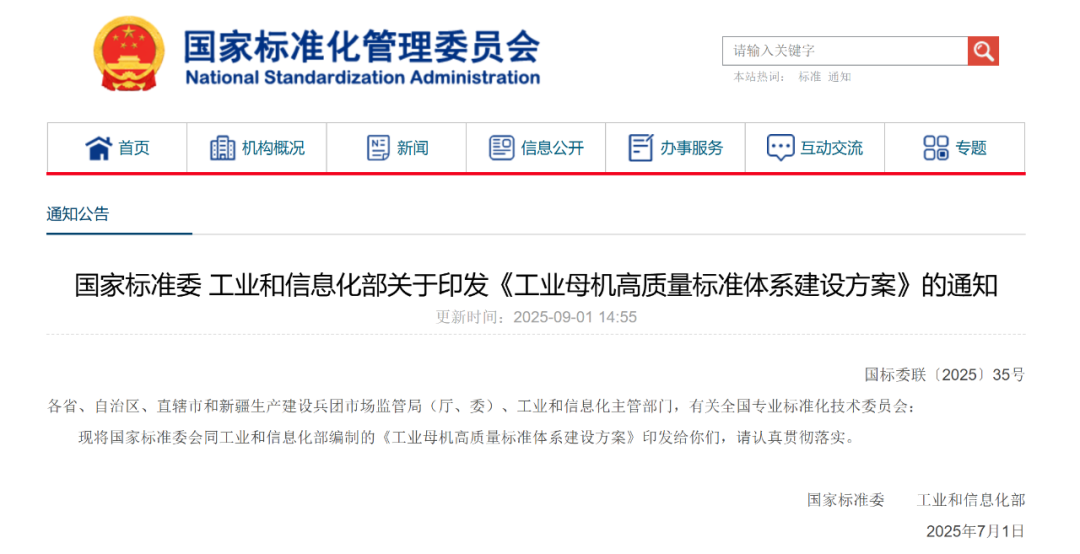
Core Insights - The article highlights the strong performance of industrial mother machine stocks, with several companies reporting significant net profits in the first half of the year [4][6] - The "Industrial Mother Machine High-Quality Standard System Construction Plan" aims to establish a high-quality standard system by 2026, promoting product quality and equipment upgrades [3] Group 1: Policy and Standards - The "Industrial Mother Machine High-Quality Standard System Construction Plan" was issued by the National Standardization Administration and the Ministry of Industry and Information Technology on September 1 [3] - By 2026, the plan aims to establish a basic high-quality standard system, with at least 300 standards to be revised or created, including at least 5 international standards, achieving a 90% conversion rate of international standards [3] - By 2030, the standard system will be fully formed, with technical levels and internationalization continuously improving, aiming for advanced standards in material reduction and additive manufacturing [3] Group 2: Company Performance - A total of 21 industrial mother machine stocks reported net profits exceeding 10 million yuan in the first half of the year, with 7 companies achieving net profits over 100 million yuan [4] - AVIC High-Tech (中航高科) reported a revenue of 2.747 billion yuan, a year-on-year increase of 7.87%, and a net profit of 605 million yuan, up 0.24% [4][7] - Huadong CNC (华东数控) achieved a net profit growth of 140.53%, with a net profit of 135.855 million yuan despite a revenue decline of 6.06% [5][7] - Other companies with notable net profit growth include Qiaofeng Intelligent (乔锋智能) at 56.43%, Genesis (创世纪) at 47.38%, and Guosheng Zhike (国盛智科) at 32% [4][7]


7只工业母机概念股上半年净利润均超亿元
Zheng Quan Shi Bao Wang· 2025-09-02 00:49
Group 1 - The core viewpoint of the article is the establishment of a high-quality standard system for industrial mother machines by 2026, aimed at enhancing product quality and promoting equipment upgrades [1] - The plan includes the revision and formulation of no less than 300 standards, with at least 5 international standards being led, and a target international standard conversion rate of 90% [1] - The supply structure of standards is expected to be optimized as part of this initiative [1] Group 2 - In the A-share market, there are 21 industrial mother machine concept stocks with a net profit of over 10 million yuan in the first half of the year, including seven stocks like AVIC High-Tech and Changying Precision, which reported net profits exceeding 100 million yuan [1] - From a profit change perspective, Huadong CNC, Qiaofeng Intelligent, Genesis, and Guosheng Zhike have shown significant year-on-year net profit growth rates of 140.53%, 56.43%, 47.38%, and 32% respectively [1]

机构:“工业母机+”活动持续推进
Zheng Quan Shi Bao Wang· 2025-09-02 00:47
Core Viewpoint - The National Standardization Administration and the Ministry of Industry and Information Technology have issued a plan to establish a high-quality standard system for industrial mother machines by 2026, aiming to enhance product quality and equipment upgrades through high-level standards [1] Summary by Relevant Sections Standard System Development - By 2026, a basic high-quality standard system for industrial mother machines will be established, with at least 300 standards to be formulated or revised, including at least 5 international standards [1] - The international standard conversion rate is targeted to reach 90%, optimizing the structure of standard supply [1] Industry Upgrades and Emerging Demands - The plan emphasizes accelerating the development of standards for high-end industrial mother machines, advanced CNC systems, high-performance functional components, advanced manufacturing processes, and key core components [1] - Some critical standards will be set to be moderately ahead of the average industry development level, enhancing the role of standards in leading high-quality industrial development [1] Investment Opportunities - Guojin Securities notes that the "Industrial Mother Machine+" initiative has been advancing over the past two years, promoting both domestic production and industrial upgrades to better meet the demands of emerging industries such as new energy vehicles, humanoid robots, and low-altitude economy [1] - Investment opportunities are suggested in sectors benefiting from domestic production, such as five-axis machine tools, CNC systems, and screw guide rails, as well as in processing centers and grinding machines driven by the demand from humanoid robots and other emerging industries [1]
9月2日证券之星早间消息汇总:造车新势力8月交付量出炉
Sou Hu Cai Jing· 2025-09-02 00:41
Macro News - The National Standardization Administration and the Ministry of Industry and Information Technology issued a plan for the construction of a high-quality standard system for industrial mother machines, aiming to establish a basic system by 2026, with at least 300 standards to be revised or formulated, and a 90% conversion rate of international standards [1] Industry News - In September, new car manufacturers reported delivery data for August, showing an overall growth trend. Leap Motor, Xpeng Motors, and NIO all achieved record monthly delivery numbers, while Li Auto experienced a decline in deliveries for three consecutive months due to product transitions and adjustments in its sales and service system. In August, Leap Motor led with 57,066 deliveries, a year-on-year increase of over 88%, while Li Auto delivered 28,529 vehicles, a year-on-year decrease of 40.72% and a month-on-month decrease of 7.17% [2] - The monthly stock recommendations from securities firms showed that the electronics sector maintained the highest recommendation rate at 14.63%, followed by the computer and pharmaceutical sectors at 6.99% each, and the non-ferrous metals sector at 6.11% [2] - A 26-megawatt offshore wind turbine, the largest in the world with complete independent intellectual property rights, was successfully installed in Shandong, providing technical support for China's deep-sea wind power development. This turbine, with the largest single capacity and longest rotor diameter globally, is expected to generate 100 million kilowatt-hours of electricity annually, enough to power 55,000 households for a year [2] Overseas News - U.S. stock markets were closed for Labor Day, while European indices saw gains. The FTSE 100 in London closed at 9,196.34 points, up 0.10%; the CAC 40 in Paris closed at 7,707.90 points, up 0.05%; and the DAX in Frankfurt closed at 24,037.33 points, up 0.57% [3] - According to CME's FedWatch, the probability of the Federal Reserve maintaining interest rates in September is 10.4%, while the probability of a 25 basis point cut is 89.6%. For October, the probability of maintaining rates is 4.9%, with cumulative probabilities of a 25 basis point cut at 47.3% and a 50 basis point cut at 47.9% [3]


贵州茅台控股股东增持;AI新标准实施……盘前重要消息还有这些
Zheng Quan Shi Bao· 2025-09-02 00:15
Group 1 - The National Standardization Administration and the Ministry of Industry and Information Technology have issued a plan to establish a high-quality standard system for industrial mother machines by 2026, aiming to enhance product quality and equipment upgrades through high-level standards [2] - The Shanghai Futures Exchange will expand the range of products available for qualified foreign institutional investors starting September 10, 2025, including new futures and options contracts for petroleum asphalt and fuel oil [2] - The National Medical Insurance Administration is promoting the direct issuance of maternity allowances to individuals, with 20 provinces implementing this system, covering nearly 80% of the coordinated areas [3] Group 2 - Guizhou Moutai's controlling shareholder increased holdings by 67,821 shares on September 1 [5] - BYD's new energy vehicle sales reached 373,600 units in August [5] - Chengdu Huami released a high-precision RF ADC chip with 40G speed [5] - JD Group made a voluntary public acquisition offer to CECONOMY [5] - Sichuan Jinding's subsidiary obtained a mining license [6] Group 3 - The market outlook suggests a balanced structure with new technology as a main line and cyclical finance as a dark horse, with expectations for a rebound in Hong Kong stocks [7] - The policy environment is supportive of "artificial intelligence+" applications, with short-term liquidity continuing to catalyze investments [8] - A-share companies have shown marginal improvement in revenue, particularly in information technology, healthcare, and midstream manufacturing sectors [9]

两部门印发《工业母机高质量标准体系建设方案》;华为本周四发布新款三折叠手机——《投资早参》
Mei Ri Jing Ji Xin Wen· 2025-09-02 00:07
Market News - US stock market was closed on September 1 due to a holiday. International precious metal futures generally rose, with COMEX gold futures up 0.84% at $3545.8 per ounce and COMEX silver futures up 2.46% at $41.725 per ounce. International oil prices increased, with WTI crude oil main contract rising 0.94% and Brent crude oil main contract rising 1.01% to $68.16 per barrel. European stock indices closed slightly higher, with Germany's DAX index up 0.57% at 24037.33 points, France's CAC40 index up 0.05% at 7707.9 points, and the UK's FTSE 100 index up 0.1% at 9196.34 points [1] Industry Insights - The National Standards Committee and the Ministry of Industry and Information Technology issued a plan for the construction of a high-quality standard system for industrial mother machines, aiming to establish a basic standard system by 2026. The plan emphasizes the development of high-end industrial mother machines, advanced manufacturing processes, and key core components, with a goal for the standard system to be fully formed by 2030. The industry is expected to shift from scale expansion to quality improvement, with the market size projected to exceed 650 billion yuan by 2025 and reach $131.56 billion by 2030 [2] - Huawei announced that Andy Lau will serve as the brand ambassador for the MateXTs, with a new foldable smartphone set to be launched on September 4. The MateXTs is the second flagship foldable smartphone globally, supporting satellite communication and pre-installed with HarmonyOS. The device is expected to introduce eSIM technology, enhancing internal space utilization [3] - According to IDC, the global foldable smartphone market is expected to reach approximately 19.83 million units by 2025, with a compound annual growth rate of 7.8% until 2029. China has become the largest market for foldable smartphones, expected to maintain over 40% of the global market share in the next five years [4] - Solid-state battery capital operations have intensified, with Huayu Automotive planning to acquire a 49% stake in Shanghai SAIC Qingtao Energy Technology for 206 million yuan. The solid-state battery industry is anticipated to see significant growth, with a projected market size exceeding 300 billion yuan by 2030 and an average annual growth rate of 78% from 2025 to 2030 [5]
四大证券报精华摘要:9月2日
Xin Hua Cai Jing· 2025-09-02 00:03
Group 1: Industrial Standards and Policies - The National Standardization Administration and the Ministry of Industry and Information Technology issued a plan to enhance the resilience and safety of the industrial mother machine supply chain by establishing a high-quality standard system by 2026, with at least 300 standards to be revised or created [1] - The plan aims to improve product quality and equipment upgrades through high-quality standards, with a target of a 90% international standard conversion rate [1] Group 2: Stock Market Trends - Over 120 stocks have been included in the September "golden stocks" list by brokerages, with ZTE Corporation receiving recommendations from three brokerages, indicating strong market interest [2] - The A-share market showed strong performance in August, with several brokerage indices reporting monthly gains exceeding 20%, suggesting a continued upward trend in September, albeit at a potentially slower pace [2] Group 3: Automotive Industry Performance - New energy vehicle manufacturers such as XPeng Motors, Li Auto, and NIO reported record monthly delivery volumes in August, while Li Auto's deliveries fell below 30,000 units, causing it to drop out of the top tier of new energy vehicle makers [3] - Several automotive companies have released positive signals regarding sales and performance growth for the second half of the year [3] Group 4: Dividend Trends in the Stock Market - More than 400 companies listed on the Shanghai Stock Exchange have announced mid-year dividend plans, marking a new high in both the number of companies and the total dividend amount [4] - Nearly 60% of these companies have consistently paid mid-year dividends for two consecutive years, indicating a trend towards stable and predictable returns for investors [4] Group 5: Silver Market Dynamics - Silver prices surged to a nearly 14-year high, with COMEX silver reaching $41.64 per ounce and London spot silver at $40.754 per ounce, driven by supply-demand fundamentals, Federal Reserve interest rate expectations, and safe-haven demand [5] - Companies in the silver industry, such as Shengda Resources and Yuguang Gold Lead, have seen their stock prices boosted, although profit margins for smelting companies may vary based on processing fees and inventory costs [5] Group 6: Robotics Industry Developments - Companies in the robotics sector, including Tianzhun Technology and Aofei Technology, reported progress in developing humanoid robots and securing bulk orders from clients [6][7] - The industry is focusing on the entire ecosystem from core components to commercialization, with significant interest in humanoid robot business developments during a recent industry conference [7] Group 7: Express Delivery Industry Changes - The express delivery industry is experiencing a "de-involution" trend, with several companies raising delivery fees in key e-commerce regions, including Guangdong and Zhejiang [8] - This price increase is expected to improve profit margins for delivery companies and enhance the income stability of delivery personnel, shifting the industry focus from scale competition to value competition [8] Group 8: Securities Industry Performance - The securities industry reported a net profit of over 112.2 billion yuan in the first half of 2025, a year-on-year increase of over 40%, with total revenue reaching 251.04 billion yuan [9] - The industry served 33 companies in their IPOs, raising 19.7 billion yuan, highlighting its role in supporting technological innovation [9] Group 9: Stock Performance and Institutional Holdings - A total of 130 stocks exceeded performance expectations in the first half of the year, with significant representation from sectors such as machinery, power equipment, electronics, and pharmaceuticals [10] - Among these, 41 stocks were held by social security funds, with seven stocks having a market value exceeding 1 billion yuan [10] Group 10: Hong Kong Stock Market Activity - The Hong Kong stock market has seen significant inflows from foreign institutions, with the Hang Seng Index and Hang Seng Tech Index rising by 27.70% and 29.79% respectively this year [11] - Foreign institutions have been actively increasing their holdings in quality assets, with notable increases in shareholding percentages for companies like CATL and WuXi AppTec [11] Group 11: Low-altitude Economy Initiatives - Various provinces in China are advancing low-altitude economy initiatives, with specific measures aimed at enhancing quality and strengthening the industrial chain [12][13] - These efforts are seen as proactive steps to align with national strategic goals and promote high-quality development in the low-altitude economy sector [13] Group 12: AI Glasses Industry Growth - The AI glasses sector is experiencing growth, with 48 out of 103 listed companies reporting improved performance in the first half of 2025, driven by successful product mass production and delivery [14] - The transition of AI glasses from auxiliary tools to intelligent personal devices is seen as a key factor in the industry's potential, with expectations for increased delivery volumes in the second half of the year [14]
早新闻 | 行业巨头,出手回购
Zheng Quan Shi Bao· 2025-09-01 23:50
Macro Trends - The National Standardization Administration and the Ministry of Industry and Information Technology aim to establish a high-quality standard system for industrial mother machines by 2026, with at least 300 standards to be revised or created, including 5 international standards [1] - The Ministry of Industry and Information Technology emphasizes active participation in global governance in areas such as digital economy and artificial intelligence, promoting a secure and efficient global supply chain [1] Market Activities - In September 2025, the State Administration for Market Regulation and 26 other departments will launch the "Quality Month" campaign, featuring over 200 quality-related activities across various sectors to enhance public quality awareness [2] Commodity Trading - The Shanghai Futures Exchange will expand the range of commodities available for qualified foreign institutional investors starting September 10, 2025, including new futures and options contracts for petroleum asphalt and fuel oil [3] Company News - Kweichow Moutai's controlling shareholder increased holdings by 67,821 shares, investing 100 million yuan [4] - Fulongma won a sanitation service project with a total contract value of 75.92 million yuan [4] - Hengrui Medicine's innovative drug Zemeituosita tablets received market approval [4] - Industrial Fulian repurchased 7.6974 million shares for 147 million yuan [4] - Samsung Medical's subsidiary signed an overseas contract worth 5.88 million USD [5] - Gujia Home intends to invest 1.124 billion yuan in a self-built base project in Indonesia [5] - Yuantong Bio's drug registration certificate for sodium niflumic acid oral disintegrating tablets was approved [4]
影响市场重大事件:上半年境外投资者持有A股市值超3万亿元;两部门发文,到2030年,适应工业母机产业高质量发展的标准体系全面形成
Mei Ri Jing Ji Xin Wen· 2025-09-01 22:49
Group 1 - The National Standardization Administration and the Ministry of Industry and Information Technology aim to establish a high-quality standard system for industrial mother machines by 2026, with a total of at least 300 standards to be revised or formulated, including at least 5 international standards [1] - By 2030, the high-quality standard system for industrial mother machines is expected to be fully formed, enhancing product quality and equipment upgrades [1] Group 2 - As of June 2025, foreign investors held A-shares worth 3.07 trillion yuan, with a net inflow of 83.6 billion yuan in the first half of the year, indicating a positive trend in overseas investment in A-shares [2] - The recovery of the Chinese economy and corporate innovation are expected to boost investor confidence in the A-share market [2] Group 3 - By the end of 2027, 90% of forest station locations are expected to have access to 4G/5G networks, significantly improving coverage in key areas [3] - The initiative aims to enhance broadband network coverage in natural protected areas and along major roads [3] Group 4 - In the first half of 2025, the total amount of foreign licensing for innovative drugs approached 66 billion USD, reflecting the growing global recognition of Chinese innovative pharmaceuticals [4] - During the 14th Five-Year Plan period, 210 innovative drugs and 269 innovative medical devices were approved, indicating a trend of accelerated growth in the sector [4] Group 5 - The Chinese securities industry reported a net profit of 112.28 billion yuan in the first half of 2025, with a year-on-year growth of 40.37%, driven by increased trading activity [6] - The total revenue for the industry reached 251.04 billion yuan, marking a 23.47% increase compared to the previous year [6] Group 6 - The global wafer foundry revenue reached over 41.7 billion USD in Q2 2025, with a quarter-on-quarter growth of 14.6%, driven by demand from new product launches in the smartphone and PC markets [8] - The industry is expected to continue benefiting from seasonal demand and high-value orders in advanced processes [8] Group 7 - Beijing Data Group is set to officially list soon, with a registered capital of 3 billion yuan, focusing on big data services and investment activities [9] - The company is fully owned by the Beijing State-owned Assets Management Company [9] Group 8 - Chengdu Huamei announced the successful launch of a 4-channel 12-bit 40G high-precision RF direct sampling ADC, filling a gap in the domestic and international market [10] - The product has received intention orders from several clients, showcasing its advanced technical specifications [10] Group 9 - WeRide announced the arrival of its first batch of Robotaxi GXR in Singapore for testing, marking the first deployment of such autonomous vehicles in Southeast Asia [11] - The vehicles are undergoing simulations to assess their performance and safety in public road conditions [11]
晚报 | 9月2日主题前瞻
Xuan Gu Bao· 2025-09-01 14:31
Group 1: Tungsten Market - Tungsten concentrate prices surged by 12,000 yuan to 264,000 yuan per ton on September 1, marking a 4.76% increase, with a cumulative rise of nearly 35% over the past two months [1] - Supply constraints due to reduced mining quotas and declining ore grades are supporting prices, while stable domestic demand primarily driven by essential purchases is also a factor [1] - The manufacturing sector is expected to enter a peak demand season, making it likely for tungsten prices to rise further [1] Group 2: Solid-State Battery Industry - A leading solid-state battery equipment manufacturer reported nearly 100 million yuan in new orders last year, with 400-500 million yuan in orders for the first half of this year, and expects to exceed 1 billion yuan in total orders for the year [2] - The solid-state battery industry is projected to grow at over three times annually, with significant capital movements noted recently [2] - By 2025, solid-state battery shipments are expected to surpass 10 GWh, with major technological breakthroughs anticipated in the next 2-3 years [2] Group 3: Industrial Mother Machine Standards - The National Standardization Administration and the Ministry of Industry and Information Technology have issued a plan to establish a high-quality standard system for industrial mother machines by 2026 [3] - The plan aims to accelerate the development of standards for high-end industrial mother machines and key components, with a complete standard system expected by 2030 [3] - The industrial mother machine sector is experiencing strong growth, with revenue and profit in the machinery industry showing higher growth rates than the national average [3] Group 4: Foldable Smartphone Market - Huawei announced the launch of the MateXTs foldable smartphone, which is the second flagship foldable phone globally, featuring satellite communication and 5G technology [4] - The global foldable smartphone market is projected to reach approximately 19.83 million units by 2025, with a compound annual growth rate of 7.8% expected through 2029 [4] - China has become the largest market for foldable smartphones, expected to maintain over 40% of the global market share in the coming years [4] Group 5: Laser Technology - A research team at Zhejiang University has developed the world's first electrically driven perovskite laser, which shows significant advantages in threshold current and stability [5] - The new laser technology is expected to have applications in data transmission, computing, and biomedical fields, highlighting the importance of laser technology in various industries [5] Group 6: High-Temperature Alloy Development - The GH2070P and GH4070T high-temperature alloy materials have successfully passed the review for use in supercritical demonstration projects, marking a significant breakthrough in high-parameter thermal power generation technology [6] - This development is expected to alleviate current limitations in high-parameter thermal power generation, supporting the high-quality development of the national energy sector [6]