
晶圆制造

Search documents
十大券商一周策略:A股跨年行情已经启动,新的主线浮出水面
Zheng Quan Shi Bao· 2025-12-28 22:47
Group 1 - The core viewpoint is that the A-share market is experiencing a cross-year rally, driven by liquidity and positive policy expectations, with a focus on sectors like AI, commercial aerospace, and materials [9][10][11] - 39 out of 360 industry/theme ETFs reached new highs in December, with established sectors like telecommunications and non-ferrous metals leading, while new sectors like commercial aerospace are gaining traction [1] - The market consensus is shifting towards sectors representing competition in next-generation infrastructure between China and the US, with a focus on manufacturing and pricing power in the global market [1][2] Group 2 - The strategy emphasizes structural opportunities in a volatile market, with a preference for sectors with low concentration but rising attention and long-term ROE potential, such as chemicals and engineering machinery [2] - The outlook for the RMB is positive, with expectations of appreciation driven by improved domestic conditions and external factors, which could lead to significant capital inflows and asset revaluation [4][5] - The spring market is expected to benefit from favorable conditions, including liquidity support and upcoming policy events, with a focus on technology and cyclical sectors [3][10][12] Group 3 - The investment focus is on sectors that benefit from RMB appreciation, such as those with high import material dependency and those that can leverage increased domestic purchasing power [5] - The market is characterized by a structural rotation, with a focus on technology themes and sectors like commercial aerospace, nuclear power, and robotics [12][14] - The overall sentiment is optimistic, with expectations of a continued upward trend in the market leading up to the Spring Festival, supported by strong institutional buying and favorable policy expectations [11][13][14]
【十大券商一周策略】A股跨年行情已经启动,新的主线浮出水面
券商中国· 2025-12-28 14:59
Group 1 - The article highlights that among 360 industry/theme ETFs, 39 reached new highs in December, with established sectors like telecommunications and non-ferrous metals reflecting North American AI infrastructure and resource logic, while new sectors like commercial aerospace are gaining attention during market fluctuations [2] - The focus is on structural opportunities in a volatile market, with sectors like chemicals, engineering machinery, and new energy being prioritized due to their long-term ROE potential, alongside emerging themes like commercial aerospace [3] - The article emphasizes the importance of the RMB appreciation trend and its implications for investment strategies, particularly in brokerage and insurance sectors [3] Group 2 - The article discusses favorable conditions for the spring market rally, driven by liquidity and investor expectations, with a focus on the A500 ETF and potential market fluctuations at year-end and early next year [4] - It notes that the RMB's recent strength, driven by corporate settlement demand and a favorable external environment, could lead to a capital market rally, benefiting sectors reliant on imported materials and those with significant foreign currency liabilities [6] - The article identifies new investment themes emerging in the commodity market and manufacturing sectors, particularly in AI and global manufacturing recovery, recommending investments in industrial resources and equipment exports [8] Group 3 - The article indicates that the A-share market has entered a cross-year rally phase, supported by optimistic institutional investor sentiment and favorable policy expectations [9] - It suggests that the spring market is likely to exhibit structural characteristics with rapid sector rotation, encouraging investors to adopt a low-buying strategy [13][14] - The article highlights the potential for a continued upward trend in the market leading up to the Spring Festival, with a focus on technology themes and non-bank financial sectors [15]


A股策略周报20251228:新的主线浮出水面-20251228
SINOLINK SECURITIES· 2025-12-28 11:16
Group 1 - The A-share market has seen a continuous rise, indicating the gradual initiation of a year-end rally, with global risk assets recovering amid easing liquidity tightening expectations [3][12] - The market is shifting focus from a single narrative around AI to a broader range of themes, including domestic demand, price increase chains, and new industrial themes like commercial aerospace [3][12] - The current market rally is characterized by industry rotation and the emergence of new investment themes for 2026, driven by the interplay between AI investment and global manufacturing recovery [3][12] Group 2 - Recent price increases across various industries have become a focal point, with raw material price hikes being a primary driver, leading to passive price increases in many sectors [4][17] - The effects of anti-involution policies are becoming evident, as some companies opt for voluntary production cuts and joint price increases to maintain competitive order amid rising upstream costs and downstream price pressures [4][17] - The sustainability of price increases varies by sector, with strong demand in some areas like lithium battery and wafer manufacturing, while sectors with weaker demand, such as titanium dioxide, may face challenges in sustaining price hikes [4][24] Group 3 - A new cycle of RMB appreciation is emerging, primarily driven by the weakening dollar and seasonal capital inflows, with medium-term support from improved China-U.S. relations and resilient export performance [5][33] - Historical trends indicate that during RMB appreciation periods, companies with high overseas exposure often experience a temporary increase in sales margins, followed by a decline, suggesting a complex relationship between currency strength and export competitiveness [5][34] - The current RMB appreciation is expected to alleviate cost pressures from rising prices of commodities and integrated circuits, benefiting sectors such as communication equipment, environmental governance, and lithium batteries [5][40] Group 4 - The new investment themes for 2026 are beginning to manifest across commodity markets, real industry chains, and foreign exchange markets, with a focus on industrial resource products that resonate with AI investment and global manufacturing recovery [6][12] - Recommended sectors include industrial resource products like copper, aluminum, and lithium, as well as equipment export chains with global comparative advantages, and consumer sectors benefiting from inbound recovery and rising household income [6][12]
国金证券:2026年新的投资主线正在慢慢浮出水面
Xin Lang Cai Jing· 2025-12-28 10:13
Core Viewpoint - The new investment theme for 2026 is emerging in the commodity market, real industry chain, and foreign exchange market, characterized by a scenario where investment exceeds consumption, leading to increased physical consumption across manufacturing sectors and extended trading ranges for bulk commodities, with China's manufacturing advantages becoming more evident and reflected in the foreign exchange market [1] Group 1: Investment Opportunities - Focus on AI investments and industrial resource products that resonate with the global manufacturing recovery, including copper, aluminum, tin, lithium, crude oil, and oil transportation [1] - Attention to China's equipment export chain, which has global comparative advantages and is confirmed at the cycle bottom, including power grid equipment, energy storage, lithium batteries, photovoltaics, engineering machinery, and commercial vehicles, as well as domestic manufacturing sectors showing signs of bottom reversal, such as chemicals (dyeing, coal chemicals, pesticides, polyurethane, titanium dioxide) and wafer manufacturing [1] - Capture the recovery in inbound tourism and the increase in residents' income, leading to a rebound in consumption in sectors like aviation, hotels, duty-free shops, and food and beverages [1] - Benefit from the expansion of the capital market and the bottoming out of long-term asset returns in non-bank sectors, including insurance and brokerage firms [1]

机构论后市丨A股或迎接跨年“小躁动”行情;春节前行情整体仍具备上行空间
Di Yi Cai Jing· 2025-12-28 10:06
Group 1 - The A-share market is experiencing a "small fluctuation" trend as it approaches the end of the year, with the Shanghai Composite Index recording eight consecutive days of gains and a significant increase in trading volume, surpassing 2 trillion yuan on Friday [2] - The market is expected to continue its upward momentum, driven by liquidity and positive factors such as a weaker US dollar and rising attractiveness of RMB assets, with a focus on policy expectations and industry trends for potential catalysts [2] - The new investment themes for 2026 are emerging in commodity markets, real industry chains, and foreign exchange markets, with a focus on AI investments and the recovery of global manufacturing, as well as sectors with comparative advantages in China [3] Group 2 - The overall market is expected to have upward space before the Spring Festival, with opportunities for low-position layouts, as the main risk factors have weakened compared to previous periods [4] - The current market environment is characterized by a consolidation phase rather than a formal initiation of a major upward trend, with funds adopting a strategy of "buying on dips and structural switching" rather than aggressive accumulation at high levels [4] - The short-term market is likely to evolve through gradual increases in focus and continuous internal adjustments rather than rapid surges, indicating a more cautious approach to investment [4]
早盘直击|今日行情关注
申万宏源证券上海北京西路营业部· 2025-12-26 02:28
Market Overview - The Shanghai Composite Index has stabilized above the 60-day moving average, indicating a continuation of the upward trend in the market. Other major indices such as the ChiNext Index, Shenzhen Component Index, and CSI 500 have also surpassed the 60-day moving average, showing a clear strengthening of the market. The year-end cautious sentiment is gradually dissipating, and the selling wave under the "locking in profits" sentiment has come to a pause, signaling the beginning of a year-end rally in A-shares [1] Future Outlook - December's uncertainties are largely resolved, setting the stage for the spring market in the coming year. Key uncertainties include the Federal Reserve's interest rate decision, inflation, employment data releases, and the latest interest rate decision from the Bank of Japan. Current indications from officials of the Federal Reserve and the Bank of Japan are neutral to dovish, alleviating the tight liquidity environment in global financial markets at year-end, which had previously constrained the upward movement of A-shares. After a prolonged period of sideways movement since October, the market is now positioned for further upward expansion. A recovery in supply and demand in the mid-to-lower reaches of the manufacturing sector is likely in 2026, which could lead to a significant rebound in the earnings growth of A-share listed companies. The current market fluctuations may be preparing for a new level in the index as 2025 comes to a close, making it an ideal time to prepare for the upcoming spring market [1] Sector Focus - In December, sectors benefiting from dividends and price increases are expected to outperform, with short-term attention on banks, public utilities, coal, and non-ferrous metals. Consumer sectors may also gain attention due to event-driven factors. In 2026, technology remains the market's main focus, with particular attention on AI, lithium batteries, military industry, and robotics after a phase of adjustment. Key points of interest include: 1. The trend in AI hardware remains established, with a continuous increase in the token usage of major AI models, indicating a peak in AI applications expected in 2026. 2. The domestic production of robots and their integration into daily life is a confirmed trend for 2026, with robot products expanding from humanoid robots to quadrupedal and functional robots, creating recurring opportunities in sensors, controllers, and dexterous hands. 3. The trend towards semiconductor localization continues, with a focus on semiconductor equipment, wafer manufacturing, semiconductor materials, and IC design. 4. The military industry is expected to see a continued recovery in orders in 2026, with many sub-sectors like ground equipment, aviation equipment, and military electronics showing signs of bottoming out in their third-quarter performance. 5. The innovative drug sector is entering a harvest period after nearly four years of adjustment, with positive net profit growth for four consecutive quarters since Q3 2024, and an anticipated turning point in fundamentals in 2025, continuing an upward trend into 2026 [2]

中芯国际,涨价!
是说芯语· 2025-12-24 00:12
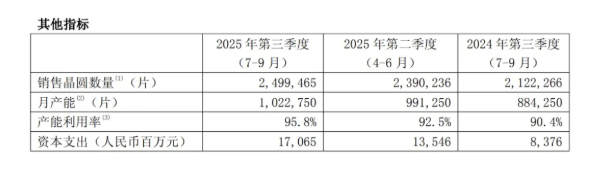
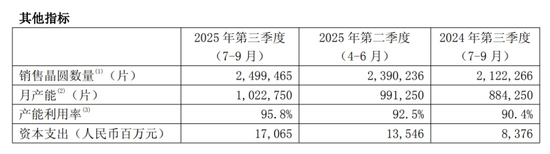
"整体来说,当前公司产线仍处于供不应求状态,出货量还无法完全满足客户需求。"在11月14 日举行的中芯国际2025年第三季度业绩说明会上,中芯国际联合首席执行官赵海军透露,四季 度是传统淡季,客户备货有所放缓,但由于产业链切换迭代效应持续,将"淡季不淡"。 记者从多个渠道求证获悉,中芯国际已经对部分产能实施了涨价,涨幅约为10%。 有公司反映,预计涨价会很快执行。但由于之前存储产品价格过低,晶圆厂早已率先对其实施 了涨价。 "由于手机应用和AI需求持续增长,带动套片需求,从而带动了整体半导体产品需求的增 长。"对于中芯国际涨价的原因,有半导体业内人士解读,原材料涨价也是其中因素。 此外,台积电确认整合8英寸产能,并计划在2027年末关停部分生产线,或也引发晶圆厂涨价预 期。 事实上,由于需求旺盛,中芯国际、华虹公司的产能利用率持续增长,并已接近满载或超过满 载。 中芯国际在三季报中披露,第三季度,公司产能利用率上升至95.8%,环比今年第二季度的 92.5%增长3.3个百分点。 | | 2025 年第三季度 | 2025 年第二季度 | 2024 年第三季度 | | --- | --- | --- | --- ...

报道:中芯国际部分产能已涨价约10%
Hua Er Jie Jian Wen· 2025-12-23 14:00
Core Viewpoint - SMIC has implemented a price increase of approximately 10% on certain production capacities due to rising demand in the semiconductor industry, driven by mobile applications and AI needs, as well as increased raw material costs [1][2]. Group 1: Price Increase and Demand - SMIC has raised prices on some production capacities by about 10% [1]. - The price increase is expected to be implemented quickly, following prior increases in storage product prices due to low pricing [2]. - The demand for semiconductor products is growing, influenced by the continuous rise in mobile applications and AI, which has led to increased demand for wafers [2]. Group 2: Capacity Utilization and Production - SMIC's capacity utilization rate rose to 95.8% in Q3 2025, up from 92.5% in Q2 2025, indicating strong demand [5]. - The overall production capacity remains in a state of supply shortage, with shipments unable to fully meet customer demand [6]. - Hua Hong's overall capacity utilization rate reached 109.5% in Q3 2025, reflecting high operational efficiency [8]. Group 3: Financial Guidance - SMIC's revenue guidance for Q4 indicates a flat to 2% growth compared to Q3, with a gross margin forecast of 18% to 20% [7]. - The company expects its annual sales revenue to exceed $9 billion, marking a significant milestone in revenue scale [7].

中芯国际,涨价!
Xin Lang Cai Jing· 2025-12-23 13:47
Core Viewpoint - Semiconductor companies, including SMIC, are experiencing increased demand leading to price hikes and higher capacity utilization rates, with SMIC implementing a price increase of approximately 10% on certain capacities [1][7]. Group 1: Price Increases and Demand - SMIC has raised prices on some of its capacities by about 10% due to rising demand from mobile applications and AI, which has driven overall semiconductor product demand [2][8]. - The price increase is also influenced by rising raw material costs and the consolidation of TSMC's 8-inch capacity, which is expected to lead to further price hikes in the industry [9]. Group 2: Capacity Utilization and Production - SMIC's capacity utilization rate rose to 95.8% in Q3 2025, up from 92.5% in Q2 2025, indicating strong demand and near-full capacity operation [3][9]. - The company reported a total of 2,499,465 wafers sold in Q3 2025, with a monthly capacity of 1,022,750 wafers, reflecting a significant increase in production capabilities compared to previous quarters [10]. Group 3: Financial Guidance - For Q4 2025, SMIC has provided revenue guidance indicating a flat to 2% growth, with a gross margin forecast of 18% to 20%, consistent with Q3 guidance [4][11]. - The company anticipates its annual sales revenue to exceed $9 billion, marking a new milestone in revenue scale [4][11]. Group 4: Competitor Performance - Hua Hong's overall capacity utilization rate reached 109.5% in Q3 2025, an increase of 1.2 percentage points from the previous quarter, indicating robust operational performance [5][12]. - Hua Hong's three 8-inch wafer fabs continue to operate at high utilization rates, with its first 12-inch fab producing over 100,000 wafers consistently [6][12].
2025年10月中国制造单晶柱或晶圆用的机器及装置进口数量和进口金额分别为0.02万台和1.24亿美元
Chan Ye Xin Xi Wang· 2025-12-23 03:18
Core Insights - The import quantity of machines and devices for manufacturing monocrystalline columns or wafers in China reached 0.02 million units in October 2025, representing a year-on-year increase of 13.5% [1] - The import value for these machines and devices amounted to 1.24 million USD, showing a year-on-year growth of 8.4% [1] Group 1 - The increase in import quantity indicates a growing demand for manufacturing equipment in the semiconductor industry [1] - The rise in import value suggests that the market for these machines is becoming more valuable, potentially due to advancements in technology or increased production capacity [1]
